Are Sudden Body Changes Normal Today?
Disclaimer: This article is for general information only and isn’t medical advice or a diagnosis. If you have severe symptoms or think it may be an emergency, call your local emergency number.
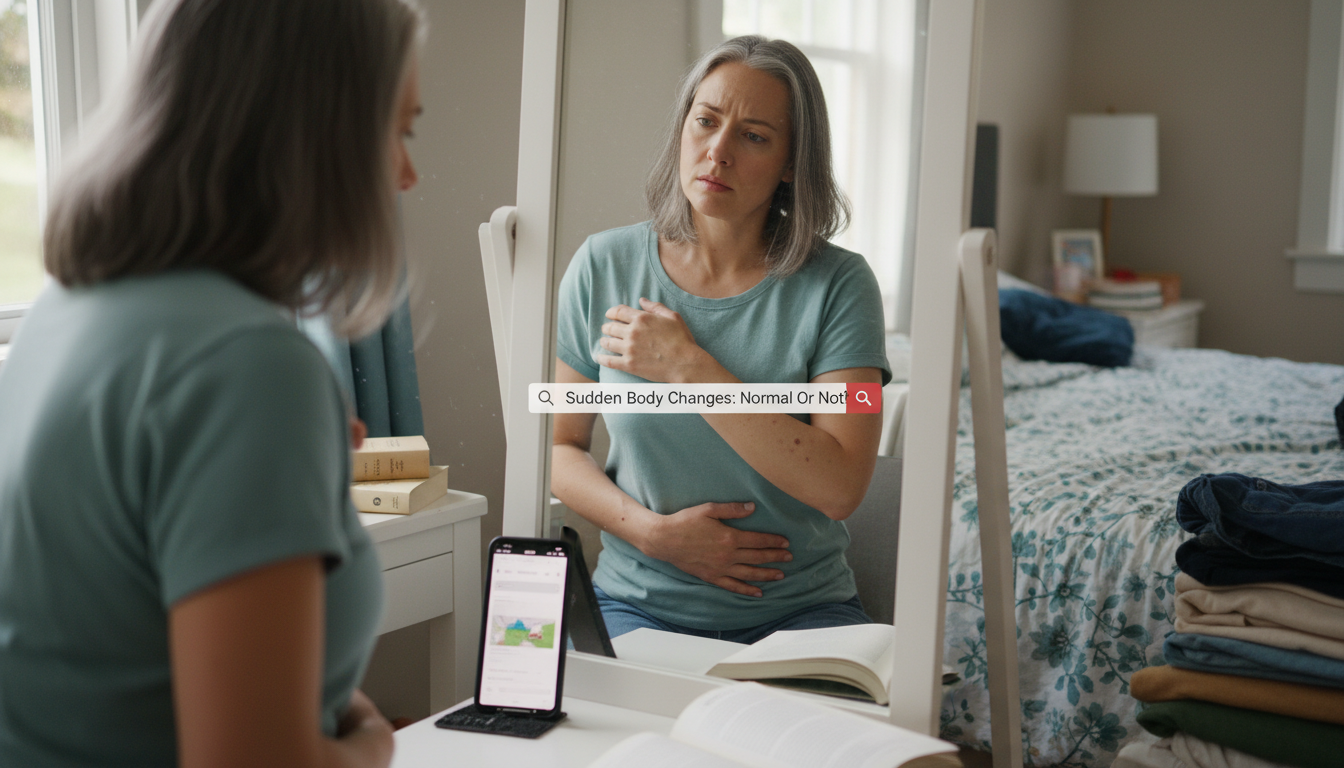
You ever wake up and think, “Okay, whose body is this and what did you do with mine?” One random Tuesday your heart feels weird. Another day you’re dizzy for no reason. Suddenly you’re sweating, shaking, or your legs feel like jelly — and your brain immediately goes to the worst-case scenario.
So: sudden body changes today — normal or not? Let’s walk through what might be okay to monitor vs what needs medical help as soon as possible, in plain English.
First: What Do We Mean by “Sudden Body Changes”?
“Sudden” can mean different things, but usually we’re talking about symptoms that:
- Start out of the blue (not gradually over months)
- Feel different from your normal
- Make you pause and think, “Wait, that’s not right.”
Common sudden changes people worry about:
- Sudden dizziness or lightheadedness
- New chest discomfort or racing heart
- Shortness of breath at rest
- Sudden weakness, shaking, or trembling
- A feeling of being about to faint
- New numbness or trouble speaking
- Sudden bad headache unlike your usual
Some of these can be from benign causes (like dehydration or anxiety). Others can be red flags that need urgent care.
Quick takeaway: Sudden + new + worrying = worth paying attention to, not ignoring.
Normal-ish vs Not: A Quick Comparison
This is not a diagnosis tool, but it can help your thinking.
Changes That Are Often From Non-Emergency Causes
These still deserve attention, but they’re less likely to be immediately life-threatening, especially if they’re mild and improve:
- Feeling lightheaded after standing up quickly (could be a drop in blood pressure)
- Mild, brief palpitations (skipped or strong beats) that settle on their own
- Shakiness when you haven’t eaten for hours (possible low blood sugar)
- Feeling “off,” sweaty, or with a mild racing heart during anxiety or panic
- Mild dizziness when dehydrated or after being in heat
These can still be miserable and absolutely worth a doctor visit, but they usually don’t scream “call 911 right now.”
Changes That Are Not Normal and Can Be Emergencies
Seek immediate emergency care (911) if you notice sudden:
- Chest pain or pressure, especially if it’s heavy, crushing, or radiates to the arm, jaw, back, or neck
- Shortness of breath that makes it hard to speak or rest
- Weakness or numbness in the face, arm, or leg — especially on one side of the body
- Trouble speaking, understanding, seeing, or walking suddenly
- A sudden severe headache that feels like “the worst headache of my life”
- New chest pain with sweating, nausea, or feeling like you’re going to pass out
These can be signs of heart attack, stroke, or other serious problems, and major medical organizations stress not to wait around to “see if it passes.”
Quick takeaway: If your brain is genuinely asking, “Could I die from this?” and the symptoms are intense or getting worse, err on the side of getting urgent help.
Could Sudden Body Changes Be From Anxiety?
Yes, absolutely. And that doesn’t mean “it’s all in your head.” Anxiety can cause very real physical symptoms.
Common anxiety-related physical changes:
- Pounding or racing heart
- Chest tightness or discomfort
- Sweating, shaking, trembling
- Feeling lightheaded or detached
- Tingling in hands or face
- Feeling like you’re short of breath, even if oxygen is normal
Why this happens:
- When you’re stressed or panicking, your body releases adrenaline.
- Adrenaline boosts heart rate, breathing, and muscle tension — a built-in survival response.
- If your brain misreads normal body sensations as dangerous, it can create a feedback loop: symptom → fear → more symptoms.
But here’s the nuance:
- Anxiety can mimic serious conditions like heart or breathing problems.
- You should not self-diagnose “It’s just anxiety” the first time you have severe or new symptoms like chest pain, severe shortness of breath, or neurological changes.
Quick takeaway: Anxiety can cause dramatic body changes, but you still deserve a medical evaluation for new or scary symptoms — especially the first time.
Common Sudden Symptoms: When They’re Likely Benign vs Concerning
1. Sudden Dizziness or Feeling Faint
More likely to be non-emergency if:
- It happens when you stand up quickly or have been standing for a long time.
- You’re dehydrated, skipped meals, or overheated.
- It improves quickly when you sit or lie down.
Possible everyday causes: low blood pressure on standing, dehydration, low blood sugar, or anxiety.
More concerning if:
- It comes with chest pain, shortness of breath, or palpitations that don’t ease up.
- You also have trouble walking, talking, or seeing, or one side of your body feels weak.
- You actually pass out (lose consciousness).
Those can be signs of heart rhythm problems, stroke, or other serious issues.
You stand up fast after scrolling in bed for an hour, the room tilts for a few seconds, then you’re fine after a sip of water. Likely: blood pressure shift and mild dehydration.
You’re sitting at your desk, suddenly the room spins, your vision doubles, your speech slurs, and your arm goes weak. That’s an emergency.
Takeaway: Dizziness that’s brief and clearly triggered is often less scary. Dizziness with neurologic changes or chest symptoms needs urgent care.
2. Sudden Racing Heart or Palpitations
More likely to be benign if:
- It happens after caffeine, energy drinks, or stress.
- It lasts a few seconds and resolves on its own.
- You’re otherwise feeling okay and can breathe, talk, and move normally.
More concerning if:
- Your heart rate is very fast and sustained (for example, sitting quietly with heart rate 140+ and not slowing down).
- You feel chest pain, pressure, or shortness of breath.
- You feel like you’re about to faint or actually pass out.
Those can suggest abnormal heart rhythms or other heart issues and may require urgent evaluation.
Takeaway: A few weird beats now and then are very common. Fast, sustained, or paired with chest pain or faintness is not.
3. Sudden Weakness, Numbness, or Trouble Speaking
This one’s simple: do not wait and see.
Red-flag signs include:
- Face drooping on one side
- Inability to lift one arm or sudden weakness on one side
- Slurred speech or trouble finding words
These are classic stroke warning signs.
If you notice this in yourself or someone else, call 911 immediately. Stroke treatments are very time-sensitive; the sooner you get help, the better the chance of reducing long-term damage.
Takeaway: Sudden weakness, numbness, or trouble speaking is never “normal today.” Treat it as an emergency.
4. Sudden Shortness of Breath
Sometimes less scary if:
- You just climbed stairs or exercised harder than usual.
- You’re having a panic attack with chest tightness but your oxygen level (if you check it) is normal.
Much more concerning if:
- You’re short of breath at rest or can’t speak in full sentences.
- It started suddenly and severely, especially with chest pain, leg swelling, or coughing up blood.
- You have known heart or lung disease and this is a sudden change from your baseline.
These could be signs of a heart attack, pulmonary embolism (blood clot in the lungs), severe asthma attack, or heart failure — all of which are emergencies.
Takeaway: If you can’t catch your breath well enough to talk normally or it feels dramatically worse than your usual, seek emergency care.
“But It Started Today… Should I Wait and See?”
Here’s a simple mental framework.
You Can Usually Watch and Call Your Doctor Soon If:
- Symptoms are mild, improving, and not spreading.
- You have no chest pain, severe shortness of breath, or neurologic changes.
- It seems related to something obvious: lack of sleep, dehydration, new intense workout, increased stress.
- You can still do your basic daily tasks, just a bit uncomfortably.
Examples:
- Mild, new body aches after upping your exercise.
- Feeling more tired than usual after several late nights.
- A few extra skipped heartbeats that settle down.
You Should Seek Same-Day or Emergency Care If:
- Symptoms are sudden, severe, or rapidly getting worse.
- You feel like you might pass out, or you do pass out.
- There’s chest pain, crushing pressure, or intense shortness of breath.
- There’s sudden weakness, confusion, trouble seeing, or speaking.
- Your gut instinct is screaming that something is really wrong.
Takeaway: “New today” does not automatically mean “safe to wait.” The intensity and type of symptoms matter much more than the calendar.
How to Track Sudden Changes So Your Doctor Can Actually Help
When weird symptoms show up, your brain may panic, which makes it harder to remember details later. Try this:
Write down or note in your phone:
- What exactly did you feel? Use simple words: “sharp chest pain,” “room spinning,” “legs jelly-like,” “heart thumping.”
- What were you doing right before? Standing, lying down, after eating, after exercise, during stress?
- How long did it last? Seconds, minutes, hours?
- Did anything make it better or worse? Sitting, lying down, drinking water, deep breaths?
- Did it come with other symptoms? Chest pain, shortness of breath, headache, vision change, numbness?
This kind of information helps doctors tell if something is likely benign vs serious and makes your visit way more productive.
Takeaway: Your memory under stress is unreliable. Notes are your friend.
What to Do Right Now If You’re Having Sudden Symptoms
Let’s assume you’re experiencing something new today and you’re reading this while slightly freaking out.
-
Check the obvious basics (if you can do so safely):
- Are you hydrated?
- Have you eaten in the last few hours?
- Did you take any new medications, supplements, or higher doses than usual?
-
Sit or lie down somewhere safe. If you’re dizzy or lightheaded, sitting or lying reduces risk of falling.
-
Do a quick self-check for red flags:
- Severe chest pain or pressure?
- Can’t catch your breath?
- Weakness or numbness on one side, trouble speaking, sudden confusion?
- Feeling like you’re about to pass out and it’s not easing?
If yes to any of these, call 911 (or your local emergency number). Don’t drive yourself.
-
If no obvious red flags but you’re worried: Call your doctor’s office or a nurse line and describe your symptoms. If you can’t reach them and your worry is high, consider urgent care or the emergency room.
Takeaway: A web page can’t see you, examine you, or run tests. When in doubt, involve an actual human clinician.
The Emotional Side: You’re Not “Dramatic” for Being Worried
If your body suddenly starts acting different, it is completely rational to feel scared.
A few reminders:
- Many serious conditions get better outcomes the earlier they’re treated.
- You are not wasting anyone’s time by seeking help for sudden chest pain, new severe headache, or stroke-like symptoms.
- Even if it does turn out to be anxiety, dehydration, or something less dangerous — that’s good news, not a reason to feel foolish.
Takeaway: Listening to your body isn’t overreacting; it’s basic self-care.
So… Are Your Sudden Body Changes “Normal” Today?
Here’s the bottom line:
- Some sudden changes are common and not emergencies — like brief dizziness after standing up fast or a few skipped heartbeats.
- Other sudden changes are clear red flags — chest pain, severe shortness of breath, one-sided weakness, difficulty speaking, or a sudden worst-ever headache.
- Anxiety can mimic a lot of scary stuff, but serious issues can look similar, especially the first time — so medical evaluation is still important.
- When symptoms are new, intense, or just feel deeply wrong, choosing to get help is the safer move.
If you’re on the fence right now, ask yourself:
“If my best friend told me they were having these symptoms, would I tell them to just wait, or to get checked out?”
Whatever answer you’d give them is probably what you deserve, too.
Sources
-
Mayo Clinic – “Heart attack: Symptoms and causes” (when chest symptoms are an emergency)
https://www.mayoclinic.org/diseases-conditions/heart-attack/symptoms-causes/syc-20373106
-
American Stroke Association – “Stroke symptoms and warning signs” (sudden neurologic changes, when to call 911)
-
Mayo Clinic – “Shortness of breath” (causes, red flags, when to seek care)
https://www.mayoclinic.org/symptoms/shortness-of-breath/basics/when-to-see-doctor/sym-20050890
-
Cleveland Clinic – “Palpitations” (common causes, when they’re serious)
https://my.clevelandclinic.org/health/symptoms/16744-heart-palpitations
-
MedlinePlus (NIH) – “Dizziness and fainting” (causes, evaluation, when to seek help)
-
Mayo Clinic – “Panic attacks and panic disorder” (how anxiety triggers physical symptoms)
https://www.mayoclinic.org/diseases-conditions/panic-attacks/symptoms-causes/syc-20376021
Leave a Reply