Is a Heart Rate of 120 Dangerous?
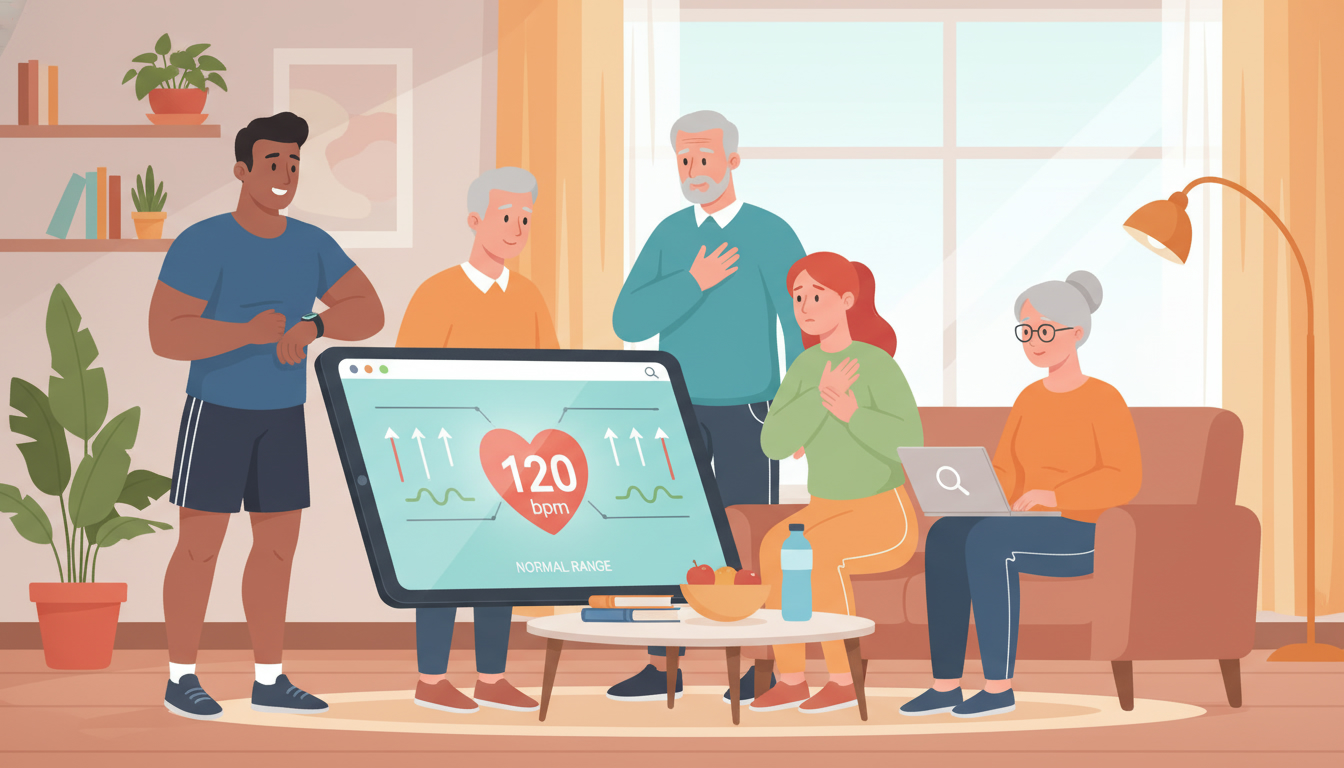
You look down at your smartwatch. Heart rate: 120 beats per minute. You are sitting on the couch. Cue the internal monologue: “Am I dying or is my watch just being dramatic?”
Here is what a heart rate of 120 really means, when it is normal, when it is a red flag, and what to do next, without turning you into a doom-scroller.
Quick answer: Is a heart rate of 120 dangerous?
Sometimes. A heart rate of 120 beats per minute (bpm) can be:
- Totally normal during exercise, excitement, or stress.
- A concern if you are sitting still, feel unwell, or if it happens often.
- An emergency if it comes with serious symptoms like chest pain, fainting, trouble breathing, or confusion.
Most adults at rest have a heart rate between 60–100 bpm. A resting heart rate consistently above 100 bpm is called tachycardia (fast heart rate).
Takeaway: 120 bpm is not automatically dangerous, but context and symptoms matter a lot.
First, what exactly is heart rate?
Heart rate is how many times your heart beats in one minute. It changes all day based on what your body is doing and how it feels.
Heart rate goes up with:
- Exercise or physical activity
- Stress, anxiety, or panic
- Fever or illness
- Dehydration
- Caffeine, nicotine, some medications, and certain drugs
Heart rate tends to go down when you are:
- Asleep
- Relaxed and calm
- Very physically fit (athletes often have lower resting heart rates)
Takeaway: Your heart rate is supposed to be flexible. A single number like 120 only makes sense when you add the full story around it.
When is a heart rate of 120 normal?
1. During exercise
If you are walking briskly, climbing stairs, doing cardio, or lifting weights, a heart rate of 120 bpm is usually normal for many adults.
Your target heart rate zone for moderate exercise is often around 50–70% of your maximum heart rate. A simple rough estimate for max heart rate is:
220 – your age
So if you are 40 years old:
- Estimated max heart rate ≈ 180 bpm
- 50–70% of that ≈ 90–126 bpm
In that case, 120 bpm during a workout is in the expected range.
Example:
- You are 35
- You are on a brisk walk or light jog
- Your watch shows 118–125 bpm
- You are breathing a bit faster but can still talk in short sentences
That is likely normal exercise heart rate, not an emergency.
Mini takeaway: During physical activity, 120 is often a good sign your heart is responding as it should.
2. When you are excited, scared, or stressed
Your heart does not only respond to treadmill miles. It responds to emotions.
Moments that can push you toward 120 bpm include:
- Public speaking
- A jump scare in a horror movie
- A stressful argument
- A panic attack or surge of anxiety
This is your fight-or-flight system kicking in. Your body releases adrenaline, your heart speeds up, and your muscles get ready for action, even if the only action is scrolling on the couch.
If your heart rate settles back down once you calm down, that is usually okay.
Mini takeaway: A heart rate of 120 during big emotions is usually your nervous system being dramatic, not instantly dangerous.
3. In kids and teenagers
If you are searching this for your child, higher heart rates are normal in kids.
- Babies and toddlers often have resting heart rates well over 100 bpm.
- Young children and sometimes teens can hit 120 bpm with mild activity or excitement.
What is normal depends heavily on age, activity level, and whether they feel well.
Important: If your child has a heart rate around 120 while resting, especially with symptoms (fever, breathing problems, looking very ill, floppy, or unresponsive), contact a pediatrician or urgent care right away.
Mini takeaway: For kids, 120 bpm is not automatically scary, but if they are at rest and look or act sick, get medical advice quickly.
When is a heart rate of 120 not normal?
1. 120 bpm while truly resting
If you are sitting, lying down, or doing something light like reading or watching TV, and your heart rate is 120 bpm and staying there, that is not typical for most healthy adults.
This resting fast rate, especially if it:
- Happens often
- Appears out of nowhere
- Does not drop after a few minutes of rest
should be discussed with a healthcare professional.
Possible causes can include (not an exhaustive list):
- Fever or infection
- Dehydration
- Anemia (low red blood cells)
- Thyroid problems (overactive thyroid)
- Heart rhythm issues (arrhythmias)
- Side effects of medications or stimulants
Only a clinician who can examine you and review your history can sort out which, if any, apply to you.
Mini takeaway: A resting heart rate of 120 is not automatically dangerous, but it is a “please talk to a doctor” situation, not a “ignore it for months” situation.
2. 120 bpm plus worrying symptoms
The number matters less than how you feel.
Seek emergency care (call 911 or your local emergency number) if a fast heart rate (around 120 or higher) comes with:
- Chest pain or pressure
- Trouble breathing or feeling like you cannot get enough air
- Fainting or almost fainting
- Sudden, severe dizziness
- Confusion, trouble speaking, or weakness in face, arms, or legs
- Sweating heavily with a feeling that something is very wrong
These can be signs of serious heart or medical problems.
Mini takeaway: Fast heart plus scary symptoms means do not wait it out. Get urgent help.
3. 120 bpm that feels like pounding, fluttering, or skipping
If your heart rate is 120 and it also feels:
- Like it is racing out of your chest
- Like fluttering or “flip-flopping”
- Like it is irregular (fast, then slow, then a pause)
you might be feeling palpitations. These can be harmless, but they can also signal a rhythm issue like atrial fibrillation or supraventricular tachycardia (SVT).
These conditions are common and often treatable, but they do require medical evaluation.
Mini takeaway: A fast, strange-feeling heartbeat deserves real-life, human medical attention, not just another search.
How accurate is your watch or fitness tracker at 120 bpm?
Sometimes the drama is not your heart. It is your device.
Common issues that can make your heart rate reading wrong or jumpy include:
- Loose or very tight strap
- Cold hands or poor circulation
- Rapid movement of your wrist
- Tattoos under the sensor
- Sweat, lotion, or dirt on the sensor
What you can do:
- Tighten and reposition the band (snug, but not painful).
- Clean the back of the device and your skin.
- Compare with a manual pulse check:
- Place two fingers on your wrist or side of your neck.
- Count beats for 30 seconds and multiply by 2.
If your watch says 120 but your finger count says 80, trust your actual pulse more than the gadget.
Mini takeaway: Check your heart, not just your hardware.
What should you do if you see 120 bpm?
Here is what to consider in different situations.
Scenario 1: You are exercising
- Ask: “Do I feel okay?”
- Mild shortness of breath and faster breathing can be normal.
- If you feel good, 120 bpm is often a normal workout number.
But stop and rest if:
- You feel chest pain, tightness, or pressure
- You get very dizzy or lightheaded
- You feel like you might pass out
- Your heart rate seems unusually high for the effort
If symptoms do not quickly improve with rest, seek urgent care.
Scenario 2: You are sitting or lying down
- Stay calm. Anxiety can push 120 even higher.
- Sit or lie down comfortably.
- Take slow, deep breaths for a few minutes:
- In through your nose for 4 seconds
- Hold for 2 seconds
- Out through your mouth for 6 seconds
- Re-check your heart rate after 3–5 minutes.
Then:
- If it drops below 100 and you feel fine, keep an eye on it, but it may have been a brief response to stress, caffeine, or similar triggers.
- If it stays around 120 or higher at rest, call your doctor or a nurse advice line the same day to ask what to do.
Get immediate help (ER or 911) if at rest 120+ comes with:
- Chest pain, pressure, or discomfort
- Trouble breathing
- Fainting, near-fainting, or severe dizziness
- New confusion, trouble speaking, or weakness
Scenario 3: It happens often
If you regularly see resting heart rates around 110–130:
- Track it for a week:
- Time of day
- What you were doing
- Symptoms (dizzy, short of breath, chest discomfort, anxious, etc.)
- Make an appointment with a healthcare professional and bring:
- Your log
- Medication list (including supplements, caffeine and energy drinks)
- Your wearable data screenshots if you have them
They may recommend:
- Blood tests (check anemia, thyroid, infection, etc.)
- An ECG (electrocardiogram)
- A heart monitor you wear at home for a few days
Mini takeaway: Repeated unexplained 120s at rest are exactly the kind of thing doctors are there to help with.
What can you do to support a healthier heart rate over time?
Only a clinician can diagnose or treat a specific problem, but there are general habits that help many people:
- Stay hydrated. Dehydration can raise heart rate.
- Watch caffeine and stimulants. Coffee, energy drinks, pre-workout, nicotine, and some cold medicines can speed things up.
- Sleep better. Poor or fragmented sleep can boost resting heart rate and stress hormones.
- Move regularly. Regular exercise can, over time, lower your resting heart rate.
- Manage stress. Breathing exercises, mindfulness, therapy, and social support can help calm your nervous system.
- Follow medical advice if you have conditions like thyroid disease, anemia, or heart disease.
Mini takeaway: You cannot control every beat, but you can influence the overall rhythm of your health.
So, is a heart rate of 120 dangerous?
A heart rate of 120 bpm is more of a question than an answer:
- During exercise or strong emotion? Often normal.
- At rest, no symptoms, rare? Worth watching.
- At rest, frequent, or you feel unwell? Worth a medical evaluation.
- With chest pain, trouble breathing, fainting, confusion, or a feeling of severe illness? Treat as a medical emergency.
This article is not a diagnosis and it cannot replace in-person medical evaluation. If something feels seriously wrong, it is always better to get checked than to regret waiting.
Bottom line: A heart rate of 120 can be totally normal or a sign your body needs help. Listen to the number, but listen to your symptoms and your gut even more.
If you are worried enough to be reading this, you are not being dramatic. You are being responsible. Reach out to a healthcare professional and let them help you figure out what your heart is trying to say.
Leave a Reply