Is a Heart Rate of 110 Dangerous?
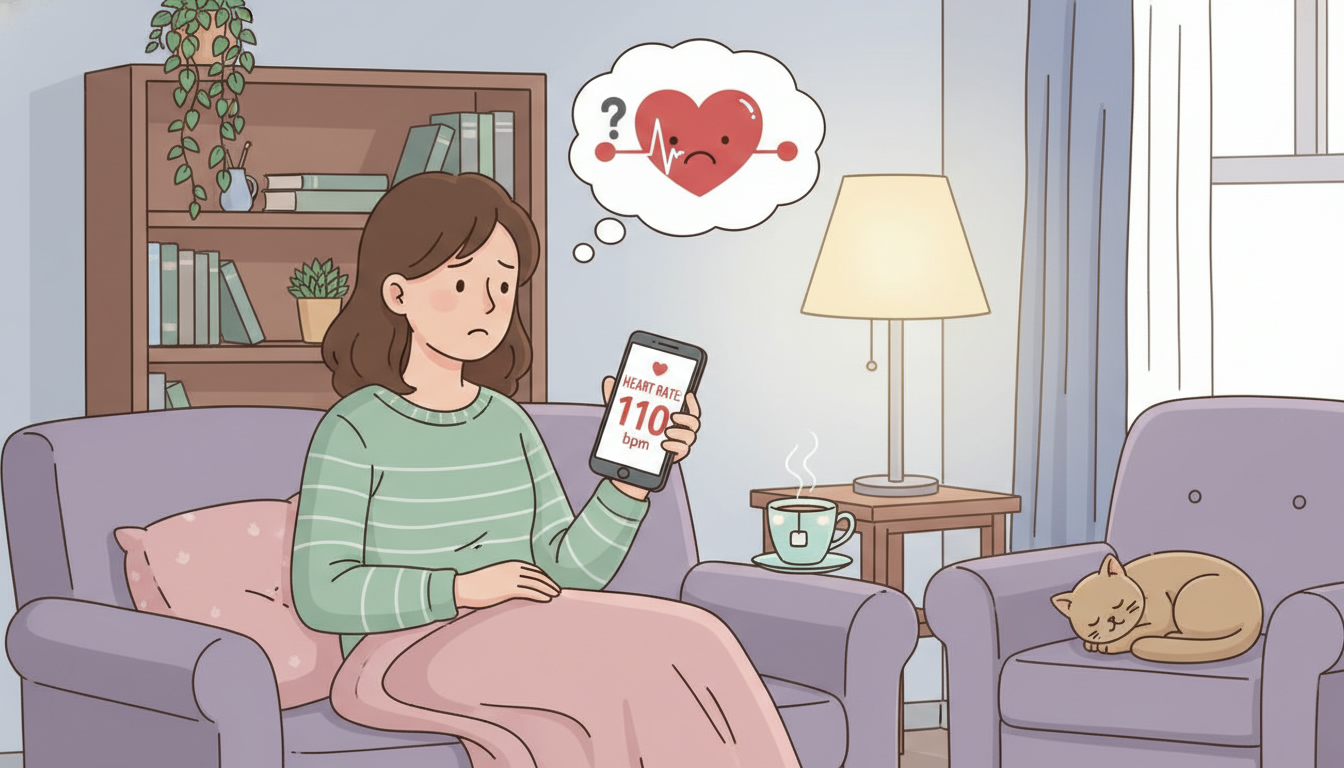
You glance at your smartwatch, see a heart rate of 110, and suddenly your heart rate jumps even higher. Relatable.
So let’s tackle the big question head-on: is a heart rate of 110 dangerous… or just your body doing its thing?
Quick Answer: Is a Heart Rate of 110 Dangerous?
Sometimes it’s perfectly normal. Sometimes it’s a red flag. Context is everything.
For most healthy adults, a normal resting heart rate is usually 60–100 beats per minute (bpm), according to major heart organizations like the American Heart Association.
So:
- 110 bpm while resting and feeling unwell? That’s worth a call to a doctor or urgent care.
- 110 bpm while walking, climbing stairs, anxious, or drinking coffee? Often normal.
- 110 bpm plus chest pain, trouble breathing, or feeling like you might pass out? That’s an emergency — call 911.
Takeaway: 110 isn’t automatically “dangerous,” but it absolutely isn’t something to ignore if it’s at rest, persistent, or paired with concerning symptoms.
What Exactly Is Heart Rate?
Your heart rate is simply how many times your heart beats in one minute.
- Resting heart rate: When you’re sitting or lying quietly, not stressed, not right after exercise.
- Active heart rate: When you’re moving, exercising, stressed, or excited.
Most guides consider a resting heart rate of 60–100 bpm typical for adults. Many healthy, fit people have resting heart rates closer to 50–60. Kids and teens have higher normal ranges.
So where does 110 fit in?
- At rest, 110 is above the normal range for most adults.
- With activity or stress, 110 can be completely normal.
Takeaway: Don’t judge 110 in isolation. Judge it based on what you’re doing and how you feel.
The Big Distinction: 110 at Rest vs. 110 With Activity
1. Heart Rate 110 While Resting
If your heart rate is around 110 bpm while you’re sitting or lying down, this is called tachycardia (fast heart rate) in medical terms — generally defined as a resting heart rate above 100 bpm in adults.
Common non-emergency reasons this might happen:
- Anxiety or panic
- Dehydration
- Fever or infection
- Caffeine, nicotine, energy drinks, some cold medicines
- Pain
- Lack of sleep
More serious possible causes include:
- Anemia (low red blood cell count)
- Heart rhythm problems (arrhythmias)
- Thyroid problems (especially overactive thyroid)
- Heart or lung conditions
You cannot diagnose the cause just by looking at the number. But you can use the number as a prompt to check in with your body and, if needed, a professional.
When 110 at rest is more concerning:
Call a doctor, urgent care, or nurse line the same day if:
- Your resting heart rate stays above 100–110 bpm for hours without obvious reason (like anxiety or just finished exercising), or
- You feel dizzy, weak, unusually tired, or “off”.
Go to the ER or call 911 if the fast heart rate is combined with:
- Chest pain or pressure
- Shortness of breath or trouble breathing
- Fainting or feeling like you might pass out
- Severe palpitations (heart pounding, racing, or skipping that really scares you)
Takeaway: Resting heart rate of 110 isn’t automatically a disaster, but it is a “let’s pay attention now” sign.
2. Heart Rate 110 During Movement or Exercise
If you’re walking briskly, climbing stairs, cleaning the house actively, or feeling stressed or emotional, a heart rate around 100–130 bpm can be pretty normal for many adults.
During intentional exercise, it’s expected for your heart rate to climb much higher than 110, especially if you’re younger or pushing yourself.
Many fitness guidelines use a “target heart rate zone,” often about 50–85% of your estimated max heart rate, which is roughly 220 minus your age.
Example:
- Age 40 → estimated max heart rate ≈ 180
- 50–85% of that is 90–153 bpm
- So 110 bpm during a light jog or fast walk? Very normal.
Takeaway: 110 bpm is usually not dangerous during mild-to-moderate activity if you feel okay.
What If Your Heart Rate Is 110 While Sleeping or Waking Up?
This is where people often get spooked by smartwatch data.
If your tracker shows you hovering near 110 while you’re supposedly resting or sleeping, a few options:
- The data might be off. Wrist-based sensors can misread if the watch is loose, you’re moving, or the device glitches.
- You might not be as “rested” as you think. Nightmares, stress, pain, fever, or restless movement can all raise heart rate.
- It could reflect a real issue like infection, anemia, or heart rhythm problems — especially if it’s a pattern.
If this is a one-time weird spike, note it and move on.
If you notice a pattern of high resting heart rate (like 100–120 at rest or overnight many nights in a row), that’s worth bringing to a doctor with screenshots or logs.
Takeaway: One strange high reading in the middle of the night isn’t an emergency. Repeated nights in that range deserve medical attention.
Is 110 a Dangerous Heart Rate for Children or Teens?
Kids naturally have higher normal heart rates than adults.
Very broad ballpark resting ranges (approximations):
- Newborns/infants: often 100–160 bpm
- Toddlers/young kids: commonly 80–130 bpm
- Older kids/teens: often 70–110 bpm
So for a young child, a heart rate of 110 while awake and a little active can be totally normal.
More concerning signs in a child include:
- 110 while limp, very tired, or struggling to breathe
- Paired with blue lips, chest pain, or fainting
In those cases, seek urgent medical care.
Takeaway: 110 can be normal in kids, but the behavior and symptoms matter more than the number.
Common Causes of a Heart Rate of 110
Here are some everyday reasons your heart rate might hit around 110 that are not automatically dangerous:
- You just climbed stairs.
- You’re anxious, stressed, or having a panic attack.
- You had an energy drink, strong coffee, or a pre-workout.
- You’re dehydrated (not enough fluids, hot day, sweating a lot).
- You’re sick with a cold, flu, or COVID and have a fever.
- You’re in pain (headache, injury, cramps, etc.).
More medical causes that need evaluation:
- Anemia (low red blood cells)
- Thyroid problems (hyperthyroidism)
- Heart rhythm issues (like atrial fibrillation or SVT)
- Heart disease or heart failure
- Lung problems (asthma flare, pulmonary embolism, pneumonia, etc.)
You cannot reliably self-sort these without a medical professional, but you can ask: “Do I feel mostly okay, or really not okay?”
Takeaway: A heart rate of 110 is a symptom, not a verdict. The “why” is what matters.
How to Check Your Heart Rate Correctly
If you see a number that scares you, first make sure it’s even accurate.
1. Sit down and relax for a few minutes. Give yourself 3–5 minutes of quiet, slow breathing.
2. Use a manual pulse check:
- Place two fingers (not your thumb) on the inside of your wrist (thumb side) or on the side of your neck.
- Count beats for 30 seconds and multiply by 2.
If it’s still around 110 at rest, that’s more meaningful than a single smartwatch blip.
3. Watch for rhythm, not just speed. Does it feel steady (thump-thump-thump) or chaotic and irregular? An irregular rhythm deserves quicker medical attention.
Takeaway: Verify the number before spiraling into panic.
When Should You Be Worried About a Heart Rate of 110?
Use this as a general, non-medical guide (not a diagnosis):
Less Urgent, but Call Your Doctor Soon
- Resting heart rate is consistently above 100–110 over and over without obvious explanation.
- You feel more tired than usual, short of breath with minimal activity, or just “not right.”
- You’ve had recent illness, new medications, or major stress.
Urgent: Get Seen Now (ER/911)
A heart rate around 110 (or higher) plus any of these:
- Chest pain, pressure, or squeezing
- Shortness of breath at rest or with very light activity
- Fainting, near-fainting, or confusion
- Sweating heavily, feeling very weak or “about to die”
- Sudden, pounding heart rate that started out of nowhere and won’t slow down
Takeaway: The number 110 is less important than the full picture of symptoms, how suddenly it started, and whether it’s ongoing.
Practical Steps If Your Heart Rate Is 110 and You’re Worried
If you’re not in immediate crisis but feeling uneasy, try this:
- Pause and breathe
- Sit or lie down.
- Inhale through your nose for 4 seconds, exhale slowly for 6–8 seconds.
- Do this for a few minutes.
- Hydrate
- Drink water (especially if you’ve had caffeine, alcohol, heat exposure, or sweating).
- Cool down
- If you just exercised, give your body at least 10–15 minutes to wind down.
- Re-check your heart rate
- Manually or with a device after 5–10 minutes of rest.
- Call a medical professional if it stays high
- If it’s still above 100–110 at rest and you feel off, call your doctor, an urgent care clinic, or a nurse advice line.
- Seek emergency care for serious symptoms
- Chest pain, trouble breathing, or fainting = ER/911.
Takeaway: You’re not powerless here. A few simple steps can calm both your heart and your mind.
How to Talk to Your Doctor About a Heart Rate of 110
To make your visit (or telehealth call) more useful, track:
- When you notice the 110+ readings (time of day, what you were doing)
- How long they last (minutes? hours?)
- Symptoms you feel with them (dizziness, chest discomfort, anxiety, etc.)
- Medications, caffeine, alcohol, supplements, or energy drinks you use
- Any fitness tracker logs or screenshots
Bring this information in. It gives your provider a far clearer picture than “My watch said 110 and I freaked out.”
Takeaway: Data plus symptoms = better answers, faster.
So… Is a Heart Rate of 110 Dangerous?
Here’s the bottom line:
- 110 with activity or mild stress and you otherwise feel fine? Often normal.
- 110 at true rest, especially if it’s persistent or new for you? Needs medical attention (not necessarily an ER, but don’t ignore it).
- 110 with scary symptoms like chest pain, breathing trouble, or fainting? Treat it as an emergency.
Your heart rate is a clue, not a sentence.
If this is bothering you enough that you’re reading about it, it’s worth at least a quick check-in with a healthcare professional. You deserve peace of mind — not a permanent tab open to “is heart rate 110 dangerous?”
Important note: This article is for general information only and isn’t a substitute for professional medical advice, diagnosis, or treatment. If you’re worried about your heart or feeling unwell, please contact a healthcare provider or emergency services right away.
Leave a Reply