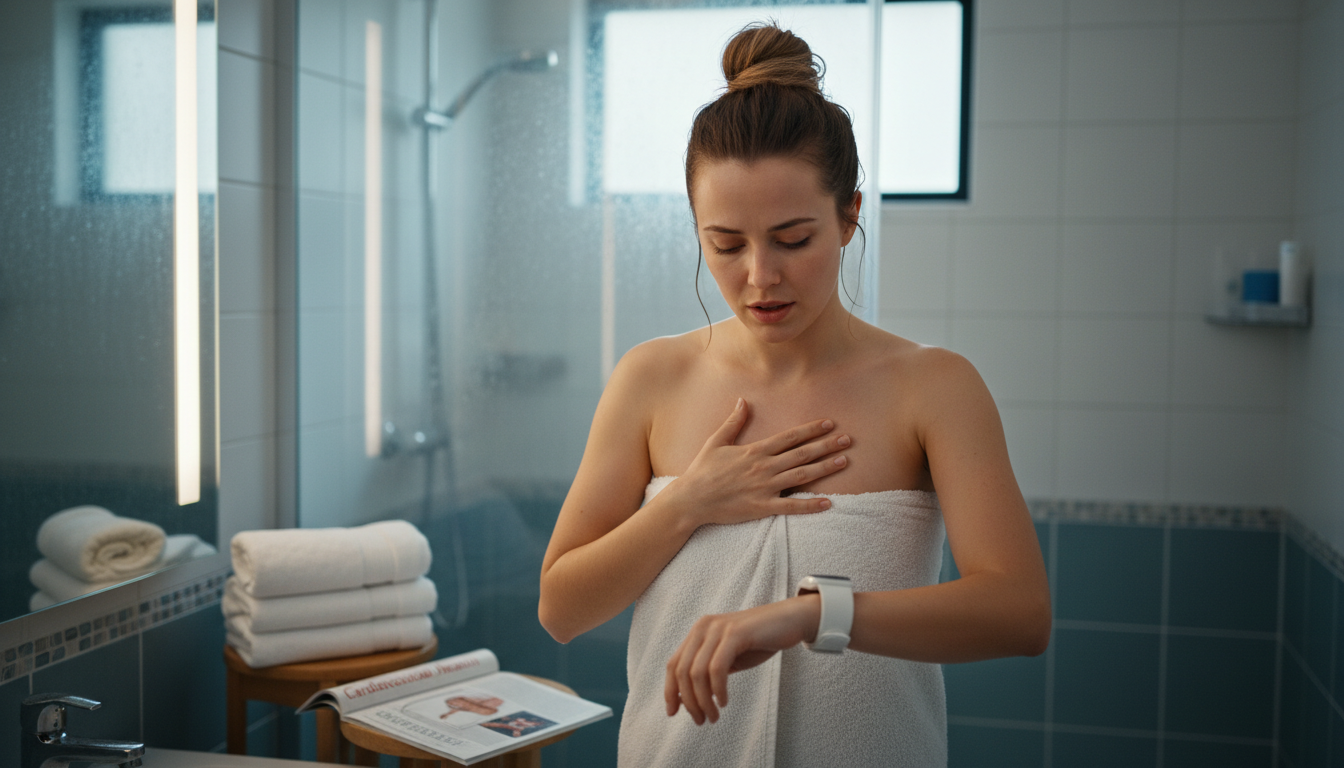

Heart Racing After a Shower: What It Might Mean
Disclaimer: This article is for general information only and isn’t medical advice or a diagnosis. If you have severe symptoms or think it may be an emergency, call your local emergency number.
You step out of the shower feeling all clean and refreshed and then notice your heart is pounding like you just sprinted up 5 flights of stairs. You weren’t running. You were just shampooing. So why is your heart racing after a shower, and when is it something you should actually worry about?
Let’s unpack what might be going on, what’s probably harmless, and when it’s time to get checked out.
First, What Counts as a “Racing” Heart After a Shower?
Your heart rate naturally changes throughout the day. It speeds up when you stand up quickly, get warm (like in a hot shower), feel anxious, stressed, or startled, or move around more than usual.
A “racing heart” usually means you’re feeling:
- Fast heartbeat (often over 100 beats per minute when you’re just standing or resting)
- Strong, pounding beats in your chest, neck, or throat
- A fluttering, skipping, or flip-flop sensation (palpitations)
Feeling your heart more than usual for a short time after a shower isn’t automatically dangerous. The big questions are: How fast is it? How long does it last? What else are you feeling with it?
Quick takeaway: Not every post-shower heart thump is a medical emergency, but paying attention to the details matters.
Why Can Your Heart Race After a Shower?
Let’s walk through some of the most common (and often harmless) reasons this happens.
1. Hot Water and Widened Blood Vessels
Hot showers cause your blood vessels to widen (dilate) to help your body release heat. When your vessels widen, blood pressure can drop a bit and your body may respond by speeding up your heart rate to keep blood flowing where it needs to go.
This is a normal reflex. Many people feel a little lightheaded or notice a faster heartbeat after a very hot, steamy shower because of these circulation changes.
You may notice this more if:
- You take long, very hot showers
- You stand up quickly at the end
- The bathroom is also very warm and steamy
Takeaway: Extra-hot, long showers can temporarily boost your heart rate. Warm is usually better than scalding if this bothers you.
2. Standing Up and Moving After Lying or Sitting
If you’re going from lying in bed or sitting on the couch straight into the shower, your body does a little postural adjustment dance. Standing pulls blood toward your legs and lower body and your nervous system reacts by tightening blood vessels and raising heart rate.
For some people, especially if they’re dehydrated, under-fueled, or have a sensitive nervous system, this can cause heart racing, lightheadedness, and feeling like you need to sit down.
In some cases, this can be related to conditions like orthostatic intolerance or POTS (postural orthostatic tachycardia syndrome), where the heart rate jumps a lot when standing up.
Takeaway: A big heart-rate jump when you stand, especially from bed to shower, can be more noticeable in the bathroom but isn’t always caused by the shower itself.
3. Anxiety and the “Bathroom Amplifier” Effect
Anxiety and panic can absolutely make your heart race. And bathrooms are sneakily great at making you notice your heartbeat. It’s quiet, you’re often alone, you might already be thinking about your health or body, and you may feel slightly breathless from the warm steam.
Your brain picks up on a few extra thumps and suddenly goes, “Wait, are we okay?” That worry triggers more adrenaline, which makes your heartbeat faster and stronger, your breathing a bit quicker, and you hyper-focus on every sensation. This can spiral into a mini panic loop.
If your heart racing after a shower comes in waves of intense fear, is paired with chest tightness, shakiness, tingling, or feeling of doom, and peaks within 10–20 minutes then fades, it might be more about panic or anxiety than the shower itself.
Takeaway: Sometimes the shower isn’t the cause, it’s just where you notice your anxious body the most.
4. Dehydration or Not Eating Enough
Taking a hot shower after barely drinking water all day can leave you with heart pounding, feeling weak or shaky, and a bit dizzy. Being dehydrated or low on fuel means your body has to work harder to maintain blood pressure and circulation, especially when you’re warm.
You may be more prone to:
- Faster heart rate
- Feeling faint when getting out of the shower
- Needing to sit down afterward
If your urine is very dark, you barely drank all day, or you shower first thing after skipping dinner or breakfast, this can be part of the picture.
Takeaway: A dry body in a hot, steamy environment means your heart has to pick up the slack.
5. Stimulants, Medications, or Substances
Certain things you eat, drink, or take can prime your heart to race, and the shower is just when you happen to notice it.
Common culprits include:
- Caffeine (coffee, energy drinks, pre-workout)
- Nicotine (vaping, smoking, nicotine pouches)
- Decongestants (like pseudoephedrine in cold medicine)
- Some inhalers
- Thyroid medications or high thyroid hormone levels
- Certain mental health medications
- Recreational drugs (cocaine, amphetamines, MDMA, etc.)
If your heart is already a bit fast or sensitive from one of these, adding heat, standing up, or anxiety can lead to more noticeable pounding.
Takeaway: If your heart racing after showers lines up with caffeine, cold meds, or other stimulants, that’s an important clue to mention to your doctor.
6. Underlying Heart Rhythm or Health Issues
Most of the time, post-shower heart racing is from normal body responses such as heat, position changes, or anxiety. But sometimes, it can reveal an underlying heart or circulation problem, such as:
- Arrhythmias (irregular heart rhythms), like supraventricular tachycardia (SVT) or atrial fibrillation
- Inappropriate sinus tachycardia (heart beats faster than expected at rest)
- POTS or other autonomic nervous system conditions
- Anemia (low red blood cells)
- Overactive thyroid (hyperthyroidism)
- Heart valve or structural heart disease
These conditions typically show up in more situations than just the shower, but the shower might make them more obvious.
Takeaway: If your heart races in lots of everyday situations, not just after showers, or you feel clearly unwell, it deserves a medical workup.
When Is Heart Racing After a Shower Probably Okay?
Nothing replaces a proper medical evaluation, but there are patterns that are often more reassuring.
Your post-shower heart racing is more likely to be benign if:
- It happens mainly after very hot or long showers
- It eases within a few minutes of cooling down or sitting
- You do not have chest pain, severe shortness of breath, or passing out
- You recently had caffeine, were stressed, or didn’t drink much water
- Your resting heart rate the rest of the day is generally normal
You can still bring this up with a healthcare professional, but it’s less likely to be an emergency.
Takeaway: Short-lived, mild racing that clearly links to heat, stress, or dehydration is usually less concerning.
When to Pay Close Attention: Red Flags
Here’s where we stop shrugging it off and start taking it seriously.
Call emergency services right away (911 in the U.S.) or go to the nearest ER if, after a shower, your heart racing is paired with:
- Chest pain, pressure, or tightness, especially if it spreads to your jaw, neck, back, arm, or shoulder
- Trouble breathing or feeling like you can’t catch your breath
- Fainting or nearly passing out
- Sudden confusion, trouble speaking, facial drooping, or weakness on one side (stroke signs)
- Severe, ripping chest or upper back pain
- A heart rate that is extremely fast (for example, 180+ beats per minute) and not slowing down at all
These can be signs of a heart attack, dangerous arrhythmia, stroke, or other emergency situation. If any of these show up, do not wait to see if a shower adjustment helps. Get emergency care.
Takeaway: Heart racing plus chest pain, severe shortness of breath, fainting, or stroke-like symptoms is an emergency.
When to Schedule a Non-Emergency Doctor Visit
You should book an appointment with a healthcare professional if:
- Your heart racing after showers happens frequently (for example, several times per week)
- Episodes last longer than 10–15 minutes, even after sitting, cooling off, and hydrating
- You also notice:
- Dizziness or feeling faint
- New or worsening fatigue
- New shortness of breath with everyday activities
- Swelling in legs, ankles, or feet
- Unexplained weight loss, tremor, heat intolerance (possible thyroid issues)
- You have a history of heart disease, high blood pressure, diabetes, or high cholesterol
- You’re pregnant or recently postpartum
- You have a strong family history of sudden death, arrhythmias, or early heart disease
At that visit, your clinician might check your vitals and blood pressure sitting and standing, listen to your heart and lungs, order blood tests (for anemia, thyroid problems, electrolytes, and more), order an ECG (electrocardiogram), and possibly suggest a heart monitor worn for 24 hours or longer to capture your rhythm during episodes.
Takeaway: If it’s happening often, lasting longer, or you feel “off” in other ways, getting checked is absolutely worth it.
Simple Tweaks to See If Your Symptoms Improve
While you’re waiting for an appointment, or if your symptoms sound more on the mild side, some practical steps may reduce heart racing after showers.
1. Turn Down the Water Temperature
Try switching from very hot to warm showers, keeping showers shorter (5–10 minutes instead of 20), and cracking a window or using a fan to reduce steam. See if a week of gentler showers changes how your heart feels.
2. Move More Gradually
Give your body time to adjust. When getting out of bed, sit first, then stand. Avoid suddenly standing up quickly in the shower. If you feel lightheaded, sit down or squat safely until it passes.
3. Hydrate and Fuel
Try, if medically safe for you, drinking a glass of water 20–30 minutes before your shower, not showering on an empty stomach if you tend to feel weak or shaky, and adding a bit of salt to your diet if your doctor has said it’s okay and you tend to have low blood pressure. Ask before changing salt intake.
4. Watch Caffeine and Stimulants
If you notice a pattern like energy drink plus hot shower equals heart pounding, experiment with cutting back caffeine or spacing it out, avoiding vaping or smoking right before showering, and checking labels on cold or allergy medicines, since many can raise heart rate.
5. Calm Your Nervous System
If anxiety is part of this, as it is for many people, try slow, diaphragmatic breathing while in or after the shower (for example, inhale for 4 seconds, exhale for 6–8 seconds), grounding techniques (notice 5 things you can see, 4 you can feel, 3 you can hear), and reminding yourself: “My body is reacting to heat and standing — this feels scary but isn’t automatically dangerous.”
Takeaway: Small, low-risk changes (cooler showers, better hydration, slower movements) can give you clues about what’s driving your symptoms.
What to Track Before Talking to a Doctor
If you decide to see a healthcare professional, bringing good notes can speed things up.
For 1–2 weeks, jot down:
- When it happens: morning, evening, after exercise, only with hot showers?
- How fast your heart is: if you can, count beats for 15 seconds and multiply by 4, or use a smartwatch or fitness tracker (but don’t obsess)
- How long it lasts: 30 seconds, 5 minutes, 30 minutes?
- Other symptoms: chest discomfort, shortness of breath, dizziness, headache, shaking, feeling of panic
- What you had before: caffeine, alcohol, large meals, cold meds, poor sleep, dehydration
This kind of log helps your clinician decide whether you may need more tests like a heart monitor, echocardiogram, or blood work.
Takeaway: Notes turn a vague “my heart just races” into a clear pattern your doctor can work with.
The Bottom Line
A heart that races after a shower is very common and often related to hot water and dilated blood vessels, standing and position changes, dehydration or low blood pressure, and anxiety or panic.
But it can occasionally unmask something more serious, especially if it happens frequently and lasts a long time, you feel faint, have chest pain, or can’t catch your breath, or you have other risk factors or medical conditions.
If your gut is nagging you about it, it’s reasonable and smart to bring it up with a healthcare professional. You’re not being dramatic; you’re paying attention.
In the meantime, experiment with cooler, shorter showers, better hydration, gentler transitions, and less caffeine. See how your body responds, and don’t hesitate to seek help if the red flags apply to you.
Sources
- Mayo Clinic – “Heart palpitations: Symptoms and causes” (symptoms, common triggers)
https://www.mayoclinic.org/diseases-conditions/heart-palpitations/symptoms-causes/syc-20373196 - Mayo Clinic – “Tachycardia” (fast heart rate, causes, when to seek care)
https://www.mayoclinic.org/diseases-conditions/tachycardia/symptoms-causes/syc-20355127 - Cleveland Clinic – “Heat Intolerance” (effects of heat on heart rate and blood vessels)
https://my.clevelandclinic.org/health/diseases/21696-heat-intolerance - Cleveland Clinic – “Postural Orthostatic Tachycardia Syndrome (POTS)” (standing, rapid heart rate)
https://my.clevelandclinic.org/health/diseases/16560-postural-orthostatic-tachycardia-syndrome - MedlinePlus – “Dehydration” (symptoms, heart rate, low blood pressure)
https://medlineplus.gov/dehydration.html - American Heart Association – “Arrhythmia” (abnormal heart rhythms and symptoms)
https://www.heart.org/en/health-topics/arrhythmia - National Institute of Mental Health – “Panic Disorder” (panic attacks, physical symptoms, heart racing)
https://www.nimh.nih.gov/health/topics/panic-disorder
Leave a Reply