
Heart Racing After Eating: What It Might Mean
Disclaimer: This article is for general information only and isn’t medical advice or a diagnosis. If you have severe symptoms or think it may be an emergency, call your local emergency number.
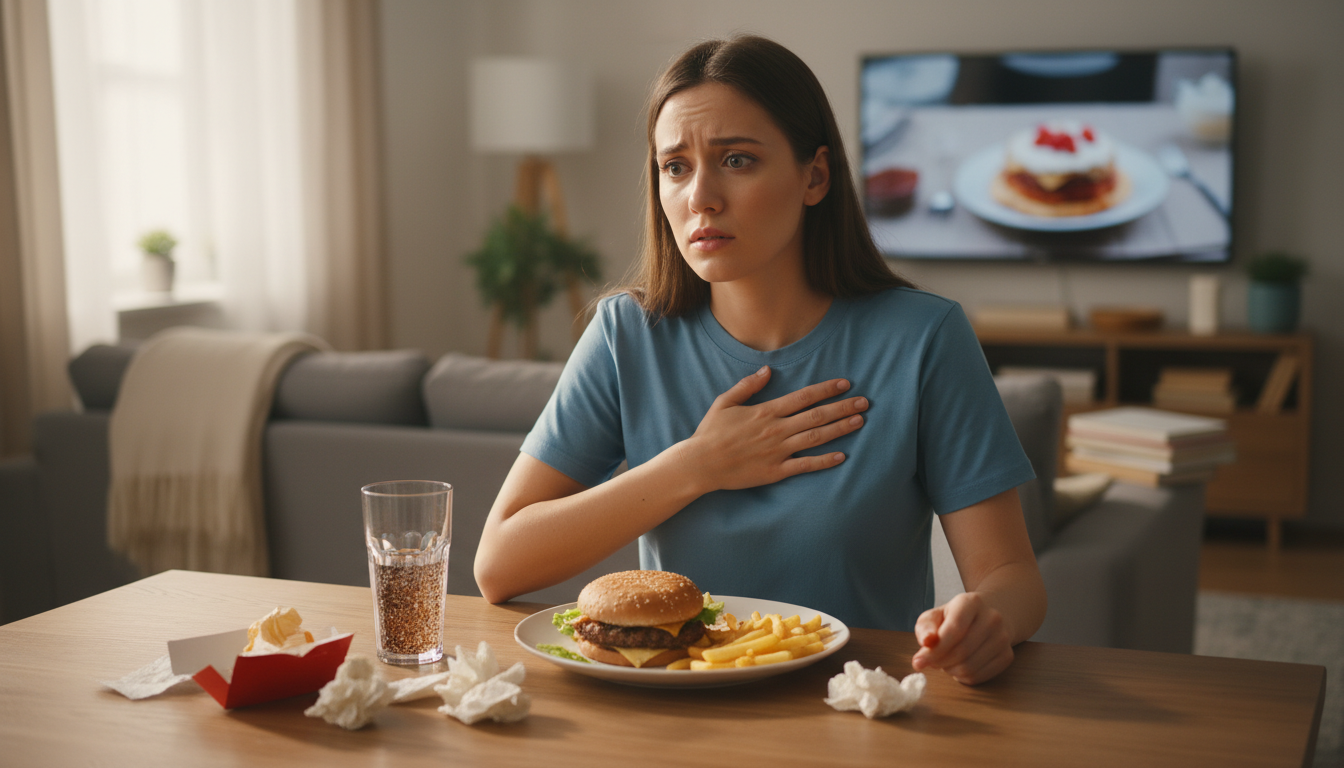
You just finished eating, sat back, and suddenly your heart is pounding.
Now your brain is saying things like:
- “Am I having a heart attack?”
- “Is this normal after eating?”
- “Do I Google this or just panic quietly?”
Let’s walk through what might be going on, when a racing heart after eating can be normal, when it’s more concerning, and what you can actually do about it right now.
First, What Do We Mean by “Heart Racing After Eating”?
When people say their heart is racing after eating, they usually mean one or more of these:
- Your heart feels like it’s beating faster than usual
- You notice stronger or heavier beats
- You feel skipping, fluttering, or pounding (palpitations)
- You suddenly feel very aware of your heartbeat
A normal resting heart rate for most adults is about 60–100 beats per minute (bpm). After eating, it’s not unusual for your heart rate to go up by 10–20 bpm for a while as your body digests food.
Quick takeaway: A mild increase in heart rate after meals can be normal. What really matters is how high it goes, how you feel, and whether anything else is going on.
Why Does My Heart Race After Eating? (The Normal Reasons)
Your body is actually doing a lot behind the scenes after a meal.
1. Blood Flow Shift: Your Gut Becomes the VIP
After you eat, more blood is sent to your digestive system to help break down and absorb food. To keep your overall blood pressure and circulation stable, your heart may beat a little faster and pump a bit stronger.
This is called the postprandial (after-meal) response, and it’s a normal part of digestion.
Feels like: Slightly faster heartbeat, maybe a bit of warmth or sleepiness.
Usually not worrying if:
- Your heart rate doesn’t go extremely high
- You don’t have chest pain, trouble breathing, or feel like you’ll pass out
Mini takeaway: Sometimes your heart is just doing its job so your stomach can do its job.
2. Big, Heavy, or High-Carb Meals
Large meals, especially ones high in simple carbs, sugar, or fat, can cause a bigger spike in blood sugar, insulin, and stress hormones (like adrenaline in some people). This can make your heart beat faster or feel more noticeable.
Common culprits:
- Fast food or greasy takeout
- Big bowls of pasta or white rice
- Sugary desserts and drinks
- Holiday feasts
Mini takeaway: The bigger and heavier the meal, the more work your body has to do, and your heart may speed up to keep up.
3. Caffeine, Alcohol, and Nicotine
If your meal includes any of these, your post-meal palpitations might not be the food at all.
- Caffeine (coffee, tea, energy drinks, soda, chocolate) can increase heart rate and make you more aware of your heartbeat.
- Alcohol can trigger a racing or irregular heartbeat in some people, sometimes called “holiday heart” when it happens after drinking.
- Nicotine (smoking, vaping) also raises heart rate and blood pressure.
Mini takeaway: Sometimes it’s not the sandwich, it’s the coffee, wine, or cigarette hanging out next to it.
4. Anxiety and Hyper-Awareness of Your Body
If you’ve had scary symptoms before, it’s easy to go into scan mode after eating:
“Was that an extra beat? Why is my heart doing that? Should it be doing that?”
Anxiety itself can raise your heart rate, make normal sensations feel intense and alarming, and create a cycle: notice heartbeat, worry, adrenaline, faster heartbeat.
Mini takeaway: Worrying about your heart can, ironically, make your heart race more.
When a Racing Heart After Eating Might Be More Than Just Digestion
While it’s often harmless, sometimes heart racing after meals is a clue to an underlying issue. You don’t need to self-diagnose, but here are some possibilities doctors look at.
1. Postprandial Hypotension (Blood Pressure Drop After Eating)
In some people, especially older adults or those with certain health conditions, blood pressure drops after a meal. The heart may beat faster to compensate.
Typical signs:
- Racing heart and
- Dizziness or feeling faint
- Blurry vision
- Weakness or fatigue shortly after eating
If you notice you feel lightheaded, woozy, or like you might black out after most meals, that’s something to bring to a doctor.
Mini takeaway: If your heart races and you feel like you might pass out after eating, that’s not one to ignore.
2. Blood Sugar Swings
If you have diabetes, prediabetes, insulin resistance, or reactive hypoglycemia, your blood sugar may spike and then drop after eating.
Possible symptoms:
- Heart racing or pounding
- Shakiness
- Sweating
- Hunger or nausea
- Feeling weak, jittery, or anxious
People sometimes confuse these symptoms with anxiety or panic, but they can be related to blood sugar.
Mini takeaway: If your racing heart after eating comes with shakiness or sweating, blood sugar might be part of the story.
3. Arrhythmias (Irregular Heart Rhythms)
Sometimes the heart isn’t just fast, it’s irregular.
Examples include:
- Atrial fibrillation (AFib) – chaotic, irregular heartbeat
- Supraventricular tachycardia (SVT) – sudden episodes of very fast heart rate
These can sometimes be triggered by large meals, alcohol, caffeine, or certain medications.
Possible warning signs:
- Sudden, very fast heart rate (often over 120–150 bpm) that doesn’t settle quickly
- Heart feels like it’s fluttering, quivering, or flip-flopping
- You feel short of breath, weak, or lightheaded
Mini takeaway: A heart that’s very fast and irregular, especially in episodes, deserves medical attention.
4. Thyroid or Other Medical Conditions
An overactive thyroid (hyperthyroidism) can make your heart beat faster and feel jumpy or irregular.
Other conditions (like anemia, dehydration, or infections) can also raise your heart rate and make palpitations more obvious, especially after eating when your body is working harder.
Mini takeaway: If your heart seems to race not just after meals but all the time, it’s worth a proper check-up.
Red Flags: When Is a Racing Heart After Eating Not Normal?
If you’re sitting there thinking “Okay but is this an emergency right now?” here are signs to take seriously.
Seek urgent medical care (ER or local emergency number) if your heart is racing and you also have:
- Chest pain, pressure, or tightness (especially if it spreads to arm, jaw, back, or neck)
- Trouble breathing or feeling like you can’t get enough air
- Fainting or feeling like you’re about to pass out
- Severe dizziness or confusion
- Sudden, extreme sweating (cold sweat)
- A heart rate that is very fast (for example, over 140–150 bpm at rest) and not slowing down
Don’t talk yourself out of getting help because “it might just be anxiety.” Emergency services would always rather see you and rule out something serious.
Mini takeaway: If it feels very bad, especially with chest pain, breathing problems, or fainting, treat it like an emergency.
What Can I Do Right Now If My Heart Is Racing After Eating?
You’re reading this in the moment, so here are some practical steps.
1. Pause and check in (safely)
- Sit or lie down.
- Take a few slow, deep breaths, in through your nose for 4 seconds, out through your mouth for 6 seconds.
- If you have a smartwatch or blood pressure cuff, check your heart rate, but don’t obsessively re-check every 10 seconds.
2. Ask yourself:
- Did I just eat a big, heavy, or sugary meal?
- Did I have coffee, an energy drink, alcohol, or nicotine?
- Have I been stressed, anxious, or sleep-deprived?
If the answer is yes to any of these, your heart may just be reacting to a normal trigger.
3. Watch for red-flag symptoms
If any of the serious symptoms above show up (chest pain, trouble breathing, fainting, severe dizziness), don’t wait it out, get emergency care.
4. If it settles down
If your heart rate comes back toward your normal range and you feel okay within 10–30 minutes, make a mental note of what you ate, how fast you ate, any caffeine, alcohol, or smoking, and how stressed or tired you were. These notes help if you decide to talk to a doctor later.
Mini takeaway: In the moment: sit, breathe, check for red flags, and notice patterns.
How to Reduce Heart Racing After Meals Going Forward
If your symptoms are mild but annoying, there are lifestyle tweaks that can really help.
1. Shrink the Meal, Not Your Joy
Instead of one giant meal, try smaller, more frequent meals and avoiding “I’m starving so I inhaled half the fridge” situations. Large meals demand more blood flow to the gut and can cause a bigger heart rate response.
2. Tame the Fast Carbs and Sugar
Options that may be easier on your system include choosing whole grains over white bread or pasta, pairing carbs with protein and healthy fats (like chicken plus veggies plus olive oil), and skipping or reducing huge sugary drinks or desserts right after meals.
3. Watch Your Caffeine and Alcohol Timing
Try having coffee or energy drinks away from meals or in smaller amounts, and notice if your heart racing is worse after wine, beer, or cocktails with dinner. If you see a pattern, you’ve found a trigger.
4. Slow Down and Chew
Eating quickly can trigger more air swallowing (which can cause chest sensations and bloating), make you feel overly full faster, and stress your system more than needed.
Try putting the fork down between bites and taking 15–20 minutes instead of 5 to finish a meal.
5. Don’t Lie Completely Flat Right Away
Some people feel worse if they lie down immediately after eating.
Instead, sit upright for 30–60 minutes after meals, and go for a gentle walk if you feel up to it (not a hardcore workout right after eating).
6. Manage the Anxiety Side of It
Even if something physical kicked it off, anxiety can turn the volume up a lot.
Things that may help include slow, controlled breathing (about 4–6 breaths per minute), reminding yourself “My body is doing digestion work; I’ll monitor but I don’t have to panic,” and discussing with a therapist if health anxiety is a big theme for you.
Mini takeaway: Small, basic changes such as smaller meals, less sugar, caffeine, and alcohol, and slower eating often make a big difference.
Should I See a Doctor About My Racing Heart After Eating?
If this is new, frequent, getting worse, or worrying you, it’s worth being checked.
You should especially talk to a doctor if:
- Your heart races after most meals, not just occasionally
- You also feel dizzy, weak, or like you might pass out
- You have a history of heart disease, high blood pressure, diabetes, thyroid issues, or arrhythmias
- You’re pregnant and not sure what’s normal
- You’ve noticed heart rates that are regularly above 120 bpm at rest
What a Doctor Might Do
Depending on your symptoms and history, they may:
- Check vital signs and listen to your heart
- Order blood tests (checking things like thyroid function, anemia, electrolytes, blood sugar)
- Do an ECG/EKG to look at your heart rhythm
- Suggest a Holter monitor or event monitor (a portable heart monitor you wear for a day or more)
- Ask you to track your heart rate and symptoms after different types of meals
This can help sort out whether your symptoms are a normal physiologic response, anxiety-related, due to blood pressure or blood sugar changes, or related to an arrhythmia or other heart condition.
Mini takeaway: If your gut says “I should probably get this checked,” that’s a good enough reason.
So, Is Heart Racing After Eating Normal?
Sometimes yes, sometimes no.
It can be normal if it’s mild, happens after big or heavy meals, settles down in a short time, and you don’t have other concerning symptoms.
It’s not something to brush off if it’s new, frequent, intense, or getting worse, if you feel chest pain, trouble breathing, faint, very dizzy, or confused, or if you have known heart disease or major risk factors.
When in doubt, it’s always okay to call your doctor’s office and ask, use telehealth or urgent care if you’re unsure, or go to the ER if symptoms are severe or feel just not right.
Final takeaway: A racing heart after eating doesn’t automatically mean something is seriously wrong, but it’s your body’s way of asking you to pay attention. Notice patterns, make gentle changes, and get medical advice if it keeps happening or worries you.
Sources
- Mayo Clinic – Heart palpitations: Symptoms & causes
- Cleveland Clinic – Heart Palpitations After Eating
- Mayo Clinic – Tachycardia
- Cleveland Clinic – Postprandial Hypotension
- National Institute of Diabetes and Digestive and Kidney Diseases – Hypoglycemia
- American Heart Association – Atrial Fibrillation (AFib)
- American Thyroid Association – Hyperthyroidism
Leave a Reply