Racing Heart After Eating: What It Might Mean
Disclaimer: This article is for general information only and isn’t medical advice or a diagnosis. If you have severe symptoms or think it may be an emergency, call your local emergency number.
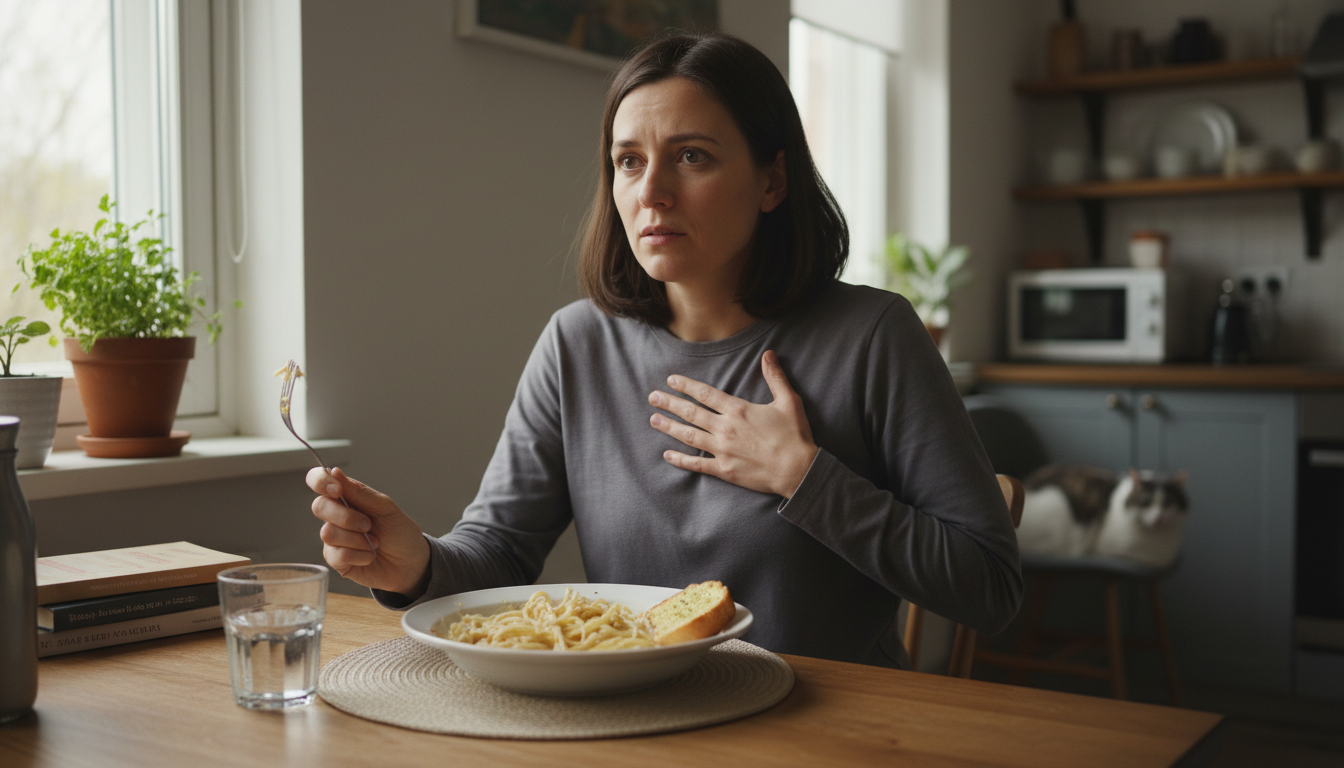
You finish a meal, sit back, and notice your heart thumping harder or faster, and now you’re wondering if you just ate lunch or triggered a medical crisis. Is a racing heart after eating normal, or a red flag you shouldn’t ignore? Let’s break it down in plain English.
Is It Normal for Your Heart to Race After Eating?
Sometimes a racing heart after eating can be normal, but it depends on how fast, how often, what it feels like, and what else is going on.
After you eat, your body sends more blood to your stomach and intestines to help with digestion. To keep blood flowing everywhere else too, your heart may beat a bit faster and stronger. For many people, a mild increase in heart rate after eating is normal and not dangerous.
But there’s a difference between:
- Noticing your heart feels a little faster for a few minutes, and
- Feeling like your heart is pounding out of your chest, with dizziness, sweating, or feeling like you might pass out.
One is common. The other deserves medical attention.
Quick takeaway: A slight, short-lived increase in heart rate after eating can be normal. Intense, persistent, or scary symptoms are not “just digestion.”
What Does “Heart Racing After Eating” Actually Feel Like?
People describe it in different ways, including:
- Pounding in the chest, throat, or neck
- Fluttering or flip-flop sensations
- Feeling like the heart is beating too fast or skipping beats
- Being uncomfortably aware of each heartbeat
Sometimes this shows up on a fitness watch as:
- Resting heart rate jumping 20–30 or more beats per minute after meals
- Sudden spikes after certain foods or big meals
These sensations are often called palpitations. They’re common and can be caused by many things, some harmless and some not.
Quick takeaway: If you feel every heartbeat after a meal like it’s using a megaphone, you’re feeling palpitations.
Common (Often Benign) Reasons Your Heart Races After Eating
Here are several everyday reasons your heart rate might climb after a meal that often aren’t dangerous on their own.
1. Big, Heavy, or High-Carb Meals
Large meals, especially those loaded with refined carbs, sugar, or fat, can:
- Demand more blood flow to your digestive system
- Cause a big insulin release
- Lead to shifts in blood sugar
All of this can nudge your heart to beat faster for a while.
Real-life example: You skip breakfast, eat a huge plate of pasta, bread, and dessert at lunch, and 20 minutes later your heart is pounding and you feel sleepy and slightly shaky. This could be your body dealing with a sugar spike and heavy digestion all at once.
Tip: Smaller, more frequent meals with a mix of protein, fiber, and healthy fats are easier on your system.
2. Caffeine and Stimulants With Meals
Coffee, energy drinks, strong tea, chocolate, or pre-workout supplements taken around meal times can:
- Increase heart rate
- Trigger palpitations
- Make you more aware of your heartbeat
If your lunch is a sandwich plus a double espresso and an energy drink, your heart is just following orders.
Quick experiment: Try a few days with no caffeine around meals and see if the racing episodes change.
3. Alcohol With Food
Alcohol can:
- Dilate blood vessels
- Affect blood pressure
- Trigger certain abnormal heart rhythms in some people (sometimes called “holiday heart” when it happens after heavy drinking)
You might notice your heart racing after wine, cocktails, or beer with dinner, especially if you drink more than usual.
4. Dehydration or Eating When You’re Already Tired
If you’re dehydrated, overheated, or sleep-deprived, your body is already working harder. Add a big meal, and your heart may beat faster to keep up.
5. Anxiety and Panic
Worrying about your heart can make your heart race.
If you notice a slightly stronger heartbeat after eating, start searching for worst-case scenarios, and feel a wave of “something’s wrong,” that anxiety can drive your heart rate up further. This can snowball into a panic attack, which may include:
- Rapid heartbeat
- Chest discomfort
- Shortness of breath
- Sweating or trembling
- Feeling of doom
It feels terrifying, but panic itself is not the same as a heart attack.
Quick takeaway: Your mind and heart influence each other. Worrying about your heart can literally make your heart beat faster.
When a Racing Heart After Eating Might Be a Medical Issue
Sometimes, a fast heartbeat after meals is a clue to an underlying condition that needs medical evaluation.
1. Heart Rhythm Problems (Arrhythmias)
Certain rhythm issues, like atrial fibrillation (AFib) or supraventricular tachycardia (SVT), can be triggered or worsened by eating, alcohol, or big meals in some people.
Possible clues include:
- Sudden, very fast heartbeat (often 120–200 or more beats per minute), not just a mild increase
- Heartbeat feels irregular or chaotic, not just fast
- Episodes that start and stop abruptly
- Feeling lightheaded, weak, or short of breath
These need a doctor’s attention, even if they come and go.
2. Low Blood Pressure After Eating (Postprandial Hypotension)
In some people, especially older adults or those with certain conditions, eating can cause a drop in blood pressure after meals. To compensate, the heart may beat faster.
You might notice:
- Dizziness or feeling faint 15–90 minutes after eating
- Blurry vision
- Weakness
- Sometimes chest discomfort or palpitations
This is more than just feeling full; it’s your circulation struggling to keep up.
3. Blood Sugar Swings
In people with diabetes, prediabetes, or reactive hypoglycemia, big swings in blood sugar after eating can cause:
- Racing or pounding heart
- Shakiness
- Sweating
- Feeling jittery, weak, or irritable
If you notice that carb-heavy meals reliably lead to a racing heart plus these symptoms, it’s worth discussing blood sugar testing with a clinician.
4. Thyroid Problems
An overactive thyroid (hyperthyroidism) can cause:
- Fast or irregular heartbeat
- Heat intolerance
- Weight loss despite normal or increased eating
- Tremor, anxiety, or trouble sleeping
If your heart seems to run on fast-forward all day and meals make it worse, thyroid testing might be appropriate.
5. POTS and Other Autonomic Issues
Conditions that affect the autonomic nervous system, like Postural Orthostatic Tachycardia Syndrome (POTS), can cause heart rate to rise abnormally with everyday activities, sometimes including eating.
Possible signs include:
- Big heart rate jump when standing up
- Dizziness, brain fog, or fatigue
- Worsening symptoms after meals, especially large or hot ones
These conditions are complex but real, and they benefit from a specialist’s guidance.
Quick takeaway: If a racing heart after eating is part of a bigger pattern of odd circulation or nervous system symptoms, it’s time to involve a doctor.
Red-Flag Symptoms: When to Get Help ASAP
A racing heart after eating becomes more concerning if it’s paired with any of these emergency warning signs:
- Chest pain, pressure, or squeezing that doesn’t quickly ease
- Pain spreading to arm, jaw, back, or neck
- Shortness of breath that’s new or severe
- Feeling like you might pass out, or actually fainting
- Sudden confusion, trouble speaking, or weakness on one side of the body
- Severe, crushing anxiety plus chest discomfort in someone at risk for heart disease
If any of this happens, do not wait it out. Call your local emergency number.
Even without full-on emergency signs, you should see a doctor soon if:
- Your heart races after most meals
- Your resting heart rate is often above 100 beats per minute without a clear reason
- You have known heart disease, high blood pressure, diabetes, or thyroid issues
- There’s a strong family history of heart rhythm problems or sudden cardiac events
Quick takeaway: Intense, frequent, or worsening symptoms, especially with chest pain, shortness of breath, or fainting, need timely evaluation.
Simple Things You Can Try at Home (Non-Emergency)
These ideas are not a substitute for medical care, but many people find them helpful.
1. Shrink and Slow Your Meals
Try for 1–2 weeks:
- Smaller portions, more often (for example, 4–5 mini-meals instead of 1–2 huge ones)
- Eating slowly and chewing well
- Avoiding lying flat right after eating
If your heart races less with smaller, slower meals, you’ve learned something useful.
2. Tweak What’s on Your Plate
Many people notice fewer palpitations when they:
- Cut back on refined carbs such as white bread, pastries, and sugary drinks
- Add more protein and fiber such as beans, lentils, eggs, Greek yogurt, and vegetables
- Limit very salty, ultra-processed foods
You don’t have to be perfect. Just experiment and see which meals your body seems to tolerate better.
3. Watch Caffeine and Alcohol Timing
Try:
- No energy drinks or strong coffee close to meals
- Limiting alcohol, especially in the evening or with big dinners
If your heart behaves better, that’s a useful clue.
4. Stay Hydrated
Unless your doctor gave you fluid limits, aim for steady hydration through the day:
- Sip water regularly instead of drinking a large amount at once
- Add an electrolyte drink occasionally if you sweat heavily or have low blood pressure, but ask your clinician first if you have heart or kidney conditions
5. Practice Calm on Purpose
If anxiety is part of the picture, calming your nervous system matters.
During or after a meal when you feel your heart picking up, you can try:
- Slow breathing: Inhale through your nose for 4 seconds, exhale for 6–8 seconds, repeat for a few minutes.
- Grounding: Name 5 things you see, 4 you can touch, 3 you can hear, 2 you can smell, and 1 you can taste.
If these techniques bring your heart rate down within a few minutes, anxiety may be playing a bigger role than you realized.
Quick takeaway: Small lifestyle tweaks won’t fix every cause, but they’re low-risk ways to learn what your body responds to.
What to Tell Your Doctor (So You Get Better Answers)
If you decide to see a doctor or cardiologist, coming prepared helps.
Start a Symptom Log for 1–2 Weeks
Write down:
- When it happens (time of day, before or after meals, specific foods)
- What you ate and drank (include caffeine and alcohol)
- What it felt like (pounding, fluttering, fast, irregular)
- How long it lasted
- Any other symptoms (dizziness, chest pain, shortness of breath, nausea, anxiety)
If you have a smartwatch or fitness tracker, bring heart rate data or screenshots.
Questions You Can Ask Your Clinician
- What could be causing my heart to race after I eat?
- Do I need tests like an EKG, heart monitor, or blood work (thyroid, electrolytes, blood sugar)?
- Are there specific foods or patterns I should avoid for now?
- At what point should I go to the ER versus calling your office?
Quick takeaway: The more specific information you bring, the easier it is for your clinician to spot patterns and rule out serious causes.
So, Is Your Heart Racing After Eating Something to Panic About?
Not automatically. For many people, a slightly faster or stronger heartbeat after a big meal, sugary food, or coffee is uncomfortable but not dangerous.
But if it’s intense, happens a lot, or comes with chest pain, shortness of breath, fainting, or feeling really unwell, then it’s not something to shrug off or self-diagnose online.
Bottom line:
- Mild, occasional heart racing after eating can be normal.
- Persistent, severe, or scary episodes, especially with other symptoms, need real-world evaluation.
- You’re not overreacting for wanting your heart checked.
If you’re worried, reach out to a healthcare professional. Getting answers is almost always less stressful than staying stuck in “what if.”
Sources
- Mayo Clinic – Heart palpitations: Symptoms and causes
- Mayo Clinic – Atrial fibrillation (AFib)
- Cleveland Clinic – Postprandial hypotension
- Cleveland Clinic – Supraventricular tachycardia (SVT)
- National Institute of Diabetes and Digestive and Kidney Diseases (NIDDK) – Hypoglycemia (low blood sugar)
- American Thyroid Association – Hyperthyroidism
- Johns Hopkins Medicine – Postural Orthostatic Tachycardia Syndrome (POTS)
- American Heart Association – Warning signs of a heart attack
Leave a Reply