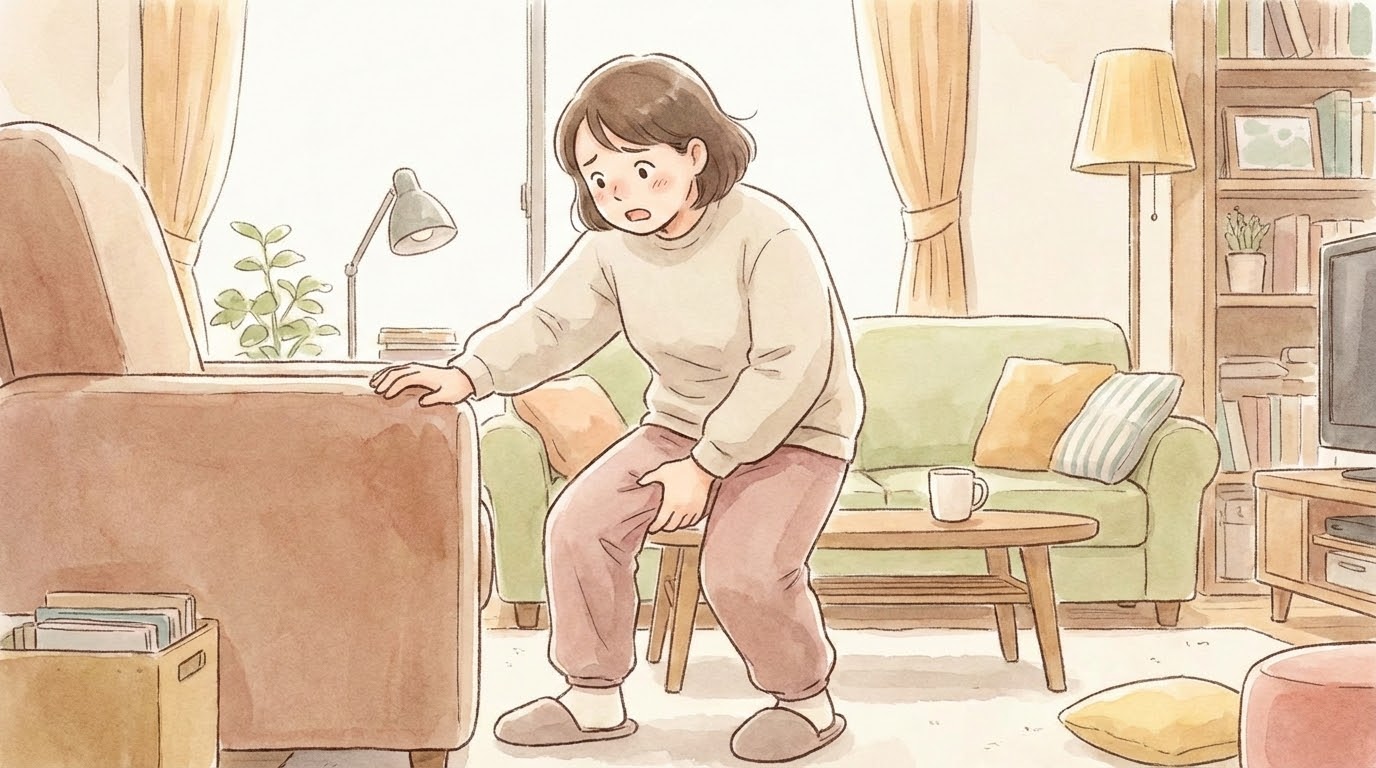
Sudden Weakness in Legs: What It Could Mean and What to Do
First: Is It Really “Weakness” or Just Tired or Heavy Legs?
A lot of people say “my legs feel weak” when they’re actually describing:
- Fatigue (you overdid it at the gym)
- Wobbliness or unsteadiness (a balance or vertigo issue)
- Painful legs that make it hard to move (but the strength is still there)
True muscle weakness means:
- You cannot move or hold your leg like you normally can
- Climbing stairs, standing from a chair, or lifting your foot is suddenly way harder or impossible
- It’s not just “these feel heavy” — it’s “my leg literally won’t do what I’m asking”
If your legs suddenly stop cooperating in a way that feels brand new and dramatic, that’s a red flag.
Quick takeaway: If it’s a true loss of power, not just tiredness, treat it seriously.
Red-Flag Symptoms: When Sudden Leg Weakness Is an Emergency
Sudden weakness in one or both legs can be a medical emergency. Call 911 or emergency services immediately if your leg weakness comes on suddenly and you notice any of the following.
Stroke-like symptoms
Call 911 right away if leg weakness is accompanied by:
- Face drooping on one side
- Slurred or garbled speech
- Trouble understanding others
- Arm weakness or numbness
- Sudden trouble walking or loss of balance
Use the FAST rule (Face, Arms, Speech, Time): if anything seems off, don’t wait and see.
Symptoms pointing to spinal cord compression
Seek emergency care immediately if you have:
- Sudden leg weakness plus loss of bladder or bowel control
- Numbness in the groin, buttocks, or inner thighs (often described as “saddle anesthesia”)
- Severe back pain with new difficulty walking or moving your legs
This can be a sign of cauda equina syndrome or spinal cord compression, which needs urgent treatment to prevent permanent damage.
Other serious warning signs
Get urgent help if leg weakness comes with:
- Sudden paralysis (you cannot move one or both legs)
- Trouble breathing, chest pain, or feeling like you might pass out
- Severe headache or sudden confusion
- Loss of vision, double vision, or trouble controlling eye movements
Quick takeaway: If your gut says “this feels wrong,” especially if symptoms are sudden, severe, or spreading, don’t wait—go to the ER or call 911.
Common (and Not-So-Common) Causes of Sudden Leg Weakness
There’s a long list of possibilities. Some are urgent, some are not, but nearly all should be evaluated by a healthcare professional if they’re new or unexplained.
1. Stroke or transient ischemic attack (TIA)
A stroke happens when blood flow to part of the brain is interrupted. This can cause sudden weakness or paralysis in one leg, or one side of the body, depending on which part of the brain is affected.
A TIA (mini-stroke) causes similar symptoms that may improve within minutes to hours, but it’s still an emergency and a major warning sign.
Clues:
- Sudden onset
- Often one-sided (right leg or left leg)
- May include face drooping, speech problems, vision issues, or confusion
Bottom line: Anything that looks like a stroke is treated as a stroke until proven otherwise.
2. Nerve or spinal cord problems
Your brain may be fine, but the wiring that carries signals to your legs can get damaged or compressed.
Common culprits include:
- Herniated disc in the lower spine
- Spinal stenosis (narrowing of the spinal canal)
- Pinched nerve (radiculopathy)
- Spinal cord compression from injury, tumor, severe arthritis, or infection
What it can feel like:
- Sudden or gradually worsening weakness in one or both legs
- Shooting pain down a leg (sciatica)
- Numbness, tingling, or electric-shock sensations
- Worse with certain movements, like bending or twisting
When to worry more:
- Weakness is getting worse
- You can’t control your bladder or bowels
- You have numbness in your inner thighs, buttocks, or groin
3. Peripheral nerve issues (outside the spine)
Sometimes the problem is in the peripheral nerves (the branches that run through your legs), not the brain or spine.
Examples:
- Peripheral neuropathy (often related to diabetes, alcohol use, infections, or vitamin B12 deficiency)
- Guillain–Barré syndrome (GBS) – an autoimmune condition where your immune system attacks your nerves, usually starting in the legs and moving upward
- Nerve injury from trauma, prolonged pressure, or surgery
Guillain–Barré in particular is an emergency — it can move from leg weakness to trouble breathing over days.
Red-flag pattern:
- Leg weakness that started recently and is getting worse over hours to days
- Often begins in the feet and legs and moves upward
- May include tingling, loss of reflexes, or difficulty walking
4. Muscle problems (myopathies)
Sometimes the muscles themselves are the issue.
Causes can include:
- Medication side effects, especially from certain cholesterol drugs (statins), steroids, or drug interactions
- Inflammatory muscle diseases (like polymyositis or dermatomyositis)
- Electrolyte imbalances (like very low potassium or sodium)
- Thyroid disorders
What it feels like:
- Trouble climbing stairs, rising from a chair, or lifting your legs
- Often affects both sides more symmetrically
- May come with muscle pain, tenderness, or dark urine (in severe muscle breakdown)
5. Temporary, less-threatening causes
Not every episode of leg weakness means something catastrophic, but it still deserves attention if it’s new.
More benign explanations can include:
- Overexertion: You worked your legs hard and now they’re jelly.
- Dehydration or heat exhaustion: Can cause fatigue, cramping, and a “my legs might give out” feeling.
- Low blood sugar: Shaky, weak, sweaty, lightheaded, plus wobbly legs.
- Anxiety or panic attacks: Adrenaline surges can make your legs feel like they’re going to buckle.
These usually:
- Come with a clear trigger (exercise, heat, missed meals, intense stress)
- Improve with rest, fluids, food, or calming down
Still, if it’s severe, out of character, or not clearly explained, get checked.
Real-Life Scenarios: What Might Be Going On?
Scenario 1: The “Out of Nowhere” Collapse
You’re walking across the room and suddenly your right leg feels weak and drags. You stumble, your spouse notices your speech sounds slightly off, and one side of your face looks uneven.
Most concerning possibility: Stroke.
What to do: Don’t drive yourself. Call 911 immediately. Time is brain.
Scenario 2: The Back-Pain Plus Weakness Combo
You’ve had lower back pain for a week. Today you noticed your left leg feels weaker, and you’re tripping more when you walk. You also feel some numbness going down the back of your thigh.
Possibility: Herniated disc or pinched nerve in the lower spine.
What to do: Same-day or urgent appointment with a doctor, urgent care, or ER if symptoms are significant or worsening. If you suddenly lose bladder or bowel control or can barely move the leg, go to the ER.
Scenario 3: The Post-Viral Slide
Two weeks ago you had a respiratory or stomach virus. Now your feet feel tingly, walking feels strange, and over a couple of days your legs feel weaker. Stairs are suddenly hard.
Possibility: Guillain–Barré syndrome.
What to do: This is urgent. Go to the ER and clearly state: “I’ve had progressively worsening leg weakness for a few days after a viral illness.”
Scenario 4: The Gym Warrior
You did heavy squats yesterday after months off. Today, your legs feel wobbly and weak, but if you push through, they still work. No numbness, no back pain, no trouble speaking or controlling your bladder.
Possibility: Delayed onset muscle soreness and fatigue.
What to do: Rest, hydrate, light stretching. But if pain is extreme, swelling is severe, or urine turns dark (like cola), get checked to rule out serious muscle breakdown.
What Will Doctors Usually Check for Sudden Leg Weakness?
If you go to urgent care or the ER for sudden, unexplained leg weakness, expect something like this.
1. History and questions
They’ll ask things like:
- When did this start? Sudden or gradual?
- One leg or both? Getting better, worse, or staying the same?
- Any back pain, neck pain, or injuries?
- Changes in vision, speech, swallowing, or face drooping?
- Any recent infections, vaccinations, or new medications?
- Any problems with bladder or bowel control?
2. Physical and neurologic exam
This may include:
- Testing strength in different muscle groups
- Checking reflexes with a reflex hammer
- Evaluating balance, gait, and coordination
- Testing sensation (light touch, pinprick, vibration)
3. Possible tests
Depending on what they suspect, they may order:
- Blood tests (electrolytes, sugar, thyroid, vitamin levels, muscle enzymes)
- Brain imaging (CT or MRI) to check for stroke or other brain issues
- Spine MRI to look for disc herniation, spinal stenosis, or compression
- Nerve conduction studies / EMG (usually later, with a neurologist)
- Lumbar puncture (spinal tap) in suspected Guillain–Barré or certain infections
You won’t necessarily need all of these. The pattern of your symptoms guides the workup.
Quick takeaway: You don’t need to self-diagnose. Your job is to show up and clearly describe what you’re feeling and when it started.
What You Can Do Right Now (Before You’re Seen)
These steps are not a substitute for medical care, but they can help you stay safe until you’re evaluated.
1. Don’t push through it
If your legs are suddenly weak:
- Avoid driving
- Avoid stairs if possible
- Use support (wall, railings, cane, walker, or another person)
Falling can turn a bad situation into a worse one.
2. Check for other symptoms
Ask yourself:
- Am I having trouble talking or finding words?
- Is my face drooping? Can I smile evenly?
- Is one arm weak or numb?
- Do I feel chest pain, trouble breathing, or a severe headache?
- Any loss of bladder or bowel control or numbness around the groin?
If yes to any of these, go to the ER now.
3. Don’t self-medicate heavily
Avoid:
- Taking a bunch of leftover prescription meds
- Drinking alcohol to “relax” your muscles
Both can mask symptoms that doctors need to see clearly, or make things worse.
4. Call for help
If you’re alone and worried about falling or getting to care, call a family member, friend, or emergency services. Don’t risk it if your legs feel unreliable.
Can Sudden Weakness in Legs Be Cured?
It depends entirely on the cause:
- Stroke: Some people recover significantly with early treatment and rehab; others may have lasting weakness. Early treatment improves odds.
- Herniated disc or pinched nerve: Many cases improve with time, physical therapy, and sometimes medication or surgery.
- Guillain–Barré: Many people recover well with proper treatment, though it can take months.
- Nutritional or metabolic causes (like low B12 or thyroid issues): Often very treatable once the underlying problem is fixed.
- Muscle overuse or dehydration: Typically short-lived with rest and proper care.
The key is finding the real cause early, not guessing and hoping it goes away.
When It’s Okay to See a Regular Doctor (Not the ER)
You should still get seen soon, but you can usually start with your primary care provider or a clinic if:
- Weakness is mild, not worsening, and not truly sudden (more gradual over days or weeks)
- There are no red-flag signs: no face drooping, no speech trouble, no bowel or bladder changes, no severe back pain, no major trauma
- You can still walk, though maybe with some difficulty
Even then, don’t sit on it for weeks. Make an appointment within a few days.
The Bottom Line: Listen to Your Legs (and Your Gut)
Sudden weakness in the legs is not something to shrug off as “I’m just tired” — especially if it:
- Comes out of nowhere
- Affects one side more
- Is accompanied by changes in speech, face, vision, or bladder or bowel control
If you’re reading this because it’s happening right now and you’re scared, the safest move is simple: err on the side of getting urgent medical help.
You are not overreacting by going to the ER or calling 911 when your legs suddenly stop working the way they should. Walking away with reassurance is always better than staying home and wishing you’d gone.
And once everything is evaluated and you’ve got answers, that’s when the real work begins: rehab, prevention, and rebuilding trust in your body — one solid step at a time.
Leave a Reply