
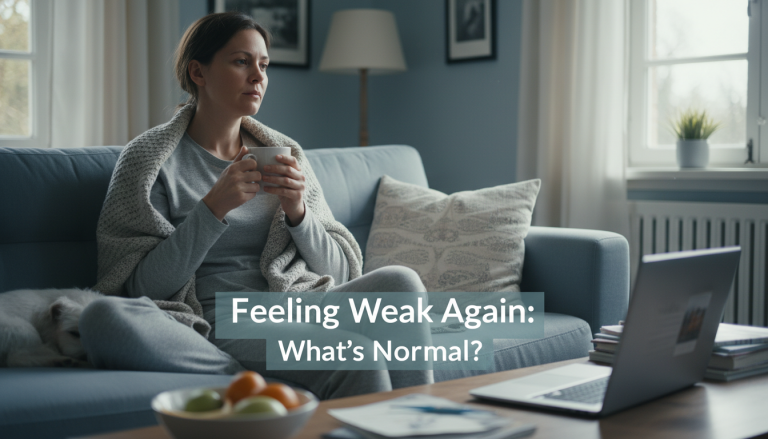
Feeling Weak Again: What It Might Mean and What to Do
Disclaimer: This article is for general information only and isn’t medical advice or a diagnosis. If you have severe symptoms or think it may be an emergency, call your local emergency number.
You know that moment when you’re just standing there and suddenly you feel like your body’s batteries went from 60% to 3%? Your legs feel wobbly. Your arms feel heavy. Your brain goes, “Uh, we doing this again?”
If you’re feeling weak again right now, it’s scary, especially when it keeps coming back and you’re wondering, “Is this normal, or is something really wrong?”
Let’s walk through what “normal-ish” weakness can look like, what’s more concerning, and what to do next.
First: What Do We Even Mean by “Feeling Weak”?
People use the word weak to mean a few different things:
- True muscle weakness – Your muscles literally can’t do what they normally can. For example, you can’t lift a grocery bag you usually carry, or you keep tripping because your leg won’t lift properly.
- Fatigue or drained feeling – You can move, but everything feels like dragging a sandbag. This can be physical, mental, or both.
- Lightheaded or about to faint – You feel woozy, unsteady, or like you might pass out. Sometimes people call this feeling “weak,” even though it’s more about blood flow and the brain than muscle strength.
- Shaky or trembling – You feel weak because you’re shaky, jittery, or your heart is racing.
It helps to ask yourself: Is it that my muscles can’t work, or that everything just feels really hard and I’m wiped out?
Quick takeaway: “Weak” can mean a few different sensations. Getting clear on which one you feel is step one.
Is It Normal to Feel Weak Again and Again?
It can be common, but it isn’t something to ignore.
Feeling weak once after a terrible night’s sleep, a brutal workout, or a virus is pretty normal.
Feeling weak repeatedly, randomly, or for no obvious reason is your body raising its hand like, “Hey, can we talk?”
Common, real-life situations where people feel weak over and over include:
- After being sick – Viral infections like the flu, COVID-19, or other respiratory bugs can leave you tired and weak for days to weeks, even after the main symptoms fade.
- Chronic stress or anxiety – Living in constant “fight or flight” mode can cause shaking, fatigue, and that drained, rubbery-limbs feeling.
- Not eating or drinking enough – Low blood sugar, dehydration, or low electrolytes can cause weakness, lightheadedness, or shakiness.
- Poor sleep or sleep disorders – If your sleep is short, broken, or low quality, weakness and fatigue during the day are very common.
- Anemia (low red blood cells) – This can cause tiredness, shortness of breath with activity, and feeling weak.
Feeling weak again doesn’t automatically mean an emergency, but it does mean your body is giving you a pattern to pay attention to.
Quick takeaway: Recurrent weakness is common, but “common” isn’t the same as “nothing to see here.” Patterns matter.
Common Causes of Recurrent Weakness (That Aren’t Always Emergencies)
These causes still deserve attention from a healthcare professional, but they’re not always urgent.
1. Low Blood Sugar or Skipped Meals
When you go too long without eating, you may suddenly feel shaky, sweaty, weak, and irritable.
- Signs can include shakiness, feeling weak, pounding heart, irritability, headache, or feeling like you have to eat now.
- It’s more common if you:
- Skip meals
- Drink a lot of caffeine instead of eating
- Have diabetes or take certain medications that can lower blood sugar
What might help right now:
- Have a balanced snack with protein and carbs, such as peanut butter toast, yogurt and fruit, or nuts and crackers.
- Avoid just sugary drinks by themselves, as they can spike and then drop your blood sugar.
Quick takeaway: If your weak spells improve pretty quickly after eating, blood sugar swings might be part of the story.
2. Dehydration and Electrolyte Imbalance
Even mild dehydration can make you feel weak and off.
You might notice:
- Dark yellow urine or not urinating much
- Dry mouth
- Headache
- Dizziness when standing up
- General “my body feels heavy” feeling
Things that increase your risk include:
- Hot weather
- Exercise or sweating a lot
- Vomiting or diarrhea
- Drinking mostly caffeine or alcohol instead of water
What might help right now:
- Sip water slowly over 30–60 minutes.
- If you’ve been sweating or sick, consider an oral rehydration solution or electrolyte drink (but not energy drinks).
Quick takeaway: Dehydration can cause that weak, floppy feeling, and it’s often fixable with fluids and rest.
3. Anxiety and Panic
Anxiety affects your whole body, including muscles, breathing, heart, and gut.
When anxiety ramps up, you may feel:
- Shaky or weak in the legs
- Lightheaded, dizzy, or detached
- Heart racing or pounding
- Short of breath or chest tightness
- Tingly hands, feet, or face
Your brain may react with more panic, which can make the weakness feel worse.
If your weakness often comes with worry, racing thoughts, or feeling on edge, anxiety could be a major factor.
What might help right now:
- Slow breathing: Inhale through your nose for 4 seconds, hold for 2 seconds, then breathe out slowly for 6–8 seconds. Repeat for a few minutes.
- Grounding: Name 5 things you see, 4 you can touch, 3 you can hear, 2 you can smell, and 1 you can taste.
Quick takeaway: Anxiety can cause real physical weakness sensations. It is not “faking it,” and it deserves support and treatment.
4. Post-Illness or Long Recovery
After infections like the flu, mono, or COVID-19, it’s very common to feel:
- Weak and tired easily
- Short of breath with usual activities
- “Not back to normal” even weeks later
Your body has been through a lot, and recovery is full-time repair work.
What might help over time:
- Gentle, gradual movement such as short walks or light stretching.
- Pacing: Increase activity slowly rather than going from bed to full throttle.
- Consistent sleep and hydration.
Quick takeaway: Post-illness weakness can linger, but if it’s not gradually improving or is getting worse, it’s time to check in with a clinician.
5. Anemia, Thyroid Problems, or Other Medical Conditions
Sometimes repeated weakness has an underlying medical cause that you can’t see or feel directly, such as:
- Anemia (low red blood cells), which can cause tiredness, weakness, pale skin, shortness of breath with activity, and sometimes dizziness.
- Thyroid issues, where both underactive and overactive thyroid can cause fatigue, weakness, heart changes, or weight changes.
- Vitamin deficiencies such as vitamin B12 or vitamin D, which can cause fatigue, numbness or tingling, or muscle weakness.
- Heart or lung conditions, which may show up as getting unusually winded or weak with light activity.
These require medical evaluation and usually some basic labs or tests.
Quick takeaway: If your weakness has been going on for weeks or months, or you have other symptoms such as weight change, hair changes, shortness of breath, or palpitations, getting checked is important.
Red-Flag Signs: When Feeling Weak Is Not Normal and Needs Urgent Help
Some weakness is not okay to wait on.
Call emergency services or seek urgent care immediately if:
- Weakness comes on suddenly and affects one side of the body (face, arm, or leg) or you have trouble speaking, understanding, or seeing.
- You feel like you’re about to pass out and it’s not improving when you lie down.
- You have weakness with chest pain, pressure, or tightness, especially if it goes to your arm, jaw, neck, or back.
- You have trouble breathing, talking, or swallowing.
- There’s new weakness with loss of bladder or bowel control, or severe back pain.
- You’ve had a major injury, fall, or trauma and now feel weak, confused, or very drowsy.
These symptoms can be signs of serious conditions such as stroke, heart attack, severe infection, or other emergencies.
Quick takeaway: Recurrent mild weakness is worth a clinic visit. Sudden, severe, one-sided, or weakness with chest pain, breathing trouble, or confusion is an emergency.
What’s “Normal” Weakness vs. “I Should See Someone”?
Here’s a simple way to think about it.
More likely to be “normal-ish” (but still worth tracking):
- You can link it to something such as poor sleep, stress, recent illness, a long day, or skipped meals.
- It improves with rest, food, or hydration.
- It’s mild to moderate and not getting worse over time.
- There are no concerning symptoms like chest pain, severe shortness of breath, or one-sided weakness.
Needs a non-urgent but timely doctor or clinic visit (within days to a couple of weeks):
- Weakness or fatigue keeps coming back without a clear trigger.
- It’s been going on for more than 2–3 weeks.
- You feel weaker than you did a few months ago and it’s a clear trend.
- You also have symptoms like unexplained weight change, hair loss, heavy periods, shortness of breath, palpitations, or frequent infections.
Needs same-day or emergency help:
- Sudden, severe, or one-sided weakness.
- Weakness with chest pain, trouble breathing, confusion, severe headache, or difficulty speaking or seeing.
Quick takeaway: “Normal” weakness usually has a clear cause and gets better. Persistent, worsening, or dramatic weakness deserves medical attention.
What You Can Do Right Now If You’re Feeling Weak
If you’re reading this while feeling weak again, start with small, safe steps:
- Sit or lie down somewhere safe. Avoid standing or walking if you feel like you might faint or fall.
- Check your basics. Ask yourself when you last drank water, when you last ate a real meal or snack, and how well you slept last night and recently.
- Try gentle hydration and a light snack. Sip water and eat something simple if you haven’t eaten in a while.
- Notice your breathing and thoughts. If you have racing thoughts, dread, or panic along with the weakness, try the slow-breathing exercise of inhaling for 4 seconds, holding for 2 seconds, and exhaling for 6–8 seconds for a few minutes.
- Make a note of what’s happening. Jot down what you were doing when it started, the time of day, how long it lasted, and what helped, if anything.
This information can help you and any doctor you talk to understand patterns.
Quick takeaway: Start with safety, then basics like food, fluids, and rest, then observe and write it down. Patterns tell a story.
When to Book a Checkup (Even If It Doesn’t Feel “Bad Enough”)
If you’ve had more than a couple of these “weak again” episodes, it’s reasonable to schedule a visit with a healthcare professional.
Consider booking an appointment if:
- You’ve had recurrent episodes over the last few weeks or months.
- You’re avoiding activities you used to do because you’re scared you’ll feel weak.
- Weakness comes with other changes such as new headaches, shortness of breath, heart pounding, changes in your periods, or big swings in weight or mood.
- You have a history of conditions like diabetes, heart disease, anemia, thyroid issues, or autoimmune diseases.
At the visit, they may:
- Ask detailed questions about your symptoms and lifestyle.
- Check your blood pressure, heart rate, and perform a physical exam.
- Order blood tests such as a blood count, thyroid tests, or nutrients like B12 or iron.
- Decide if you need further tests or referrals.
You’re not overreacting by asking for help. You’re gathering information about something that keeps bothering you.
Quick takeaway: If weakness keeps returning, let a medical professional help you figure out why.
Be Kind to Yourself: You’re Not Broken
Feeling weak, especially again and again, can make you feel fragile, scared, or even angry at your own body.
Your body is not your enemy. It’s sending signals. You are allowed to take those signals seriously without immediately assuming the worst. You deserve real answers, not just “It’s probably nothing” from yourself or anyone else.
If you’re feeling weak again right now:
- Make sure you’re safe by sitting or lying down if needed.
- Check basics such as food, water, sleep, and stress.
- Watch for red-flag symptoms and don’t ignore them.
- If this keeps happening, write it down and talk with a healthcare professional.
You’re not being dramatic. You’re listening to your body, and that’s one of the healthiest things you can do.
Sources
- Mayo Clinic – Fatigue: Symptoms, Causes and Diagnosis
- Mayo Clinic – Muscle Weakness: Possible Causes
- MedlinePlus – Weakness and Fatigue
- MedlinePlus – Fainting (Syncope)
- Cleveland Clinic – Dehydration: Symptoms and Causes
- Cleveland Clinic – Hypoglycemia (Low Blood Sugar)
- National Institute of Mental Health – Anxiety Disorders
- American Heart Association – Warning Signs of a Heart Attack and Stroke
Leave a Reply