Racing Heart: Anxiety or Something Serious?
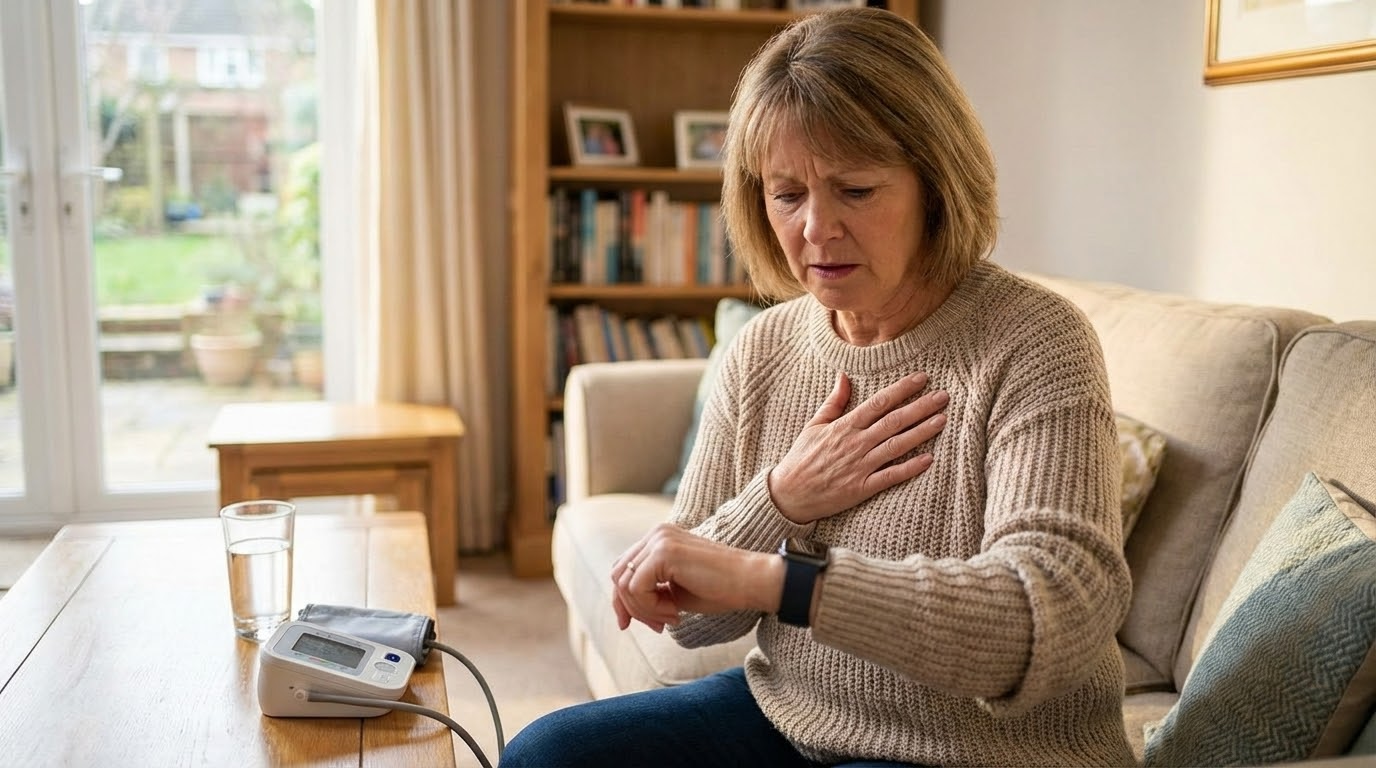
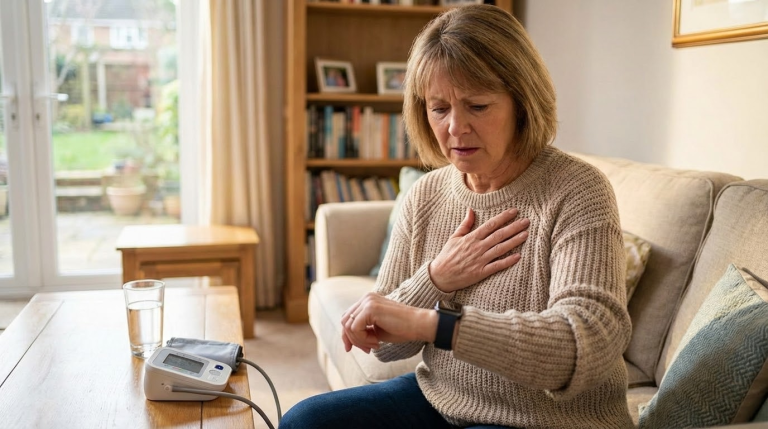
Your heart is pounding, your chest feels weird, and your brain has entered the am I dying or is this just anxiety phase.
Let’s slow this down.
A racing heart can be normal, can be anxiety, and can be something serious. The trick is knowing which is which and what to do right now.
This article walks through:
- When a racing heart is usually harmless
- When it could be dangerous
- Simple steps to calm things down
- Clear red-flag signs that mean: stop reading, seek help
First: What Does a Racing Heart Actually Mean?
Most people say “my heart is racing” when they feel:
- Very fast beats
- Hard, pounding beats
- Flutters or skipped beats (palpitations)
- A sudden “whoosh” of heart speed out of nowhere
Medically, a “racing heart” often means a high heart rate (tachycardia): usually over 100 beats per minute when you’re resting.
You can check this by:
- Using a smartwatch or fitness tracker
- Using a blood pressure cuff with pulse readout
- Manually: count your pulse at your wrist or neck for 30 seconds and multiply by 2
Quick takeaway: “Racing” usually means fast and/or hard beats. Over 100 bpm at rest is considered high, but context matters a lot.
Common Non-Dangerous Reasons Your Heart Is Racing
Let’s start with the good news: a fast heart rate is often a normal response.
1. Exercise or Movement
If you just walked up stairs, jogged to the car, carried groceries, or cleaned the house, your heart should beat faster. That is its job: pump more blood and oxygen when your muscles demand it.
Things that can raise your heart rate in a normal, healthy way:
- Exercise or physical activity
- Hot environments (sauna, hot shower, hot day)
- Dehydration or not drinking enough water
- Fever or illness
If your heart rate goes up with activity and comes down again as you rest, that is usually a good sign.
Takeaway: If your heart speeds up when your body works, that is normal. The key question is: does it calm down again within a few minutes of rest?
2. Anxiety, Stress, or Panic
If your heart is racing right now and you are also feeling:
- A sense of doom or fear
- Shaky, sweaty, or dizzy
- Chest tightness but normal oxygen levels and you can still talk
- Tingling in hands or around the mouth
you might be in an anxiety or panic response.
In a panic or stress response, your body dumps adrenaline and cortisol. That:
- Speeds your heart up
- Makes your breathing fast and shallow
- Can cause chest sensations, tingling, shaking
The feeling of your heart racing makes you more anxious, and the cycle feeds on itself.
Clue it is likely anxiety or stress:
- It started during or after worry, conflict, public speaking, scrolling symptoms online, or sudden fear.
- You have had similar episodes before that were checked and told “it is anxiety or panic.”
- Your symptoms come in waves and often ease after 10–30 minutes.
Takeaway: Anxiety and panic are some of the most common causes of a racing heart—very real, very intense, but often not dangerous in themselves.
3. Caffeine, Energy Drinks, Nicotine, or Other Stimulants
If your heart is racing and you recently had:
- Coffee, espresso, cold brew, or multiple caffeinated drinks
- Energy drinks or pre-workout powders
- Nicotine (vapes, cigarettes, pouches, etc.)
- Certain decongestants (like some cold and flu medications)
those can increase your heart rate. Some people are much more sensitive than others. A drink that feels normal to your friend might send your heart into overdrive.
Takeaway: If your racing heart showed up after stimulants, cut them down, hydrate, and see if things settle over the next few hours.
4. Being Dehydrated or Low on Blood Volume
Low fluid intake, heavy sweating, vomiting, or diarrhea can lower your blood volume. Your heart compensates by beating faster to keep blood pressure and oxygen delivery up.
Clues this might be the cause:
- Dark yellow urine or not urinating much
- You feel lightheaded on standing
- You have been sweating a lot or ill recently
Sipping fluids (especially water or an electrolyte drink) and resting can help.
Takeaway: Sometimes your heart is racing because it is working harder due to dehydration or recent illness—fixing the root cause often helps.
When a Racing Heart Might Be More Serious
Now, let’s talk about possible danger signs. A fast heart rate can sometimes signal a heart rhythm problem or another medical condition.
Here are situations where a racing heart is more concerning:
1. You Have Chest Pain, Pressure, or Tightness
If your heart is racing and you have:
- Heavy, crushing, or squeezing chest pain
- Pain going to your arm, jaw, back, or neck
- Shortness of breath even at rest
- Nausea, sweating, or you feel like you are going to pass out
this could be a medical emergency (like a heart attack or serious arrhythmia), especially if you are older, have high blood pressure, diabetes, or a history of heart disease.
In that case: do not wait it out. Call emergency services (911 in the U.S.).
Takeaway: Racing heart plus chest pain, trouble breathing, or feeling like you will faint means you should get urgent help.
2. You Feel Like You Might Pass Out (or You Actually Do)
A racing heart plus:
- Severe dizziness
- Feeling like the world is fading out
- You cannot stay upright
- You actually faint
can be a sign your brain is not getting enough blood flow. That can happen with certain abnormal heart rhythms, serious low blood pressure, or other urgent issues.
If you faint with a racing heart, that needs prompt medical evaluation.
Takeaway: Any loss of consciousness linked to a racing heart is not a “wait and see” situation.
3. Your Heart Rate Is Extremely High and Will Not Come Down
Some arrhythmias (abnormal heart rhythms) can cause heart rates like:
- 150–200+ beats per minute
- Sudden onset: one second you are fine, the next your heart is extremely fast
- It stays fast even when you lie down, hydrate, and try to calm yourself
If your heart rate is sustained over about 140–150 bpm at rest for more than a few minutes and you feel unwell (weak, dizzy, breathless, chest pain), you should seek urgent medical care.
Takeaway: Super fast, sudden, unrelenting racing that does not ease with rest deserves real-life medical attention, not just internet reassurance.
4. You Have Known Heart or Medical Conditions
Talk to a doctor urgently or go to urgent or emergency care if your racing heart is happening on top of:
- Known heart disease or prior heart attack
- Heart failure, cardiomyopathy, or valve disease
- A known arrhythmia (like atrial fibrillation) that suddenly gets much worse
- Very high or very low blood pressure
- Recent major surgery
- Serious infections or sepsis
Takeaway: If you already have heart or serious medical issues, do not ignore new or worsening racing-heart episodes.
Is My Racing Heart From Anxiety or Something Dangerous?
You cannot always know for sure at home, but a few patterns help.
More Likely to Be Anxiety or a Non-Dangerous Cause If:
- It started during stress, worry, or an emotional trigger.
- You have had similar episodes before that were checked and called panic or benign palpitations.
- You can still talk full sentences without gasping.
- Your symptoms come in waves and often fade after 10–30 minutes.
- Your heart rate comes down when you:
- Lie down
- Breathe slowly
- Distract yourself for a bit
More Concerning If:
- It is the first time and feels unlike anything you have ever had.
- There is significant chest pain or heavy pressure.
- You are very short of breath at rest.
- You are about to pass out or actually do.
- You have known heart disease or major risk factors.
- The heart rate is extremely fast and will not slow down with rest.
Important: Only a healthcare professional with real-life assessment (vitals, ECG, blood tests, etc.) can safely sort this out. Use this as guidance, not a diagnosis.
What to Do Right Now If Your Heart Is Racing
Assuming you do not have crushing chest pain, major trouble breathing, or fainting (if you do, stop and call 911):
1. Pause and Check Your Breathing
Sit or lie somewhere safe.
Try this simple breathing reset:
- Inhale slowly through your nose for a count of 4.
- Hold gently for a count of 2.
- Exhale through pursed lips for a count of 6.
- Repeat for 1–2 minutes.
Slower breathing can reduce adrenaline, help reset your nervous system, and sometimes bring your heart rate down if anxiety is the driver.
2. Check Your Heart Rate If You Can
Use a watch, phone app, or your pulse. Rest completely for a minute, then count or check the number. If it is gradually dropping as you calm down, that is reassuring.
3. Hydrate
Sip water or an electrolyte drink slowly, especially if you:
- Have not had much to drink today
- Have been sweating, sick, or in the heat
4. Reduce Stimulation
- Turn off loud music or TV.
- Step away from stressful conversations or social media doomscrolling.
- Dim lights if they are harsh.
This tells your brain, “We are not in danger right now,” and your heart often follows.
5. Try a Grounding Technique If You Feel Panicky
The 5–4–3–2–1 trick:
- Name 5 things you can see
- 4 things you can feel
- 3 things you can hear
- 2 things you can smell
- 1 thing you can taste
Bringing your attention into your senses can break the spiral of “what if” thoughts that further fuel a racing heart.
If your heart rate is still very high, you feel worse instead of better, or anything just feels “off in a scary way,” seek in-person care.
When to Seek Urgent or Emergency Care for a Racing Heart
You should get urgent medical help right away (ER or 911 in the U.S.) if:
- Your heart is racing and you have:
- Crushing, heavy, or squeezing chest pain
- Pain into your arm, jaw, back, or neck
- Severe shortness of breath
- You feel like you are going to pass out
- You faint
- Your heart rate is extremely fast (for example, well above 140–150 bpm at rest) and does not come down after several minutes of rest.
- You are confused, weak on one side, or having trouble speaking (stroke-like symptoms) along with strange heart sensations.
- You have a history of serious heart disease or arrhythmias and this feels new or worse.
You should call your doctor or use urgent care soon (same day if possible) if:
- You are getting repeated episodes of unexplained racing heart.
- Your resting heart rate is often above 100 bpm for no obvious reason.
- You feel more tired, breathless, or lightheaded than usual with mild activity.
- You recently started a new medication or supplement and noticed a racing heart.
How Doctors Might Evaluate a Racing Heart
If you see a healthcare provider about your heart racing, they may:
- Ask detailed questions: when it started, what you were doing, how it feels, how long it lasts.
- Review your medications, caffeine or stimulant use, and medical history.
- Check your vital signs: heart rate, blood pressure, oxygen level, temperature.
- Do an ECG (electrocardiogram) to look at your heart rhythm.
- Order blood tests (for anemia, thyroid issues, infections, electrolytes, etc.).
- Possibly arrange a heart monitor you wear for a day or more to catch abnormal rhythms if episodes come and go.
All of this helps sort out normal but uncomfortable palpitations, anxiety-related symptoms, and treatable medical issues (like thyroid problems, anemia, arrhythmias, and others).
Can a Racing Heart Be Dangerous Long-Term?
Sometimes, yes, if it is due to an underlying problem and goes untreated.
Potential issues from chronic, untreated abnormal rhythms can include:
- Heart muscle strain or weakness over time
- Higher risk of blood clots with certain arrhythmias (like atrial fibrillation)
- Worsening heart failure in people who already have it
Many people have occasional racing-heart episodes from stress, caffeine, illness, or minor rhythm changes that are uncomfortable but not harmful once evaluated and managed. That is why getting checked—especially if it is new, frequent, or severe—is worth it.
Practical Next Steps
If your heart is racing right now without emergency red flags:
- Sit or lie down safely.
- Check your breathing and slow it with gentle, longer exhales.
- Hydrate and step away from stress or screens for a bit.
- Observe: Does your heart rate come down over 10–20 minutes?
- Write it down: when it started, what you felt, what you were doing, any triggers (caffeine, lack of sleep, arguments, etc.). This is very helpful for your doctor.
If episodes are repeating, getting worse, or scaring you, schedule a medical appointment soon—even if you suspect anxiety. Anxiety and physical heart issues can coexist, and you deserve real clarity, not guesswork.
Bottom Line
A racing heart right now does not automatically mean you are in danger, but it also is not something to always ignore.
- Sometimes it is normal (exercise, heat, dehydration).
- Sometimes it is your body’s alarm system (anxiety, panic, stress).
- Sometimes it is a sign your heart or another part of your body needs medical attention.
Use the red-flag signs as your “do not wait” guide. Use calming breathing, hydration, and reducing stimulation as your “help my body reset” tools. And when in doubt, it is always okay—and smart—to get checked by a professional.
This article is for general information only and is not a diagnosis or a substitute for seeing a healthcare provider.
Leave a Reply