Why Your Head Feels Weird (And What to Do About It)
You know that feeling when your head just doesn’t feel like your head? Not quite painful, not exactly dizzy, but just off.
If your first thought was, “Cool, I’m broken,” you’re not alone.
Let’s walk through what “my head feels weird” might mean, when it’s usually normal, when it’s not, and what you can do right now—without scaring yourself via a 3 a.m. symptom search spiral.
Important: This is not medical advice or a diagnosis. It’s a guide to help you make sense of what you’re feeling so you can decide what to do next.
What Does “My Head Feels Weird” Even Mean?
People use “my head feels weird” to describe a bunch of different sensations, like:
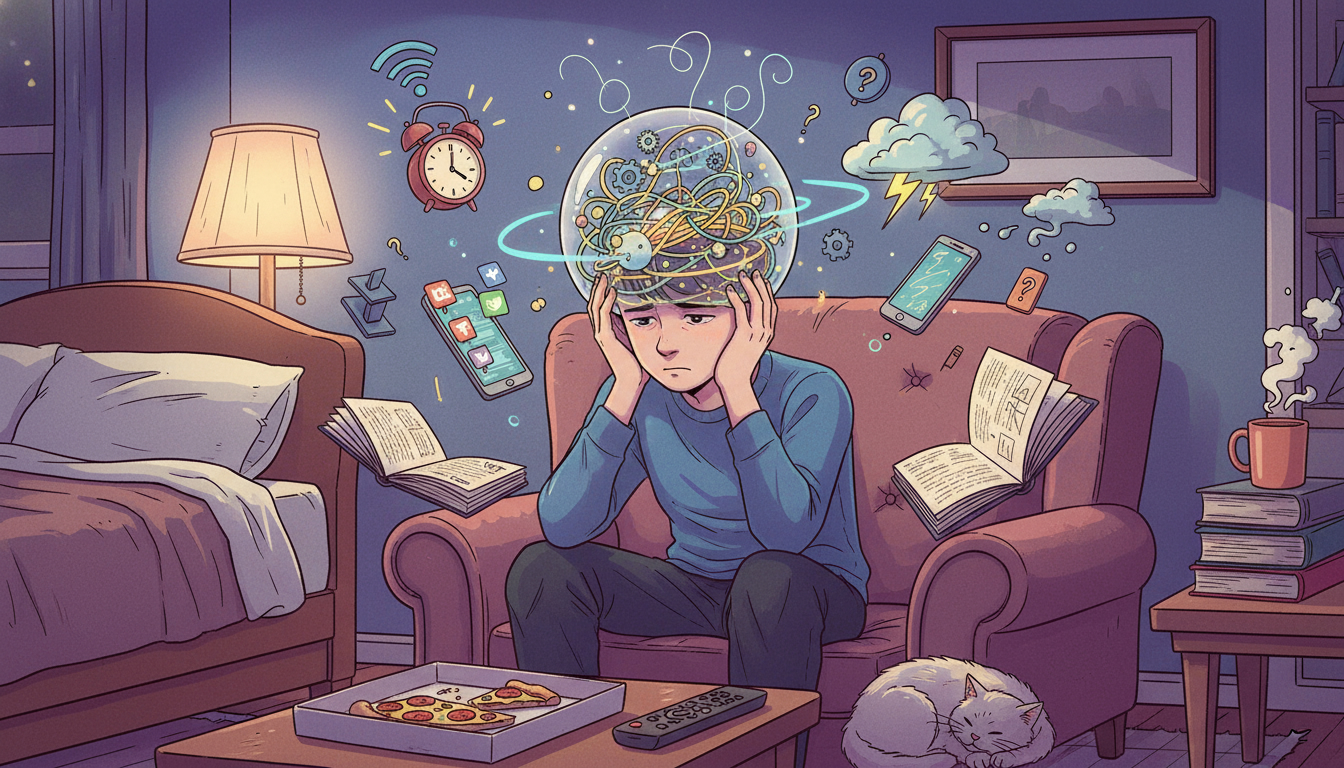
- Fuzzy or spacey, like your brain has bad Wi‑Fi
- Lightheaded or floaty
- Pressure or tightness in the head or face
- A heavy head or “cotton” feeling
- Mild buzzing or tingling
- Feeling detached or not fully present
The tricky part: these can come from totally different causes—from not drinking enough water to high anxiety to something more serious that needs medical attention.
Quick takeaway: “Weird head” is a symptom shape-shifter. Getting specific about what it feels like is step one.
Common, Not-Usually-Emergency Reasons Your Head Feels Weird
These are very common and often fixable with rest, routine changes, or basic care. Still, if something feels off or is getting worse, talk to a doctor.
1. You’re Exhausted (Mentally or Physically)
Not sleeping well, working nonstop, or being “on” all the time can make your head feel:
- Foggy or slow
- Heavy or tight
- Weirdly detached, like you’re watching your life through glass
Sleep deprivation messes with attention, mood, and perception. Even one bad night can affect your ability to think clearly and regulate emotions the next day.
What might help:
- Aim for a consistent sleep schedule (same wake-up time every day, including weekends)
- Avoid doomscrolling in bed (screens and bright light delay sleep)
- Try a 10–20 minute nap if you’re safe to rest and feeling wiped
Takeaway: Before assuming catastrophe, ask: “Have I been sleeping like a raccoon in a dumpster?”
2. Stress and Anxiety Doing Their Thing
Stress and anxiety don’t always show up as racing thoughts or panic attacks. Sometimes they are sneaky and show up as physical sensations:
- Tight band-like pressure around your head (classic tension-type headache pattern)
- Feeling spacey, unreal, or “not in my body” (often called derealization or depersonalization)
- Buzzing, tingling, or head “heat” when adrenaline surges
When you are anxious, your body stays in “fight, flight, or freeze” mode. That affects your breathing, muscle tension, and blood flow, which can all change how your head feels.
What might help (right now):
- Check your breathing. Are you breathing fast and shallow? Try:
- Inhale through your nose for 4 seconds
- Hold for 2–3 seconds
- Exhale slowly for 6–8 seconds
- Repeat 5–10 times
- Drop your shoulders and jaw. Physically unclenching can reduce head tightness.
- Label it. Saying to yourself, “This is anxiety showing up in my body” can soften the fear.
Takeaway: A weird-feeling head is a classic anxiety side quest.
3. Dehydration, Hunger, or Blood Sugar Swings
Sometimes your head is not mysterious—it is just mildly annoyed.
You might notice:
- Woozy or lightheaded feelings
- Mild headache
- Difficulty concentrating or “foggy” thinking
Common culprits:
- Not drinking enough water
- Skipping meals or going long stretches without food
- Having mostly caffeine and sugar and calling it “nutrition”
Quick reset checklist:
- Drink a full glass of water and see how you feel in 20–30 minutes
- Eat something with protein + complex carbs (for example: peanut butter toast, yogurt and fruit, hummus and crackers)
- If you have had multiple coffees, consider pausing the caffeine for a bit
Takeaway: Sometimes your head doesn’t feel weird. It feels hungry.
4. Screens, Posture, and Eye Strain
If your head feels weird after staring at a screen, you are not alone.
Eye strain and poor posture can cause:
- Pressure around the eyes or forehead
- Heaviness or a “tight band” feeling
- Slight dizziness or off-balance sensations when you finally look away
Staring at screens for long periods also reduces your blink rate, drying your eyes and making them work harder.
What might help:
- Follow the 20-20-20 rule: every 20 minutes, look at something 20 feet away for 20 seconds
- Raise your screen to eye level so you are not craning your neck
- Take a 5-minute movement break every hour (stretch, walk, anything)
Takeaway: If your head feels weird after six straight hours of scrolling, it is probably not a mystery illness. It is physics and posture.
5. Sinus Pressure, Allergies, or Mild Congestion
If your head weirdness comes with:
- Pressure in your cheeks, forehead, or behind your eyes
- Stuffy or runny nose
- Worse sensations when you bend over
It might be sinus-related.
Mucus buildup and inflammation around the sinuses change how your head feels—sometimes more like pressure than pain.
What might help (general ideas):
- Hydration and steam (warm showers or a humidifier)
- Saline nasal rinses or sprays (if you tolerate them)
- Over-the-counter meds if they are safe for you (always check with a pharmacist or doctor)
Takeaway: A “weird head” plus a “weird nose” often points to sinuses.
When a Weird-Feeling Head Might Be More Serious
A strange feeling in your head can sometimes be a sign of something that needs urgent or at least prompt medical care.
You should seek emergency care (call 911 or go to the ER) if:
- The weird feeling comes on suddenly and severely, like a thunderclap
- You have trouble speaking, understanding, walking, or seeing
- One side of your face, arm, or leg feels weak or numb
- You feel like you are about to faint or you do faint
- You have a stiff neck, high fever, and intense headache
- You have had a recent head injury and now your head feels very off, you feel confused, or you are vomiting
These types of symptoms can be linked with serious conditions like stroke, severe infection, or significant head injury. Time matters—do not wait it out “just to see.”
If your symptoms are not that severe, but you notice any of these, call your doctor or an urgent care line soon:
- Your head feels weird most days and it is getting worse over time
- You also have new changes in your vision, coordination, or balance
- You have frequent migraines or headaches that are changing in pattern, intensity, or triggers
- You feel persistently detached from reality, low, or hopeless
Takeaway: If your gut is screaming, “This is not normal for me,” listen. It is always okay to get checked.
How to Describe Your Weird Head Feeling (So Doctors Actually Get It)
If you do reach out to a doctor, saying “my head feels weird” is a start, but more detail helps a lot.
Try answering these questions in your notes app before the appointment:
- Where exactly?
- All over? Front? Back? One side? Behind eyes?
- What kind of weird?
- Pressure, burning, buzzing, heavy, light, tight, floaty, electric, foggy?
- How long has this been happening?
- Minutes, hours, days, weeks? Constant or in episodes?
- What makes it better or worse?
- Lying down, standing up, screens, stress, certain foods, lack of sleep?
- Any other symptoms with it?
- Nausea, vision changes, ringing in ears, neck pain, mood changes, fever?
You can show that list to your provider. It gives them a clearer picture and can make the visit more efficient.
Takeaway: More specific is more helpful. “Weird” is your starting point, not the entire description.
Grounding Yourself When Your Head Feels Unreal or Floaty
One especially unsettling type of “weird head” feeling is when you feel detached, like you are not fully in your body or the world looks a bit unreal. This can happen with anxiety, panic, burnout, and other conditions.
If that is you, try a simple grounding routine:
- Name 5 things you can see
- 4 things you can touch (and actually touch them—chair, clothing, table)
- 3 things you can hear
- 2 things you can smell (or remember a smell)
- 1 thing you can taste (or take a sip of water or tea)
You can also:
- Hold something cold (ice pack, chilled can) and notice how it feels
- Plant your feet flat on the floor and gently press down, noticing the ground supporting you
This does not fix root causes, but it can turn the intensity down while you figure out next steps.
Takeaway: Feeling unreal is a known, common human brain glitch—not proof you are “losing it.”
Simple Checklist: What to Do Right Now
If your head feels weird right now and you are not having any emergency symptoms, you can try this mini reset:
- Safety check
- Ask honestly: “Am I having any severe, sudden, or scary symptoms (trouble speaking, seeing, walking, weakness, chest pain, high fever, etc.)?”
- If yes or you are unsure, err on the side of calling a medical professional or emergency services.
- Body basics
- Drink a glass of water
- Eat something simple if you have not eaten in a while
- Step away from screens for 10–15 minutes
- Breath and posture
- Do a few slow, deep breaths
- Unclench your jaw, drop your shoulders, gently stretch your neck
- Note your symptoms
- Jot down what you are feeling, when it started, and anything that seemed to trigger it
- Decide on next steps
- If it passes and you feel okay, that is reassuring
- If it keeps coming back or worsens, plan to schedule a medical appointment
Takeaway: You do not have to fix everything right now. You just have to take the next wise step.
When to Absolutely Not Just “Wait and See”
To recap, do not sit on it—seek urgent or emergency help—if:
- Your head suddenly feels extremely strange or painful, like “worst ever”
- You have weakness, numbness, trouble speaking, understanding, or seeing
- You are confused, very dizzy, or cannot stand or walk properly
- You recently hit your head and now feel very off, drowsy, or are vomiting
- You have a high fever with intense headache and neck stiffness
If you are thinking, “I do not know if this is that serious, but something feels wrong,” it is completely valid to:
- Call your doctor’s office or an after-hours nurse line
- Use telehealth if it is available to you
- Go to urgent care or the ER if your concern feels urgent
You are never being dramatic for wanting your brain and head checked out.
Final Thoughts: You’re Not Weird. Your Brain Is Just Loud.
Having your head feel weird can be scary, especially when your mind jumps straight to worst-case scenarios.
Very often, the cause is something common and fixable: stress, sleep, tension, dehydration, screens, or a minor illness. That does not mean you should ignore it—it means you can approach it with curiosity instead of panic.
Your next steps:
- Check for any red-flag symptoms (if yes, seek urgent care)
- Do a quick body and environment reset (water, food, rest, less screen)
- Write down what you are feeling and for how long
- Plan to talk to a healthcare professional if it is new, frequent, or worrying you
Your head feeling weird does not automatically mean something terrible is happening, but it does mean your body is trying to tell you something.
Listening to it is not overreacting. It is taking yourself seriously—which you deserve.
Leave a Reply