
Category: Vitals & Numbers Explained

blood pressure, heart rate, oxygen level, resting HR changes

  • Why Does My Pulse Feel Weak?

    Why Does My Pulse Feel Weak?

    Weak Pulse: When It’s Normal and When to Worry

    Disclaimer: This article is for general information only and isn’t medical advice or a diagnosis. If you have severe symptoms or think it may be an emergency, call your local emergency number.

    You’re sitting there, feeling your wrist like a wannabe ER doctor, and wondering if your pulse is supposed to feel this soft. Is a weak pulse normal, or is your heart quietly filing a complaint? This article unpacks the whole “my pulse feels weak” situation calmly, without doom-scrolling.

    Quick Answer: Can a Weak-Feeling Pulse Be Normal?

    Sometimes, yes. Sometimes, absolutely not.

    A pulse that feels lighter or harder to find can be normal in situations like:

    • You’re relaxed and your heart rate is low (especially if you’re young, fit, or an athlete)
    • Your hands are cold or you’re in a cool room
    • You’re pressing in the wrong spot or too gently or too hard

    A weak pulse is not reassuring if it comes with red-flag symptoms like:

    • Chest pain or pressure
    • Trouble breathing
    • Feeling like you might pass out (or actually fainting)
    • Pale, cool, or clammy skin
    • Confusion, extreme weakness, or inability to stay awake

    Takeaway: A slightly soft pulse in an otherwise well-feeling person can be normal. A weak pulse plus feeling very unwell is an emergency situation.

    What Exactly Is a Weak Pulse?

    When people say their pulse feels weak, they usually mean it is harder to find at the wrist or neck, it feels faint, soft, or thready instead of strong and bounding, or it seems to disappear at times, especially with light pressure.

    Medically, a weak or thready pulse often means your blood isn’t being pushed through your arteries with normal force. This can be due to low blood pressure, dehydration, blood loss, or serious heart or circulation problems.

    However, the perception of a weak pulse isn’t always the same as a truly weak pulse.

    Takeaway: Weak can mean two different things: how it actually is (blood flow) versus how it feels to your fingers.

    How to Check Your Pulse the Right Way

    Before assuming your heart is in crisis, it helps to know you’re measuring your pulse correctly.

    Where to Check

    1. Wrist (radial pulse)
      • Place your index and middle fingers on the thumb side of your wrist, just below the base of your thumb.
      • Gently press until you feel a tapping.
    2. Neck (carotid pulse)
      • Place two fingers to the side of your windpipe (never both sides at once).
      • Press gently until you feel a strong beat.

    Common Mistakes That Make Your Pulse Feel Weaker Than It Is

    • Using your thumb (it has its own pulse and can confuse you)
    • Pressing too hard (can cut off the flow and make it feel faint)
    • Pressing too lightly (you never fully “catch” the artery)
    • Checking in a cold environment (blood vessels constrict, pulses can feel harder to find)

    If you try multiple spots, use proper technique, and your pulse still feels consistently very faint, especially if you feel unwell, that deserves medical attention.

    Takeaway: Sometimes the pulse isn’t weak; the technique is.

    When a Weak Pulse Can Be Normal

    There are situations where a softer pulse is not automatically a red flag.

    1. You’re Relaxed, Resting, or Fit

    Some people naturally have lower resting heart rates, often 50–60 beats per minute, sometimes even lower in athletes, and a calmer circulation when resting or lying down.

    In these cases, the pulse can feel softer, slower, and less pounding. If you feel well, have normal energy, and aren’t dizzy, short of breath, or in pain, a gentle-feeling pulse by itself can be normal.

    2. Cold Hands or Temporary Blood Vessel Tightening

    In the cold, your body shunts blood away from the skin toward your core. That means wrist and hand pulses can feel weaker, while the neck pulse may still feel strong. Warm your hands, move around a bit, and re-check.

    3. You’re Pressing at a Small or Deep Artery

    Some people have slightly deeper arteries, more soft tissue or muscle over them, or naturally smaller wrists or ankles. You might simply be in a spot where the pulse is harder to feel.

    Takeaway: Context matters. Feeling absolutely fine with only a slightly soft pulse is very different from feeling faint with a barely-there pulse.

    When a Weak Pulse Is Not Normal: Possible Causes

    Here are some potential medical causes behind a truly weak or thready pulse. These are examples, not a diagnosis.

    1. Low Blood Pressure (Hypotension)

    A weak pulse often goes hand in hand with low blood pressure. When pressure is low, the blood pushes through your arteries with less force, so the pulse feels faint.

    Possible triggers include:

    • Dehydration (vomiting, diarrhea, not drinking enough)
    • Blood loss (heavy bleeding, internal bleeding)
    • Certain medications (like some blood pressure drugs)
    • Severe infection (sepsis)

    If low blood pressure is significant, you may also notice dizziness or lightheadedness, blurry vision or feeling like you might pass out, weakness, confusion, or fatigue.

    2. Serious Bleeding or Fluid Loss

    Losing a lot of blood or body fluid can lead to shock. In shock, the body prioritizes blood flow to vital organs, and the pulse becomes rapid and weak.

    Red flags include recent injury or accident, vomiting blood, black or bloody stools, very heavy menstrual bleeding or postpartum bleeding, and cool, clammy, pale skin plus weak pulse. This is an emergency.

    3. Heart Problems Affecting Pumping Strength

    If the heart isn’t pumping effectively, pulses may feel weak or irregular. Examples include severe heart failure, heart attack, and certain abnormal heart rhythms (arrhythmias).

    These often cause other symptoms like chest pain, pressure, or discomfort, shortness of breath, swelling in the legs or sudden weight gain in heart failure, or feeling like your heart is racing or skipping.

    4. Narrowed or Blocked Arteries in Specific Limbs

    If one arm or leg has a noticeably weaker pulse than the other, it can sometimes suggest narrowing or blockage of an artery in that limb.

    This might show up as one hand or foot colder or paler than the other, or pain when walking that goes away with rest, as in peripheral artery disease.

    5. Severe Allergic Reaction (Anaphylaxis) or Sepsis

    In major allergic reactions or overwhelming infections, blood vessels can dilate and blood pressure can drop, leading to a weak, rapid pulse and other danger signs.

    Allergic reaction signs include hives, swelling of lips, tongue, or face, and trouble breathing. Sepsis signs include fever, chills, confusion, and a very unwell feeling. Both are emergencies.

    Takeaway: A weak pulse plus feeling very unwell, dizzy, confused, or short of breath is not something to watch and wait on.

    Is It Anxiety or Something Serious?

    Once you start checking your pulse every few minutes, anxiety often increases and can affect how you experience your body.

    Anxiety can make you hyper-focused on your heartbeat, cause physical sensations like chest tightness, tingling, and dizziness that feel terrifying, and make your normal or mildly soft pulse feel like something is very wrong.

    However, anxiety does not usually cause a truly thready, disappearing pulse, extremely low blood pressure, or new chest pain with shortness of breath and collapse.

    A few grounding questions to consider are whether, when you distract yourself, the worry eases up a bit, and whether a doctor has ever checked your vitals and said they’re normal even when your pulse felt weak to you. If yes, anxiety and body awareness may be playing a big role. That still deserves care, such as talking with your primary care provider or a mental health professional.

    Takeaway: Anxiety can magnify normal sensations, but don’t blame anxiety for new, severe, or clearly worsening symptoms.

    When to Seek Urgent or Emergency Care

    Call your local emergency number or seek emergency help right away if a weak or thready pulse comes with:

    • Chest pain, pressure, or burning
    • Trouble breathing or shortness of breath at rest
    • Feeling like you’re going to pass out, or actually fainting
    • Sudden confusion, trouble speaking, or weakness on one side of the body
    • Cold, sweaty, pale, or bluish skin
    • Very fast heart rate, especially with low blood pressure or dizziness
    • Heavy bleeding (visible or suspected internal)
    • Severe allergic reaction signs (swelling of face or tongue, hives, trouble breathing)

    Get same-day or urgent evaluation at urgent care or a same-day clinic if your pulse feels consistently much weaker than usual, you feel lightheaded when standing, especially if it’s new, you’ve had vomiting or diarrhea and can’t keep up with fluids, or one arm or leg has a much weaker pulse, color change, or pain.

    Takeaway: If your gut says, “This feels really wrong,” listen to it and get checked.

    What You Can Do at Home (If You’re Not in Crisis)

    If you don’t have emergency red flags but are worried, there are some reasonable steps you can take.

    1. Check your pulse calmly
      • Sit or lie down in a quiet place.
      • Use two fingers on your wrist or neck, not your thumb.
      • Count beats for 30 seconds and multiply by 2.
    2. Notice patterns

      Write down your pulse rate and how strong or weak it feels, what you were doing before you checked (lying, standing, post-exercise), and any symptoms such as dizziness, shortness of breath, or chest discomfort.

    3. Hydrate (if safe for you)

      If you’re otherwise healthy and haven’t been told to restrict fluids, sipping water can help if mild dehydration is part of the issue.

    4. Change positions slowly

      If you get lightheaded when standing, rise more slowly and hold onto something for balance.

    5. Plan a check-in with your doctor

      Bring your notes. Ask specifically about blood pressure (sitting and standing), heart rate and rhythm, and whether further tests like ECG, blood work, or heart imaging are needed.

    Takeaway: Calm data beats panicked guessing. Tracking what’s happening gives your doctor better clues.

    So… Pulse Feels Weak. Now What?

    If your pulse feels weak but you feel otherwise okay, have no severe symptoms, and it’s been this way for a while without getting worse, it’s reasonable to learn proper pulse-checking technique, note your symptoms and patterns, and schedule a routine visit to ask your clinician if this seems normal for you.

    If your pulse feels weak and you feel awful, dizzy, short of breath, confused, in pain, or like you might collapse, seek urgent or emergency care.

    You’re not overreacting by getting evaluated. Hearts and blood pressure are important, and it is reasonable to be cautious.

    Sources

  • Why Is My Resting Heart Rate Higher Today?

    Why Is My Resting Heart Rate Higher Today?

    Why Is My Resting Heart Rate Higher Today?

    Disclaimer: This article is for general information only and isn’t medical advice or a diagnosis. If you have severe symptoms or think it may be an emergency, call your local emergency number.

    You open your health app, glance at your stats, and—wait. Why is your resting heart rate higher today?

    A slightly higher resting heart rate (RHR) on a random Tuesday doesn’t automatically mean something is wrong, but it is a useful signal from your body that deserves a closer look.

    This guide walks you through:

    • What a “normal” resting heart rate is
    • Common (and surprisingly normal) reasons it might be higher today
    • When a higher RHR is a red flag
    • What you can do right now to support a healthier, steadier heart rate

    What Is Resting Heart Rate, Really?

    Resting heart rate is how many times your heart beats per minute when you’re at complete rest, usually measured after sitting or lying quietly for a few minutes.

    According to major health organizations like the American Heart Association and Mayo Clinic, a typical resting heart rate for most adults ranges from 60 to 100 beats per minute (bpm). Many healthy, active people fall on the lower side of that range, and highly trained athletes may even have RHRs in the 50s or high 40s.

    Your resting heart rate is not a fixed number. It shifts based on what your body is dealing with.

    Quick takeaway: Normal RHR is a range, not a single magic number. Variations happen.

    Is It Normal for Resting Heart Rate to Be Higher Some Days?

    Yes, it is normal.

    A one-off day (or even a few days) where your resting heart rate is 5–10 bpm higher than your usual baseline can be completely normal, especially if you can connect it to something like bad sleep, stress, a heavy workout, or being sick.

    Where we start paying more attention is when:

    • The increase is persistent (several days to weeks), and
    • It’s significantly higher than your normal (for example, your usual 65 bpm is now 85–95 bpm most days), or
    • You also have other symptoms like chest pain, shortness of breath, dizziness, or feeling like you might pass out.

    Quick takeaway: One odd day usually isn’t an emergency; a consistent upward trend is worth discussing with a clinician.

    Why Is My Resting Heart Rate Higher Today? 10 Common Reasons

    You don’t need a cardiology textbook to interpret a slightly elevated resting heart rate. Often, the reason is surprisingly everyday.

    1. Poor or Short Sleep

    If you slept badly, stayed up late, or woke up a lot, your nervous system may be more activated the next day. That can show up as a higher resting heart rate, even if you’re technically “resting.”

    Sleep deprivation can raise both heart rate and blood pressure temporarily as your body compensates for fatigue.

    Try this: Notice whether your RHR is often higher after nights of fragmented or short sleep.

    2. Stress, Anxiety, or Adrenaline

    Your heart is directly wired into your stress system. When you’re worried about work, relationships, money, or even about your heart rate itself, your body can release stress hormones like adrenaline and cortisol.

    Those hormones:

    • Make the heart beat faster
    • Can increase blood pressure
    • May give you that fluttery, on-edge feeling

    A classic example: You check your watch, see a higher RHR, panic, and then your heart rate climbs more because you’re panicking about it.

    Try this: Do 2–5 minutes of slow breathing (inhale 4 seconds, exhale 6 seconds). Recheck your heart rate after.

    3. Dehydration

    When you’re dehydrated, your blood volume drops. Your heart may have to pump faster to circulate the same amount of oxygen.

    Clues you might be low on fluids include:

    • Dark yellow urine
    • Dry mouth or lips
    • Headache or feeling a bit off

    Try this: Drink water, then recheck your resting heart rate in 30–60 minutes.

    4. Caffeine, Energy Drinks, or Stimulants

    Coffee, tea, pre-workout supplements, energy drinks, some decongestants, and certain ADHD or weight-loss medications can all raise heart rate.

    If your resting heart rate is higher today, ask yourself:

    • Did I have more caffeine than usual?
    • Did I drink it later in the day?
    • Did I take a new medication or supplement?

    Try this: On a quieter day, reduce or time-limit your stimulants and see how your RHR trends.

    5. Alcohol (Last Night Counts)

    Even if you feel mostly okay the next morning, alcohol can:

    • Dehydrate you
    • Disturb your sleep cycles
    • Increase resting heart rate temporarily the next day

    Many people notice their highest RHR on nights they drink or the morning after.

    Try this: Compare your RHR on nights or days after drinking versus alcohol-free days.

    6. Recent Hard Workouts

    Exercise is good for your heart, but the day after a tough workout, your body may still be in recovery mode.

    Signs of this can include:

    • Higher resting heart rate than your usual baseline
    • Muscle soreness
    • Feeling more tired or heavy than normal

    Overtraining or not resting enough between high-intensity sessions can keep your RHR elevated more frequently.

    Try this: If your RHR is up and you’re sore or fatigued, consider an easier day such as walking, stretching, or full rest.

    7. Fighting Off an Infection

    Your heart rate often rises when you’re:

    • Getting a cold, flu, or other infection
    • Running a fever
    • Feeling run-down or achy

    Your body is using extra energy for the immune response, and your heart may beat faster even at rest to meet those demands.

    Try this: Pay attention to other symptoms such as sore throat, body aches, chills, cough, congestion, or stomach issues. A higher RHR may be your early warning signal.

    8. Hormones and Menstrual Cycle Changes

    Hormones like estrogen and progesterone can affect heart rate and blood vessels. Some women notice a slightly higher resting heart rate in the luteal phase (after ovulation and before a period) or with certain hormonal birth control methods.

    Pregnancy can also raise resting heart rate, especially in the later trimesters, as blood volume and cardiac output increase.

    Try this: If you menstruate, track your RHR across your cycle for a few months and see if the pattern repeats.

    9. Medications and Medical Conditions

    Several medications and health conditions can raise resting heart rate, including:

    • Some asthma medications (like certain inhalers)
    • Thyroid conditions, especially overactive thyroid (hyperthyroidism)
    • Certain antidepressants or stimulants
    • Fever, anemia, or heart-related conditions

    If your RHR has trended up over weeks, not just a day, and especially if you have other symptoms (weight changes, tremor, heat intolerance, breathlessness, chest discomfort), it’s important to discuss this with a healthcare professional.

    Try this: Make a simple log of your heart rate, symptoms, and medications to bring to your visit.

    10. Normal Daily Variation

    Sometimes your resting heart rate is higher today because you moved more, you ate a bigger meal, you’re slightly warm, or your body is simply having a normal variation.

    We often expect our numbers to behave like perfectly flat graphs. Real physiology doesn’t work like that.

    Try this: Zoom out. Look at the weekly or monthly trend, not one random reading.

    How Much of an Increase Is Concerning?

    Context is everything. A few rough guidelines (not a diagnosis):

    • Mild bump (5–10 bpm above your usual) for a day or two, with no other concerning symptoms, is often linked to sleep, stress, or lifestyle factors.
    • Moderate increase (10–20 bpm above your usual) that persists for several days, especially if you feel unwell, dizzy, short of breath, or just “off,” is worth a call to your doctor or nurse line.
    • Very high resting heart rate (for example, consistently over 100–110 bpm at rest) or sudden racing heart plus chest pain, difficulty breathing, feeling faint, or confusion is a situation for same-day urgent evaluation or emergency care.

    If you’re ever torn between “Is this anxiety or something serious?”, it’s safer to get checked.

    Quick takeaway: A number on a screen means little without context: how you feel, how long it’s lasted, and what else is going on.

    How to Check Resting Heart Rate Accurately

    If you’re going to worry about your numbers, it is best to make sure they’re good numbers.

    For the most accurate resting heart rate:

    1. Measure after sitting or lying quietly for 5 minutes.
    2. Don’t measure right after climbing stairs, drinking coffee, or arguing with someone.
    3. If using a wearable, check that it’s snug and properly placed.
    4. You can also use the classic method: two fingers on your wrist or side of your neck, count beats for 30 seconds, then multiply by 2.

    Consider tracking:

    • Time of day
    • RHR value
    • Sleep quality
    • Stress level
    • Exercise that day or the day before
    • Caffeine, alcohol, or illness

    Quick takeaway: Good data beats random, rushed checks every time.

    What Can I Do if My Resting Heart Rate Is Higher Today?

    You don’t always have to fix a single-day RHR bump, but you can support your body so that things drift back toward baseline.

    Here are practical, low-risk steps for most otherwise-healthy adults:

    1. Hydrate
      • Sip water through the day.
      • Limit very salty foods for the moment.
    2. Dial Down Stimulants
      • Cut back on caffeine and energy drinks for the day.
      • Avoid new pre-workouts or decongestants unless recommended by your clinician.
    3. Gentler Movement
      • Swap intense training for walking, light cycling, or stretching if your RHR is notably elevated and you feel tired.
    4. Support Your Nervous System
      • Try 5–10 minutes of slow breathing, meditation, or simply lying down in a quiet room.
      • Even a short walk outside can help regulate stress.
    5. Prioritize Sleep Tonight
      • Aim for a consistent bedtime.
      • Keep screens out of bed if you can.
      • Create a short wind-down routine such as dim lights, a book, or relaxing music.
    6. Monitor, Don’t Obsess
      • Check your RHR once or twice, not every 10 minutes.
      • Look at trends over days, not minute-to-minute changes.

    Quick takeaway: Small, calm actions help more than frantic over-monitoring.

    When a Higher Resting Heart Rate Means You Should Call Someone

    You should seek urgent or emergency care (call your local emergency number or go to the ER/ED) if your heart rate is high and you have any of the following:

    • Chest pain, pressure, or tightness
    • Trouble breathing or shortness of breath at rest
    • Feeling like you might pass out, or actually fainting
    • Severe, sudden dizziness or confusion
    • Pain that spreads to your jaw, shoulder, arm, or back

    You should contact your doctor or a nurse advice line soon (same day or within a few days) if:

    • Your resting heart rate is consistently higher than your usual for several days or more
    • Your RHR is often above 100 bpm at rest, even when you are calm and seated
    • You notice palpitations (pounding, racing, skipping beats) that are frequent or bothersome
    • You have other new symptoms: weight changes, heat intolerance, tremors, fatigue, swelling in legs or ankles, or you’re just not feeling like yourself

    If you’re not sure whether it’s urgent, many clinics and health systems have a 24/7 nurse line. They can walk through your situation and advise on next steps.

    Quick takeaway: A higher RHR plus concerning symptoms or a strong gut feeling means it is time to get checked.

    Using Resting Heart Rate as a Helpful Signal, Not a Scare Tactic

    Your resting heart rate is like a little dashboard light. It’s one indicator, not the entire story.

    Used well, it can:

    • Hint that you’re getting sick before symptoms fully hit
    • Show overtraining or recovery needs
    • Reflect your stress and sleep patterns
    • Track improvements in fitness over time

    Used poorly, it can:

    • Fuel constant checking and anxiety
    • Make you interpret every small change as a crisis

    The sweet spot is being curious, not panicked.

    If your resting heart rate is higher today, check the basics (sleep, stress, fluids, caffeine, illness, workouts), make a few gentle adjustments, watch the trend, and loop in a professional when something feels off or the pattern persists.

    Your heart is doing a lot for you, all day, every day. Treat this as an invitation to listen a little more closely, not a command to panic.

    Sources

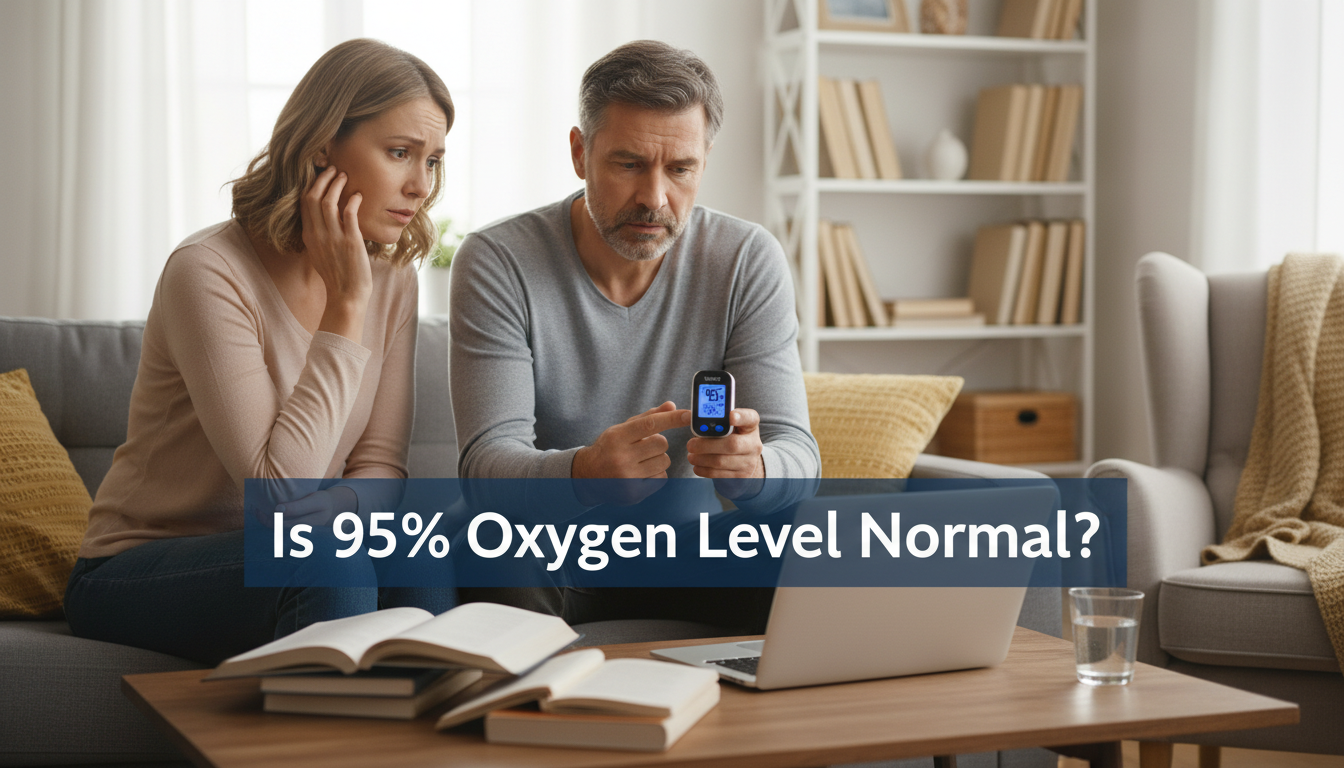
  • Is 95% Oxygen Level Normal?

    Is 95% Oxygen Level Normal?

    Is Oxygen Level 95 Normal?

    Disclaimer: This article is for general information only and isn’t medical advice or a diagnosis. If you have severe symptoms or think it may be an emergency, call your local emergency number.

    You glance at your pulse oximeter. Ninety-four, ninety-five, ninety-six, back to ninety-five. Cue mild panic: “Wait… is an oxygen level of 95 normal or am I supposed to freak out now?”

    Let’s slow that mental spiral down. In this post, we’ll break down what a 95% oxygen level usually means, when it’s okay, when it’s a yellow flag, and when it’s a “stop reading and seek care now” situation.

    Quick Answer: Is Oxygen Level 95 Normal?

    Short version: For many people, an oxygen saturation (SpO₂) of 95% is within the low end of the normal range, especially if:

    • You’re otherwise feeling okay (no severe shortness of breath, chest pain, confusion, or blue lips/face).
    • The reading is stable (not suddenly dropping into the 80s or low 90s).
    • You just took it at home on a small finger device that can be a bit off.

    In general, normal SpO₂ in healthy adults is often quoted as 95–100%. Many guidelines start to call it “low” or “concerning” when it’s consistently under 94%, especially if you feel unwell.

    Key takeaway: A single reading of 95% in a person who feels fine is usually not an emergency. But context really matters.

    What Does Oxygen Level (SpO₂) Actually Measure?

    Your pulse oximeter (the little finger clip or smartwatch sensor) is estimating your peripheral oxygen saturation—essentially, what percentage of your red blood cells’ hemoglobin is carrying oxygen.

    • 100% means basically all the hemoglobin it’s seeing is carrying oxygen.
    • 95% means most hemoglobin is carrying oxygen, but there’s a small drop from the top.

    Because of how the oxygen–hemoglobin curve works, the difference between 97% and 95% is usually not a dramatic change in actual oxygen content in your blood. The curve is flat at the top, so small number changes there don’t always equal big changes in how your body functions.

    Takeaway: SpO₂ is a useful clue, not a perfect window into your health.

    What Is Considered a Normal Oxygen Level?

    Different organizations and hospitals use slightly different cutoffs, but many clinicians roughly use these ranges for adults at sea level:

    • 95–100%: Generally considered normal for most healthy adults.
    • 93–94%: Slightly low, may be okay for some people (for example, mild lung disease, high altitude), but worth monitoring.
    • 90–92%: Low—often a reason to contact a clinician promptly, especially if new.
    • Below 90%: Often called hypoxemia (low blood oxygen) and usually needs urgent medical evaluation.

    So where does your 95% fit? Right at the lower edge of “normal” for many people.

    Takeaway: On most charts, 95% is still wearing the “normal” badge, just not the honor-roll version of normal.

    When Is 95% Oxygen Level Usually Okay?

    A reading of 95% is more reassuring when:

    1. You feel well overall

      • No severe shortness of breath
      • No chest pain or chest tightness
      • No confusion, extreme fatigue, or new dizziness
    2. The number is stable

      • It stays around 94–97% across several checks.
      • It doesn’t suddenly drop 4–5 points when you stand or walk.
    3. You’re at mild altitude

      Higher elevation (mountains, some cities) can lower normal SpO₂ a bit.

    4. You have a known lung or heart condition and your care team has told you that mid-90s is your usual baseline.
    5. The device isn’t perfect

      Pulse oximeters, especially cheap home ones or fitness wearables, can be off by 2–3 percentage points under real-world conditions. That means your “95%” could realistically be 93–98%.

    Takeaway: If you feel fine and keep seeing around 95% without other red-flag symptoms, it’s usually not a reason to panic, but it can be a good reason to keep an eye on the trend.

    When Might 95% Oxygen Be a Yellow Flag?

    A 95% oxygen level deserves extra attention in some situations.

    1. It’s New for You

    Example scenarios:

    • You normally see 98–99%, but today you’re hanging around 94–95% and you feel more winded than usual.
    • You recently had a respiratory infection (COVID, flu, pneumonia, RSV, bronchitis), and now your numbers are lower than your normal.

    In these cases, 95% isn’t automatically dangerous, but the change from your baseline matters.

    2. It Drops With Light Activity

    If your oxygen level is 95% at rest, but:

    • Falls to 90–92% after walking across the room, or
    • Takes a long time to come back up after mild activity,

    that’s more concerning and worth checking with a clinician.

    3. You Have Risk Factors

    Use extra caution if you have:

    • Chronic lung disease (COPD, severe asthma, pulmonary fibrosis)
    • Heart failure or other significant heart conditions
    • Sleep apnea or obesity hypoventilation
    • Recent surgery, especially chest or abdominal

    In these settings, even low-normal numbers can carry more weight and may be part of a bigger picture your doctor needs to know about.

    Takeaway: 95% isn’t an automatic crisis, but if it’s new, dropping, or paired with risk factors, treat it as a reason to check in with a professional.

    When Is a 95 Oxygen Level Not Okay? Red Flags to Watch For

    Numbers are only half the story. Symptoms plus numbers together tell you much more.

    Regardless of the exact number, seek urgent or emergency care (call your emergency number or go to an emergency department or urgent care) if you have:

    • Shortness of breath at rest or struggling to speak in full sentences
    • Chest pain, pressure, or discomfort
    • Bluish lips, face, or fingernails
    • Severe confusion, difficulty staying awake, or sudden change in mental state
    • Oxygen level dropping below about 90–92%, especially if it stays there
    • Rapid breathing and feeling like you cannot catch your breath

    In these scenarios, 95% at one moment doesn’t rule out a serious problem. Your oxygen could be fluctuating, or the device could be missing what your body is clearly telling you.

    Takeaway: If your body is clearly telling you something is wrong, trust that over a single number.

    How Reliable Is a Home Pulse Oximeter Reading of 95?

    Home pulse oximeters and smartwatches are helpful, but they are not perfect diagnostic tools.

    Things that can make a reading of 95% less accurate include:

    • Cold fingers (poor circulation lowers signal quality)
    • Movement (shaking, talking, walking during the reading)
    • Nail polish or artificial nails (especially dark colors)
    • Skin tone (some devices may be less accurate in people with darker skin tones)
    • Poorly fitting device or cheap, unvalidated models

    Ways to improve accuracy:

    1. Sit still for a few minutes.
    2. Warm your hands (rub them, use warm water, or hold a mug).
    3. Remove dark nail polish or try a different finger.
    4. Hold your hand at heart level and keep still while it reads.
    5. Take several readings over a few minutes rather than believing the very first number.

    Takeaway: A 95% reading from a home device has some wiggle room. Always pair it with how you actually feel.

    Case Studies: When 95% Means Different Things

    Case 1: The Mildly Anxious but Healthy Person

    Alex is a healthy 28-year-old with no lung or heart issues. They buy a pulse oximeter during cold season just to check. It reads:

    • Resting: 95–98%
    • Walking around the house: briefly 94–95%, then back to 96–98%

    Alex feels fine, no shortness of breath, just general anxiety.

    Likely interpretation: This is within normal variation. The 95% readings alone, in someone who feels well, are not concerning.

    Case 2: The Post-COVID Patient

    Jordan is 52 and recently had COVID with a bad cough and fatigue. A week later:

    • Resting SpO₂: 94–95%
    • Walking across the room: drops to 91–92%, takes a minute to come back up
    • Still feels more short of breath than usual

    Likely interpretation: This pattern is more concerning. Even though 95% appears, the drops with movement, the recent infection, and ongoing shortness of breath make this something to discuss with a clinician promptly.

    Case 3: The Person With Known COPD

    Maria is 67 with COPD. Her doctor has told her:

    • Her usual baseline at rest is 92–94%.
    • She should seek help if she’s under 88–89% or much more short of breath.

    One day, Maria checks and sees 95% at rest.

    Likely interpretation: For Maria, 95% is actually better than her usual baseline and can be reassuring, as long as symptoms aren’t worse.

    Takeaway: The same number (95%) can be normal, low-normal, or even better than usual, depending on the person.

    What Should You Do If Your Oxygen Level Is 95?

    Here’s a simple decision framework you can use at home.

    Step 1: Check How You Feel

    Ask yourself:

    • Am I having trouble breathing at rest or speaking?
    • Do I have chest pain, blue lips, or feel like I might pass out?
    • Do I feel confused, extremely drowsy, or “not right” mentally?

    If the answer is yes to any of these, seek urgent or emergency care, regardless of what the number says.

    Step 2: Repeat the Measurement Correctly

    If you feel basically okay but you’re worried about the 95%:

    1. Rest for 5–10 minutes.
    2. Make sure your hands are warm and still.
    3. Check on a different finger.
    4. Take two to three readings over 5 minutes.

    Pay attention to:

    • Trend: Staying 94–96% versus dropping into the 80s or low 90s
    • Symptoms: Any change when walking, talking, or lying flat

    Step 3: Contact a Clinician If…

    You should call your doctor, a nurse line, or telehealth if:

    • Your SpO₂ is consistently 93–94% or lower, even at rest, especially if this is new for you.
    • You recently had a respiratory infection and your numbers are lower than before.
    • You have lung or heart disease and your readings are down from your known baseline.
    • You feel more short of breath than usual, even if the number is 95–96%.

    Takeaway: 95% is often okay, but your symptoms and their changes over time are just as important.

    Key Points to Remember About a 95 Oxygen Level

    To summarize:

    • Is 95 oxygen level normal? For many adults at sea level, yes—95% is at the low end of normal, especially if you feel well.
    • Context is everything. A single 95% reading means little without symptoms, trends, and your own baseline.
    • Red flags beat numbers. Severe shortness of breath, chest pain, confusion, blue lips or face, or readings under about 90–92% are reasons to seek urgent care.
    • Devices have limits. Home pulse oximeters can be off by a few points and don’t replace clinical judgment.
    • When in doubt, call. If your oxygen numbers worry you or you feel worse than usual, reach out to a healthcare professional rather than just watching the digits change.

    Your job is to use your pulse oximeter as a tool, not a fortune-teller. Listen to your body, watch the trends, and get help when your symptoms or your instincts say something isn’t right.

    Sources

  • Is A Heart Rate Of 100–110 Normal?

    Is A Heart Rate Of 100–110 Normal?

    Is a Heart Rate of 100–110 Normal?

    Disclaimer: This article is for general information only and isn’t medical advice or a diagnosis. If you have severe symptoms or think it may be an emergency, call your local emergency number.

    You glance at your watch or phone. Heart rate: 104.

    “Is 100–110 a normal heart rate right now… or am I about to pass out?”

    A heart rate of 100–110 can be totally normal in some situations and a red flag in others. The context matters a lot.

    Below, we’ll break down when a heart rate of 100–110 is okay, when it’s borderline, and when you should call for help, in plain English.

    Quick Answer: Is a Heart Rate of 100–110 Normal Right Now?

    If your heart rate is between 100–110 beats per minute (bpm), think through two big questions:

    1. What are you doing right now?
    2. How do you feel right now?

    Often Normal If…

    A heart rate of 100–110 can be normal or expected if:

    • You just walked up stairs, rushed around, or did chores
    • You recently exercised or are still cooling down
    • You’re stressed, anxious, or having a panic spike
    • You had caffeine, nicotine, or an energy drink
    • You’re in a hot environment or had a hot shower
    • You’re pregnant

    If you’re otherwise feeling okay (no severe chest pain, severe shortness of breath, or feeling like you’re about to pass out), this range may simply be your body reacting to a trigger.

    Takeaway: If there’s an obvious reason your heart rate is up, and you feel basically okay, 100–110 can be within a normal response zone.

    More Concerning If…

    A heart rate of 100–110 is more concerning if:

    • You’re completely at rest (lying or sitting quietly) and it stays there for a while
    • You feel lightheaded, faint, or confused
    • You have chest pain, pressure, or tightness
    • You’re short of breath at rest or with very little activity
    • You feel your heart is pounding or irregular (skipping, fluttering)
    • You’re sick with fever, infection, or dehydration and feel worse than expected

    In these cases, that 100–110 might be your body waving a “hey, something’s not right” flag.

    Takeaway: Resting heart rate consistently at or above 100, especially with symptoms, should be discussed with a healthcare professional.

    What Is a Normal Resting Heart Rate?

    For most healthy adults, a typical resting heart rate is about 60–100 bpm.

    • Many sources (like the American Heart Association and major health systems) consider 60–100 bpm normal at rest for adults.
    • Well-trained athletes may have resting heart rates as low as 40–60 bpm.

    When we say “resting,” we mean:

    • Sitting or lying quietly
    • Not talking, walking, or scrolling in a panic
    • No recent intense exercise (ideally you’ve been calm for 5–10 minutes)

    So where does 100–110 bpm fit in?

    • 100 bpm at rest is the usual cut-off for something called tachycardia (a faster-than-normal heart rate for resting conditions).
    • 100–110 at rest is considered faster than ideal for many adults and might mean your body is under some type of stress (physical or emotional).

    Takeaway: 60–100 bpm is the standard resting range. 100–110 at rest is on the high side and may deserve a closer look, especially if it’s constant.

    Context Check: What Are You Doing Right Now?

    Before you spiral, ask: What was I doing in the last 5–15 minutes?

    Normal Reasons Your Heart Rate Might Be 100–110

    These situations can easily push your heart rate into the 100–110 range, even if you’re generally healthy:

    • Walking, climbing stairs, or housework
    • Exercise or recent workout (your heart rate can stay elevated for a bit afterward)
    • Stress, panic, or anxiety
    • Caffeine (coffee, tea, energy drinks, pre-workout)
    • Nicotine (smoking, vaping)
    • Fever or illness
    • Dehydration (not enough fluids, vomiting, diarrhea, or heavy sweating)
    • Hot bath or shower, hot weather

    Mini example: You race around getting ready, jog up the stairs, grab your phone, sit down, and instantly check your watch: 107 bpm. Totally believable. Give yourself 5–10 minutes of true rest and check again.

    Takeaway: If there’s an obvious trigger and your heart rate is trending down with rest, it’s often a normal short-term response.

    How Do You Feel? Symptoms That Matter More Than the Number

    A heart rate of 104 can be less worrying than a heart rate of 92 if the person with 92 is having scary symptoms.

    Pay close attention to how you feel right now, not just the number.

    Call Emergency Services If

    Your heart rate is high and you have any of these:

    • Crushing, heavy, or squeezing chest pain
    • Chest pain that spreads to jaw, arm, back, or neck
    • Severe shortness of breath (can’t speak in full sentences, gasping)
    • Feeling like you might pass out or actually fainting
    • Sudden confusion, trouble speaking, or weakness on one side of the body
    • Heart rate is very fast and won’t slow down, or feels very irregular and scary

    Those are red-flag emergency signs that need immediate help.

    Takeaway: Symptoms like chest pain, severe shortness of breath, or fainting matter more than whether your heart rate is 100 vs. 110.

    When a 100–110 Heart Rate at Rest Might Be a Problem

    If you’re sitting or lying down, calm, hydrated, and your heart rate is still 100–110 for a while, it might be related to:

    • Infections or fever (like the flu, COVID, pneumonia)
    • Anemia (low red blood cell count)
    • Thyroid problems, especially overactive thyroid (hyperthyroidism)
    • Heart rhythm issues (like atrial fibrillation or other arrhythmias)
    • Dehydration or low blood volume
    • Certain medications or stimulants (decongestants, ADHD meds, some asthma meds, etc.)
    • Pain, even if you’re not moving
    • Untreated anxiety or panic disorder

    You can’t self-diagnose these just by your watch. But a resting heart rate consistently in the 100s is something to mention to your doctor or another qualified clinician.

    Takeaway: A repeatedly high resting heart rate isn’t automatically dangerous, but it’s your body saying, “Please investigate me.”

    How to Check Your Heart Rate Correctly

    Wearables are helpful, but they’re not perfect. To get a clearer picture:

    1. Sit or lie down and rest for 5–10 minutes.
    2. Avoid talking, scrolling, or stressing yourself out.
    3. Find your pulse:
      • At your wrist (radial pulse): place two fingers (not your thumb) on the thumb side of your wrist.
      • Or at your neck (carotid pulse): beside your windpipe, gently.
    4. Count beats for 30 seconds, then multiply by 2.
      • Example: 52 beats in 30 seconds → 104 bpm.
    5. Repeat a couple of times at different moments in the day.

    If your heart rate is always 100–110 at rest, not just once or twice, that pattern is more important than a single reading.

    Takeaway: One random high reading can be noise. Repeated high readings at rest are a signal.

    Anxiety vs. Heart Problem: How Can You Tell?

    Googling your heart rate is a classic anxiety move. But anxiety can also cause your heart to race, which then causes more anxiety.

    Signs It Might Be More Anxiety-Driven

    • Your heart rate jumps when you start thinking about it or checking it.
    • You feel tight chest, racing thoughts, trembling, or doom-like feelings.
    • The fast heart rate comes in waves and often improves when distracted or reassured.

    Signs It Might Be More of a Physical or Medical Issue

    • High heart rate even when you feel totally calm and not mentally stressed.
    • Heart rate stays elevated for long periods regardless of what you’re thinking about.
    • You have other physical symptoms like weight changes, fever, paleness, shortness of breath with minor activity, or leg swelling.

    Important note: You can have both anxiety and a medical issue. It’s not either/or. If in doubt, it’s valid to get checked.

    Takeaway: Anxiety can push your heart rate to 100–110, but you shouldn’t blame anxiety for everything without at least one proper medical evaluation.

    What to Do Right Now If Your Heart Rate Is 100–110

    Here’s a calm, step-by-step way to approach it.

    Step 1: Pause and Re-Check

    • Sit or lie down.
    • Breathe slowly: in through your nose for 4 seconds, out through your mouth for 6 seconds, repeat for a few minutes.
    • Re-check your heart rate after 5–10 minutes.

    If it comes down closer to your usual range, it was probably a temporary response (activity, stress, caffeine, etc.).

    Step 2: Scan for Red-Flag Symptoms

    Ask yourself:

    • Am I having severe chest pain or pressure?
    • Am I struggling to breathe or gasping?
    • Do I feel like I might pass out?
    • Is my heart wildly irregular in a new way?

    If yes to any of those, call emergency services right now. Don’t wait to see if it goes away.

    Step 3: Consider Short-Term Self-Care Moves

    If no emergency red flags and you feel basically okay:

    • Hydrate: Sip water, especially if you may be dehydrated.
    • Limit stimulants: Skip more caffeine, nicotine, or energy drinks for now.
    • Cool down: Move to a cooler space if you’re overheated.
    • Relax your body: Gentle breathing, stretching, or lying down quietly.

    Step 4: Plan Follow-Up If It Keeps Happening

    You should contact a healthcare professional soon (same day or within a few days, depending on how you feel) if:

    • Your resting heart rate is often 100–110 over several days.
    • You notice it’s getting progressively higher.
    • You have milder symptoms like fatigue, mild chest discomfort, lightheadedness, or exercise intolerance.

    Bring:

    • A log of your heart rate readings (time, activity, symptoms).
    • Medications, supplements, and energy drink or caffeine use.
    • Any smartwatch or fitness tracker reports.

    Takeaway: Focus on staying calm, re-checking in a few minutes, and watching for red-flag symptoms. Then plan follow-up if it’s a pattern.

    When to Absolutely Seek Urgent or Emergency Care

    Get urgent or emergency help if:

    • Your heart rate is very fast (for example, well over 120–130 at rest) and not coming down.
    • You have chest pain or pressure, especially with sweating, nausea, or pain spreading to arm, jaw, or back.
    • You’re short of breath at rest or with very light activity.
    • You feel like you might faint, are very dizzy, or you actually pass out.
    • Your heart rhythm feels suddenly irregular in a way you’ve never felt before.
    • You have known heart disease and your symptoms are worse or different than usual.

    You’re not overreacting for getting emergency help when you’re genuinely scared something is seriously wrong. Doctors and nurses would rather check you too early than too late.

    Takeaway: If your gut says, “This feels like more than just a fast heart from stress,” it’s reasonable to seek urgent evaluation.

    The Bottom Line: Is 100–110 Normal Right Now?

    • During movement, stress, or after caffeine: 100–110 bpm can be a normal, temporary response.
    • At true rest, repeatedly: 100–110 bpm is on the high side and worth discussing with a healthcare professional, even if you feel okay.
    • With serious symptoms (chest pain, severe shortness of breath, fainting): treat it as a medical emergency and call your local emergency number.

    Your heart rate is one data point, not a full story about your health. Use it as a signal to pay attention, not as a solo judge and jury.

    If this keeps bothering you, the most reassuring thing you can do is get checked, get answers, and build a plan with a professional who can look at you, not just your watch.

    Sources

  • 120 Resting Heart Rate While Pregnant: Is It Dangerous?

    120 Resting Heart Rate While Pregnant: Is It Dangerous?

    Resting Heart Rate of 120 While Pregnant: What It Means and What to Do

    Disclaimer: This article is for general information only and isn’t medical advice or a diagnosis. If you have severe symptoms or think it may be an emergency, call your local emergency number.

    You’re pregnant, lying on the couch, not moving, and your resting heart rate is 110–120. Cue the spiral: “Is this normal? Am I hurting the baby? Do I need to go to the ER?”

    Let’s slow down and unpack what a resting heart rate of 120 while pregnant might mean, when it’s normal, when it’s a red flag, and what to do next.

    Quick Answer: Is a 120 Resting Heart Rate in Pregnancy Always Bad?

    Not always, but it’s higher than usual and deserves attention.

    During pregnancy, your heart works harder. Blood volume increases by 30–50%, and your resting heart rate often rises by about 10–20 beats per minute on average compared with pre-pregnancy. Many pregnant people sit somewhere in the 70–100 bpm range at rest.

    A resting heart rate around 120 bpm:

    • Can sometimes happen with normal pregnancy changes, anxiety, dehydration, or mild illness.
    • Is on the high side for “resting” and should not be ignored, especially if it’s persistent or you feel unwell.

    Takeaway: A one-off 120 bpm in pregnancy isn’t automatically an emergency, but a consistently elevated resting heart rate or a racing heart with other symptoms is a solid reason to call your prenatal provider.

    What’s a Normal Resting Heart Rate During Pregnancy?

    Everyone’s baseline is different, but common patterns look like this:

    • Before pregnancy: Many adults rest between 60–90 bpm (some a bit lower or higher).
    • During pregnancy: It’s common for resting heart rate to climb by about 10–20 bpm.
    • Many guidelines consider up to around 100 bpm at rest as still within a typical range during pregnancy, though some healthy people may run higher.

    Why the change? Your body:

    • Pumps more blood to support the placenta and baby.
    • Has higher levels of hormones (like progesterone) that can speed up the heart.
    • Is carrying more weight and working harder even for everyday tasks.

    Takeaway: A modest rise in resting heart rate is expected in pregnancy. But once you’re consistently above about 100–110 bpm at rest, especially near 120, it’s worth a conversation with your provider.

    What Does “Resting” Actually Mean?

    This part matters.

    A heart rate of 120 bpm while:

    • Walking up stairs
    • Rushing around the house
    • Chasing a toddler
    • Feeling anxious or just had a coffee

    Is not the same as 120 bpm while:

    • Lying down, relaxed, for several minutes
    • Just waking up in the morning
    • Sitting quietly and breathing calmly

    To check a true resting heart rate during pregnancy:

    1. Sit or lie down comfortably for 5–10 minutes.
    2. Avoid caffeine, heavy meals, or exercise just beforehand.
    3. Use a reliable device (blood pressure cuff, pulse oximeter, or well-fitted smartwatch) or count manually at your wrist or neck for 30 seconds and double it.
    4. Note the number and how you feel (dizzy, breathless, chest pain).

    Takeaway: 120 bpm during activity may be normal; 120 bpm repeatedly at true rest needs medical input.

    Why Can Your Heart Rate Hit 120 While Pregnant?

    Several common, and some more serious, reasons can push your heart rate up during pregnancy.

    1. Normal Pregnancy Changes

    Your blood volume goes up, and your heart pumps more per minute (cardiac output). Hormones like progesterone can make your blood vessels relax and your heart beat faster to keep blood pressure stable.

    Result: You may notice your usual 70 bpm now sits closer to 85–95 bpm. Sometimes you’ll briefly see numbers over 100.

    Clue it’s likely normal:

    • Mild increase (10–20 bpm above your old normal)
    • No major symptoms besides occasional awareness of your heartbeat
    • Your prenatal visits and labs are otherwise normal

    Takeaway: Mildly higher heart rate is expected. We’re more concerned with consistently high, sudden changes, or strong symptoms.

    2. Dehydration

    Pregnancy increases your fluid needs. If you’re not drinking enough, have been vomiting, or had diarrhea, your body may respond by increasing heart rate to keep blood pressure up.

    Typical signs:

    • Dry mouth, dark urine, dizziness when standing
    • Headache, feeling “off,” plus faster heart rate

    Takeaway: Sometimes a high pulse is your body’s way of saying, “I need water and electrolytes, please.”

    3. Anemia (Low Red Blood Cell Count)

    Anemia is very common in pregnancy because your blood volume expands. If your red blood cells or hemoglobin are low, your heart beats faster to deliver enough oxygen.

    Possible clues:

    • Fatigue that feels beyond usual pregnancy tiredness
    • Pale skin, feeling weak
    • Shortness of breath with light activity
    • Fast resting heart rate

    Takeaway: If your provider mentioned low iron or anemia, a higher heart rate may be part of that picture and usually needs treatment, not just waiting.

    4. Thyroid Issues

    Pregnancy can unmask or worsen thyroid disorders. An overactive thyroid (hyperthyroidism) can cause:

    • Rapid heart rate (sometimes over 100 at rest)
    • Anxiety, shakiness
    • Heat intolerance, sweating
    • Weight loss or trouble gaining weight despite eating

    Takeaway: If you have a history of thyroid problems, or these symptoms sound familiar, your provider will likely want thyroid labs.

    5. Infections or Illness

    Even a common infection (like a respiratory virus or urinary tract infection) can boost your heart rate, especially if you have fever or dehydration.

    Signs to watch:

    • Fever, chills, burning with urination, bad cough, or trouble breathing
    • Feeling very unwell plus a racing heart

    Takeaway: A high resting heart rate plus signs of infection in pregnancy is absolutely worth same-day medical attention.

    6. Heart Rhythm Problems (Arrhythmias)

    Pregnancy can bring out underlying heart rhythm issues or make existing ones more noticeable. Some are benign; others need treatment.

    Possible symptoms:

    • Sudden racing heart that starts or stops abruptly
    • Feeling like your heart is flip-flopping or skipping beats
    • Chest discomfort or feeling faint

    Takeaway: If your 120 bpm comes in sudden bursts, feels irregular, or makes you feel faint or like you have chest pain, this moves into urgent medical evaluation territory.

    7. Anxiety, Panic, and Stress

    Pregnancy can be anxiety fuel. Anxiety or panic can cause:

    • Sudden spike in heart rate
    • Tight chest, shortness of breath, trembling
    • Sense of doom or “I’m going to pass out”

    The tricky part is that anxiety symptoms can look a lot like heart or lung problems. That’s why it’s important not to just assume it’s “only anxiety,” especially in pregnancy. Once serious causes are ruled out, working on anxiety management can still help a lot.

    Takeaway: Mind and body are deeply connected. But never dismiss a high resting heart rate in pregnancy without a medical check.

    When Is a 120 Resting Heart Rate While Pregnant an Emergency?

    You should seek urgent or emergency care (call your local emergency number or go to the ER) for a fast heart rate plus any of these red flags:

    • Chest pain, pressure, or tightness
    • Trouble breathing or feeling like you can’t get enough air
    • Feeling like you’re going to pass out, or actually fainting
    • Sudden, severe shortness of breath
    • Coughing up blood
    • Heart rate staying over about 120–130 bpm at rest and you feel very unwell
    • Signs of severe infection: high fever, chills, confusion, rapid breathing
    • Swelling, redness, and pain in one leg (possible blood clot) plus fast heart rate or shortness of breath

    Takeaway: If your gut is saying “something is really wrong” or the symptoms are sudden and intense, do not wait for a scheduled appointment.

    When Should You Call Your OB, Midwife, or Clinic?

    Call your prenatal provider soon (same day or within 24 hours) if:

    • Your resting heart rate is often over 100–110 bpm, especially if it’s close to 120 repeatedly.
    • You feel lightheaded or dizzy.
    • You feel short of breath with minimal effort.
    • You feel extra tired beyond normal pregnancy fatigue.
    • You are uncomfortably aware of your heartbeat or pounding in your chest.
    • You previously had heart, thyroid, or rhythm problems.
    • Your smartwatch or home blood pressure monitor keeps flagging “high pulse” at rest.

    What they may do:

    • Check vitals and oxygen level
    • Order blood tests (anemia, thyroid, infection, electrolytes)
    • Possibly do an EKG or refer to a cardiologist if there are concerns

    Takeaway: You don’t need to wait until it’s an emergency. Persistent or worrisome changes are exactly what prenatal care is for.

    Real-Life Scenarios: What Might This Look Like?

    Scenario 1: The Dehydrated Second-Trimester Sprint

    You’re 22 weeks, chasing a toddler, barely remembering to drink water. Your fitness tracker shows 120–130 bpm while hustling around (normal for activity), but also 110–120 bpm while you sit and scroll your phone. You feel a bit dizzy when you stand and your urine is pretty dark.

    You drink water, add an electrolyte drink, rest for an hour, and your heart rate settles around 90–100 bpm. You still call your provider to let them know, and they recommend coming in to check labs and urine just in case.

    Scenario 2: The Iron-Deficient Third Trimester

    You’re 30 weeks, and your last blood work showed low iron. Lately, even walking to the mailbox leaves your heart pounding 120+. When you’re resting, your heart rate hovers around 100–115, and you feel exhausted and a bit short of breath.

    You call your OB, who repeats blood work, confirms anemia, and adjusts your iron treatment. Over the next few weeks, your heart rate slowly improves.

    Scenario 3: The Sudden Racing Heart With Chest Tightness

    You’re 18 weeks, lying in bed, when your heart suddenly races to 140+, your chest feels tight, and you’re short of breath. You feel like you might pass out.

    This is a situation where you or a family member calls emergency services or goes straight to the ER. Doctors check your heart rhythm and lungs and rule out things like serious arrhythmia or a blood clot.

    Takeaway: The context, symptoms, and pattern matter more than a single number.

    What Can You Do at Home (While You Wait to Be Seen)?

    These do not replace medical care, but may help support your heart while you’re sorting things out with your provider:

    1. Hydrate regularly

      Aim for steady fluids through the day. Water is great; if you’re vomiting or sweating a lot, ask your provider about electrolyte drinks.

    2. Change positions slowly

      When getting up from lying or sitting, go step by step to avoid sudden drops in blood pressure that can trigger fast heart rate and dizziness.

    3. Limit stimulants

      Caffeine, certain energy drinks, and some over-the-counter medicines can spike heart rate. Always check with your provider before taking any medicines or supplements.

    4. Use calming breathing techniques

      If anxiety is in the mix, try inhaling through your nose for 4 seconds, holding for 2 seconds, and exhaling slowly for 6–8 seconds. Repeat for a few minutes.

    5. Track, don’t obsess

      Keep a simple log of time of day, heart rate at rest, what you were doing, and symptoms. Bring this to your appointment. If watching the number makes your anxiety and heart rate worse, check less often and lean on symptoms instead.

    Takeaway: Gentle lifestyle tweaks can help, but never use them as a reason to delay calling your provider if you’re worried.

    Key Points to Remember About a 120 Resting Heart Rate While Pregnant

    • Pregnancy normally raises resting heart rate by about 10–20 bpm.
    • Many pregnant people rest somewhere between 70–100 bpm; higher can still be normal depending on the person.
    • A resting heart rate near 120 bpm is on the high side and should be discussed with your prenatal provider, especially if it’s consistent.
    • Red flag symptoms like chest pain, trouble breathing, fainting, or signs of infection plus fast heart rate require emergency care.
    • Common, treatable causes include dehydration, anemia, thyroid issues, anxiety, infections, and sometimes heart rhythm problems.
    • You are not overreacting by asking about your numbers. Pregnancy care includes your heart, not just the baby’s.

    If you’re staring at your watch or app seeing 115–120 bpm and feeling nervous, that alone is enough reason to reach out. You deserve reassurance and proper evaluation.

    Sources

  • Is A High Heart Rate After Walking Normal?

    Is A High Heart Rate After Walking Normal?

    High Heart Rate After Walking: What It Really Means

    Disclaimer: This article is for general information only and isn’t medical advice or a diagnosis. If you have severe symptoms or think it may be an emergency, call your local emergency number.

    You go for a “nice easy walk,” check your smartwatch after, and your heart rate looks like you just sprinted from a bear. Cue the panic spiral: Is something wrong with my heart? Am I out of shape? Is this dangerous? Let’s slow things down (literally and emotionally) and walk through what it really means when your heart rate is high after walking, and when it’s actually a red flag.

    Quick Answer: Is a High Heart Rate After Walking Always Bad?

    Not automatically. Your heart rate should go up when you walk. That’s the point. Your muscles need more oxygen, so your heart pumps faster to deliver it.

    What matters more than a single “high” number on your watch is:

    • How high it goes compared with what’s normal for you
    • How you feel (symptoms or no symptoms)
    • How long it stays elevated after you stop
    • Your overall health, fitness level, and medications

    If you feel generally okay, your heart rate goes up with walking, then comes back down within a few minutes of resting, that’s usually a normal response to exercise.

    Takeaway: A higher heart rate with walking is expected. The context and symptoms around it are what really matter.

    What’s a “Normal” Heart Rate When You Walk?

    First, some big-picture numbers for adults:

    • Normal resting heart rate: about 60–100 beats per minute (bpm) for most healthy adults, according to major heart organizations like the American Heart Association (AHA).
    • Well-trained athletes can have resting heart rates in the 40s–50s and still be totally healthy.

    When you start walking, your heart rate will naturally climb above resting. How much it climbs depends on:

    • Age
    • Fitness level
    • Speed of walking
    • Hills vs flat ground
    • Temperature and humidity
    • Stress, anxiety, or caffeine

    Many people will see 100–130 bpm during a brisk walk. For some, especially if they’re deconditioned or walking uphill, it may rise into the 130s or 140s.

    What really matters: Does this feel like appropriate effort for how hard you’re working? If you’re power-walking up a hill and breathing faster but still able to talk in short sentences, that might be perfectly fine.

    Takeaway: There is no single “perfect” walking heart rate. It’s about patterns, fitness, and how your body feels, not just the number.

    How Long Should Your Heart Rate Stay High After Walking?

    Your heart rate shouldn’t snap back instantly the moment you stop. But it should gradually come down over a few minutes.

    Typical pattern after stopping or slowing down:

    • Within 1–3 minutes: heart rate starts dropping
    • Within 5–10 minutes: often closer to your usual resting range (or at least trending clearly down)

    People who are more fit tend to see their heart rate drop faster after exercise. A slow recovery can sometimes be a sign of deconditioning or, in some contexts, heart problems, especially if paired with symptoms.

    Takeaway: A heart rate that rises with walking and then steadily drifts back down in the first 5–10 minutes is usually a good sign.

    When Is a High Heart Rate After Walking Probably Okay?

    It’s often normal if:

    1. You feel generally fine. Maybe a little winded, but no chest pain, crushing pressure, severe shortness of breath, or feeling like you’ll pass out.
    2. The effort matches the heart rate. You walked fast, climbed stairs, or tackled a hill. It’s hot or humid outside. You’re carrying bags, pushing a stroller, or walking and talking.
    3. It goes back down with rest. You sit or slow down. Within a few minutes, you see the number trending down.
    4. You’re out of practice with exercise. If you haven’t exercised in a while, it’s very common for your heart rate to climb more with relatively light activity.
    5. You’re a bit anxious or watching the number constantly. Anxiety and hyper-focusing on heart rate can drive it even higher. The more you stare at your watch, the more you may spike your adrenaline.

    Takeaway: If the heart rate spike fits the situation, drops with rest, and you feel okay, it’s usually not an emergency, but still mention it to your doctor if you’re unsure.

    When Is a High Heart Rate After Walking Not Normal?

    You should take a high heart rate more seriously if one or more of these is true:

    1. Your Heart Rate Is Very High With Mild Effort

    Examples:

    • You’re strolling slowly on flat ground, and your heart rate jumps into the 150s–170s or higher.
    • You feel like your heart is pounding or racing out of proportion to what you’re doing.

    This might be something like sinus tachycardia (a normal rhythm that’s just fast), but it can also be a sign of other issues, especially if it’s new for you.

    2. Your Heart Rate Stays High Long After You Stop

    If your heart rate:

    • Stays very high (say, above 120–130 bpm) for a long time after stopping, and
    • Doesn’t trend down even after sitting and resting

    this deserves medical attention, particularly if it’s new or keeps happening.

    3. You Have Worrying Symptoms Along With It

    Get help right away (emergency care) if your high heart rate with or after walking is paired with:

    • Chest pain, pressure, tightness, or discomfort
    • Pain spreading to arm, jaw, neck, or back
    • Trouble breathing or feeling like you can’t get air
    • Severe lightheadedness, almost passing out, or passing out
    • Sudden, heavy sweating with other symptoms
    • Confusion, weakness on one side, or trouble speaking

    These can be signs of heart attack, serious rhythm problems, or other emergencies.

    4. You Have Concerning Health Conditions

    High heart rate during or after walking is more concerning if you also have:

    • Known heart disease or heart rhythm problems
    • History of heart attack, heart failure, or valve disease
    • Lung conditions (like COPD or pulmonary hypertension)
    • Significant anemia, thyroid problems, or uncontrolled high blood pressure

    Takeaway: A fast heart alone is not always dangerous, but fast plus red-flag symptoms or medical conditions needs prompt medical attention.

    Common Reasons Your Heart Rate May Be High After Walking

    Here are some of the more common (and often fixable) explanations:

    1. Deconditioning (a.k.a. “I Haven’t Moved Much Lately”)

    If you’ve been more sedentary, your body has to work harder for basic tasks. Even gentle walking can push your heart rate higher until your fitness improves.

    Good news: With consistent, gradual activity, your heart often becomes more efficient, and you may notice lower heart rates for the same walk over time.

    2. Heat, Humidity, or Dehydration

    Hot day? You’re sweating? Not drinking much water?

    Your body has to pump harder to cool you down and keep blood flowing. That can cause a higher-than-usual heart rate for the same walk.

    3. Anxiety, Stress, or Panic

    Your brain says, “We’re just walking.” Your nervous system whispers, “Are we though? Because it feels like danger.”

    Stress hormones like adrenaline can:

    • Speed up your heart
    • Make you more aware of your heartbeat
    • Create a feedback loop: you see a high number → you panic → it goes higher

    4. Caffeine or Stimulants

    Coffee, energy drinks, pre-workout powders, some cold medicines, and certain ADHD meds can all raise heart rate.

    If you notice your heart rate is higher on days you’ve had more caffeine or certain meds, that’s a clue to bring up with your doctor or pharmacist.

    5. Illness, Fever, or Anemia

    If you’re fighting off an infection, have a fever, or have low red blood cells (anemia), your heart may beat faster, even with light activity, to get enough oxygen around your body.

    6. Thyroid Problems or Heart Rhythm Issues

    Overactive thyroid (hyperthyroidism) and certain arrhythmias (abnormal heart rhythms) can show up as an unusually high and sometimes irregular heart rate, even with mild activity.

    This is where a healthcare professional and sometimes an ECG, bloodwork, or longer-term heart monitoring come in.

    Takeaway: High heart rate after walking is a symptom, not a diagnosis. The “why” behind it matters, and many causes are treatable once identified.

    How to Check Your Heart Rate More Accurately

    Fitness watches are helpful, but they’re not perfect medical devices. To get a clearer picture:

    1. Measure your resting heart rate. Sit quietly for 5–10 minutes. Use your watch or feel your pulse at your wrist or neck. Count beats for 30 seconds and double it. Do this for a few mornings and note the range.
    2. Track what happens during a typical walk. Note your starting heart rate. Note roughly how high it goes during an easy walk on a flat surface. Note how long it takes to drop after you stop.
    3. Pay attention to symptoms, not just numbers. Any chest discomfort? Unusual shortness of breath compared to similar walks? Dizziness, vision going gray, or feeling like you might collapse?
    4. Write it down. Having a simple log helps your healthcare provider interpret what’s going on instead of reacting to a single scary screenshot.

    Takeaway: One random high reading isn’t the whole story. Patterns over time tell you much more.

    Practical Steps If Your Heart Rate Feels Too High After Walking

    If you notice your heart pounding after an ordinary walk and it doesn’t feel right, here’s a calm, step-by-step approach:

    1. Stop and rest safely. Sit or stand still in a cool, shaded place. Loosen tight clothing.
    2. Take slow, steady breaths. In through your nose for 4 seconds. Hold for 2 seconds. Out through your mouth for 6 seconds. Repeat for a few minutes.
    3. Sip water. Especially if it’s hot or you haven’t had much to drink.
    4. Watch the trend, not each beat. Check your heart rate every minute or two. Look for it moving downward, even gradually.
    5. Decide if you need urgent care. If you have severe symptoms (chest pain, struggle to breathe, feeling like you’ll pass out, sudden weakness, or confusion), don’t wait—seek emergency help.
    6. Schedule a non-urgent checkup if this keeps happening. Especially if high heart rate with light walking is new, frequent, or worrying. Bring your heart rate log and a list of medications and supplements.

    Takeaway: You can’t self-diagnose your heart at home, but you can notice patterns and get help sooner rather than later.

    When to Talk to a Doctor About High Heart Rate After Walking

    Reach out to a healthcare professional (primary care or cardiology) if:

    • Your heart rate feels too high for mild walking, repeatedly
    • It takes a long time (20+ minutes) to come down, even with rest
    • You’re getting more short of breath with everyday activities than before
    • You notice irregular heartbeats (skipping, fluttering, or pounding out of nowhere)
    • You have risk factors like high blood pressure, diabetes, smoking history, high cholesterol, or a strong family history of heart disease

    Go to urgent or emergency care immediately if:

    • You have chest pain or pressure, especially with walking
    • You feel like you might pass out, or you actually faint
    • You’re extremely short of breath at rest
    • You suddenly feel “the worst” or “not right” in a way that scares you

    In all those situations, you are never overreacting by asking for help.

    Takeaway: If your gut says, “This is more than just being out of shape,” it’s worth getting checked.

    Can Improving Fitness Lower Your Walking Heart Rate?

    Very often, yes.

    With regular, appropriate exercise (cleared by your doctor), your heart can become stronger and more efficient. Over time, many people notice:

    • Lower resting heart rate
    • Lower heart rate for the same walking speed or distance
    • Faster heart rate recovery after activity

    A gentle starting plan (once medically cleared):

    1. Start with short, easy walks (5–10 minutes) on flat ground.
    2. Gradually add 2–5 minutes per walk every few days as tolerated.
    3. Aim for being able to hold a conversation while walking.
    4. Mix in rest days or lighter days.

    Takeaway: Your heart is a muscle; with safe, gradual training, it usually gets more efficient, and that shows up in your heart rate numbers.

    Bottom Line: Should You Worry If Your Heart Rate Is High After Walking?

    Think of it this way:

    • Normal: Heart rate rises with walking, you feel okay overall, it comes back down within minutes of resting.
    • Worth a checkup: Heart rate seems unusually high for gentle walking, or it’s a new change, but you don’t have severe symptoms.
    • Emergency: High heart rate plus chest pain, severe shortness of breath, fainting, or other alarming symptoms.

    Your smartwatch is a tool, not a judge and jury. Use it as one piece of information, not the whole story.

    If high heart rates after walking are worrying you, that alone is a valid reason to talk with a healthcare professional. Peace of mind and a clearer plan are worth it.

    Sources

  • Resting Heart Rate 120 When Sick

    Resting Heart Rate 120 When Sick

    Resting Heart Rate of 120 While Sick: What It Can Mean

    Disclaimer: This article is for general information only and is not medical advice or a diagnosis. If you have severe symptoms or think it may be an emergency, call your local emergency number.

    You are sick, trying to rest, you check your smartwatch, and it says your resting heart rate is 120.

    Are you dying? Is this just the fever? Is your watch broken? Should you go to the ER or just close your eyes and pretend you did not see it?

    This article walks through what a resting heart rate of 120 while sick can mean, when it is urgent, and what you can actually do about it.

    First: What Is a Normal Resting Heart Rate?

    In most healthy adults, a normal resting heart rate (RHR) is usually around 60–100 beats per minute (bpm), according to major cardiology guidelines such as the American Heart Association. Athletes or very fit people can even sit in the 40s–50s.

    Where does 120 bpm fit in?

    • Over 100 bpm at rest is called tachycardia (a faster-than-normal heart rate).
    • 120 bpm at rest is clearly elevated and not in the normal range for most adults.

    Quick takeaway: 120 at rest is definitely high, but context matters a lot.

    Why Does Your Heart Rate Go Up When You Are Sick?

    Many illnesses make your heart beat faster, even when you are just lying in bed. There are several common reasons.

    1. Fever Revs Up Your Heart

    For many people, heart rate increases as body temperature goes up. A rough rule doctors sometimes use is:

    For every 1°C (about 1.8°F) increase in body temperature, heart rate can go up by roughly 10–15 bpm.

    If you normally sit at 70 bpm and have a decent fever, you might see numbers in the 90s or low 100s. Higher fevers or more severe infections can push it further.

    Example:

    • Normal: 70 bpm
    • You get the flu with a 102°F fever, and your resting heart rate could jump to 100–110 bpm.

    Takeaway: Fever alone can push your heart rate up, but 120 at rest is still on the higher side and deserves attention, especially if you feel unwell in other ways.

    2. Dehydration

    When you are sick, you might sweat from fever, vomit, have diarrhea, or not feel like drinking anything. Less fluid in your body means lower blood volume. To keep blood and oxygen moving, your heart may beat faster.

    Signs dehydration may be part of the problem include:

    • Dark yellow urine or not peeing much
    • Dry mouth or cracked lips
    • Feeling weak, dizzy, or lightheaded when standing

    Takeaway: If you are sick and not drinking much, a high resting heart rate can be your body’s red flag for needing fluids.

    3. Stress, Anxiety, and Pain

    Being sick is stressful. If you are anxious, in pain, or panicking because you saw 120 on your smartwatch, your body pumps out stress hormones such as adrenaline, which speed up the heart.

    You may notice:

    • Heart racing when you are worrying or searching symptoms online
    • Chest tightness or a pit in your stomach
    • Shaky hands or feeling wired

    Takeaway: Stress can stack on top of illness and fever, pushing your heart rate even higher.

    4. Medications That Raise Heart Rate

    Some illness-related medications can increase heart rate, for example:

    • Decongestants such as pseudoephedrine or phenylephrine in some cold and flu tablets
    • Some inhalers for asthma or bronchitis (short-acting bronchodilators)
    • High caffeine intake, such as energy drinks or strong coffee, on top of being sick

    If you started a new medication around the time your heart rate jumped, it is worth checking the label and calling a healthcare provider or pharmacist.

    Takeaway: A combination of cold medicine, caffeine, and fever can significantly boost heart rate.

    5. The Infection Itself

    Some infections can directly stress the heart, especially more serious ones.

    Your body may increase heart rate to:

    • Fight infection
    • Deliver more oxygen to tissues
    • Compensate for lower blood pressure

    Sometimes, a very high heart rate at rest is one of the clues of a more serious infection or sepsis, especially when combined with other red-flag symptoms.

    Takeaway: A fast heart rate can be your body’s alarm system, not just a random glitch.

    When Is a Resting Heart Rate of 120 While Sick Less Concerning, and When Is It Not?

    There is no single magic number that is safe or unsafe for everyone, but patterns and red flags matter.

    Situations Where It May Be Less Alarming (But Still Worth Watching)

    It may be less concerning if:

    • You have a known fever (such as 101–103°F) and feel like you have a typical viral illness such as the flu or COVID-19.
    • You just checked after walking to the bathroom, climbing stairs, or changing positions.
    • You are anxious, in noticeable pain, or just took a decongestant or inhaler.
    • The number comes down to more reasonable territory (for example, below 100 bpm) within 10–20 minutes of resting and hydrating.
    • You otherwise feel moderately sick but not severely unwell: no trouble breathing, no chest pain, not confused, and can drink fluids.

    Even in these cases, 120 is high enough that you should keep a close eye on it, address fluids, fever, and rest, and call your doctor or a nurse line if it keeps happening.

    Takeaway: Less concerning does not mean ignore it. It means watch it closely and correct what you can.

    Red Flags: When a Resting Heart Rate of 120 While Sick Is an Urgent Problem

    Call a doctor, urgent care, or go to the emergency room or call emergency services if you have a high heart rate around 120 or more at rest plus any of these:

    • Chest pain, pressure, or tightness, especially if it spreads to the arm, jaw, or back
    • Trouble breathing or feeling like you cannot get enough air
    • Feeling faint, passing out, or almost passing out
    • New confusion, trouble thinking clearly, or not acting like your normal self
    • Cold, clammy, or pale, gray, or blue skin, lips, or nails
    • Very low blood pressure readings, or feeling extremely weak and woozy
    • Fast heart rate that stays at or above 120 at rest for an hour or more, even after lying down, drinking fluids if you are allowed to, and treating fever with medications like acetaminophen or ibuprofen if they are safe for you
    • History of heart or lung disease, such as heart failure, coronary artery disease, prior heart attack, arrhythmia, COPD, severe asthma, or pulmonary embolism, and now your heart is much faster than usual
    • You have COVID-19, flu, or another infection and are feeling unusually weak or like something is very wrong.

    If you are pregnant, elderly, or have major health conditions, do not wait as long to be checked.

    Takeaway: High heart rate plus shortness of breath, chest pain, confusion, or collapse means you should seek help urgently.

    How to Check if It Is Really Your Resting Heart Rate

    Before reacting to a number, make sure you are checking it correctly.

    To get a more accurate resting heart rate:

    1. Sit or lie down for at least 5–10 minutes in a quiet, calm environment.
    2. Avoid talking, scrolling through stressful content, or watching intense television.
    3. Use one method:
      • A smartwatch or fitness tracker, understanding they are not perfect, or
      • A manual pulse check by placing two fingers on your wrist on the thumb side or on your neck, counting beats for 30 seconds and multiplying by 2.
    4. Repeat it 2–3 times, a few minutes apart.

    If every time you check you are between about 110–130 bpm while truly resting, that is meaningful information.

    Takeaway: If your watch says 120 right after you walked up stairs, that is not your resting heart rate.

    What You Can Do at Home

    If you do not have red-flag symptoms and you are not in a medical emergency, there are practical steps you can take at home.

    1. Hydrate

    • Sip water, oral rehydration solutions, or broths regularly.
    • If you have had vomiting or diarrhea, electrolytes such as oral rehydration solutions or electrolyte drinks can help.
    • Aim for steady sipping, not large amounts at once if your stomach is sensitive.

    Watch for improvement over 30–60 minutes. If your heart rate eases down as you hydrate and rest, that is reassuring but still worth mentioning to your doctor.

    2. Treat Your Fever if It Is Safe for You

    Ask your doctor what is safe based on your conditions, but many adults use:

    • Acetaminophen (Tylenol)
    • Ibuprofen (Advil, Motrin), which is not safe for everyone, such as some people with kidney, gastrointestinal, or heart conditions

    Treating fever can lower body temperature, reduce discomfort and pain, and often help bring the heart rate closer to baseline. Recheck your heart rate 30–60 minutes after fever medicine.

    3. Rest Fully

    • Lie down or sit reclined.
    • Limit screen time and stimulation.
    • Skip heavy meals, intense activity, or long hot showers.

    If moving from lying to standing sharply increases your heart rate and makes you dizzy, sit or lie back down and call your doctor.

    4. Check Your Medications and Stimulants

    • Review any cold or flu medications, inhalers, or decongestants you have started.
    • Avoid extra caffeine from coffee, tea, soda, or energy drinks.
    • Avoid nicotine and recreational drugs.

    If you suspect a specific medication is raising your heart rate, call your doctor or pharmacist before stopping any prescription on your own.

    5. Calm Your Nervous System

    Your body does not separate the stress of infection from the stress of seeing a high heart rate.

    Consider:

    • Slow breathing, such as inhaling for 4 seconds and exhaling for 6–8 seconds, repeated for a few minutes.
    • Progressive relaxation, gently tensing then relaxing muscle groups from toes to head.
    • Listening to something soothing instead of reading alarming stories.

    If your heart rate drops a bit when you calm your body and mind, that is useful information.

    Takeaway: You cannot always fix the illness instantly, but you can reduce how activated your system is.

    When to Call a Doctor About a Resting Heart Rate of 120 While Sick

    If you are unsure, calling is reasonable. In general, reach out to a healthcare provider the same day if:

    • Your resting heart rate is consistently at or above about 110–120 bpm while sick, even when lying still.
    • It is noticeably higher than your normal baseline, such as usually 60 and now 120.
    • You have had symptoms for more than a day or two and they are not improving.
    • You have other conditions such as heart disease, lung disease, diabetes, kidney disease, or are pregnant.
    • You are not sure if your symptoms mean urgent or emergency care.

    Things to have ready when you call include:

    • Your heart rate range, for example 110–130 at rest for 24 hours.
    • Temperature readings and how high your fever is.
    • Any medications you are taking.
    • Other symptoms such as shortness of breath, chest discomfort, dizziness, confusion, or color changes.

    Takeaway: If you are asking whether it is bad enough to call, that is already a good sign you should call.

    Special Situations

    1. You Have Known Heart Problems

    If you have a history of:

    • Arrhythmias such as atrial fibrillation or supraventricular tachycardia (SVT)
    • Prior heart attack or heart failure
    • A known structural heart condition or are on heart medications such as beta-blockers

    and now your resting heart rate is 120 while you are sick, call your cardiologist or primary care provider promptly, or follow any “when to call” plan they gave you.

    2. You Recently Had COVID-19, Flu, or Another Major Infection

    Some people notice their resting heart rate stays high for days or weeks after the main infection symptoms improve. This can sometimes be part of post-viral syndromes or conditions affecting how the nervous system regulates heart rate.

    If your resting heart rate stays elevated for more than a couple of weeks, or is interfering with your ability to function, get evaluated. Your provider may check lab work, an ECG, or other tests to rule out lingering issues such as anemia, thyroid problems, persistent inflammation, or heart involvement.

    Takeaway: Being past the worst of the virus but still having a racing heart is a valid reason to be seen.

    Bottom Line: Is a Resting Heart Rate of 120 While Sick Dangerous?

    Sometimes it is your body’s normal reaction to fever, dehydration, and stress. Sometimes it is an early warning sign of something more serious, such as a severe infection, heart strain, or another underlying problem.

    So:

    • Do not ignore 120 bpm at rest.
    • First, address what you can at home: fluids, fever control, rest, review medications, and calm your system.
    • Pay close attention to how you feel overall, not just the number.
    • If the rate stays high, you feel worse, or you see any red-flag symptoms, seek urgent or emergency care.

    Listening to your body and acting on concerning signs is appropriate and important.

    Sources

  • Is 90/60 Blood Pressure Too Low?

    Is 90/60 Blood Pressure Too Low?

    Is 90/60 Blood Pressure Too Low?

    You checked your blood pressure, saw 90/60, and now you’re wondering: “Is my blood pressure too low… or am I just unusually chill?”

    Let’s break it down in plain English so you know when 90/60 is okay, when it’s not, and what to do next.

    Quick Answer: Is 90/60 Too Low?

    For many people, 90/60 mmHg is considered the lower edge of “normal.”

    • If you feel fine (no dizziness, fainting, chest pain, shortness of breath): 90/60 can be normal and healthy for you.
    • If you’re having symptoms like lightheadedness, fainting, blurry vision, confusion, or feeling like you might pass out: then 90/60 may be too low for your body and needs medical attention.

    Doctors often define low blood pressure (hypotension) as a reading below 90/60 mmHg, especially if symptoms are present. But the number alone doesn’t tell the whole story—how you feel matters just as much as the reading.

    Takeaway: 90/60 by itself is not automatically dangerous, but if you feel unwell with it, that’s a red flag.

    What Does a 90/60 Blood Pressure Reading Mean?

    Blood pressure has two numbers:

    • 90 (systolic) – pressure when your heart beats.
    • 60 (diastolic) – pressure when your heart relaxes between beats.

    Most guidelines say a “normal” blood pressure is around 120/80, and anything from about 90/60 up to 120/80 can be normal for many adults.

    Some people—especially younger adults, smaller-bodied people, athletes, and very fit individuals—naturally run lower and feel great.

    But if your body and brain aren’t getting enough blood flow, low pressure can cause symptoms. That’s when we stop calling it “just low” and start calling it a problem.

    Takeaway: 90/60 means your pressure is on the low end, but whether it’s too low depends on context and symptoms.

    When Is 90/60 Blood Pressure Normal?

    You might be totally fine with a blood pressure of 90/60 if:

    1. You feel well. No dizziness, no fainting, no weird vision changes, no confusion, no chest pain.
    2. It’s always been that way. Some people’s “usual” is 95/60, 100/65, or 90/60. If your past readings are similar and your doctor wasn’t concerned, it may be normal for you.
    3. You’re young and/or very fit. Athletes and very active people often have lower resting blood pressure and heart rate because their hearts are efficient.
    4. You’re not pregnant or in a high-risk group where low blood pressure could signal something more serious.

    Example: A 25-year-old runner regularly checks her blood pressure: it’s usually around 92/58–100/62. She feels great, no symptoms. For her, 90/60 is probably just her normal baseline.

    Takeaway: If 90/60 matches your usual, and you feel good, it’s often nothing to panic about.

    When Is 90/60 Blood Pressure Too Low or Unsafe?

    90/60 becomes more concerning when it comes with symptoms or a sudden change.

    You should be more cautious if:

    1. You Have Symptoms of Low Blood Pressure

    Call a doctor urgently (or seek emergency care, depending on how bad it is) if your 90/60 reading comes with:

    • Fainting or nearly fainting (feeling like you’re about to black out)
    • New or severe dizziness or lightheadedness, especially when standing up
    • Confusion, difficulty thinking clearly, or feeling “out of it”
    • Blurred vision
    • Chest pain, shortness of breath, or a racing/irregular heartbeat
    • Cold, clammy, or pale skin

    These can be warning signs that your brain, heart, or other organs aren’t getting enough blood flow.

    Takeaway: Low reading plus symptoms = don’t ignore it.

    2. Your Blood Pressure Suddenly Dropped to 90/60 (or Lower)

    A sudden drop can be more dangerous than a steady low number.

    Example: You usually run 120/80, and today you feel weirdly weak and dizzy. You check and get 90/60 or lower. That sudden change is more concerning than someone who’s always at 90/60.

    Sudden drops can be caused by:

    • Dehydration (not drinking enough, vomiting, diarrhea, heavy sweating)
    • Blood loss (internal or external)
    • Certain medications (like blood pressure meds, heart meds, some antidepressants, or meds for Parkinson’s)
    • Severe infection (sepsis)
    • Allergic reactions (anaphylaxis)
    • Heart problems (heart attack, severe rhythm problems, heart failure)

    Takeaway: A new low reading—especially if you feel unwell—deserves prompt medical evaluation.

    3. You’re in a Higher-Risk Group

    Be extra cautious with a 90/60 reading if you:

    • Are pregnant, especially if you have symptoms like dizziness or fainting
    • Are older or have a history of falls
    • Have known heart disease, diabetes, or neurologic conditions
    • Recently started or changed medications that can affect blood pressure

    For these groups, even what looks like “mild” low blood pressure can increase the risk of falls, fainting, or reduced blood flow to vital organs.

    Takeaway: In higher-risk situations, don’t self-diagnose—loop in a professional.

    Common Reasons Someone Might Have 90/60 Blood Pressure

    Here are some everyday causes and what typically helps (always talk with a clinician for personal advice):

    1. Dehydration

    Not drinking enough, sweating a lot, vomiting, or diarrhea can all lower your blood volume, dropping your blood pressure.

    Signs this may be the issue:

    • Dark urine, going less often
    • Feeling extra thirsty, tired, or lightheaded

    What sometimes helps: Sip water or oral rehydration solutions (especially if you’ve been sick or sweating a lot).

    2. Medications

    Certain medications can cause or worsen low blood pressure, for example:

    • Blood pressure medications (ACE inhibitors, ARBs, beta blockers, diuretics)
    • Some antidepressants
    • Parkinson’s medications
    • Nitrates for chest pain

    What to do: Do not stop your medication on your own. Instead, document your readings and symptoms and talk with your prescriber; they may adjust the dose or timing.

    3. Standing Up Too Fast (Orthostatic Hypotension)

    If you go from lying or sitting to standing and your blood pressure drops, that’s called orthostatic hypotension.

    You might notice a head rush, dimming vision, or feeling like you’ll pass out right after you stand.

    What can help (general tips):

    • Stand up slowly—sit at the edge of the bed for a moment before getting up.
    • Drink enough fluids (unless your doctor has limited them).
    • Compression stockings or certain medications may be used, but only under medical supervision.

    4. Naturally Low Baseline

    Some people simply live in the 90/60 to 100/65 range and feel totally fine.

    If that’s you, keep an eye on symptoms more than the number itself, and let your doctor know your usual baseline so they interpret future readings correctly.

    Takeaway: 90/60 isn’t one-size-fits-all. The “why” behind the number matters.

    How Low Is Too Low for Blood Pressure?

    There isn’t a single magic cutoff that fits everyone, but a few practical guideposts:

    • Readings consistently below 90/60, plus symptoms like dizziness, fainting, confusion, or chest pain: too low—needs evaluation.
    • A drop from something like 130/80 to 90/60 or less, along with feeling very unwell: concerning.
    • Extremely low readings such as 80/50, 70/40, or lower—especially with symptoms like confusion, trouble breathing, or cold/clammy skin—can be signs of a medical emergency. Call emergency services right away.

    Takeaway: “Too low” is really “too low for you plus you feel unwell.” Err on the side of caution.

    What Should You Do If Your Blood Pressure Is 90/60?

    Here’s a step-by-step, common-sense approach. This is general information—not personal medical advice.

    Step 1: Check How You Feel

    Ask yourself:

    • Do I feel dizzy, lightheaded, weak, or faint?
    • Do I have chest pain, shortness of breath, confusion, or trouble speaking?
    • Did I collapse or nearly pass out?

    If yes to severe symptoms, especially chest pain, shortness of breath, confusion, or fainting, seek emergency care immediately.

    If symptoms are milder (like slight lightheadedness) but persistent, contact your doctor or an urgent care the same day for guidance.

    Step 2: Recheck the Reading

    Sometimes home monitors are inaccurate.

    • Sit quietly for 5 minutes, feet flat on the floor, back supported.
    • Don’t talk, don’t cross your legs.
    • Take 2–3 readings, 1–2 minutes apart, and average them.

    If your second or third reading is much different, the first one may have been off.

    Step 3: Think About Triggers

    Consider:

    • Have I eaten very little or skipped meals?
    • Am I dehydrated (sick, sweating, not drinking much)?
    • Did I drink alcohol recently?
    • Any new medications or dose changes?

    Write these down—they’re extremely helpful for your doctor.

    Step 4: Try Simple, Safe Measures (If Symptoms Are Mild and You’re Not in an Emergency)

    Common advice clinicians may give (this is general information):

    • Hydrate: Slowly drink water, especially if you suspect dehydration.
    • Change positions slowly: Move from lying to sitting to standing over 1–2 minutes.
    • Avoid very hot showers or baths, which can drop your pressure.

    If you’re on blood pressure medications or have heart or kidney issues, ask your doctor before significantly increasing fluids.

    Step 5: Follow Up With a Healthcare Professional

    Reach out to a clinician if:

    • 90/60 is new for you, even if you feel okay.
    • You have repeated low readings over several days.
    • You’re having ongoing symptoms, even if they’re mild.

    They may review your medications, check for anemia, dehydration, hormonal issues, or heart problems, and suggest tests like blood work or an EKG depending on your situation.

    Takeaway: Don’t just watch the number—partner with a clinician, especially if something feels off.

    90/60 and Anxiety: Could Worry Be Making It Worse?

    When people feel weird—lightheaded, “off,” or shaky—they understandably get anxious. That anxiety can make your heart race, make you breathe faster (sometimes causing more lightheadedness), and make you focus intensely on the number on the screen.

    Anxiety more often causes surges in blood pressure, but feeling unsteady from low-ish blood pressure can absolutely trigger anxiety and panic, turning it into a vicious cycle.

    If your doctor rules out serious causes and says your pressure is safe for you, working on stress management, hydration, gradual position changes, and regular check-ins can help you feel more in control.

    Takeaway: Lowish blood pressure can feel scarier because of anxiety—but anxiety itself doesn’t turn 90/60 into an emergency if your doctor says it’s your normal.

    When to Get Urgent or Emergency Help

    Call emergency services right away if your blood pressure is around 90/60 or lower and you have:

    • Chest pain or pressure
    • Trouble breathing
    • Confusion, difficulty speaking, or trouble staying awake
    • Fainting or nearly fainting
    • Signs of severe allergic reaction (swelling of face, lips, tongue, trouble breathing, hives)
    • Signs of severe infection (fever, feeling very ill, very fast heart rate, cold or clammy skin, or extreme weakness)

    Contact a doctor or urgent care the same day if:

    • 90/60 is new for you and you feel dizzy, weak, or unwell
    • You’ve had repeated low readings for several days
    • You recently started or changed a medication that can affect blood pressure

    Takeaway: Numbers are helpful—but symptoms decide the urgency. Don’t hesitate to seek help if you’re worried.

    Bottom Line: Should You Worry About 90/60?

    Think of 90/60 as a yellow light, not automatically a red one.

    • No symptoms and it’s your usual: Likely okay, but still worth mentioning at regular checkups.
    • New number or you feel off: Call your healthcare provider and get it checked out.
    • Severe symptoms: Treat it like an emergency.

    If you’re unsure, it’s always reasonable to say: “I got a reading of 90/60, and I’m feeling ___ (describe symptoms). Is this something I should be seen for today?” That way, you’re not just staring at the monitor—you’re getting real-world help tailored to you.

  • Is 90/60 Blood Pressure Dangerous?

    Is 90/60 Blood Pressure Dangerous?

    Is 90/60 Blood Pressure Dangerous?

    If you have ever checked your blood pressure and seen 90/60, you may have wondered whether that is a sign of excellent health or something dangerous.

    This article walks through what 90/60 actually means, when it is usually fine, and when it is a red flag that deserves a call to your doctor.

    Quick disclaimer: This is educational, not personal medical advice. If you are worried about your blood pressure or feeling unwell, talk to a healthcare professional.

    What Does 90/60 Blood Pressure Mean?

    Blood pressure is written as two numbers:

    • Systolic (top number) – the pressure when your heart beats
    • Diastolic (bottom number) – the pressure when your heart relaxes between beats

    So 90/60 mmHg means:

    • Your heart’s pumping pressure is 90
    • Your resting pressure between beats is 60

    Most guidelines consider normal blood pressure to be around 120/80 mmHg, and low blood pressure (hypotension) is usually defined as less than 90 systolic or less than 60 diastolic.

    That means 90/60 is right on the border of what many would call “low,” but it is not automatically dangerous.

    Takeaway: 90/60 is low-ish but not automatically a problem—context matters a lot.

    Is Blood Pressure 90/60 Dangerous?

    Sometimes no, sometimes yes. The key question is: How do you feel?

    When 90/60 Is Usually Not Dangerous

    • You feel totally fine: no dizziness, no fainting, no chest pain, no shortness of breath.
    • This is your usual blood pressure and has been low for years.
    • You are young, healthy, and active (especially endurance athletes, people who exercise regularly, or are naturally slim).
    • Your doctor has checked you out before and said, “Yes, that is your normal.”

    For many healthy adults, a blood pressure of 90/60 is just their normal baseline and may even be associated with a lower lifetime risk of heart disease compared with consistently high blood pressure.

    When 90/60 Can Be Dangerous

    Low blood pressure becomes a concern when it is new, sudden, or causing symptoms. That can signal that your organs are not getting enough blood flow.

    Red flag scenarios include:

    • You feel dizzy, lightheaded, or like you might faint, especially when standing up.
    • You have blurred vision, confusion, or trouble thinking clearly.
    • You feel weak, shaky, or unusually tired for no clear reason.
    • You notice cold, clammy, or pale skin.
    • You have chest pain, shortness of breath, or a rapid, weak pulse.
    • Your low reading comes after vomiting, diarrhea, heavy sweating, blood loss, or dehydration.
    • You recently started or changed medications. Blood pressure pills, heart medications, diuretics, some antidepressants, or medications for Parkinson’s and others can all lower blood pressure.

    In those cases, low blood pressure (including 90/60) may reflect something more serious going on in your body.

    Takeaway: 90/60 on a screen is not the whole story. No symptoms and long-term stability is often fine. New, sudden, or with symptoms is when we worry.

    When Is Blood Pressure 90/60 an Emergency?

    It helps to draw a clear line between “monitor this” and “get help now.”

    Call emergency services or seek emergency care immediately if you have a reading around 90/60 and:

    • Chest pain or pressure
    • Shortness of breath or trouble breathing
    • Fainting or passing out
    • Severe weakness, confusion, or difficulty waking up
    • Signs of shock, such as:
      • Very pale, cool, or clammy skin
      • Fast, weak pulse
      • Fast, shallow breathing

    These symptoms can signal serious problems like internal bleeding, heart issues, severe infection (sepsis), or a major allergic reaction, where blood pressure being low is part of a bigger emergency.

    Takeaway: 90/60 with scary symptoms is an emergency. Do not wait it out; get help.

    What If I Feel a Little Off, but Not Terrible?

    If your blood pressure is about 90/60 and you feel mildly off—like slightly dizzy or tired—but not in crisis, you still should not ignore it.

    You should contact your doctor the same day (or use an urgent care or telehealth service) if:

    • The low reading is new for you, especially if you are usually closer to 110–130 systolic.
    • You have had several readings under 90/60 over a day or more.
    • You have recurrent dizziness, “head rushes,” or near-fainting, especially when standing.
    • You recently started a new medication or had the dose of a current one changed.
    • You have a history of heart disease, diabetes, kidney issues, or hormonal problems.

    Your doctor may:

    • Review your medications (some may need adjustment).
    • Check for dehydration, blood loss, or infection.
    • Consider tests for heart or endocrine issues, such as adrenal or thyroid problems.
    • Ask you to track your blood pressure at home at different times of day.

    Takeaway: Mild but persistent symptoms with low blood pressure are a “call your doctor” situation, not a “ignore it” situation.

    Common Causes of a 90/60 Blood Pressure

    Seeing 90/60 does not automatically mean something is wrong, but there are common reasons your reading might land there.

    1. Your Body’s Natural Setting

    Some people are just built for low blood pressure. This often includes:

    • Younger adults, especially women
    • Physically active people or endurance athletes
    • People with a smaller body size

    If this has always been your range and you feel great, your body may simply run on a lower pressure without any issue.

    Mini takeaway: For some people, 90/60 is simply their normal.

    2. Dehydration

    Not drinking enough fluids, sweating a lot, or losing fluid from vomiting or diarrhea can lower blood volume, and that can drop your blood pressure.

    Clues this might apply to you include:

    • Dark yellow urine or peeing less often
    • Feeling thirsty, dry-mouthed, or lightheaded
    • Recent illness, heat exposure, or hard workouts

    Mild dehydration may improve with fluids and rest, but if you cannot keep fluids down or feel very weak or dizzy, you should seek medical care.

    3. Medications

    Several medications can push your blood pressure down, including:

    • Blood pressure medications (ACE inhibitors, ARBs, beta blockers, diuretics, and others)
    • Some heart medications
    • Certain antidepressants
    • Medications for Parkinson’s disease
    • Drugs for erectile dysfunction, especially if combined with nitrates

    If your 90/60 reading started after a new prescription or dose change, call the prescribing provider. Do not stop medications abruptly unless you are told to.

    4. Standing Up Too Fast (Orthostatic Hypotension)

    If your blood pressure drops when you go from lying or sitting to standing and you feel dizzy or “woozy,” this could be orthostatic hypotension.

    It can be caused by dehydration, medications, or sometimes nervous system conditions.

    This is worth discussing with a doctor, especially if you have nearly fainted or actually fainted.

    5. Underlying Medical Conditions

    Less commonly, low blood pressure like 90/60 can be part of a bigger medical issue, such as:

    • Heart problems, such as heart failure or heart valve disease
    • Hormonal issues, such as adrenal gland problems or severe hypothyroidism
    • Severe infection (sepsis)
    • Significant blood loss, internal or external

    These are usually accompanied by other clear symptoms, such as pain, fever, major fatigue, or shortness of breath.

    Takeaway: Sometimes 90/60 is just your normal; other times it is your body saying something is wrong. The context and your symptoms tell the story.

    How Accurate Is That 90/60 Reading?

    Before you panic or feel proud of a very low reading, it helps to check how the reading was taken.

    Home monitors and wrist cuffs are not perfect. To improve accuracy:

    1. Sit quietly for 5 minutes before measuring.
    2. Keep your feet flat on the floor, not crossed.
    3. Ensure your back is supported and your arm is resting on a table so the cuff is at heart level.
    4. Avoid caffeine, nicotine, or exercise for at least 30 minutes beforehand if you want a resting reading.
    5. Use the right cuff size, as a cuff that is too small or too big can skew results.
    6. Take two or three readings, one minute apart, and average them.

    If one rushed reading says 90/60 but others are normal (for example, 105/70 or 112/68), you are probably fine.

    Takeaway: One odd reading does not define you. Technique and repeat checks matter.

    What Should I Do If My Blood Pressure Is 90/60?

    Here is a simple decision guide you can adapt to your situation.

    If You Feel Completely Fine

    • Repeat the reading after sitting calmly for a few minutes.
    • Check at different times of day for a couple of days.
    • If 90/60 (or nearby) is consistent and you have no symptoms, mention it at your next routine visit if you have not already.

    If your doctor already knows your numbers and is not worried, you probably do not need to stress about it.

    If You Feel Mildly Off

    If you feel lightheaded or a bit weak, but not severely ill:

    • Sit or lie down to avoid falling.
    • Drink water, unless you have been told to limit fluids.
    • Avoid sudden position changes; stand up slowly and hold onto something for balance.
    • Call your doctor or clinic the same day to ask if you should be seen.

    If You Feel Very Unwell or Have Red-Flag Symptoms

    • Do not drive yourself if you feel faint or confused.
    • Seek urgent or emergency care depending on the severity.
    • If in doubt, err on the side of going in, especially with chest pain, breathing trouble, or fainting.

    Takeaway: What you do next depends less on the number and more on how your body is acting.

    Is Lower Blood Pressure Always Better?

    Many people hear that “lower is better” when it comes to blood pressure.

    That is mostly true when we are talking about people with high blood pressure (hypertension) bringing their numbers down from, for example, 150/95 into the 120s or low 130s. In that group, lower usually means lower risk of stroke, heart attack, and kidney damage.

    But blood pressure that is too low can also be a problem if it causes:

    • Fainting and falls
    • Reduced blood flow to vital organs
    • Fatigue, dizziness, and trouble functioning

    The real goal is “healthy for you,” not “as low as possible.”

    For some people, that is 118/76. For others, it might be 100/65. For a few, it may be around 90/60 with zero symptoms.

    Takeaway: The best blood pressure is the one that keeps your organs healthy and lets you live your life without feeling half-conscious.

    Quick FAQ: Common Questions About 90/60 Blood Pressure

    1. Is Blood Pressure 90/60 Dangerous During Pregnancy?

    Pregnancy naturally changes blood pressure, and many pregnant people experience lower readings in the first and second trimester.

    However, any dizziness, fainting, or very low readings in pregnancy should be discussed with an obstetric provider or midwife. Do not self-diagnose in this situation—pregnancy has its own considerations.

    2. Is 90/60 OK for Older Adults?

    In older adults, very low blood pressure can increase the risk of falls, fractures, and reduced blood flow to the brain and other organs.

    If you are older, or caring for someone who is, and regularly seeing readings around 90/60, especially with dizziness or unsteadiness, this should be reviewed with a healthcare provider. Sometimes blood pressure medications need adjustment.

    3. Can I Exercise If My Blood Pressure Is 90/60?

    If 90/60 is normal for you and you feel well, most people can safely exercise, and regular activity is great for overall heart health.

    If low blood pressure is new or making you feel faint, weak, or unwell, skip intense workouts and talk to your doctor first.

    4. What Lifestyle Habits Help If My Blood Pressure Tends to Run Low?

    If your doctor has confirmed that your lower pressure is not caused by a serious condition, they might suggest:

    • Staying well hydrated throughout the day
    • Eating small, frequent meals instead of big heavy ones
    • Standing up slowly, especially in the morning
    • Wearing compression stockings in some cases
    • Adjusting medications that may be pushing your pressure too low

    Never start increasing salt or changing medications without medical guidance.

    The Bottom Line: Is 90/60 Dangerous?

    • By itself, 90/60 is not automatically dangerous.
    • For many healthy people, it is just a normal low reading.
    • It becomes concerning when it is new, sudden, or accompanied by symptoms like dizziness, fainting, chest pain, shortness of breath, confusion, or signs of shock.
    • If you are ever in doubt, especially with serious symptoms, get medical help right away.

    If this is a one-off reading and you feel fine, do not panic. Recheck it properly and bring a short log of readings to your next medical appointment.

    Your blood pressure is one data point in a complex system: your body. The goal is not a perfect number—it is a number at which you feel well and stay safe.

  • Is Your Blood Pressure Too Low?

    Is Your Blood Pressure Too Low?

    When Is Blood Pressure Too Low?

    Quick refresher: what is blood pressure, really?

    Blood pressure is the force of your blood pushing against your artery walls.

    It is written as two numbers:

    • Systolic (top number) – pressure when your heart beats
    • Diastolic (bottom number) – pressure when your heart relaxes

    Example: 120/80 mmHg (read as “120 over 80”). Most people know the upper limits (like 140/90 or higher being in the high range), but the lower end gets less attention.

    Key idea: Low blood pressure (hypotension) is not automatically dangerous. What matters most is how you feel and what’s causing it.

    Takeaway: The numbers are important. The symptoms are more important.

    So… what counts as low blood pressure?

    In many guidelines, hypotension is often defined as below 90/60 mmHg. But that number alone does not equal an emergency.

    Some people, especially young, healthy adults or endurance athletes, naturally run low, like 95/60 or even a bit lower, and feel completely fine.

    You might be in the “low but normal for you” camp if:

    • You have always had lower readings
    • You have zero symptoms (no dizziness, no fainting, no unusual fatigue)
    • Your doctor is not worried and your labs and exam are normal

    In that case, low-ish numbers can actually be a good thing for long-term heart health.

    Takeaway: A low reading on paper is only a problem if your body is acting like it is a problem.

    When is blood pressure too low?

    Blood pressure is “too low” when it does not get enough blood and oxygen to your organs. That is when you start getting symptoms.

    Common red-flag symptoms include:

    • Dizziness or feeling lightheaded
    • Blurry or tunnel vision
    • Fainting or almost fainting
    • Fatigue or weakness that does not make sense
    • Confusion, trouble concentrating
    • Nausea
    • Cold, clammy, or pale skin
    • Fast, shallow breathing
    • Rapid, weak pulse

    Now add the numbers:

    • A blood pressure like 80/50 with lightheadedness is concerning.
    • A sudden drop from 130/80 to 90/60 with symptoms is also concerning, even though 90/60 is on the “borderline normal” list.

    Takeaway: The change in blood pressure and the symptoms matter more than one single reading.

    Serious warning signs: when to call emergency services

    If low blood pressure shows up with any of these, it can be an emergency:

    • Chest pain or pressure
    • Shortness of breath
    • Confusion, trouble speaking, acting “off” mentally
    • Fainting and not waking up quickly
    • Blue or gray lips or fingers
    • Very fast heart rate, especially with weakness
    • Signs of severe allergic reaction (hives, swelling of lips or tongue, trouble breathing)
    • Vomiting, diarrhea, or bleeding plus feeling like you might pass out

    This can happen with things like severe dehydration, internal bleeding, sepsis (serious infection), heart problems, or a severe allergic reaction.

    If you are experiencing these right now: stop reading and call emergency services. This article is not a substitute for urgent medical care.

    Takeaway: Low blood pressure plus serious symptoms is not a “wait and see” situation.

    What causes low blood pressure?

    Low blood pressure can be grouped into two big categories: occasional dips and chronic low blood pressure.

    Occasional or sudden low blood pressure

    These are scenarios where your blood pressure may crash temporarily:

    1. Standing up too fast (orthostatic hypotension)

      Standing up and suddenly feeling like your brain forgot to come with you is often orthostatic (postural) hypotension, when your blood pressure drops as you go from lying or sitting to standing.

    2. Dehydration

      Not enough fluid in your blood means lower volume and lower pressure. Add heat, sweating, vomiting, or diarrhea, and it can drop fast.

    3. Blood loss

      From injury, surgery, internal bleeding, or heavy menstrual bleeding, losing blood means losing volume and pressure.

    4. Medications

      Common culprits include:

      • Blood pressure medications
      • Diuretics (“water pills”)
      • Some antidepressants
      • Medications for Parkinson’s disease
      • Some heart medications
    5. Severe infection (sepsis)

      In sepsis, blood vessels widen and leak, and pressure can plummet.

    6. Severe allergic reactions (anaphylaxis)

      Allergic reactions can cause blood vessels to open wide and blood pressure to drop.

    Chronically low blood pressure

    Some people run low all the time. Other times, it is linked to:

    • Hormonal issues such as adrenal or thyroid problems
    • Heart conditions such as very slow heart rate, heart failure, or heart valve problems
    • Nervous system disorders where conditions affect the nerves that control blood vessel tone and heart rate

    Takeaway: A one-off low reading after you skipped breakfast is very different from weeks of dizziness and fatigue.

    Is my blood pressure too low if I feel fine?

    Probably not.

    If your blood pressure is, for example, 95/60 or even 88/58, but you feel totally normal, can exercise without unusual symptoms, are thinking clearly, and your doctor has checked you out and is not concerned, then that might just be your body’s natural setting.

    Lower pressure without symptoms is often associated with lower risk of heart disease and stroke over time.

    Takeaway: If you have low numbers but high quality of life, your body might just like running in energy-saver mode.

    But what if I do not feel fine?

    If your blood pressure is low and you are having symptoms, that is worth a conversation with a health professional.

    They may:

    • Ask about your medications, supplements, and alcohol intake
    • Check for dehydration or blood loss
    • Ask about recent illnesses, infections, or fevers
    • Review your heart history and family history
    • Possibly run tests like blood work, ECG, or other studies depending on your situation

    Takeaway: Symptomatic low blood pressure deserves real-life medical attention, not just an online search.

    What you can do right now if your blood pressure runs low

    This is general information, not personal medical advice, but these are common strategies doctors often recommend for people with non-dangerous, chronic low blood pressure.

    1. Hydrate like it is your job

    Low blood volume means low blood pressure.

    • Sip water through the day, not just in big, occasional gulps.
    • On hot days or when you are more active, increase fluids.
    • If your doctor says it is okay, drinks with electrolytes can help too.

    2. Do not skip meals

    Blood sugar dips can make low blood pressure feel worse.

    • Eat regular meals and snacks with protein and complex carbohydrates.
    • Avoid huge heavy meals that make you sleepy and sluggish; they can pull blood into your digestive system and leave you lightheaded.

    3. Stand up smart

    If you tend to get dizzy when standing:

    • Move from lying to sitting to standing, instead of jumping straight up.
    • Flex your calf muscles before you stand by wiggling or marching in place a bit.
    • Take a second after standing before you walk.

    4. Dress and sleep strategically

    Depending on your situation and your doctor’s advice:

    • Compression stockings or abdominal binders can help keep blood from pooling in your legs.
    • Some people feel better sleeping with the head of the bed slightly elevated.

    5. Ask about salt (do not do this on your own)

    In some people with low blood pressure, doctors may recommend slightly higher salt intake, but this is not for everyone.

    • If you have heart disease, kidney disease, or are at risk for high blood pressure, more salt can be dangerous.
    • Never make big changes to salt intake without asking a professional who knows your health history.

    6. Review your medications with your doctor

    If your blood pressure dropped after starting or changing a medication, that is important to mention.

    • Do not stop prescription medications on your own.
    • Do ask whether a medication could be lowering your blood pressure too much.

    Takeaway: Small changes to fluids, food, posture, and habits can make a big difference, but they should be tailored to you.

    How (and when) to check your blood pressure at home

    Home monitors can be very helpful if you use them correctly.

    How to get more accurate readings

    • Sit quietly for 5 minutes before measuring.
    • Keep your feet flat on the floor, back supported, and arm at heart level.
    • Do not smoke, drink caffeine, or exercise within 30 minutes before.
    • Use the right cuff size for your arm.

    Take readings at different times of day and keep a log with:

    • Date and time
    • Reading (for example, 98/62)
    • How you felt (fine, dizzy, tired, and so on)

    Bring that log to your appointments. It gives your doctor actual data instead of “I think it is low sometimes.”

    Takeaway: One random reading does not tell the whole story; patterns do.

    FAQ: common questions about low blood pressure

    Can low blood pressure make me tired?

    Yes. If your organs, including your brain and muscles, are not getting enough blood and oxygen, you may feel wiped out, weak, or foggy.

    Can low blood pressure cause anxiety or feel like anxiety?

    It can. Dizziness, racing heart, and feeling like you might faint can feel like a panic attack. Sometimes low blood pressure and anxiety even show up together. That is why it is important to get checked instead of guessing.

    Is low blood pressure dangerous in pregnancy?

    Blood pressure often drops in early to mid-pregnancy because blood vessels relax and your circulatory system expands. Many pregnant people feel a bit lightheaded at times.

    However, any dizziness, fainting, chest pain, shortness of breath, severe headaches, or visual changes in pregnancy should be discussed with an obstetrician or midwife right away.

    Can I exercise if my blood pressure is low?

    Often, yes. Exercise can actually help your body regulate blood pressure better over time. But if you are fainting, getting chest pain, or feeling extremely short of breath, that needs medical evaluation first.

    Takeaway: If a “simple” symptom like dizziness keeps showing up, it deserves a real conversation with a professional.

    The bottom line: when is blood pressure too low?

    Think of it this way:

    • Low number + no symptoms + normal checkup → often okay, maybe even ideal
    • Low number + mild symptoms (dizzy, tired, fuzzy) → talk to your doctor soon
    • Low number + severe symptoms (chest pain, confusion, trouble breathing, severe weakness, fainting) → seek emergency care

    Your body is allowed to have its own “normal,” but it is not supposed to make you miserable or unsafe getting there.

    If you are worried about your readings or how you feel, write down:

    • Your recent blood pressure numbers
    • When symptoms happen
    • Any new medications, illnesses, or changes in your life

    Then bring that list to your next appointment and say, “I am worried my blood pressure might be too low — can we walk through this together?” That question alone is a strong start.