Category: Heart & Circulation

palpitations, racing heart, chest tightness, skipped beats

  • Why Your Heart Races After Eating

    Why Your Heart Races After Eating

    Heart Racing After Eating: Should You Worry or Just Skip Dessert?

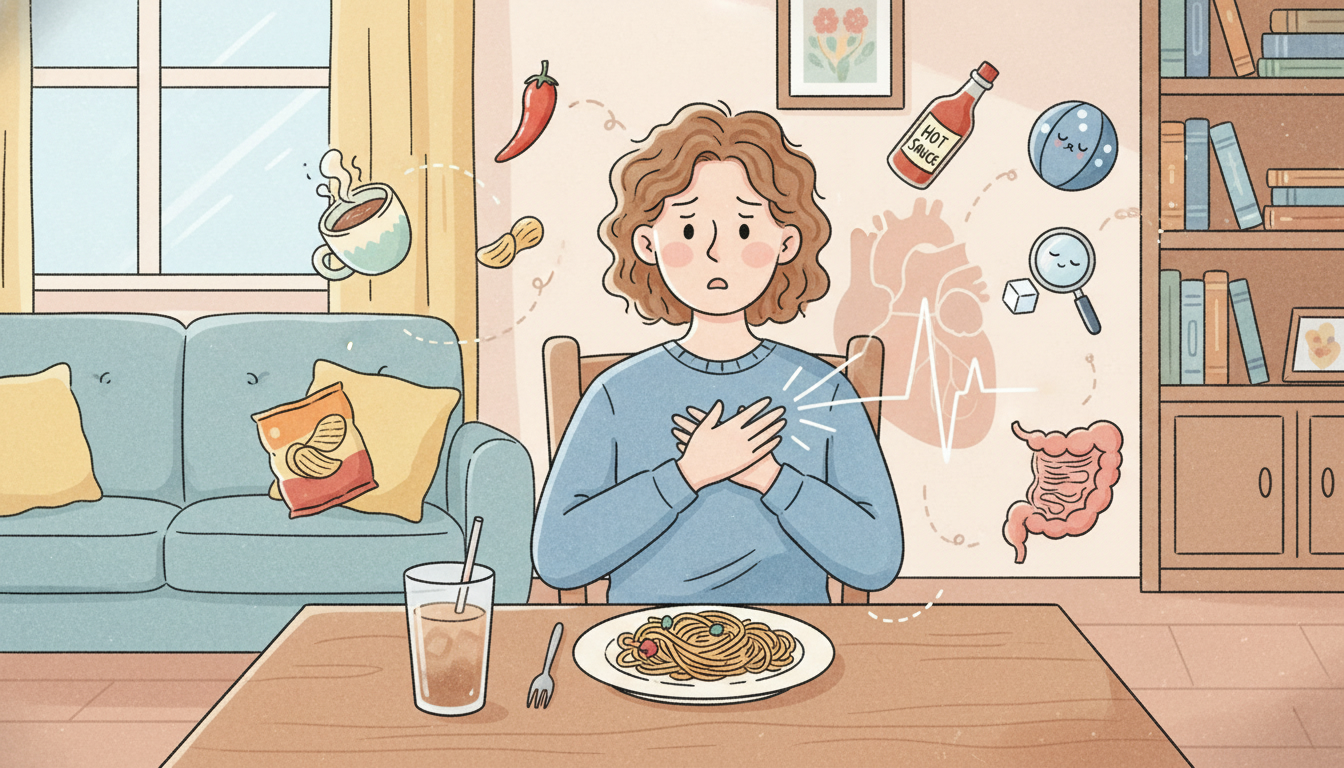
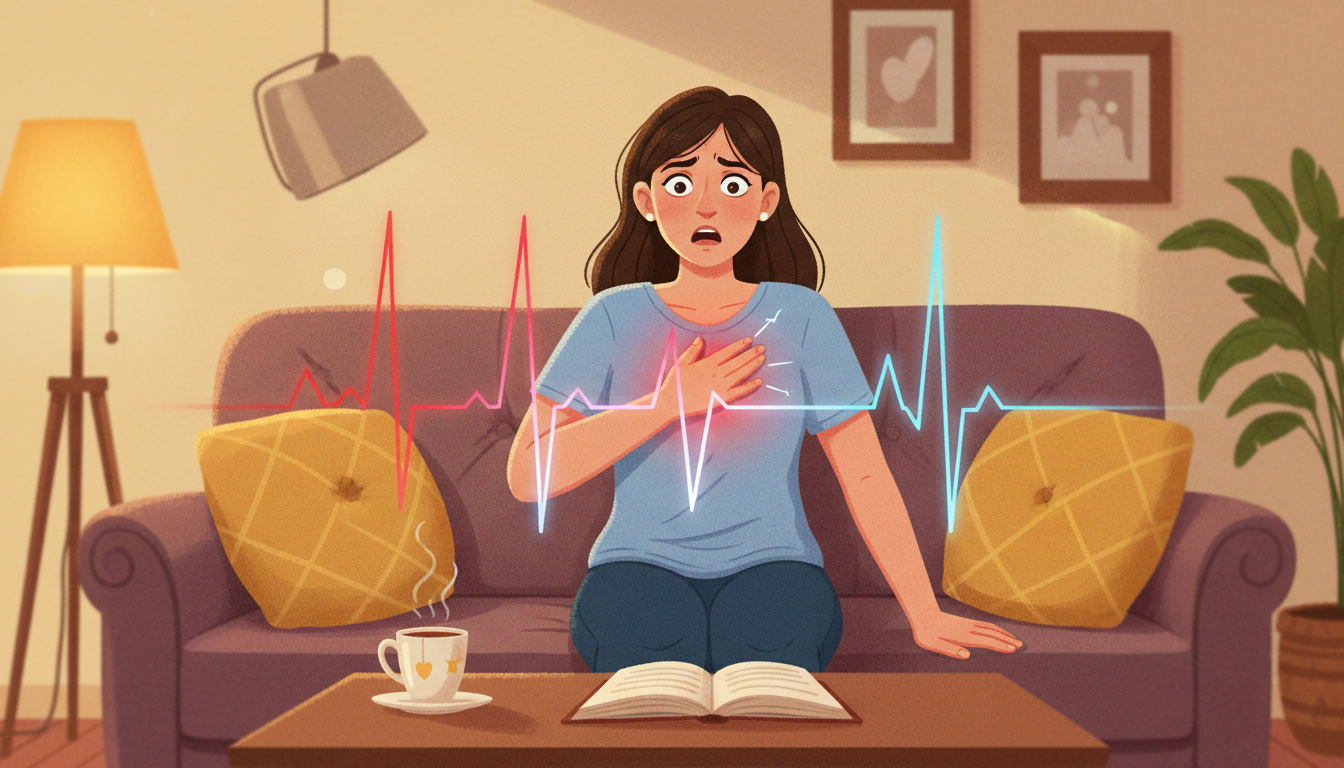
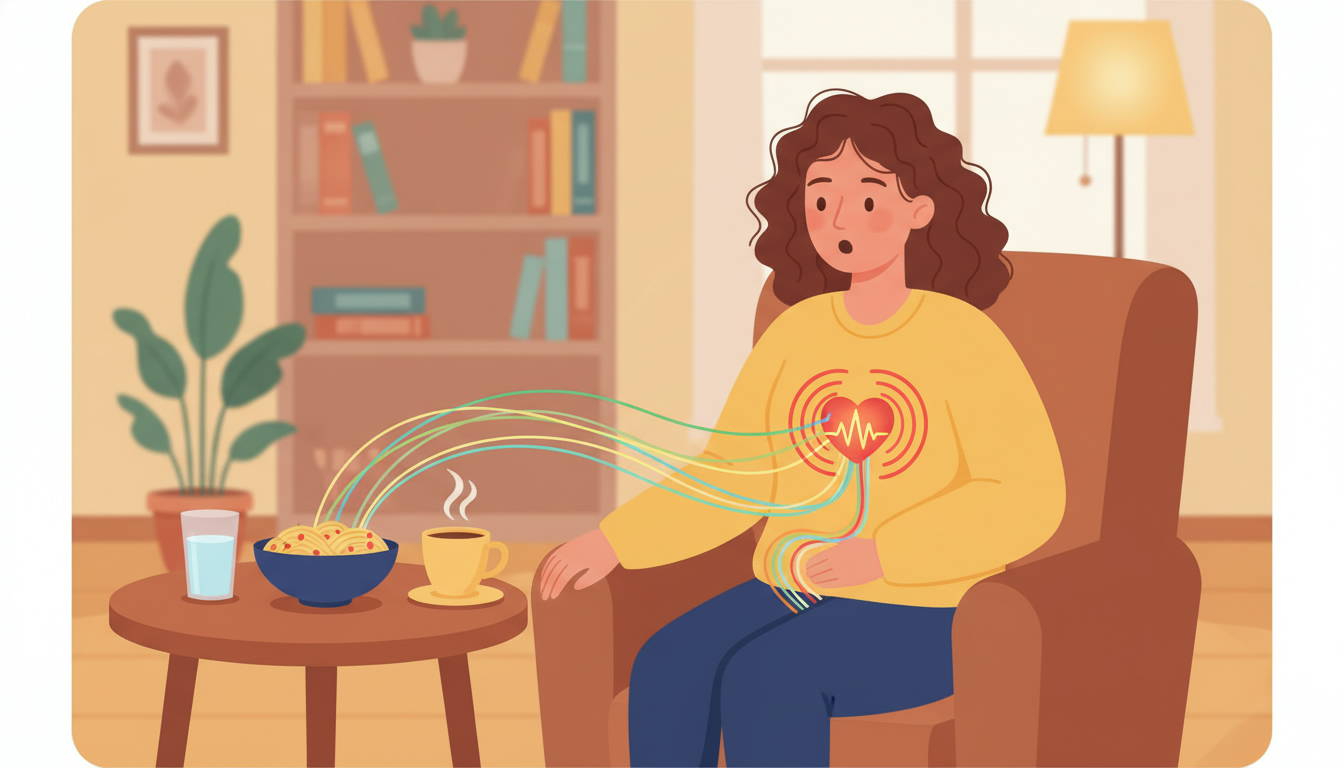
    You sit down, enjoy a meal, life is good… and then your heart suddenly feels like it’s auditioning for a drum solo. Fast heartbeat. A weird thump in your chest. Maybe a little shaky or anxious on top. And now you’re wondering: “Is this normal, or do I need to head to the ER?”

    Let’s walk through what might be going on when your heart races after eating, what’s usually harmless, what’s not, and how to calm things down without spiraling on WebMD.

    What Does “Heart Racing After Eating” Actually Mean?

    When people say their “heart is racing after eating,” they usually mean one or more of these:

    • Fast heart rate (tachycardia): resting heart rate jumps above about 100 beats per minute shortly after a meal.
    • Pounding or fluttering sensations (palpitations): you feel your heartbeat in your chest, neck, or even ears.
    • Skipped beats or extra beats: the heart feels like it “drops” or “kicks,” often from benign extra beats.

    A small increase in heart rate after eating is normal. Your body is sending more blood to your digestive system and activating what’s called the “rest and digest” response.

    The problem is when it feels sudden or intense, it comes with other symptoms such as chest pain, shortness of breath, or faintness, or it happens frequently or seems to be getting worse over time.

    Takeaway: A little bump in heart rate after a meal is common. Big, scary jumps or scary symptoms deserve attention.

    Common (Often Harmless) Reasons Your Heart Races After Eating

    There are several everyday triggers that can make your heart pound post-meal. These are very common and usually not dangerous on their own, but they are still worth paying attention to.

    1. Large, Heavy, or High-Carb Meals

    When you eat a big meal, especially one heavy in refined carbs, sugar, or fat, your body has to work harder to digest it. Blood flow shifts to your digestive tract, and your heart may beat faster to keep up.

    Think:

    • Big pasta dinner
    • Huge fast-food combo
    • Holiday buffet “I regret everything” plate

    If your blood sugar spikes quickly from lots of simple carbs or sugar, your body releases insulin to bring it down. Rapid blood sugar swings can trigger a racing heart in some people, along with shakiness or lightheadedness.

    What this feels like:

    • Fifteen to forty-five minutes after eating, your heart feels faster or more noticeable.
    • You might feel sleepy, a bit sweaty, or “off.”

    Takeaway: Big, carb-heavy meals are a classic “heart racing after eating” trigger. Smaller, balanced meals usually stress your system less.

    2. Caffeine and Stimulants (Not Just Coffee)

    Caffeine stimulates your nervous system and can increase heart rate. If your meal includes coffee or espresso, strong tea or energy drinks, pre-workout supplements, chocolate, or caffeine-containing sodas, it can all add up.

    Some people are especially sensitive, and combining caffeine with sugar, such as in sweetened iced coffee or energy drinks, is a double effect.

    Takeaway: If your meals plus caffeine lead to a racing heart, experiment with cutting back or spacing caffeine away from meals.

    3. Alcohol With Meals

    Alcohol can dilate blood vessels, lowering blood pressure, trigger an increase in heart rate to compensate, and act as a direct irritant to the heart’s electrical system in some people.

    There is even a term sometimes used informally, “holiday heart,” for heart rhythm issues or palpitations after heavy drinking, even in people without known heart disease.

    Takeaway: If your heart pounds after dinner with wine or cocktails, alcohol might be a key player.

    4. Dehydration and Electrolyte Imbalances

    If you are even mildly dehydrated, your heart may beat faster to maintain blood flow. Combine that with a big meal or salty food, and your cardiovascular system is juggling a lot at once.

    Low levels of certain electrolytes like potassium or magnesium can also contribute to palpitations or abnormal beats.

    Clues this might be you:

    • Dark urine, dry mouth, or headache
    • You have had vomiting, diarrhea, or intense sweating recently
    • You take medications like diuretics (water pills)

    Takeaway: Drink enough water through the day, not just during meals, and talk to a healthcare professional if you suspect electrolyte issues.

    5. Anxiety, Stress, and the “Oh No, What Is This?” Spiral

    If you have ever felt your heart race, then immediately felt more anxious, which made your heart race even more, you know the feedback loop.

    Anxiety can increase adrenaline, raise heart rate, and make you hyper-aware of normal body sensations. Sometimes, the original trigger might be mild, such as a small bump in heart rate from a meal, but anxiety magnifies it into a full-blown symptom episode.

    Takeaway: Your mind and body are a team. Managing stress and anxiety can reduce how intense or scary post-meal heart sensations feel.

    Medical Reasons Your Heart May Race After Eating

    Now let’s talk about when a racing heart after eating might be part of a bigger medical picture. None of this is a diagnosis, but it is helpful to know what doctors consider.

    1. Reactive Hypoglycemia (Blood Sugar Drops After Meals)

    In some people, blood sugar may drop too low a few hours after eating, particularly after a carb-heavy meal. This is called reactive hypoglycemia.

    Symptoms can include:

    • Racing or pounding heart
    • Shakiness
    • Sweating
    • Hunger or nausea
    • Feeling suddenly weak or anxious

    If you notice you feel worse one to three hours after eating, especially after sugary or high-carb meals, this is worth mentioning to your doctor.

    Takeaway: It is not just high blood sugar that causes issues. Big swings up and down can make your heart race too.

    2. Postprandial Hypotension (Blood Pressure Drop After Eating)

    Postprandial simply means “after a meal.” In postprandial hypotension, your blood pressure drops after eating because blood rushes to your digestive system, and your body does not compensate well.

    Your heart may then beat faster to keep blood flowing.

    Common symptoms include dizziness or lightheadedness after meals, weakness or feeling like you might pass out, blurry vision, and a racing heart.

    This happens more often in older adults or people with certain conditions like Parkinson’s disease, diabetes, or nervous system disorders, but it can occur in others as well.

    Takeaway: If you feel dizzy and your heart is racing after eating, especially when standing up, talk to a doctor about your blood pressure.

    3. Heart Rhythm Issues (Arrhythmias)

    Some arrhythmias, or irregular heart rhythms, can flare up around mealtimes.

    Examples include:

    • Supraventricular tachycardia (SVT): very rapid heart rate that can start and stop suddenly.
    • Atrial fibrillation (AFib): irregular, often fast heartbeat that may be noticed more after certain triggers like alcohol, big meals, or caffeine.

    Signs this might be more than just a busy digestive system include a sudden racing heart that feels very fast and does not settle within a few minutes, feeling faint, weak, or very short of breath, or an irregular, chaotic-feeling heartbeat.

    Takeaway: Intense, sudden, or irregular heart racing, especially with other symptoms, should be checked out urgently.

    4. Thyroid Problems

    An overactive thyroid (hyperthyroidism) can cause a rapid or pounding heart, anxiety or irritability, weight loss despite normal or increased eating, and heat intolerance and sweating.

    When your baseline heart rate is already high from thyroid overactivity, meals and digestion may push it even higher.

    Takeaway: If your heart races frequently, not just after eating, ask about thyroid testing.

    5. Food Sensitivities, Allergies, and Histamine

    Some people notice heart racing or palpitations after certain foods, especially foods they are allergic or sensitive to, or high-histamine foods such as aged cheeses, wine, smoked meats, or some fermented foods.

    More severe allergic reactions can cause hives, swelling, wheezing, trouble breathing, tightness in the throat, and a drop in blood pressure. This is a medical emergency and needs immediate attention.

    Takeaway: If specific foods reliably trigger symptoms, keep a log and discuss this with a professional, especially if other allergy symptoms show up.

    Is It Dangerous If Your Heart Races After Eating?

    It can be, but often it is not.

    More likely to be benign if:

    • It is mild and short-lived, lasting a few minutes.
    • It improves when you stand up, walk, or take a few slow breaths.
    • You have had a normal heart evaluation in the past and no other symptoms.

    More concerning if:

    • You have chest pain, tightness, or pressure.
    • You are short of breath at rest.
    • You feel faint, confused, or actually pass out.
    • You have known heart disease, high blood pressure, or diabetes.
    • The rhythm feels very irregular or extremely fast.

    Bottom line: When in doubt, especially with severe or new symptoms, it is much better to overreact and get checked than to underreact.

    Simple Things You Can Try at Home (Non-Emergency Situations Only)

    These are general lifestyle tips, not medical treatment, but they help many people calm post-meal heart racing.

    1. Shrink Your Meal Size

    Instead of two or three huge meals, try four or five smaller meals or snacks. Balance protein, healthy fat, and fiber at each meal to blunt blood sugar spikes.

    Example: Swap a giant plate of white pasta and garlic bread for a smaller portion of pasta with grilled chicken or tofu, vegetables, and a side salad.

    2. Go Easy on Sugar and Refined Carbs

    High-sugar foods and drinks can cause rapid swings in blood sugar and insulin.

    Try to cut back on soda, energy drinks, and large desserts, choose whole grains and fiber-rich carbs, and pair carbs with protein and fat, such as an apple with peanut butter instead of just apple juice.

    3. Watch the Caffeine and Alcohol Combo

    If you suspect caffeine or alcohol is a trigger, move coffee to earlier in the day or reduce the dose, skip energy drinks especially with meals, and limit alcohol and see if episodes improve.

    You do not have to quit everything forever, but a two to four week experiment can tell you a lot.

    4. Hydrate and Support Electrolytes

    Aim to drink water regularly through the day, not only when you are already thirsty. If you sweat a lot, are very active, or take certain medications, ask your doctor if an electrolyte drink or supplement makes sense for you.

    5. Gentle Movement After Eating

    Instead of collapsing on the couch, take a slow 10 to 15 minute walk or do light stretching. This can help digestion and keep your cardiovascular system balanced.

    6. Calm Your Nervous System

    If anxiety is in the mix, try slow, deep breathing such as inhaling for four seconds, holding for two, and exhaling for six to eight, box breathing with a four-four-four-four pattern, or grounding by looking around and naming several things you can see, feel, and hear.

    Takeaway: Small, consistent tweaks to what and how you eat can significantly reduce after-meal heart symptoms.

    When You Should Call a Doctor (Or 911)

    Call Emergency Services Right Away if:

    • Your heart is racing and you also have chest pain or pressure.
    • You have trouble breathing.
    • You have pain radiating to jaw, arm, or back.
    • You have sudden confusion, trouble speaking, or weakness on one side.
    • You faint or nearly faint.

    Do not drive yourself if you feel like you might pass out.

    Make an Appointment With Your Healthcare Provider Soon if:

    • Your heart often races after eating, even with small meals.
    • You feel dizzy, weak, or “off” after meals.
    • There is a clear pattern with certain foods, but no obvious allergy.
    • You have other ongoing symptoms such as weight loss, fatigue, anxiety, tremors, or frequent sweating.
    • You have a history of heart issues, high blood pressure, or diabetes.

    They might ask detailed questions about your meals and symptoms, check your vital signs, heart, and possibly blood pressure lying versus standing, and order tests like an EKG, Holter monitor, blood work including thyroid and glucose, or an echocardiogram.

    Takeaway: You are not bothering anyone by asking about this. Recurrent heart symptoms are exactly the kind of thing worth a professional opinion.

    How to Track Your Symptoms (So Your Doctor Can Actually Help)

    If your heart races after eating but you are not sure why, a simple log can be incredibly useful.

    For one to two weeks, note the time and content of each meal or snack, caffeine and alcohol intake including amount and time, the approximate time symptoms start after eating, what you feel such as fast heart, skipped beats, dizziness, sweating, or chest discomfort, and how long it lasts.

    You can also use a smartwatch or fitness tracker to capture approximate heart rates. These are not perfect medical devices, but they give helpful trends.

    Bring this log to your healthcare provider. It often speeds up getting to an answer.

    Takeaway: A simple notebook or phone note can turn “my heart is weird sometimes” into useful data.

    The Bottom Line: You’re Not Imagining It—and You’re Not Alone

    A racing heart after eating is common and often tied to large or high-sugar meals, caffeine or alcohol, dehydration, or stress. But sometimes it is a clue to something more, like blood pressure changes, blood sugar swings, thyroid issues, or heart rhythm problems.

    You do not need to panic, but you do deserve clarity. Start with small changes such as smaller, balanced meals, hydration, and less caffeine and alcohol. Track what you feel and when. Loop in a healthcare professional, especially if symptoms are new, intense, or frequent.

    Your heart is doing a lot for you, all day, every day. If it is sending you signals after you eat, it is worth listening.

  • Why Is My Heart Racing Right Now?

    Why Is My Heart Racing Right Now?

    Why Is My Heart Racing Right Now?

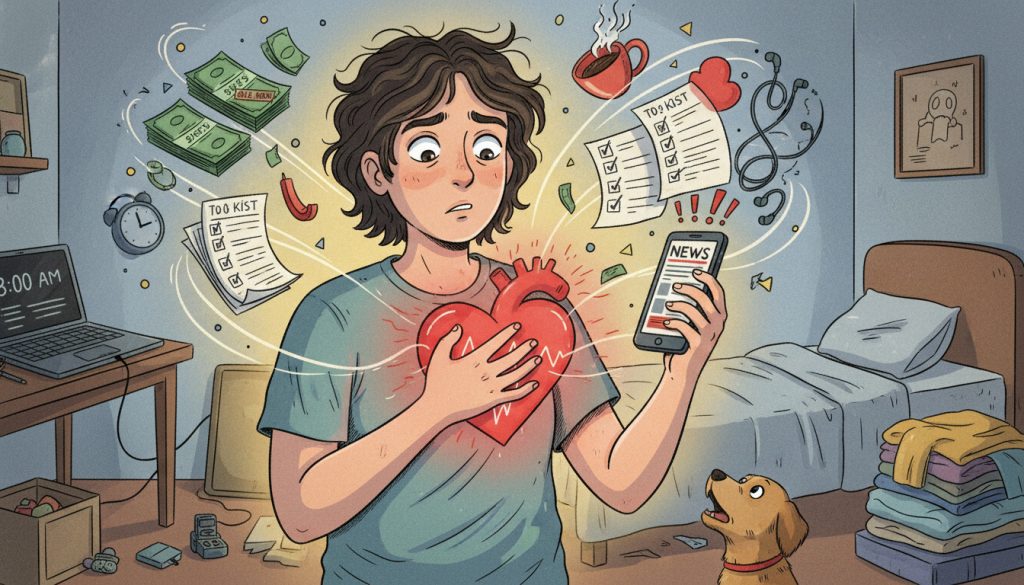
    You are sitting there minding your business when suddenly your heart decides to audition for a drum solo. No warning. No treadmill. Just boom-boom-boom in your chest.

    If you are thinking, “Why is my heart racing right now — and should I be freaking out?”, this will walk through what might be going on, when it is usually harmless, when it is not something to ignore, and what you can do in the moment.

    Quick note: This is for education, not diagnosis. If something feels seriously wrong, do not overthink it — get help.

    What Does “Heart Racing” Actually Mean?

    People describe a racing heart in a bunch of ways:

    • Pounding or thudding in your chest
    • Heartbeat that feels faster than normal
    • Fluttering, skipping, or “flip-flop” sensations
    • Feeling your pulse in your neck, ears, or chest

    Medically, a resting heart rate over about 100 beats per minute is called tachycardia. But you may feel like your heart is racing even below that if you are not used to noticing your heartbeat.

    Takeaway: “Heart racing” is usually about either speed (fast), force (pounding), rhythm (irregular) — or all three.

    Common (and Surprisingly Normal) Reasons Your Heart Is Racing Right Now

    Here are some causes that sound dramatic but are often very fixable.

    1. Stress, Anxiety, or a Mini Adrenaline Surge

    When you are anxious, your body flips into fight-or-flight mode. Your brain signals your adrenal glands to release adrenaline. That hormone:

    • Speeds up your heart rate
    • Makes your breathing faster or shallower
    • Can cause chest tightness, sweating, or a “wired” feeling

    You might notice this:

    • Right after a stressful text, email, or conflict
    • While you are doomscrolling bad news
    • Out of nowhere — because your brain revisited something stressful

    Panic attacks can make your heart race, pound, or feel like it is skipping along with dizziness or a sense of “I am about to die” — even though many people are medically fine afterward.

    Quick self-check:

    • Has anything stressful happened today?
    • Did your heart start racing around the same time as feeling worried, scared, overwhelmed, or upset?

    If yes, anxiety is high on the suspect list.

    Takeaway: Your body might not be broken; it might just be reacting (loudly) to stress.

    2. Caffeine, Energy Drinks, or Stimulants

    Coffee, energy drinks, pre-workout, certain teas, chocolate, and some medications can all crank up your heart rate.

    Common culprits:

    • Large coffees or multiple cups back-to-back
    • Energy shots or drinks
    • Strong pre-workout powders
    • Decongestants (like some cold medicines) and ADHD stimulants

    Some people are more sensitive to caffeine and stimulants than others. Even a “normal” amount can cause:

    • Jitters or shakiness
    • Racing heart
    • Feeling wired but tired

    Questions to ask yourself:

    • Did you have caffeine or an energy drink in the past 4–6 hours?
    • Did you increase your dose recently (stronger coffee, new pre-workout, new pill)?

    Takeaway: Your heart may be reacting to what is in your cup, not what is in your soul.

    3. Dehydration or Not Eating Enough

    Low fluid intake or low blood sugar can push your body into “compensate mode,” which often means:

    • Faster heart rate
    • Lightheadedness or dizziness when you stand up
    • Weakness or shakiness

    This can happen if you:

    • Have not eaten in many hours
    • Are on a new diet and barely eating carbs
    • Spent time in heat, sweated a lot, or exercised and did not rehydrate

    Fast check:

    • When was your last real meal?
    • How much water have you had today, really?

    Takeaway: Sometimes your heart is racing because your body is quietly whispering, “Water and food. Now, please.”

    4. Normal Response to Movement or Position

    If you just:

    • Walked up stairs
    • Rushed across the room
    • Stood up quickly after sitting or lying down

    Your heart rate will naturally rise to pump blood where it needs to go. If you are out of shape, tired, or recovering from illness, you may notice this more.

    There is also something called orthostatic intolerance — where standing up makes your heart beat faster and you feel a bit off — but that is something a doctor would need to evaluate if it is frequent.

    Takeaway: If your heart speeds up briefly with movement and quickly settles, that can be normal.

    5. Illness, Fever, or Infection

    When you are sick — even with something like the flu or a viral infection — it is common for your heart rate to go up.

    You might notice:

    • Fever or chills
    • Cough, sore throat, or body aches
    • Feeling weak, wiped out, or just “off”

    Your heart beats faster to help your body fight infection and move oxygen more quickly.

    Takeaway: Feeling sick plus a racing heart is not rare, but it is still something to mention to a healthcare provider, especially if you feel very unwell.

    When a Racing Heart Might Be More Serious

    Here are situations where you should not just shrug it off.

    Red-Flag Symptoms: Do Not Ignore These

    You should seek immediate medical help (ER or emergency services) if your heart is racing and you have:

    • Chest pain, pressure, squeezing, or discomfort
    • Shortness of breath that is new or severe
    • Fainting or feeling like you are about to pass out
    • Pain in your jaw, arm, back, or neck
    • A feeling of impending doom or something being very wrong
    • Confusion, trouble speaking, or weakness on one side of the body

    Those can be signs of something serious like a heart attack, dangerous heart rhythm, stroke, or another emergency.

    Also get urgent care if:

    • Your heart rate is very high and not slowing down at rest (for example, staying above 120–130 beats per minute for a while when you are just sitting)
    • The rhythm feels wildly irregular (not just a single skipped beat here or there)
    • You have a known heart condition and this feels very different from your usual

    Takeaway: If you are asking, “Is this an emergency?” and your gut says “maybe,” it is better to get checked.

    Could It Be a Heart Rhythm Problem (Arrhythmia)?

    Sometimes a racing heart comes from an arrhythmia — an abnormal heart rhythm.

    Some examples you might hear from a doctor:

    • Supraventricular tachycardia (SVT): Sudden episodes of very rapid heart rate that can start and stop abruptly.
    • Atrial fibrillation (AFib): Irregular, often fast heartbeat that may feel like fluttering or pounding.
    • Premature beats (PACs, PVCs): Extra beats that can feel like flutters, thumps, or “skipped beats.”

    These can be benign (more annoying than dangerous) or potentially serious — especially if you have other heart disease, are older, or have other medical conditions.

    Only a healthcare professional with tools like an ECG (EKG) or heart monitor can tell you for sure what type of rhythm you have.

    Signs it is worth getting evaluated soon:

    • Repeated episodes of heart racing for no obvious reason
    • Episodes that last many minutes to hours
    • Family history of sudden cardiac death or serious arrhythmias
    • You feel weak, dizzy, or breathless when it happens

    Takeaway: A racing heart can be harmless, but if it is frequent, intense, or worrying, a proper workup is the safe move.

    What to Do Right Now If Your Heart Is Racing

    If you are not having severe symptoms like chest pain, fainting, or trouble breathing, here are steps you can try to calm things down and gather useful information.

    1. Check the Basics

    • Sit or lie down somewhere safe. Do not keep walking around or driving if you feel off.
    • Check your pulse on your wrist or neck, or use a smartwatch or fitness tracker if you have one.

    Note roughly:

    • How fast it seems (for example: “around 110 bpm”)
    • Whether it feels regular (steady) or irregular (all over the place)
    • What you were doing right before it started

    Write this down or put it in your phone. It is very useful for a doctor later.

    2. Try a Slow-Breathing Reset

    You can help your nervous system shift gears using your breath.

    Try this for 1–3 minutes:

    1. Inhale gently through your nose for a count of 4.
    2. Hold your breath for a count of 4.
    3. Exhale slowly through pursed lips for a count of 6–8.
    4. Repeat.

    If holding your breath feels uncomfortable, skip the hold and just inhale for 4 and exhale for 6–8.

    Often, this can lower anxiety and help your heart rate drift downward if the cause is stress or adrenaline.

    3. Remove Obvious Triggers

    Ask yourself:

    • Have I had caffeine or energy drinks recently? If so, no more today.
    • Am I overheated? Move to a cooler place and remove extra layers.
    • Am I dehydrated? Sip water slowly.
    • Did I skip eating? Have a light, balanced snack if it is safe for you.

    4. Try Grounding Your Mind

    Because anxiety and heart racing feed each other (your heart races, you panic, your heart races more), grounding can help break the loop.

    You can try the 5–4–3–2–1 technique:

    • Name 5 things you can see
    • 4 things you can feel
    • 3 things you can hear
    • 2 things you can smell
    • 1 thing you can taste

    Giving your brain a specific task can lower that spiraling “what if?” chatter.

    5. Decide What Level of Care You Need

    After a few minutes of calm breathing and sitting:

    • If your heart rate is still very high, you feel worse, or you have any red-flag symptoms, seek urgent or emergency care.
    • If it is slowing down, you feel more normal, and there are no other serious symptoms, it is still wise to mention this to your primary care provider and ask if you need an ECG or heart monitor.

    Takeaway: Calm the body, gather data, then decide whether to ride it out or get seen — but do not ignore your instincts.

    How to Reduce Future “Why Is My Heart Racing?” Moments

    You cannot control everything, but you can lower how often this happens or how intense it feels.

    1. Tame the Stimulants

    • Set a caffeine cutoff time (for example, none after 2 p.m.).
    • Track how you feel after coffee, energy drinks, or pre-workout.
    • Consider cutting back for a week or two to see if racing episodes drop.

    2. Support Your Body’s Basics

    • Hydration: Carry a water bottle and actually drink from it.
    • Regular meals: Do not go many hours running only on caffeine.
    • Sleep: Aim for something in the 7–9 hour range if you can.

    Your heart likes boring consistency.

    3. Build Stress Valves Into Your Day

    You do not have to become a meditation expert, but even small practices help:

    • 5–10 minutes of slow breathing or a guided meditation
    • Short walks outside
    • Stretching or light yoga
    • Journaling or brain-dumping your worries

    The lower your baseline stress, the less often your body overreacts with adrenaline dumps.

    4. Get a Proper Medical Checkup

    Especially if:

    • You are having repeated heart-racing episodes
    • You have a history of heart issues, thyroid problems, anemia, or other medical conditions
    • You are on medications that might affect heart rate

    A provider might:

    • Do blood tests (for anemia, thyroid function, electrolytes, and more)
    • Order an ECG (EKG)
    • Give you a wearable heart monitor

    It is not about being dramatic — it is about ruling out the big stuff so your brain can stop going to worst-case scenarios every time your chest thumps.

    Takeaway: Small daily habits plus a good checkup can reduce both the episodes and the anxiety around them.

    When Googling “Heart Racing Right Now” Makes Everything Worse

    The pattern often goes like this: your heart starts pounding, you search your symptoms online, and within a few clicks, you are convinced it is the worst possible thing.

    Information is helpful until it tips into panic fuel.

    If you catch yourself doom-searching:

    • Step away from the screen for a bit.
    • Focus on what you actually know: your symptoms, your history, and what your body is doing right now.
    • Use that energy to either calm yourself with the exercises above or call a real human professional who can evaluate you.

    Takeaway: The internet is not your cardiologist. Use it to get informed, not terrified.

    The Bottom Line: What Your Racing Heart Might Be Saying

    If your heart is racing right now, it could be:

    • A normal reaction to stress, caffeine, dehydration, or movement
    • A sign your body wants basics like rest, food, or water
    • A symptom of anxiety, panic, or being chronically on edge
    • Occasionally, a warning sign of a heart rhythm issue or another medical problem

    You do not have to figure it all out alone. If you are scared, symptoms are intense, or something just feels off in a serious way, seeking medical care is not overreacting — it is being careful with the only heart you have.

    And if this turns out to be “just” stress or a benign rhythm quirk, that is still valuable information. It means you can work on triggers, build calming habits, and learn your body’s patterns.

    So take a deep breath in, a slow breath out, and if you are in doubt about your racing heart, reach out to a professional who can check you properly. You are not strange; you are just a human with a very dramatic internal drum section.

  • Why You Get Heart Palpitations After Eating

    Why You Get Heart Palpitations After Eating

    Heart Palpitations After Eating: What Might Be Going On

    You’re sitting there enjoying a perfectly normal meal and then your heart suddenly decides to audition for a drum solo. Fast, fluttery, pounding, or a weird extra beat — palpitations after eating can be scary, especially when they hit out of nowhere. Let’s walk through what might be going on, when it’s usually harmless, and when you should get it checked out.

    Quick note: This is education, not medical diagnosis. If you’re worried about your heart, talk to a healthcare professional.

    What Are Heart Palpitations, Exactly?

    Heart palpitations are the sensation that your heart is beating in an unusual way. People often describe them as:

    • Pounding
    • Fluttering
    • Racing
    • Skipping beats or “thumps” in the chest or throat

    Sometimes palpitations are completely benign (annoying but not dangerous). Other times, they’re a sign of an underlying heart rhythm problem, thyroid issue, anemia, or other medical condition.

    Key takeaway: Palpitations are a symptom, not a diagnosis. The real question is: what’s triggering them — and is it serious?

    Why Do I Get Palpitations After Eating?

    Digestion is not a passive background process. After you eat, your body ramps up a lot of activity:

    • Blood flow to your digestive tract increases.
    • Hormones like insulin and gut peptides are released.
    • Your nervous system shifts a bit to handle digestion.

    All of that can influence your heart. Here are common, non–life-threatening reasons people notice palpitations after meals:

    1. Big, Heavy Meals

    Large meals — especially ones high in simple carbs, sugar, or fat — can trigger palpitations for some people.

    Why?

    • A big meal diverts more blood to the gut, and your heart may beat faster to keep up.
    • Spikes in blood sugar and insulin can affect heart rate in sensitive people.
    • Large volumes of food can physically push up against the diaphragm and make you feel your heartbeat more.

    You might notice:

    • Palpitations 15–60 minutes after eating
    • Feeling overly full, sluggish, or a bit lightheaded

    Takeaway: If your heart races after Thanksgiving-style portions, your body may just be saying, “Smaller plates, please.”

    2. Caffeine and Stimulants (Hidden and Obvious)

    You already know coffee and energy drinks can speed up your heart. But stimulants can hide in:

    • Chocolate (especially dark chocolate)
    • Pre-workout supplements
    • Strong tea
    • Some sodas or “zero sugar” energy drinks
    • Certain cold meds or decongestants

    If you’re sensitive to caffeine or other stimulants, having them with or after a meal can make palpitations more noticeable.

    Takeaway: If your “simple lunch” always includes iced coffee, that combo may be stirring things up.

    3. Sugar and Refined Carbs

    White bread, pastries, sugary drinks, desserts — sound familiar?

    Meals high in refined carbs or sugar can cause rapid blood sugar spikes followed by sharp drops. That swing can trigger:

    • Shakiness
    • Anxiety or “wired” feeling
    • Sweating
    • Palpitations

    People with insulin resistance, prediabetes, or diabetes may be especially prone to noticing heart flutters after carb-heavy meals.

    Takeaway: If you get palpitations with donuts, soda, and white pasta but not with balanced meals, blood sugar swings could be playing a role.

    4. High-Sodium or Ultra-Processed Foods

    Salty, processed, or fast foods can:

    • Increase fluid retention
    • Temporarily raise blood pressure
    • Make your heart work a bit harder

    In people with underlying heart or blood pressure issues, this can contribute to palpitations or a pounding heartbeat, especially after a big salty meal such as ramen, pizza, fried foods, or takeout.

    Takeaway: A fast-food run here and there is one thing — but if salt bombs reliably equal heart pounding, that’s a valuable pattern to note.

    5. Alcohol

    Alcohol can trigger palpitations during or after drinking, and even the next day. There’s a term called “holiday heart syndrome” used when otherwise healthy people develop heart rhythm issues (often atrial fibrillation) after heavy drinking, especially around parties and holidays.

    Even moderate amounts of alcohol can:

    • Dehydrate you
    • Affect your electrolytes
    • Interfere with the heart’s electrical system

    Takeaway: If your chest flutters tend to show up after wine with dinner or social drinking, alcohol may be a key trigger.

    6. Food Sensitivities, Reflux, and Bloating

    Sometimes the issue isn’t the heart itself — it’s what’s happening right next door in your esophagus and stomach.

    • Acid reflux (GERD): Burning in the chest plus palpitations after meals can feel terrifyingly similar to heart trouble.
    • Gas and bloating: A very full, gassy stomach can put pressure under the diaphragm and chest, making heartbeats more noticeable.
    • Food sensitivities: Some people report palpitations after eating gluten, dairy, MSG, or certain additives, likely through a mix of inflammation, nervous system activation, or reflux.

    Takeaway: Chest sensations from the digestive tract can amplify how aware you are of your heartbeat — and awareness itself often makes palpitations feel worse.

    7. Anxiety and the Mind–Body Loop

    If you’ve ever felt palpitations after eating and gotten scared, your brain may now be on high alert at every meal.

    What can happen:

    1. You feel a normal or mild heartbeat change after food.
    2. You worry it’s dangerous.
    3. Anxiety ramps up.
    4. Adrenaline kicks in, and your heart beats faster or harder.
    5. You notice it even more, and the cycle continues.

    This doesn’t mean “it’s all in your head.” It means your nervous system is doing exactly what it’s wired to do when it thinks there’s a threat.

    Takeaway: Fear of palpitations can actually fuel more palpitations — especially around predictable triggers like meals.

    8. Medications and Medical Conditions

    Sometimes, palpitations after eating are related to an underlying issue rather than the meal itself. For example:

    • Thyroid problems (overactive thyroid) can cause a fast heartbeat that you might notice more after meals.
    • Anemia (low red blood cells) can make your heart work harder to deliver oxygen, so any extra demand — like digesting food — might bring on palpitations.
    • Low blood sugar (from diabetes meds or going too long without eating) can cause shakes, sweating, and palpitations, especially when you finally do eat.
    • Certain medications, including inhalers, decongestants, ADHD meds, and some weight-loss drugs, can also increase heart rate.

    Takeaway: If palpitations are frequent or intense, you need a medical workup to rule these out.

    Is It Normal to Have Palpitations After Eating?

    Mild, brief palpitations that:

    • Happen occasionally
    • Have clear triggers (big meals, caffeine, sugar)
    • Go away on their own
    • Aren’t accompanied by scary symptoms

    are common and often not dangerous in otherwise healthy people.

    But you shouldn’t just assume, especially if this is new for you, it’s happening more often, or it feels intense or lasts a long time.

    Takeaway: Common does not equal harmless for every person. When in doubt, ask your doctor.

    Red-Flag Symptoms: When to Call a Doctor ASAP

    If palpitations after eating come with any of these, seek urgent or emergency care:

    • Chest pain, tightness, or pressure
    • Shortness of breath (especially at rest)
    • Fainting or feeling like you might pass out
    • Severe dizziness
    • Pain radiating to jaw, arm, or back
    • Sudden onset of very rapid, regular heartbeats that won’t slow down

    If something feels seriously wrong, do not wait it out. Go to the ER or call emergency services.

    For non-emergency but concerning situations, schedule a visit with your primary care doctor or a cardiologist if:

    • Palpitations happen most days
    • They last more than a few minutes regularly
    • You have a history of heart disease, high blood pressure, diabetes, or thyroid problems
    • You’re on medications that affect heart rate

    Takeaway: Gut instinct matters. If you’re worried, that alone is a reason to get checked.

    How Doctors Usually Evaluate Palpitations

    If you see a clinician about palpitations after eating, they might:

    • Ask detailed questions about:
      • When palpitations happen (before, during, after meals)
      • What you ate and drank
      • Other symptoms (dizziness, chest pain, anxiety, sweating)
      • Medications, supplements, caffeine, and alcohol
    • Perform a physical exam
    • Do tests such as:
      • ECG (electrocardiogram): A quick snapshot of your heart rhythm.
      • Blood tests: To check for anemia, thyroid issues, electrolytes, and more.
      • Holter monitor or event monitor: A portable device you wear for 24 hours or longer to track your heart rhythm during real life, including meals.
      • Echocardiogram: An ultrasound of the heart if there’s concern about structure or function.

    Takeaway: Getting evaluated isn’t just about finding something wrong. It’s also about getting reassurance if everything looks okay.

    What Can I Do to Reduce Palpitations After Eating?

    While you should rule out serious causes with a healthcare professional, there are practical lifestyle tweaks that often help.

    1. Change How You Eat

    Try:

    • Smaller, more frequent meals instead of huge ones.
    • Eating more slowly to give your body time to respond.
    • Avoiding lying down right after eating, especially if you get reflux.

    This can ease the cardiovascular load and reduce big swings in blood flow and hormones.

    2. Rethink What You Eat and Drink

    Experiment with:

    • Cutting back on caffeine, especially around meals.
    • Reducing ultra-processed foods high in sugar and refined carbs.
    • Limiting salty takeout and fast food.
    • Moderating alcohol intake.

    You don’t have to eat perfectly — just notice patterns. Maybe coffee is fine with breakfast, but not after dinner. Maybe soda with a meal is your personal trigger.

    3. Balance Your Plate

    To keep blood sugar steadier:

    • Include protein (eggs, beans, chicken, tofu, Greek yogurt).
    • Add healthy fats (olive oil, nuts, avocado).
    • Choose high-fiber carbs (oats, quinoa, beans, whole grains, veggies) instead of only white bread, sweets, or juice.

    A more balanced meal can reduce that spike–crash roller coaster that sometimes fuels palpitations and anxiety.

    4. Hydrate and Watch Electrolytes

    Dehydration can make palpitations worse, especially if you’re drinking caffeine or alcohol.

    • Drink water regularly through the day, not just at meals.
    • If you exercise heavily or sweat a lot, you may benefit from occasional electrolyte drinks, but avoid super sugary or ultra-caffeinated ones if palpitations are an issue.

    5. Support Your Nervous System

    If anxiety or hyperawareness is part of the picture, calming your nervous system can help reduce both palpitations and your reaction to them.

    Tools to try (especially after meals):

    • Slow, deep breathing, such as inhaling for 4 seconds and exhaling for 6–8 seconds for a few minutes.
    • A gentle walk after eating instead of scrolling and stressing.
    • Limiting doomscrolling or stressful conversations at the table.

    6. Keep a Simple Symptom and Food Log

    For 1–2 weeks, jot down:

    • What and when you ate and drank
    • When palpitations occurred and how they felt
    • Other factors: sleep, stress, menstrual cycle (if applicable), exercise, medications

    Patterns you (and your doctor) might notice include:

    • Palpitations mainly after high-sugar meals
    • Worse with wine or cocktails
    • Linked to eating late at night
    • Dominant on days with high stress plus coffee

    Takeaway: Small, realistic changes and a bit of tracking can give you a surprising amount of control — and better data for your doctor.

    So, Should I Be Worried About Palpitations After Eating?

    Here’s the bottom line:

    • Palpitations after meals are common and often tied to things like big portions, sugar, caffeine, alcohol, or reflux.
    • They can also be made worse by anxiety and your brain’s very understandable fear of anything heart-related.
    • Sometimes, though, they’re a clue to something deeper — like a heart rhythm issue, thyroid problem, anemia, or blood sugar disorder.

    You don’t need to panic, but you do deserve clarity.

    Smart next steps:

    1. Notice your patterns: what you eat, when symptoms happen, and what else is going on (stress, sleep, medications).
    2. Make a few gentle changes: smaller meals, less caffeine and sugar, and better hydration.
    3. Book an appointment with a healthcare provider, especially if:
      • This is new or getting worse.
      • You have other health conditions.
      • You’re feeling scared and want answers.

    Your heart is important. If it’s doing something that worries you — even if it might be “nothing” — that’s worth checking out.

  • Panic Attack Or Heart Attack?

    Panic Attack Or Heart Attack?

    Panic Attack vs Heart Attack: How to Tell the Difference

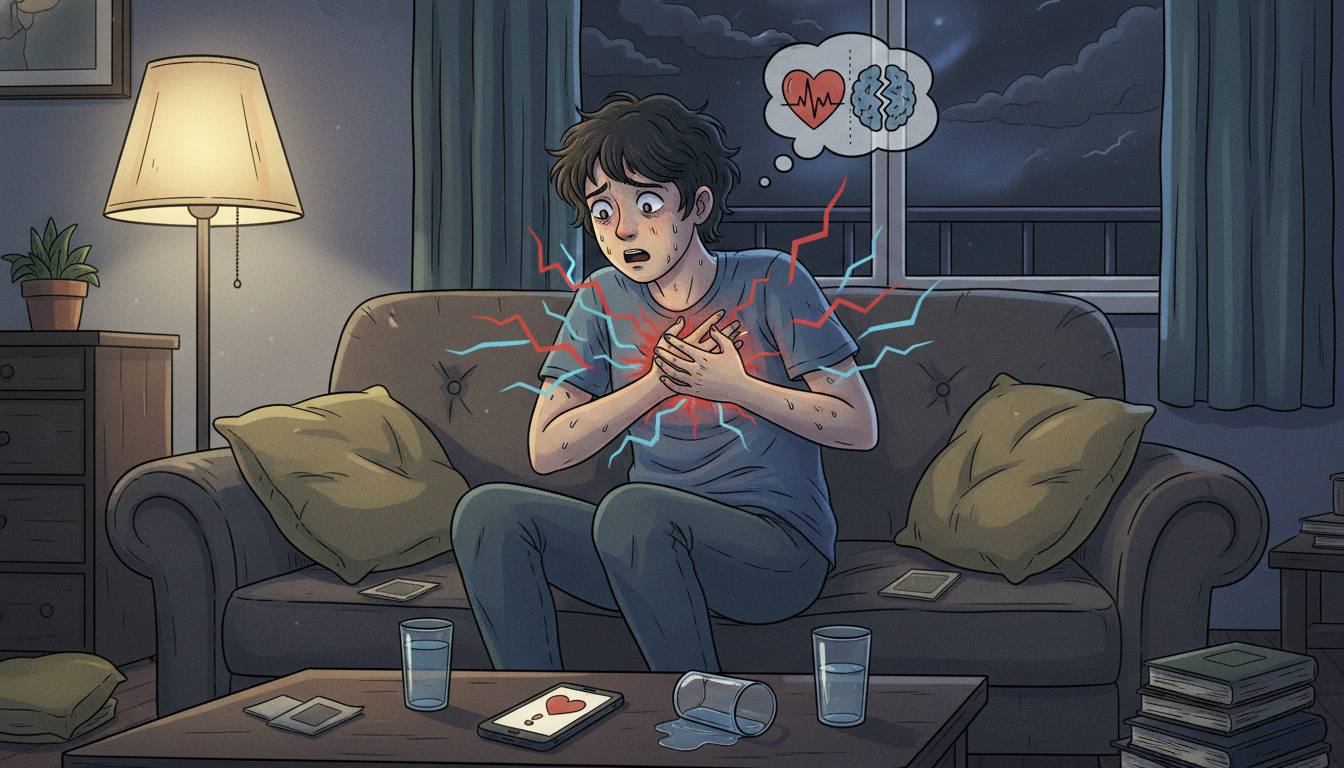
    You are sitting on the couch, scrolling your phone, when it hits: your chest feels tight, your heart is racing, you are sweating, dizzy, and suddenly very aware of your own mortality.

    One thought crashes through your brain: “Am I having a heart attack or just a panic attack?”

    If you have ever had that moment, you know it is terrifying. And to make it worse, panic attacks and heart attacks can feel shockingly similar.

    This guide will walk you through:

    • The key differences between a panic attack and a heart attack
    • Common symptoms of each
    • Red-flag signs that mean you should call 911 right now
    • What to do in the moment when you cannot tell which it is

    This is not a DIY diagnostic tool. It is a clarity-and-calm guide so you are not completely in the dark when your body is reacting strongly.

    Important: If you think you might be having a heart attack, treat it like a heart attack and call 911. It is always better to be checked and told “you are okay” than the other way around.

    Panic attack vs heart attack: Why they are so easy to confuse

    Let us start with the overlap.

    Both panic attacks and heart attacks can cause:

    • Chest pain or discomfort
    • Racing or pounding heart
    • Sweating
    • Shortness of breath
    • Nausea or stomach upset
    • Feeling like something is very wrong (impending doom)

    The difference is mainly in what is happening in your body and the pattern of symptoms over time:

    • A heart attack happens when blood flow to part of your heart is blocked. This can damage heart muscle and is a medical emergency.
    • A panic attack is a surge of intense fear or discomfort, often triggered by stress or sometimes appearing “out of nowhere.” Your body goes into fight-or-flight mode: adrenaline, fast breathing, and a racing heart.

    Key takeaway: The feelings can overlap, but a heart attack is a plumbing problem in your heart; a panic attack is more like your alarm system going into overdrive.

    What is a panic attack?

    A panic attack is a sudden episode of intense fear or discomfort that peaks within minutes. Panic attacks often include physical symptoms that can feel life-threatening, even when they are not.

    Common panic attack symptoms include:

    • Racing or pounding heart
    • Chest pain or tightness
    • Shortness of breath or feeling like you cannot get enough air
    • Sweating or chills
    • Trembling or shaking
    • Nausea or stomach distress
    • Dizziness or feeling faint
    • Numbness or tingling (especially in hands, feet, or face)
    • Feeling detached from reality (“this does not feel real”)
    • Fear of losing control or “going crazy”
    • Fear of dying

    How panic attacks usually behave

    While everyone is different, panic attacks often:

    • Come on suddenly and peak within 10 minutes, then gradually ease over 20–30 minutes (sometimes longer)
    • May be linked to stress, phobias, social situations, or sometimes happen “out of the blue”
    • Can leave you exhausted but usually do not cause physical damage to the heart in otherwise healthy people

    You might notice a pattern over time: similar triggers, similar sensations, and similar “I survived that” endings.

    Mini-takeaway: Panic attacks feel dangerous, but they are usually not physically dangerous. However, you should never assume chest pain is “just anxiety” without a medical evaluation.

    What is a heart attack?

    A heart attack (myocardial infarction) happens when one of the arteries that supply blood to your heart gets blocked. This can damage or destroy part of the heart muscle and is a medical emergency.

    Heart attacks are a leading cause of death, but getting rapid treatment (ideally within the first 1–2 hours of symptom onset) dramatically improves outcomes.

    Common heart attack symptoms include:

    • Chest discomfort: pressure, squeezing, fullness, or pain in the center or left side of the chest that lasts more than a few minutes or goes away and comes back
    • Pain or discomfort radiating to one or both arms, back, neck, jaw, or upper stomach
    • Shortness of breath (with or without chest discomfort)
    • Cold sweat
    • Nausea, vomiting, or indigestion-like discomfort
    • Lightheadedness or sudden dizziness

    Heart attack patterns to know

    Heart attack symptoms can:

    • Come on suddenly and intensely (the classic movie-style clutching the chest)
    • Or start slowly with mild pain or discomfort that builds over minutes to hours

    Not everyone has “crushing” chest pain. Some people, especially women, older adults, and people with diabetes, may have more subtle or atypical symptoms like:

    • Unusual fatigue
    • Shortness of breath
    • Pressure or discomfort in the back, jaw, or shoulders
    • A feeling of “I just do not feel right” that will not go away

    Mini-takeaway: Heart attacks are not always dramatic, but they are always an emergency. If in doubt, get checked.

    Panic attack or heart attack? Key differences you might notice

    You cannot safely self-diagnose a heart attack at home. But understanding patterns can help you know when to be extra cautious.

    Think of these as clues, not rules.

    1. Type and location of chest pain

    Panic attack:

    • Often sharp, stabbing, or very tight
    • May stay in one small area of the chest
    • Can worsen when you focus on it or take very deep breaths

    Heart attack:

    • More often described as pressure, squeezing, fullness, or heavy pain
    • Usually in the center or left side of the chest
    • May radiate to the arm, neck, jaw, back, or upper stomach

    2. Trigger and timing

    Panic attack:

    • Frequently linked to stress, fear, crowds, confined spaces, or health worries
    • Often starts suddenly and peaks quickly (within about 10 minutes)

    Heart attack:

    • Can occur during physical exertion, emotional stress, or even at rest or during sleep
    • Symptoms may build slowly over minutes or hours and keep going or cycling

    3. Breathing and sensations

    Panic attack:

    • You may feel like you cannot get enough air and start breathing fast
    • Tingling in hands, feet, or around the mouth is common (from over-breathing)
    • You may feel detached, unreal, or like you are watching yourself

    Heart attack:

    • Shortness of breath might appear with or without chest pain
    • Less likely to cause tingling in hands or face from breathing changes
    • More likely to be paired with cold sweats, nausea, or radiating pain

    4. Duration

    Panic attack:

    • Intensity usually peaks within 10 minutes, then gradually lessens
    • You may feel “off” for a while afterward but the worst part passes

    Heart attack:

    • Discomfort usually lasts more than a few minutes, may go away and return
    • Often does not fully resolve without medical treatment

    5. Risk factors

    These do not decide what you are having, but they matter.

    Heart attack risk goes up with:

    • Age (especially 45+ for men, 55+ for women)
    • Smoking
    • High blood pressure, high cholesterol, or diabetes
    • Obesity or sedentary lifestyle
    • Family history of early heart disease

    Panic attacks are more common with:

    • History of anxiety or panic disorder
    • Recent major stress or trauma
    • Thyroid problems or certain medications (as triggers)
    • Family history of anxiety disorders

    Mini-takeaway: Patterns can hint at what is going on, but never use this list to talk yourself out of calling 911 if something feels seriously wrong.

    Real-life style scenarios

    Sometimes it is easier to recognize patterns in stories. These are examples, not rules.

    Scenario 1: The sudden wave at the grocery store

    You are standing in line. Out of nowhere, your heart starts pounding. Your chest feels tight. Your hands tingle, you feel dizzy, like you might pass out. You are suddenly terrified you will collapse in front of strangers.

    Within 10–15 minutes, the worst of it passes. You feel shaky, drained, and embarrassed.

    This pattern, sudden onset, intense fear, tingling, and relatively quick peak, fits more with a panic attack. But if this is your first time with chest pain, it is still reasonable to get evaluated.

    Scenario 2: The slow burn while watching TV

    It is evening and you are relaxed. You notice a pressure in the center of your chest. It is not stabbing, but it feels like something is sitting on your chest. After 20 minutes, it is still there.

    Then you notice it is starting to spread into your left arm and jaw. You are a 58-year-old with high blood pressure and high cholesterol.

    This pattern, pressure-type pain, lasting longer than a few minutes, radiating to arm and jaw, plus risk factors, is very concerning for a heart attack.

    That is a call 911 immediately situation.

    Scenario 3: The workout confusion

    You are on the treadmill. You feel chest discomfort and shortness of breath. When you stop, the pain eases a bit but does not fully go away. You are 45, you smoke, and heart disease runs in your family.

    Even if you have a history of anxiety, this must be treated as potential heart trouble until proven otherwise.

    Mini-takeaway: If there is any reasonable chance it is your heart, get emergency help. Anxiety can be treated; a missed heart attack can be fatal.

    When to call 911 immediately

    Use this as your “do not overthink it, just act” list.

    Call 911 (or your local emergency number) right away if:

    • You have chest pain, pressure, squeezing, or discomfort that:
      • Lasts more than a few minutes, or
      • Goes away and comes back
    • The pain spreads to your arm, back, neck, jaw, or upper stomach
    • You have chest discomfort plus:
      • Shortness of breath
      • Cold sweat
      • Nausea or vomiting
      • Lightheadedness or fainting
    • You feel an unexplained sense of doom or “about to die” with chest symptoms
    • You have heart disease, are older, or have risk factors, and the symptoms are new or more intense than usual

    If you are with someone and they collapse, complain of severe chest pain, or seem to be having a heart attack, call 911 first, then follow the operator’s guidance.

    Mini-takeaway: In a real emergency, seconds matter more than pride. No one in the ER will be upset that you came in to be checked.

    What to do right now if you are not sure

    If you are having symptoms as you read this and feel unsure, here is a calm step-by-step:

    1. Check your gut and the red flags.
      • Severe, crushing, pressure-like chest pain? Radiating to arm or jaw? Short of breath, nauseous, sweaty? Call 911.
    2. If symptoms are milder but scary and new, especially with risk factors (age, blood pressure, cholesterol, smoking, family history), it is still wise to seek urgent care or ER evaluation.
    3. If you have been evaluated before for similar symptoms and told it was panic or anxiety, but this episode feels different, stronger, or you are not sure, err on the side of getting checked again.
    4. While you wait for help or if a clinician has already ruled out a heart issue and says it is likely panic, try grounding:
      • Slow breathing: inhale for 4 seconds, exhale for 6 seconds. Repeat.
      • The 5–4–3–2–1 technique: name 5 things you see, 4 you can touch, 3 you hear, 2 you smell, 1 you can taste.
      • Remind yourself: “I have felt like this before and survived. This wave will pass.”

    Mini-takeaway: When you cannot tell if it is panic or heart, you treat it as heart until a medical professional says otherwise.

    Long-term: Dealing with recurring panic attacks

    If you have been told by a healthcare professional that your heart is healthy and your episodes are panic attacks, the next step is management and prevention, not just enduring each one.

    Evidence-based options include:

    • Cognitive behavioral therapy (CBT): Helps you understand and rewire the thoughts and body-sensations spiral that leads to panic.
    • Exposure-based therapy: Gradually and safely exposes you to sensations or situations that trigger panic, so they become less terrifying.
    • Medication: Some people benefit from SSRIs or other medications; this is a conversation with a healthcare provider or psychiatrist.
    • Lifestyle foundations:
      • Regular movement (even walking)
      • Limiting caffeine and alcohol
      • Prioritizing sleep
      • Stress-management practices (meditation, breathing exercises, journaling)

    If panic attacks are affecting your work, relationships, or ability to leave the house, it is absolutely worth getting professional help. Panic disorder is very treatable.

    Mini-takeaway: If your heart is okay but your anxiety is not, that is still real, and you deserve support.

    When you have already had a heart attack or heart scare

    If you have previously had a heart attack, stent, or other heart condition, new chest symptoms can trigger panic on top of real physical sensations. That is incredibly stressful.

    Important steps in that situation:

    • Work closely with a cardiologist and primary care clinician.
    • Ask them to explain your specific warning signs and when to go straight to the ER.
    • Consider cardiac rehab programs; they often address both physical and emotional recovery.
    • Ask about mental health support. Anxiety and depression are common after cardiac events and treating them can improve quality of life.

    Mini-takeaway: Heart history plus anxiety is a double load. You do not have to carry it without a team.

    The bottom line: You do not have to guess alone

    Here is a simple summary:

    • Panic attacks and heart attacks share symptoms, especially chest pain, racing heart, and shortness of breath.
    • Panic attacks usually come on quickly, peak within minutes, and often include intense fear, tingling, and a feeling of unreality.
    • Heart attacks more often involve pressure-type chest pain, may radiate to the arm, jaw, or back, and do not fully let up without treatment.
    • Risk factors (age, blood pressure, cholesterol, smoking, family history) increase the odds a symptom is heart-related.
    • If you are not sure, treat it as a heart emergency and call 911.

    You are not being “dramatic” for taking your health seriously.

    If you have had repeated scares, whether they turned out to be panic, heart issues, or both, this is your nudge to:

    • Schedule a check-in with a healthcare professional
    • Talk openly about both physical and mental health
    • Create a clear plan for what to do if it happens again

    That way, the next time your chest tightens and your thoughts spiral, you will have more than fear, you will have a plan.

    Disclaimer: This article is for general information and education only. It is not a substitute for personal medical advice, diagnosis, or treatment. If you have concerning symptoms, especially chest pain or trouble breathing, seek emergency care immediately.

  • Sudden Heart Palpitations: Should You Worry?

    Sudden Heart Palpitations: Should You Worry?

    Sudden Heart Palpitations: What They Mean and What to Do

    You are sitting on the couch, scrolling your phone, when suddenly your heart does a weird flip-flop. Skip. Thud. Flutter. Instant panic: “Am I having a heart attack?” If that sounds familiar, you are not alone.

    Sudden heart palpitations are one of the most common reasons people end up in urgent care or searching symptoms late at night. They are often benign, but sometimes they are a red flag.

    This article explains what sudden heart palpitations are, why they happen, when to relax, and when to get help, without sending you into a spiral.

    What Are Sudden Heart Palpitations?

    Heart palpitations are the sensation that your heart is beating weirdly, such as:

    • Pounding or racing
    • Skipping beats
    • Fluttering or “flip-flopping”
    • Beating harder than usual

    They can show up out of the blue, at rest or during activity, and last for a few seconds, minutes, or occasionally longer.

    Sometimes they are harmless extra beats. Sometimes they are an abnormal heart rhythm (an arrhythmia). And sometimes they are your nervous system in overdrive, not a heart problem at all.

    Takeaway: Palpitations are a symptom, not a diagnosis. The feeling can be scary even when the cause is not.

    Common Causes of Sudden Heart Palpitations

    Causes can be grouped into two big buckets: often-benign triggers and potentially serious causes.

    1. Everyday Triggers (Annoying but Usually Harmless)

    These are very common and often show up out of nowhere.

    • Caffeine (coffee, energy drinks, pre-workout, tea)
    • Alcohol, especially binge drinking or “holiday heart” after heavy use
    • Nicotine (cigarettes, vaping, nicotine pouches)
    • Dehydration or low blood volume
    • Lack of sleep or chronic fatigue
    • Stress and anxiety (including panic attacks)
    • Stimulant medications (ADHD meds, some cold meds with pseudoephedrine)
    • High-sugar or big meals, especially if you eat quickly

    For many healthy people, these cause extra beats, such as premature atrial contractions (PACs) or premature ventricular contractions (PVCs), which are often benign when the heart is structurally normal.

    For example, Jenna drinks two iced coffees and a pre-workout before the gym. During her warmup, her heart suddenly starts racing and skipping. Her EKG at urgent care shows normal sinus rhythm with occasional extra beats. The likely cause is caffeine, stimulants, and anxiety. The solution is to cut back.

    Quick takeaway: If your palpitations line up with caffeine, stress, or poor sleep, your heart may just be responding to your lifestyle.

    2. Medical Causes (Worth Checking Out)

    Sometimes sudden palpitations are your body signaling that something else is going on.

    a) Arrhythmias (Abnormal Heart Rhythms)

    These are electrical problems in the heart that can cause fast, slow, or irregular rhythms, such as:

    • Atrial fibrillation (AFib) – Irregular, often fast heartbeat; more common with age, high blood pressure, sleep apnea, or heart disease.
    • Supraventricular tachycardia (SVT) – Episodes of very fast heart rate that start and stop suddenly; often in younger, otherwise healthy people.
    • Ventricular arrhythmias – More serious; usually seen in people with underlying heart disease.

    These can cause sudden racing heart (often over 150 beats per minute), chest discomfort, and feeling off or lightheaded.

    b) Thyroid Problems

    An overactive thyroid (hyperthyroidism) can speed up your metabolism and heart rate, leading to palpitations, weight loss, heat intolerance, and tremors.

    c) Anemia and Low Oxygen

    When your blood cannot carry enough oxygen, as with anemia, your heart may beat faster or harder to compensate.

    d) Electrolyte Imbalances

    Abnormal levels of potassium, magnesium, sodium, or calcium, sometimes from vomiting, diarrhea, certain medications, or extreme dieting, can affect the heart’s electrical system.

    e) Heart Disease or Structural Issues

    Conditions like cardiomyopathy, valve problems, or prior heart damage can predispose you to more dangerous arrhythmias.

    Quick takeaway: One random flutter is usually not a crisis, but repeated, prolonged, or intense episodes should be evaluated.

    What Do Sudden Heart Palpitations Feel Like?

    Everyone describes them differently, but common phrases include:

    • “It is like my heart dropped into my stomach.”
    • “It thumps really hard for a second and then feels normal.”
    • “It starts racing out of nowhere and I feel like I cannot calm down.”
    • “A fluttering in my chest, almost like a bird in there.”

    They might happen at rest or wake you from sleep, show up when you stand up quickly, or be triggered by stress, caffeine, or exertion, and sometimes have no obvious cause.

    Anxiety can cause palpitations and palpitations can trigger anxiety, creating a feedback loop.

    Quick takeaway: Trust your experience. If something feels new, more intense, or just wrong, do not ignore it.

    When Are Sudden Palpitations an Emergency?

    Call emergency services right away if palpitations come with:

    • Chest pain or pressure
    • Trouble breathing or shortness of breath
    • Fainting or passing out
    • Severe dizziness or feeling like you are about to black out
    • Sudden confusion or trouble speaking
    • Weakness or numbness on one side of the body

    Also treat it as urgent if:

    • Your heart rate is very fast (for example, over 150 beats per minute) and does not slow down with rest.
    • You have a known heart condition and the sensation is new or dramatically different.
    • You recently had a heart attack, heart surgery, or major procedure.

    If you are not sure, it is always acceptable to seek emergency care. It is better to be checked for something that turns out to be benign than to stay home during something serious.

    Quick takeaway: Palpitations plus chest pain, breathing trouble, fainting, or stroke-like symptoms mean you should not wait.

    When Should You See a Doctor About Palpitations?

    If it is not an emergency but things still feel off, book an appointment soon with your primary care provider or a cardiologist if:

    • Palpitations are frequent, such as daily or several times a week.
    • Episodes last longer than a few minutes, especially if this is new for you.
    • You notice they are getting more intense or more frequent over time.
    • You have a history of heart disease, high blood pressure, diabetes, or thyroid issues.
    • You feel lightheaded, mildly short of breath, or unusually tired with episodes.
    • You are pregnant and having new or worsening palpitations.

    For example, Marcus notices sudden racing heart episodes lasting 5 to 10 minutes, a few times a week, sometimes with lightheadedness and no chest pain. He sees his doctor, gets an EKG and a wearable monitor, and is diagnosed with SVT, which can often be managed with medication or a simple procedure.

    Quick takeaway: If it is not “once in a blue moon” anymore, it is time for an evaluation.

    What Will a Doctor Likely Do for Sudden Palpitations?

    Evaluation usually includes a mix of questions, an exam, and tests.

    1. Detailed Questions

    They will ask about:

    • When the palpitations started
    • How long they last
    • What they feel like (racing, pounding, skipping)
    • Triggers (caffeine, exercise, stress, lying down)
    • Associated symptoms (dizziness, chest pain, shortness of breath, fainting)
    • Your medical history and medications, including supplements and energy drinks

    2. Physical Exam and Basic Tests

    Common tests may include:

    • Blood pressure and heart rate
    • Electrocardiogram (EKG/ECG) to check your heart’s electrical pattern
    • Blood tests to check thyroid function, anemia, electrolytes, and related issues

    3. Additional Heart Monitoring

    If your EKG is normal but symptoms come and go, they might order:

    • Holter monitor – Worn for 24 to 48 hours continuously
    • Event monitor or patch – Worn for days to weeks and activated during symptoms, or auto-recording abnormal rhythms

    Some people may also need:

    • Echocardiogram (heart ultrasound) to look at heart structure and function
    • Stress test if symptoms occur with exertion

    Quick takeaway: You do not have to guess what is going on; there are good tools to capture and interpret your heart’s rhythm.

    Things You Can Do Right Now to Reduce Palpitations

    These steps do not replace medical care, but they are practical things you can start today.

    1. Track Your Episodes

    Use your phone’s notes app or a journal to record:

    • Date and time
    • What you were doing
    • How long it lasted
    • Any potential triggers (caffeine, alcohol, stress, missed meals, poor sleep)
    • Symptoms (dizziness, chest pain, and so on)

    This information is very helpful for your doctor and helps you spot patterns.

    2. Check Your Pulse Calmly

    If you can, gently check:

    • Rate – How many beats in 60 seconds
    • Rhythm – Steady or irregular

    You can feel your pulse at your wrist or neck, or use a home blood pressure cuff or watch if you have one. A few checks during episodes can be helpful, but try not to obsess over every single beat.

    3. Reduce Common Triggers

    Try a one to two week experiment with:

    • Cutting back on caffeine (coffee, energy drinks, pre-workout)
    • Limiting or pausing alcohol
    • Avoiding nicotine
    • Hydrating regularly (aim for pale yellow urine unless told otherwise)
    • Prioritizing sleep (aim for 7 to 9 hours if possible)
    • Checking labels for decongestants like pseudoephedrine and talking to your doctor about alternatives

    If palpitations clearly decrease during this time, that is useful information.

    4. Practice Quick Calming Techniques

    When a sudden palpitation hits, your body often switches into panic mode. Try:

    • Slow, deep breathing – In for 4 seconds, out for 6 to 8 seconds, repeated for a minute or two
    • Grounding techniques – Notice several things you can see, feel, and hear around you
    • Reassuring self-talk – Remind yourself you are monitoring it and will get it checked

    Some types of fast rhythm, like certain SVTs, can sometimes slow down with specific vagal maneuvers, but these should only be done after a doctor teaches you the safe technique.

    Quick takeaway: You cannot control every beat your heart takes, but you can modify triggers and how your nervous system responds.

    Sudden Palpitations at Night: Why They Hit When You Are Trying to Sleep

    If you get palpitations mostly when you lie down or in the middle of the night, you are not imagining it.

    Possible reasons include:

    • Fewer distractions, so you notice your heartbeat more
    • Higher vagal tone at night, which can change how beats feel
    • Reflux or big meals close to bedtime
    • Sleep apnea, which is linked to abnormal heart rhythms and AFib
    • Anxiety increasing when your brain finally runs out of daytime distractions

    If your partner notices snoring, gasping, or pauses in breathing while you sleep, or you wake feeling unrefreshed, talk to your doctor about screening for sleep apnea.

    Quick takeaway: Nighttime palpitations are not automatically more dangerous, but they are worth mentioning to your doctor, especially with snoring or poor sleep.

    Can Anxiety Really Cause Heart Palpitations?

    Yes. When you are anxious, your body releases stress hormones like adrenaline. These:

    • Speed up your heart
    • Make you more aware of each beat
    • Can trigger extra beats or a racing heart

    Your brain then notices the fast heart and assumes something is wrong, which makes you more anxious and continues the loop.

    You can have both anxiety and a real heart rhythm issue. You should not assume it is just anxiety without at least one medical evaluation. Therapy, stress management, and sometimes medication can significantly reduce anxiety-driven palpitations.

    Quick takeaway: Anxiety is a real, physical trigger, but ruling out medical causes first is a smart move.

    What Is the Bottom Line on Sudden Heart Palpitations?

    Sudden palpitations are common and often tied to lifestyle triggers like caffeine, stress, or lack of sleep. They can also signal arrhythmias, thyroid issues, anemia, or heart disease, especially when frequent or intense.

    Emergency care is needed if palpitations happen with chest pain, trouble breathing, fainting, or stroke-like symptoms. If your episodes are recurring, worsening, or simply worrying you, get them checked. An EKG, basic labs, and possibly a monitor can provide real answers.

    In the meantime, track your symptoms, reduce obvious triggers, and work on sleep and stress. You are not being dramatic or overly sensitive for wanting clarity about your heart. If something feels off, you are allowed to get it evaluated.

    Important note: This article is for general education and is not a substitute for personal medical advice, diagnosis, or treatment. If you are worried about your symptoms, even if they seem minor, reach out to a healthcare professional.