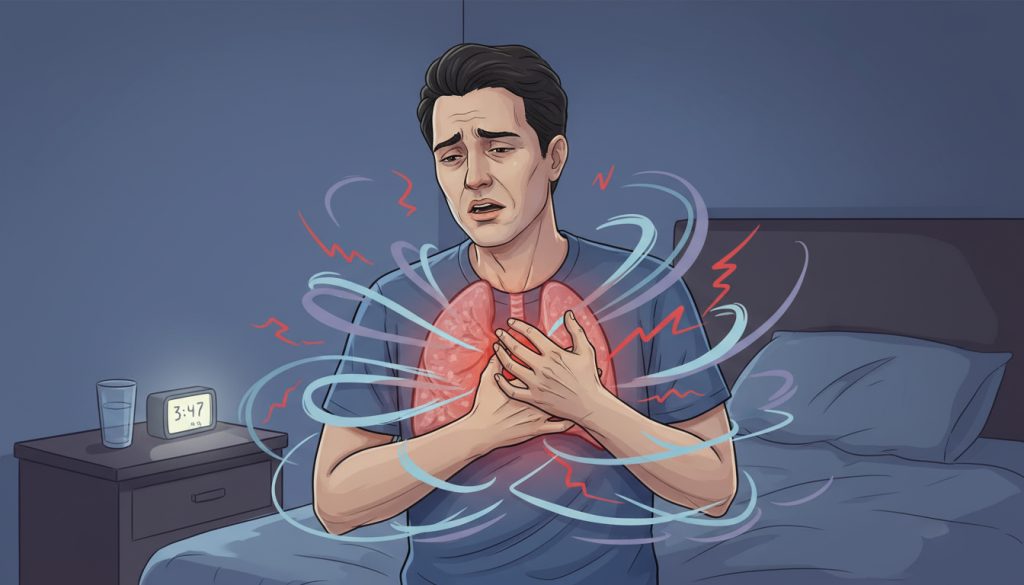

Category: Breathing & Chest

shortness of breath, shallow breathing, can’t take a deep breath

  • Feeling Like You Can’t Take a Deep Breath

    Feeling Like You Can’t Take a Deep Breath

    Feeling Unable to Take a Deep Breath: What It Might Mean and What to Do

    Ever catch yourself thinking, “Why can’t I just take a deep breath?” and then immediately trying to suck in the biggest inhale of your life to prove you still can? And then it does not feel satisfying.

    That can lead to mild panic, more forced breaths, and a fast trip down the “something must be seriously wrong” rabbit hole.

    If that sounds familiar, you are not alone. Feeling unable to take a deep breath is a very common symptom people report to doctors, anxiety forums, and late-night search engines.

    This post will walk you through what this feeling often is (and is not), common causes, what you can try at home, and when to get checked out. It is educational, not diagnostic—so if you are worried, always lean toward calling a medical professional.

    What Does “Feeling Unable to Take a Deep Breath” Actually Mean?

    People describe this in a few different ways:

    • “I can breathe, but I cannot get a full, satisfying breath.”
    • “I keep needing to yawn or sigh to feel like I got enough air.”
    • “I feel like there is a block halfway down my chest.”
    • “It is not exactly shortness of breath, just incomplete breathing.”

    Often, oxygen levels are totally normal, and your lungs are technically working. The problem is in the sensation of breathing and the way you are using your breathing muscles.

    Quick takeaway: This feeling is very real—but it does not automatically mean your lungs are failing.

    Common Reasons You Might Feel Unable to Take a Deep Breath

    You cannot know the cause for sure without a medical evaluation, but some patterns show up over and over.

    1. Anxiety and “Air Hunger”

    When your nervous system is on high alert—stress, anxiety, panic, even chronic worry—your breathing often becomes:

    • faster
    • shallower
    • more chest-based than belly-based

    This can create a sensation called air hunger or cannot get a full breath even when oxygen levels are normal.

    Typical clues it might be anxiety-related:

    • Symptoms get worse when you focus on your breathing or health.
    • It comes in waves or episodes, often with stress or panic.
    • You might also notice chest tightness, racing heart, tingling fingers or lips, or feeling on edge.

    Takeaway: Your body is breathing enough, but your brain keeps pressing the “more air” button.

    2. Over-Breathing and Dysfunctional Breathing Patterns

    A lot of us are quietly not very good at breathing.

    Modern life trains us to:

    • sit slumped over laptops and phones
    • breathe mostly into the upper chest
    • take frequent deep sighs or yawns to “reset”

    Over time, you can develop a dysfunctional breathing pattern, where you:

    • overuse the neck and upper chest muscles
    • underuse the diaphragm (your main breathing muscle)
    • breathe faster than your body actually needs

    This can make you feel like you constantly need one perfect deep breath that never quite arrives.

    Takeaway: It is not always about lung capacity—sometimes it is your breathing technique.

    3. Asthma or Airway Issues

    Sometimes, feeling unable to take a deep breath can be related to asthma or other airway constriction problems.

    Common asthma clues include:

    • Wheezing (whistling sound when breathing out)
    • Coughing, especially at night or with exercise
    • Tight or heavy feeling in the chest
    • Symptoms triggered by allergens, cold air, exercise, or infections

    Other airway issues—like vocal cord dysfunction, chronic bronchitis, or exposure to irritants such as smoke and chemicals—can also make breathing feel tight or restricted.

    Takeaway: If breathing trouble is triggered by exercise, allergens, or illness—or you have had wheezing—it deserves a medical workup.

    4. Deconditioning and Fitness Level

    If you have been more sedentary lately, your body might simply be less conditioned to handle exertion.

    Signs this might play a role:

    • You mainly notice the problem when walking uphill, climbing stairs, or exercising.
    • You get winded faster than you used to, but basic breathing at rest is mostly okay.
    • Heart and lung tests (if you have had them) come back normal.

    Takeaway: Sometimes your muscles, not your lungs, are the ones complaining.

    5. Post-Illness Recovery (Colds, Flu, COVID, etc.)

    After a respiratory infection—anything from a basic cold to COVID—many people describe lingering:

    • chest tightness
    • occasional breathlessness
    • an odd, unsatisfying feeling when taking a deep breath

    This may be due to irritation or inflammation in the airways, muscle weakness from being sick, or increased anxiety about breathing after feeling unwell.

    Takeaway: Even when you are over the infection, your breathing and energy can lag behind for weeks. Do not ignore it, but do not be surprised if recovery feels slower than the fever did.

    6. Heart or Lung Disease (Less Common, but Important)

    While many people with the “cannot get a deep breath” sensation end up having normal testing, sometimes it can signal something more serious, like:

    • heart problems (for example, heart failure, arrhythmias)
    • lung disease (like pulmonary embolism, pneumonia, COPD)
    • fluid around the lungs or heart

    Possible red flags include:

    • New or rapidly worsening shortness of breath
    • Trouble breathing when lying flat; needing extra pillows
    • Chest pain, pressure, or pain going to jaw, arm, or back
    • Swelling in legs or sudden weight gain
    • Coughing up pink, frothy, or bloody mucus
    • Fever, chills, or feeling very unwell

    Takeaway: These are “do not wait it out” situations. If any of these describe you, call your doctor or emergency services, depending on severity.

    Is Feeling Unable to Take a Deep Breath Dangerous?

    It can be, depending on what is causing it.

    But many people who have this sensation have normal oxygen levels, can walk, talk, and exercise within reason, and have normal chest X-rays, ECGs, and blood tests.

    In many cases the issue turns out to be anxiety, breathing pattern, or muscle tension rather than damaged lungs.

    Here is a helpful question to ask yourself:

    “Am I truly short of breath, or am I uncomfortable with the quality of my breath?”

    If you are gasping, unable to speak full sentences, turning blue, or feeling like you are suffocating, that is an emergency.

    If you are breathing, talking, and functioning but feel like your breaths are never deep enough, that is still important—but usually less immediately dangerous.

    Takeaway: The brain can sound the alarm even when the numbers, like oxygen level, are totally okay.

    Simple Self-Checks You Can Do Right Now (Not a Diagnosis!)

    These are not to replace medical care, but they can give you a bit more information.

    1. The Conversation Test

    Ask yourself: Can I speak in full sentences without having to gasp for air?

    • If yes, your body is likely getting enough air, even if your breathing feels strange.
    • If no, or if speaking a sentence makes you very breathless, that is a sign to seek urgent help.

    2. Gentle Walking Test

    If it is safe for you to do so:

    • Walk around your home or do a slow walk for 2–3 minutes.
    • Notice: does your shortness of breath get dramatically worse? Does your chest hurt? Do you feel faint?

    Severe worsening with light activity, especially if new for you, means a medical evaluation is recommended.

    3. Pay Attention to Triggers

    Write down:

    • When you notice the feeling most (morning, night, after eating, while resting, while anxious, during exercise).
    • What you are usually doing when it starts (scrolling, arguing, rushing, sitting hunched, lying down).
    • Any associated symptoms (dizziness, chest pain, cough, heart pounding, and so on).

    You are not doing this to self-diagnose. You are gathering data to bring to a doctor, which can speed up getting help.

    Takeaway: Notice patterns, but still get real medical advice when in doubt.

    How to Gently Reset Your Breathing (Practical Steps)

    These strategies are generally safe for most people, but if anything makes you feel worse, stop and seek medical attention.

    1. Drop Your Shoulders and Fix Your Posture

    When we are stressed, we often:

    • hunch forward
    • tense the neck and shoulders
    • lock the ribs

    This literally shrinks the space your lungs have to expand.

    Try this:

    1. Sit or stand tall, with both feet on the floor.
    2. Roll your shoulders up, back, and down. Let them drop.
    3. Imagine a string gently lifting the crown of your head.
    4. Place one hand on your upper chest and one on your upper belly.

    Notice which hand moves more when you breathe.

    Takeaway: You are giving your lungs and diaphragm physical room to do their job.

    2. The 4–6 Breathing Reset

    This is a calm-breathing pattern, not a competition. Avoid big dramatic inhales.

    1. Breathe in through your nose for a count of 4, letting your belly rise more than your chest.
    2. Gently breathe out through pursed lips (like blowing out a candle slowly) for a count of 6.
    3. Pause for 1–2 seconds before the next inhale.
    4. Repeat for 1–3 minutes.

    Helpful tips:

    • Focus on softening the breath, not deepening it.
    • If 4 and 6 feel too long, do 3 in, 4 out. Comfort over perfection.
    • If you feel dizzy or more panicky, stop and go back to normal, gentle breathing.

    Takeaway: Longer, slower exhales can signal to your nervous system that you are safe.

    3. Chest vs. Belly Experiment

    Do a quick mini-experiment to retrain your brain:

    1. Place one hand on your chest, one on your belly.
    2. Take a breath where only your chest moves. Notice how shallow or tense it feels.
    3. Now take a breath where you try to keep your chest hand relatively still and let your belly hand rise and fall.

    You are building awareness of how different breathing styles feel, so you can choose the one that supports you.

    Takeaway: Belly-focused (diaphragmatic) breathing is usually more efficient and calming.

    4. Limit “Checking” Breaths

    If you are constantly taking big test breaths, sighing heavily, or yawning to force a deep breath, you might actually be reinforcing the feeling that your normal breathing is not enough.

    Try this for a few hours:

    • Allow your body to breathe however it wants, without testing or forcing big breaths.
    • If you feel the urge to check, do a gentle, small inhale and an extended, slow exhale instead.

    Takeaway: The more you chase that one perfect breath, the more elusive it can feel.

    When Should You Seek Medical Care?

    It helps to split this into urgent and non-urgent but important.

    Seek Urgent or Emergency Care If You Have:

    • Trouble breathing that is sudden or significantly worse than usual
    • Chest pain or pressure, especially if it spreads to jaw, arm, back, or neck
    • Blue or gray lips or face
    • Extreme difficulty speaking full sentences
    • Feeling like you might pass out, or new confusion
    • Coughing up blood, or pink frothy mucus
    • Very fast heart rate with shortness of breath and feeling unwell

    These can be signs of serious heart or lung problems, and you should call emergency services or go to the emergency department.

    Make a Non-Urgent Appointment With a Doctor If:

    • You have had ongoing feelings of not getting a full breath for more than a few days or weeks.
    • Exercise tolerance is dropping (you are more winded than usual doing normal things).
    • You have a history of asthma, heart disease, blood clots, or lung problems.
    • You recently had a COVID or respiratory infection and breathing still feels off.
    • This symptom is making you anxious, interfering with sleep, or lowering your quality of life.

    Your clinician may consider tests like:

    • physical exam and listening to your lungs and heart
    • oxygen level check (pulse oximeter)
    • chest X-ray or other imaging
    • ECG or heart tests
    • lung function tests (spirometry)

    Takeaway: You deserve reassurance and answers—not just “you are fine” with no explanation.

    What If It Really Is “Just Anxiety”?

    That phrase can feel dismissive—like someone is saying, “It is all in your head.” In reality, anxiety is a body-wide experience that absolutely can:

    • change how your breathing muscles fire
    • alter your perception of air hunger
    • make harmless sensations feel terrifying

    If breathing tests are normal and your provider thinks anxiety or dysfunctional breathing is the main driver, that does not mean you are making it up or that you should “just stop worrying.”

    It does mean there are powerful tools that can help, including:

    • breathing exercises and breath-focused physical therapy
    • cognitive-behavioral therapy (CBT) or other anxiety therapies
    • lifestyle changes such as movement, sleep, reducing stimulants like caffeine, and stress management
    • sometimes, medication when appropriate

    Takeaway: “Just anxiety” is still a real problem—and a very treatable one.

    Putting It All Together

    If you have been feeling unable to take a deep breath, here is the short version:

    1. The sensation is common and real—even when tests are normal.
    2. Many cases relate to anxiety, breathing patterns, posture, or recovery after illness.
    3. Serious causes exist, especially with red-flag symptoms—do not ignore your instinct if something feels very wrong.
    4. Gentle breathing resets, posture changes, and limiting test breaths may ease the feeling.
    5. If this is new, worsening, or worrying you, a medical check is always a good idea.

    Until you get answers, try to treat yourself with the same kindness you would offer a friend who said, “My breathing feels strange and it is frightening me.”

    You do not have to manage it alone—and you are allowed to ask for help.
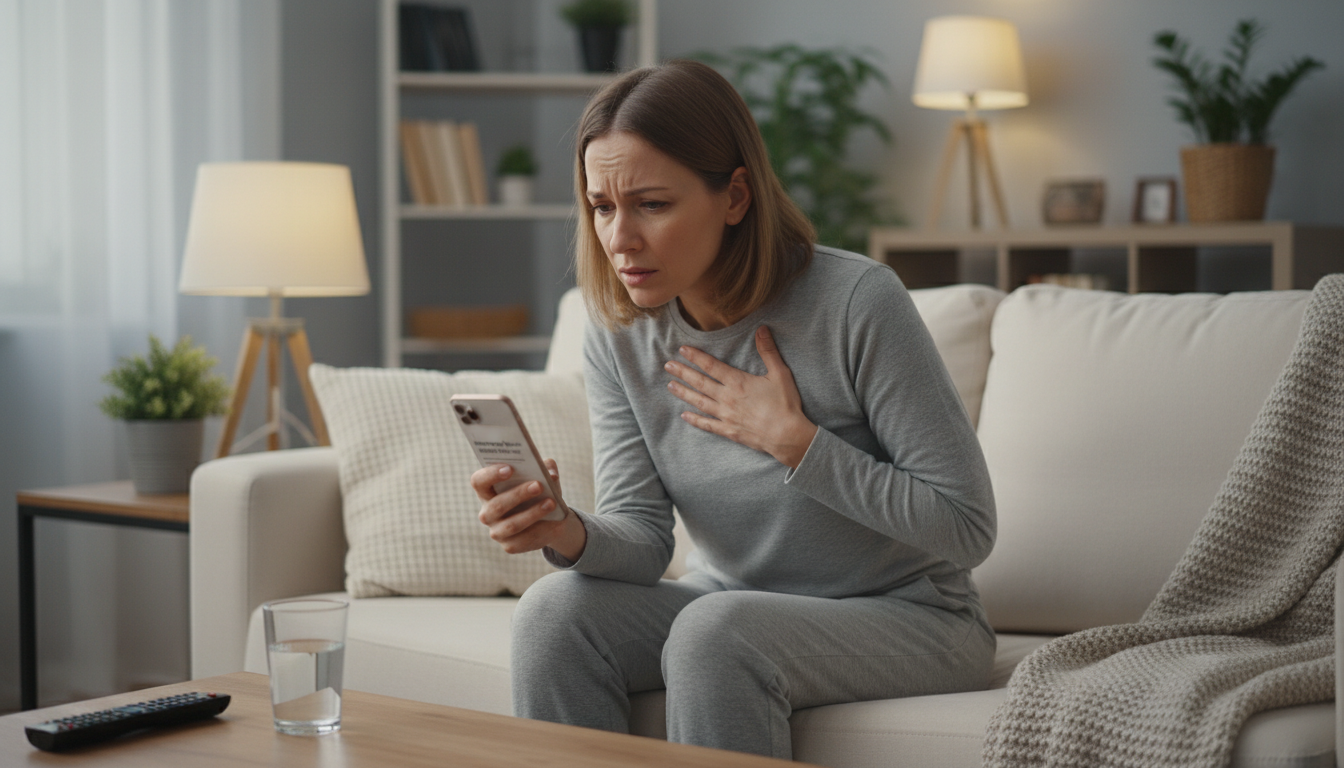
  • Shortness of Breath Right Now: What It Could Mean

    Shortness of Breath Right Now: What It Could Mean

    Shortness of Breath Right Now: What It Might Mean and What to Do

    You are short of breath right now and your brain has officially entered Worst Case Scenario Mode.

    “Is this anxiety? Asthma? My heart? Am I dying or just stressed and dehydrated?”

    Let’s slow things down (literally, your breathing) and walk through what might be going on, what you can safely try at home, and when it is absolutely not the time to Google and chill, but to get medical help right away.

    Quick note: This is not a diagnosis and not a replacement for a doctor or 911. If something feels like an emergency, treat it like one.

    First: Is This a Medical Emergency Right Now?

    Before we talk about anxiety, posture, or breathing exercises, we need to rule out the big, dangerous stuff.

    Call 911 or your local emergency number immediately or go to the emergency department if your shortness of breath:

    • Started suddenly and severely (especially out of nowhere)
    • Comes with chest pain or pressure, especially if it feels like squeezing, heaviness, or burning
    • Comes with pain going to your arm, jaw, back, neck, or shoulder
    • Is paired with blue or gray lips, face, or fingernails
    • Is making it hard to speak full sentences
    • Happens with confusion, fainting, or extreme weakness
    • Is after a choking episode or you think something is stuck in your airway
    • Follows a serious allergic reaction (hives, swelling of face or tongue, wheezing, trouble swallowing)
    • Comes with one-sided leg swelling or pain, recent surgery, long travel, or a history of blood clots

    These can be signs of things like heart attack, pulmonary embolism (blood clot in the lungs), severe asthma attack, anaphylaxis, or pneumonia, conditions that need urgent, in-person care, not a blog.

    Takeaway: If your gut is screaming “this is not okay,” act on that. Better to be checked and reassured than ignore a true emergency.

    What Do We Mean by “Shortness of Breath”? (You Are Not Imagining It)

    People describe shortness of breath (also called dyspnea) in a lot of different ways:

    • “I can’t get a full deep breath.”
    • “I feel like I’m breathing fast but still not satisfied.”
    • “My chest feels tight or heavy.”
    • “I feel like I’m suffocating even though I’m breathing.”

    All of those count. Sometimes tests (like oxygen level or chest X-ray) look okay, but the sensation is still very real.

    Shortness of breath can come from:

    • Your lungs (airflow, air sacs, or airways)
    • Your heart (pumping issues, blood flow)
    • Your blood (anemia, oxygen-carrying problems)
    • Your nervous system and muscles (how you control breathing)
    • Or your stress and anxiety system, which can change breathing patterns

    Takeaway: Just because your oxygen is “normal” does not mean you are not short of breath. Sensation and numbers do not always match.

    Common Causes of Sudden Shortness of Breath (That Are Not Always Obvious)

    Let’s walk through some categories. This is not exhaustive, but it hits many common possibilities.

    1. Breathing and Lung Causes

    These are some of the more familiar culprits.

    Asthma or reactive airways

    • Tight, inflamed airways make it harder to move air in and out.
    • You might notice wheezing, coughing (especially at night or with exercise), or a history of asthma.
    • Triggers include cold air, exercise, smoke, perfumes, and infections.

    Infections (like bronchitis or pneumonia)

    • Shortness of breath with cough, fever, chills, or chest discomfort might signal infection.
    • Pneumonia can cause sharp pain when breathing in, plus fatigue and feeling generally unwell.

    COPD or chronic lung disease

    • More common in people with long-term smoking history or prior lung damage.
    • Shortness of breath can be worse with exertion, colds, or air pollution.

    Pulmonary embolism (blood clot in the lungs)

    • Sudden shortness of breath, often with sharp chest pain, rapid heart rate, or coughing up blood.
    • Risk factors include recent surgery, long flights or car rides, pregnancy, birth control or hormones, prior clots, and cancer.
    • This is an emergency.

    Takeaway: Lung causes often show up with cough, wheeze, chest pain, or risk factors like smoking, recent illness, or clots.

    2. Heart-Related Causes

    Your heart and lungs are a team. If the heart struggles, your breathing can feel off.

    Heart attack

    • Chest pressure, squeezing, or heaviness, often with shortness of breath, nausea, sweating, or feeling “off.”
    • Symptoms can be more subtle in women and people with diabetes. Sometimes it is mostly shortness of breath and fatigue.
    • This is always an emergency.

    Heart failure or fluid backup

    • Breathlessness that is worse lying flat or wakes you up gasping at night.
    • Swelling in legs or ankles, rapid weight gain from fluid, and fatigue.

    Abnormal heart rhythms (arrhythmias)

    • Racing, fluttering, or irregular heartbeat plus feeling winded or lightheaded.

    Takeaway: If your shortness of breath is tied to chest pain, palpitations, leg swelling, or is worse when lying down, your heart deserves a closer look as soon as possible.

    3. Other Physical Causes

    Anemia (low red blood cell count)

    • Your blood carries less oxygen, so you feel winded more easily.
    • Often comes with fatigue, paleness, or feeling weak.

    Deconditioning (low fitness)

    • If you have not moved much recently (illness, long sedentary period), even basic activity can feel breathless.

    Obesity and posture

    • Extra weight around the chest or abdomen or very slumped posture can make it harder to expand your lungs fully.

    Pain, especially in the chest or ribs

    • If it hurts to breathe deeply, you may take shallow breaths, which can feel like “I can’t get enough air.”

    Takeaway: Sometimes the “why am I so out of breath” answer is part blood, part muscle, part posture and lifestyle, not just lungs.

    4. Anxiety, Panic, and “I Can’t Take a Deep Breath”

    Anxiety can absolutely cause real, intense shortness of breath, even when your lungs and heart are structurally fine.

    During anxiety or panic:

    • Your body shifts into fight-or-flight mode.
    • Breathing becomes faster and more shallow, often from the upper chest instead of the belly.
    • You might feel like you cannot get a satisfying breath, so you keep trying to “yawn” or “top off” a deep breath.
    • This can lead to over-breathing (hyperventilation), which lowers carbon dioxide levels in your blood and makes you feel:
      • Dizzy or lightheaded
      • Tingly in hands, feet, or around the mouth
      • Even more breathless

    A classic scenario:

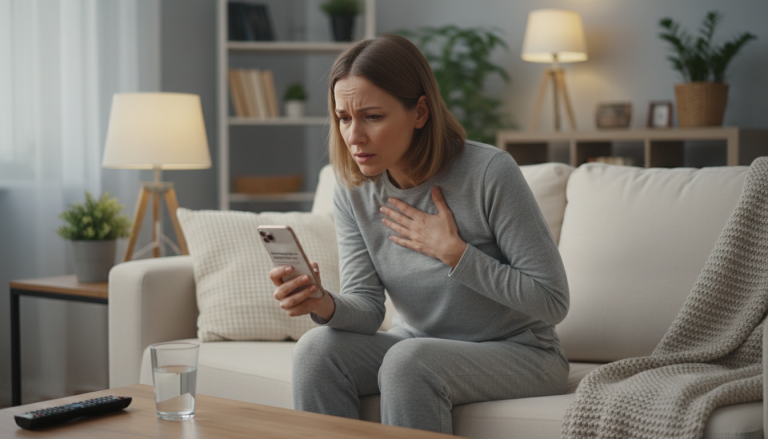
    You are scrolling, feel a weird sensation in your chest, start paying close attention to every breath, notice it feels wrong, heart rate jumps, breathing speeds up, and within minutes you are convinced something catastrophic is happening.

    That spiral is common, and it is exhausting.

    Takeaway: Anxiety-related shortness of breath is not “fake.” It is your nervous system cranking the dial too high. The key is to calm the system, not just chase the perfect breath.

    Quick At-Home Check-In: What Is Going On With You Right Now?

    This is not a substitute for a doctor, but it can help you organize what you are feeling.

    Ask yourself:

    1. When did this start?
      • Sudden (seconds to minutes) vs. gradual (days to weeks)?
    2. What were you doing?
      • At rest, asleep, walking up stairs, after a meal, during stress?
    3. Any other symptoms?
      • Chest pain, cough, fever, wheeze, palpitations, swelling, dizziness, tingly fingers?
    4. Any recent events?
      • COVID or other infection, surgery, long travel, big life stress, new meds, new exercise routine?
    5. Does body position change it?
      • Worse lying flat? Better sitting up? Worse with certain movements?

    If you are answering “yes” to multiple red-flag items (severe pain, blue lips, confusion, cannot talk in full sentences, sudden onset with clot risk), err on the side of emergency care now.

    Takeaway: A quick mental checklist can help you decide whether you are in “get checked soon” territory or “call 911 right this second” territory.

    If You Are Not in Immediate Danger: Simple Steps to Try Right Now

    If you have screened for obvious red flags and do not think this is a 911 situation, these techniques can sometimes ease shortness of breath, especially if anxiety or breathing pattern is playing a big role.

    1. Change Your Body Position

    Try one of these for 2 to 5 minutes:

    • Sit and lean slightly forward, resting your forearms on your thighs or a table. Let your shoulders drop.
    • Stand and lean forward with your hands on a counter or back of a chair.
    • Side-lying with your head elevated on pillows, especially if one lung or side of the chest feels worse.

    These positions can help your diaphragm work more efficiently and reduce tension in your neck and upper chest muscles.

    Takeaway: Sometimes a small change in angle beats many minutes of panicked overthinking.

    2. Try a Gentle Breathing Reset (Not a Giant Gasp)

    Avoid big dramatic inhales. Instead, go for slow, controlled, smaller breaths.

    Exercise: 4–6 Breathing (or whatever number feels doable)

    1. Gently exhale through your mouth like you are fogging a mirror.
    2. Inhale through your nose for a count of 4 (or 3 if 4 feels like too much).
    3. Pause for 1–2 seconds.
    4. Exhale through pursed lips (like blowing out a candle slowly) for a count of 6.
    5. Repeat for 1–3 minutes.

    This can slow your breathing and heart rate, ease hyperventilation, and give your brain something concrete to focus on instead of “What if this is it?”

    If counting stresses you out, just think: gentle in, slow out.

    Takeaway: The goal is not the biggest breath, it is the calmest rhythm.

    3. Relax the Muscles That Help You Breathe

    Your neck, shoulders, and upper back can clamp down during stress and make breathing feel restricted.

    Try this:

    • Shrug your shoulders up toward your ears, hold 3 seconds, then drop.
    • Slowly roll your shoulders backward 5–10 times.
    • Gently stretch your chest by clasping hands behind your back (or just pulling shoulders back) and opening your chest.

    Even a small release of tension can make your chest feel less “locked.”

    Takeaway: Tight muscles can mimic tight lungs. Loosen the frame around your lungs and see what changes.

    4. Zoom Out From the Symptom Mentally

    When you obsess over each breath, everything starts to feel wrong.

    Try a 60–90 second experiment:

    • Name 5 things you can see.
    • 4 things you can feel (chair under you, clothes on skin).
    • 3 things you can hear.
    • 2 things you can smell (or like the smell of).
    • 1 thing you are grateful for or looking forward to.

    This grounding exercise does not fix a physical problem, but if anxiety is cranking your fight-or-flight system, it can take the edge off so you can think clearly and decide what to do next.

    Takeaway: Your breathing is one signal. Zooming out lets you see the whole dashboard, not just the red warning light.

    When to See a Doctor (Even If It Is Not 911-Level)

    You should schedule urgent or prompt medical care (same day or next available) if:

    • This is new shortness of breath and you have never been evaluated for it.
    • It is getting worse over days to weeks.
    • It keeps happening with mild activity, like walking across a room or climbing a single flight of stairs.
    • You have had COVID or another infection recently, and breathing still feels off.
    • You have conditions like asthma, COPD, heart disease, or anemia and your usual meds or coping strategies are not working as well.
    • You are unsure whether what you are feeling is from anxiety or something medical.

    A clinician may:

    • Check vital signs (heart rate, blood pressure, oxygen level).
    • Listen to your heart and lungs.
    • Order blood tests, chest X-ray, ECG (heart tracing), or other imaging.
    • Talk through stress, panic, or hyperventilation if those seem likely.

    Takeaway: If your body keeps sending the same “I can’t breathe right” message, it deserves a real-life listener, not just the internet.

    If You Know It Is Anxiety-Linked: Longer-Term Strategies

    If you have already been checked out medically and were told your heart and lungs look okay, but the sensation of not getting a deep breath keeps coming back, that is miserable but also common.

    Helpful directions to explore with a professional include:

    • Breathing retraining with a physical therapist or respiratory therapist
    • Cognitive behavioral therapy (CBT) or other talk therapy focused on panic, health anxiety, or trauma
    • Regular movement (walking, light cardio) to rebuild trust in your body
    • Sleep, caffeine, and stimulant habits (too much caffeine can mimic anxiety symptoms)
    • Medication options if anxiety or panic is severe and frequent

    Takeaway: “It is just anxiety” should never mean “it does not matter.” It means the treatment path is different but very real.

    Key Things to Remember If You Are Short of Breath Right Now

    • Emergency signs mean emergency response. Sudden severe breathlessness, chest pain, blue lips, confusion, or trouble speaking full sentences? Call 911.
    • Shortness of breath has many causes: lungs, heart, blood, muscles, posture, and your stress system can all play a role.
    • Anxiety can make breathing feel broken even with normal tests, but it is still real and treatable.
    • Simple steps, such as changing position, slow breathing, relaxing muscles, and grounding your attention, can sometimes help in the moment.
    • If this is new, worsening, or unexplained, you should be seen by a medical professional.

    For now, if you are safe and stable, pick one small thing from this article to try, maybe the leaning-forward posture or a minute of slow exhales. Then plan your next concrete step: call your doctor, book an appointment, or, if needed, head to urgent or emergency care.

    You do not have to figure this out alone, and you do not have to keep white-knuckling every breath.

  • Shortness Of Breath After Shower: What It Means

    Shortness Of Breath After Shower: What It Means

    Shortness of Breath After a Shower: What It Might Mean

    Is It Normal to Feel Short of Breath After a Shower?

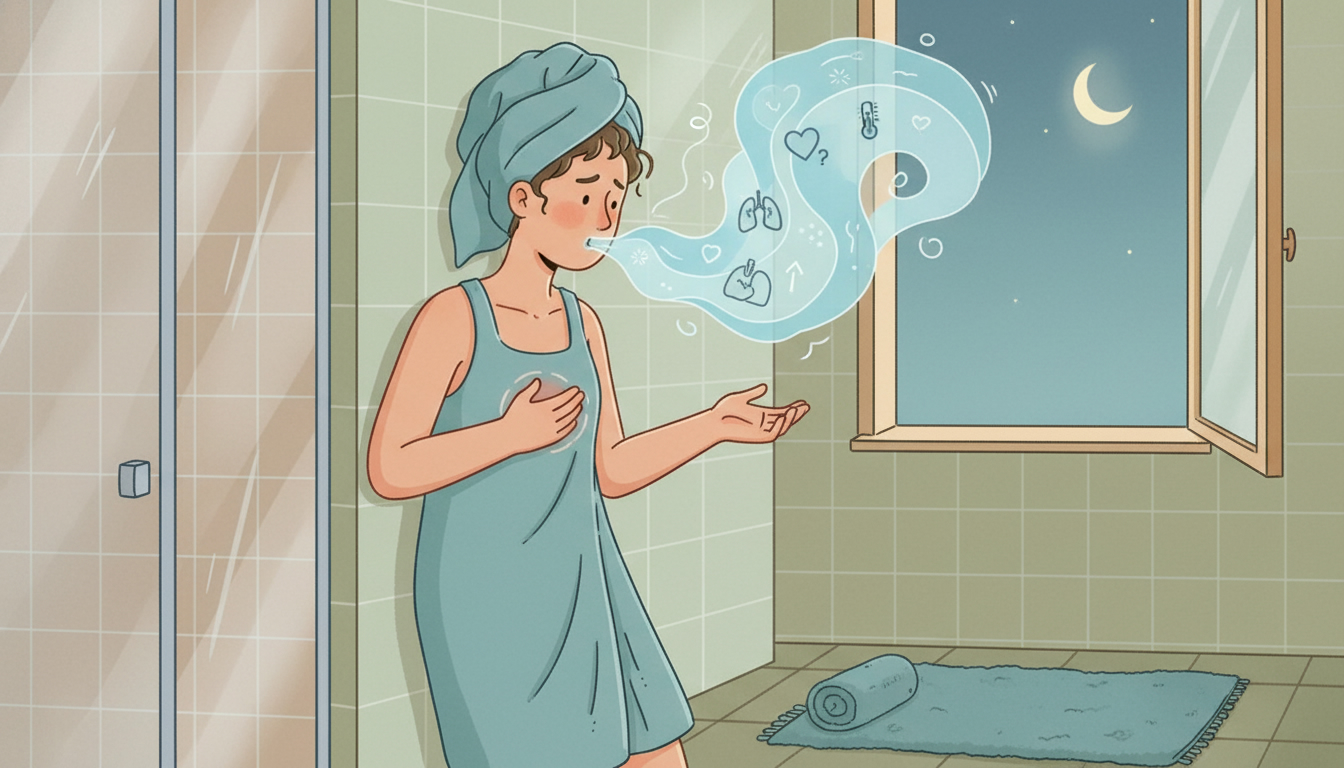
    You step out of a hot shower feeling not refreshed, but weirdly out of breath. Heart racing. Chest tight. You are standing still, but it feels like you just jogged up a flight of stairs.

    In this guide, we will break down why shortness of breath after a shower happens, when it is probably benign, and when it is a “call your doctor” situation. This is educational only, not a diagnosis, but it can help you walk into an appointment informed instead of panicked.

    Sometimes it can be normal, but not always.

    There are a bunch of non-serious reasons you might feel a bit winded in or after the shower, especially if it is very hot, very steamy, or you are already a bit deconditioned or anxious.

    But if you consistently feel like you cannot catch your breath, have chest pain, dizziness, or symptoms keep getting worse, that is not something to ignore. Shortness of breath (also called dyspnea) can be a sign of issues with your lungs, heart, blood, or even anxiety and panic.

    Quick takeaway: An occasional mild, short-lived breathless feeling in a super hot shower can be “normal-ish.” Ongoing, intense, or worsening symptoms deserve a medical evaluation.

    Why Showers Can Trigger Shortness of Breath

    Here are the most common reasons you might feel short of breath after a shower, starting with the less serious and moving toward the more concerning.

    1. Hot Water, Steam, and Your Airways

    Hot showers create lots of steam. Steam changes the temperature, humidity, and density of the air you are breathing.

    That can:

    • Make the air feel thicker and harder to pull in
    • Temporarily irritate sensitive airways
    • Make you more aware of your breathing (which can trigger anxiety)

    People with asthma, COPD, chronic bronchitis, or reactive airways may find that hot, humid environments make breathing more difficult. They may notice:

    • Chest tightness
    • Wheezing
    • Coughing
    • Feeling like they cannot get a deep breath

    You are fine all day, but within a few minutes of a steamy shower, you are coughing and reaching for your inhaler. As soon as the bathroom cools down and air dries out a bit, you start feeling better.

    Takeaway: Hot, humid air can make it harder to breathe, especially if you already have lung issues.

    2. Heat, Blood Vessels, and Low Blood Pressure

    Hot water makes your blood vessels widen (vasodilation). This helps release heat from your body, but it also can lower your blood pressure.

    If your blood pressure drops too much, you might feel:

    • Lightheaded or dizzy
    • Weak or shaky
    • A bit breathless
    • Like your heart is pounding or racing

    Then you step out of the shower, your body is trying to stabilize temperature and pressure, and you feel off for a minute.

    This effect can be stronger if:

    • The shower is very hot and long
    • You are dehydrated
    • You are on blood pressure medications or medications that affect circulation
    • You stand up quickly or move fast in the shower

    Takeaway: Very hot showers can drop your blood pressure and make you feel off-balance and breathless, especially if you are sensitive to changes in circulation.

    3. Deconditioning

    Showering is not exactly a workout, but it kind of is if you have been mostly sedentary, are recovering from an illness, or have chronic fatigue, long COVID, or another condition affecting stamina.

    Lifting arms to wash hair, bending, twisting, standing, and dealing with heat can all add up and briefly stress your cardiovascular system.

    You might notice:

    • Mild shortness of breath while washing or right after
    • Heart rate taking a bit longer to come back down
    • Feeling more tired than seems reasonable for “just a shower”

    Takeaway: If your overall fitness or health is low right now, showering can be more physically demanding than it used to be.

    4. Anxiety, Panic, and Hyper-Awareness of Breathing

    Bathrooms are small, steamy, sometimes echoey spaces where it is easy to become hyper-aware of your body. Shower anxiety is real.

    If you get a sudden sense of:

    • “I cannot get enough air”
    • Tightness in your chest
    • Rapid heartbeat
    • Tingling in hands or feet

    you might unconsciously start over-breathing (hyperventilating). This can actually cause or worsen the sensation of breathlessness, creating a feedback loop.

    For some, the shower can even become associated with anxiety or past trauma (like a bad fainting episode), which primes the brain to react before anything is actually wrong.

    Quick self-check questions:

    • Does the breathing issue come with racing thoughts, fear, or a sense of doom?
    • Do you sigh or yawn a lot trying to get a deep breath throughout the day, not just in the shower?
    • Do symptoms often improve when distracted or after leaving the bathroom?

    If yes, anxiety may be a big factor.

    Takeaway: The feeling of not getting enough air is not always about your lungs. Sometimes it is your nervous system running the show.

    5. Asthma and Other Lung Conditions

    If you have asthma, COPD, or other lung disease, showers can be a sneaky trigger.

    Common patterns:

    • Steam or strong-smelling products (shampoos, cleaners, fragrances) irritate your airways
    • Warm, humid air makes it harder for your lungs to move air in and out
    • You cough or wheeze more in or right after the shower

    With asthma, you may notice:

    • Chest tightness or pressure
    • Wheezing (a whistling sound when breathing out)
    • Needing to use a rescue inhaler more after showers or in humid environments

    Takeaway: If you already know your lungs are sensitive, a hot steamy shower can act like a mini “stress test” for your airways.

    6. Heart Issues

    Some heart problems can show up first, or most noticeably, as shortness of breath during everyday activities, including showering.

    Potential red flags involving the heart can include:

    • Shortness of breath with light activity or while talking
    • Trouble breathing when lying flat
    • Waking at night feeling like you are suffocating
    • Swelling in the feet, ankles, or legs
    • Chest discomfort, pressure, or pain

    Showering may make symptoms more noticeable because:

    • Warm water increases your circulation workload
    • Standing can be more challenging if your heart already struggles to pump efficiently
    • You might not notice mild shortness of breath during other parts of the day until that extra heat and movement push you just a bit more

    Takeaway: If breathing problems are part of a bigger picture, such as swelling, chest pain, fatigue, or nighttime breathlessness, get checked. Do not wait.

    7. Anemia or Low Oxygen-Carrying Capacity

    If your red blood cell count or hemoglobin is low (anemia), your blood cannot carry as much oxygen. That can make relatively small efforts, like showering, feel like more work.

    You may notice:

    • Shortness of breath with mild activity
    • Fatigue that does not match your activity level
    • Pale skin or gums
    • Headaches or fast heartbeat

    In this case, the shower is just revealing an underlying problem, not causing it.

    Takeaway: If everyday tasks feel like climbing a hill, ask your doctor about simple blood tests to check for anemia.

    Quick Self-Check: What Is Your Pattern?

    It helps to get specific. Ask yourself:

    1. When does the shortness of breath start?

      • During the shower?
      • Only afterward?
      • Only when the water is very hot?
    2. How long does it last?

      • Seconds? A few minutes? Longer than 10–15 minutes?
    3. What else do you feel?

      • Chest pain or pressure?
      • Wheezing or coughing?
      • Dizziness, blurred vision, or feeling faint?
      • Palpitations (pounding, racing, or skipping heartbeats)?
    4. What makes it better or worse?

      • Cooling the water down?
      • Opening a window or turning on a fan?
      • Sitting down afterward?
      • Using an inhaler (if you have one)?

    Patterns help your clinician sort likely environmental, anxiety, or deconditioning causes, possible lung-related issues, and possible heart or circulation-related problems.

    Takeaway: Write this information down. It will help you at the doctor’s office.

    When Is Shortness of Breath After a Shower an Emergency?

    If you are unsure, err on the side of getting help.

    Call emergency services or go to the ER immediately if:

    • You have sudden, severe shortness of breath
    • You have chest pain, pressure, or squeezing, especially if it radiates to jaw, neck, arm, or back
    • You feel like you might pass out (or you actually do)
    • Your lips or face turn blue or gray
    • You are confused or unable to speak in full sentences

    These could be signs of serious conditions like heart attack, pulmonary embolism (blood clot in the lungs), severe asthma attack, or heart failure.

    Takeaway: If breathing feels like an emergency, treat it like one.

    When to See a Doctor (Non-Emergency, but Important)

    Make an appointment with a healthcare professional if:

    • You are often short of breath after showering, even if it eventually passes
    • You notice it is getting worse over weeks or months
    • You also feel tired, weak, dizzy, or have swelling in your legs or feet
    • You have a history of asthma, COPD, heart disease, blood clots, or anemia
    • You recently had COVID-19 or another infection and your breathing has not gone back to normal

    They might:

    • Ask detailed questions about your symptoms and history
    • Listen to your heart and lungs
    • Check oxygen levels
    • Order tests like blood work, chest X-ray, EKG, or lung function tests, depending on your situation

    Takeaway: Repeated, unexplained shortness of breath is your body asking for a check-in, not a “wait and see for another year.”

    Practical Tips to Make Showers Easier on Your Breathing

    While you sort out the underlying cause with a professional, here are some gentle, low-risk strategies that help many people.

    1. Turn Down the Water Temperature

    Lukewarm instead of steaming hot can:

    • Reduce blood pressure swings
    • Decrease steam in the air
    • Be easier on sensitive airways

    You do not have to go full cold plunge, just aim for comfortably warm, not sauna-level hot.

    2. Improve Ventilation

    • Turn on the bathroom fan
    • Crack the door or open a small window if privacy allows
    • Consider a dehumidifier nearby (outside the shower area) if your bathroom traps a lot of moisture

    Less steam makes breathing easier.

    3. Sit if You Need To

    A shower chair or stool can make a big difference if you:

    • Get lightheaded standing
    • Have low stamina
    • Are afraid of fainting

    Sitting helps your body not fight gravity as hard and makes it easier to control your breathing.

    4. Slow, Paced Breathing

    Practice this before you feel short of breath so it is easier to use in the moment:

    • Inhale slowly through your nose for about 4 seconds
    • Exhale gently through pursed lips (like blowing out a candle slowly) for about 6 seconds
    • Repeat for a few minutes

    This technique, called pursed-lip breathing, helps keep your airways open and can reduce that panicky “I cannot get air in” feeling.

    5. Time Your Shower

    Shorter showers can:

    • Reduce heat and steam buildup
    • Put less physical and cardiovascular strain on your body

    Try starting with a 5–10 minute shower, see how your body responds, and adjust from there.

    6. Watch Products and Scents

    Strong fragrances or harsh cleaners can irritate airways.

    • Try unscented or hypoallergenic products
    • Avoid spraying cleaners or aerosols right before you shower

    If you notice you cough or wheeze more with certain products, switch them out.

    Takeaway: Small tweaks, like cooler water, more ventilation, and pacing your breathing, can make showers more manageable.

    A Few Real-World Scenarios

    Sometimes it helps to see where you fit.

    Scenario 1: The Hot Shower Lover

    Alex loves extra-hot, 20-minute showers. Lately, Alex steps out of the shower a bit dizzy and breathless for a minute or two, but it resolves quickly. There is no chest pain, no swelling, and no symptoms with other activities.

    • Likely contributors: heat, steam, mild low blood pressure, maybe deconditioning
    • What helps: turning the water down a notch, shorter showers, better ventilation, staying hydrated

    Scenario 2: The Asthma Flare

    Jordan has mild asthma. They notice they wheeze and cough during hot showers, especially with strong-smelling shampoos. Breathing improves after using a rescue inhaler and leaving the bathroom.

    • Likely contributors: asthma plus steam and fragrance triggers
    • What helps: cooler showers, fragrance-free products, talking to a doctor about an asthma control plan

    Scenario 3: The Subtle Heart Clue

    Taylor, in their 50s, feels winded going up stairs and now also gets unexpectedly out of breath in the shower. There is also some ankle swelling by evening and occasional chest tightness with exertion.

    • Possible concern: heart or circulation issue
    • What helps: prompt medical evaluation

    Takeaway: The same symptom, shortness of breath after a shower, can mean very different things depending on context.

    What to Do Next

    If you have made it this far, here is a simple action plan:

    1. Track your symptoms for a week or two

      • When they happen
      • How long they last
      • What else you feel (dizziness, chest pain, wheezing, swelling, and so on)
    2. Make low-risk changes

      • Cooler, shorter showers
      • Better bathroom ventilation
      • Sitting if needed
      • Gentle breathing techniques
    3. Schedule a checkup if:

      • This is new for you
      • It is getting worse
      • You have other symptoms (fatigue, swelling, chest discomfort, wheezing)
    4. Seek emergency care if you ever feel like you truly cannot breathe, are in severe pain, or feel like you might pass out.

    Feeling short of breath after a shower is common enough that you are not alone, but not so normal that it should always be brushed off.

    Your body is giving you data. The goal is not to panic about it, but to listen, adjust what you can, and involve a professional when you should.

    If you would like, you can describe your specific pattern (age range, other health issues, what your symptoms are like), and use that to draft a list of questions to bring to your doctor.

  • Shortness Of Breath Right Now: What To Know

    Shortness Of Breath Right Now: What To Know

    Shortness of Breath Right Now: What to Do

    You are short of breath right now, and you are on the internet instead of totally panicking. That is good, but it is important to make sure you are not ignoring anything serious.

    Let us walk through what might be going on, when shortness of breath is an emergency, and what you can safely try at home while you decide your next step.

    Important: This article is educational, not medical care. If you are worried, trust that feeling and seek real-time help.

    First: When to Call 911 or Seek Emergency Care Right Now

    Shortness of breath (often called dyspnea) can be anything from “I am out of shape” to “this is life-threatening.” Some red flags are not a wait-and-see situation.

    If any of this is happening, stop reading and call 911 or your local emergency number immediately:

    • Sudden, severe shortness of breath that came on out of nowhere
    • Shortness of breath plus chest pain, pressure, tightness, or pain going to your arm, jaw, back, or neck
    • A feeling like you cannot get enough air, even at rest
    • Blue or gray lips, face, or fingernails
    • Confusion, trouble staying awake, or feeling like you are going to pass out
    • Wheezing or choking after you have possibly inhaled food, liquid, or an object
    • Rapid breathing plus very fast or irregular heartbeat
    • Shortness of breath that started suddenly after:
      • A long flight, car ride, or bed rest
      • Recent surgery
      • Leg swelling or pain

    These can be signs of heart attack, pulmonary embolism (blood clot in the lung), severe asthma attack, anaphylaxis (severe allergy), pneumonia, or other emergencies. Major health organizations emphasize not delaying care for these symptoms.

    Takeaway: If your gut says “this feels wrong,” act on it. The worst case is you get checked and reassured. That is a win.

    Quick Self-Check: How Bad Is Your Shortness of Breath?

    While this is not a diagnosis, a quick mental checklist can help you decide how urgent this feels.

    Ask yourself:

    1. Did this come on suddenly or slowly?
      • Sudden = more concerning.
    2. Did it start after something obvious?
      • Hard workout? Running to catch a bus? Crying hard? Anxiety trigger? That may point to a more benign cause.
    3. Can you speak in full sentences?
      • If you cannot get more than a few words out without gasping, that is more serious.
    4. Any chest pain, pressure, or tightness?
      • Especially if it feels heavy, crushing, or radiates to arm or jaw.
    5. Any fever, cough, or mucus?
      • Could suggest an infection like bronchitis or pneumonia.
    6. Any wheezing or whistling sound?
      • Could be asthma, COPD, or airway narrowing.
    7. Any recent travel, surgery, or long period of sitting or lying down?
      • Raises concern for a blood clot.
    8. Any new medications, foods, or insect stings right before this started?
      • Think allergic reaction.

    If you answer yes to several concerning signs, especially chest pain, collapsing, confusion, or bluish color, that pushes you toward urgent evaluation.

    Takeaway: How fast it started, how limited you feel, and what else is going on all matter.

    Common (and Not-So-Common) Reasons for Shortness of Breath Right Now

    Shortness of breath can come from problems in the lungs and airways, heart and circulation, blood (like anemia), muscles, or even your brain and emotions (anxiety).

    Here are some frequent culprits and how they tend to show up.

    1. Anxiety or Panic Attack

    Your brain can make you feel like you cannot breathe even when your oxygen level is normal.

    Typical features:

    • Sudden wave of fear, doom, or intense worry
    • Fast, shallow breathing; you may feel like you “cannot take a deep breath”
    • Racing heart, chest tightness, sweating, shaking
    • Tingling in fingers, around the mouth, or toes

    Panic symptoms are real and terrifying, but they are typically time-limited and improve with calming and slower breathing.

    Red flag: Anxiety and heart or lung issues can look similar. If this is new, feels different from your usual anxiety, or is combined with strong chest pain, do not write it off.

    You are scrolling on your phone, read something stressful, and suddenly your heart is pounding, your chest feels tight, and you cannot get a satisfying breath. You feel hot, shaky, and a bit dizzy. Ten to twenty minutes later, after breathing slowly and distraction, it starts to ease.

    2. Exercise, Deconditioning, or Being Out of Shape

    If you only feel short of breath with exertion (going up stairs, brisk walking, carrying groceries) and it eases quickly when you rest, it could simply be that your body is not used to that level of activity.

    Signs it may be fitness-related:

    • You can breathe comfortably at rest
    • You have been more sedentary lately
    • No chest pain, fainting, or severe symptoms

    Still, if your exercise tolerance suddenly gets much worse without explanation, a checkup is wise.

    3. Asthma or Other Airway Issues

    Asthma can cause:

    • Wheezing (whistling sound when you breathe out)
    • Chest tightness
    • Coughing, especially at night or early morning
    • Shortness of breath with exercise, cold air, allergens, or infections

    If you have been diagnosed with asthma and your inhaler is not helping or you need it more often than usual, that is a reason to call your doctor today and possibly seek urgent care if you are struggling to breathe.

    Other airway triggers include respiratory infections, allergies, and irritants like smoke, strong perfumes, or cleaning chemicals.

    4. Infections: Bronchitis, Pneumonia, Flu, COVID-19

    Breathing can feel harder when your lungs or airways are inflamed or full of mucus.

    Symptoms might include:

    • Cough (dry or with mucus)
    • Fever or chills
    • Chest discomfort, especially with deep breaths or coughing
    • Feeling unusually tired or weak

    With illnesses like pneumonia or COVID-19, shortness of breath that gets worse over a few days, especially with high fever, chest pain, or confusion, can become dangerous. Do not ignore worsening breathing or low oxygen if you have a respiratory infection.

    5. Heart-Related Causes

    The heart and lungs work together. If the heart is struggling, you may notice:

    • Shortness of breath when lying flat, needing extra pillows
    • Waking up at night feeling like you are gasping
    • Swelling in feet, ankles, or legs
    • Fatigue and decreased ability to exercise

    Conditions like heart failure, heart valve problems, or coronary artery disease can show up primarily as breathlessness, especially with exertion.

    If shortness of breath is new for you, especially if you are older, have high blood pressure, diabetes, high cholesterol, or you smoke or used to smoke, your heart deserves a checkup.

    6. Blood Clot in the Lung (Pulmonary Embolism)

    This is serious and needs immediate medical attention.

    Typical clues can include:

    • Sudden shortness of breath
    • Sharp chest pain that may worsen when you breathe deeply
    • Fast heart rate
    • Cough, sometimes with blood
    • History of recent surgery, long travel, pregnancy, birth control pills or hormone therapy, cancer, or previous clots

    This is one reason doctors emphasize taking new, sudden breathlessness seriously, especially after long immobility.

    7. Anemia or Low Oxygen-Carrying Capacity

    If your blood is low on red blood cells or hemoglobin, it cannot carry oxygen as well.

    You might notice:

    • Feeling winded with minimal activity
    • Fatigue and weakness
    • Looking pale
    • Headaches or dizziness

    Anemia has many causes and is usually found with a simple blood test.

    Takeaway: Shortness of breath is a symptom, not a diagnosis. Many different issues can cause it, some mild and some serious.

    What You Can Safely Try Right Now (If No Emergency Red Flags)

    If your symptoms feel mild to moderate and you do not have emergency warning signs, you can try a few steps at home while monitoring yourself.

    1. Change Your Position

    Certain postures can help your lungs and breathing muscles work more efficiently.

    Try:

    • Sitting leaning forward with your forearms resting on your thighs or a table
    • Standing with hands resting on a counter or back of a chair, leaning slightly forward
    • Lying on your side with your head elevated on pillows if lying flat worsens it

    These positions help your diaphragm move more freely and can ease the work of breathing for many people.

    2. Pursed-Lip Breathing

    This technique is used in conditions like COPD, but it can also help during anxiety or mild breathlessness.

    1. Inhale slowly through your nose for about 2 seconds.
    2. Purse your lips as if you are going to whistle.
    3. Exhale slowly and gently through your pursed lips for about 4 seconds, or longer than your inhale.
    4. Repeat for a few minutes.

    This helps keep your airways open longer and can reduce the sensation of air hunger.

    3. Grounding Yourself If Anxiety Is a Factor

    If shortness of breath came on during stress or panic, combining breathing with grounding can help.

    Try the 5-4-3-2-1 method:

    • Name 5 things you can see
    • 4 things you can touch
    • 3 things you can hear
    • 2 things you can smell
    • 1 thing you can taste

    Remind yourself: “I have felt this before. It passed. I am doing what I can right now.”

    If your symptoms clearly ease as your anxiety decreases, that is helpful information, but do not assume everything is just anxiety if something feels off.

    4. Remove Obvious Triggers

    • Step away from smoke, strong odors, or chemicals.
    • Loosen tight clothing around your chest or abdomen.
    • If you use inhalers for asthma or COPD exactly as prescribed, you can use your rescue inhaler. If it is not helping or you are needing it much more than usual, that is a reason to seek prompt care.

    Takeaway: Gentle breathing techniques and better positions can take the edge off. They are not a substitute for evaluation if your body is waving red flags.

    When to Call a Doctor Today (Non-Emergency but Not Nothing)

    You should contact a healthcare provider the same day or within 24 hours if:

    • Your shortness of breath is new or clearly worse than your usual
    • You had a recent respiratory infection and breathing is getting harder instead of better
    • You have a chronic lung or heart condition and your usual medicines are not controlling symptoms
    • You are coughing up yellow or green mucus, especially with fever, for more than a few days
    • You notice leg swelling, weight gain, or needing more pillows to sleep comfortably
    • You are just not sure what is going on and it keeps happening

    They may ask about your symptoms and history, listen to your lungs and heart, and order tests like a chest X-ray, EKG, blood tests, or sometimes a CT scan or echocardiogram.

    Takeaway: If this is not a one-time, mild issue, it deserves a professional opinion sooner rather than later.

    What to Track Before You See a Professional

    If you are planning to see or message a doctor, having specific information makes their job a lot easier.

    Write down:

    • When it started (date and time, if you remember)
    • What you were doing right before it began
    • Whether it is constant or comes and goes
    • What makes it better or worse (lying down, activity, eating, stress, certain environments)
    • Any associated symptoms:
      • Chest pain or pressure
      • Cough, and what the mucus looks like
      • Fever or chills
      • Swelling in legs or abdomen
      • Palpitations, feeling your heart race or skip
    • Medications you take, including inhalers, birth control, hormones, and supplements
    • Recent travel, surgery, or illnesses

    If you have a home pulse oximeter, note your oxygen saturation at rest and after light activity, plus your heart rate. Do not panic over single numbers; trends and how you feel matter.

    Takeaway: The more details you bring, the faster you are likely to get answers.

    A Few Real-World Scenarios (And What They Might Mean)

    These are examples, not a substitute for care, but they can help you frame your own situation.

    Scenario 1: “Stairs Are Suddenly Killing Me”

    You are 48 and usually manage stairs fine. Over the last two weeks, you have had to pause climbing one flight. You feel a bit breathless but not gasping. There is some ankle swelling at night.

    Possible concerns include heart function, anemia, lung issues, or deconditioning.

    Good next step: Schedule a doctor’s appointment soon, within days. If it becomes sudden or severe, go to urgent or emergency care.

    Scenario 2: “Cannot Catch My Breath, Heart Pounding, Came Out of Nowhere at My Desk”

    You are 28, working on a stressful deadline. Suddenly your heart is racing, your chest feels tight, and you feel like you cannot get a deep breath. You feel shaky and tingly. Ten minutes later, with slow breathing and reassurance, symptoms begin to fade.

    Possible cause: panic attack or acute anxiety. But if chest pain is intense, crushing, or radiating, or you have never felt this before, emergency evaluation is still the safer move.

    Scenario 3: “Short of Breath, Cough, and Fever”

    You have had 3 to 4 days of fever, cough, and fatigue. Today, walking across the room leaves you more winded than usual, and your chest hurts when you take a deep breath.

    Possible causes include pneumonia, flu, COVID-19, or other respiratory infections.

    Good next step: Same-day clinic, urgent care, telehealth, or emergency room depending on how bad it feels. If you are struggling to breathe, turning blue, confused, or chest pain is severe, seek emergency care immediately.

    Takeaway: Context such as age, health history, and triggers shapes the level of concern, but severe or rapidly worsening symptoms always win priority.

    The Bottom Line: Listen to Your Breath and Your Instincts

    If you are searching “shortness of breath right now,” your body got your attention for a reason.

    Here is your condensed action plan:

    1. Scan for red flags. Chest pain, confusion, blue lips or face, severe sudden shortness of breath, or fainting? Call 911.
    2. Rate how limited you feel. If you cannot speak full sentences or breathe comfortably at rest, seek urgent evaluation.
    3. Try simple relief techniques if symptoms are mild and no red flags are present: upright positioning, pursed-lip breathing, and calming strategies.
    4. Arrange a medical visit soon if this is new, recurrent, or getting worse.
    5. Do not self-diagnose based only on online information, including this article.

    You are not overreacting by getting checked. Breathing is one thing you cannot opt out of.

    If you are unsure right now whether to go in, a good middle step, if available where you live, is to call a nurse advice line or your doctor’s office and describe your symptoms. When in doubt, err on the side of being seen.

    Your lungs and your future self will benefit from taking it seriously.

  • Sudden Chest Tightness: Stay Calm, Get Smart

    Sudden Chest Tightness: Stay Calm, Get Smart

    Sudden Chest Tightness: What It Means and What To Do

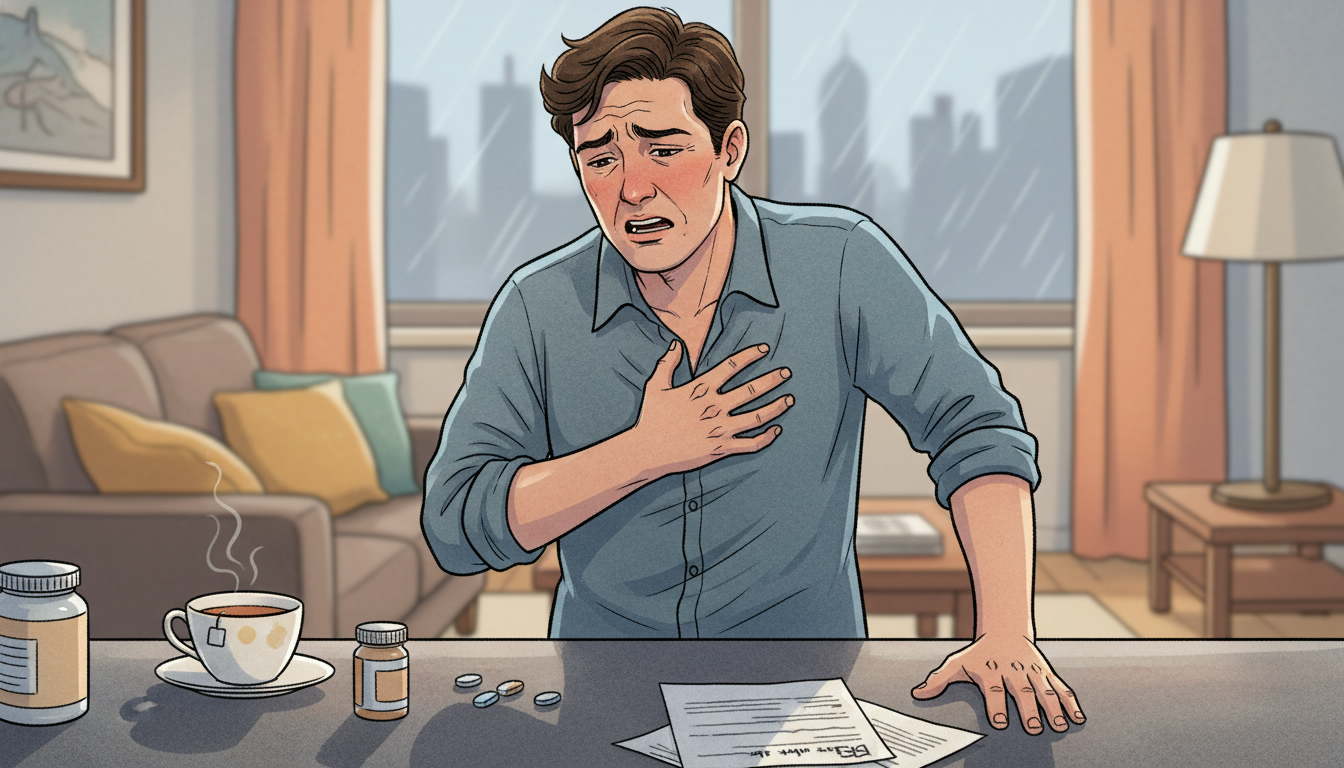
    You’re minding your business — scrolling, working, eating lunch — when suddenly your chest feels tight.

    “Is this a heart attack? Anxiety? Gas? Am I… dying or just dramatic?”

    Sudden chest tightness can be serious, but it also has many causes that are not immediately life-threatening. The key is knowing what to watch for, what to do right now, and when not to wait it out.

    This guide will walk you through:

    • What sudden chest tightness can mean
    • The big red-flag symptoms you should never ignore
    • Common non-emergency causes (like anxiety, reflux, or muscle strain)
    • Simple steps to take at home — and when to go straight to the ER

    Quick note: This isn’t medical care and can’t diagnose you. If you’re in doubt, always err on the side of getting checked.

    First Things First: When Sudden Chest Tightness Is an Emergency

    Let’s start with the non-negotiables.

    If you’re experiencing sudden chest tightness right now and any of the following are true, call 911 (or your local emergency number) immediately:

    • Chest tightness or pressure that feels like crushing, squeezing, or heavy weight in the center or left side of your chest
    • Pain or tightness spreading to your arm (especially left), jaw, neck, back, or stomach
    • Shortness of breath (you feel like you can’t get enough air)
    • Sweating, especially cold or clammy sweat
    • Nausea or vomiting
    • Dizziness, lightheadedness, or fainting
    • You have a history of heart disease, high blood pressure, diabetes, or you’re a smoker, and this feels “different” or worse than usual

    These can be signs of a heart attack (myocardial infarction) or another serious heart problem, like unstable angina or aortic dissection. The American Heart Association emphasizes that chest discomfort, shortness of breath, and breaking out in a cold sweat are classic heart attack warning signs, and waiting to see if it goes away can be dangerous.

    Takeaway: If your gut is yelling “this is bad” and the symptoms match the list above, do not drive yourself, do not Google more — call 911.

    What Does Sudden Chest Tightness Actually Feel Like?

    “Chest tightness” is a vague term, and that’s part of why it’s scary. People describe it in a lot of different ways, like:

    • “Someone is sitting on my chest.”
    • “A band is squeezing my ribs.”
    • “My chest feels full or heavy.”
    • “It’s hard to take a deep breath.”

    For doctors, the quality of the feeling, plus what triggers it and what makes it better or worse, helps narrow down the cause.

    A few patterns:

    • Cardiac (heart) causes often feel like pressure, squeezing, or heaviness, may come on with exertion or stress, and can spread to the arm, jaw, or back.
    • Lung causes often come with shortness of breath, coughing, or pain when breathing in deeply.
    • Anxiety or panic can cause tightness, a feeling of not getting enough air, pounding heart, and a sense of impending doom.
    • Muscle or rib issues often feel sharper and can hurt more when you move, twist, or press on the area.

    Takeaway: Describing how it feels (pressure vs. stabbing vs. burning) and what you’re doing when it happens are big clues — write it down if you plan to see a doctor.

    Serious Causes of Sudden Chest Tightness (You Should Know These)

    This is the scary list, but knowing it helps you act fast if needed.

    1. Heart Attack (Myocardial Infarction)

    A heart attack happens when blood flow to part of the heart is blocked, often by a blood clot in a narrowed artery. This is a true medical emergency.

    Common features:

    • Sudden chest pressure, squeezing, or tightness lasting more than a few minutes or that comes and goes
    • May radiate to left arm, jaw, neck, or back
    • Shortness of breath, nausea, sweating, or feeling faint

    Not everyone has the “Hollywood” version of a heart attack. Symptoms in women, older adults, and people with diabetes may be more subtle, including fatigue, mild chest discomfort, or shortness of breath.

    If you suspect a heart attack: Call 911. Don’t drive yourself. Don’t wait an hour “to see.”

    2. Angina (Reduced Blood Flow to the Heart)

    Angina is chest discomfort caused by temporary reduced blood flow to the heart muscle, usually from narrowed coronary arteries. It’s a warning sign of underlying heart disease.

    Typical patterns:

    • Chest tightness or pressure brought on by physical exertion, cold air, or emotional stress
    • Often eases with rest or medication like nitroglycerin (if prescribed)

    Stable angina tends to be predictable (same trigger, same pattern). New, worsening, or “out of the blue” angina-like chest tightness can be unstable angina — which is an emergency.

    Takeaway: If “exercise or stress = chest tightness” is becoming a pattern, don’t ignore it. That’s a “call your doctor ASAP” situation.

    3. Pulmonary Embolism (Blood Clot in the Lung)

    A pulmonary embolism (PE) is a blood clot that travels to the lungs. This can be life-threatening and needs immediate care.

    Signs can include:

    • Sudden chest pain or tightness, often worse when you take a deep breath
    • Shortness of breath that appears suddenly
    • Fast heart rate, feeling anxious or lightheaded
    • Sometimes coughing up blood

    Risk is higher if you recently had surgery, long travel with little movement, are pregnant or postpartum, use estrogen-based birth control or hormone therapy, smoke, or have a history of clots.

    Takeaway: Sudden chest tightness + shortness of breath + risk factors for clots = ER now, not later.

    4. Pneumothorax (Collapsed Lung)

    A pneumothorax happens when air leaks into the space around the lung, causing it to collapse partially or fully.

    It can cause:

    • Sudden sharp chest pain or tightness, often on one side
    • Trouble breathing or feeling like you can’t fully inhale
    • Sometimes happens after an injury, but can also occur spontaneously (especially in very tall, thin people or those with underlying lung disease)

    Severe cases can be life-threatening and require emergency treatment to re-expand the lung.

    Takeaway: If your breathing suddenly feels very off with sharp chest pain or tightness, get urgent care.

    5. Aortic Dissection (Rare, but Critical)

    An aortic dissection is a tear in the inner layer of the main artery leaving the heart. It’s rare but extremely serious.

    Typical symptoms:

    • Sudden, severe chest or upper back pain described as tearing or ripping
    • May move from chest to back or abdomen
    • Can be associated with fainting, stroke-like symptoms, or extremely high blood pressure

    This is a call-911-right-now situation.

    Takeaway: Sudden “worst-ever” chest/back pain that feels tearing or ripping is never a “wait and see” moment.

    Less Dangerous (But Still Real) Causes of Sudden Chest Tightness

    Not all chest tightness means heart attack. Here are common non-cardiac causes that can still feel very scary.

    1. Anxiety and Panic Attacks

    Panic attacks are known for mimicking heart problems.

    You might feel:

    • Sudden chest tightness or pain
    • Rapid heartbeat or pounding heart
    • Shortness of breath or feeling like you can’t get enough air
    • Sweating, shaking, dizziness
    • A powerful sense of fear or “I’m going to die”

    The symptoms often peak within 10–20 minutes and then gradually ease. They can happen even when you’re sitting quietly, often during periods of high stress.

    Why this happens: The body’s “fight or flight” response floods you with adrenaline, which affects breathing, muscles, and heart rate.

    Important: Panic and heart issues can overlap. If it’s new, different, or your first time with these symptoms, you should still get medically evaluated.

    2. Gastroesophageal Reflux (GERD) and Heartburn

    Acid reflux can cause burning or tightness in the chest that’s very similar to heart pain.

    Clues it may be reflux:

    • Burning or pressure in the chest, often after eating
    • Worse when lying down or bending over
    • Sour taste in mouth, belching, or regurgitation
    • May improve with antacids

    Heartburn is common, but sometimes heart attacks are mistaken for heartburn. If your “heartburn” feels different, more intense, or comes with shortness of breath, sweating, or jaw/arm pain, get checked immediately.

    Takeaway: Reflux can explain a lot of chest discomfort, but it should never be your only explanation for new, severe, or unusual symptoms.

    3. Musculoskeletal Pain (Costochondritis, Muscle Strain)

    Sometimes the problem is in your chest wall, not your heart or lungs.

    Costochondritis (inflammation of the cartilage where ribs attach to the breastbone) or a muscle strain can cause:

    • Sharp or aching pain or tightness on one side of the chest
    • Pain that gets worse if you press on the area, twist, stretch, or move certain ways
    • Pain after heavy lifting, intense workouts, new exercise, or even bad posture at a desk

    This type of pain can be very uncomfortable but is usually not dangerous.

    Takeaway: If pressing on the spot or moving your torso clearly changes the pain, it’s more likely to be muscle or cartilage than heart — but again, when in doubt, get evaluated.

    4. Asthma, Bronchospasm, or Other Lung Conditions

    Lung issues can cause chest tightness, especially with breathing symptoms.

    Common signs:

    • Tightness in the chest, wheezing, or whistling when you breathe
    • Coughing, especially at night or with exercise
    • Feeling like you can’t fully exhale

    People with asthma often describe a band around the chest or a sense of constriction. Chest infections (like pneumonia or bronchitis) can also cause chest discomfort and tightness.

    Takeaway: If chest tightness comes with wheezing, coughing, or a history of asthma or lung disease, talk with your doctor about adjusting your treatment plan.

    How to Respond to Sudden Chest Tightness (Step-by-Step)

    Step 1: Check for Emergency Red Flags

    Use this quick mental checklist:

    • Am I having crushing, squeezing, or heavy chest pressure?
    • Is it spreading to my arm, jaw, back, or neck?
    • Am I short of breath, sweating, nauseated, or about to faint?
    • Do I have major risk factors (heart disease, diabetes, high blood pressure, smoking, strong family history)?

    If yes to any combination of these and the symptoms are significant or worsening, call 911. Don’t drive yourself. Don’t wait 30 minutes just to see.

    Step 2: If No Red Flags, Pause and Observe

    If your symptoms are mild and you don’t have the emergency signs above:

    1. Stop what you’re doing. Sit or lie down in a comfortable position.
    2. Take slow breaths: In through your nose for 4 seconds, hold for 4, out through your mouth for 6–8.
    3. Notice patterns:
      • Did this start after exercise, eating, stress, or lying down?
      • Does it change when you press on the area or move your ribs or arms?
      • Have you had this before?

    If things improve steadily over 10–20 minutes and you feel generally okay, it’s reasonable to call your doctor or a telehealth service for advice on next steps.

    Step 3: Call a Healthcare Professional the Same Day If…

    • The tightness is new and you can’t clearly link it to something like sore muscles
    • You’ve had similar episodes more than once recently
    • You have risk factors (smoking, high blood pressure, high cholesterol, diabetes, strong family history of heart disease)
    • You’re just not sure and it’s making you anxious

    They may recommend:

    • An in-person evaluation
    • An EKG (electrocardiogram)
    • Blood tests to check for heart damage
    • Possibly a stress test or imaging studies, depending on your history

    Takeaway: “It went away” does not always mean “it was nothing.” Recurrent or unexplained chest symptoms deserve a real workup.

    Real-Life Style Scenarios (And What They Might Mean)

    Scenario 1: The 2 a.m. Heartburn Panic

    You eat a big, spicy dinner at 9 p.m., lie down at 11:30, and at 2 a.m. wake up with burning chest tightness.

    • Feels worse when you lie flat
    • Eases a bit when you sit up
    • You have a sour taste in your mouth

    Possibility: Acid reflux or GERD. But if this is more intense than usual, comes with shortness of breath or sweating, or you have strong heart risk factors, get emergency care.

    Scenario 2: The Meeting Meltdown

    You’re in a stressful work call. Out of nowhere:

    • Your chest feels tight
    • Heart races
    • Hands tingle, you feel dizzy and detached
    • You’re convinced something terrible is happening

    Symptoms peak in 10 minutes and start to ease.

    Possibility: Panic attack. Still worth a medical check at least once to rule out heart issues, especially if this is new.

    Scenario 3: The Weekend Warrior

    You helped a friend move yesterday — heavy boxes, stairs, the whole deal. Today:

    • Sharp pain and tightness in a specific spot on your chest
    • Hurts more when you twist, stretch, or press that area
    • Breathing is otherwise normal

    Possibility: Muscular strain or costochondritis. Usually managed with rest, gentle stretching, and over-the-counter pain relief (if safe for you), but see a provider if it’s intense, persists, or you’re not completely sure.

    Scenario 4: Climbing the Stairs

    You walk up two flights of stairs and:

    • Feel pressure or tightness in the center of your chest
    • Need to stop and rest
    • It eases after a few minutes of rest

    This pattern has been happening more often over the past few weeks.

    Possibility: Angina (reduced blood flow to the heart). This deserves prompt medical evaluation — call your doctor right away or seek urgent care or ER, especially if the pattern is getting worse.

    Practical Ways to Reduce Future Episodes (Depending on the Cause)

    Once a doctor has helped rule out or identify a cause, some lifestyle changes can reduce episodes of chest tightness:

    • For heart health:
      • Stop smoking (if you do)
      • Manage blood pressure, blood sugar, and cholesterol
      • Build up regular, moderate exercise if your doctor says it’s safe
      • Focus on heart-healthy eating patterns (Mediterranean-style, more plants and fiber, fewer ultra-processed foods)
    • For reflux or GERD:
      • Avoid huge late-night meals
      • Cut back on trigger foods (spicy, acidic, very fatty, chocolate, caffeine, alcohol — varies by person)
      • Elevate the head of your bed slightly if nighttime reflux is an issue
    • For anxiety or panic:
      • Learn and practice grounding or breathing techniques when not in crisis
      • Consider therapy (like CBT), which is very effective for panic disorders
      • Discuss medication or other options with your healthcare provider if attacks are frequent
    • For muscle-related pain:
      • Improve posture (especially if you work at a desk)
      • Warm up before workouts and progress intensity gradually
      • Include mobility and stretching in your routine

    Takeaway: You can’t control everything, but you can lower your odds of scary chest episodes with long-term habits.

    When in Doubt About Chest Tightness, Here’s the Rule

    Sudden chest tightness is one of those symptoms where overreacting is better than underreacting.

    • If you have severe, crushing, or spreading chest pain or tightness, especially with shortness of breath, sweating, nausea, or faintness, call 911.
    • If your symptoms are mild but new, recurrent, or confusing, and you’re not actively in distress, call your doctor or a nurse line the same day.
    • If a healthcare provider has already evaluated you and told you what to watch for, follow that plan — and go back if things change.

    You’re not bothering anyone by getting chest symptoms checked. You’re doing the most responsible thing you can do for yourself.

    And if you’re reading this because that tight feeling just scared you, take one slow breath in and one long breath out.

    Then, based on what you’ve read here, decide: Is this an emergency right now? Or is this a “call my doctor today” moment?

    Either way, you don’t have to just sit in fear. You can act — and that’s where your power is.

  • Sudden Shortness of Breath: When To Worry

    Sudden Shortness of Breath: When To Worry

    Sudden Shortness of Breath: What It Might Mean and What to Do

    You are walking up the stairs, mid-sentence on a call, and suddenly it feels like someone turned the oxygen down. You stop, grab the railing, and think: “Why am I this out of breath?”

    If you have ever had sudden shortness of breath, you know it can go from mildly annoying to deeply terrifying very fast.

    This article unpacks what might be going on, how to tell an emergency from a “monitor this” situation, and what to do next, without sending you into a search-induced panic spiral.

    Quick disclaimer: This is educational, not a substitute for seeing a doctor or calling 911. If you are worried, err on the side of getting help.

    What Counts as Sudden Shortness of Breath?

    Shortness of breath (medical term: dyspnea) is that uncomfortable feeling that you cannot get enough air, are breathing harder than usual, or need to work to breathe.

    “Sudden” usually means it:

    • Starts over seconds to minutes (for example, out of nowhere at rest or with minimal activity), or
    • Worsens dramatically over a short time, even if you have had mild shortness of breath before.

    People describe it as:

    • “I can’t catch my breath.”
    • “I feel like I’m suffocating.”
    • “My chest feels tight, like I can’t expand it.”
    • “I can’t finish a sentence without stopping to breathe.”

    Key idea: A slow, months-long change (like getting more winded over years of deconditioning) is concerning but different from a sudden, big change. Sudden means you should pay closer attention.

    Red-Flag Signs: When Sudden Shortness of Breath Is an Emergency

    If you have sudden shortness of breath plus any of these, call 911 or your local emergency number immediately:

    1. Chest pain or pressure

      • Especially if it is heavy, squeezing, burning, or radiates to your arm, jaw, back, or neck.
      • Could signal a heart attack or serious heart problem.
    2. Blue or gray lips, face, or fingertips

      • Sign of low oxygen.
    3. Confusion, trouble speaking, or altered consciousness

      • The brain may not be getting enough oxygen.
    4. You cannot speak full sentences

      • If you can only get out a few words at a time because you are so breathless.
    5. Severe wheezing or noisy breathing (stridor)

      • High-pitched, squeaky, or tight-sounding breaths can signal airway obstruction or severe asthma.
    6. Sudden shortness of breath after choking or swallowing something

      • Possible foreign body in the airway.
    7. Crushing chest pain and sudden breathlessness after exertion or at rest

      • Possible pulmonary embolism (blood clot in the lungs) or heart attack.
    8. Frothy, pink, or blood-tinged sputum

      • Can be a sign of acute heart failure or significant lung bleeding.
    9. Severe anxiety plus physical breathing changes plus sense of impending doom

      • Could be a panic attack, which is usually not life-threatening, but if it is a first-time event or you are not sure, it still deserves urgent evaluation to rule out heart and lung issues.

    Bottom line: If your gut says “this is not normal,” and especially if it started suddenly at rest, do not self-diagnose. Get emergency care.

    Common Causes of Sudden Shortness of Breath (From Urgent to Less Urgent)

    Shortness of breath can come from problems in the lungs, heart, blood, airway, or even your brain and emotions. Here are some of the more common categories.

    1. Lung Emergencies

    These tend to come on quickly and feel scary.

    Pulmonary embolism (PE) – blood clot in the lung

    • Sudden shortness of breath, often with sharp chest pain that worsens when you breathe in, rapid heart rate, and maybe coughing up blood.
    • Often happens after recent surgery, long travel, immobilization, pregnancy, or blood clot history.
    • This is a 911 or emergency room situation.

    Pneumonia

    • Shortness of breath with fever, chills, and cough, often with yellow, green, or bloody mucus.
    • Pain with deep breaths, feeling very sick or weak.
    • Can develop over hours to days.

    Pneumothorax (collapsed lung)

    • Air leaks into the space around the lung, causing it to collapse.
    • Can happen spontaneously (especially in tall, thin young adults or people with lung disease) or from trauma such as a rib fracture or stab wound.
    • Sudden sharp chest pain plus one-sided breath sound changes.
    • Needs emergency care.

    Asthma attack

    • Wheezing, tight chest, cough, and difficulty breathing, especially if you have a history of asthma.
    • Severe attacks can be life-threatening.

    COPD flare (for people with chronic lung disease)

    • Worsening shortness of breath, increased cough, more sputum.
    • Often triggered by infections or irritants like smoke.

    Takeaway: If breathing changes fast and you feel worse by the minute, it is not a “wait a few days” problem.

    2. Heart-Related Causes

    The heart and lungs share the workload of getting oxygen into your body. When the heart struggles, you often feel it in your breathing.

    Heart attack (myocardial infarction)

    • Sudden chest pain or pressure, shortness of breath, sweating, nausea, lightheadedness.
    • Not everyone has classic chest pain. Some people, especially women, older adults, and people with diabetes, mainly feel shortness of breath, fatigue, or nausea.

    Acute heart failure or fluid in the lungs (pulmonary edema)

    • Shortness of breath, especially lying flat or waking you up at night gasping.
    • Swollen legs or ankles, rapid weight gain from fluid, fatigue, and sometimes coughing frothy or pink-tinged mucus.

    Arrhythmias (abnormal heart rhythms)

    • Heart suddenly racing, irregular, or pounding with feeling breathless, dizzy, or about to faint.

    Takeaway: Heart-related breathlessness often shows up with chest discomfort, swelling, or extreme fatigue. New or severe symptoms should be evaluated urgently.

    3. Airway and Allergy Causes

    These are often dramatic but may respond quickly to the right treatment.

    Anaphylaxis (severe allergic reaction)

    • Sudden shortness of breath, swelling of lips, tongue, or throat, hives, itching, drop in blood pressure, feeling faint.
    • Often triggered by foods, insect stings, medications, or latex.
    • This is an emergency. Use an epinephrine auto-injector if you have one and call 911.

    Asthma and severe bronchospasm

    • Tight chest, wheezing, coughing, using neck or chest muscles to breathe.
    • If your usual inhaler is not helping or you are getting worse, the emergency room is the right move.

    Choking or foreign body

    • Sudden inability to talk, high-pitched or no sound when breathing in, clutching throat.
    • Needs immediate first aid and emergency response.

    Takeaway: If your throat, lips, or tongue are involved, or breathing is noisy and tight, do not wait.

    4. Panic Attacks and Anxiety

    Panic attacks can feel exactly like something deadly is happening.

    Common features include:

    • Sudden intense fear or sense of doom
    • Rapid, shallow breathing (hyperventilation)
    • Chest tightness or pain
    • Tingling in hands, feet, or around the mouth
    • Racing heart, sweating, shaking

    Panic-related shortness of breath often:

    • Comes with a wave of anxiety or a trigger such as a crowded place, conflict, or fearful thought.
    • Improves when you slow your breathing or are distracted.
    • Has normal tests when checked in an emergency room.

    However, you should not assume it is “just anxiety” if you have never been evaluated or if something feels different from your usual pattern. Many people with heart or lung problems were initially told it was anxiety.

    Takeaway: Panic attacks are real and miserable, but they do not damage your lungs or heart. Still, ruling out physical causes, especially the first time, is smart.

    5. Anemia, Blood Issues, and Other Medical Conditions

    Sometimes your lungs are fine, but your blood is not carrying enough oxygen or your body is under extra stress.

    Anemia (low red blood cells)

    • Shortness of breath with exertion, fatigue, pale skin, dizziness, rapid heart rate.
    • Can be due to low iron, chronic disease, vitamin deficiencies, blood loss, or other causes.

    Infections, sepsis, or high fevers

    • Illness can raise your body’s oxygen demand so even normal lungs feel overworked.

    Thyroid problems

    • Overactive thyroid (hyperthyroidism) can cause racing heart and breathlessness.
    • Underactive thyroid (hypothyroidism) can cause fatigue and exercise intolerance.

    Obesity or deconditioning

    • Not “sudden” in the classic sense, but people often notice it suddenly, like one day you realize you are more winded on stairs than you used to be.

    Takeaway: Even if symptoms are not dramatic, gradual changes matter. Shortness of breath on mild exertion that is new for you is worth checking.

    How to Quickly Assess Your Own Breathing at Home

    This is not a substitute for medical care, but these steps can help you make sense of what you are feeling.

    Step 1: Check How Limited You Are

    Ask yourself:

    • Can I speak in full sentences, or only a few words at a time?
    • Am I struggling at rest, or only with exertion such as climbing stairs or walking?
    • Did this start suddenly, or has it been building over days or weeks?

    If you cannot speak full sentences or are short of breath at rest, that leans toward urgent or emergency.

    Step 2: Look for Obvious Triggers

    • Did this start after exercise, allergic exposure, a stressful event, or choking?
    • Is there a known condition such as asthma, heart failure, COPD, or anxiety that could explain it?

    This does not rule anything in or out but helps you explain it clearly to a clinician.

    Step 3: Check for Visual Red Flags

    If you can, in a mirror or with someone’s help, look for:

    • Blue or gray lips or fingers
    • Heavy use of neck or chest muscles to breathe (visible strain)
    • Confusion, very drowsy appearance, or looking like you are about to faint

    Any of those signs mean emergency care now.

    Step 4: If You Have Devices, Use Them

    • Pulse oximeter (finger oxygen reader): A normal adult reading is typically 95–100 percent at rest. Under about 92 percent at rest, especially if dropping or with symptoms, is concerning and often needs urgent evaluation.
    • Home blood pressure monitor: Very low or very high blood pressure plus breathlessness can mean heart or circulation trouble.

    If your numbers are off and you feel bad, do not wait.

    Takeaway: Home checks are useful data, but symptoms matter more than gadgets. A normal oxygen reading does not mean you can ignore crushing chest pain.

    What Doctors Usually Do to Evaluate Sudden Shortness of Breath

    If you go to urgent care or the emergency room, expect some combination of the following:

    • History and physical exam
      • When did it start? What were you doing? Any associated chest pain, cough, fever, swelling, anxiety?
      • Listening to lungs and heart, checking oxygen levels, heart rate, and blood pressure.
    • Basic tests (depending on how you present):
      • Pulse oximetry and maybe arterial blood gas to check oxygen and carbon dioxide.
      • Chest X-ray to look for pneumonia, collapsed lung, heart enlargement, or fluid.
      • Electrocardiogram (ECG or EKG) to screen for heart attack or abnormal rhythms.
      • Blood tests for infection markers, anemia, heart strain markers, clot risk, and other issues.
      • CT scan of the chest if a pulmonary embolism or other serious lung issue is suspected.
      • Echocardiogram (heart ultrasound) if heart function is in question.

    Treatment might include oxygen, inhalers, steroids, antibiotics, blood thinners, diuretics to remove fluid, or other targeted therapies depending on the cause.

    Takeaway: The goal is not just to make you breathe better but to find and treat the underlying cause.

    When It Is Probably Not an ER-Level Emergency (But Still Worth a Check)

    These are situations where you may be able to see your primary care clinician or a same-day clinic instead of the emergency room, assuming no red flags:

    • You notice you are more winded on stairs or hills than a few weeks ago, but you are comfortable at rest.
    • You have a mild cough and low-grade fever, are breathing a bit harder but talking normally and not looking seriously ill.
    • You have known anxiety or panic disorder, the episode feels like your past attacks, and it is resolving with your usual coping tools, but it is happening more often.
    • You have mild worsening of asthma or allergies, and your inhaler is helping but not as much as usual.

    Even then, if something shifts or worsens quickly, upgrade to urgent or emergency care. You are allowed to change your mind.

    Practical Steps You Can Take Right Now

    If you are currently not in immediate crisis but worried about your breathing in general, here is what you can do:

    1. Track your symptoms

      • When do you feel short of breath? At rest? With exertion? Lying down? At night?
      • What makes it better or worse?
      • Bring this timeline and any photos or home readings, such as pulse oximeter values, to your visit.
    2. List your risk factors

      • Smoking or vaping history
      • Asthma, COPD, heart disease, blood clots, cancer, recent surgery, long flights, pregnancy
      • Medications, including birth control or hormone therapy
    3. Book a medical appointment soon if:

      • Your breathing has gotten noticeably worse over days to weeks.
      • You are skipping activities you used to do because of breathlessness.
      • You are not sure whether something like anemia, asthma, or heart disease might be in play.
    4. Do not self-treat with random medications

      • Old antibiotics, steroids, someone else’s inhaler, or leftover opioids will not solve the root problem and can make diagnosis harder or create new issues.
    5. Lifestyle changes that support better breathing over time

      • Quit smoking or vaping.
      • Build gradual cardiovascular fitness if cleared by your clinician.
      • Maintain a healthy weight.
      • Manage conditions like high blood pressure, diabetes, and sleep apnea.

    Takeaway: The best time to investigate non-emergency shortness of breath is before it turns into a crisis.

    Simple Breathing Tools for Mild Episodes (Not Emergencies)

    For situations where you have been medically cleared or know this is typical for you, such as mild anxiety or deconditioning, these can help you feel more in control.

    Pursed-Lip Breathing

    1. Inhale slowly through your nose for about 2 seconds.
    2. Purse your lips like you are blowing out a candle.
    3. Exhale slowly through pursed lips for about 4 seconds.

    This can help keep your airways open a bit longer and improve air exchange. It is often used by people with COPD but can be helpful for many.

    4-6 Breathing (for Anxiety-Driven Breathlessness)

    1. Inhale through your nose for a count of 4.
    2. Exhale gently through your mouth for a count of 6.
    3. Repeat for a few minutes.

    Longer exhales can calm the nervous system and help break the hyperventilation cycle.

    Important: These are adjuncts, not cures. If something feels wrong, do not try to breathe through a heart attack.

    The Bottom Line: Listen to Your Lungs and Your Gut

    Sudden shortness of breath is one of those symptoms you should never ignore. It can mean anything from “you just sprinted up the stairs and your fitness is a bit rusty” to “your lungs, heart, or blood are in serious trouble and need immediate care.”

    When in doubt:

    • If it is sudden, severe, or comes with chest pain, blue lips, confusion, or inability to speak in full sentences, treat it as an emergency.
    • If it is new or gradually worse over days to weeks, schedule a medical evaluation soon.

    You do not get bonus points for toughing out breathing issues. Getting checked early is how small problems stay small and how big problems get caught in time.

    If you have been noticing “I am more out of breath than I used to be,” consider this your nudge to bring it up with a clinician. Your future self, and your lungs, will benefit.