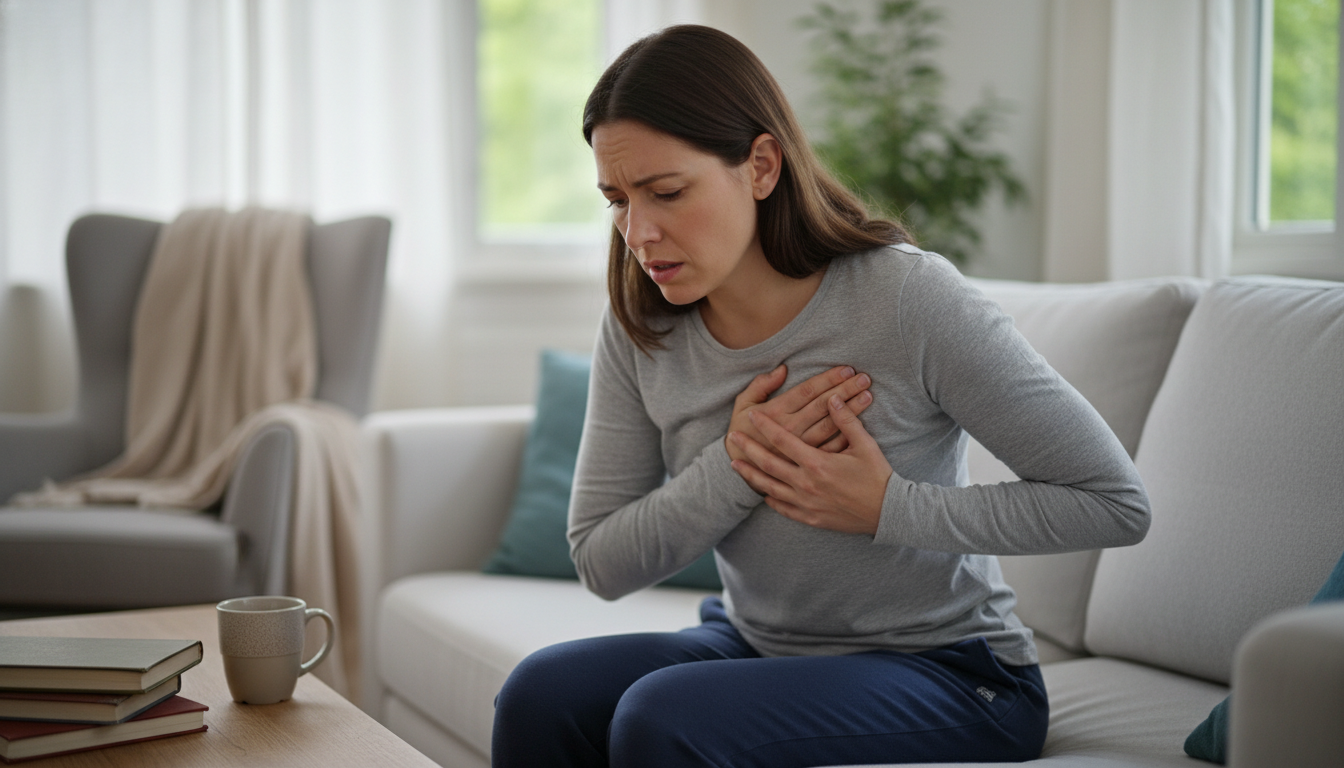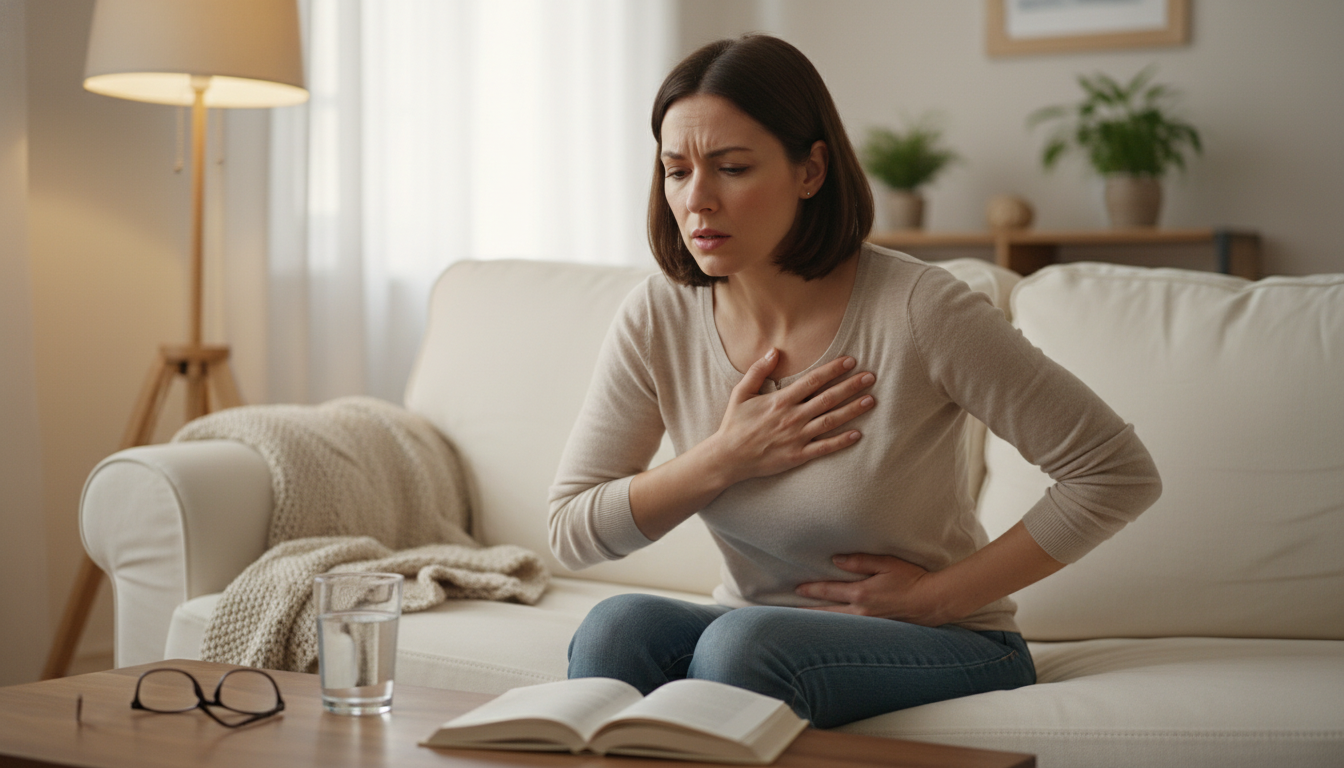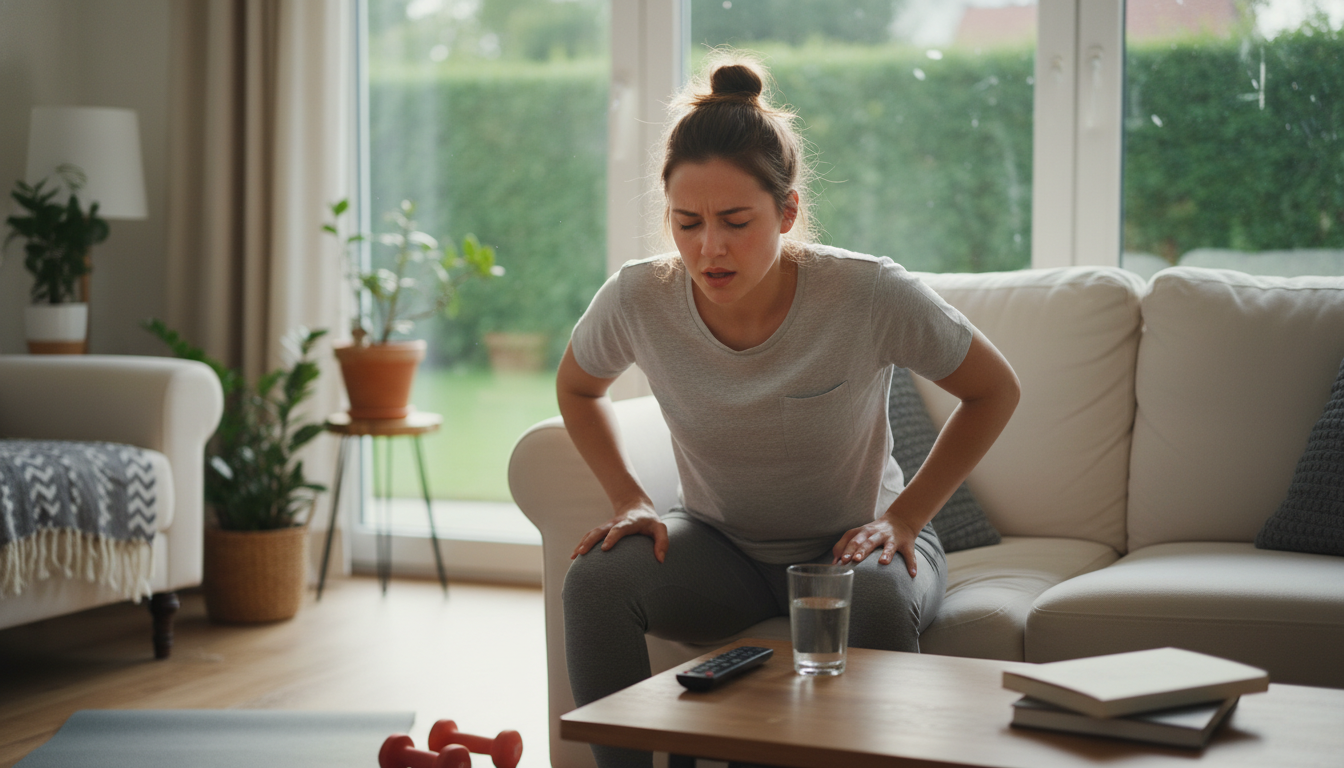
Category: Breathing & Chest

shortness of breath, shallow breathing, can’t take a deep breath

  • Breathless After Mild Activity

    Breathless After Mild Activity

    Breathlessness After Mild Activity: What It Could Mean

    Disclaimer: This article is for general information only and isn’t medical advice or a diagnosis. If you have severe symptoms or think it may be an emergency, call your local emergency number.

    You walk up a single flight of stairs. Your heart’s pounding, your chest feels tight, and you’re out of breath. You think: “That was mild activity. Why does it feel like I just ran a marathon?”

    If that sounds familiar, you’re not alone, and you’re not being dramatic. This guide breaks down what breathlessness after mild activity might mean, when it’s more likely to be harmless, when it’s a red flag, and what you can do about it.

    What Counts as Mild Activity?

    “Mild” can mean different things to different people, so it helps to define it. Mild activity usually includes things like:

    • Walking on level ground at a comfortable pace
    • Climbing one short flight of stairs
    • Light housework (dishes, tidying, folding laundry)
    • Casual grocery shopping
    • Slowly walking from your car into a store

    If these kinds of activities leave you noticeably short of breath (needing to stop, catch your breath, or feeling like you can’t quite get enough air), that’s worth paying attention to, especially if it’s new or getting worse.

    Takeaway: Mild effort shouldn’t consistently feel like a cardio workout.

    What Does Breathlessness Feel Like?

    Shortness of breath (also called dyspnea) is more than just being a little winded. People describe it as:

    • “I can’t get a deep breath.”
    • “My chest feels tight or heavy.”
    • “I feel like I’m breathing fast but it’s not helping.”
    • “I have to stop talking to catch my breath.”

    After mild activity, it might show up as:

    • Needing to pause on the stairs or lean on something
    • Taking several minutes to feel back to normal
    • Breathing faster or deeper than seems right for the effort

    Takeaway: Your body should recover quickly after light movement. If it doesn’t, that’s a signal, not a personality flaw.

    Common, Often-Benign Reasons for Breathlessness After Mild Activity

    Not all causes are dangerous, but they still matter. Here are some frequent, non-emergency reasons.

    1. Deconditioning (Being Out of Shape)

    If you’ve been sitting a lot (desk job, gaming, studying), recovering from an illness, or less active for weeks or months, your muscles and cardiovascular system get less efficient. When you move, your body needs more oxygen than it’s used to, and you feel short of breath sooner than before.

    The good news is that with gradual, consistent activity, this type of breathlessness often improves over weeks.

    Takeaway: If your lifestyle got more sedentary recently, deconditioning is a real, fixable thing, not a moral failing.

    2. Anxiety or Panic

    Anxiety can make you breathe faster and shallower, tighten chest and throat muscles, and make you hyper-aware of normal sensations. You walk up stairs, your heart rate rises (which is normal), anxiety kicks in and asks if this is dangerous, your breathing speeds up more, and you feel extremely breathless.

    Clues it may be anxiety-related include:

    • Comes in waves, often with worries, fear, or feeling “on edge”
    • Tingling in fingers or face, chest tightness, or a sense of doom
    • Medical tests you’ve had so far are normal, but symptoms persist

    Takeaway: Anxiety can cause real physical breathlessness. It’s not “in your head,” even though it starts in your nervous system.

    3. Extra Body Weight

    Carrying more weight means your heart and lungs work harder with movement, and your diaphragm and chest wall may have less room to expand. Even mild activity, like walking a short distance, can feel harder, especially if you’re also deconditioned.

    Takeaway: Weight is one factor, not the only factor. The goal is gentle, sustainable changes, not shame.

    4. Recent Illness (Like COVID-19, Flu, or a Bad Cold)

    After respiratory infections, your lungs and muscles may need time to fully recover. Some people notice being short of breath with mild exertion for weeks after, along with fatigue and slower recovery after walking or climbing stairs.

    Post-COVID or post-viral issues can linger and may need a doctor’s guidance and a gradual return-to-activity plan.

    Takeaway: If your breathlessness started after an infection, mention that timeline clearly to your doctor.

    More Serious Causes: When Breathlessness Is a Warning Sign

    Here we switch from “annoying but common” to “please don’t ignore this.” Breathlessness after mild activity can be linked to more serious conditions.

    1. Heart Problems

    Certain heart issues can limit how well blood and oxygen are pumped around your body. These include:

    • Heart failure (the heart doesn’t pump as effectively)
    • Coronary artery disease (narrowed heart arteries)
    • Abnormal heart rhythms

    Warning signs with breathlessness may include:

    • Chest pain, pressure, or tightness (especially with activity)
    • Swelling in legs, ankles, or feet
    • Waking at night short of breath or needing extra pillows
    • Rapid, pounding, or irregular heartbeat

    If you notice these, especially if they’re new or worsening, get medical care promptly.

    Taylor notices that walking from the parking lot to the store now causes chest tightness and breathlessness that eases with rest. A month ago, this didn’t happen. That pattern—symptoms with exertion that improve with rest—can be concerning for heart-related issues and needs prompt medical evaluation.

    Takeaway: Breathlessness plus chest discomfort or swelling should not be self-diagnosed. Get checked.

    2. Lung Conditions

    Your lungs are the main oxygen gatekeepers, so many lung problems can cause breathlessness with light activity, such as:

    • Asthma (airways narrow and swell)
    • COPD (often from smoking; includes chronic bronchitis and emphysema)
    • Pulmonary embolism (blood clot in the lung, an emergency)
    • Pulmonary fibrosis or other scarring conditions

    Red flags include:

    • Sudden, unexplained shortness of breath
    • Pain when breathing in
    • Coughing up blood
    • Wheezing or a whistling sound when breathing
    • Bluish lips or fingertips

    Takeaway: When your lungs are struggling, mild activity exposes it quickly. Sudden or severe lung symptoms are an emergency.

    3. Anemia (Low Red Blood Cells)

    Red blood cells carry oxygen. If you have too few of them or not enough hemoglobin, your body runs on “low oxygen delivery mode.”

    Common signs include:

    • Breathlessness with mild activity
    • Fatigue and low energy
    • Pale skin or inner eyelids
    • Headaches or feeling lightheaded

    Anemia has many causes, such as iron deficiency, chronic disease, and vitamin deficiencies, so proper blood work is important.

    Takeaway: If your breathlessness comes with unusual fatigue and pallor, blood tests for anemia are often part of the workup.

    4. Other Medical Conditions

    Other possibilities include:

    • Thyroid disorders (overactive or underactive)
    • Metabolic conditions
    • Deconditioning after long bed rest
    • Certain medications that affect heart rate, breathing, or fluid balance

    Takeaway: Breathlessness is a symptom, not a diagnosis. Think of it as your body’s notification that something is going on and deserves a look.

    When Is Breathlessness After Mild Activity an Emergency?

    Seek emergency care immediately (call your local emergency number) if you notice any of the following:

    • Sudden shortness of breath that comes out of nowhere
    • Chest pain, pressure, squeezing, or discomfort, especially if it spreads to arm, jaw, or back
    • Feeling like you might pass out, or actually fainting
    • Blue or gray lips, face, or fingertips
    • Coughing up blood
    • Very fast, irregular, or pounding heartbeat
    • Shortness of breath at rest that’s rapidly worsening

    These can signal heart attack, serious heart rhythm problems, pulmonary embolism, severe asthma attack, or other life-threatening issues.

    Takeaway: If you are wondering whether it is emergency-level serious and the symptoms above fit, treat it like an emergency. It is better to be safe than sorry.

    What Your Doctor May Check (and Why)

    If you see a clinician about breathlessness after mild activity, they might do several things.

    They may start by asking detailed questions, such as when it started, whether it is getting worse, better, or staying the same, what activities trigger it, and whether you have chest pain, wheezing, cough, swelling, fever, or weight change. They may ask about a history of heart, lung, or blood conditions, smoking, recent travel, or surgery.

    They will likely examine you by listening to your heart and lungs, checking your oxygen level with a finger clip (pulse oximeter), and checking your heart rate, blood pressure, and sometimes how you tolerate walking.

    Depending on your story, they may order tests such as blood tests (for anemia, infection, thyroid function, or heart strain markers), a chest X-ray (to look at lungs and heart size), an ECG or EKG (to check heart rhythm and signs of strain or prior heart issues), an echocardiogram (ultrasound of the heart), pulmonary function tests for asthma or COPD, or sometimes a CT scan if they are concerned about clots or other lung problems.

    Takeaway: Do not be surprised if they say they need a few tests. Breathlessness has many possible causes, and they often need data to narrow it down.

    Practical Things You Can Track Before Your Appointment

    You do not have to show up empty-handed. A few days of observation can really help your doctor.

    Track the following:

    1. When it happens (for example, “Climbing 12 stairs to my apartment” or “Carrying groceries one block”)
    2. How bad it feels on a 0–10 scale (0 = normal, 10 = cannot breathe at all)
    3. How long it takes to recover (for example, back to normal in about 1 minute versus 10–15 minutes)
    4. Associated symptoms (chest pain, dizziness, palpitations, cough, wheezing, swelling, fever)
    5. Recent changes (new medications, illness, long travel, big stress, big weight change, pregnancy)

    Takeaway: A simple note in your phone can turn a vague “I get short of breath” into a clear, helpful story.

    What You Can Do Right Now (While Waiting to Be Seen)

    While you are arranging an appointment and assuming you are not in emergency territory, some general steps may help.

    1. Pace and Plan Your Activity

    • Break tasks into smaller chunks and rest halfway up the stairs if needed.
    • Avoid sudden sprints and start slow, then build up.
    • Use rails or supports when climbing if you feel unsteady.

    2. Try Breathing Techniques

    Pursed-lip breathing, often taught to people with lung disease but helpful for many, works like this:

    1. Breathe in gently through your nose for about 2 seconds.
    2. Purse your lips like you are blowing out a candle.
    3. Breathe out slowly through pursed lips for about 4 seconds.

    This can help you feel more in control of your breathing and sometimes reduce breathlessness.

    3. If Anxiety Is a Big Factor

    • Notice if your breathlessness spikes when you are stressed, overthinking, or panicking.
    • Try grounding by naming 5 things you see, 4 you feel, 3 you hear, 2 you smell, and 1 you taste.
    • Consider talking to a therapist or your doctor about anxiety management, such as cognitive behavioral therapy, medication, or breathing retraining.

    4. Avoid Smoking and Secondhand Smoke

    Smoke irritates and damages the lungs over time and can worsen many causes of breathlessness.

    5. Be Gentle but Honest About Activity Level

    If you suspect deconditioning, you can start with short, easy walks (even 5–10 minutes) most days and gradually add 1–2 minutes every few days as tolerated. Stop or slow down if you have chest pain, severe breathlessness, or feel like you might faint.

    Takeaway: You do not have to push through it or completely stop moving. Gentle, smart adjustments are ideal, guided by your symptoms and your clinician’s advice.

    When Should You Definitely Book a Non-Urgent Appointment?

    You should arrange to see a doctor or other qualified clinician soon (days to a few weeks, not months) if:

    • You are newly breathless with mild activity, and it is not clearly explained by a recent illness or big lifestyle change
    • Your breathlessness is gradually getting worse
    • You have other symptoms such as fatigue, palpitations, cough, wheeze, swelling, or weight changes
    • You have a history of heart or lung disease, and this feels like a change from your usual

    Takeaway: Living with “It’s probably nothing” plus weeks of worry is not helpful. Getting evaluated is usually less scary than staying in limbo.

    The Bottom Line

    Feeling breathless after mild activity is your body’s way of saying, “Can we check in here?” Sometimes the answer is that you are out of shape, stressed, or recovering from an illness, and a gradual plan can help. Other times, there is a heart, lung, blood, or other medical issue that deserves real attention.

    Either way, listening to your body and getting appropriate care is not overreacting. It is being responsible with the only set of lungs and heart you have. If you are unsure what category you fall into, that is exactly what healthcare professionals are for.

    Sources

  • Chest Tightness When Breathing: What It Could Mean

    Chest Tightness When Breathing: What It Could Mean

    Chest Tightness When Breathing: Causes, Red Flags, and What to Do

    Disclaimer: This article is for general information only and is not medical advice or a diagnosis. If you have severe symptoms or think it may be an emergency, call your local emergency number.

    You take a breath and your chest feels tight. Instantly your brain goes, “Is this anxiety? My lungs? My heart? Am I dying or just stressed?”

    Chest tightness when breathing is common, scary, and caused by a wide range of things — from totally benign to true emergencies. The goal of this guide is not to turn you into a doctor, but to help you understand likely causes of chest tightness, know when it might be urgent, learn practical steps to handle mild, familiar symptoms, and get clearer on when to seek in-person medical care.

    What Does “Chest Tightness When Breathing” Actually Feel Like?

    People describe chest tightness differently, so it helps to get specific. You might feel:

    • A band-like pressure around the chest
    • A heavy or squeezing feeling when you inhale
    • A burning or sharp pain that worsens with deep breaths (sometimes called pleuritic pain)
    • The sense that you can’t get a full breath or your chest is “stuck”
    • Discomfort that shows up mostly when you climb stairs, walk, lie flat, or take a big sigh

    Two quick reality checks:

    • Pain vs. pressure vs. tightness – All matter, but the pattern and triggers (rest vs. exertion, sudden vs. gradual) are often more important than the exact word you use.
    • Breathing vs. movement – If it hurts mainly when you twist, press on the area, or move your arm, that often points more toward a muscle or rib issue than the heart or lungs.

    Takeaway: The more your symptoms change with body position or pressing on the chest, the more likely it is musculoskeletal. The more they relate to exertion, breathing, or sudden onset, the more careful you need to be.

    Common (and Less Scary) Causes of Chest Tightness When Breathing

    Not every episode of chest tightness is a heart attack. Here are some frequent non-emergency causes.

    1. Anxiety, Stress, and Panic Attacks

    When you are anxious or panicking, your body’s fight-or-flight response kicks in. You may start hyperventilating (even slightly), which can cause:

    • Chest tightness or pressure
    • Feeling like you can’t take a satisfying breath
    • Tingling in fingers, around the mouth
    • Racing heart, sweating, trembling

    According to major medical sources, anxiety and panic attacks are well-recognized causes of chest pain and shortness of breath, especially in otherwise healthy people after serious causes have been ruled out.

    Clues it may be anxiety-related:

    • Episodes come on during high stress, worrying, social situations, or out of the blue with intense fear
    • You have had panic attacks before with similar feelings
    • Emergency workups (ER, urgent care, cardiology) have repeatedly come back normal

    What can help in the moment:

    • Box breathing: Inhale for 4 seconds, hold for 4, exhale for 4, hold for 4. Repeat for a few minutes.
    • Name it: Mentally label the experience, such as “This feels like one of my panic episodes. My tests were normal last month.”
    • Grounding: Notice 5 things you see, 4 you feel, 3 you hear, 2 you smell, and 1 you taste.

    Takeaway: Anxiety chest tightness is real physical discomfort, not “all in your head,” but it is usually not dangerous. Still, do not blame anxiety for new or different symptoms without being medically checked at least once.

    2. Muscle Strain, Costochondritis, and Chest Wall Pain

    Your chest is full of muscles, cartilage, and joints. Any of these can be irritated.

    • Costochondritis is inflammation of the cartilage where the ribs meet the breastbone. It can cause sharp or aching pain that worsens with deep breaths or pressing on the area.
    • Muscle strain (from coughing, lifting, workouts, or even poor posture) can cause tightness when you breathe deeply or twist your torso.

    Common features include pain that is reproducible when you press on a specific spot, worse with certain movements or positions, and aggravated when breathing deeper stretches sore muscles.

    What often helps:

    • Resting from the motion that triggered it (for example, heavy lifting)
    • Warm compresses on the sore area
    • Over-the-counter pain relievers if your healthcare professional says they are safe for you
    • Gentle stretching and posture adjustments

    Takeaway: If your chest tightness clearly tracks with movement or touch, a chest wall cause is more likely, but do not self-diagnose if you also have red-flag symptoms.

    3. Breathing Issues Like Asthma or Reactive Airways

    Chest tightness that feels like your airways are narrow is a classic asthma-type symptom. Asthma and other reactive airway problems can cause:

    • Tightness or heaviness in the chest
    • Wheezing (a whistling sound when you exhale)
    • Coughing, especially at night or early morning
    • Shortness of breath with exercise, cold air, or allergies

    Many trusted medical sites note that chest tightness and trouble taking a deep breath are common asthma symptoms, especially if triggered by pollen, pets, exercise, or respiratory infections.

    If you already have asthma, follow your asthma action plan if you have one, use rescue inhalers as directed by your clinician, and seek urgent or emergency care if you are needing your rescue inhaler more than recommended or it is not helping.

    If you do not have a diagnosis but suspect asthma, track when the tightness happens (season, time of day, exposures, exercise) and see a healthcare professional. They may order lung function tests or trials of inhalers.

    Takeaway: If chest tightness is paired with wheezing, cough, and known allergies, asthma or airway irritation is more likely.

    More Serious Causes You Cannot Ignore

    Chest tightness when breathing can be a sign of urgent or emergency conditions, especially if sudden, severe, or with other red-flag symptoms.

    1. Heart Problems (Like a Heart Attack or Angina)

    Heart attack symptoms can be subtle. Concerning features include:

    • Pressure, squeezing, or tightness in the center or left side of the chest
    • Discomfort that may spread to the arm, neck, jaw, back, or stomach
    • Shortness of breath (with or without chest pain)
    • Nausea, sweating, or feeling lightheaded
    • Symptoms brought on by exertion and eased by rest

    Some people, particularly women, older adults, and people with diabetes, can have atypical or milder symptoms, such as shortness of breath, fatigue, or indigestion-like discomfort instead of classic “crushing” pain.

    If you are having possible heart attack symptoms, this is an emergency. Do not drive yourself if you can avoid it; call your local emergency number.

    Takeaway: Chest tightness with exertion, radiation of pain, or associated nausea and sweating is not a “wait and see” situation.

    2. Pulmonary Embolism (Blood Clot in the Lungs)

    A pulmonary embolism (PE) is a blood clot that travels to the lungs. It can block blood flow and be life-threatening. Possible symptoms include:

    • Sudden shortness of breath
    • Sharp chest pain that worsens with deep breaths or coughing
    • Fast heart rate
    • Feeling lightheaded or faint
    • Coughing up blood (not always present)

    Risk factors can include recent surgery, long travel or immobilization, certain clotting conditions, pregnancy, some medications (such as estrogen-containing birth control), and previous clots.

    This is an emergency-level condition; call your local emergency number if you suspect it.

    Takeaway: A sudden onset of chest tightness and shortness of breath, especially with risk factors for clots, is not something to monitor at home.

    3. Lung Infections: Pneumonia, COVID-19, Bronchitis

    Infections that affect your airways and lungs can make chest expansion painful or tight. Common features include:

    • Cough (dry or with mucus)
    • Fever or chills
    • Fatigue and body aches
    • Shortness of breath or chest discomfort when breathing deeply

    Pneumonia, in particular, can cause pleuritic chest pain, which is sharp pain that worsens with deep inhalation or coughing.

    COVID-19 has also been associated with shortness of breath, chest discomfort or tightness, cough, fatigue, loss of smell or taste, sore throat, and other viral symptoms.

    When to seek urgent care for infection-related tightness:

    • Trouble breathing or speaking in full sentences
    • Blue lips or face
    • High fever that does not improve
    • Confusion, severe weakness, or chest pain

    Takeaway: If chest tightness comes along with fever, cough, and feeling very unwell, consider infection and get evaluated.

    4. Collapsed Lung (Pneumothorax)

    Sometimes, air can leak into the space around the lung, causing it to collapse partially or completely. This can happen spontaneously (especially in tall, thin young people or people with underlying lung disease) or from trauma.

    Symptoms may include:

    • Sudden sharp chest pain, often on one side
    • Sudden shortness of breath
    • Fast heart rate
    • Feeling lightheaded

    This is another emergency condition.

    Takeaway: Any abrupt, severe, one-sided chest pain with shortness of breath should be checked immediately.

    Red-Flag Signs: When Chest Tightness While Breathing Is an Emergency

    Call emergency services or go to the nearest emergency department if:

    • Chest tightness is sudden, severe, or crushing, especially with:
      • Shortness of breath
      • Pain spreading to arm, jaw, neck, back, or stomach
      • Sweating, nausea, or feeling like you might pass out
    • You are struggling to breathe, cannot speak in full sentences, or feel like you are suffocating
    • Your lips, face, or fingertips look blue or gray
    • You cough up blood
    • You have chest pain after significant injury (fall, car accident, blow to the chest)
    • You have known heart or lung disease and symptoms feel worse or different than usual

    If you are unsure whether it is serious, err on the side of getting urgent help. Medical professionals would much rather tell you “You are okay” than miss something serious.

    Takeaway: If you are debating whether it is “bad enough” to go in, that alone is a strong sign to get evaluated.

    When It Is Probably Not an Emergency but Still Worth a Check

    Not all chest tightness requires the ER, but persistent or recurring symptoms deserve attention. Consider scheduling a non-urgent visit with a healthcare professional if:

    • Chest tightness comes and goes over days or weeks
    • You have had multiple “panic-feeling” episodes but never been evaluated
    • You notice a pattern with exercise, allergies, or certain positions
    • Over-the-counter medicines or inhalers (if you use them) are not helping as expected
    • You have risk factors like high blood pressure, diabetes, high cholesterol, or a strong family history of heart disease

    They may recommend a physical exam and detailed history, ECG, blood tests, or heart imaging, chest X-ray or CT scan, lung function tests, or trials of inhalers, acid-reflux medicines, or anti-inflammatories.

    Takeaway: Persistent chest tightness is a valid reason to see a clinician, even if you suspect it is “just anxiety.” You deserve a proper workup.

    Simple Strategies That May Ease Mild, Familiar Chest Tightness

    These are not substitutes for emergency care, but for people who have already been evaluated and told their symptoms are from non-dangerous causes (like anxiety, mild asthma, or muscle strain), these strategies can help.

    1. Breathing Exercises

    • Diaphragmatic breathing: Sit or lie comfortably, place one hand on your chest and one on your belly, inhale through your nose so your belly rises more than your chest, exhale slowly through pursed lips, and repeat for 5–10 minutes.
    • Pursed-lip breathing: Inhale slowly through your nose for 2 counts, purse your lips as if blowing out a candle, and exhale gently for 4 counts.

    This can help reduce the sensation of air hunger and calm your nervous system.

    2. Gentle Movement and Posture

    • Roll your shoulders back and down and avoid slumping over a laptop for hours.
    • Try gentle chest stretches against a doorway.
    • Take movement breaks if you sit all day.

    Sometimes, what feels like “cannot get a deep breath” is partly your rib cage and posture locking things up.

    3. Managing Triggers

    • If asthma is involved, avoid known triggers (smoke, strong fragrances, cold air) and use medications exactly as prescribed.
    • For reflux-related chest discomfort, discuss diet, meal timing, and medication with your clinician.
    • For anxiety, consider therapy such as cognitive behavioral therapy, relaxation training, and, when appropriate, medications under professional guidance.

    Takeaway: Once serious causes are ruled out, lifestyle tweaks and targeted treatments can make chest tightness episodes less frequent and less scary.

    Two Quick Example Scenarios

    Scenario 1: The Anxious Commuter

    You are on a crowded train after a stressful day. Your chest suddenly feels tight. Your heart races, your breathing speeds up, and you feel like everyone can see you panicking.

    At the ER, your ECG, blood tests, and chest X-ray are all normal. The doctor explains it was likely a panic attack. Next time you feel it coming on, you sit down, focus on box breathing, and remind yourself, “I have felt this before; my heart tests were fine.” It still feels unpleasant, but less terrifying, and it passes.

    Scenario 2: The Sudden Sharp Pain

    You are 45, generally healthy, watching TV. Suddenly you get sharp pain on the left side of your chest that hurts more when you take a deep breath. Walking to the kitchen makes you short of breath. You notice your heart racing.

    Instead of waiting it out, you call emergency services. After tests, they find a pulmonary embolism and treat it promptly. That decision to go in quickly could be life-saving.

    Takeaway: The story behind the tightness — how, when, and what else you feel — is crucial.

    The Bottom Line

    Chest tightness when breathing sits on a spectrum from annoying but harmless to life-threatening. You cannot always tell which just by guessing.

    Use this rough mental checklist:

    • Is it sudden, severe, or with big red flags? Call emergency services.
    • Is it mild, familiar, previously evaluated, and clearly linked to anxiety or muscle strain? Use your coping tools and follow your care plan.
    • Is it new, changing, or worrying you? Schedule a medical appointment and get it checked.

    You do not need to be stoic or “wait it out” when it comes to your chest. Getting help early is a sign of wisdom, not weakness.

    Sources

  • Why Your Breathing Feels Shallow Today

    Why Your Breathing Feels Shallow Today

    Why Does My Breathing Feel So Shallow Today?

    Disclaimer: This article is for general information only and isn’t medical advice or a diagnosis. If you have severe symptoms or think it may be an emergency, call your local emergency number.

    Ever have a day where breathing suddenly feels like a weird manual task?

    You’re sitting there, minding your business, and boom:

    “Why does my breathing feel so shallow today?”

    Now you can’t not think about it. Each breath feels small, unsatisfying, or just off. Maybe you’re sighing a lot, yawning to “top off” your lungs, or testing how deep you can inhale.

    Let’s walk through what might be going on, when shallow breathing is usually harmless, when it’s not, and what you can realistically do about it today.

    First: Is This an Emergency Right Now?

    Before we talk about breathing mechanics, do a quick safety scan. Get urgent or emergency care (call 911 or your local emergency number) right now if your shallow breathing comes with any of these:

    • Chest pain or pressure, especially if it’s crushing, heavy, or spreading to your arm, jaw, back, or neck
    • Sudden severe shortness of breath or you can’t speak in full sentences
    • Blue or gray lips or face
    • Feeling like you might pass out or you do faint
    • Confusion, extreme agitation, or difficulty staying awake
    • Wheezing or choking

    These can be signs of a serious problem such as a heart attack, severe asthma attack, blood clot in the lungs (pulmonary embolism), or other emergencies.

    Quick takeaway: If your gut says, “This feels really wrong,” don’t overthink it—get checked.

    What Do We Actually Mean by “Shallow Breathing”?

    People describe “shallow breathing” in a few different ways:

    • “I feel like I’m not getting a full breath.”
    • “My breaths feel short or stuck in my chest.”
    • “I can breathe, but it never feels satisfying.”
    • “I keep needing to sigh or yawn to ‘reset’ my breathing.”

    Medically, this can overlap with shortness of breath (dyspnea), but not always. Sometimes your oxygen levels are totally normal, but your breathing feels wrong, tight, or effortful.

    Quick takeaway: Shallow breathing is often about sensation as much as mechanics—and that’s important.

    Common Reasons Your Breathing Feels Shallow Today

    There are many possible causes. Some are temporary and benign; some need prompt medical care. Below are common, non-emergency reasons, but this is not a substitute for a doctor visit.

    1. Anxiety, Stress, and “Over-Aware” Breathing

    When you’re anxious or stressed, your nervous system goes into a mild fight-or-flight mode. That often leads to:

    • Faster, lighter breathing from the chest instead of the belly
    • A sense of “air hunger” (like you can’t quite get enough)
    • Frequent sighing or yawning

    This is sometimes called hyperventilation or dysfunctional breathing. You might not look like you’re breathing super fast, but you’re breathing in a way that makes your chest feel tight, your throat feel weird, or your breathing feel manual and unsatisfying.

    Once you notice your breathing, you may start monitoring it constantly:

    “Was that breath normal? Should I breathe deeper? Am I breathing enough?”

    That hyper-focus can make each breath feel more awkward and shallow.

    Signs anxiety may be playing a role:

    • Your symptoms came on during or after stress, conflict, doomscrolling, caffeine overload, or health worries
    • You also feel jittery, on edge, or have racing thoughts
    • Your breathing feels better when you’re distracted, busy, or laughing

    Quick takeaway: Anxiety doesn’t mean “it’s all in your head.” It means your nervous system is cranked up and your breathing pattern is along for the ride.

    2. Poor Posture and “Laptop Slump”

    If you’re hunched over a screen, your lungs are basically working in tight space.

    Rounded shoulders, slumped spine, or leaning forward for hours can:

    • Limit how far your ribcage can expand
    • Make your chest feel tight or compressed
    • Turn your breaths into short, upper-chest sips instead of fuller, deeper breaths

    Try this:

    1. Sit back, let your spine lengthen.
    2. Roll your shoulders up, back, and down.
    3. Place a hand on your belly and take a slow breath in through the nose, letting the belly gently rise.

    Many people notice their “shallow breathing” eases a bit with better posture and slower breaths.

    Quick takeaway: Sometimes your lungs are fine—your posture is just the problem.

    3. Being Out of Shape, Recently Sick, or Extra Tired

    If you’ve been more sedentary, had a recent cold, flu, COVID, or are just wiped out, normal activities can suddenly feel harder.

    You might notice shallow or more noticeable breathing:

    • Walking up stairs you usually handle fine
    • Carrying groceries
    • After a minor cold or respiratory infection

    Even after you recover from something like COVID-19 or a respiratory bug, your lungs and muscles may need time to bounce back.

    But: If your breathlessness with activity is new, worsening, or clearly out of proportion to what you’re doing, that deserves a medical check.

    Quick takeaway: Deconditioning and recovery can make breathing feel harder, but they shouldn’t keep getting worse or come with red flags.

    4. Asthma, Allergies, or Irritated Airways

    If you have a history of asthma or allergies, shallow breathing can show up when your airways are:

    • Narrowed (asthma flare)
    • Irritated by smoke, pollution, or strong odors
    • Triggered by pollen, dust, pets, or mold

    You might notice:

    • Tight chest
    • Wheezing (whistling sound when you breathe out)
    • Coughing, especially at night or with exertion
    • Needing to use your rescue inhaler more often

    If this sounds like you, follow your asthma or allergy action plan, and talk to your clinician if you don’t have one or your inhaler isn’t helping enough.

    Quick takeaway: If you have lung conditions already, treat any change in your breathing pattern as a signal, not background noise.

    5. Chest Wall, Muscle, or Rib Pain

    Sometimes breathing feels shallow because it literally hurts to take a deep breath. This can come from:

    • Muscle strain (heavy lifting, coughing fits, new workout)
    • Costochondritis (inflammation of cartilage where ribs meet the breastbone)
    • Bruised or fractured ribs (usually after trauma)

    You may notice:

    • Sharp or stabbing pain with deep breaths, certain movements, or pressing on a spot
    • Breathing more shallowly on purpose to avoid the pain

    Muscle-related pain often improves with rest, gentle movement, and time.

    But: Chest pain—especially if it’s new, severe, or hard to pinpoint—always deserves medical attention to rule out heart and lung causes.

    Quick takeaway: Pain makes you breathe shallowly, but the reason for the pain matters a lot.

    6. Underlying Heart or Lung Conditions

    Conditions like chronic obstructive pulmonary disease (COPD), heart failure, or lung scarring (fibrosis) can cause chronic shortness of breath and shallow-feeling breathing.

    Clues something more serious might be going on:

    • Symptoms have been building over weeks or months, not just today
    • You’re more winded with everyday activities than you used to be
    • You have leg swelling, waking up short of breath, or needing extra pillows to sleep
    • You smoke or used to smoke heavily

    These warrant ongoing care with a healthcare professional.

    Quick takeaway: Long-term pattern changes in breathing are never “just a phase” to ignore.

    Why Does It Feel Worse When I Focus on My Breathing?

    Breathing is normally automatic. When you suddenly take manual control—

    In… out… was that deep enough? Should I go slower?

    you may switch from easy, background breathing to stiff, awkward breathing. This can:

    • Make breaths feel shallow or forced
    • Increase chest or throat tension
    • Make you feel like you can’t breathe properly, even while your oxygen is fine

    This is common with anxiety and health worries.

    Try this experiment later today:

    • Notice your breathing without trying to change it.
    • Imagine you’re eavesdropping on your body instead of steering it.
    • If your mind tries to take over, gently shift focus to a different sensation (like your feet on the floor) and let your breaths fade into the background.

    Quick takeaway: The more you obsessively manage your breathing, the weirder it can feel.

    Simple, Calming Things You Can Try Today (Non-Emergency Only)

    If you’ve screened yourself for red flags and this doesn’t feel like an emergency, here are some gentle, practical strategies.

    1. The 4-6 Breathing Reset

    This can help calm your nervous system and smooth out shallow, fast breathing.

    1. Sit or lie comfortably, shoulders relaxed.
    2. Inhale through your nose for a slow count of 4.
    3. Exhale through pursed lips (like blowing out a candle) for a count of 6.
    4. Repeat for 1–3 minutes.

    If those counts feel too long, cut them in half (for example, 2 in, 3–4 out). The key is a longer exhale.

    2. Belly (Diaphragmatic) Breathing Practice

    This helps you shift from shallow chest breathing to deeper, more efficient diaphragmatic breathing.

    1. Place one hand on your chest and one on your belly.
    2. Breathe in through your nose, gently aiming for your belly hand to rise more than your chest hand.
    3. Exhale slowly through your mouth.
    4. Practice for a few minutes, 1–2 times a day, not just when you’re panicking.

    3. Posture and Movement Check

    • Un-hunch your shoulders.
    • Roll your neck and upper back gently.
    • Stand up and stretch your arms overhead.
    • Take a slow walk, even for 5–10 minutes.

    Light movement can reduce muscle tension and help normalize breathing patterns.

    4. Reduce Over-Stimulation

    • Cut back on caffeine for the day.
    • Step away from your phone or doomscrolling cycle.
    • Use calming background music, a podcast, or a simple task (folding laundry, doing dishes) to shift focus.

    Sometimes your body is fine, but your nervous system is on “high alert” mode.

    Quick takeaway: Think: calm the system, not force the breath.

    When to Call a Doctor About Shallow Breathing

    Even if you’re not in immediate danger, it’s smart to talk to a healthcare professional soon if:

    • Your breathing feels shallow or off for more than a few days
    • It’s getting worse or more frequent
    • It limits normal activities (walking, talking, climbing stairs)
    • You have a history of heart or lung disease, blood clots, or severe asthma
    • You recently had COVID-19 or another infection and breathing still feels wrong

    They may:

    • Listen to your lungs and heart
    • Check your oxygen level and vital signs
    • Order tests like a chest X-ray, spirometry (lung function test), or blood work

    The goal is not to prove you’re overreacting—it’s to rule out dangerous causes, treat what’s treatable, and help you feel safer in your own body.

    Quick takeaway: If this is new, persistent, or concerning, getting checked is an investment in clarity, not a sign of weakness.

    Mini Scenarios: Which One Sounds Like You?

    Scenario 1: The Stress Spiral

    You’ve had a rough week, too much caffeine, and now you’re hyper-focused on every breath. No chest pain, no wheezing, just an uncomfortable awareness of shallow-feeling breaths.

    • Likely contributors: anxiety, over-breathing, posture
    • What to try today: breathing exercises, stretching, screen break, and scheduling a non-urgent check-in if it keeps happening.

    Scenario 2: Post-Cold Recovery

    You had a respiratory bug recently. You’re mostly better, but stairs feel harder, and your breathing feels smaller than before.

    • Likely contributors: deconditioning, lingering airway irritation
    • What to do: pace activity, talk to your doctor if symptoms persist or worsen, especially with chest pain, high fever, or low oxygen.

    Scenario 3: Known Asthma, More Tightness

    You have asthma. Today is high pollen, your chest feels tight, and breathing feels shallow. You’ve needed your rescue inhaler more than usual.

    • Likely contributors: asthma flare, allergens, irritants
    • What to do: follow your asthma action plan, seek urgent care if your inhaler doesn’t help or symptoms escalate.

    Scenario 4: New, Unexplained Breathlessness

    Recently, you’re more winded just walking across the room. Breathing feels shallow and effortful most days, even at rest.

    • Possible concern: heart or lung issue that needs evaluation
    • What to do: schedule prompt medical evaluation; seek urgent or emergency care if red flags are present.

    The Bottom Line: Shallow Breathing Is a Signal, Not a Sentence

    If your breathing feels shallow today, it doesn’t automatically mean something terrifying—but it does deserve curiosity and care.

    Big picture reminders:

    • Rule out emergencies first. If there are red flags, get help immediately.
    • Anxiety and posture can dramatically change how breathing feels, even when oxygen is okay.
    • Long-term or worsening breath changes always deserve medical attention.
    • You’re not being dramatic for wanting your breathing checked. Breathing is the baseline of everything.

    If this is really worrying you, you don’t have to solve it alone. Reach out to a healthcare professional, describe exactly how it feels, what makes it better or worse, and how long it’s been going on.

    Your job today: stay curious, stay kind to your body, and don’t ignore your lungs when they’re trying to get your attention.

    Sources

  • Is Recurring Shortness of Breath Normal?

    Is Recurring Shortness of Breath Normal?

    Recurring Shortness of Breath: What’s Normal and What’s Not

    Disclaimer: This article is for general information only and isn’t medical advice or a diagnosis. If you have severe symptoms or think it may be an emergency, call your local emergency number.

    Shortness of breath showed up again, and now your brain is doing that thing where it jumps straight to worst‑case scenarios.

    “Is this normal?” “Is it just anxiety?” “Or am I missing something serious?”

    Let’s walk through what recurring shortness of breath can mean, when it might be okay, and when it’s absolutely time to stop Googling and call a doctor.

    First, What Exactly Is Shortness of Breath?

    Shortness of breath (the medical term is dyspnea) is the feeling that breathing is hard work:

    • You feel like you can’t get a full breath.
    • You have to think about breathing instead of it just happening.
    • You might feel tightness in your chest or like there’s a “weight” on it.
    • Normal activities suddenly feel like a workout.

    It can happen:

    • At rest
    • With light activity (walking to the bathroom)
    • Only with heavier exertion (climbing stairs, carrying groceries)
    • At night or when lying flat

    Quick takeaway: Shortness of breath is about how breathing feels, not just what a test or number shows.

    Is It Normal for Shortness of Breath to Come and Go?

    Sometimes, yes. Sometimes, no. It depends on what’s causing it and how it behaves.

    Some causes of recurring shortness of breath are benign or manageable, like:

    • Deconditioning (out of shape): You get winded going up stairs or walking fast, but it fades with rest and improves as your fitness improves.
    • Asthma: You may have episodes triggered by cold air, exercise, infections, or allergens; symptoms often improve with prescribed inhalers.
    • Anxiety or panic: Episodes where breathing feels “stuck,” shallow, or like you can’t get a satisfying breath, often accompanied by racing heart, tingling, or feeling of doom.

    But recurring shortness of breath can also point to more serious conditions, including:

    • Heart problems (like heart failure or coronary artery disease)
    • Lung diseases (like COPD, pulmonary fibrosis)
    • Blood clots in the lungs (pulmonary embolism)
    • Anemia (low red blood cells)
    • Infections (like pneumonia)

    These conditions may cause symptoms that fluctuate, especially with activity or time of day, so “on and off” doesn’t always mean “not serious.”

    Quick takeaway: Recurring shortness of breath is common but not always normal. The pattern and red flags matter.

    Common Causes of Shortness of Breath That Can Recur

    Let’s break down some of the more frequent reasons people feel breathless again and again.

    1. Asthma and Airway Issues

    With asthma, the airways in your lungs get narrowed and inflamed. According to major health organizations, asthma can cause:

    • Episodes of wheezing
    • Tight chest
    • Coughing (often worse at night or early morning)
    • Shortness of breath that can be triggered by exercise, infections, or allergens

    You might notice patterns:

    • “Every time I run in cold weather, I get breathless and tight.”
    • “My breathing acts up at night when I lie down.”

    If you have an inhaler and your symptoms improve after using it (as prescribed), that’s an important clue, but still something that should be regularly reviewed by a clinician.

    Mini case example:

    Alex notices they get short of breath every time they jog, especially in chilly air. It eases with rest and an inhaler prescribed years ago. The episodes repeat but are predictable and respond to medication. Their doctor adjusts their asthma plan, and the pattern improves.

    Quick takeaway: Recurring shortness of breath with wheeze or chest tightness that responds to inhalers may suggest asthma, but it still needs medical follow‑up.

    2. Anxiety, Panic, and Hyperventilation

    Yes, anxiety really can mess with your breathing.

    During anxiety or panic episodes, your body ramps up the “fight or flight” response. You may:

    • Breathe faster or more shallowly (hyperventilation)
    • Feel like you can’t get a deep breath, even though your oxygen level may be normal
    • Notice chest tightness, lump in throat, tingling in fingers or lips, dizziness, or feeling detached or unreal

    These episodes can:

    • Come and go
    • Be triggered by stress, and sometimes by nothing obvious
    • Improve with calming, grounding, or breathing techniques

    Mini case example:

    Sam’s shortness of breath appears randomly while scrolling on their phone. Their heart races, palms sweat, and they feel like they’re “not getting enough air.” ER tests are normal. Later, they learn these were panic attacks, and with therapy plus a plan from their doctor, the episodes become less frequent and less scary.

    Important note: Anxiety and serious conditions are not mutually exclusive. You can have anxiety and a physical problem, which is why recurring symptoms deserve at least one good medical evaluation.

    Quick takeaway: If episodes of shortness of breath come with classic anxiety symptoms and normal medical tests, anxiety might be a factor, but don’t assume that without a proper evaluation.

    3. Being Out of Shape (Deconditioning)

    If you’ve been more sedentary lately, gained weight, or stopped exercising, your body becomes less efficient at using oxygen.

    This can look like:

    • Getting winded going up stairs but being okay at rest
    • Breathing returning to normal within a few minutes of stopping
    • No chest pain, no wheezing, and no major symptoms at rest

    If this is the main cause, gradual, safe exercise (cleared by your clinician if you have other medical issues) often improves things over weeks.

    Mini case example:

    After months of desk work and no exercise, Jordan feels like they “can’t catch their breath” after one flight of stairs. Their check‑up is otherwise normal. Their clinician recommends a slow walking program. Over two to three months, the same stairs feel much easier.

    Quick takeaway: Being out of shape can absolutely cause recurring breathlessness with effort, but that diagnosis should never be made just by guessing.

    4. Heart and Lung Conditions

    Some of the more serious causes of shortness of breath include diseases of the heart and lungs. These may develop gradually or appear more suddenly.

    Examples include:

    • Heart failure: The heart doesn’t pump as effectively, leading to fluid buildup and breathlessness, especially when lying flat or at night. Swelling in the legs, rapid weight gain, or fatigue may also happen.
    • Coronary artery disease (blockages in heart arteries): Shortness of breath can be an “angina equivalent,” sometimes occurring with chest pressure, jaw or arm discomfort, or nausea.
    • Pulmonary embolism (blood clot in the lungs): Often sudden shortness of breath, sharp chest pain that may worsen with deep breaths, fast heart rate, coughing up blood in some cases.
    • Chronic lung diseases (COPD, pulmonary fibrosis, etc.): Typically cause persistent and or progressive shortness of breath, often with cough, mucus, or a long smoking history.

    These conditions are not “normal” recurring shortness of breath and require urgent or at least prompt evaluation.

    Quick takeaway: If your breathlessness is getting worse, limiting daily life, or paired with other worrisome symptoms, it’s not something to watch casually.

    Red Flags: When Recurring Shortness of Breath Is Not Normal

    Go to urgent care, an emergency department, or call emergency services if you notice shortness of breath with any of these:

    • Chest pain or pressure, especially if it spreads to arm, jaw, back, or neck
    • Sudden, severe shortness of breath that comes out of nowhere
    • Blue or gray lips, face, or fingernails
    • Feeling like you might pass out or actually fainting
    • Confusion, severe agitation, or new difficulty speaking
    • Coughing up blood
    • Very fast breathing or very fast heart rate that doesn’t settle
    • New swelling in one leg plus shortness of breath (possible blood clot)
    • Shortness of breath that gets rapidly worse over hours

    These are not times to wonder “is this normal?” They’re times to seek immediate care.

    Quick takeaway: If it feels like an emergency, treat it like one. Let a professional rule out the scary stuff.

    When It Can Wait for an Appointment (But Still Matters)

    Even if you don’t have red flags, you should book a non‑emergency appointment soon (virtual or in‑person) if:

    • Shortness of breath keeps coming back over days or weeks
    • You notice it’s gradually getting more frequent or more intense
    • It limits your normal activities (work, walking, chores)
    • You’ve had a respiratory infection and breathing still feels off after several weeks
    • You already have asthma, heart disease, or lung disease, and your usual symptoms are changing or worsening

    At that visit, your clinician may:

    • Ask detailed questions about the pattern (time of day, triggers, duration)
    • Listen to your heart and lungs
    • Check oxygen level, heart rate, and blood pressure
    • Order tests like a chest X‑ray, ECG, blood tests, or lung function tests

    Quick takeaway: Recurring shortness of breath, even if mild, deserves at least one proper medical work‑up.

    How to Describe Your Symptoms So Your Doctor Gets the Full Picture

    Instead of just saying “I’m short of breath,” try to bring these details:

    1. Onset

      • When did this start?
      • Did it begin suddenly or gradually?
    2. Pattern

      • How often does it happen? Daily, weekly, randomly?
      • How long do episodes last?
    3. Triggers

      • Exercise, climbing stairs, lying flat, eating, stress, cold air, allergens, infections?
    4. Relief

      • Does rest help? Sitting up? Inhalers? Anxiety medications? Time?
    5. Other symptoms

      • Chest pain, cough, wheeze, fever, swelling, dizziness, palpitations, weight changes?

    Write this down or keep a simple symptom diary for a week. It makes your appointment far more productive and helps your clinician spot patterns.

    Quick takeaway: The more specific you are, the easier it is for your clinician to separate “probably okay” from “needs urgent testing.”

    What You Can Do Right Now (While You Wait to Be Seen)

    These tips are not a substitute for medical care, but they can help you feel more in control:

    1. Try a Simple Positioning Trick

    • Sit upright or slightly leaning forward, resting your forearms on your knees or a table.
    • Relax your shoulders.

    This position can make breathing feel easier for many people because it helps your chest muscles work more efficiently.

    2. Practice Calmer Breathing

    If your doctor has already told you anxiety or hyperventilation is part of the picture, you can try:

    • Pursed‑lip breathing: Breathe in through your nose for about two seconds, then gently exhale through pursed lips (like you’re blowing out a candle) for four seconds.
    • Box breathing: Inhale for four, hold for four, exhale for four, hold for four.

    Stop if this makes you feel worse, lightheaded, or panicky.

    3. Avoid Obvious Triggers (For Now)

    Until you’ve been evaluated:

    • Avoid smoking or vaping, and minimize exposure to smoke or strong fumes.
    • Avoid pushing yourself into breathlessness with intense exercise; choose gentle movement if cleared to do so.
    • Follow your asthma or lung‑disease action plan if you have one.

    4. Listen to Your Body

    If your body is telling you, “Hey, this feels wrong,” don’t override it. Trust that inner alarm enough to at least get checked.

    Quick takeaway: You can use breathing techniques and positioning to get some relief, but they’re an add‑on, not a replacement, for medical evaluation.

    So, Is It Normal That My Shortness of Breath Is Happening Again?

    Here’s the bottom line:

    • Recurring shortness of breath is common, but not something to ignore.
    • It can be related to anxiety, asthma, being out of shape, or other manageable issues.
    • It can also be a subtle sign of heart, lung, blood, or other conditions that need prompt evaluation.
    • “It went away” does not always mean “it was nothing.”

    If this is happening again and you haven’t had a proper check‑up for it, or if your usual pattern has changed, consider that your sign to schedule an appointment.

    And if at any point it feels severe, sudden, or just deeply wrong, don’t wait for certainty. Get help. Let the professionals decide if it’s “normal.” Your future self will be grateful you did.

    Sources

  • Shortness of Breath and Chest Pressure: Normal?

    Shortness of Breath and Chest Pressure: Normal?

    Shortness of Breath and Chest Pressure: What’s Normal, What’s Not, and What to Do

    Disclaimer: This article is for general information only and isn’t medical advice or a diagnosis. If you have severe symptoms or think it may be an emergency, call your local emergency number.

    Ever have a moment where you suddenly notice your breathing and think, “Wait… why does my chest feel weird right now?” Cue the mental spiral: heart attack, asthma, anxiety, something horrible?

    Let’s talk about shortness of breath and chest pressure right now—what might be normal, what’s not, and what to do next.

    First Things First: When Is This an Emergency?

    There are times when shortness of breath and chest pressure are absolutely not normal and need urgent medical attention.

    Call 911 (or your local emergency number) right away if:

    • You have sudden chest pain or pressure that:
      • Feels like squeezing, heaviness, or crushing
      • Spreads to your arm, neck, jaw, back, or stomach
    • You are short of breath at rest and it’s getting worse
    • You feel faint, weak, or about to pass out
    • You are sweating a lot, nauseated, or vomiting
    • Your lips or face look blue or gray
    • You have a known heart or lung condition and this feels very different or much worse than usual

    These can be signs of a heart attack, dangerous heart rhythm, severe asthma attack, pulmonary embolism (blood clot in the lungs), or other emergencies.

    Quick takeaway: If your gut is saying, “Something is really wrong,” don’t overthink it. Treat it as an emergency.

    “Is This Normal or Am I Overreacting?”

    Shortness of breath (also called dyspnea) and chest pressure can show up in a lot of situations:

    • After running upstairs
    • During a panic attack
    • With a bad cold or COVID
    • From heart or lung disease
    • From anemia, infections, and more

    Sometimes it’s explainable and less concerning. But it’s also a symptom doctors take seriously because it overlaps with true emergencies.

    A better question than “Is this normal?” is: “Does this match something clearly harmless, or does it have red flags?”

    Quick takeaway: Not all shortness of breath is a crisis, but it’s never something to completely ignore.

    Common Non-Emergency Reasons for Shortness of Breath and Chest Pressure

    These are situations where symptoms might be uncomfortable but not usually life-threatening. They are still worth checking with a doctor, just not necessarily 911-level.

    1. Anxiety or Panic Attacks

    Anxiety can feel shockingly physical.

    Typical anxiety-related symptoms include:

    • Feeling like you can’t get a full breath
    • Tight or heavy feeling in the chest
    • Fast heart rate or pounding heart
    • Tingling in hands, feet, or face
    • Sweaty, shaky, or feeling “on edge”

    Often, tests like ECG, blood work, and chest X-ray come back normal, and yet the symptoms feel terrifying.

    Clues it might be anxiety-related:

    • Symptoms come on during stress, arguments, worrying, crowded spaces, driving, etc.
    • They peak over minutes, then ease off (like a wave).
    • You’ve had similar episodes before and doctors have ruled out major heart or lung problems.

    However, anxiety and medical problems can coexist. If it’s new, worse, or different from usual, it’s still worth a medical check.

    Mini example: You’re sitting on the couch scrolling on your phone, suddenly notice your breathing, heart starts racing, chest feels tight, and now you’re convinced something’s wrong. Within 20–30 minutes, it calms down without treatment. That pattern often fits panic.

    Quick takeaway: Anxiety can cause real chest pressure and shortness of breath, but it’s a diagnosis of exclusion, not a guess you make at home.

    2. Overexertion or Deconditioning

    If you sprinted up stairs or carried heavy groceries, feeling a bit winded and tight in the chest may be your body saying, “We haven’t trained for this.”

    It is more likely to be benign if:

    • You were clearly exerting yourself
    • Breathing improves within a few minutes of rest
    • There is no severe pain, dizziness, or other red-flag symptoms

    Mini example: You haven’t exercised in months, then decide to run with a friend. Halfway through, your chest feels tight, you’re huffing, legs are burning—but it settles down after slowing and resting. That can be conditioning, not catastrophe.

    Quick takeaway: Being out of shape can mimic more serious issues, but if any chest pain feels deep, heavy, or strange, don’t just blame fitness.

    3. Respiratory Infections (Cold, Flu, COVID, Bronchitis)

    Shortness of breath and chest pressure are common with:

    • COVID-19
    • Flu
    • Pneumonia
    • Bronchitis

    You may notice:

    • Cough
    • Fever or chills
    • Mucus or phlegm
    • Feeling wiped out or achy

    In mild cases, you are a bit short of breath when walking or going upstairs, but can still talk in full sentences and rest helps.

    Red flags with infection:

    • Rapidly worsening breathing
    • High fever that doesn’t improve
    • Confusion, chest pain, or blue lips

    Those need urgent care.

    Quick takeaway: Chest pressure combined with infection symptoms means you should see a doctor promptly, especially if breathing is getting worse.

    4. Asthma or Reactive Airways

    Asthma is not just wheezing. It can feel like:

    • A tight band around your chest
    • Hard to fully exhale or inhale
    • Coughing, especially at night or with exercise

    Common triggers include:

    • Allergens (dust, pollen, pets)
    • Cold air
    • Exercise
    • Respiratory infections

    If you already have asthma and your inhaler isn’t helping, or you’re using it more often than usual, that’s a sign to call your doctor. If you are really struggling to breathe, it’s an emergency.

    Quick takeaway: Chest tightness with wheezing or known asthma should not be ignored. Asthma attacks can escalate quickly.

    5. Acid Reflux (GERD) or Stomach Issues

    Heartburn can masquerade as heart pain.

    You might feel:

    • Burning in the chest, especially after eating or lying down
    • Sour taste in your mouth
    • Pressure or fullness behind the breastbone

    GERD can sometimes cause a feeling of shortness of breath or chest tightness, especially when lying flat.

    Because heartburn-like symptoms can imitate heart attacks, especially in people over 40 or with risk factors such as smoking, diabetes, high blood pressure, high cholesterol, or a strong family history, doctors often still want to rule out heart issues.

    Quick takeaway: Reflux can cause chest pressure, but you never want to assume it’s “just heartburn” for new or intense chest symptoms.

    When Shortness of Breath and Chest Pressure Are Not Normal

    Some patterns are more concerning, even if you’re young or otherwise healthy.

    Call 911 or emergency services if:

    • The chest pressure is severe, crushing, or heavy
    • It started suddenly at rest or woke you from sleep
    • You can’t speak full sentences without gasping
    • You feel like you’re drowning when lying flat
    • You have chest pain plus one or more of:
      • Jaw, arm, back, or neck pain
      • Cold sweat
      • Nausea or vomiting
      • Extreme sense of doom

    Contact a doctor the same day (urgent care or your provider) if:

    • This is a new symptom for you and not clearly from overexertion
    • The shortness of breath or chest pressure keeps coming back
    • You notice it’s worse when you lie down, or your legs and ankles are swelling
    • You have known conditions like asthma, COPD, heart disease, or blood clots and this episode feels different or worse

    Quick takeaway: New, unexplained, or worsening chest symptoms deserve medical attention. It is better to be told “you’re okay” than to wait on something serious.

    What You Can Check Right Now (Without Google Spiraling)

    Important: If at any point your symptoms feel severe or you’re scared you might pass out, skip this list and call 911.

    1. Rate Your Symptoms

    On a scale from 0 to 10, rate:

    • Chest discomfort: ____ / 10
    • Shortness of breath: ____ / 10

    Anything 7 or higher, or rapidly increasing, is more concerning.

    2. Notice Your Activity

    Ask yourself:

    • Did this begin during or right after exertion, or did it start at rest?
    • Did anything trigger it—stressful conversation, argument, panic, running, lying flat, big meal?

    This context helps doctors a lot and may hint at the cause, such as heart, lungs, anxiety, or reflux.

    3. Check Basic Signs (If You Can)

    If you have tools at home, check:

    • Pulse/heart rate: Is it very fast (like more than 120 at rest) or irregular?
    • Pulse oximeter: Is your oxygen saturation below about 94% at rest (for most healthy adults)?
    • Temperature: Do you have a fever?

    Any combination like low oxygen plus shortness of breath plus chest pressure means you should call a doctor urgently or seek emergency care.

    4. Try a Grounding Breathing Exercise (If No Red Flags)

    If your symptoms seem more anxiety-related (you’ve been cleared medically before, no new risk factors or red flags), you can try:

    • Sit upright and place a hand on your belly.
    • Inhale gently through your nose for 4 seconds.
    • Hold for 1–2 seconds.
    • Exhale slowly through pursed lips (like blowing through a straw) for 6–8 seconds.
    • Repeat for a few minutes.

    If this dramatically improves your symptoms, anxiety may be playing a role, but that doesn’t replace a medical evaluation.

    Quick takeaway: Check severity, triggers, and simple signs. If anything feels off the charts or just wrong, err on the side of professional help.

    What to Tell a Doctor When You Call or Go In

    Whether you go to urgent care, the ER, or a regular appointment, having clear information ready will help you get better care faster.

    Be ready to answer:

    • When did this start? (Exact time if possible.)
    • What were you doing when it began?
    • What does it feel like? (pressure, burning, sharp, tight, crushing)
    • Where is it? Does it move anywhere (jaw, arm, back)?
    • What makes it better or worse? (lying down, walking, deep breaths, eating)
    • Any other symptoms? (cough, fever, nausea, sweating, palpitations, swelling)
    • Your history and meds:
      • Heart disease, high blood pressure, high cholesterol
      • Asthma, COPD, blood clots, smoking or vaping
      • Diabetes, kidney disease
      • Current medications and any birth control or hormone therapy

    Quick takeaway: The more specific you can be, the faster doctors can rule in or out serious causes.

    “But I’ve Had This Before and They Said It Was Nothing…”

    Many people go to the ER, have tests, are told their heart looks fine, and are told it may be anxiety or nonspecific chest pain. Then they become afraid of both dying and “wasting their time” if they go back.

    Keep in mind:

    • Bodies change; a normal test once doesn’t guarantee everything forever.
    • It’s okay to return if the symptoms feel different, worse, or more frequent.
    • Many people have both anxiety and a real medical condition, and each flare can feel similar.

    If you’ve been told it was anxiety before, it may help to:

    • Follow up with your primary care doctor or mental health provider
    • Ask about cognitive behavioral therapy (CBT), breathing strategies, and possibly medication
    • Learn your personal pattern—what your anxiety chest symptoms usually feel like, how long they last, and what typically helps

    Quick takeaway: Prior reassurance is helpful, but it doesn’t mean you’re never allowed to seek help again.

    So… Is My Shortness of Breath and Chest Pressure “Normal” Right Now?

    Your current symptoms are more likely to be urgent if:

    • The chest pressure is severe, crushing, or heavy
    • It started suddenly, especially at rest
    • You are struggling to breathe and can’t speak full sentences
    • You feel faint, confused, or like you might pass out
    • There’s new pain in jaw, arm, back, or neck
    • You’re sweating heavily, nauseated, or have blue or gray lips
    • You have heart or lung disease, clotting problems, or are pregnant

    In any of those cases, stop reading and seek emergency care now.

    If your symptoms are milder, come and go, and match known triggers like anxiety, exertion, or reflux—and you’ve previously been evaluated—this episode may not be an immediate emergency. But it’s still worth:

    • Tracking when it happens
    • Scheduling a check-in with your doctor
    • Asking directly: “Do I need more testing for my heart or lungs?”

    Final takeaway: Your body is not being dramatic. Shortness of breath and chest pressure are always worth paying attention to. When in doubt, get checked—no one in the ER is mad at the person who came in “just in case” and turned out okay.

    Sources

  • Chest Tightness And Shortness Of Breath: Should I Worry?

    Chest Tightness And Shortness Of Breath: Should I Worry?

    Chest Tightness and Shortness of Breath: When to Worry and What to Do

    Disclaimer: This article is for general information only and is not medical advice or a diagnosis. If you have severe symptoms or think it may be an emergency, call your local emergency number.

    So your chest feels tight, you are a bit short of breath, and your brain has gone straight to the worst-case scenario. Heart attack? Blood clot? Are you about to pass out in the snack aisle?

    Take a slow breath, as slow as you comfortably can. This article walks through what might be going on, when chest tightness and shortness of breath are an emergency, and when it might be anxiety or something less dangerous but still worth checking.

    First: Is This an Emergency Right Now?

    Before talking about stress, muscles, or GERD, it is important to rule out the big, dangerous causes.

    Call 911 or your local emergency number immediately if you have chest tightness or shortness of breath plus any of these:

    • Chest pain or pressure that:
      • Feels like squeezing, crushing, or a heavy weight on your chest
      • Spreads to your arm, shoulder, back, neck, jaw, or stomach
    • Sudden trouble breathing, especially if it came out of nowhere
    • Pain that gets worse with activity and does not ease with rest
    • Sweating, nausea, or vomiting with chest discomfort
    • Feeling faint, lightheaded, or like you might pass out
    • Fast or irregular heartbeat that will not settle
    • Coughing up blood
    • New confusion or difficulty speaking
    • One-sided weakness or facial drooping (possible stroke signs)

    These symptoms can signal a heart attack, pulmonary embolism (blood clot in the lungs), severe asthma or COPD flare, or other emergencies. For these, you do not wait and see; you go now.

    Quick takeaway: If something feels suddenly, intensely wrong and is getting worse, treat it like an emergency. You will not bother the emergency room; that is what it is there for.

    Okay, It Is Mild or Come-and-Go. Should You Still Worry?

    Maybe your chest feels tight but not crushing, and you can breathe, it just feels off. Your mind is asking whether this is anxiety, your heart, your lungs, or if you are overreacting.

    You cannot be 100 percent sure at home what is behind chest tightness and shortness of breath. But you can look for patterns that help your doctor figure it out.

    Some of the more common categories include:

    • Heart-related causes
    • Lung and breathing causes
    • GI (digestive) causes
    • Muscles, ribs, and posture
    • Anxiety and panic

    We will go through each and then talk about what to do next.

    Quick takeaway: Non-emergency does not mean ignore it. It means call your doctor or clinic instead of an ambulance.

    1. Heart-Related Causes: When the Worry Is Justified

    When people notice chest tightness and shortness of breath, the heart is usually their first fear, and that is understandable.

    Possible heart-related causes include:

    • Angina – Reduced blood flow to the heart muscle.
      • Often feels like pressure, tightness, or squeezing in the chest.
      • Can be triggered by exertion or stress and ease with rest.
    • Heart attack (myocardial infarction) – A blockage in a heart artery.
      • Similar to angina but often more intense, lasts longer, may occur at rest.
      • Can come with sweating, nausea, or a sense that something is very wrong.
    • Pericarditis – Inflammation of the sac around the heart.
      • Chest pain may be sharp and worse when lying down, better when sitting forward.
    • Arrhythmias – Irregular heart rhythms.
      • May cause palpitations, chest discomfort, lightheadedness, or shortness of breath.

    Red flags that lean more toward the heart include:

    • Being over 40 and/or having risk factors such as:
      • High blood pressure, high cholesterol, or diabetes
      • Smoking
      • Strong family history of early heart disease
    • Tightness or pain with physical activity that improves with rest
    • Discomfort that feels like pressure, heaviness, or squeezing
    • Symptoms that come with sweating, nausea, or feeling like something is very wrong

    Quick takeaway: Heart causes are serious and often time-sensitive. If you are in the “this might be my heart” zone, it is a same-day urgent evaluation problem, not a “next month physical” problem.

    2. Lung and Breathing Causes: Not Just Being Out of Shape

    Your lungs, airways, and even blood clots can cause chest tightness and shortness of breath.

    Common lung-related possibilities include:

    • Asthma
      • Tight chest, wheezing, coughing, feeling like you cannot get air all the way in or out.
      • Often triggered by exercise, allergies, cold air, or infections.
    • Pneumonia or bronchitis
      • Cough, fever, fatigue, sometimes sharp chest pain when taking a deep breath.
    • Pulmonary embolism (PE) – Blood clot in the lungs.
      • Sudden shortness of breath, chest pain (often sharp and worse with deep breaths), feeling faint, fast heart rate.
      • Risk factors include recent surgery, long travel, pregnancy, hormone therapy, or history of clots.
      • This is an emergency.
    • Pneumothorax (collapsed lung)
      • Sudden one-sided chest pain and shortness of breath, often in tall, thin people or after injury.
      • This is also an emergency.

    Patterns that lean toward lung-related causes include:

    • Pain that worsens when you breathe in deeply or cough
    • Hearing or feeling wheezing
    • Having a cough, with or without mucus
    • Recent respiratory infection, COVID, flu, or pneumonia

    Quick takeaway: New shortness of breath, especially if it is clearly worse than your usual, always deserves medical attention, even if it is not 911-level.

    3. Stomach, Reflux, and Esophagus: The Sneaky Imitators

    Your digestive system can closely mimic heart and lung symptoms.

    Common GI-related causes include:

    • GERD (acid reflux)
      • Burning sensation in the chest, sour taste, worse after meals or lying down.
      • Can cause chest tightness and a feeling like something is stuck.
    • Esophageal spasm
      • Intense, sometimes crushing chest pain that can look a lot like heart pain.
    • Gas and bloating
      • Pressure or discomfort under the ribs, worse after eating certain foods.

    Clues it might be GI-related include:

    • Symptoms are worse after big meals, spicy or acidic foods, or lying down
    • Heartburn, burping, or sour taste in your mouth
    • Antacids sometimes help

    Heart and GI symptoms can overlap a lot. Never assume it is just reflux if it is new, severe, or has red flags.

    Quick takeaway: GERD is common and often manageable, but sudden new chest symptoms still deserve a medical evaluation, not just a handful of antacids.

    4. Muscles, Ribs, and Posture: Sore Muscles Can Be Scary

    Your chest wall, including ribs, muscles, and cartilage, can create very real chest tightness.

    Possible musculoskeletal causes include:

    • Muscle strain from lifting, workouts, coughing, or even sleeping in an unusual position
    • Costochondritis – Inflammation of the cartilage where ribs meet the breastbone
    • Poor posture or desk work
      • Hunched shoulders and tight chest muscles can create a constant feeling of tightness.

    Things that point toward musculoskeletal pain include:

    • Pain that is sharp or achy and clearly worsens when you press on a specific spot
    • Pain that is worse with certain movements such as twisting, reaching, or turning the torso
    • Recent new exercise, heavy lifting, or a big coughing spell

    Muscle and rib pain can make breathing feel harder simply because it hurts to take a deep breath, which can trigger anxiety and then a shortness of breath spiral.

    Quick takeaway: If you can reproduce the pain by pressing or moving, it is more likely to be chest wall related, but do not self-diagnose if you have risk factors or other concerning symptoms.

    5. Anxiety, Panic, and Hyperventilation: When Your Brain Joins the Party

    Anxiety and panic attacks are a major cause of chest and breathing symptoms.

    Anxiety can cause:

    • Chest tightness or chest pain
    • Shortness of breath or the feeling you cannot get a full breath
    • Racing heart, pounding heart, or palpitations
    • Tingling in hands, feet, or around the mouth
    • Sweating, shakiness, feeling detached or unreal

    A panic attack can feel identical to a heart attack for many people. The symptoms can be terrifying even when the heart itself is okay.

    Patterns that lean toward anxiety or panic include:

    • Symptoms peak within 10 to 20 minutes and gradually ease
    • Symptoms often start during high stress, or out of the blue in crowded stores, at work, or at night when trying to sleep
    • History of panic attacks or anxiety issues
    • Emergency room or doctor visits have repeatedly ruled out heart and lung causes

    Anxiety and physical problems are not either-or. You can have anxiety triggered by a real physical sensation, such as a skipped heartbeat, or a real condition plus anxiety making it feel much worse.

    Quick takeaway: Anxiety can cause very real chest and breathing symptoms. However, doctors usually want to rule out heart and lung causes at least once before they say it is most likely panic.

    So, Right Now, What Should You Do?

    This section offers a simple decision path. It is not a diagnosis tool, but it can help you decide your next step.

    Step 1: Rate Urgency

    Call 911 or emergency services now if:

    • Chest tightness or pain is severe, sudden, or crushing
    • You are struggling to breathe or cannot speak in full sentences
    • The tightness spreads to your arm, jaw, back, or neck
    • You feel like you might pass out, or actually do
    • You are sweating, pale, or extremely nauseated
    • You have chest tightness or shortness of breath and known heart disease, or a history of clots

    Go to same-day urgent care, the emergency room, or call an on-call doctor if:

    • You have new chest tightness and shortness of breath you have never had before
    • Symptoms are moderate but not as dramatic as the emergency signs above
    • Symptoms are not going away after rest
    • You have risk factors: high blood pressure, diabetes, smoking, high cholesterol, strong family history, recent surgery, or long travel

    Call your primary care provider soon (within a few days) if:

    • You have mild, brief, or clearly triggered episodes happening repeatedly
    • Symptoms come and go and are manageable, but you are worried or confused
    • You suspect anxiety, reflux, or muscle issues but have not been evaluated yet

    Step 2: Things You Can Try if You Are Not in Immediate Danger

    These are not substitutes for medical care, but they can help you assess and feel calmer while arranging follow-up.

    1. Change your position
      • Sit upright, shoulders relaxed, feet on the floor.
      • Notice if tightness eases when you change posture.
    2. Check your breathing pattern
      • If you are over-breathing with fast, shallow breaths, try this:
        • Inhale gently through your nose for about 4 seconds.
        • Exhale slowly through pursed lips for about 6 seconds.
        • Repeat for a few minutes.
    3. Notice triggers
      • Did it start after a stressful thought, email, or argument?
      • Did it appear while walking upstairs or doing something physical?
      • Did it start after a large meal or lying down?
      • Write these details down for your doctor.
    4. Avoid self-diagnosing purely online
      • Use your symptoms to guide a call or visit, not to convince yourself you are fine.

    Quick takeaway: Use home strategies for comfort, not as a final answer. If doubt is screaming at you, that alone is a reason to speak with a professional.

    Real-Life Scenarios (and What They Did Next)

    Scenario 1: The Staircase Surprise

    Alex, 52, notices chest tightness and breathlessness walking up one flight of stairs. It eases after a few minutes of rest. It has happened three times this week. There is no cough, but he has high blood pressure and high cholesterol.

    • Best move: Same-day urgent evaluation or emergency room. With his age and risk factors, this pattern could signal angina.

    Scenario 2: The Meeting Meltdown

    Jordan, 29, sitting in a stressful work meeting, suddenly feels chest tightness, cannot get a deep breath, heart racing, tingling fingers, and a wave of doom. It peaks in 10 minutes and slowly fades. An earlier emergency room visit found normal heart tests.

    • Best move: Once emergencies have been ruled out, talking to a doctor or therapist about panic attacks and anxiety treatment is important. If a symptom feels different from past episodes, it is still reasonable to get re-checked.

    Scenario 3: The Midnight Burning

    Taylor, 38, gets chest tightness mostly at night after big dinners. There is a burning feeling behind the breastbone and sour taste in the mouth. It is worse lying flat and better when propped up.

    • Best move: Non-urgent but important appointment with a primary care provider to discuss GERD, lifestyle changes, and whether medication or further testing is needed. If pain becomes severe or changes character, go to the emergency room.

    Scenario 4: The Post-Flu Breathlessness

    Sam, 44, recently had a flu-like illness. Now there is chest tightness and shortness of breath walking across the room, with some coughing and fatigue.

    • Best move: Prompt clinic or urgent care evaluation to rule out pneumonia or other complications. Go to the emergency room if breathing worsens, fever is high, or there is lightheadedness.

    Quick takeaway: Your story, including age, risks, timing, and triggers, matters just as much as the symptoms themselves.

    How Doctors Usually Evaluate Chest Tightness and Shortness of Breath

    If you go in for chest tightness and shortness of breath, the medical team may:

    • Take vital signs such as heart rate, blood pressure, oxygen level, and temperature
    • Listen to your heart and lungs
    • Do an ECG (EKG) to check your heart rhythm and look for signs of strain or heart attack
    • Order blood tests for heart damage markers, clots, infection, or anemia
    • Order a chest X-ray, and sometimes a CT scan or ultrasound
    • Ask detailed questions about onset, triggers, duration, and associated symptoms

    If serious causes are ruled out, they may then talk about anxiety, reflux, asthma, or muscle issues and how to manage them.

    Quick takeaway: Getting checked is not overreacting. It gives you and your doctor real data so you can stop guessing.

    When It Probably Is Anxiety and Still Matters

    If multiple evaluations have ruled out heart and lung emergencies, and your doctor says your chest tightness and shortness of breath are likely from anxiety or panic, that is not a brush-off. It is a real condition that deserves real treatment.

    Helpful steps can include:

    • Cognitive behavioral therapy (CBT) to retrain your brain’s response to body sensations
    • Breathing training so you recognize and correct hyperventilation early
    • Medication, when appropriate, for anxiety or depression
    • Lifestyle changes such as improving sleep, adjusting caffeine intake, managing alcohol, exercising, and reducing stress

    Anxiety-driven chest tightness is common, but you should not be left to simply live with it and hope it goes away.

    Quick takeaway: “It is anxiety” is not the end of the conversation; it is the start of a treatment plan.

    The Bottom Line: Should You Worry?

    You should take chest tightness and shortness of breath seriously. Always.

    Taking it seriously does not always mean panicking. It means acting fast if there are red-flag symptoms such as severe pain, sudden breathlessness, passing out feelings, spreading pain, heavy sweating, or known heart or clot risks. It also means getting timely medical care for new, unexplained, or recurring even mild symptoms, and working with your doctor to sort out physical causes and then address anxiety if it is part of the picture.

    If you are reading this while feeling chest tightness and shortness of breath and you are on the fence, consider the following:

    • If a little voice is saying, “This feels really wrong,” go get checked.
    • If it is mild, familiar, and your doctor has already evaluated it but you are still worried, reach out again.

    You are not weak, dramatic, or wasting anyone’s time by taking your symptoms seriously. You are doing exactly what a future, healthier you would want you to do.

    Sources

  • Shallow Breathing Right Now: Should I Worry?

    Shallow Breathing Right Now: Should I Worry?

    Feeling Like Your Breathing Is Shallow Right Now

    Disclaimer: This article is for general information only and isn’t medical advice or a diagnosis. If you have severe symptoms or think it may be an emergency, call your local emergency number.

    So your breathing feels weirdly shallow right now. You’re taking breaths, but they feel thin and not satisfying. Maybe you’re hyper-aware of every inhale. Maybe you just caught yourself thinking, “Am I even breathing right?” and now you can’t stop thinking about it.

    Let’s walk through what might be going on, when it is a big deal, and what you can do in the next 5–10 minutes to feel calmer and safer.

    Shallow Breathing vs. True Shortness of Breath

    First, some language, because it actually matters.

    Shallow breathing (sometimes called “chest breathing”) often feels like:

    • You can breathe, but the breaths feel small or unsatisfying.
    • You catch yourself taking frequent sighs or yawns to “top up” your air.
    • You’re more aware of your breathing than usual, especially when anxious.

    Shortness of breath (medical term: dyspnea) is more serious and can feel like:

    • You cannot get enough air even when trying.
    • You struggle to speak in full sentences.
    • You feel like you’re being smothered, choking, or can’t breathe deeply at all.
    • It’s happening at rest or with very little activity.

    Shallow breathing is often linked to anxiety, stress, poor posture, or deconditioning. True shortness of breath can share those causes too, but it’s also a classic symptom of heart or lung problems, blood clots, infections, and more.

    Quick takeaway: If you can breathe but it feels small or tight, it may be shallow breathing. If you feel like you truly can’t breathe or talk, that’s emergency territory.

    Red-Flag Symptoms: When Shallow Breathing Is an Emergency

    If your breathing feels shallow right now, pause and quickly scan for these emergency signs. Get urgent help (call 911 or your local emergency number) if shallow or difficult breathing is sudden or worsens and you also have:

    • Chest pain or pressure, especially if it’s crushing, heavy, or spreading to your arm, jaw, neck, or back.
    • Blue or gray lips, face, or fingernails.
    • Confusion, extreme drowsiness, or trouble staying awake.
    • Severe shortness of breath – can’t speak in full sentences, gasping, or struggling to breathe even at rest.
    • Wheezing or noisy breathing that suddenly appears or gets much worse.
    • Swelling in one leg with chest pain or sudden shortness of breath (possible blood clot/PE).
    • High fever, chills, and cough with trouble breathing (possible serious infection like pneumonia).
    • History of asthma or COPD with symptoms not improving with your usual inhaler.
    • Recent injury to chest or trauma and now breathing is painful or very hard.

    If any of these match what’s happening right now, this isn’t the moment to keep reading a blog post—get emergency care.

    Quick takeaway: Shallow breathing plus chest pain, confusion, blue lips, or severe breathlessness = call emergency services now.

    Common Non-Emergency Reasons Breathing Feels Shallow

    If you read past that last section, there’s a decent chance your symptoms are milder, confusing, and scary—but not necessarily an emergency. Here are common, non-emergency reasons breathing can feel shallow.

    1. Anxiety and Panic (Very Common)

    When we’re anxious, we tend to switch from deeper belly breathing to quick, upper-chest breathing. This can:

    • Make you feel like your breaths are too light or not deep enough.
    • Cause tingling in hands or lips.
    • Create a sense of “air hunger” – like you can’t quite satisfy your need to breathe, even though your oxygen level is usually normal.

    Many people first notice this when:

    • Lying in bed scrolling and suddenly tuning in to their breathing.
    • At work after a stressful email or conflict.
    • In a crowded place or while driving.

    Quick takeaway: Anxiety can powerfully change how breathing feels, even if your lungs are working normally.

    2. Poor Posture and Muscle Tension

    Slouching or rounding the shoulders can:

    • Compress your chest and belly.
    • Make it mechanically harder to take a deep breath.
    • Create tightness in chest and neck muscles, which you then interpret as “I can’t breathe deeply.”

    Try this mini test:

    • Sit or stand tall, roll your shoulders back and down.
    • Relax your jaw, unclench your stomach.
    • Take a slow breath in through your nose for 4 seconds and out for 6 seconds.

    If that already feels easier or fuller, posture and tension are likely part of the story.

    Quick takeaway: Sometimes it’s not your lungs—it’s your posture and tight muscles.

    3. Deconditioning or Low Fitness

    If climbing stairs or carrying groceries suddenly makes your breathing feel shallow and fast—but you recover quickly when you rest—you might just be out of shape. This can look like:

    • Getting winded easily with moderate exertion.
    • Feeling your heart pound and breathing speed up more than you expect.
    • No chest pain, fainting, or severe wheezing—just “wow, that took more out of me than it should.”

    While not an emergency, it’s still worth building up activity slowly over time and checking in with a doctor if this is new or getting worse.

    Quick takeaway: If activity reliably triggers mild, improving shortness of breath, low fitness or conditioning might be a factor.

    4. Respiratory Infections and Allergies

    Viruses, colds, flu, COVID-19, and allergies can all:

    • Make airways irritated or a bit swollen.
    • Lead to congestion and post-nasal drip, which worsen breathing comfort.
    • Cause coughing or chest tightness.

    With these, you may also notice:

    • Runny or stuffy nose
    • Sore throat
    • Mild fever, fatigue, or body aches
    • Cough with or without mucus

    These can usually be managed at home if symptoms are mild and you can still breathe comfortably, but trouble breathing with infection deserves medical attention.

    Quick takeaway: Mild infections can make breathing feel off; serious trouble breathing with fever or cough should be checked out as soon as possible.

    5. Asthma or Other Lung Conditions

    If you have a history of asthma, COPD, or other lung disease, feeling like your breathing is shallow could signal:

    • Narrowing of the airways.
    • Increased inflammation or mucus.

    You might notice:

    • Wheezing (a whistling sound when you breathe out).
    • Coughing, especially at night or early morning.
    • Chest tightness or pressure.

    If your usual inhalers or treatments aren’t helping, or symptoms are new and significant, you should get medical care sooner rather than later.

    Quick takeaway: Known lung issues plus worse breathing means follow your action plan and call your doctor or urgent care if not improving.

    What If My Breathing Feels Shallow Right Now and I’m Freaking Out?

    Let’s do something practical while you’re still reading.

    Step 1: Quick Safety Check

    Ask yourself:

    • Can I speak in full sentences without gasping?
    • Am I able to walk around the room without feeling like I’m suffocating?
    • Do I have severe chest pain, blue lips, or feel like I’m going to pass out?

    If the answer is yes, you can talk, no severe pain, no blue lips, you likely have a little space to try calming techniques and then decide about seeking care. If not, stop reading and seek emergency help.

    Step 2: Try a 1-Minute Reset Breathing Exercise

    You can do this sitting or standing.

    1. Posture reset – Sit tall, feet flat on the floor. Let your shoulders drop away from your ears. Relax your jaw and unclench your stomach.
    2. Hand placement – Put one hand on your chest, one on your belly.
    3. Inhale through your nose for 4 seconds – Aim to make your belly hand rise more than your chest hand.
    4. Exhale slowly through pursed lips for 6 seconds – Like you’re gently blowing out a candle but don’t want the wax to splatter.
    5. Repeat for 8–10 breaths.

    This kind of diaphragmatic breathing can help shift you out of fight-or-flight mode, slow your heart rate, and make breaths feel deeper and more satisfying. If your breathing starts to feel easier or your anxiety level drops even a bit, that’s a good sign.

    Quick takeaway: Slow, belly-focused breathing won’t fix serious lung problems, but it will help interrupt the anxiety–shallow-breathing spiral.

    When to Call a Doctor (Even If It’s Not 911-Level)

    You should contact a doctor, urgent care, or telehealth soon (same day or next day) if:

    • Your breathing feels shallow or tight for more than a few hours and isn’t clearly improving.
    • You have a new or unexplained change in breathing that doesn’t match your usual anxiety symptoms.
    • You have a history of heart or lung disease, and this feels different or worse than usual.
    • The shallow breathing comes with:
      • Mild chest discomfort or pressure
      • New or worsening cough
      • Swollen ankles or legs
      • Unintentional weight loss or night sweats
    • You recently had COVID-19 or another respiratory illness and now feel persistent breathing changes.

    A healthcare professional may:

    • Listen to your lungs and heart.
    • Check your oxygen level and vital signs.
    • Ask detailed questions about triggers, timing, and other symptoms.
    • Order tests like a chest X-ray, EKG, spirometry (lung function), or blood tests if needed.

    Quick takeaway: If it’s ongoing, unexplained, or worsening—even if not an emergency—it’s absolutely appropriate to get checked.

    Two Real-World Scenarios (and What Usually Happens)

    Scenario 1: The Late-Night Rabbit Hole

    You’re lying in bed, scrolling, and suddenly notice your breathing. You test a deep breath and it feels tight or incomplete. Heart rate creeps up. You search for “breathing feels shallow right now” and end up here.

    In many cases like this, the pattern is:

    • Anxiety ramps up → breathing shifts to shallow → you focus more on it → it feels worse.
    • When someone does slow belly breathing and gets distracted (TV, talking, music), the sensation often eases.

    Still, if this keeps happening or is new for you, bringing it up with a doctor is smart.

    Scenario 2: Walking Up Stairs Suddenly Feels Different

    You’ve always gotten a bit winded on stairs, but lately it feels like your breathing is shallow and your heart is pounding more than usual.

    Possible non-emergency reasons:

    • Deconditioning (less activity lately).
    • Weight gain.
    • Anemia or other medical issues making your body work harder to get oxygen.

    This is doctor territory, but not always emergency territory—especially if:

    • You recover within a minute or two at rest.
    • There’s no crushing chest pain, severe dizziness, or fainting.

    Your doctor may run tests to rule out heart or lung causes and talk about lifestyle, medications, or further workup.

    Quick takeaway: Changes with exertion deserve attention, even if they’re not dramatic.

    What You Can Do Over the Next Few Days

    If you’re not in crisis but your breathing has felt shallow lately, consider:

    1. Track your symptoms
      • Note when it happens (at rest, lying down, with exercise, after eating, during stress).
      • Jot down associated symptoms: chest pain, cough, palpitations, dizziness.
      • Bring this to your appointment.
    2. Work on posture and movement
      • Set a timer to stand up, stretch, and roll shoulders every 60–90 minutes.
      • Add light walking most days, if safe for you.
    3. Practice 5–10 minutes of diaphragmatic breathing daily
      • Consistency helps re-train your default breathing pattern.
    4. Address anxiety and stress
      • Consider therapy, mindfulness, or stress management techniques.
      • If anxiety feels unmanageable, talk to your doctor or a mental health professional.
    5. Follow up on any other health clues
      • Unexplained fatigue, weight changes, chest discomfort, or swelling? Don’t ignore them.

    Quick takeaway: Even if today’s episode passes, use it as a nudge to learn your body’s patterns and loop in a professional if things don’t feel right.

    So…Should You Be Concerned?

    Here’s the honest version:

    • Yes, be concerned enough to pay attention. Breathing is important. Persistent or unexplained changes deserve medical input.
    • No, you don’t need to panic automatically. Many people experience shallow breathing from anxiety, posture, and deconditioning—and their tests come back normal.
    • You absolutely should seek urgent or emergency care if red-flag symptoms show up: severe shortness of breath, chest pain, blue lips, confusion, or feeling like you might collapse.

    If your breathing feels shallow right now but you can talk in full sentences, have no severe pain, and things ease even a bit with slow belly breathing, you likely have enough time to do a few rounds of calming breaths and decide if it’s appropriate to call your doctor, urgent care, or a nurse line.

    You deserve to feel safe in your own body. When in doubt, reaching out for medical advice is never overreacting.

    Sources

  • Feeling Breathless Right Now?

    Feeling Breathless Right Now?

    Shortness of Breath: Causes, Red Flags, and What to Do

    Disclaimer: This article is for general information only and isn’t medical advice or a diagnosis. If you have severe symptoms or think it may be an emergency, call your local emergency number.

    You’re suddenly short of breath and your brain does that thing: “Am I dying? Is it my heart? My lungs? Panic? All of the above?” Let’s slow this down.

    Feeling breathless right now can be scary, but it doesn’t always mean something catastrophic is happening. It can be serious, though, so the real question is: what’s causing it, and when is it an emergency?

    This guide walks you through common causes of shortness of breath, how to think about your other symptoms, and what to do next.

    First Things First: Is This an Emergency?

    Before we talk about possible causes, do a quick safety check. If any of the following are true right now, stop reading and seek urgent help (call 911 in the U.S. or your local emergency number):

    • Sudden shortness of breath that feels severe or worsening quickly
    • Chest pain, pressure, or tightness (especially spreading to arm, jaw, back, or neck)
    • Feeling like you can’t get enough air even at rest
    • Blue or gray lips, face, or fingertips
    • Feeling faint, confused, or actually passing out
    • Coughing up pink, frothy, or significant bloody mucus
    • A history of heart disease, blood clots, or lung disease, and this feels very different from your usual

    If you’re on the fence—your symptoms feel “too much” or just wrong—err on the side of getting checked urgently.

    Mini takeaway: If your gut is screaming “this is bad,” trust it and seek help now.

    What Does “Short of Breath” Actually Mean?

    Shortness of breath (also called dyspnea) can feel like:

    • You can’t get a deep breath
    • You’re breathing faster than normal to keep up
    • A sensation of tightness in your chest
    • Needing to work harder to breathe, even if you’re sitting still

    It might come on suddenly (minutes) or slowly over days, weeks, or months. The timing and triggers give important clues.

    Mini takeaway: “Breathless” covers a lot of experiences, from mild air hunger to full-on gasping. How and when it started matters.

    Common Cause #1: Anxiety, Stress, and Panic

    Yes, anxiety can absolutely make you feel out of breath.

    When you’re anxious or having a panic attack, your body flips into fight-or-flight mode:

    • Your breathing becomes faster and shallower.
    • You may feel like you can’t get a satisfying breath, even though your oxygen level is usually normal.
    • Your chest can feel tight, and your heart may race or pound.
    • You might feel dizzy, shaky, sweaty, or detached (like things aren’t real).

    This is often called hyperventilation—you’re breathing too fast or too deeply for what your body needs, which changes carbon dioxide levels in your blood and makes you feel even more off.

    Clues it might be anxiety-related:

    • Started during or after stress, worry, or a triggering thought
    • Symptoms peak within minutes (typical of a panic attack)
    • You also feel fear, doom, or that something terrible is happening
    • Symptoms come and go, and you’ve had similar episodes that checked out ok before

    Calming reset you can try:

    If you feel safe and have no major red flags from the emergency list above, try this for 2–3 minutes:

    1. Breathe in through your nose for a slow count of 4.
    2. Hold your breath for a gentle count of 4.
    3. Breathe out through pursed lips (like you’re blowing out a candle) for a count of 6.
    4. Repeat, focusing on the longer exhale. This helps reset your nervous system.

    If this helps noticeably, anxiety may be playing a role (though that doesn’t rule out other causes).

    Mini takeaway: Anxiety can make breathing feel wrong even when your lungs and oxygen are ok, but new, intense, or different symptoms still deserve medical evaluation.

    Common Cause #2: Your Lungs Are Working Harder Than Usual

    Shortness of breath is a classic sign that something in the lungs or airways is unhappy.

    Asthma

    With asthma, the airways become narrow and inflamed, often triggered by:

    • Allergens (dust, pollen, pets)
    • Viruses (like a cold)
    • Exercise
    • Cold air

    Typical asthma clues:

    • Wheezing (a whistling sound when you breathe out)
    • Coughing, especially at night or early morning
    • Tightness in the chest
    • History of asthma or allergies

    If you use a rescue inhaler (like albuterol) and it helps within minutes, that’s another clue. But if your inhaler isn’t helping, or you need it more often than prescribed, that’s a sign to get urgent care.

    Infections: Bronchitis, Pneumonia, COVID-19, and Others

    Lung infections can make breathing feel harder because there’s inflammation, mucus, or fluid in the air spaces.

    Possible signs:

    • Cough (dry or producing mucus)
    • Fever or chills
    • Chest discomfort with breathing or coughing
    • Feeling generally unwell or unusually tired

    COVID-19, flu, and pneumonia can all cause shortness of breath. With pneumonia, symptoms can get progressively worse, especially in older adults or those with other health conditions.

    Chronic Lung Conditions (COPD and Others)

    Conditions like COPD (chronic obstructive pulmonary disease) often cause:

    • Long-term shortness of breath, especially with activity
    • Chronic cough, often with mucus
    • History of smoking or significant second-hand smoke exposure

    If you have a known lung condition and your usual breathing suddenly worsens, that’s a reason to seek urgent care.

    Mini takeaway: Lung-related breathlessness often comes with cough, wheeze, mucus, or infection symptoms, but not always. A new or worsening change in lung symptoms should be checked.

    Common Cause #3: Your Heart Is Under Strain

    Your heart and lungs are a team. If the heart isn’t pumping well, your body might not get the oxygen it needs, and breathing can feel harder, especially with activity.

    Heart Attack (Myocardial Infarction)

    Shortness of breath can be a symptom of a heart attack, sometimes even without dramatic chest pain.

    Concerning clues:

    • Chest pain, pressure, squeezing, or fullness
    • Pain spreading to arm, jaw, back, neck, or stomach
    • Nausea, cold sweat, or lightheadedness
    • Shortness of breath that feels sudden and intense

    Women, older adults, and people with diabetes may have more subtle symptoms (like unusual shortness of breath or fatigue) rather than classic crushing chest pain.

    Heart Failure

    When the heart doesn’t pump efficiently, fluid can back up into the lungs, making breathing tough.

    Possible signs:

    • Shortness of breath worse when lying flat
    • Needing extra pillows to sleep comfortably
    • Waking up at night gasping for air
    • Swollen ankles, legs, or belly
    • Rapid weight gain from fluid retention

    Mini takeaway: If your breathing changes with body position, comes with chest symptoms, or you have a history of heart issues, don’t ignore it.

    Common Cause #4: Blood Clots and Other Serious Lung Issues

    Some causes are less common but require fast action.

    Pulmonary Embolism (Blood Clot in the Lung)

    A pulmonary embolism (PE) happens when a clot (often from a leg vein) travels to the lungs. It can block blood flow and cause sudden shortness of breath.

    Warning signs can include:

    • Sudden, unexplained shortness of breath
    • Sharp chest pain, worse with deep breaths or coughing
    • Rapid heart rate
    • Coughing up blood (not always present)
    • History of recent surgery, long travel, pregnancy, birth control or hormone use, or previous clots

    This is an emergency—call 911 or get urgent help if you suspect this.

    Pneumothorax (Collapsed Lung)

    This is when air leaks into the space around the lung, causing it to partially or fully collapse.

    Clues:

    • Sudden sharp chest pain on one side
    • Sudden shortness of breath
    • Often happens after chest injury, severe coughing, or sometimes spontaneously in otherwise healthy people

    Mini takeaway: Sudden, unexplained, sharp chest pain plus new breathlessness is not a “wait and see” situation.

    Common Cause #5: Anemia, Fitness Changes, and Whole-Body Issues

    Sometimes your lungs and heart are doing their best, but your blood or overall condition makes you feel breathless.

    Anemia (Low Red Blood Cells)

    Red blood cells carry oxygen. If you don’t have enough, even normal activity can leave you winded.

    Possible signs:

    • Shortness of breath with activity (like climbing stairs)
    • Fatigue, weakness
    • Pale skin or inside eyelids
    • Dizziness or headaches

    Anemia can be due to low iron, blood loss, chronic conditions, or other causes. A simple blood test can check for it.

    Deconditioning (Your Fitness Level Dropped)

    If you’ve been more sedentary—after illness, injury, or just life happening—your body may be less efficient at using oxygen.

    You might notice:

    • Getting breathless faster than you used to with similar activity
    • Heart rate shooting up quickly with mild exertion
    • But generally no major symptoms at rest

    Other Whole-Body Causes

    Shortness of breath can also be tied to:

    • Thyroid issues
    • Metabolic problems
    • Certain medications

    These are usually diagnosed with a combination of history, exam, and blood tests.

    Mini takeaway: If you’re out of breath mostly with activity and it’s a gradual change, blood work and a checkup can uncover things like anemia or fitness changes.

    How to Think Through: “What’s Causing My Breathlessness Right Now?”

    Try asking yourself these quick questions (this does not replace medical care, but it can clarify your next step):

    1. When did it start?

      • Seconds to minutes → more urgent to get checked.
      • Days to weeks → still important, but less likely a sudden emergency (though there are exceptions).
    2. What was I doing?

      • At rest and came out of nowhere? More concerning.
      • During stress, panic, argument, or worrying thoughts? Anxiety could be involved.
      • During or after exercise? Could be asthma, heart, or fitness-related.
    3. Any big helpers or triggers?

      • Gets worse lying flat? Think heart or fluid issues.
      • Better when you calm your breathing and distract yourself? Anxiety might be big here.
      • Worse with deep breaths, coughing, or specific movement? Could point to lung, muscle, or chest wall causes.
    4. What other symptoms are tagging along?

      • Chest pain, severe dizziness, bluish lips, confusion → urgent evaluation.
      • Fever, cough, mucus → maybe infection.
      • Wheeze, tight chest → possibly asthma or airway.
      • Swelling in one leg, recent surgery, long travel → think about clots (urgent).

    Mini takeaway: Your story (timeline, triggers, and sidekick symptoms) is often as important as the breathlessness itself.

    What You Can Safely Try at Home (If There Are No Red Flags)

    If you’ve ruled out obvious emergency signs for now and you feel stable, a few gentle steps may help while you decide your next move.

    1. Posture Check

    • Sit upright in a chair with your feet flat on the floor.
    • Lean forward slightly with your elbows resting on your knees.
    • Relax your shoulders away from your ears.

    This position can make breathing easier by giving your lungs more room.

    2. Pursed-Lip Breathing

    This technique helps if you feel like you’re not exhaling fully:

    1. Inhale slowly through your nose for a count of 2.
    2. Purse your lips (like you’re gently blowing out a candle).
    3. Exhale slowly through pursed lips for a count of 4.

    Repeat for a few minutes.

    3. Ground Your Nervous System

    • Name 5 things you can see, 4 you can touch, 3 you can hear, 2 you can smell, 1 you can taste.

    This can reduce panic-driven hyperventilation.

    If these steps do not help, or you feel worse, seek medical help.

    Mini takeaway: Simple breathing and posture tweaks can break the “I can’t breathe → I panic → I breathe worse” loop, if there’s no serious underlying emergency.

    When to See a Doctor Soon (Even If It’s Not 911-Level)

    You should schedule a prompt medical appointment or urgent care if:

    • You’ve had new or worsening shortness of breath for more than a day or two
    • You’re getting winded with activities that used to be easy
    • You have a chronic condition (asthma, COPD, heart disease) and this is a meaningful change from your usual
    • Shortness of breath is paired with unexplained weight loss, night sweats, or ongoing fatigue
    • You’re not sure if this is “just anxiety,” or your anxiety feels different than usual

    At that visit, your clinician may:

    • Check vital signs (heart rate, oxygen level, blood pressure, breathing rate)
    • Listen to your heart and lungs
    • Order blood tests (for anemia, infection, clot risk, thyroid, and others)
    • Do a chest X-ray, ECG, or other imaging if needed

    Mini takeaway: Just because it’s not an ambulance moment doesn’t mean you should ignore it. Shortness of breath deserves a workup.

    The Bottom Line: Take Your Breath Seriously, but Don’t Assume the Worst

    Feeling breathless right now is scary, but it lives on a spectrum. On one end are anxiety, deconditioning, and mild asthma. On the other end are heart attack, pulmonary embolism, and severe infection.

    You don’t need to self-diagnose, which is almost impossible without tests. What you can do is scan quickly for emergency red flags and call for help if they’re present, notice when and how your shortness of breath started, track other symptoms riding along, and get timely medical care instead of waiting weeks hoping it just disappears.

    And if it does turn out to be anxiety or panic, that’s still real, and it’s still worth treating—through therapy, skills, and sometimes medication—so your body doesn’t keep ringing the “I can’t breathe” alarm when you’re actually safe.

    You deserve to breathe easier, physically and mentally. Getting it checked is a strong, not fearful, move.

    Sources

  • Trouble Taking a Deep Breath?

    Trouble Taking a Deep Breath?

    Trouble Taking a Deep Breath: When It’s Normal and When It’s Not

    Disclaimer: This article is for general information only and isn’t medical advice or a diagnosis. If you have severe symptoms or think it may be an emergency, call your local emergency number.

    You’re sitting there minding your own business and suddenly it feels like you can’t quite get a full breath in. You try again. Big inhale. Your chest lifts, but something about it feels incomplete or stuck. Instant brain response: “Is this okay or am I about to die?”

    This guide walks through what “trouble taking a deep breath” can mean, common causes (including non-scary ones), when it might be okay to monitor, and when it’s not okay and you need help as soon as possible.

    First: What Does “Trouble Taking a Deep Breath” Actually Mean?

    People describe this feeling in a bunch of different ways:

    • “I can breathe, but it doesn’t feel satisfying.”
    • “I keep needing to yawn to get a full breath.”
    • “My chest feels tight when I try to breathe in deeply.”
    • “I can breathe, but it feels like I have to work harder than usual.”

    This is different from severe shortness of breath, where you:

    • Can barely speak in full sentences
    • Feel like you’re suffocating or drowning in air
    • Are gasping or struggling just to move air in and out

    That severe, obvious shortness of breath is an emergency — do not wait and see.

    Quick takeaway: Mild, weird, or unsatisfying breaths are common and not always dangerous, but any feeling that you can’t get enough air at all is not okay.

    When Trouble Taking a Deep Breath Might Be Okay (But Still Annoying)

    There are several non–life-threatening reasons you might suddenly feel like you can’t get a good breath in.

    1. Anxiety and Stress

    If your breathing issue showed up out of nowhere during a stressful moment, in a crowd, at work, or while doom-scrolling scary health content, anxiety may be a big player.

    Anxiety can cause:

    • Faster, shallow breathing from your chest instead of your belly
    • Tight chest muscles and throat tension
    • A constant urge to “sigh” or “yawn” to feel like you’ve completed a breath

    Panic attacks can cause very intense shortness of breath, chest discomfort, pounding heart, shaking, and a strong sense of doom. The physical symptoms are real — they’re just driven by your nervous system, not by your lungs suddenly failing.

    Red flag here: Anxiety and panic are common, but it’s important not to automatically blame anxiety if you’ve never been checked out, your symptoms are new, or they feel different from past episodes.

    Mini example:

    • You’re watching a stressful video, heart starts racing, you suddenly notice your breathing feels weird, and then it feels like you can’t get a deep breath. You stand up, walk around, breathe slowly, distract yourself — within 10–30 minutes it eases up. That pattern is often anxiety-related.

    Quick takeaway: Anxiety can absolutely make breathing feel difficult, even when your lungs and heart are fine — but new or severe symptoms still deserve medical evaluation.

    2. Poor Posture and “Computer-Slouch Lungs”

    If you spend half your life bent over a laptop or phone, your posture can literally restrict how well your lungs expand.

    Slouching can:

    • Compress your chest and diaphragm
    • Make it harder to take a full breath
    • Make you notice your breathing more because it feels tight or limited

    Try this tiny experiment:

    1. Slouch as hard as you can in your chair.
    2. Try to take a deep breath.
    3. Now sit up straight, shoulders relaxed, chest open. Breathe again.

    If sitting or standing tall, rolling your shoulders back, or lying flat in a comfortable position makes breathing feel easier within a few minutes, posture may be part of the problem.

    Quick takeaway: Sometimes your lungs are fine — your chair is the problem.

    3. Mild Respiratory Infections, Allergies, or Irritation

    If you:

    • Recently had a cold, flu, or COVID-19
    • Have asthma, seasonal allergies, or nasal congestion
    • Were around smoke, dust, or strong fumes

    Your airways might be a little irritated or narrowed, making deep breaths feel tight or wheezy.

    Common non-emergency signs include:

    • Cough that’s annoying but not extreme
    • A bit of chest tightness or wheezing, especially with exertion
    • Mild shortness of breath that comes and goes
    • You can still walk around, talk in full sentences, and do light activities

    Even if it’s “just” a virus, listen to your body. If breathing is getting worse instead of better over a few days, that’s a reason to check in with a professional.

    Quick takeaway: Mild infections and allergies can make deep breathing feel off, but worsening symptoms or trouble breathing at rest are not okay.

    4. Muscle Tension and Chest Wall Pain

    Sometimes the lungs are fine, but the muscles and joints around them aren’t.

    You may notice:

    • Sharp or sore pain when you take a deep breath or twist
    • Pain in the ribs or upper back
    • Recent heavy lifting, new workout, or weird sleeping position

    This can be from strained muscles or something called costochondritis (inflammation of the cartilage where ribs meet the breastbone). It can make deep breaths painful or uncomfortable but doesn’t usually mean your lungs or heart are failing.

    Heads up: Because chest pain can also be heart-related, don’t self-diagnose. New, unexplained, or intense chest pain — especially with shortness of breath — should be evaluated.

    Quick takeaway: Sore muscles can make deep breathing hurt, but chest pain plus shortness of breath always deserves caution.

    When Trouble Taking a Deep Breath Is Not Okay

    Here’s the part you probably really want: the “Is this an emergency?” checklist.

    Call your local emergency number or seek emergency care right now if your breathing trouble comes with any of these:

    • You can’t speak in full sentences because of shortness of breath
    • Chest pain or pressure, especially if it’s crushing, heavy, or spreading to your arm, jaw, neck, or back
    • Bluish lips or face
    • Confusion, extreme tiredness, or feeling like you might pass out
    • Sudden severe shortness of breath at rest
    • Fast breathing with a very fast heart rate, sweating, or feeling like something is very wrong
    • You have asthma or COPD and your inhaler isn’t helping like it normally does
    • You recently had surgery, a long trip, or are on bed rest and suddenly develop shortness of breath or chest pain (could signal a blood clot in the lungs)

    Those combinations are not a “wait and see” situation.

    If your symptoms are milder but you’re unsure, urgent care or a same-day clinic is usually better than sitting at home panicking and searching online.

    Quick takeaway: If you’re asking yourself “Should I be in the ER right now?” and your gut says “maybe,” it’s usually safer to go.

    Common Causes Doctors Think About

    Only a medical professional who knows your history and can examine you can sort out what’s actually going on. But here are some of the more frequent categories they consider when someone reports trouble taking a deep breath.

    Note: This isn’t the full list, just some common categories.

    1. Lung-Related Causes

    • Asthma – Airways tighten and swell, causing wheezing, chest tightness, and shortness of breath. Often triggered by exercise, allergens, cold air, or illness.
    • Infections (like pneumonia, COVID-19, or bronchitis) – Can inflame airways and lung tissue; deeper breaths might feel heavy, painful, or limited.
    • Pulmonary embolism (blood clot in the lungs) – Typically causes sudden shortness of breath, chest pain (often sharp, worse with deep breaths), fast heart rate, and sometimes coughing up blood. This is an emergency.

    2. Heart-Related Causes

    Your heart and lungs are a team. If the heart isn’t pumping well, your body may sense it as breathing trouble.

    Doctors may think about:

    • Heart attacks
    • Heart failure
    • Abnormal heart rhythms

    Usually there are other clues: chest pain or pressure, swelling in legs, waking up gasping at night, or a history of heart disease or risk factors.

    3. Anxiety and Panic Disorders

    Shortness of breath from anxiety is a recognized medical issue and it feels just as real as lung disease in the moment. But because heart and lung problems can also feel similar, a proper evaluation is important, especially the first time.

    4. Anemia and Other Whole-Body Issues

    If your blood is low on red cells or hemoglobin (anemia), your body may feel “air hungry” or tired more quickly, especially when you’re active. Thyroid problems, deconditioning (being very out of shape), and certain medications can also play a role.

    Quick takeaway: Many different systems can create a “can’t get a deep breath” feeling — which is why guessing at home isn’t ideal.

    Simple Self-Checks You Can Do Right Now

    These are not medical tests and do not replace seeing a doctor — but they can help you notice patterns.

    1. Check Your Breathing Position

    • Sit or stand tall, shoulders relaxed
    • Put one hand on your chest and one on your belly
    • Breathe in slowly through your nose for 4 seconds, aiming to expand your belly more than your chest
    • Exhale gently through your mouth for 6 seconds

    If breathing feels easier this way after a few minutes, anxiety, posture, or shallow chest breathing may be part of what you’re feeling.

    2. Notice Your Activity Tolerance

    Ask yourself:

    • Can I walk across the room and talk in full sentences?
    • Can I climb a flight of stairs — yes, maybe a little winded, but not gasping?

    If you’re suddenly much more short of breath than usual with light activity, or getting worse over hours or days, that’s a sign to seek care.

    3. Track Timing and Triggers

    Over a day or two (if your symptoms are mild and not clearly an emergency), jot down:

    • When does the breathing trouble show up? (At rest, only when active, at night?)
    • What were you doing right before? (Eating, lying down, exercising, reading stressful news?)
    • Any other symptoms? (Heart racing, dizziness, cough, fever, chest pain, wheeze?)

    This makes your visit with a doctor much more productive.

    Quick takeaway: You can’t self-diagnose at home, but you can collect useful clues for your clinician.

    What to Do If Your Symptoms Are Mild and You’re Still Worried

    If your breathing trouble is mild, comes and goes, and has no scary red flags (like severe chest pain, blue lips, confusion, or inability to speak in full sentences), here are some reasonable next steps while you arrange a check-in with a professional:

    1. Call your primary care provider or a nurse line. Describe your symptoms, how long they’ve been happening, and any other issues (like chest pain, fever, cough, leg swelling, recent travel, pregnancy, or medical conditions).
    2. Consider urgent care if you can’t be seen quickly. This is especially important if this is new, worse than usual, or you have conditions like asthma, heart disease, or a history of clots.
    3. Practice gentle breathing and grounding. Try slow belly breathing, stretching your chest and shoulders, and taking breaks from screens and stressful content.
    4. Avoid obvious irritants. Stay away from smoke, heavy fragrances, dusty environments, or intense exercise until you’ve been evaluated.
    5. Don’t self-medicate heavily. Overusing someone else’s inhaler, taking random supplements, or using large doses of sedating medications isn’t safe.

    Quick takeaway: Mild symptoms with no red flags still deserve attention — just usually not an ambulance. Reach out early rather than waiting until you feel awful.

    So… Is It Okay That I Can’t Take a Deep Breath Right Now?

    Sometimes yes: If your symptoms are mild, clearly tied to anxiety or posture, come and go, and you have zero red-flag symptoms, it may not be urgent — but you should still mention it to a healthcare professional.

    Sometimes no: If breathing feels severely difficult, painful, or clearly worse than your usual, or if it’s paired with chest pain, confusion, bluish lips, or you simply feel like something is really wrong, that is not okay. Get emergency help.

    Your body is not being dramatic for fun. If your breathing feels off and it scares you, that’s worth taking seriously — whether the final answer turns out to be your heart, your anxiety, or your posture and your office chair.

    Bottom line: Err on the side of getting checked. You’re not overreacting for wanting to breathe comfortably.

    Sources

  • Shortness of Breath Right Now: Is It Normal?

    Shortness of Breath Right Now: Is It Normal?

    Shortness of Breath: What’s Normal, What’s Not, and What to Do

    Disclaimer: This article is for general information only and isn’t medical advice or a diagnosis. If you have severe symptoms or think it may be an emergency, call your local emergency number.

    You’re suddenly aware of every breath. Your chest feels tight, air feels thin, and your brain is whispering, “Is this normal or am I dying?”

    Shortness of breath right now can be anything from completely harmless to a medical emergency. The trick is knowing which is which and what to do next.

    This guide walks you through:

    • Common normal-ish reasons you might feel short of breath
    • Red flags that mean “stop reading and go get help”
    • How to tell anxiety vs. something physical
    • Simple steps you can try right now while you decide what to do

    First: When Is Shortness of Breath Not Normal and Needs Urgent Help?

    If your shortness of breath is happening right now and any of the following are true, you should seek emergency care immediately (call 911 in the U.S.):

    • You are struggling to speak full sentences without gasping.
    • You feel like you’re choking or can’t get air in at all.
    • You have chest pain or pressure, especially if it’s crushing, heavy, or spreading to your arm, jaw, back, or neck.
    • You feel faint, confused, or extremely weak.
    • Your lips, face, or fingertips look blue or gray.
    • You have severe wheezing or a very high-pitched sound when you breathe.
    • You have a known heart or lung condition and this feels suddenly worse or very different.
    • Shortness of breath came on very suddenly with sharp chest pain, especially on one side (possible blood clot or collapsed lung).

    These kinds of symptoms can signal heart attack, a serious asthma attack, blood clot in the lung (pulmonary embolism), severe allergic reaction, or pneumonia — all things emergency doctors want you to come in for.

    Takeaway: If you’re reading this while thinking, “I really cannot breathe normally,” err on the side of calling emergency services now, not later.

    “Is My Shortness of Breath Normal?” Questions to Ask Yourself

    If you’re not in obvious, severe distress, you can check in with a few quick questions:

    1. Did something specific trigger this?
      • Just ran up stairs?
      • Just had a panic or stress spike?
      • Just inhaled smoke, dust, or an irritant?
    2. How fast did it come on?
      • Sudden, out of nowhere at rest = more concerning.
      • Gradual, with an obvious reason (exercise, anxiety, nasal congestion) = often less concerning.
    3. What else is happening?
      • Fever, cough, chest pain, leg swelling, rash, dizziness?
      • Or mostly a sense of air hunger and racing thoughts?
    4. Does changing position help?
      • Lying flat makes it worse but sitting up helps: can be heart or lung related in some people.
    5. Has this happened before?
      • Known asthma, allergies, or panic attacks?

    Your answers don’t give a diagnosis, but they help sort: “probably okay but get checked soon” vs. “this could be serious.”

    Takeaway: Notice patterns — what triggered it, how fast it started, and what else your body is doing.

    Common Causes of Shortness of Breath That Are Often Benign

    These aren’t “nothing,” but they’re often not immediately dangerous. Still, any new or unexplained shortness of breath deserves a conversation with a healthcare professional.

    1. You Just Demanded a Lot From Your Body (Exercise, Stairs, Heat)

    You sprinted, carried groceries up three flights, or tried a workout you were not warmed up for. In those moments, breathing faster and feeling winded can be completely normal, especially if:

    • It improves quickly when you rest (within a few minutes).
    • You don’t have chest pain, severe dizziness, or fainting.
    • You can talk again after a short recovery.

    Over time, better fitness usually means less of that “I’m dying on this hill” feeling.

    Takeaway: Getting winded with exertion can be normal as long as it settles quickly and isn’t wildly out of proportion to the activity.

    2. Anxiety, Panic Attacks, and Hyperventilation

    Anxiety can make your chest feel tight, your breathing weird, and your brain certain something terrible is happening.

    Typical anxiety-related shortness of breath might include:

    • Fast, shallow breathing, sometimes feeling like you can’t get a deep breath
    • Tingling in fingers or around the mouth
    • Feeling of “air hunger” but oxygen levels are usually normal
    • Racing heart, trembling, sweating, sense of doom

    During panic or hyperventilation, your breathing pattern changes so quickly that it messes with the balance of oxygen and carbon dioxide in your blood, which can cause chest tightness and dizziness.

    Clues it may be anxiety-related:

    • It started during stress, fear, or intense worry, even if subconscious.
    • You’ve had panic attacks or anxiety before.
    • Medical tests in the past for similar episodes were normal.
    • Slow breathing, grounding, or distraction helps.

    Anxiety and serious physical problems can feel similar, and they can even coexist. So if something feels different, worse, or new, it’s still worth a proper medical evaluation.

    Takeaway: Anxiety can cause shortness of breath. But don’t automatically blame anxiety for every new or intense episode — get checked if you’re unsure.

    3. Mild Respiratory Infections (Colds, Mild COVID, Flu, Bronchitis)

    If you’ve had cough, runny nose or congestion, sore throat, or low-grade fever or body aches, then a viral infection might be the reason your breathing feels off.

    You might notice:

    • Shortness of breath when walking or talking more
    • Mild chest discomfort from coughing
    • Wheezing if you’re prone to asthma or bronchospasm

    This can still be serious (for example, COVID-19, flu, or pneumonia) if:

    • Breathing gets progressively worse
    • You have high fever, chest pain, or confusion
    • You’re in a higher risk group (older age, chronic disease, pregnancy, lower immunity)

    Takeaway: With infections, worsening shortness of breath — especially over hours to days — means it’s time to call a doctor or urgent care, not wait it out indefinitely.

    4. Asthma or Reactive Airways

    Asthma symptoms can include:

    • Tight chest
    • Shortness of breath
    • Cough (sometimes the main symptom)
    • Wheezing (a whistling sound when breathing out)

    Triggers can be:

    • Exercise
    • Cold air
    • Allergies (pollen, pets, dust mites)
    • Smoke or strong smells
    • Respiratory infections

    If you have known asthma, shortness of breath that improves with your quick-relief inhaler (as prescribed) and settles again may be within the pattern you and your clinician already manage.

    Red flags for asthma that needs urgent or emergency care:

    • Inhaler is not helping or helping less than usual
    • You’re using quick-relief inhaler more frequently than your plan allows
    • You’re struggling to speak or your chest feels like it “won’t move”

    Takeaway: Asthma-type shortness of breath is common and treatable, but if your usual tools aren’t working, that becomes an emergency question.

    Causes That Are Not Normal and Need Prompt Medical Attention

    Some serious conditions can start with shortness of breath that feels similar to more benign causes. That’s what makes this symptom tricky.

    Below are some important possibilities where you should talk to a clinician urgently (same day) or go to urgent care or the emergency department if symptoms are moderate to severe.

    1. Heart Problems (Including Heart Attack and Heart Failure)

    Heart-related shortness of breath can show up as:

    • Trouble breathing with minimal exertion or when lying down
    • Waking up suddenly at night gasping for air
    • Shortness of breath with chest pain or pressure
    • Swelling in legs or ankles, sudden weight gain from fluid

    A heart attack can show up as:

    • Chest pain or discomfort (pressure, squeezing, fullness)
    • Pain spreading to arm, jaw, neck, or back
    • Shortness of breath, sweating, nausea, or lightheadedness

    Women, older adults, and people with diabetes may have less classic chest pain and more subtle symptoms like shortness of breath, fatigue, or nausea.

    Takeaway: Shortness of breath plus chest pain, jaw or arm pain, sweating, or nausea deserves immediate emergency care.

    2. Blood Clot in the Lung (Pulmonary Embolism)

    This is a medical emergency.

    Clues include:

    • Sudden, unexplained shortness of breath, often at rest
    • Sharp chest pain that may worsen with deep breaths
    • Cough (sometimes with blood)
    • Fast heart rate
    • A recent long trip, surgery, immobilization, pregnancy, or a history of clots
    • One leg more swollen, red, or painful than the other (possible deep vein clot)

    Takeaway: Sudden shortness of breath with sharp chest pain, particularly with risk factors for clots, means you should go to the emergency department now, not wait to see if it goes away.

    3. Pneumonia or Serious Lung Infection

    This is more likely if you have:

    • Fever and chills
    • Cough with phlegm (or a very dry, hacking cough)
    • Chest pain that worsens when breathing deeply
    • Feeling unusually tired and unwell

    Some people (older adults, people with weaker immune systems) can have milder or atypical symptoms, so any noticeable worsening in breathing after a cold or flu-like illness should be taken seriously.

    Takeaway: Shortness of breath that shows up with fever and a bad cough needs a medical evaluation; pneumonia can be serious but is treatable.

    4. COPD or Other Chronic Lung Diseases

    If you smoke, used to smoke, or have chronic lung issues, you may be dealing with chronic obstructive pulmonary disease (COPD), chronic bronchitis, or emphysema.

    Shortness of breath can slowly worsen over time, and flare-ups can be triggered by infections or irritants.

    Signs of a flare that needs prompt care:

    • Your usual inhalers or treatments are less effective
    • You’re more breathless with normal activities
    • Changes in your mucus (more, thicker, different color)

    Takeaway: If you have chronic lung disease and your breathing is noticeably worse than your “normal bad,” reach out to your clinician or urgent care.

    Anxiety vs. Real Emergency: How Can You Tell?

    You cannot always tell on your own.

    Anxiety can:

    • Make your breathing feel tight and shallow
    • Make your heart race
    • Cause chest discomfort

    Emergencies can do the same.

    A few gentle guidelines (not rules):

    • Onset: Panic often ramps up with a trigger (thought, situation, crowd), but heart or lung problems can hit suddenly with no emotional trigger.
    • Activity link: If it happens mostly when thinking or worrying about health and not when walking around, anxiety becomes more likely.
    • Testing history: If you’ve had thorough work-ups (EKG, chest X-ray, blood tests, maybe echo, and others) that were normal and multiple doctors have suspected anxiety, that pattern matters, but it doesn’t give lifetime immunity from new physical problems.

    If you’re asking, “What if I go in and it’s just anxiety?” then you’ll get reassurance and can focus more confidently on treating anxiety. That’s still a win.

    Takeaway: When in doubt between anxiety and emergency, it’s safer and completely okay to get checked.

    What You Can Do Right Now If You’re Mildly Short of Breath

    If symptoms are getting worse, don’t stay in do-it-yourself mode — seek care.

    1. Change Your Position

    Try:

    • Sitting upright with your back supported, feet on the floor.
    • Leaning slightly forward with elbows on knees (the “tripod” position).
    • If you’re lying down, elevate your head and torso with pillows.

    These positions can help your lungs expand more easily and reduce the work of breathing.

    2. Pursed-Lip Breathing

    This is a simple technique often used in COPD and anxiety:

    1. Gently breathe in through your nose for about 2 seconds.
    2. Purse your lips like you’re blowing out a candle.
    3. Breathe out slowly through your mouth for about 4 seconds.
    4. Repeat for 1–3 minutes, as comfortable.

    This can help you feel more in control of your breathing and sometimes reduce the sense of air hunger.

    3. Check for Obvious Triggers

    • Move away from smoke, strong odors, or dust.
    • If you have asthma and your action plan says to use a quick-relief inhaler, use it exactly as prescribed.
    • Loosen tight clothing around your chest or neck.

    4. Ground Your Nervous System (If Anxiety Is Likely)

    Try a quick grounding exercise:

    • Name 5 things you can see
    • 4 things you can touch
    • 3 things you can hear
    • 2 things you can smell
    • 1 thing you can taste

    Pair that with slower breathing, and sometimes the “I can’t breathe” feeling eases as your nervous system steps down from high alert.

    Takeaway: Simple posture changes, pursed-lip breathing, and calming techniques can help with mild episodes, but they are not a substitute for medical care if symptoms are significant or worsening.

    When to Call a Doctor vs. Go to the ER

    Call 911 or Go to Emergency Right Now If:

    • You can’t catch your breath, are gasping, or can’t speak in full sentences.
    • You have chest pain or pressure, especially with sweating, nausea, or arm or jaw pain.
    • Breathing is rapidly getting worse.
    • Your lips, face, or fingertips look blue or gray.
    • You feel like you might pass out.
    • You have sudden shortness of breath with sharp chest pain, especially with risk factors for blood clots.

    Contact Your Doctor or Urgent Care Today or Soon If:

    • This is new shortness of breath that you can’t explain.
    • You’re more short of breath than usual with daily tasks.
    • You have a lingering cough, fever, or chest discomfort.
    • You have known heart or lung disease, and your usual baseline is worse.
    • You suspect anxiety but haven’t had a proper evaluation yet.

    You can ask specifically for help with:

    • Ruling out serious causes (heart, lung, blood clots, anemia)
    • Getting a plan for asthma or COPD if that’s suspected
    • Support for anxiety or panic if that’s the main driver

    Takeaway: Use the emergency department for sudden, severe, or rapidly worsening breathing trouble or chest pain. Use clinics or urgent care for new but stable issues and follow-ups.

    Final Thoughts: Is This Normal?

    Shortness of breath can be:

    • Normal: After exertion, during a mild cold, or in a predictable anxiety episode that calms down.
    • Needs attention: New, unexplained, recurrent, or slowly worsening.
    • An emergency: Sudden, severe, or paired with chest pain, faintness, blue lips, or inability to speak.

    If your gut is conflicted, ask yourself, “If my friend described exactly what I’m feeling, would I tell them to get checked?” Then give yourself the same advice.

    You don’t need to be 100% sure something is wrong before you seek help. That’s what healthcare professionals are there to figure out.

    Sources