Category: Anxiety vs Physical Symptoms

stress symptoms, panic vs emergency, anxiety causing dizziness/palpitations

  • Can Anxiety Really Cause Chest Tightness?

    Can Anxiety Really Cause Chest Tightness?

    Can Anxiety Cause Chest Tightness?

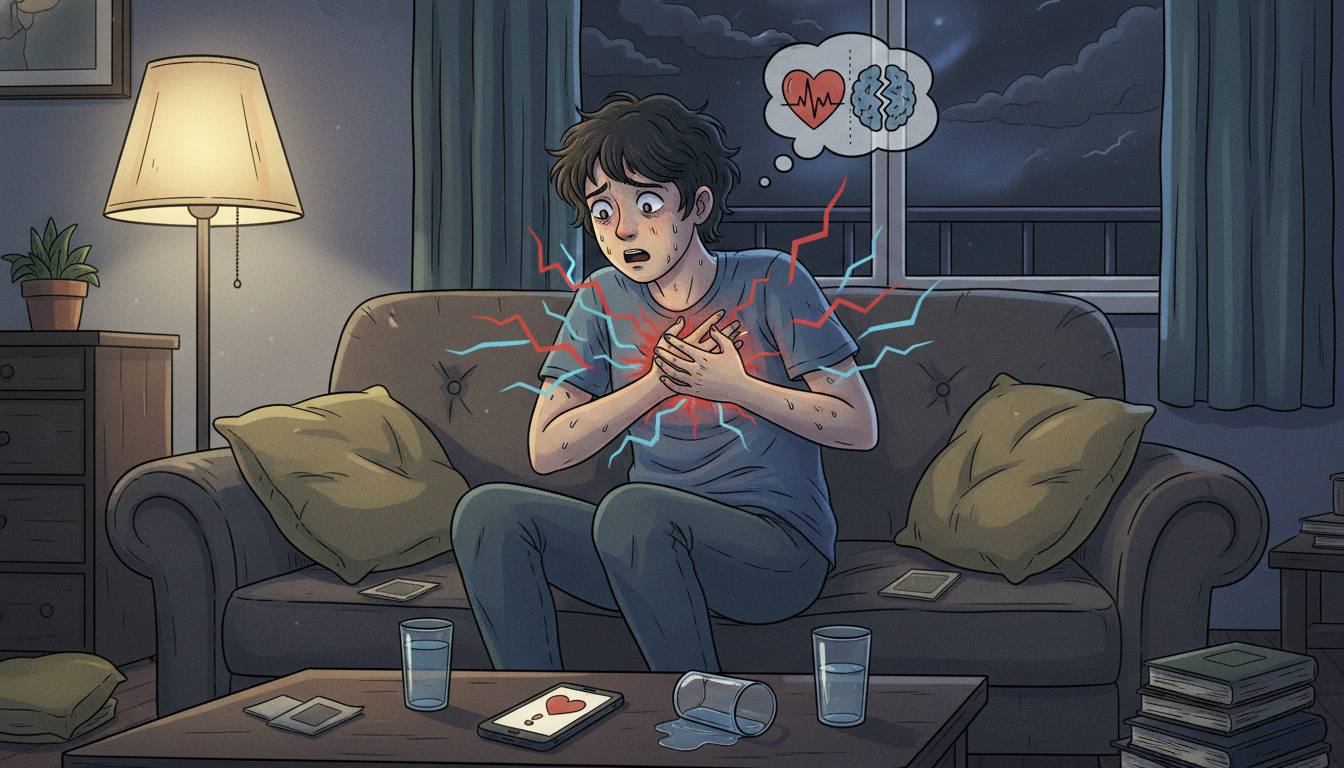
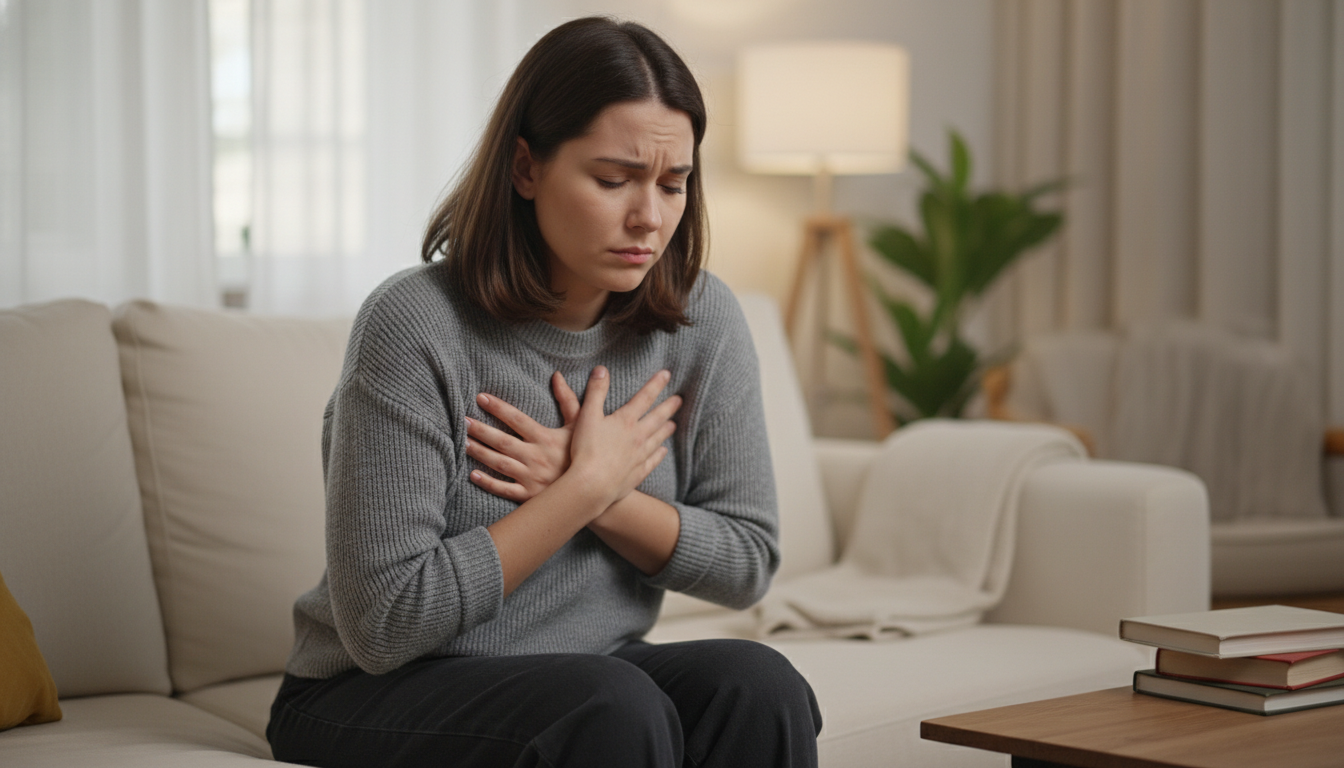
    You’re sitting there minding your business when suddenly your chest feels tight. Cue instant panic: “Am I having a heart attack… or is this just anxiety?”

    If that sounds familiar, you are very, very not alone. Let’s unpack what’s actually happening when anxiety shows up in your chest, how to tell when it might be just anxiety vs. when it might be something more serious, and what you can do in the moment to calm both your body and your brain.

    Can Anxiety Cause Chest Tightness?

    Yes. Anxiety can absolutely cause chest tightness.

    When you feel anxious, your body flips into fight-or-flight mode. Stress hormones like adrenaline and cortisol surge, your heart rate and breathing change, and your muscles tense up—especially around your chest, shoulders, and neck.

    All of that can create:

    • A band-like tightness across the chest
    • A pressure or heaviness feeling
    • Sharp but short-lived chest pains
    • Burning or aching around the breastbone

    These symptoms are very real. They’re not in your head. They’re just being driven by your nervous system, not necessarily by a heart or lung emergency.

    Quick takeaway: Anxiety can absolutely cause chest tightness—but that doesn’t mean every tight chest is just anxiety.

    What Does Anxiety Chest Tightness Feel Like?

    Everyone describes it a little differently, but some common patterns show up again and again.

    1. It Often Comes With Other Anxiety Symptoms

    Chest tightness from anxiety usually doesn’t travel alone. You might also notice:

    • Racing heart or palpitations
    • Feeling shaky or jittery
    • Shortness of breath or feeling like you can’t get a deep breath
    • Sweaty palms, flushed or cold skin
    • A lump in the throat, stomach knots, nausea
    • Feeling unreal or detached (“am I in a dream?”)

    The chest discomfort is part of a whole-body stress response, not an isolated symptom.

    Mini example: You’re in traffic, already late, and your boss just texted. Your chest suddenly feels tight, your heart whooshes in your ears, your breathing goes weird. Ten minutes later, as you’re parked and calmer, the tightness eases. That pattern—tied to stress, easing with calm—is very anxiety-like.

    2. It Can Be Sharp but Brief—or Dull and Lingering

    Anxiety chest tightness can feel like:

    • A quick, sharp stab that makes you catch your breath
    • A squeezing or band-like pressure
    • A dull ache that lingers during a stressful period

    It may worsen when you focus on it and partially ease when you’re distracted.

    3. Your Tests May Be Normal

    Many people with anxiety-driven chest tightness have had:

    • A normal EKG
    • Normal blood tests
    • A normal chest X-ray or echocardiogram

    Yet the sensations continue. That can feel frustrating—but it’s also reassuring: your heart may be structurally fine, while your nervous system is just on high alert.

    Takeaway: Anxiety chest tightness usually comes with other stress signs, fluctuates with your emotional state, and often shows up despite normal medical tests.

    Why Does Anxiety Show Up in Your Chest?

    Let’s zoom in for a second.

    1. Muscle Tension and Posture

    When you’re anxious, your body subtly curls in: shoulders up, chest slightly hunched, neck tight.

    This can:

    • Strain the muscles between your ribs
    • Tighten the big chest muscles (pectorals)
    • Pull on your upper back and neck

    All of that can create a tight, sore, or constricted chest—especially if you sit for long periods, drive a lot, or hunch over your phone or laptop.

    2. Breathing Changes (Shallow Breathing)

    Anxiety often makes your breathing:

    • Faster (hyperventilation)
    • Shallower (from the upper chest instead of deep in the belly)

    This can lead to:

    • A feeling of not getting a full breath
    • Tightness or pressure in the chest
    • Lightheadedness, tingling in hands or face

    The more you notice this, the more anxious you feel, which makes breathing even more off. That’s the anxiety–breathing loop at work.

    3. Sensation Sensitivity

    When you’re anxious, your brain’s alarm system is turned up. Normal body sensations—like small muscle twitches, regular heartbeat changes, or mild gas, even tiny ones—can feel huge and scary.

    Your brain starts scanning: “What’s that? Is this dangerous? Am I in trouble?” That fear amplifies the sensation, especially in a place as symbolically loaded as your chest.

    Takeaway: Anxiety tightens muscles, changes breathing, and makes you hyper-aware of normal sensations—perfect recipe for chest tightness.

    Anxiety Chest Tightness vs Heart Attack: What’s the Difference?

    This is the million-dollar question, and it’s important to get this right.

    Only a medical professional who evaluates you in person can tell you for sure. But here are general patterns, not rules.

    Features That Can Lean More Toward Anxiety (Not a Guarantee)

    • You’re younger and otherwise healthy, with low heart risk factors.
    • The tightness comes during or after obvious stress or panic.
    • The pain may be sharp, fleeting, or move around (chest, ribs, sometimes back or shoulder) rather than one fixed spot.
    • It improves when you calm down, distract yourself, or change position.
    • You’ve had similar symptoms before that were medically checked and cleared.

    Features That Can Be More Concerning (Get Checked)

    Call emergency services or seek urgent care immediately if you notice any of these patterns:

    • Crushing, squeezing, or heavy pressure in the chest that doesn’t let up
    • Pain that spreads to the arm, jaw, neck, or back
    • New or unusually severe shortness of breath
    • Chest pain with fainting, confusion, or sudden severe weakness
    • Chest pain plus sweating, nausea, or vomiting that feels different from your usual anxiety
    • You have known heart disease, high blood pressure, diabetes, or strong family history of heart problems

    If you’re ever unsure, err on the side of caution. Doctors would rather see you and say, “It’s anxiety; your heart looks okay,” than have you stay home with something serious.

    Takeaway: Patterns can give clues—but they’re not perfect. New, severe, or different chest pain always deserves medical attention.

    Why Does Anxiety Chest Tightness Feel So Scary?

    Because your chest holds some of your most vital organs—and your brain knows it.

    A few reasons it feels extra terrifying:

    1. Cultural association: We’re taught “chest pain = heart attack.” Any sensation there triggers worst-case thinking.
    2. Visibility bias: The chest is front and center; every breath and heartbeat is noticeable.
    3. Fear loop: You feel tightness → you fear a heart problem → your anxiety spikes → your chest gets tighter. The sensation is real, but it’s fueled by the fear about the sensation.

    Over time, you can actually become afraid of the feeling itself, which keeps the cycle going.

    Takeaway: The fear of chest symptoms often amplifies the symptoms. Breaking that fear loop is key.

    What to Do in the Moment When Anxiety Causes Chest Tightness

    Here’s a simple, practical playbook you can try when your chest tightens and you suspect anxiety is involved (assuming you’ve already been cleared by a doctor for heart issues, or this fits your known pattern).

    1. Check for Red Flags

    Ask yourself:

    • Is this sudden, crushing, or the worst chest pain I’ve ever had?
    • Is it radiating to my arm, jaw, or back?
    • Am I extremely short of breath, faint, or confused?

    If yes, get urgent medical help immediately. Don’t self-diagnose.

    If it feels like your familiar anxiety pattern and you’ve been evaluated before, move to the next steps.

    2. Slow Your Breathing (in a Specific Way)

    Try this for 1–3 minutes:

    • Inhale through your nose for a count of 4.
    • Gently hold your breath for a count of 2.
    • Exhale through pursed lips (like blowing out a candle) for a count of 6.
    • Repeat.

    This slows your breathing, helps reset the CO₂ balance in your blood, and tells your nervous system, “We’re okay.”

    3. Un-Crumple Your Posture

    • Drop your shoulders away from your ears.
    • Open your chest by gently rolling your shoulders back.
    • If you’re sitting, place both feet flat on the floor and let your hands rest on your thighs.

    This can ease muscle tension around your chest and ribs and make breathing easier.

    4. Name What’s Happening

    Try saying something like:

    This is anxiety. My body is in fight-or-flight mode right now. I’ve felt this before. It’s uncomfortable, but it’s not automatically dangerous.

    This doesn’t magically erase the feeling, but it takes away some of its power.

    5. Gently Engage Your Body

    Once the peak intensity passes (often within 10–20 minutes for panic), try:

    • A slow walk
    • Light stretching for your chest, shoulders, and upper back
    • A warm shower or heating pad on tense muscles (not on bare skin, and not if you’re feeling faint)

    Movement helps your body “use up” some of the stress chemicals and can reduce that locked-in-tight feeling.

    Takeaway: Ground yourself, breathe, fix your posture, and talk back to the fear. Your goal isn’t to make the tightness vanish instantly, but to ride it out with less panic.

    Long-Term: How Do You Reduce Anxiety-Related Chest Tightness Overall?

    If this is happening often, it’s worth addressing the root cause: your anxiety, not just the chest symptom.

    Here are some evidence-based tools people commonly find helpful.

    1. Cognitive Behavioral Therapy (CBT)

    CBT is a structured type of therapy that helps you:

    • Notice anxious thoughts (“I’m definitely dying right now”)
    • Challenge them (“Is there another explanation?”)
    • Change the behaviors that keep the cycle going (like compulsively checking your pulse)

    Many people with health anxiety or panic disorder report fewer chest symptoms once they learn to respond differently to body sensations.

    2. Breathing and Relaxation Training

    Practicing calming techniques when you’re not anxious makes them easier to use when you are. Consider:

    • Diaphragmatic (belly) breathing
    • Progressive muscle relaxation (tensing and releasing muscles)
    • Gentle yoga or stretching

    Over time, this teaches your nervous system a new default: less high alert, more baseline calm.

    3. Lifestyle Habits That Support Your Nervous System

    These aren’t magic, but they really do matter:

    • Sleep: Aim for a consistent sleep schedule.
    • Caffeine: High caffeine can mimic or worsen anxiety and chest sensations.
    • Alcohol and nicotine: Both can increase anxiety over time, even if they feel calming in the moment.
    • Movement: Regular activity (even walks) helps regulate mood, sleep, and stress hormones.

    4. Medication (for Some People)

    For moderate to severe anxiety or panic, some people work with a clinician on:

    • Daily medications that reduce overall anxiety levels
    • Short-term medications for acute panic in specific situations

    This is highly individual and should always be decided with a licensed medical or mental health professional who knows your history.

    Takeaway: Managing anxiety at the source—through therapy, breathing skills, lifestyle, and sometimes medication—often reduces chest tightness episodes over time.

    When Should You See a Doctor About Chest Tightness?

    Even if you’re 99% sure it’s anxiety, it’s completely reasonable—and often wise—to get checked.

    Consider seeing a healthcare provider if:

    • This is your first time having chest tightness
    • The pattern of symptoms has changed (new type of pain, new triggers)
    • The tightness is happening more often or more intensely
    • You’re avoiding activities because you’re scared of triggering it

    A clinician can:

    • Rule out heart, lung, or other physical causes
    • Explain what’s happening in your body
    • Offer treatment options for anxiety and/or physical issues

    And if you’re ever in doubt—especially with sudden, severe, crushing, or radiating chest pain—treat it as an emergency. It’s much better to hear, “Your tests look okay; this is likely anxiety,” than to wait on something serious.

    Takeaway: When in doubt, get checked out. Peace of mind is part of your health.

    The Bottom Line

    Can anxiety cause chest tightness? Yes, absolutely.

    It can:

    • Tighten your chest muscles
    • Change your breathing
    • Turn up your awareness of every heartbeat and sensation

    The result feels intensely real—and intensely scary.

    But with medical evaluation to rule out emergencies, plus tools like breathing exercises, posture adjustments, therapy, and lifestyle changes, many people find that chest tightness becomes:

    • Less frequent
    • Less intense
    • Less terrifying

    You may not be able to control when anxiety first knocks on the door—but you can learn to control how you respond when it shows up in your chest.
  • Is This Anxiety Or Something Physical?

    Is This Anxiety Or Something Physical?

    Is This Anxiety Or Something Physical?

    You’re lying in bed.

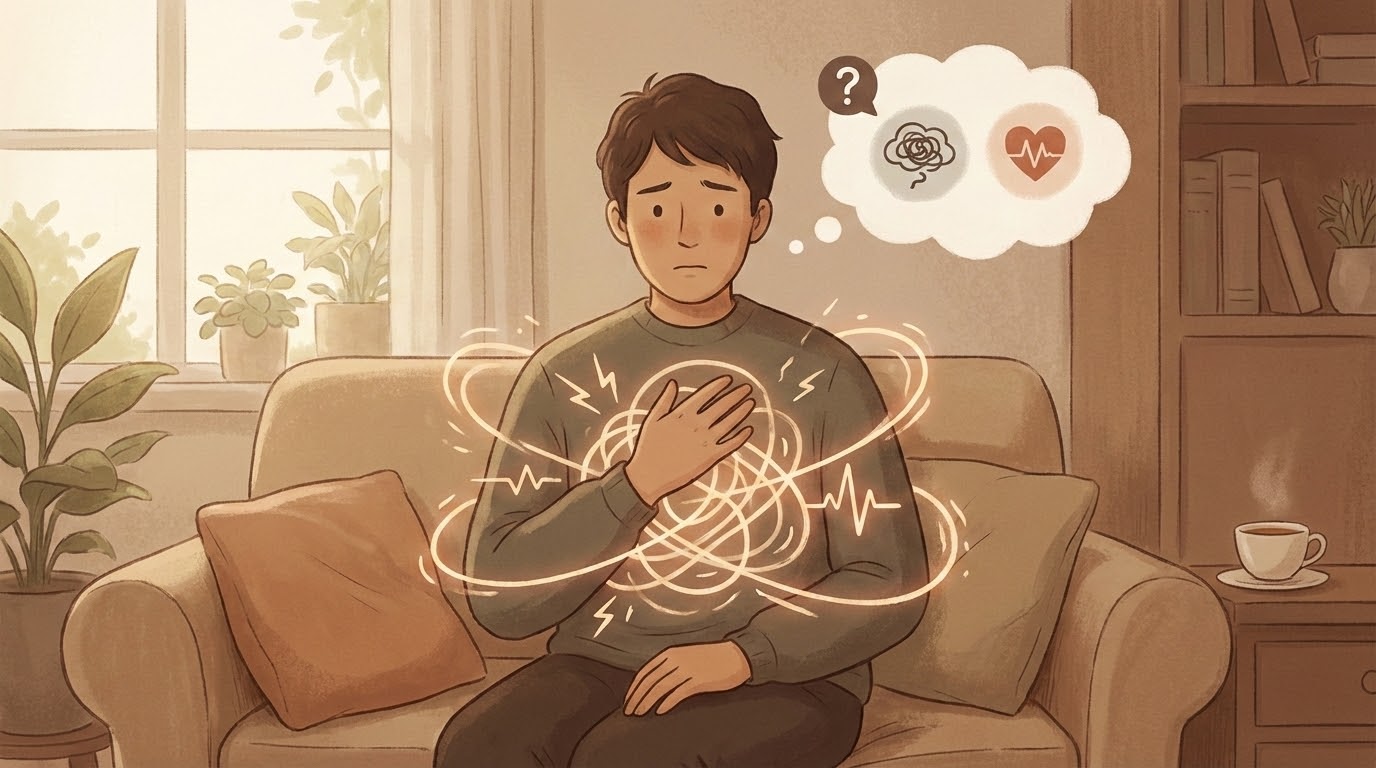
    Your heart is racing, your chest feels weird, you’re slightly dizzy, and your brain whispers: “Is this just anxiety… or am I actually dying?”

    You Google. Bad idea. Now you are dying — in ten different ways — according to the first page of search results.

    Let’s slow this down.

    This post will walk you through:

    • How anxiety can create very real physical symptoms
    • Clues that suggest anxiety vs something more medical
    • When you should not assume it’s “just anxiety”
    • Practical steps to take today (besides doomscrolling)

    This is not a substitute for a doctor, therapist, or emergency care. But it is a guide to help you make sense of what your body might be telling you — and to know when to get help.

    Why Anxiety Feels So Physical (You’re Not Imagining It)

    Anxiety isn’t just a “thought problem.” It’s a full-body alarm system.

    When your brain thinks there’s a threat (real or imagined), it flips on your fight-or-flight response:

    • Your heart beats faster to push blood to your muscles
    • Your breathing changes (faster or shallower)
    • Muscles tense up (jaw, neck, shoulders, stomach)
    • Digestion slows down (nausea or urgent bathroom trips)

    Even if the “threat” is an email, a memory, or a what-if thought, your body can react the same way.

    Common physical symptoms of anxiety can include:

    • Racing or pounding heart
    • Tight chest or feeling like you can’t get a deep breath
    • Dizziness or lightheadedness
    • Tingling in hands, feet, face
    • Sweaty or shaky
    • Nausea, stomach pain, diarrhea, constipation
    • Feeling detached or “not real” (derealization)
    • Hot flashes or chills

    These are real sensations, driven by a real nervous system response.

    Quick takeaway: Anxiety can absolutely feel like a physical illness. That doesn’t mean everything is anxiety.

    The Core Question: Is It Anxiety Or Something Physical?

    Without a medical evaluation, you can’t know for sure. But you can look at patterns and context.

    Think of this in three buckets:

    1. Probably anxiety-related (but still check in with a doctor at some point)
    2. Needs a non-urgent medical workup
    3. Drop-everything, get urgent or emergency care

    We’ll walk through each.

    1. Signs Your Symptoms Might Be Anxiety-Driven

    These are green-ish flags that what you’re feeling could be related to anxiety or panic.

    A. Symptoms ramp up with stress or certain thoughts

    Ask yourself:

    • Do these feelings spike before social events, meetings, driving, or conflict?
    • Do they show up while you’re worrying about your health, future, relationships, or money?
    • Do they calm down when you’re distracted, engaged, or having fun?

    When symptoms clearly follow stress, worry, or triggers, anxiety is a strong suspect.

    B. They come in waves or “attacks” and eventually pass

    Panic attacks typically:

    • Build up over minutes
    • Peak within about 10–20 minutes
    • Slowly ease off afterward (you might feel drained or shaky)

    Physical illnesses can also come in waves, but panic episodes often have a pattern: sudden, intense, then gradual calm.

    C. You’ve been medically checked and cleared (but still feel awful)

    If a doctor has evaluated you — maybe with blood work, ECG, basic exam — and said something like, “We’re not seeing a physical cause,” anxiety or another mental health condition becomes more likely.

    This doesn’t mean your symptoms are fake. It means the source is likely your nervous system rather than, say, your heart or lungs.

    D. Symptoms are broad and move around

    Anxiety symptoms can be weirdly random:

    • Head tension one day
    • Stomach issues the next
    • Then random tingling or shaky hands

    Physical conditions tend to be more specific (for example, knee pain in one spot, a rash in one area, consistent chest pain with exertion).

    Quick takeaway: If your symptoms are closely linked with worry or stress, come in waves, and you’ve already been medically checked, anxiety is a strong contender.

    2. Signs You Need a Non-Urgent Medical Checkup

    You should not have to guess alone.

    It’s reasonable and smart to see a primary care provider if:

    • Symptoms are new and you’ve never been evaluated
    • They stick around for weeks instead of minutes or hours
    • You notice unintended weight loss or gain
    • Your sleep, appetite, or energy have changed significantly
    • You have a family history of relevant conditions (heart disease, thyroid disorders, diabetes, etc.)

    Conditions like thyroid disorders, anemia, low blood sugar, heart rhythm problems, vitamin deficiencies, perimenopause, or medication side effects can all mimic or worsen anxiety. Getting basic labs, vitals, and a good history can rule out or treat those.

    This doesn’t mean it’s “not anxiety.” Physical and mental health often overlap. You can have both a medical issue and anxiety at the same time.

    Quick takeaway: If you’ve never had your symptoms medically evaluated, or they’re changing over time, let a healthcare provider weigh in — not just the internet.

    3. When You Should Not Assume It’s “Just Anxiety”

    If you experience any of the following, seek urgent or emergency care immediately (call 911 in the U.S. or your local emergency number):

    • Sudden chest pain or tightness, especially if it:
      • Spreads to your arm, jaw, or back
      • Comes with sweating, nausea, or shortness of breath
    • Sudden numbness or weakness in the face, arm, or leg — especially on one side
    • Difficulty speaking, understanding, or seeing clearly
    • Sudden, severe headache unlike anything you’ve had before
    • Fainting or nearly fainting
    • Trouble breathing, wheezing, or feeling like your throat is closing
    • Coughing up blood or vomiting blood
    • Severe abdominal pain that’s new or rapidly worsening

    Many of these can happen during panic attacks, and ER doctors see a lot of anxiety masquerading as heart attacks. But doctors would always rather rule out something serious than have you stay home and hope for the best.

    Quick takeaway: If your gut says “this could be an emergency,” listen. You can worry about whether it was anxiety later — with a doctor, not alone.

    Two Real-World Scenarios (That Might Feel Familiar)

    Scenario 1: The “Out of Nowhere” Panic at the Grocery Store

    You’re in line at the store, scrolling on your phone. Suddenly:

    • Your heart starts pounding
    • You feel lightheaded
    • Your chest feels tight
    • Your brain screams, “I’m going to pass out!”

    You leave the cart, rush to your car, and sit there shaking.

    Looking back, you realize:

    • You hadn’t eaten much all day.
    • You were already stressed from work and bad sleep.
    • As soon as you got home, you started Googling heart attack symptoms.

    This cluster — sudden onset, peak in minutes, linked with stress and overthinking, and resolving with rest — fits more with a panic attack.

    Does that mean you should never see a doctor? No. But if this pattern repeats and your doctor clears you medically, the focus often shifts toward anxiety management rather than just “ruling things out” forever.

    Scenario 2: The Slow-Build Fatigue and Chest Discomfort

    Over a few months you notice:

    • You get short of breath walking up stairs when you didn’t before
    • Your chest feels tight with physical effort, not just stress
    • You’re more tired than usual, even on low-stress days
    • Symptoms are getting worse over time, not just showing up in stress spikes

    This pattern — symptoms that reliably show up with physical exertion and gradually worsen — is more concerning for a possible physical cause and absolutely deserves prompt medical evaluation.

    Could anxiety also be present? Sure. But this is where you don’t try to self-sort it. You get checked.

    Quick takeaway: Patterns matter. Sudden, short-lived symptoms in stressful moments often lean anxiety. Progressive, exertion-linked, or worsening symptoms lean medical.

    How To Calm Your Body While You Figure It Out

    While you’re waiting for appointments or trying to manage recurring episodes, there are tools that can help calm your nervous system — whether the root issue is anxiety, something physical, or both.

    1. Ground your nervous system in the moment

    Try one or two of these when symptoms spike:

    • Box breathing: Inhale for 4 seconds, hold 4, exhale 4, hold 4. Repeat for a few minutes.
    • 5–4–3–2–1 grounding: Name 5 things you see, 4 you can feel, 3 you can hear, 2 you can smell, 1 you can taste.
    • Progressive muscle relaxation: Tense a muscle group (for example, fists) for 5–7 seconds, then release. Move through your body.

    If symptoms ease as your mind and breath calm down, that’s another clue anxiety is involved.

    2. Do a gentle body check — without spiraling

    Instead of scanning for disaster, ask yourself:

    • Did I eat and drink water today?
    • Have I had caffeine, nicotine, or alcohol recently?
    • Did I sleep poorly last night?
    • Have I been more stressed, busy, or overwhelmed?

    These can all amplify anxiety and physical symptoms.

    3. Track — don’t obsess

    Keep a simple log for 1–2 weeks:

    • Time symptoms start and end
    • What you were doing, thinking, or feeling before they started
    • Food, caffeine, alcohol, sleep, exercise
    • Your menstrual cycle (if applicable)

    Patterns that emerge can help both you and your doctor.

    Quick rule: Tracking should feel like gathering info, not hunting for doom. If you notice you’re checking your pulse many times a day, that’s anxiety getting louder, not more accurate.

    When To Talk To a Mental Health Professional

    Even if a medical cause is found and treated, anxiety can stick around. And if your doctor says “We’re not finding anything physical,” that’s your cue to bring in mental health support.

    Consider talking to a therapist or psychiatrist if:

    • Worry about your health is taking over your day
    • You’re avoiding activities (exercise, social events, travel, work) because of symptoms
    • You have frequent panic attacks or live in fear of the next one
    • You’re constantly researching symptoms and always end up more scared

    Treatments that can help include:

    • Cognitive Behavioral Therapy (CBT) to challenge catastrophic thoughts and reduce avoidance
    • Exposure-based therapies for panic and health anxiety
    • Medication (like SSRIs or others) when appropriate, prescribed by a professional

    Anxiety is highly treatable. You do not have to white-knuckle your way through every weird body sensation forever.

    Quick takeaway: If anxiety about your symptoms is affecting your life as much as the symptoms themselves, it’s time to get mental health support.

    What To Do Next (A Simple Plan)

    If you’re reading this thinking, “Okay, but what do I actually do?”, here’s a simple step-by-step.

    Step 1: Check for red-flag symptoms

    Right now, ask:

    • Am I having severe, sudden, or scary symptoms (like chest pain, sudden weakness, trouble speaking, or breathing problems)?

    If yes, stop reading and seek emergency care.

    If no, continue.

    Step 2: Schedule a medical checkup (if you haven’t yet)

    Especially if your symptoms are:

    • New
    • Changing
    • Persistent over weeks

    Tell the provider:

    • Exactly what you feel
    • When it happens
    • Any patterns you’ve noticed
    • Your medical history and family history

    Step 3: Start basic anxiety-friendly habits

    While you wait for appointments or follow-ups:

    • Aim for regular sleep (as close as you can get)
    • Eat regularly (don’t skip all day, then have coffee for “lunch”)
    • Move your body gently most days (walking counts)
    • Limit large amounts of caffeine, nicotine, and alcohol — they can all worsen anxiety and bodily sensations

    Step 4: Consider therapy or a support group

    You don’t have to wait for a doctor to say “It’s anxiety” to start therapy. You can say, “I’m having scary physical symptoms and I’m terrified they mean something awful,” and that alone is a valid reason to get support.

    The Bottom Line: You Don’t Have To Choose One Or The Other

    It’s tempting to want a clean label: “It’s only anxiety” or “It’s definitely physical.” In reality, your mind and body are on the same team.

    You can take your physical symptoms seriously and acknowledge that anxiety may be turning the volume way up, and get both medical and mental health support.

    If you’re scared right now, that makes sense. But fear doesn’t get the last word — information, care, and support do.

    You don’t have to figure out whether it’s “anxiety or something physical” all by yourself.

    Your job is to:

    1. Notice what your body is saying
    2. Get the right people involved (doctors, therapists)
    3. Treat yourself with the same compassion you’d give a friend who was scared

    You’re not “crazy.” You’re a human with a nervous system doing its best — sometimes a little too enthusiastically.

  • Panic Attack Or Heart Attack?

    Panic Attack Or Heart Attack?

    Panic Attack vs Heart Attack: How to Tell the Difference

    You are sitting on the couch, scrolling your phone, when it hits: your chest feels tight, your heart is racing, you are sweating, dizzy, and suddenly very aware of your own mortality.

    One thought crashes through your brain: “Am I having a heart attack or just a panic attack?”

    If you have ever had that moment, you know it is terrifying. And to make it worse, panic attacks and heart attacks can feel shockingly similar.

    This guide will walk you through:

    • The key differences between a panic attack and a heart attack
    • Common symptoms of each
    • Red-flag signs that mean you should call 911 right now
    • What to do in the moment when you cannot tell which it is

    This is not a DIY diagnostic tool. It is a clarity-and-calm guide so you are not completely in the dark when your body is reacting strongly.

    Important: If you think you might be having a heart attack, treat it like a heart attack and call 911. It is always better to be checked and told “you are okay” than the other way around.

    Panic attack vs heart attack: Why they are so easy to confuse

    Let us start with the overlap.

    Both panic attacks and heart attacks can cause:

    • Chest pain or discomfort
    • Racing or pounding heart
    • Sweating
    • Shortness of breath
    • Nausea or stomach upset
    • Feeling like something is very wrong (impending doom)

    The difference is mainly in what is happening in your body and the pattern of symptoms over time:

    • A heart attack happens when blood flow to part of your heart is blocked. This can damage heart muscle and is a medical emergency.
    • A panic attack is a surge of intense fear or discomfort, often triggered by stress or sometimes appearing “out of nowhere.” Your body goes into fight-or-flight mode: adrenaline, fast breathing, and a racing heart.

    Key takeaway: The feelings can overlap, but a heart attack is a plumbing problem in your heart; a panic attack is more like your alarm system going into overdrive.

    What is a panic attack?

    A panic attack is a sudden episode of intense fear or discomfort that peaks within minutes. Panic attacks often include physical symptoms that can feel life-threatening, even when they are not.

    Common panic attack symptoms include:

    • Racing or pounding heart
    • Chest pain or tightness
    • Shortness of breath or feeling like you cannot get enough air
    • Sweating or chills
    • Trembling or shaking
    • Nausea or stomach distress
    • Dizziness or feeling faint
    • Numbness or tingling (especially in hands, feet, or face)
    • Feeling detached from reality (“this does not feel real”)
    • Fear of losing control or “going crazy”
    • Fear of dying

    How panic attacks usually behave

    While everyone is different, panic attacks often:

    • Come on suddenly and peak within 10 minutes, then gradually ease over 20–30 minutes (sometimes longer)
    • May be linked to stress, phobias, social situations, or sometimes happen “out of the blue”
    • Can leave you exhausted but usually do not cause physical damage to the heart in otherwise healthy people

    You might notice a pattern over time: similar triggers, similar sensations, and similar “I survived that” endings.

    Mini-takeaway: Panic attacks feel dangerous, but they are usually not physically dangerous. However, you should never assume chest pain is “just anxiety” without a medical evaluation.

    What is a heart attack?

    A heart attack (myocardial infarction) happens when one of the arteries that supply blood to your heart gets blocked. This can damage or destroy part of the heart muscle and is a medical emergency.

    Heart attacks are a leading cause of death, but getting rapid treatment (ideally within the first 1–2 hours of symptom onset) dramatically improves outcomes.

    Common heart attack symptoms include:

    • Chest discomfort: pressure, squeezing, fullness, or pain in the center or left side of the chest that lasts more than a few minutes or goes away and comes back
    • Pain or discomfort radiating to one or both arms, back, neck, jaw, or upper stomach
    • Shortness of breath (with or without chest discomfort)
    • Cold sweat
    • Nausea, vomiting, or indigestion-like discomfort
    • Lightheadedness or sudden dizziness

    Heart attack patterns to know

    Heart attack symptoms can:

    • Come on suddenly and intensely (the classic movie-style clutching the chest)
    • Or start slowly with mild pain or discomfort that builds over minutes to hours

    Not everyone has “crushing” chest pain. Some people, especially women, older adults, and people with diabetes, may have more subtle or atypical symptoms like:

    • Unusual fatigue
    • Shortness of breath
    • Pressure or discomfort in the back, jaw, or shoulders
    • A feeling of “I just do not feel right” that will not go away

    Mini-takeaway: Heart attacks are not always dramatic, but they are always an emergency. If in doubt, get checked.

    Panic attack or heart attack? Key differences you might notice

    You cannot safely self-diagnose a heart attack at home. But understanding patterns can help you know when to be extra cautious.

    Think of these as clues, not rules.

    1. Type and location of chest pain

    Panic attack:

    • Often sharp, stabbing, or very tight
    • May stay in one small area of the chest
    • Can worsen when you focus on it or take very deep breaths

    Heart attack:

    • More often described as pressure, squeezing, fullness, or heavy pain
    • Usually in the center or left side of the chest
    • May radiate to the arm, neck, jaw, back, or upper stomach

    2. Trigger and timing

    Panic attack:

    • Frequently linked to stress, fear, crowds, confined spaces, or health worries
    • Often starts suddenly and peaks quickly (within about 10 minutes)

    Heart attack:

    • Can occur during physical exertion, emotional stress, or even at rest or during sleep
    • Symptoms may build slowly over minutes or hours and keep going or cycling

    3. Breathing and sensations

    Panic attack:

    • You may feel like you cannot get enough air and start breathing fast
    • Tingling in hands, feet, or around the mouth is common (from over-breathing)
    • You may feel detached, unreal, or like you are watching yourself

    Heart attack:

    • Shortness of breath might appear with or without chest pain
    • Less likely to cause tingling in hands or face from breathing changes
    • More likely to be paired with cold sweats, nausea, or radiating pain

    4. Duration

    Panic attack:

    • Intensity usually peaks within 10 minutes, then gradually lessens
    • You may feel “off” for a while afterward but the worst part passes

    Heart attack:

    • Discomfort usually lasts more than a few minutes, may go away and return
    • Often does not fully resolve without medical treatment

    5. Risk factors

    These do not decide what you are having, but they matter.

    Heart attack risk goes up with:

    • Age (especially 45+ for men, 55+ for women)
    • Smoking
    • High blood pressure, high cholesterol, or diabetes
    • Obesity or sedentary lifestyle
    • Family history of early heart disease

    Panic attacks are more common with:

    • History of anxiety or panic disorder
    • Recent major stress or trauma
    • Thyroid problems or certain medications (as triggers)
    • Family history of anxiety disorders

    Mini-takeaway: Patterns can hint at what is going on, but never use this list to talk yourself out of calling 911 if something feels seriously wrong.

    Real-life style scenarios

    Sometimes it is easier to recognize patterns in stories. These are examples, not rules.

    Scenario 1: The sudden wave at the grocery store

    You are standing in line. Out of nowhere, your heart starts pounding. Your chest feels tight. Your hands tingle, you feel dizzy, like you might pass out. You are suddenly terrified you will collapse in front of strangers.

    Within 10–15 minutes, the worst of it passes. You feel shaky, drained, and embarrassed.

    This pattern, sudden onset, intense fear, tingling, and relatively quick peak, fits more with a panic attack. But if this is your first time with chest pain, it is still reasonable to get evaluated.

    Scenario 2: The slow burn while watching TV

    It is evening and you are relaxed. You notice a pressure in the center of your chest. It is not stabbing, but it feels like something is sitting on your chest. After 20 minutes, it is still there.

    Then you notice it is starting to spread into your left arm and jaw. You are a 58-year-old with high blood pressure and high cholesterol.

    This pattern, pressure-type pain, lasting longer than a few minutes, radiating to arm and jaw, plus risk factors, is very concerning for a heart attack.

    That is a call 911 immediately situation.

    Scenario 3: The workout confusion

    You are on the treadmill. You feel chest discomfort and shortness of breath. When you stop, the pain eases a bit but does not fully go away. You are 45, you smoke, and heart disease runs in your family.

    Even if you have a history of anxiety, this must be treated as potential heart trouble until proven otherwise.

    Mini-takeaway: If there is any reasonable chance it is your heart, get emergency help. Anxiety can be treated; a missed heart attack can be fatal.

    When to call 911 immediately

    Use this as your “do not overthink it, just act” list.

    Call 911 (or your local emergency number) right away if:

    • You have chest pain, pressure, squeezing, or discomfort that:
      • Lasts more than a few minutes, or
      • Goes away and comes back
    • The pain spreads to your arm, back, neck, jaw, or upper stomach
    • You have chest discomfort plus:
      • Shortness of breath
      • Cold sweat
      • Nausea or vomiting
      • Lightheadedness or fainting
    • You feel an unexplained sense of doom or “about to die” with chest symptoms
    • You have heart disease, are older, or have risk factors, and the symptoms are new or more intense than usual

    If you are with someone and they collapse, complain of severe chest pain, or seem to be having a heart attack, call 911 first, then follow the operator’s guidance.

    Mini-takeaway: In a real emergency, seconds matter more than pride. No one in the ER will be upset that you came in to be checked.

    What to do right now if you are not sure

    If you are having symptoms as you read this and feel unsure, here is a calm step-by-step:

    1. Check your gut and the red flags.
      • Severe, crushing, pressure-like chest pain? Radiating to arm or jaw? Short of breath, nauseous, sweaty? Call 911.
    2. If symptoms are milder but scary and new, especially with risk factors (age, blood pressure, cholesterol, smoking, family history), it is still wise to seek urgent care or ER evaluation.
    3. If you have been evaluated before for similar symptoms and told it was panic or anxiety, but this episode feels different, stronger, or you are not sure, err on the side of getting checked again.
    4. While you wait for help or if a clinician has already ruled out a heart issue and says it is likely panic, try grounding:
      • Slow breathing: inhale for 4 seconds, exhale for 6 seconds. Repeat.
      • The 5–4–3–2–1 technique: name 5 things you see, 4 you can touch, 3 you hear, 2 you smell, 1 you can taste.
      • Remind yourself: “I have felt like this before and survived. This wave will pass.”

    Mini-takeaway: When you cannot tell if it is panic or heart, you treat it as heart until a medical professional says otherwise.

    Long-term: Dealing with recurring panic attacks

    If you have been told by a healthcare professional that your heart is healthy and your episodes are panic attacks, the next step is management and prevention, not just enduring each one.

    Evidence-based options include:

    • Cognitive behavioral therapy (CBT): Helps you understand and rewire the thoughts and body-sensations spiral that leads to panic.
    • Exposure-based therapy: Gradually and safely exposes you to sensations or situations that trigger panic, so they become less terrifying.
    • Medication: Some people benefit from SSRIs or other medications; this is a conversation with a healthcare provider or psychiatrist.
    • Lifestyle foundations:
      • Regular movement (even walking)
      • Limiting caffeine and alcohol
      • Prioritizing sleep
      • Stress-management practices (meditation, breathing exercises, journaling)

    If panic attacks are affecting your work, relationships, or ability to leave the house, it is absolutely worth getting professional help. Panic disorder is very treatable.

    Mini-takeaway: If your heart is okay but your anxiety is not, that is still real, and you deserve support.

    When you have already had a heart attack or heart scare

    If you have previously had a heart attack, stent, or other heart condition, new chest symptoms can trigger panic on top of real physical sensations. That is incredibly stressful.

    Important steps in that situation:

    • Work closely with a cardiologist and primary care clinician.
    • Ask them to explain your specific warning signs and when to go straight to the ER.
    • Consider cardiac rehab programs; they often address both physical and emotional recovery.
    • Ask about mental health support. Anxiety and depression are common after cardiac events and treating them can improve quality of life.

    Mini-takeaway: Heart history plus anxiety is a double load. You do not have to carry it without a team.

    The bottom line: You do not have to guess alone

    Here is a simple summary:

    • Panic attacks and heart attacks share symptoms, especially chest pain, racing heart, and shortness of breath.
    • Panic attacks usually come on quickly, peak within minutes, and often include intense fear, tingling, and a feeling of unreality.
    • Heart attacks more often involve pressure-type chest pain, may radiate to the arm, jaw, or back, and do not fully let up without treatment.
    • Risk factors (age, blood pressure, cholesterol, smoking, family history) increase the odds a symptom is heart-related.
    • If you are not sure, treat it as a heart emergency and call 911.

    You are not being “dramatic” for taking your health seriously.

    If you have had repeated scares, whether they turned out to be panic, heart issues, or both, this is your nudge to:

    • Schedule a check-in with a healthcare professional
    • Talk openly about both physical and mental health
    • Create a clear plan for what to do if it happens again

    That way, the next time your chest tightens and your thoughts spiral, you will have more than fear, you will have a plan.

    Disclaimer: This article is for general information and education only. It is not a substitute for personal medical advice, diagnosis, or treatment. If you have concerning symptoms, especially chest pain or trouble breathing, seek emergency care immediately.

  • When Stress Shows Up In Your Body

    When Stress Shows Up In Your Body

    When Stress Shows Up In Your Body (And You Think You’re Just Sick)

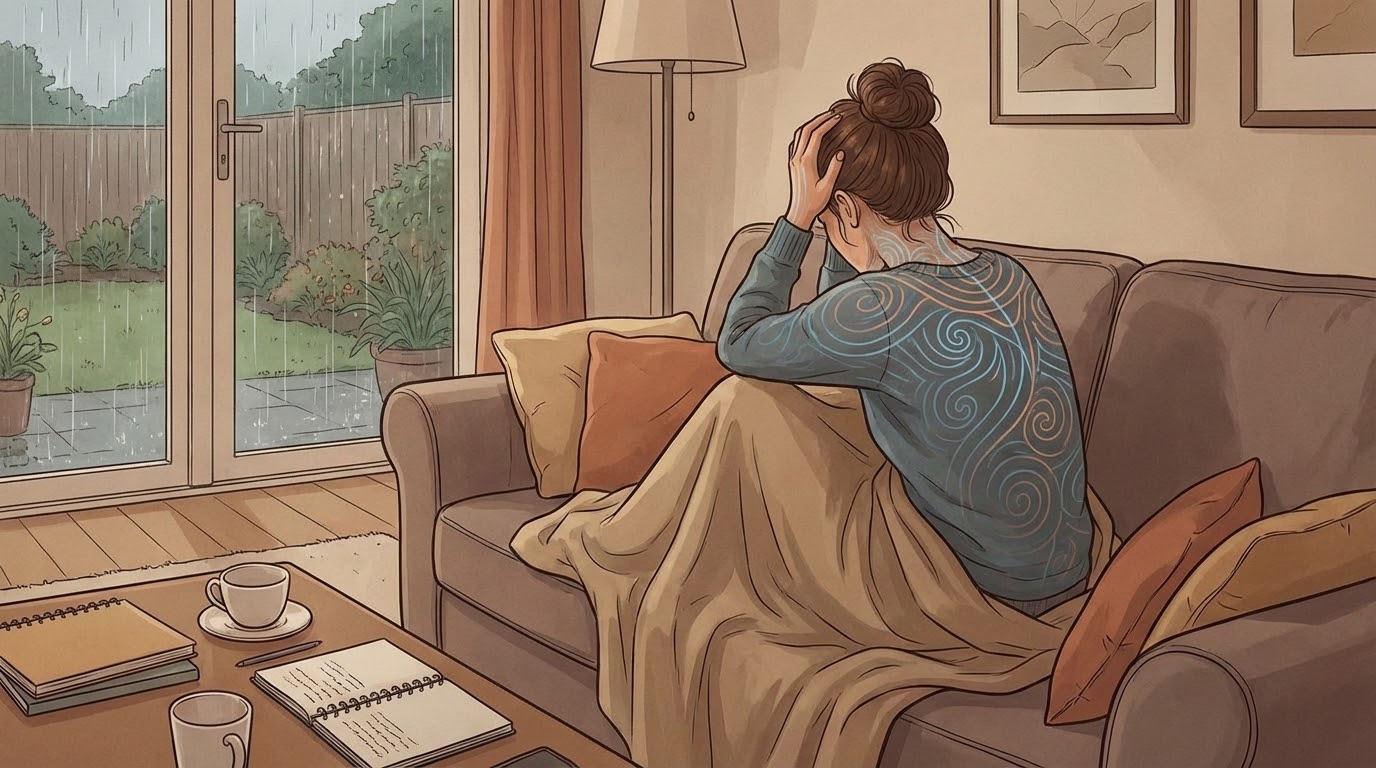
    You’re exhausted. Your neck is tight. Your stomach’s a mess. Google says you’re dying, but your doctor says, “All your tests look normal.” So what now?

    Let’s talk about something under-rated and over-felt: stress causing physical symptoms. Not “it’s all in your head” (it’s not), but how your mind and body team up when life gets too loud.

    This post will walk you through:

    • How stress actually changes your body
    • Common physical symptoms of stress (that don’t feel mental at all)
    • When to worry and see a doctor
    • Practical ways to calm your nervous system so your body can exhale

    Quick disclaimer: This is educational, not medical advice. Always talk to a qualified professional about new, severe, or worrying symptoms.

    Wait… Can Stress Really Cause Physical Symptoms?

    Yes. Very much yes.

    When you’re stressed, your body flips into survival mode (fight, flight, or freeze). Your brain signals your adrenal glands to release stress hormones like adrenaline and cortisol. These chemicals increase your heart rate, tense your muscles, change breathing patterns, and shift digestion and immune function.

    According to the American Psychological Association, chronic stress is linked with problems like headaches, digestive issues, muscle tension, sleep disturbances, and changes in appetite, among others. Over time, it can contribute to conditions like high blood pressure and heart disease.

    Key idea: Your body isn’t betraying you; it’s trying (a little too hard) to protect you.

    Takeaway: If your body feels like it’s constantly bracing for impact, stress is a very real suspect.

    The Stress Response in Plain English

    What Happens in Your Body When You’re Stressed?

    Here’s the simplified play-by-play of the stress response:

    1. Your brain detects a threat

      The “threat” can be a real danger (car swerving toward you) or a psychological one (email from your boss, money worries, relationship conflict).

    2. Your nervous system hits the gas

      The sympathetic nervous system (“stress accelerator”) sends alarms through your body.

    3. Hormones flood your system

      Adrenaline and cortisol prepare you to run or fight:

      • Heart beats faster
      • Blood pressure rises
      • Breathing gets faster and shallower
      • Digestion slows down
    4. Short-term stress is helpful, long-term stress causes problems

      Occasional stress helps you react quickly in real danger. But when stress becomes chronic—work pressure, caregiving, financial strain—your body never fully powers down.

    Over time, that constant background alarm can turn into very real physical symptoms.

    Takeaway: Your stress response is designed for sprinting away from tigers, not living inside a never-ending inbox.

    Common Physical Symptoms of Stress (That Don’t Feel Like “Stress”)

    Everyone is different, but here are some of the most common physical signs of stress people report.

    1. Muscle Tension and Pain

    When you’re stressed, your muscles automatically tighten, especially in your neck, shoulders, and jaw. This can lead to tension headaches or migraines, jaw pain or teeth grinding, and upper or lower back pain.

    Mini example: You sit at your laptop for hours, shoulders up by your ears, scrolling through work chaos. That evening, your neck is stiff and your head is pounding. It feels like “a bad posture day,” but chronic stress has kept your muscles locked for hours.

    Takeaway: If you’re always “bracing,” your muscles are too.

    2. Headaches

    Stress is a major trigger for tension-type headaches and can also trigger migraines in people who are prone to them. These often feel like dull, aching pain around the forehead or back of the head, a tight band around the skull, or sensitivity to light or noise.

    Hydration and screen time matter, but if your headaches flare during busy weeks, conflict, or deadlines, stress might be a big part of the picture.

    Takeaway: Track your headaches and note what was happening in your life before they started.

    3. Stomach and Digestive Issues

    Stress doesn’t just live in your head; it very literally lives in your gut.

    When you’re stressed, your body diverts energy away from digestion. This can show up as nausea or “butterflies,” stomach cramps, bloating, diarrhea or constipation, and flare-ups of IBS or heartburn in people who already have them.

    Many people notice their appetite swings with stress too, either eating way more (craving sugar or comfort foods) or eating way less (no appetite, food feels unappealing).

    Mini example: Before a big presentation, your stomach is in knots and you can’t eat breakfast. After, you’re suddenly starving. That’s your stress response turning digestion on and off like a switch.

    Takeaway: If your gut acts up when life does, that’s a clue.

    4. Chest Tightness and a Racing Heart

    This one is scary because it can feel like a medical emergency.

    Stress and anxiety can cause a rapid heartbeat or heart palpitations, chest tightness or pressure, and shortness of breath.

    These can overlap with symptoms of serious conditions like heart problems. Never assume it’s “just stress” if chest pain is new, severe, or worrying. It’s important to get checked by a medical professional.

    Once dangerous causes are ruled out, some people learn that these sensations are part of panic attacks or chronic stress.

    Takeaway: Listen to your body and your doctor. Rule out emergencies first, then work on stress.

    5. Sleep Problems

    Stress and sleep have a very complicated relationship.

    You might notice trouble falling asleep because your brain won’t stop replaying everything, waking up multiple times during the night, waking too early and not falling back asleep, or restless, low-quality sleep, even if you were “out” for 8 hours.

    Over time, poor sleep amplifies stress, irritability, and physical pain. It becomes a loop: stress leads to bad sleep, which leads to more stress and more symptoms.

    Takeaway: If your nights are noisy in your head, your days will feel heavier.

    6. Frequent Colds, Fatigue, and Feeling Run Down

    Chronic stress can affect the immune system and leave you feeling constantly tired, more likely to catch every cold going around, and slower to recover from minor illnesses.

    You may also feel a kind of heaviness or malaise, like you’re dragging through the day even when you’re technically sleeping enough.

    Mini example: Every busy season at work, you end up sick right after the big deadline. That “post-deadline crash” is often your body finally relaxing and then showing you how depleted it really is.

    Takeaway: If you only get sick when you’re stressed, that pattern matters.

    7. Skin Flare-Ups

    Stress can trigger or worsen acne, eczema, psoriasis, hives, or itchy skin.

    Inflammation and immune changes during stress can make the skin more reactive. Plus, when you’re stressed, you might touch your face more, skip your routine, or sleep less, which doesn’t help.

    Takeaway: Sometimes your skin is just your nervous system with better lighting.

    How Do I Know If It’s “Just Stress” or Something Serious?

    You should not self-diagnose. Stress can mimic many other conditions, and those conditions can be serious.

    Here are some red flags that mean you should seek medical care promptly (urgent care or emergency services depending on severity and your local guidelines):

    • Sudden, severe chest pain
    • Trouble breathing
    • Weakness, numbness, or difficulty speaking
    • Sudden, intense headache (“worst headache of your life”)
    • High fever, stiff neck, or confusion
    • Severe abdominal pain
    • Any symptom that feels extreme, new, or frightening to you

    For less urgent but persistent symptoms like ongoing headaches, stomach issues, pain, or fatigue, it’s still worth seeing your primary care provider. They can rule out medical causes, run basic labs or tests, and refer you to specialists if needed.

    If medical causes are ruled out, that doesn’t mean nothing is wrong. It often means:

    Something functional is happening—like your body’s systems being thrown off by chronic stress.

    Takeaway: “It might be stress” should be a doorway to care, not a reason to ignore your body.

    How to Calm Stress-Related Physical Symptoms

    You can’t avoid all stress. But you can train your body to come out of fight-or-flight more often. Think of this as shifting from “stuck on alert” to “able to reset.”

    1. Start With the Basics

    These are not exciting, but they matter more than any hack:

    • Sleep: Aim for a consistent sleep-wake schedule when possible. Dim screens before bed and keep the room dark and cool.
    • Movement: Gentle, regular movement such as walking, stretching, yoga, or light strength work helps burn off stress hormones and relax muscles.
    • Food: Eat regularly. Blood sugar crashes can make anxiety and physical symptoms worse.
    • Hydration and caffeine: Dehydration and too much caffeine can worsen headaches, heart palpitations, and anxiety-like sensations.

    Takeaway: You don’t have to optimize your life; you just need to stop running on fumes.

    2. Use Body-First Calming Techniques

    Because stress lives in the body, physical techniques can be surprisingly effective:

    • Slow, deep breathing: Try 4–6 breaths per minute. Inhale through your nose for about 4–5 seconds, exhale for about 6–7 seconds. Longer exhales signal safety to your nervous system.
    • Progressive muscle relaxation: Tense one muscle group at a time, such as feet, legs, stomach, shoulders, or jaw, for a few seconds, then release. Notice the difference between tension and relaxation.
    • Grounding techniques: Look around and name 5 things you can see, 4 you can touch, 3 you can hear, 2 you can smell, and 1 you can taste. It pulls you out of the mental spiral and back into your body.
    • Gentle stretching or yoga: Focus on neck, shoulders, and hips, where stress often shows up.

    Takeaway: You don’t have to think your way out of stress; you can breathe and move your way out of it too.

    3. Make Small, Realistic Life Tweaks

    If your life is a constant fire drill, no amount of deep breathing will fully cancel it out.

    Ask yourself where you are consistently overcommitted, what you can say no to or delay, whether you can negotiate deadlines or ask for help, and what small task would make your week a bit less stressful, such as simple meal prep, automating a bill, or setting up a shared calendar.

    You don’t have to redesign your whole life at once. But reducing just one ongoing stressor can lower your body’s background alarm volume.

    Takeaway: Tiny, boring changes add up to big nervous system relief.

    4. Address the Mental and Emotional Side

    Stress-related physical symptoms are your body’s language. Ignoring what they’re saying rarely works long-term.

    Consider therapy or counseling to work through anxiety, trauma, burnout, or chronic stress patterns. Learn stress management skills like time management, boundary-setting, or cognitive behavioral techniques. Build support systems by talking openly with trusted friends, family, or support groups.

    Many people find that as they process their emotions, set boundaries, or make meaningful changes, their physical symptoms ease.

    Mini example: Someone with weekly “mystery stomach pain” realizes it flares before meetings with a critical manager. Working with a therapist, they practice boundary-setting and coping strategies. The symptoms don’t vanish overnight, but they go from weekly to rare.

    Takeaway: Treat the cause, ongoing stress, not just the alarm, your symptoms.

    5. When to Consider Professional Help Specifically for Stress

    You may benefit from professional help if your physical symptoms are frequent or disruptive, you feel constantly on edge, overwhelmed, or burned out, you’re avoiding things you care about because you fear symptoms like panic attacks, or you’re using alcohol, drugs, or other numbing behaviors to cope.

    Depending on your situation, helpful options might include a primary care provider to rule out medical concerns and talk about stress, a therapist or counselor specializing in anxiety, stress, or somatic approaches, or a psychiatrist or psychiatric nurse practitioner if medication might help.

    Takeaway: Needing help doesn’t mean you’re weak. It means your body and brain have been doing too much alone for too long.

    How to Talk to Your Doctor About Stress-Related Symptoms

    If you suspect stress is affecting your body, but you’re not sure how to bring it up, you can say something like:

    “I’ve been having headaches, stomach issues, or chest tightness, and my tests are normal. I notice they get worse when I’m stressed. Can we talk about how stress might be affecting my body and what I can do about it?”

    It can also help to track your symptoms for one to two weeks, including time of day, what you were doing, stress level, sleep, food, and caffeine, and bring that log to your appointment. Patterns are powerful.

    Takeaway: You’re allowed to put “stress” on the agenda at a medical visit. It’s a legitimate health factor.

    Final Thought: Your Body Isn’t the Enemy

    If stress is causing physical symptoms, it doesn’t mean you’re weak, dramatic, or making it up. It means your alarm system is working overtime.

    The goal isn’t to never feel stress again. The goal is to notice your body’s signals sooner, take them seriously without panicking, and build habits and support that help your system calm down.

    Your body’s not trying to ruin your life. It’s trying to get your attention. You’re listening now. That’s the first, very real step toward feeling better.