Category: Anxiety vs Physical Symptoms

stress symptoms, panic vs emergency, anxiety causing dizziness/palpitations

  • Feeling Unwell Right Now: Is It Normal?

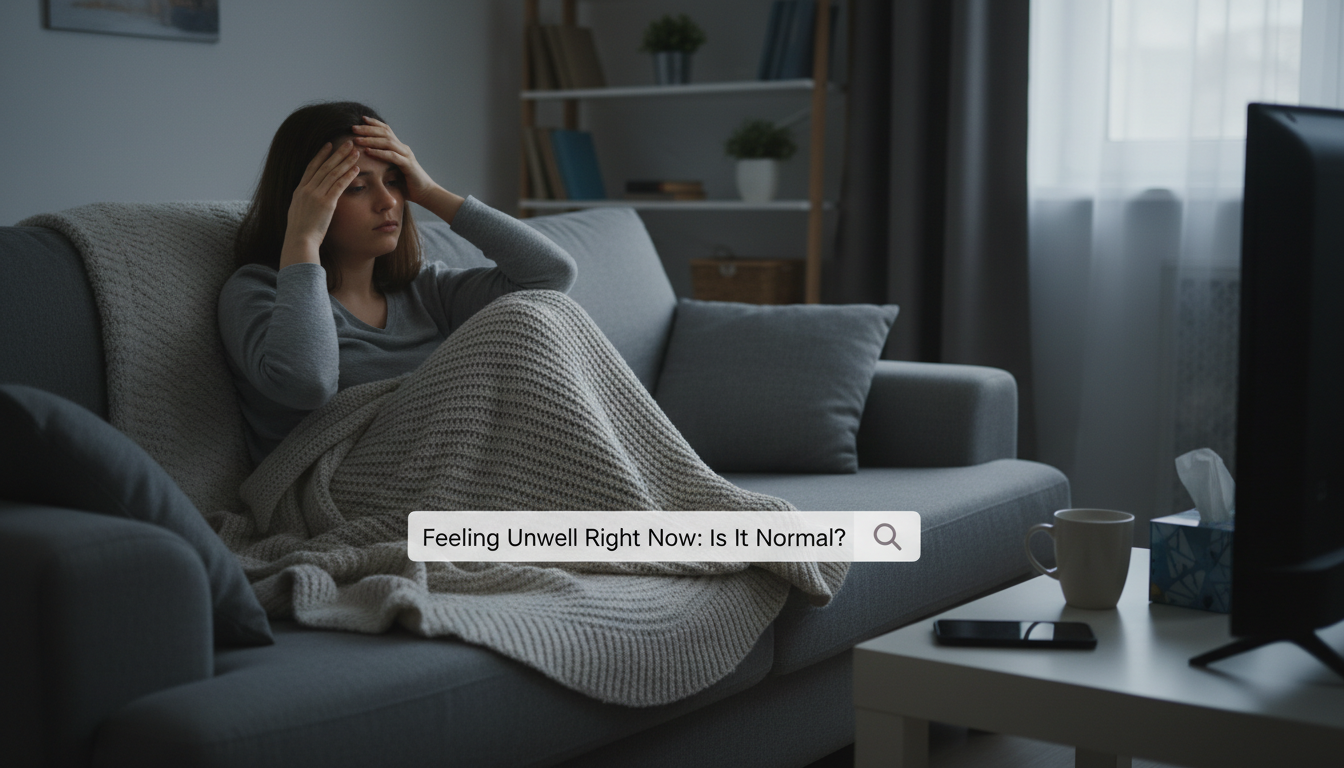
    Feeling Unwell Right Now: Is It Normal?

    Is It Normal to Feel Unwell Right Now?

    Disclaimer: This article is for general information only and isn’t medical advice or a diagnosis. If you have severe symptoms or think it may be an emergency, call your local emergency number.

    You feel off. Maybe your heart’s a bit racy, your head feels weird, your stomach’s not okay, or your whole body just feels wrong. And now you’re wondering: “Is this normal, or is something actually wrong with me?”

    Let’s talk about it in a calm, honest way—no scare tactics, no “you’re fine, just relax” dismissals either.

    First: What Do We Even Mean by “Normal”?

    When people say, “Is this normal?” they usually mean one of three things:

    1. Do other people feel this too sometimes?
    2. Is this dangerous or an emergency?
    3. Do I need to see a doctor about this, or can I wait?

    Here’s the reality:

    • Lots of uncomfortable, weird, and annoying body sensations are common and not dangerous.
    • Some symptoms are not okay to ignore, especially if they’re sudden, severe, or new for you.
    • Stress and anxiety can absolutely make you feel physically sick—but we never want to assume it’s “just anxiety” without considering red flags.

    Quick takeaway: Feeling unwell is common. Whether it’s safe or serious depends on what you feel, how intense it is, and what else is happening with it.

    Check-In: What Exactly Are You Feeling Right Now?

    Before you spiral through worst-case scenarios, do a 30-second self-scan:

    • Heart: Is it racing, pounding, skipping beats, or painful?
    • Head: Lightheaded, dizzy, foggy, pressure, or a severe sudden headache?
    • Breathing: Short of breath, chest tightness, can’t get a full breath?
    • Whole body: Shaky, weak, heavy, nauseous, sweaty, feverish?
    • Mind: Panicky, on edge, overwhelmed, “not present,” scared of dropping dead?

    You don’t have to label it perfectly. Just noticing what’s actually happening in your body is step one.

    Quick takeaway: Put words to what you feel—“spinning dizzy,” “heavy chest,” “nauseous and shaky”—that helps you decide what to do next.

    When Feeling Unwell Is Often Normal (But Still Miserable)

    There are some very common reasons people feel unwell that are usually not emergencies but can feel dramatic.

    1. Stress and Anxiety Symptoms

    Stress and anxiety don’t just live in your head; they show up all over your body. According to major health organizations like the Mayo Clinic and the National Institute of Mental Health, anxiety can cause:

    • Racing or pounding heart
    • Chest tightness or discomfort
    • Shortness of breath
    • Dizziness or feeling faint
    • Sweaty, shaky, or trembling
    • Nausea, stomach upset, or diarrhea
    • Tingling in hands, feet, or face
    • Feeling unreal or detached (like you’re watching yourself)

    Anxiety symptoms can feel intense enough to make people think they’re having a heart attack or a stroke. Many people end up in the ER with panic attacks that feel life-threatening but turn out not to be.

    What makes it more confusing: anxiety can appear even when your life seems relatively calm, or it can hang around long after a stressful event is over.

    Signs it might be anxiety-based:

    • You’ve felt something similar before during stress or panic.
    • Symptoms come in waves, peak, and then ease up over 10–60 minutes.
    • They’re worse when you’re focusing on your body or Googling symptoms.
    • They improve (even a bit) when you distract yourself, slow your breathing, or move around.

    Takeaway: Anxiety can absolutely make you feel physically awful—and it’s very common. But we always balance that with checking for red-flag signs.

    2. Common Short-Term Illnesses

    You might simply be sick. Not in a dramatic, movie-style way—just the basic, annoying human way.

    Things like:

    • Mild viral infections (colds, COVID, flu, other viruses)
    • Stomach bugs
    • Mild dehydration
    • Lack of sleep
    • Skipping meals or blood sugar swings

    These can cause:

    • Fatigue, weakness, or heavy limbs
    • Mild headache or head pressure
    • Low appetite or nausea
    • Mild fever, chills, or body aches
    • “Just off” or run-down feeling

    If you’ve recently been around sick people, traveled, changed routines, slept poorly, or eaten differently than usual, then feeling unwell today might fit that picture.

    Takeaway: A lot of “I just feel gross today” is temporary illness plus normal life stress—still real, still valid, often not dangerous.

    3. Normal Body Fluctuations (That Feel Anything But Normal)

    Your body is not a machine that runs the same way every single day. Hormones, sleep, hydration, menstrual cycles, and even weather can shift how you feel.

    Common non-emergency culprits:

    • Too much caffeine → jittery, racing heart, upset stomach, anxiety flare.
    • Not enough water → headache, dizziness, fatigue, faster heart rate.
    • Standing up quickly → brief lightheadedness from a temporary blood pressure dip.
    • Menstrual cycle changes → cramps, bloating, mood swings, fatigue, dizziness.

    Takeaway: Feeling off sometimes is part of being human. But that doesn’t mean you should ignore your body. You just don’t have to assume the worst every time.

    When Feeling Unwell Is Not Something to Wait On

    Now we’re in the important section: red flags. If any of these apply to you right now, you should seek urgent or emergency care rather than just finishing this article.

    Call Emergency Services or Go to the ER If:

    • Chest pain or pressure that is crushing, heavy, or spreading to your arm, jaw, back, or neck—especially with sweating, nausea, or shortness of breath.
    • Sudden trouble breathing or feeling like you cannot get air in, especially if it came on quickly, or you have chest pain, blue lips or face, or confusion.
    • Signs of stroke:
      • Face drooping on one side
      • Arm or leg weakness or numbness on one side
      • Slurred speech or difficulty speaking or understanding
      • Sudden severe headache (“worst headache of my life”), especially with confusion, vision changes, or trouble walking.
    • Fainting (passing out), especially with chest pain, palpitations, or after exertion.
    • Severe allergic reaction (anaphylaxis):
      • Swelling of lips, tongue, face, or throat
      • Trouble breathing or swallowing
      • Hives plus dizziness or faintness.
    • High fever and very unwell:
      • Difficulty staying awake
      • Confusion or acting “not like themselves”
      • Stiff neck and headache

    If your gut is saying, “This feels really wrong,” you do not need permission from the internet to get help. Go.

    Takeaway: If it feels like an emergency—or matches any of the above—treat it like an emergency.

    When You Should Call a Doctor Soon (But It’s Not 911-Level)

    Not every concerning symptom is an immediate emergency. Some are more like, “Okay, this needs a real human clinician, not just a search bar.”

    Consider calling your doctor, an urgent care, or a nurse line today or within the next day or two if:

    • You’ve felt unwell for days or weeks and it’s not improving.
    • You have new, unexplained symptoms (like new dizziness, new heart palpitations, new headaches) that don’t match your usual patterns.
    • Your symptoms are interfering with daily life—work, school, sleep, driving, or basic tasks.
    • You have unintentional weight loss, ongoing fatigue, or night sweats.
    • You keep thinking “What if this is serious?” and it’s stressing you out constantly.

    It’s very reasonable to say:

    “I’ve been feeling [dizzy / short of breath / weak / off] for the last [X days/weeks]. It’s not going away, and I’m worried. Can we check what might be going on?”

    Takeaway: If your symptoms are sticking around or worrying you, that alone is a valid reason to get checked.

    “Could This Just Be Anxiety?” vs “What If It’s Something Serious?”

    Yes, anxiety can mimic heart problems, make you feel like you can’t breathe even with normal oxygen levels, and cause dizziness, nausea, trembling, tingling, and chest discomfort.

    But heart problems, lung issues, infections, and other medical conditions can cause very similar sensations.

    So instead of guessing, use this middle-ground approach.

    1. Rule Out the Red Flags First

    If your symptoms match emergency red flags (sudden, severe, stroke-like, crushing chest pain, trouble breathing, confusion, etc.), go get urgent help. Don’t analyze. Just act.

    2. Look at Timing and Triggers

    Ask yourself:

    • Did this start during or after a stressful event, argument, public speaking, social fear, or worrying thought spiral?
    • Have you had similar episodes before that doctors checked and said were anxiety or panic?
    • Does it peak and fade over minutes to an hour, versus steadily worsening over hours?

    That leans more anxiety or panic—but still doesn’t replace actual medical evaluation if something feels off.

    3. Track Patterns Over a Few Days

    If you’re not in immediate danger, you can:

    • Keep a simple log: time, what you felt, what you were doing, what you had eaten or drunk, stress level, sleep.
    • Note what makes it better (movement, distraction, food, water, lying down, deep breathing) or worse (caffeine, scrolling health forums, heat, standing).

    Patterns help both you and your doctor figure out whether this looks more like anxiety, a physical condition, or a mix.

    Takeaway: It’s not either “all in your head” or “you’re dying.” Many people have a mix of physical and anxiety factors, and both deserve real attention.

    What You Can Do Right Now (If It’s Not an Emergency)

    If you’ve scanned through the red flags and don’t see your situation there, here are grounded steps you can take in the next 30–60 minutes.

    1. Do a Calm Body Check, Not a Panic Scan

    Sit or lie somewhere comfortable.

    • Take slow breaths: in through your nose for 4 seconds, out through your mouth for 6 seconds, for 1–2 minutes.
    • Ask: What exactly do I feel? Instead of “I feel horrible,” try “My chest feels tight and my hands are a little shaky.”

    Naming sensations helps your brain move from panic mode to observation mode.

    2. Cover the Basics: Water, Food, Temperature

    Sometimes the unglamorous fixes matter:

    • Drink a glass of water.
    • If you haven’t eaten in several hours, try a small, simple snack (toast, crackers, a banana, something bland).
    • If you’re overheated, move to a cooler space; if you’re shivery, add a layer.

    Give it 20–30 minutes and re-check how you feel.

    3. Gently Shift Your Focus

    You’re allowed to take a break from body-watching.

    • Put on a low-stress show, a calming podcast, or quiet music.
    • Do something simple with your hands: tidy a drawer, color, fold laundry.
    • If you can, step outside for a few minutes—daylight and fresh air help regulate your nervous system.

    You’re not ignoring your symptoms; you’re giving your nervous system a chance to dial down from high alert.

    4. Make a “Next Step” Plan

    If you’re still worried, don’t just sit in worry-land.

    • Decide: Am I calling a doctor, an urgent care, a nurse hotline, or going to a clinic in the next day or two?
    • If yes, jot down your main symptoms and questions so you don’t forget.

    Even having a plan can lower that buzzing anxiety a notch.

    Takeaway: You can support your body now and set up follow-up care. You don’t have to choose between “ignore it” and “panic about it.”

    Real-World Scenarios (Where This All Applies)

    Scenario 1: The Middle-of-the-Night Heart Rattle

    You wake up at 2 a.m., heart pounding, chest tight, a bit sweaty. You think, “Is this a heart attack?”

    You check for:

    • Crushing chest pain spreading to arm or jaw? No.
    • Trouble breathing or speaking? Not really—just feel like you can’t catch a deep breath.
    • Weakness on one side, confusion, slurred speech? No.

    Your symptoms came on suddenly, you were asleep, and you’ve had panic attacks before.

    You sit up, do slow breathing, sip some water, and distract yourself for 20 minutes. The intensity slowly eases, though you feel shaky.

    Likely next step: This could be a panic attack or anxiety flare, but you might still plan to talk to your doctor soon about these episodes, especially if they’re new or frequent.

    Scenario 2: The Slow-Burn “I Just Feel Off” Week

    You’ve felt tired, slightly dizzy, and vaguely nauseous for a week. No specific pain, no single dramatic symptom, just a constant “I don’t feel like myself.”

    You’re sleeping badly, work has been intense, and your meals are chaotic. But also you keep worrying, “What if I’m missing something serious?”

    Next steps:

    • Schedule a non-urgent appointment or telehealth visit.
    • Track your symptoms and lifestyle for a few days.
    • Ask directly: “What things are you ruling out? When should I worry enough to go to the ER?”

    Takeaway: Ongoing “meh but worried” absolutely qualifies as a reason to see a clinician.

    So… Is It Normal to Feel Unwell Right Now?

    It is very common to feel unwell sometimes—physically, mentally, or both. A ton of those episodes are not emergencies, even if they feel intense. Some symptoms are urgent red flags and deserve immediate care. Feeling scared or confused about your body is also a valid experience—and you’re not weak or dramatic for wanting clarity.

    You don’t have to diagnose yourself perfectly. Your job is simply:

    1. Notice what’s happening.
    2. Check for red flags.
    3. Take basic care of your body in the moment.
    4. Reach out to a real-life clinician when something feels off, persists, or scares you.

    You’re not overreacting for asking, “Is this normal?” You’re being human—and you’re allowed to get help figuring out the answer.

    Sources

  • Can Anxiety Really Cause Dizziness?

    Can Anxiety Really Cause Dizziness?

    Anxiety and Dizziness: What’s Going On and What to Do

    Disclaimer: This article is for general information only and isn’t medical advice or a diagnosis. If you have severe symptoms or think it may be an emergency, call your local emergency number.

    Ever had your anxiety spike and suddenly the room feels off? Not quite spinning, not quite normal — just this weird floaty, lightheaded, “am I about to pass out?” feeling.

    Then your brain, being super helpful, goes: “What if this isn’t anxiety? What if it’s something seriously wrong?” That creates more anxiety and more dizziness.

    This guide walks through how anxiety can cause dizziness, how it feels versus more dangerous causes, and when it’s time to stop searching online and call a doctor.

    Can Anxiety Cause Dizziness?

    Yes. Anxiety can absolutely cause dizziness, lightheadedness, and that off-balance feeling.

    Anxiety triggers your body’s stress response (fight-or-flight). That response changes your breathing, heart rate, blood flow, and muscle tension — and all of those can affect how steady you feel.

    According to major medical sources, dizziness and lightheadedness are common symptoms during panic attacks and high anxiety states.

    Quick takeaway: Anxiety can cause real physical dizziness. You’re not imagining it.

    What Does Anxiety-Related Dizziness Feel Like?

    Everyone describes it a little differently, but common versions include:

    • Feeling lightheaded or like you might faint
    • Feeling unsteady, like walking on a boat or a trampoline
    • A sense of floating, swimming, or being “not quite in your body”
    • Brief waves of wooziness when you stand up, walk into a store, or are in a crowd
    • Vision feeling slightly blurry, dim, or “far away” when anxiety spikes

    Mini Scenarios

    • Grocery store moment: You’re in a checkout line, it’s bright, crowded, and suddenly you feel weirdly light and off-balance. Your heart jumps, you wonder if you’re about to collapse, and now you just want to abandon your cart and leave.
    • Work or school meeting: You stand up to present, your anxiety surges, and suddenly your legs feel weak, your head feels floaty, and you’re convinced everyone can see you wobble.
    • Chilling at home… not really: You’re scrolling on your phone, notice a random dizzy spell, and your brain immediately goes to stroke, brain tumor, or heart problem. Minutes later you’re deep into medical forums and also more dizzy.

    Quick takeaway: Anxiety dizziness is often a mix of lightheadedness, unreality, and feeling off-balance — especially in stressful or overstimulating situations.

    How Does Anxiety Actually Cause Dizziness?

    Here are some of the main ways anxiety can lead to dizziness, in simple terms.

    1. Over-Breathing (Hyperventilation)

    When you’re anxious, you might start breathing:

    • faster
    • shallower
    • or taking big sighs and deep breaths over and over

    This can lower carbon dioxide levels in your blood, which changes blood flow to your brain and gives you that floaty, tingly, dizzy feeling.

    You might also feel:

    • tingling in fingers or around your mouth
    • tight chest
    • feeling like you “can’t get a full breath” (ironically while over-breathing)

    Key point: Even if oxygen is technically fine, the shift in carbon dioxide can make you feel very off.

    2. Blood Flow Shifts During Fight-or-Flight

    In anxiety or panic, your body diverts blood toward big muscles (for running or fighting) and away from things it thinks are less urgent.

    That can leave you feeling:

    • weak or heavy in the legs
    • lightheaded
    • off when you stand up quickly or are already a bit dehydrated

    3. Muscle Tension in Your Neck and Shoulders

    Anxiety commonly tightens your neck and shoulders.

    When these muscles tighten, they can:

    • change how your head sits on your neck
    • contribute to tension headaches
    • sometimes affect the fine systems that help with balance and body position

    The result is that your head can feel heavy, pressurized, or slightly dizzy.

    4. Sensitization to Normal Body Sensations

    When you’re anxious, you’re on high alert.

    Normal sensations — like standing up quickly, turning your head, or walking into a bright store — suddenly feel louder, more dramatic, and more alarming. Your brain labels them as “danger,” which further increases anxiety and makes the dizziness feel worse.

    Quick takeaway: Anxiety dizziness is usually a mix of breathing changes, blood flow changes, muscle tension, and a super-sensitive nervous system.

    Is Anxiety Dizziness Dangerous?

    The dizziness from anxiety itself is usually not dangerous. But dizziness is not always from anxiety.

    The goal is not to assume everything is anxiety. The goal is to understand patterns, rule out serious causes with a professional, and then work on the anxiety piece.

    Common features of anxiety-related dizziness include:

    • Often comes on or worsens with stress, worry, or panic
    • May show up in crowds, stores, driving, meetings, or when you’re focused on your body
    • Can come in waves and may improve when you calm down or get distracted
    • Often paired with other anxiety symptoms (racing heart, sweating, chest tightness, shaking, feeling of doom)

    Quick takeaway: Anxiety dizziness itself is usually not harmful, but you should never self-diagnose. A medical check is appropriate, especially if it’s new or changing.

    Red Flag Symptoms: When Dizziness Might Not Be Just Anxiety

    Seek urgent or emergency care (call 911 or your local emergency number) if dizziness comes with any of these:

    • Sudden, severe headache (“worst headache of my life”)
    • Trouble speaking, slurred speech, confusion, or difficulty understanding others
    • Weakness, numbness, or paralysis in face, arm, or leg (especially one side)
    • Chest pain, pressure, or tightness that feels crushing or spreads to arm or jaw
    • Sudden trouble walking, loss of coordination, or severe unsteadiness
    • Double vision or sudden loss of vision
    • Fainting or near-fainting that keeps recurring
    • High fever, stiff neck, or severe illness feeling

    You should also see a doctor promptly (same day or soon) if:

    • Dizziness is new, persistent, or clearly getting worse over time
    • You have hearing loss, ringing in one ear, or a feeling of fullness in the ear
    • You have a known heart, neurological, or inner ear condition and dizziness has changed
    • You recently started a new medication and dizziness began afterward

    Quick takeaway: If anything feels sudden, severe, very different, or comes with other alarming symptoms, treat it as a “better safe than sorry” situation.

    Anxiety vs. Other Common Causes of Dizziness

    Dizziness has many possible causes besides anxiety. Some examples include:

    • Inner ear problems (like vertigo, vestibular neuritis, Ménière’s disease)
    • Low blood pressure or sudden drops when standing (orthostatic hypotension)
    • Dehydration or heat
    • Low blood sugar (especially if you haven’t eaten)
    • Heart rhythm issues
    • Medication side effects
    • Migraines (including vestibular migraine, which can cause dizziness with or without a headache)

    A healthcare professional may:

    • Ask detailed questions about when the dizziness happens and how it feels
    • Check blood pressure and heart rate lying versus standing
    • Examine your eyes, ears, and balance
    • Order blood tests, heart tests, or imaging if needed

    Quick takeaway: Many things can cause dizziness; anxiety is common but not the only explanation. Getting evaluated can actually reduce anxiety long-term.

    What Helps With Anxiety-Related Dizziness Right Now?

    Here are some practical steps you can try when anxiety-related dizziness shows up.

    1. Ground Your Body and Vision

    If you feel a wave of dizziness:

    1. Sit or stand near something stable. Put a hand on a counter or wall.
    2. Focus your eyes on a fixed object (a doorknob, picture frame, or label). Hold your gaze there.
    3. Plant your feet and feel the floor under them. Slightly bend your knees.

    This gives your brain clearer information about where you are in space.

    2. Reset Your Breathing (Without Overdoing It)

    Try this simple pattern for 1–3 minutes:

    • Inhale gently through your nose for 4 seconds
    • Exhale slowly through pursed lips for 6 seconds
    • Pause 1–2 seconds before the next breath

    You’re not trying to take giant “perfect” breaths. You’re going for slow and steady, which helps normalize carbon dioxide levels and calm your nervous system.

    3. Check Quick Basics

    Ask yourself:

    • Have I eaten in the last few hours?
    • Have I had water today?
    • Am I overheated or in a stuffy room?

    Sometimes, a small snack, some water, or stepping into a cooler space can take the edge off.

    4. Gently Challenge the Fear Story

    When dizziness hits, your brain might say things like:

    • “I’m going to pass out.”
    • “Something catastrophic is happening.”

    Try countering that with something like:

    • “I’ve felt this before. It passed.”
    • “My body is in anxiety mode; this is a stress response, not proof of disaster.”
    • “Right now I’m breathing slowly and staying safe while my nervous system calms down.”

    Quick takeaway: Calm breathing, grounding, basic self-care, and talking back to your fear script can all reduce anxiety dizziness in the moment.

    Longer-Term Ways to Reduce Anxiety Dizziness

    If dizziness from anxiety keeps showing up, treating the underlying anxiety is key.

    Options to talk about with your healthcare provider may include:

    1. Therapy (Especially CBT or Related Approaches)

    Cognitive behavioral therapy (CBT) and related therapies can help you:

    • Understand the anxiety–body–thoughts loop
    • Reduce health anxiety and fear of symptoms
    • Gradually face situations that trigger dizziness (like stores, driving, public speaking)

    Many people notice that as they learn to tolerate and understand the feelings, the dizziness loses its power.

    2. Medication (When Appropriate)

    For some people, medications such as SSRIs or other anti-anxiety medications are part of treatment. These must be prescribed and monitored by a professional, who can explain benefits, side effects, and alternatives.

    3. Vestibular or Physical Therapy

    If you’ve had a confirmed inner ear issue or lingering imbalance, vestibular rehab (a type of specialized physical therapy) may help your brain and balance system recalibrate. Sometimes, this is combined with anxiety treatment because dizziness itself becomes a source of fear.

    4. Lifestyle and Nervous System Support

    These are not magical cures, but they do influence how sensitive your body is to stress:

    • Regular movement (even gentle walks) to improve blood flow and reduce muscle tension
    • Sleep routine that’s as consistent as life allows
    • Limiting high doses of caffeine and energy drinks if they worsen jitteriness
    • Hydration and regular meals to prevent drops in blood sugar or blood pressure

    Quick takeaway: Treating the anxiety (and any ear or balance issues) usually reduces dizzy episodes over time.

    How to Talk to a Doctor About Dizziness and Anxiety

    If you’re worried about your dizziness, talking to a professional is one of the best anxiety reducers in the long run.

    To make the visit more useful, you can track:

    • When it happens: time of day, situations (for example, in stores, standing up, during arguments)
    • What it feels like: spinning versus lightheaded versus off-balance versus floating
    • How long it lasts: seconds, minutes, hours
    • What else is happening: heart racing, chest pain, shortness of breath, vision changes, headache, ear symptoms
    • Medications and supplements: including new ones or changed doses

    You can say something like:

    “I’ve been having episodes of dizziness that seem worse when I’m anxious, but I want to be sure nothing serious is being missed. Can we go over possible causes and what needs to be checked?”

    Most clinicians appreciate clear descriptions and will help you figure out next steps.

    Quick takeaway: You don’t have to choose between “it’s all anxiety” and “it’s all something terrible.” You and your doctor can explore both possibilities thoughtfully.

    The Bottom Line: You’re Not Making This Up

    Anxiety can absolutely cause dizziness and lightheadedness, and it can feel incredibly scary and convincing.

    But:

    • The sensation is real, even if it’s driven by a stress response.
    • Serious causes of dizziness exist — so new, severe, or changing symptoms deserve medical attention.
    • Once serious issues are ruled out, working on anxiety (with professional support when needed) can make these dizzy spells less frequent and less terrifying.

    You’re not “crazy,” weak, or imagining things. Your nervous system is in overdrive, and with the right support and strategies, it can calm down.

    Sources

  • When Your Body Feels Weird

    When Your Body Feels Weird

    When Your Body Sensations Feel Unusual: What to Do Right Now

    Disclaimer: This article is for general information only and isn’t medical advice or a diagnosis. If you have severe symptoms or think it may be an emergency, call your local emergency number.

    You know that slightly terrifying moment when your body suddenly feels off?

    Your heart feels noticeable. Your hands are tingly. Your legs feel like jelly. Your chest feels tight but not quite painful. And your brain goes straight to, “What if something is really wrong?”

    If your body sensations feel unusual right now and you’re not sure what to do, you’re in the right place. Let’s walk through what might be happening, what you can safely try at home, and when it’s time to stop Googling and seek real-life medical care.

    First: Quick Safety Check

    Before we talk about calming breathing techniques and anxious brains, we need to rule out the big, scary-but-rare stuff.

    If you have any of the following, stop reading and seek urgent/emergency care right now:

    • Chest pain or pressure that is heavy, squeezing, or feels like “an elephant on the chest,” especially if it spreads to the jaw, arm, back, or shoulder
    • Sudden trouble breathing, feeling like you can’t get air in, or breathing is very hard or noisy
    • Sudden weakness, numbness, or paralysis, especially on one side of the body
    • Sudden confusion, trouble speaking, slurred speech, or difficulty understanding others
    • Sudden severe headache (worst headache of your life) with or without neck pain or confusion
    • Fainting or nearly fainting, especially with chest pain, shortness of breath, or a very fast or very slow heart rate
    • Coughing up blood, black or bloody stool, or vomiting blood
    • Severe abdominal pain, especially with fever, vomiting, or a rigid belly
    • Any symptom that feels completely different from your usual anxiety or health issues and comes on very suddenly

    These can be signs of serious problems like heart attack, stroke, blood clot, or severe infection. Medical organizations like the American Heart Association and CDC emphasize that sudden, intense, or rapidly worsening symptoms are emergencies, not “wait and see” situations.

    Takeaway: If your gut is saying “this feels like an emergency,” listen to it and get seen now.

    Step 1: Name What Feels Weird

    When your body sensations feel unusual, your brain tends to go straight into doom mode:

    “Something is wrong. But I don’t know what. So it’s probably the worst possible thing.”

    To calm things down, start by describing, not judging.

    Ask yourself:

    • Where do I feel it? (Chest, head, stomach, arms, legs, whole body?)
    • What exactly does it feel like? (Tingling, pressure, burning, tightness, fluttering, heaviness, buzzing, spinning?)
    • When did it start? (Suddenly, gradually, just now, on and off for weeks?)
    • What was I doing when it started? (Sitting, standing up, exercising, scrolling on my phone, arguing, eating?)
    • Is it constant or does it come and go?

    Writing this down in a note app or on paper can help you feel more in control, give clearer info to a doctor or nurse if you decide to get checked, and often reveal patterns (for example, “This always happens when I’m stressed, standing up suddenly, or haven’t eaten”).

    Takeaway: Shifting from “this is terrifying” to “this is tingling in my left hand that started 20 minutes ago while I was stressed” already lowers the fear dial.

    Step 2: Ask, “Could This Be Anxiety or Stress?”

    Anxiety can cause very real physical sensations. Not imagined, not “all in your head” — real.

    According to major health resources like Mayo Clinic and the NHS, common anxiety or panic-related body sensations can include:

    • Pounding or racing heart
    • Chest tightness or discomfort
    • Dizziness or lightheadedness
    • Shortness of breath or feeling unable to get a deep breath
    • Tingling in hands, feet, or face
    • Shaking, trembling, or jelly-like legs
    • Sweating, chills, or hot flashes
    • Nausea, stomach “dropping,” or urgency to use the bathroom
    • Feeling “unreal” or detached from your body (derealization/depersonalization)

    These symptoms are driven by your fight-or-flight system — your body’s automatic response to stress or perceived danger. It releases adrenaline, changes blood flow, speeds up breathing and heart rate, and can make your senses feel dialed up and strange.

    None of that means everything is just anxiety. But if you’ve had medical checkups that were normal and the sensations seem to show up when you’re stressed, worried, in crowded places, or thinking about health, then anxiety is a strong suspect.

    Takeaway: Anxiety can make your body feel strange, intense, and scary — even when you’re physically safe.

    Step 3: Do a 2-Minute Grounding and Breathing Reset

    When your body sensations feel unusual, you might either over-check (pulse, oxygen, symptoms, Google), or try to ignore it completely and pretend nothing is happening.

    There’s a middle ground: pause, feel, and regulate.

    Try this simple sequence (safe for most people):

    1. Check Your Surroundings

    Silently ask yourself:

    • Am I in immediate danger right now? (car crash, active bleeding, can’t breathe, etc.)
    • Can I talk, move, and answer questions?

    If yes, you likely have at least a few minutes to slow down and reassess instead of reacting in panic.

    2. 4–6 Breathing

    • Breathe in gently through your nose for a count of 4.
    • Breathe out slowly through pursed lips (like blowing out a candle) for a count of 6.
    • Repeat for 1–3 minutes.

    Longer exhales activate the parasympathetic (“rest and digest”) side of your nervous system, which can ease symptoms like a racing heart and tight chest.

    3. 5–4–3–2–1 Grounding

    Name:

    • 5 things you can see
    • 4 things you can feel (clothes, chair, floor)
    • 3 things you can hear
    • 2 things you can smell
    • 1 thing you can taste (or just notice your mouth)

    This anchors your brain in the present moment instead of the scary what-ifs.

    Takeaway: Even a few minutes of targeted breathing and grounding can soften the intensity of unusual body sensations, especially if they’re fueled by anxiety.

    Step 4: Scan for Common, Non-Emergency Explanations

    After that short reset, re-check your symptoms. Are they a bit less intense, the same, or worse?

    Now ask some practical questions.

    1. Could This Be From Posture, Overuse, or Tension?

    Examples:

    • Tingling or numbness in hands or arms after hours on your phone or laptop can come from nerve compression or muscle tension in the neck and shoulders.
    • Head pressure or band-like headache can show up from muscle tension, dehydration, eye strain, or grinding your teeth.

    2. Could It Be From Lifestyle Triggers?

    Consider the last 24 hours:

    • Caffeine or energy drinks? These can cause a racing heart, jitters, and shaky hands.
    • Alcohol last night? Next-day anxiety can bring palpitations, sweats, and a sense of doom.
    • Little food or skipped meals? Low blood sugar may cause shakiness, lightheadedness, and a weird “empty” feeling.
    • New meds or supplements? Many can cause sensations like dizziness, palpitations, or tingling — always check the medication leaflet and talk to a pharmacist or clinician if unsure.

    3. Have I Been Sick or Run-Down?

    • Viral infections, including flu or COVID, can leave you with fatigue, body aches, and feeling off for days or weeks.
    • Poor sleep can magnify how noticeable every twitch, flutter, and tingle feels.

    None of these explanations rule out medical issues, but they give context, which helps both you and any clinician you talk to.

    Takeaway: Often, there’s a very unglamorous combo behind weird sensations: stress, sleep debt, posture, and caffeine.

    Step 5: When Unusual Body Sensations Need Same-Day Medical Advice

    Not every odd sensation is an emergency, but some do need timely evaluation.

    You should contact a doctor, urgent care, or telehealth today if:

    • Symptoms are new and persistent (hours to days) without a clear trigger.
    • The sensation keeps returning and seems to be getting worse over time.
    • You have a history of heart, lung, neurologic, or clotting problems, and these symptoms feel different than your usual.
    • You have fever, unexplained weight loss, night sweats, or ongoing fatigue with your symptoms.
    • You’re pregnant or recently postpartum and feel short of breath, have chest pain, leg swelling, or intense headache.
    • The sensations are causing you serious distress, panic, or inability to function, even if doctors have previously said things are “normal.”

    If you’re not sure where to go, in many places you can call your primary care office and ask to speak to a nurse, use a reputable nurse advice line through your health system or insurance, or use urgent care or telehealth services that can help you decide if you need in-person care.

    Takeaway: “Not an emergency” doesn’t mean “ignore it.” New, persistent, or worsening symptoms deserve a professional opinion.

    Step 6: Anxiety vs Emergency — How Do I Tell?

    There is no perfect at-home test to completely distinguish anxiety from a serious condition. They can overlap.

    However, some general patterns (not rules) can help guide your thinking.

    Often More Consistent With Anxiety or Panic

    • Symptoms come on during or after stress, worry, or a triggering thought.
    • They peak within minutes (especially panic attacks) and then slowly fade.
    • You’ve had similar episodes before, with normal medical tests.
    • You feel intense fear of the symptoms themselves (“I’m scared of this pounding heart”) and are hyper-focused on your body.
    • Medical evaluations keep coming back reassuring, but your fear stays high.

    Often More Concerning for a Medical Problem

    • Sudden onset of symptoms that are totally new for you.
    • Symptoms are getting steadily worse over minutes to hours.
    • The weird sensation is tied to physical activity (for example, chest discomfort only when walking or climbing stairs and relieved by rest).
    • You have red-flag symptoms (chest pain, severe shortness of breath, one-sided weakness, trouble speaking, new confusion, major trauma, etc.).
    • You have significant risk factors (for example, strong family history of early heart disease, known clotting disorder, cancer, recent major surgery, long flights).

    These are not diagnostic. They’re signposts to help you decide: breathe and monitor, call now, or go in right away.

    Takeaway: When in doubt, it’s better to feel slightly silly getting checked than to ignore something serious.

    Step 7: What You Can Do Today to Feel Safer in Your Body

    Whether your symptoms are anxiety-fueled, medically explained, or still under investigation, there are things you can start now to feel less at war with your body.

    1. Create a Symptom Plan

    When your body sensations feel unusual, having a written plan can reduce panic.

    Include:

    • My usual symptoms: for example, “I often get chest tightness with anxiety that improves after breathing exercises.”
    • My red-flag list: personalized with your doctor (for example, “Crushing chest pain that doesn’t ease after 5–10 minutes = call 911”).
    • My first steps: breathe, ground, drink water, move to a safe, calm environment.
    • Who I call: doctor’s office, nurse line, trusted friend or partner.

    2. Practice Body-Neutral Awareness

    Instead of scanning your body with fear, try noticing sensations like a curious scientist:

    “My heart is beating faster. My chest feels warm. My hands are slightly tingly.”

    No good or bad labels. Just data. This is a core skill in therapies like mindfulness-based stress reduction and acceptance and commitment therapy.

    3. Build Nervous System Regulation Habits

    Over time, you can make your body less jumpy and reactive by:

    • Regular movement: walks, stretching, gentle strength work.
    • Consistent sleep schedule as much as life allows.
    • Limiting caffeine and nicotine, especially if you’re prone to palpitations.
    • Relaxation practices: breathing exercises, progressive muscle relaxation, yoga, meditation, or even just a few minutes of quiet time.
    • Therapy, especially for health anxiety, panic disorder, or trauma — cognitive behavioral therapy and related approaches have solid evidence for helping.

    Takeaway: You can’t control every sensation, but you can train your body and brain to respond in a calmer, more confident way.

    When to Stop Self-Monitoring and Get Help for Health Anxiety

    Sometimes, the sensations are real but the fear around them becomes the main problem.

    Signs that health anxiety might be taking the wheel:

    • You check your pulse, blood pressure, or oxygen multiple times a day.
    • You spend hours Googling symptoms and always land on the worst-case scenario.
    • Reassurance from doctors helps for a few hours or days, then the fear returns.
    • You avoid activities (exercise, going out, travel) in case something happens.

    If this sounds familiar, consider talking honestly with your primary care clinician about anxiety, asking for a referral to a therapist who works with health anxiety or panic, and exploring CBT-based workbooks or online programs that are evidence-based and recommended by a clinician.

    Health anxiety is common and very treatable. You’re not being dramatic, and you’re not wasting anyone’s time by asking for help.

    Takeaway: If your whole life is being rearranged around monitoring your body, it’s time for support — and that’s a strong, wise move, not a failure.

    The Bottom Line

    When your body sensations feel unusual right now, here’s your simple roadmap:

    1. Rule out emergencies. If big red flags are present, go now.
    2. Describe, don’t catastrophize. Name what you feel, where, and when.
    3. Regulate your system. Try a few minutes of calm breathing and grounding.
    4. Look for context. Stress, posture, sleep, caffeine, illness, and meds all matter.
    5. Ask for care when needed. New, persistent, worsening, or distressing symptoms deserve professional eyes.
    6. Address the fear, not just the sensations. Especially if anxiety is a big part of your story.

    You don’t have to perfectly know what’s going on to take the next right step: calm your body as best you can, listen to your symptoms, and reach out for care when your inner alarm or the red-flag list says, “Let’s get this checked.”

    You’re allowed to take your body seriously and not let fear run the show.

    Sources

  • Feeling Off Today: What’s Normal?

    Feeling Off Today: What’s Normal?

    Feeling Physically Off: What’s Normal and What’s Not

    Disclaimer: This article is for general information only and isn’t medical advice or a diagnosis. If you have severe symptoms or think it may be an emergency, call your local emergency number.

    Some days you wake up and think: “Why do I feel weird? I’m not exactly sick, but I’m definitely not okay.”

    You’re not in bed with the flu. You’re not running a fever. But something is off.

    Is that just normal life or a sign something serious is brewing? Let’s walk through this calmly and sort out when “feeling off” is common and when it deserves same‑day medical attention.

    What Does “Feeling Physically Off” Even Mean?

    “Feeling off” is vague on purpose. Most people use it when they can’t neatly label their symptoms. It can include things like:

    • Feeling drained or unusually tired
    • Mild dizziness or lightheadedness
    • A heavy, weird, or floaty body sensation
    • Slight nausea or stomach weirdness
    • Mild headache or head pressure
    • Feeling wired and tired at the same time
    • Just not feeling like yourself

    Usually, it’s a mix of multiple small symptoms that, together, feel unsettling.

    Quick takeaway: “Feeling off” is real, even if it doesn’t fit a medical checkbox. The key is watching what else is happening with it.

    Common Normal-ish Reasons You Might Feel Off Today

    Let’s start with the less scary stuff, the things that can make you feel physically off but are usually temporary and not dangerous.

    1. Poor Sleep or Broken Sleep

    Did you:

    • Stay up late?
    • Wake up a lot during the night?
    • Scroll your phone at 2 a.m. for no good reason?

    Even one bad night can cause:

    • Brain fog
    • Low energy
    • Feeling emotionally on edge
    • Feeling “out of it” or detached

    Sleep loss also worsens pain sensitivity and can mimic anxiety or illness.

    Takeaway: One or two bad nights is a very common reason to feel off. Fix your sleep and reassess.

    2. Dehydration (Even Mild)

    You don’t have to be desert-level thirsty to be dehydrated. Mild dehydration can cause:

    • Headache
    • Lightheadedness
    • Fatigue
    • Dry mouth
    • Harder to concentrate

    According to major health sources, even mild dehydration can impact mood, energy, and thinking ability.

    Check yourself:

    • Is your urine dark yellow?
    • Have you had very little water today?
    • Lots of caffeine or alcohol recently?

    Takeaway: Before you search your symptoms online, drink some water and see if things improve over a few hours.

    3. Blood Sugar Swings (From What or When You Ate)

    Feeling shaky, weird, or “off” can be related to:

    • Skipping meals
    • Going many hours without food
    • Eating a big carb-heavy meal and crashing after

    Low blood sugar can cause:

    • Shakiness
    • Sweating
    • Hunger
    • Feeling anxious or jittery
    • Lightheadedness

    If symptoms improve noticeably after eating, blood sugar ups and downs may be playing a role.

    Takeaway: If your “off” feeling eases with a balanced snack (protein plus carbs), that’s an important clue.

    4. Stress, Anxiety, or Emotional Overload

    Your brain and body are not separate teams.

    Stress and anxiety can cause very real, very physical symptoms:

    • Chest tightness
    • Stomach upset
    • Dizziness
    • Tingling or numbness
    • Trembling or shaky feelings
    • Feeling like you’re not in your body (derealization or depersonalization)

    Sometimes anxiety looks only physical at first, and you don’t notice you’re stressed until your body reacts.

    Clues it might be stress‑related:

    • Symptoms come in waves, getting worse when you worry about them
    • You’ve had a lot going on such as work, relationships, money, or health fears
    • Relaxation, breathing, or distraction makes you feel a bit better

    Takeaway: Stress‑related symptoms are common and real, but they should still be taken seriously, especially if they’re new, severe, or rapidly worsening.

    5. Minor Viral Illness Starting Up

    Sometimes your body knows you’re getting sick before the classic symptoms show up.

    Early “off” feelings can show up as:

    • Mild aching or heaviness
    • Just feeling low‑energy
    • Slight headache
    • Sensitivity to noise or light

    Within a day or two, this may turn into clearer signs like:

    • Sore throat
    • Runny nose or cough
    • Fever or chills
    • Body aches

    Takeaway: If you feel off today and tomorrow you wake up with a cold or flu, that first weird day was likely your body gearing up its immune response.

    6. Hormones, Cycles, and Normal Body Shifts

    Hormones can affect energy, mood, and body sensations. For many people, feeling physically off at certain times of the month is very normal.

    You might notice:

    • Low energy or feeling heavy
    • Headaches
    • Bloating or mild nausea
    • Emotional sensitivity

    Takeaway: If your symptoms seem to follow a monthly pattern, track them. Patterns can be reassuring and very helpful to bring to a doctor.

    When Feeling Off Might Be More Serious

    Now the part you’re really here for: When is feeling physically off not just a normal off day?

    Red Flag Symptoms: Don’t Ignore These

    Feeling off plus any of the following means you should seek urgent or emergency care (call your local emergency number or go to the ER or ED):

    • Chest pain or discomfort, especially if it:
      • Feels like pressure, squeezing, or heaviness
      • Spreads to your arm, jaw, back, or neck
      • Comes with shortness of breath, sweating, or nausea
    • Sudden trouble breathing or feeling like you can’t get enough air
    • Sudden, severe headache (worst of your life), confusion, trouble speaking, or trouble seeing
    • Weakness or numbness in your face, arm, or leg, especially on one side of the body
    • Sudden difficulty walking, loss of balance, or coordination
    • Fainting or repeatedly almost fainting
    • High fever that won’t come down or feeling extremely unwell
    • Severe abdominal pain, especially with vomiting or a rigid belly
    • New confusion, acting very strange, or not making sense

    These symptoms can be signs of life‑threatening conditions like heart attack or stroke and should be treated as medical emergencies, not wait‑and‑see situations.

    Takeaway: If you’re asking yourself, “Is this an emergency?” and you have any of the symptoms above, act now. It’s always safer to get checked.

    When to Call Your Doctor or Urgent Care

    If you don’t have emergency red flags, but you still feel off, it’s reasonable to reach out.

    Call a doctor or urgent care the same day or next day if:

    • Your symptoms are new and persistent (lasting more than a few days)
    • You feel off most days with no clear reason
    • You have other medical conditions such as heart disease, diabetes, lung disease, or you are pregnant
    • Your symptoms are gradually getting worse
    • You’ve lost weight unintentionally
    • You’re so tired it’s affecting work, school, or daily life

    What they might ask you:

    • When did this start?
    • Is it constant or does it come and go?
    • What makes it better or worse?
    • Any other symptoms such as pain, fever, shortness of breath, chest tightness, or vision changes?

    Takeaway: If something feels off for more than a few days or keeps returning, you don’t need to earn a doctor’s visit. You’re allowed to get checked.

    Anxiety or Physical Problem: How Can You Tell?

    This is where many people get stuck: “Is this just anxiety, or is something physically wrong?” Sometimes it’s both.

    Anxiety‑related symptoms often:

    • Come on quickly in response to a thought, feeling, or situation
    • Peak, then gradually fade over minutes to an hour
    • Are accompanied by racing thoughts or a sense of dread
    • Include physical signs like:
      • Rapid heartbeat
      • Chest tightness
      • Sweaty palms
      • Tingling or numbness
      • Feeling detached or unreal

    That said, you should never automatically assume it’s “just anxiety,” especially if:

    • Symptoms are brand new and intense
    • You’re older or have heart, lung, or other medical conditions
    • There are clear red‑flag signs like chest pain, trouble breathing, or sudden neurologic symptoms such as weakness, trouble speaking, or facial droop

    It’s very common and valid to get medically checked out first. If your evaluation is reassuring, then you and your provider can look more seriously at anxiety, stress, or other non‑dangerous causes.

    Takeaway: Anxiety can absolutely make you feel physically awful. But ruling out dangerous causes first is a smart move, not overreacting.

    Simple Check-In Steps When You Feel Off

    Here’s a calmer way to approach an “off” day instead of getting lost in health content online.

    1. Pause and Scan Your Body (Without Judgment)

    Ask yourself:

    • Where do I feel it most, such as head, chest, stomach, or whole body?
    • Is it pain, pressure, dizziness, heaviness, buzzing, or something else?
    • When did it start? Suddenly or gradually?

    Write a few notes on your phone. This helps you notice patterns later and give clearer information to a doctor if needed.

    2. Check Basic Needs: H.A.L.T. + S.W.

    Do a quick self‑audit:

    • Hungry?
    • Angry or stressed?
    • Lonely?
    • Tired?
    • Sleep‑deprived?
    • Water: have you had enough?

    Then:

    • Drink some water
    • Have a small, balanced snack if you haven’t eaten in a while
    • Step outside for a few minutes if you can
    • Take five slow, deep breaths: in for four, hold for four, out for six

    Give it 20 to 30 minutes and re‑check how you feel.

    3. Look for Red Flags

    Run through this short mental checklist:

    • Any chest pain or pressure?
    • Major trouble breathing?
    • Sudden weakness, numbness, confusion, or trouble speaking?
    • Severe, sudden headache?
    • Fainting or repeated near‑fainting?

    If yes to any, do not wait and seek emergency help.

    If no, but you still feel off:

    • Monitor yourself over the next few hours
    • Avoid reading scary health content
    • Plan to call a doctor if it continues into the next day or worsens

    4. Track If This Is a Pattern

    Ask:

    • Have I felt like this before?
    • Does it happen at certain times, such as after meals, at night, after standing up, during my cycle, or during stress?

    Patterns like “mostly after standing up” or “mostly at night” can help a doctor narrow down things like blood pressure issues, sleep problems, or anxiety patterns.

    Takeaway: A mini self‑check plus pattern tracking is powerful, not to diagnose yourself, but to make better decisions and have better conversations with professionals.

    So, Is Feeling Physically Off Today Normal or Not?

    Let’s zoom out.

    Often more normal if:

    • You slept badly, ate oddly, are stressed, dehydrated, or fighting off a bug
    • Symptoms are mild to moderate, not rapidly getting worse
    • You’ve felt this way before and been checked out
    • Things improve with rest, fluids, food, or stress relief

    More concerning if:

    • Symptoms are new, intense, or very different from your usual
    • You have serious medical conditions
    • You notice clear red flags such as chest pain, trouble breathing, sudden weakness, severe headache, confusion, or fainting
    • The “off” feeling keeps returning or never really goes away

    You know your baseline better than anyone. If something in you is saying, “This isn’t like me,” that alone is a good enough reason to:

    • Call your doctor
    • Use nurse advice lines (many clinics and insurance plans have them)
    • Go to urgent care or the ER if it feels more serious

    You’re never wasting time by getting checked for symptoms that worry you.

    Final takeaway: Feeling physically off for a day is incredibly common and often tied to sleep, stress, hydration, food, hormones, or early infection. But your job isn’t to guess what’s serious. It’s to notice, listen, and get help when your body’s signals feel too loud to ignore.

    Sources

  • Sudden Weird Body Sensations Explained

    Sudden Weird Body Sensations Explained

    Sudden Strange Body Feelings: What They Might Mean and When to Get Help

    Disclaimer: This article is for general information only and isn’t medical advice or a diagnosis. If you have severe symptoms or think it may be an emergency, call your local emergency number.

    So you’re sitting there minding your business when suddenly your chest feels odd, your head goes floaty, or your body does a weird zap, drop, rush, or wave thing. And your brain immediately goes: “WHAT WAS THAT? Am I dying?”

    This guide breaks down what a sudden strange body feeling might mean, when it’s usually harmless, when it could be anxiety, and when it’s time to stop searching online and get real-life medical help.

    First: What Do You Mean by “Sudden Strange Body Feeling”?

    People use this phrase for a lot of different sensations, for example:

    • A quick chest flutter or thump
    • A sudden head rush, lightheaded or floaty feeling
    • A brief “electric” zap or buzzing sensation
    • A wave of warmth, chills, or goosebumps
    • A drop in the stomach, like on a roller coaster
    • A moment of feeling detached or unreal
    • A quick, intense body jolt as you’re falling asleep

    If you recognize yourself in more than one of those, you’re not alone. Our nervous system can be dramatic.

    Key takeaway: “Weird body feeling” isn’t one thing. The meaning depends heavily on where you feel it, what it feels like, and what else is happening at the same time.

    Common, Often Harmless Reasons for Sudden Weird Sensations

    Here are some of the most common non-emergency causes people experience.

    1. Anxiety, Stress, and Panic

    You don’t have to feel mentally stressed to have a stressed-out body. When you’re anxious, your body releases stress hormones (like adrenaline) that can cause:

    • Heart racing, pounding, or skipping feelings
    • Chest tightness or a heavy sensation
    • Tingling in hands and feet, especially around the mouth
    • A rush of heat or cold sweats
    • Feeling detached, unreal, or “not in your body” (derealization or depersonalization)
    • Shaky or jelly-like legs

    Panic attacks can show up with chest pain, trouble breathing, dizziness, trembling, and a sense of doom—symptoms that feel very physical even though the trigger is your nervous system going into overdrive.

    Mini example: You’re scrolling your phone, feeling fine. Suddenly you notice your heart beating weirdly. You focus on it. Your brain yells “danger.” Adrenaline spikes, your heart speeds up more, breathing gets shallow, tingling kicks in. Now you’re sure something terrible is happening. But medically, this can be a classic anxiety–body feedback loop.

    Takeaway: Anxiety can cause dramatic, physical, sudden sensations that feel serious but aren’t always dangerous. Still, new or intense symptoms should be checked at least once by a clinician.

    2. Blood Pressure or Circulation Shifts

    Sudden lightheadedness, dimming vision, or feeling like you’re about to faint can be related to blood pressure or blood flow changes, especially when you:

    • Stand up quickly after sitting or lying down
    • Get out of a hot bath or shower
    • Haven’t eaten or drunk enough

    This is often called orthostatic (postural) hypotension—your blood pressure drops when you stand, your brain gets a little less blood for a moment, and you feel weird, floaty, or close to passing out.

    If you actually faint, have chest pain, shortness of breath, or a severe headache with it, that’s not a “wait and see” moment—get medical help.

    Takeaway: A quick head rush when you stand can be common, but repeated or severe episodes deserve a checkup.

    3. Heart Rhythm Glitches (Palpitations)

    Many people describe sudden strange body feelings as:

    • A flutter in the chest
    • A strong single thump
    • A brief pause, then a heavy beat

    These are often heart palpitations—when you become aware of your heartbeat. Common, non-dangerous causes can include:

    • Extra heartbeats called premature atrial or ventricular contractions (PACs or PVCs)
    • Caffeine, nicotine, or energy drinks
    • Stress, lack of sleep, or illness
    • Some medications or supplements

    For many healthy people, occasional palpitations are harmless. But they can also sometimes signal abnormal rhythms (arrhythmias) that need attention, especially if paired with:

    • Chest pain or pressure
    • Shortness of breath
    • Fainting or near-fainting
    • Very fast or very irregular heart rate

    Takeaway: Single, rare “weird beats” can be benign. But if they’re frequent, intense, or paired with other symptoms, get medically evaluated.

    4. Blood Sugar Ups and Downs

    Feeling suddenly shaky, sweaty, weak, or like your heart is racing can also be related to low blood sugar (hypoglycemia), especially if you:

    • Haven’t eaten for many hours
    • Drank a lot of alcohol without food
    • Take insulin or diabetes medications

    Symptoms can include:

    • Shakiness or tremor
    • Sweating
    • Hunger or nausea
    • Fast heartbeat
    • Feeling anxious, confused, or irritable

    Takeaway: If your “weird feeling” improves after you eat (especially something with carbs and protein), low blood sugar might be playing a role, but that still deserves a conversation with a healthcare professional, especially if it’s happening regularly.

    5. Nerve Zaps, Pins and Needles, and Muscle Twitches

    Sudden zaps, tingles, or twitches often come from nerves or muscles misfiring for a moment. You might feel:

    • An electric jolt down your arm or leg
    • A brief buzzing or vibrating spot
    • An eyelid that won’t stop twitching
    • A random muscle jump in your calf or thigh

    Common triggers include:

    • Holding a position that compresses a nerve (crossed legs, awkward neck angle)
    • Overuse or muscle fatigue
    • Caffeine, stress, or poor sleep

    Short-lived, isolated twitches or tingles are usually not serious. Persistent, worsening, or spreading symptoms, weakness, or problems with coordination need professional evaluation.

    Takeaway: One-off muscle or nerve zaps are common. Patterns that get worse, spread, or affect strength or balance should be checked by a clinician.

    6. Normal Sleep-Related Jolts and Surges

    Ever been about to fall asleep and your whole body jumps? That’s called a hypnic jerk—a normal, sudden muscle contraction as you transition into sleep.

    You might also feel:

    • A falling sensation
    • A zap or jerk in a limb
    • A brief adrenaline surge

    These can be more common when you’re stressed, sleep-deprived, or using a lot of caffeine.

    Takeaway: Weird sleep-entry jolts are usually normal, just very annoying.

    7. Hormones, Temperature, and “Waves” Through the Body

    Sudden warmth, flushing, or chills can be linked to:

    • Fever or infection
    • Menopause or perimenopause (hot flashes, night sweats)
    • Thyroid issues
    • Anxiety or panic

    If you’re also feeling sick (cough, sore throat, pain, or similar symptoms), a feverish or chilled wave might be infection-related. If you’re in the age range for hormonal changes and get sudden heat rushes, that may be another clue.

    Takeaway: Body waves of heat or chills can be from hormones, infection, or stress, but persistent or severe symptoms should be checked properly.

    Could This Just Be Anxiety? Or Is It Something Dangerous?

    This is a common and confusing question.

    Signs It Might Be Anxiety or a Benign Cause

    These clues lean (but do not guarantee) more toward anxiety, stress, or common non-emergency reasons:

    • You’ve had medical workups before that were reassuring
    • Symptoms often show up when you’re:
      • Overthinking your body
      • Under stress or after an argument
      • In crowded places, driving, or trying to sleep
    • Sensations come in waves and then fully go away
    • Deep, slow breathing and grounding exercises help
    • You notice a pattern with caffeine, energy drinks, or lack of sleep

    Signs You Should Treat It as a Possible Emergency

    If your sudden strange body feeling comes with any of the following, seek urgent or emergency care:

    • Chest pain, pressure, squeezing, or discomfort that’s new, severe, or spreading to arm, jaw, neck, or back
    • Trouble breathing or feeling like you can’t get enough air
    • Sudden weakness, numbness, or paralysis, especially on one side of the body
    • Sudden difficulty speaking, confusion, or trouble understanding speech
    • Sudden vision loss or double vision
    • Sudden, severe headache (often described as the worst headache of your life)
    • Loss of consciousness or fainting
    • Rapid, very irregular heart rate with dizziness or fainting

    If you’re torn between “this is probably anxiety” and “I’d never forgive myself if it’s not,” err on the side of getting checked.

    Takeaway: Anxiety can mimic emergencies, but emergencies still exist. If it looks and feels like an emergency, treat it like one.

    Quick Self-Check Questions (Not a Diagnosis!)

    Use these to organize your thoughts before talking to a professional:

    1. Where exactly did you feel it? Chest, head, limbs, whole body, stomach?
    2. What were you doing right before it started? Sitting, standing up, exercising, eating, stressed, falling asleep?
    3. How long did it last? Seconds, minutes, hours?
    4. Any other symptoms with it? Chest pain, shortness of breath, weakness, vision changes, speech issues, fever?
    5. Is this brand new or has it happened before? If yes, how often?
    6. Does anything clearly trigger or relieve it? Caffeine, alcohol, certain foods, standing, lying down, deep breathing, distraction?

    Write the answers down or put them in your phone. This makes a doctor’s visit far more efficient and less stressful.

    Takeaway: Being specific about your symptoms helps turn a vague scary feeling into something a professional can actually investigate.

    What to Do Right Now If You’re Scared (But Not in Immediate Danger)

    If you’re not having major red-flag symptoms but feel terrified, try this plan.

    1. Do a 60-Second Body Scan

    • Sit or lie down safely.
    • Notice where exactly the sensation is and rate it from 0 to 10.
    • Check for chest pain, sudden weakness, trouble speaking, or breathing problems. If you notice any of these, seek emergency care.

    2. Try a Grounding and Breathing Reset

    Use a simple pattern like inhale for 4 seconds, exhale for 6 to 8 seconds for a couple of minutes.

    This can help because a slower exhale signals your nervous system to downshift and may ease anxiety-driven symptoms like chest tightness, tingling, and dizziness.

    3. Change Your Position

    • If you were standing, sit or lie down.
    • If you were slumped over, straighten up.
    • If you’re dizzy, avoid driving or climbing.

    Sometimes just improving blood flow or posture eases the feeling.

    4. Reduce Stimulants and Doomscrolling

    For the next few hours:

    • Skip energy drinks, excess coffee, and nicotine
    • Stay hydrated
    • Avoid reading large amounts of frightening health content online

    5. Plan a Real Check-In with a Professional

    If this is new, keeps happening, or scares you, make an appointment with your primary care provider or go to urgent care or the emergency room if symptoms are more intense or come with red flags.

    Bring a log of when the sensations happen, what you were doing, how long they last, and what else you feel.

    Takeaway: You don’t have to choose between ignoring it and panicking. There is a middle path: calm yourself short-term, then get real-life medical input.

    When Is It Okay to “Wait and Watch” vs. Seek Care?

    This is general guidance, not a personalized decision, but it may help you think it through.

    Reasonable to Monitor Briefly (and Still Mention Later to a Doctor)

    • The sensation is very short (seconds) and doesn’t keep repeating
    • No chest pain, breathing problems, or neurological symptoms
    • You feel otherwise okay afterward
    • You’ve had a normal medical evaluation for similar symptoms before

    Time to Book a Non-Emergency Appointment Soon

    • Sudden strange feelings happen repeatedly over days or weeks
    • They’re affecting your sleep, work, or daily life
    • They’re linked with palpitations, dizziness, or feeling like you might faint
    • You have other conditions such as heart disease, diabetes, high blood pressure, or thyroid issues

    Time to Seek Urgent or Emergency Care

    • Any of the red-flag symptoms listed earlier
    • A “weird feeling” that quickly turns into chest pain, difficult breathing, weakness, confusion, or collapse

    Takeaway: Frequency, severity, and what else is happening with the sensation matter more than the sensation alone.

    The Bottom Line: What Does This Sudden Strange Body Feeling Mean?

    On its own, a single weird body sensation does not automatically mean disaster. It could be:

    • A stress response
    • A normal quirk of heart rhythm or blood flow
    • A posture or nerve issue
    • Hormonal or blood sugar related
    • Or the first sign of something that needs urgent care

    You can’t and shouldn’t self-diagnose serious conditions from the internet. What you can do is stay as calm as possible in the moment, check for clear emergency signs and get help if needed, track what you feel, when, and what else is going on, and bring that information to a medical professional for real evaluation.

    You’re not “crazy” for noticing your body. You’re not weak for being scared. You are allowed to ask questions, seek reassurance, and insist your symptoms be taken seriously.

    If you’re reading this while feeling something strange right now, pause, breathe out slowly, and make a plan for what you’ll do next, not what you’ll fear next.

    Sources

  • I Don’t Feel Like Myself: Now What?

    I Don’t Feel Like Myself: Now What?

    Feeling Like “I Don’t Feel Like Myself Right Now”

    Disclaimer: This article is for general information only and isn’t medical advice or a diagnosis. If you have severe symptoms or think it may be an emergency, call your local emergency number.

    Ever catch yourself thinking, “I don’t feel like myself right now… what is wrong with me?” Maybe you feel detached, fuzzy, on edge, or like you’re watching your life instead of living it. Your body feels weird. Your thoughts feel weird. You start asking: Should I be worried—or is this just stress being dramatic again?

    Let’s walk through what that “not myself” feeling can mean, when it’s probably okay, and when it’s time to get medical help. Feeling off does not automatically mean something terrible is happening. But it is a signal worth listening to.

    What Does “I Don’t Feel Like Myself” Actually Mean?

    “I don’t feel like myself” isn’t a diagnosis. It’s a signal—your brain’s way of saying, “Hey, something’s off. Pay attention.”

    It can show up as:

    • Mental or emotional changes
      • Feeling spaced out or disconnected from reality
      • Feeling numb, flat, or like your emotions are blunted
      • Feeling unusually irritable, tearful, or anxious for no clear reason
      • Racing thoughts, or the opposite—like your brain is wading through mud
    • Physical changes
      • Unusual fatigue or low energy
      • Head pressure, dizziness, or brain fog
      • Changes in sleep or appetite
      • New or increased headaches, aches, or random body sensations
    • Identity or perception changes
      • Feeling like you’re watching yourself from the outside
      • Feeling like the world looks “unreal” or dreamlike
      • Feeling unlike your “old self” after a big life event

    The takeaway is that “not myself” is real—but also very broad. The goal is to zoom in: How exactly are you not yourself? The clearer you get, the easier it is to figure out next steps.

    Common (and Often Fixable) Reasons You Don’t Feel Like Yourself

    You might expect the answer to be something dramatic. But a lot of the time, that out-of-it feeling ties back to surprisingly ordinary stuff.

    1. Stress and Anxiety

    When your stress system is cranked up, your body goes into fight–flight–freeze mode: heart rate changes, breathing speeds up, muscles tense, and your brain focuses on threats.

    According to major health organizations, anxiety can cause symptoms like:

    • Feeling unreal or detached (depersonalization or derealization)
    • Trouble concentrating and brain fog
    • Dizziness, chest tightness, or a sense of “impending doom”
    • Sleep problems and fatigue

    Those physical sensations can then make you think, “Something is really wrong with me,” which can make anxiety worse.

    Mini example: You’ve had a brutal month at work, too much coffee, not enough sleep. You start feeling buzzy, disconnected, heart a bit jumpy. You search your symptoms online and suddenly you’re spiraling. In reality, your nervous system is overcooked—very uncomfortable, but often reversible with support and lifestyle changes.

    Quick takeaway: If your “not myself” feeling comes with obvious life stress and classic anxiety symptoms, it’s very possible that your nervous system is overwhelmed, not broken.

    2. Sleep, Food, and Basic Body Maintenance

    It’s hard to feel like yourself if you’re running on crumbs of sleep and caffeine fumes.

    Lack of good sleep—even for a few nights—can cause:

    • Brain fog and trouble focusing
    • Mood swings and irritability
    • Feeling detached or unreal

    Poor nutrition or not eating regularly can lead to:

    • Lightheadedness, shakiness, feeling weak
    • Feeling “off,” jittery, or spaced out

    Mini example: You skip breakfast, drink coffee, eat a late lunch, go to bed at 1 a.m., and repeat for two weeks. Suddenly you feel off, a bit depersonalized, mood all over the place. Your brain’s like, “Cool, so we’re surviving, not thriving?” Sometimes the fix starts with the basics: food, water, sleep, movement.

    Quick takeaway: Before assuming the worst, check: Am I sleeping enough, eating regularly, and moving my body at least a little?

    3. Big Life Changes and Emotional Shocks

    Even “good” changes can make you feel strange or not like yourself for a while. Examples include:

    • New job, school, or city
    • Breakup, divorce, or loss of a friendship
    • Grief after a death or other loss
    • Having a baby, becoming a caregiver, or other big identity shifts

    Your brain is updating its internal “who am I and what is my life?” software. That transition phase can feel wobbly, numb, or surreal.

    Mini example: After a breakup, you don’t recognize your routines, your weekends, or even your own reactions. You’re not as excited about things, your mood’s flat, and you feel like a stranger in your own life. That doesn’t necessarily mean you’re broken; it often means you’re mid-transition.

    Quick takeaway: Sometimes “I don’t feel like myself” really means “My life has changed and my sense of self is catching up.”

    4. Depression or Other Mood Changes

    Depression isn’t just “sadness.” It’s often described as not feeling like yourself anymore.

    • Loss of interest or pleasure in things you used to enjoy
    • Feeling empty, numb, or hopeless
    • Low energy, moving or thinking more slowly
    • Changes in sleep (too much or too little) and appetite
    • Feeling worthless, guilty, or like a burden

    If this has been going on most days for two weeks or more, especially with thoughts like “What’s the point?” or “People would be better off without me,” it’s important to reach out to a professional.

    Quick takeaway: If “not myself” mostly means “numb, low, and disconnected from life,” consider that depression or another mood change could be involved, and it’s absolutely worth getting help.

    5. Medical Issues, Hormones, and Medications

    Sometimes that off-feeling is your body’s way of flagging a physical issue.

    Possible medical contributors include (just a few examples, not a complete list):

    • Thyroid problems (overactive or underactive)
    • Vitamin deficiencies (like B12, vitamin D, iron)
    • Infections or recovering from illness
    • Blood sugar issues
    • Hormonal changes (PMS, perimenopause, postpartum, and others)
    • Side effects from new or changed medications, or interactions

    These can cause symptoms like:

    • Fatigue and brain fog
    • Mood changes
    • Dizziness or feeling faint
    • Heart palpitations
    • Changes in weight, temperature tolerance, or appetite

    Quick takeaway: If you feel off and it’s new, persistent, or hard to explain, a medical checkup (including labs) is not overreacting—it’s smart data gathering.

    So… Should I Worry If I Don’t Feel Like Myself?

    Worry isn’t very helpful by itself. Attention is.

    Ask yourself these three questions to get some clarity.

    1. How Sudden and Severe Is This?

    • Very sudden, intense, or scary symptoms (like trouble speaking, weakness on one side, chest pain, confusion, or sudden severe headache) can be an emergency. Call 911 or your local emergency number.
    • Gradual, mild-to-moderate changes over days to weeks are more often related to stress, mood, lifestyle, or non-emergency medical issues, but still worth checking.

    2. Is This Getting Worse, Staying the Same, or Improving?

    • Worsening over days or weeks – talk to a healthcare professional soon.
    • Same but lingering – still worth a check-in; you don’t have to wait until it’s “really bad.”
    • Clearly improving with rest, stress reduction, or lifestyle changes – likely less urgent, but you can still bring it up with your doctor.

    3. Is It Interfering With Your Life?

    If the “not myself” feeling makes it hard to work or study, take care of yourself or others, enjoy anything at all, or maintain relationships, then it’s a valid reason to seek help, even if you can’t name a symptom that sounds “serious enough.”

    Big-picture takeaway: You don’t have to panic—but you also don’t have to tough it out alone. Feeling off is a legitimate reason to talk to a professional.

    When Feeling “Not Myself” Can Be a Red Flag

    Get emergency help (911 or your local emergency number) if your “not myself” feeling comes with:

    • Sudden confusion, trouble speaking, or understanding others
    • Sudden weakness or numbness, especially on one side of the body
    • Sudden trouble seeing in one or both eyes
    • Sudden severe headache that feels like “the worst headache of your life”
    • Chest pain or pressure, especially with shortness of breath, sweating, nausea, or pain spreading to jaw or arm
    • Thoughts of harming yourself or others, or feeling you might act on those thoughts

    These can be signs of serious conditions like stroke, heart attack, or a mental health emergency.

    If you’re in the United States and thinking about self-harm or suicide, you can call or text 988 for the Suicide & Crisis Lifeline.

    Takeaway: Trust your gut. If it feels like an emergency, treat it like one.

    When It’s Okay to Start With Your Regular Doctor or Mental Health Professional

    Reach out to a primary care provider or mental health professional soon (within days to weeks) if:

    • You’ve felt “not yourself” for more than two weeks
    • You’re more anxious, down, numb, or irritable than usual
    • You notice clear brain fog, memory issues, or trouble concentrating
    • Your sleep, appetite, or energy are noticeably different
    • You’ve started or changed medications around the time this began
    • You’ve had an illness, big life change, or major stress recently

    What they might do:

    • Ask detailed questions about your symptoms, timeline, and stressors
    • Check your physical health (vitals and exam)
    • Order blood tests (thyroid, vitamin levels, anemia, blood sugar, and more)
    • Screen for anxiety, depression, or other mental health conditions
    • Talk about next steps: lifestyle changes, therapy, medication, or referrals

    Takeaway: You don’t need the perfect words to justify an appointment. Saying, “I just don’t feel like myself and it’s been going on for a while,” is enough.

    What You Can Do Right Now While You Wait for Answers

    While you’re figuring this out with a professional, there are gentle, low-risk things you can try that often help your brain and body feel more like you again.

    1. Name What You’re Feeling (Even Roughly)

    Instead of just “off,” try to get a bit more specific:

    • “I feel spaced out and disconnected.”
    • “I feel heavy and unmotivated.”
    • “I feel jittery and on edge.”

    Write it down or say it out loud. This alone can reduce some of the fear and help your doctor or therapist later.

    2. Stabilize the Basics: Sleep, Food, Movement

    For the next week, aim for:

    • Sleep: Consistent bed and wake times, aiming for 7–9 hours if possible
    • Food: Regular meals or snacks, especially with some protein and complex carbohydrates
    • Hydration: Keep a water bottle nearby and actually use it
    • Movement: Even 5–10 minutes of walking or stretching counts

    You’re not trying to be perfect, just a bit kinder to your nervous system.

    3. Reduce the Constant Input

    When you feel unlike yourself, constantly reading health forums and symptom checkers can increase anxiety.

    Try:

    • Setting specific times you’ll check your phone or social media
    • Avoiding endless searching of symptoms
    • Choosing one or two trusted health sources instead of many random results

    4. Grounding for Those “Unreal” Moments

    If you feel disconnected or spacey, you can try a simple grounding exercise:

    • Look around and name five things you can see
    • Name four things you can touch (and actually touch them)
    • Name three things you can hear
    • Name two things you can smell
    • Name one thing you can taste (even if it’s just water)

    This doesn’t fix the underlying cause, but it can reduce the intensity in the moment.

    5. Tell One Trusted Person

    You don’t have to fully explain everything you’re feeling. Something as simple as:

    “Hey, I haven’t been feeling like myself lately. I’m okay for now, but I’m paying attention to it. Just wanted you to know.”

    Social support is one of the strongest buffers we have against both physical and mental stress.

    Takeaway: You’re allowed to help your future self by taking small, kind steps today—even before you have every answer.

    The Bottom Line: Should You Worry?

    You don’t need to panic, but you also don’t need to ignore it.

    Feeling “I don’t feel like myself right now” means something in your body, mind, or environment is asking for attention. It might be stress, sleep, mood, hormones, a medical issue, or a mix. You’re not weak or dramatic for noticing and caring. Reaching out for help (medical and/or mental health) is a smart, responsible move, not an overreaction.

    If this feeling is new, strong, scary, long-lasting, or interfering with your daily life, it’s reasonable and wise to talk to a professional. You’re still you, even if you don’t feel like it right now. This version of you deserves care, curiosity, and support, not judgment.

    Sources

  • When Your Body Just Feels Off

    When Your Body Just Feels Off

    Why Your Body Feels Off (And What To Do About It)

    Disclaimer: This article is for general information only and isn’t medical advice or a diagnosis. If you have severe symptoms or think it may be an emergency, call your local emergency number.

    Ever have a day where your body feels wrong, but you can’t quite explain why? Not sick exactly. Not fine either. Just vaguely off, like your body updated overnight and no one sent you the release notes.

    You’re not alone. And no, you’re probably not secretly dying. In this post, we’ll unpack why your body can feel off, what might actually be happening under the hood, when it’s likely normal, and when it’s time to stop scrolling and call a doctor.

    First: What Does “My Body Feels Off” Actually Mean?

    Let’s put some language to the weirdness. Feeling “off” can look like:

    • Mild dizziness or feeling a bit floaty
    • Brain fog or feeling spaced out
    • Unusual fatigue or low energy
    • Slightly shaky, weak, or heavy limbs
    • Heart feeling “weird” (a little fast, a little thumpy, but not full-on chest pain)
    • Just feeling “not like myself” physically

    Most people can’t neatly describe it—they just know something is different.

    Quick takeaway: “Feeling off” is a real experience, even if your words for it are vague.

    Is It Normal for My Body to Feel Off Sometimes?

    It can be. Our bodies are constantly juggling:

    • Hormones
    • Blood sugar
    • Sleep debt
    • Stress levels
    • Hydration
    • Illness exposure

    Any small slip in that juggling act can make you feel weird for a few hours or days.

    Some very common, often-normal reasons your body feels off:

    • Poor sleep or sleep disruption (even one bad night can cause brain fog, irritability, and feeling physically strange)
    • Mild dehydration (can cause dizziness, headache, fatigue)
    • Changes in caffeine intake (too much, too little, or quitting suddenly)
    • Not eating enough or skipping meals (low blood sugar can cause shakiness, lightheadedness, and feeling out of it)
    • Stress and anxiety (they don’t just live in your head; they show up in your body)
    • Minor viral illnesses (your body can feel off a day or two before obvious symptoms like sore throat or congestion)

    Most of these are temporary and improve with rest, fluids, food, and time.

    Quick takeaway: Occasional off days are extremely common and often tied to sleep, stress, hydration, or blood sugar—even if you don’t notice it right away.

    How Stress and Anxiety Can Make Your Body Feel Weird (Even If You Don’t Feel Anxious)

    Stress is a common factor. When your brain thinks something might be wrong—work, relationships, money, health worries—it can flip on your body’s fight-or-flight system. That system changes your heart rate, breathing, blood flow, digestion, and muscle tension.

    You might notice:

    • Lightheadedness
    • Chest tightness
    • Stomach weirdness
    • Shaky hands
    • Feeling detached or not fully “in your body”

    You might even say, “But I don’t feel stressed.” Your nervous system might disagree.

    Example:

    • You’ve been juggling deadlines, sleeping badly, living on coffee, scrolling in bed until 1 a.m.
    • One afternoon, you suddenly feel spacey and off, your heart feels odd, and your limbs feel heavy.
    • Nothing obvious happened in that moment—but your body has been collecting stress receipts all week and is now cashing them in.

    Quick takeaway: Your body often broadcasts signals of stress before your mind consciously admits you’re overwhelmed.

    Common Physical Things That Can Make You Feel Off (But Aren’t Always Serious)

    This is not a diagnosis—just naming some frequent, often-benign culprits people discover after being checked out by a clinician.

    1. Dehydration or Electrolyte Imbalance

    Even mild dehydration can cause fatigue, dizziness, headache, and feeling generally unwell. Extra sweating, not drinking enough, heat, or illness can all play a role.

    What might help:

    • Drink water steadily through the day, not just in one big chug
    • Include some electrolytes if you’ve been sweating a lot or have had vomiting or diarrhea

    2. Blood Sugar Swings

    Going long stretches without food, skipping meals, or eating mostly simple carbs (like pastries, candy, soda) can cause ups and downs in blood sugar.

    You might notice:

    • Shakiness
    • Feeling weak
    • Lightheadedness
    • Irritability (“hangry” is real)

    What might help:

    • Regular meals or snacks
    • Add protein and fiber (nuts, yogurt, eggs, beans, whole grains) to help stabilize energy

    3. Lack of Sleep or Poor-Quality Sleep

    One short night can affect mood, concentration, balance, and your perception of pain and discomfort. You might feel like you’re walking through fog.

    What might help:

    • Aim for 7–9 hours for most adults
    • Keep consistent sleep and wake times
    • Cut caffeine later in the day and reduce screens close to bedtime

    4. Minor Viral Infection or Early Illness

    That “I just feel off” sensation can be your body’s early warning system. You may wake up tomorrow with a sore throat, runny nose, body aches, or fever. Or your immune system might squash it and you never develop obvious symptoms.

    What might help:

    • Rest, fluids, and easing up on intense activity for a day or two

    Quick takeaway: A lot of everyday life factors—water, food, sleep, and mild illness—can make you feel off without meaning something catastrophic.

    But What If It’s Something Serious?

    Many people worry about serious conditions like heart attack or stroke. Sometimes, feeling off can be a sign of something urgent, so it’s important to know red flags rather than guessing.

    You should seek urgent or emergency care (call your local emergency number) if your weird body feelings come with:

    • Chest pain or pressure (especially if it’s heavy, squeezing, or spreading to arm, jaw, or back)
    • Sudden trouble breathing or feeling like you can’t get enough air
    • Sudden confusion, trouble speaking, or understanding speech
    • Sudden weakness, numbness, or drooping on one side of the face or body
    • Sudden, severe headache (“worst headache of my life”)
    • Fainting or passing out
    • New, very fast or very irregular heartbeat with feeling unwell, weak, or lightheaded
    • High fever with stiff neck, confusion, or rash

    If you’re not sure if it’s an emergency, err on the side of safety and get evaluated.

    Quick takeaway: Feeling off plus serious, sudden, or rapidly worsening symptoms is not a “wait and see tomorrow” situation. Get help.

    When Is It Okay to Watch and Wait?

    It may be reasonable to monitor things at home if your symptoms are mild, have come on gradually, you don’t have the red-flag symptoms above, and you can link them to something likely (bad sleep, poor eating, big stress week, extra caffeine, and similar factors).

    In that case, try a 24–48 hour experiment:

    1. Hydration reset

      • Drink water regularly through the day
      • Consider an electrolyte drink if you suspect dehydration
    2. Sleep upgrade

      • Prioritize 1–2 nights of earlier, consistent sleep
      • Reduce screens and caffeine in the evening
    3. Gentle movement

      • Light walking or stretching can improve circulation and how “in your body” you feel
    4. Regular meals

      • Eat something with protein and complex carbs every 3–4 hours while awake
    5. Stress check-in

      • Ask: “What’s been going on in my life the last 1–2 weeks?”
      • Even if you don’t feel anxious, your body may be carrying the load

    If you feel noticeably better after these changes, there’s a good chance lifestyle factors were playing a big role.

    Quick takeaway: Mild, non-worsening symptoms often improve with rest, hydration, food, and stress management—but you still deserve medical advice if you’re worried.

    When Should I See a Doctor (Even If It’s Not an Emergency)?

    You should schedule a visit with a healthcare professional if:

    • The “off” feeling lasts more than a few days and isn’t improving
    • It keeps coming and going without a clear pattern
    • You’re noticing new symptoms (weight change, persistent fatigue, changes in appetite, frequent headaches, and similar changes)
    • It’s starting to affect your daily life (work, driving, relationships, ability to function)
    • You’re feeling persistently down, anxious, or detached emotionally and physically

    A clinician can check your vitals, ask specific questions about your symptoms and timing, order tests if needed (like blood work or an ECG), and help decide whether this is likely benign, stress-related, or something that needs further evaluation.

    Quick takeaway: If your body feeling off is becoming your new normal, it’s completely reasonable to get it checked.

    How to Track Your Symptoms So Your Doctor Can Actually Help

    When your body just feels weird, it can be hard to explain. A little structure helps.

    Try jotting notes (in your phone or notebook) for a few days with:

    1. What you feel

      Example: “lightheaded, a bit weak, mild nausea, brain fog.”

    2. When it happens

      Morning, after meals, when standing up, before bed, during stress, and similar patterns.

    3. How long it lasts

      A few seconds, minutes, hours, or all day.

    4. What makes it better or worse

      Food, lying down, standing, caffeine, exercise, screens, arguments, and other triggers.

    5. Other changes

      Sleep patterns, appetite, new medications or supplements, menstrual cycle changes, recent illness, big life stressors.

    Bring this information to your appointment. It saves time, reduces “blank mind” moments, and helps your clinician connect dots you might not see.

    Quick takeaway: Documenting your off days turns vague weirdness into useful medical information.

    What You Can Do Right Now If Your Body Feels Off

    If you’re not having emergency symptoms, here’s a short checklist you can try today:

    1. Pause and breathe

      Sit or lie down somewhere safe. Take slow breaths: in for 4 seconds, hold for 4, out for 6–8. Repeat for a few minutes.

    2. Check the basics

      When did you last drink water, eat a real meal, or sleep more than 6–7 hours?

    3. Scan for stress

      Ask: “If I had to name one thing stressing me out, what would it be?” Your body may be reacting to that, even if your mind is in “I’m fine” mode.

    4. Gently move

      If you feel safe to do so, take a short walk or stretch. If you feel off when standing, sit or lie down first and move more slowly.

    5. Decide on a plan

      No red flags? Try 24–48 hours of gentle care (sleep, hydration, food, less caffeine, less doomscrolling). Still worried or not improving? Plan to contact a healthcare professional.

    Quick takeaway: You don’t have to solve the entire mystery today, but you can take small, concrete steps and make a plan.

    So… Is It Normal That My Body Feels Off Right Now?

    It can be, especially if you’ve had changes in sleep, stress, food, or routine; symptoms are mild and not rapidly worsening; and you don’t have major red-flag signs like severe pain, trouble breathing, sudden weakness, or confusion.

    But common doesn’t mean you have to just tolerate it. You’re allowed to take it seriously without panicking, care for the basics (sleep, hydration, nutrition, movement), ask your body what it might be trying to say, and reach out to a professional if this off feeling is persistent, scary, or disrupting your life.

    Your body is not being dramatic. It’s sending data. Your job isn’t to ignore it or obsess over it forever—it’s to listen, respond, and get help when something doesn’t feel right.

    Sources

  • Why Is My Body Freaking Out?

    Why Is My Body Freaking Out?

    Is It Stress or Something Seriously Wrong? Understanding Sudden Body Reactions

    Disclaimer: This article is for general information only and isn’t medical advice or a diagnosis. If you have severe symptoms or think it may be an emergency, call your local emergency number.

    You’re sitting there, minding your own business, when suddenly your heart jumps, your chest feels weird, your hands get sweaty, and your stomach flips for no obvious reason. Your brain goes straight to: “Am I stressed… or is something seriously wrong?”

    This guide breaks down why your body might react suddenly, how stress and anxiety can be sneaky, what else it might be, and when it’s time to get checked out.

    First: What Do We Mean by “Body Reacting Suddenly”?

    “Body reacting suddenly” can look like a lot of different things. Common examples include:

    • A sudden racing heart or pounding heartbeat
    • Feeling hot, flushed, or sweaty out of nowhere
    • Shaking or trembling
    • Tight chest or trouble catching a deep breath
    • A sudden jolt of dizziness or lightheadedness
    • A wave of nausea or “empty” feeling in the stomach
    • Sudden weakness, jelly legs, or feeling like you might faint

    Sometimes this lasts seconds. Sometimes minutes. Sometimes it comes in waves.

    Takeaway: Your body has a bunch of built-in alarm systems. When one fires suddenly, it feels dramatic, even if the cause isn’t dangerous.

    How Stress and Anxiety Cause Sudden Body Reactions

    Your body is more sensitive to stress than most of us want to admit. When your brain thinks there’s a threat (even an emotional one, like a tough email or scary thought), it can flip on the fight-or-flight response:

    • Adrenaline and stress hormones surge
    • Heart rate and breathing speed up
    • Blood flow shifts to muscles
    • Digestion slows

    According to major health organizations like the American Psychological Association and Cleveland Clinic, stress and anxiety can cause symptoms like a racing heart, sweating, shaking, stomach upset, chest tightness, and shortness of breath, even when you’re not in physical danger.

    Common Stress-Related Symptoms

    Stress and anxiety can trigger:

    • Palpitations (feeling your heart skip, flutter, or pound)
    • Shortness of breath or chest tightness
    • Shaking, trembling, or feeling jittery
    • Sweaty palms or sudden warmth
    • Nausea, butterflies, or upset stomach
    • Dizziness or feeling detached/unreal

    Sometimes this builds up slowly. Other times, it feels like it comes out of nowhere. For example:

    You’re scrolling your phone, reading something upsetting, and suddenly your heart takes off. You weren’t running, but your body acts like you were.

    That “out of nowhere” feeling is exactly how many people describe panic attacks or anxiety spikes.

    What Is a Panic Attack?

    A panic attack is a sudden episode of intense fear or discomfort that peaks within minutes and can include:

    • Pounding heart, chest pain, or palpitations
    • Sweating, shaking
    • Feeling short of breath or like you’re choking
    • Nausea or stomach pain
    • Dizziness or feeling faint
    • Numbness, tingling, or chills
    • Fear of dying, losing control, or “going crazy”

    Panic attacks are very real and very scary, but by themselves they are not life-threatening. However, the symptoms can look a lot like serious medical problems (like a heart attack), which is why getting checked at least once is often recommended if it’s new or severe.

    Takeaway: Yes, stress and anxiety absolutely can make your body react suddenly, and the symptoms can feel extreme.

    Signs Your Sudden Symptoms Might Be Stress or Anxiety

    There’s no perfect “home test” to tell anxiety from a medical emergency, but here are patterns that often point toward stress.

    1. The Timing Fits Stress

    • Symptoms hit during or after arguments, deadlines, bad news, overthinking, or scary health Googling.
    • Your worst moments often happen when you’re tired, hungry, dehydrated, or burned out.

    2. Symptoms Come and Go in Waves

    • Your heart races for a few minutes, then slowly settles.
    • You feel shaky for a bit, then mostly normal.
    • Dizziness appears, frightens you, then fades.

    3. You’ve Had a Normal Medical Work-Up Before

    If you’ve already seen a doctor, had basic tests (like blood work, EKG, etc.), and they didn’t find anything serious, they may have mentioned stress, anxiety, or panic as possible causes.

    4. The Fear Makes the Symptoms Worse

    • You notice one weird feeling, you worry, and your heart speeds up more.
    • You think, “What if I collapse?” and suddenly you feel more lightheaded.

    That feedback loop—symptom, fear, stronger symptom—is classic for anxiety.

    Takeaway: If your symptoms are tied to stress, come in short bursts, and you’ve been medically checked before, anxiety becomes a more likely suspect. But it still doesn’t replace real medical evaluation.

    But What If It’s Not Stress? Other Possibilities

    Stress and anxiety are common, but they’re not the only explanation. Sudden changes in how your body feels can also come from medical issues.

    Some examples (not a complete list):

    1. Heart-Related Problems

    Sudden chest pain, pressure, or discomfort, especially with shortness of breath, sweating, nausea, or pain going into the arm, jaw, or back, may signal a heart problem.

    Red-flag heart symptoms can include:

    • New or severe chest pain or tightness
    • Shortness of breath at rest
    • Fainting or feeling like you’re about to pass out
    • Rapid or irregular heartbeat that doesn’t settle

    These need urgent medical attention.

    2. Blood Pressure or Circulation Issues

    Changes in blood pressure can cause:

    • Sudden dizziness or feeling faint
    • Blurry vision
    • Headache

    Standing up quickly, especially if dehydrated or on certain medications, can cause a sudden drop in blood pressure and a brief “whoa” moment.

    3. Blood Sugar Swings

    If your blood sugar drops, you may feel:

    • Shaky or jittery
    • Sweaty
    • Weak or lightheaded
    • Very hungry or nauseated

    This can happen in diabetes, with some medications, or even in people without diabetes who haven’t eaten in a long time.

    4. Breathing and Lung Issues

    Conditions like asthma, infections, or other lung problems can cause:

    • Trouble breathing or feeling like you can’t get enough air
    • Wheezing
    • Chest tightness

    5. Hormone or Metabolic Issues

    Thyroid problems, some hormone conditions, and electrolyte imbalances can cause:

    • Heart palpitations
    • Anxiety-like feelings
    • Sweating
    • Weakness

    6. Medication, Caffeine, and Substance Effects

    Your body can react suddenly to:

    • Caffeine (coffee, energy drinks, pre-workout)
    • Decongestants and some cold medicines
    • Stimulant medications
    • Alcohol, especially withdrawal or hangovers
    • Nicotine and some recreational substances

    Takeaway: There are many possible causes besides stress. That’s why new, severe, or worrisome symptoms deserve a real medical check, not just guesswork.

    Quick Self-Check: Helpful Questions to Ask Yourself

    These questions do not diagnose you, but they can help you think more clearly before you talk with a professional.

    1. What exactly am I feeling?

      Is it pain, pressure, fluttering, spinning, weakness, numbness, shortness of breath?

    2. How fast did it start?

      Total out of the blue, or gradual build over minutes or hours?

    3. What was I doing right before it started?

      Arguing, rushing, exercising, standing up, drinking coffee, skipping meals?

    4. Have I felt this before?

      If yes, what did doctors say back then?

    5. Are there red-flag symptoms? (see next section)

    Takeaway: Writing down what happened—time, triggers, and exact feelings—can be incredibly useful for your doctor and can sometimes lower your anxiety.

    When Sudden Symptoms Are an Emergency

    There are times when “Is this just stress?” should not be the main question.

    Get emergency medical help (call 911 in the U.S.) if you have:

    • Chest pain, pressure, or squeezing that is severe, lasts more than a few minutes, or goes to your arm, jaw, neck, or back
    • Sudden trouble breathing, or feeling like you can’t get enough air
    • Sudden confusion, trouble speaking, weakness in the face, arm, or leg (especially on one side)
    • A sudden, severe headache unlike anything you’ve had before
    • Fainting or passing out, or nearly passing out with chest pain or trouble breathing
    • Rapid, irregular heartbeat with dizziness, chest pain, or fainting
    • Any symptom that feels overwhelmingly wrong or “this is not normal for me”

    These can be signs of serious issues like heart attack, stroke, dangerous heart rhythm, severe allergy, or other emergencies, and those should always be ruled out first.

    Takeaway: It’s never overreacting to seek urgent care for new or severe symptoms. Better to be told “You’re OK” than to wait on something serious.

    When to See a Doctor (Even If It’s Not 911-Level)

    If your body is reacting suddenly and it keeps happening, it’s worth a medical visit even if it doesn’t feel like an emergency.

    Consider scheduling an appointment if:

    • You get repeated episodes of racing heart, chest tightness, or dizziness
    • Symptoms are interfering with daily life, work, or sleep
    • You’re avoiding activities because you’re scared of triggering symptoms
    • You have a history of heart, lung, or metabolic conditions and notice something new
    • You’re not sure if it’s anxiety, but you’re worried about it a lot

    Your clinician might:

    • Ask detailed questions about your symptoms and triggers
    • Check vital signs (blood pressure, heart rate, oxygen level)
    • Do blood work (for things like thyroid, anemia, electrolytes, blood sugar)
    • Order tests like an EKG or heart monitor if needed

    Takeaway: Getting evaluated is not “being dramatic.” It’s taking care of the one body you’ve got.

    What You Can Do in the Moment When Your Body Freaks Out

    While you’re working with a healthcare professional on the why, here are some in-the-moment strategies that can help if your doctor has told you it’s likely stress or anxiety.

    Important: If your symptoms are new, severe, or match any red flags above, seek medical care instead of trying to self-calm.

    1. Ground Your Breathing

    Slow, steady breathing can dial down your body’s alarm system.

    Try this simple pattern for 1–3 minutes:

    1. Inhale through your nose for 4 seconds.
    2. Hold for 2–4 seconds.
    3. Exhale gently through your mouth for 6 seconds.

    Focus on making the exhale longer than the inhale. That’s what nudges your nervous system toward “rest and digest.”

    2. Name What’s Happening

    Quietly label it: “This feels like my body’s alarm system going off. It’s uncomfortable, but I’ve felt this before and it passed.”

    This doesn’t fix everything, but it can reduce the terror spiral.

    3. Check a Few Basics

    If it’s safe to do so:

    • Sit or lie down.
    • Sip water.
    • Ask: Have I eaten today? Overdone caffeine? Been sleep-deprived?

    Sometimes simple things like dehydration or skipped meals pour gasoline on the stress fire.

    4. Ground Yourself in Your Senses

    Use the classic 5-4-3-2-1 method:

    • 5 things you can see
    • 4 things you can feel (chair, clothing, floor)
    • 3 things you can hear
    • 2 things you can smell
    • 1 thing you can taste

    It pulls your attention out of the “what if” storm and back into the present.

    Takeaway: You can’t always stop your body from reacting suddenly, but you can learn ways to ride out the wave more calmly, and that alone often reduces how intense and frequent episodes feel.

    Long-Term Steps: Calming an Over-Reactive Body

    If your doctor has ruled out serious medical problems and suspects stress or anxiety, long-term strategies can help your body stop going into emergency mode so often.

    Evidence-Backed Tools That Help Many People

    • Regular movement (walking, light exercise) to burn off stress hormones and improve sleep.
    • Consistent sleep schedule—either extreme (too little or constantly oversleeping) can worsen anxiety and physical symptoms.
    • Cutting back on caffeine and nicotine, especially if you notice they trigger pounding heart or jitters.
    • Therapy, especially cognitive behavioral therapy (CBT), which has strong evidence for helping panic and anxiety.
    • Stress-management practices like mindfulness, relaxation exercises, or yoga.

    In some cases, clinicians may recommend medications for anxiety, panic, or underlying conditions (like thyroid issues, heart rhythm problems, or blood pressure changes). That’s a conversation to have openly with your healthcare provider.

    Takeaway: You’re not stuck like this. Both body-focused and mind-focused approaches can make sudden symptoms far less frequent and less scary.

    The Bottom Line: Stress or Something Else?

    Here’s the reality:

    • Yes, stress and anxiety absolutely can make your body react suddenly with racing heart, chest tightness, dizziness, sweating, stomach flips, and more.
    • No, you should not assume it’s “just anxiety” without a proper medical check, especially if symptoms are new, severe, or different from your usual.
    • You’re allowed to seek help even if you’re not sure what’s going on. That’s what healthcare is for.

    If this has been happening to you:

    1. Note your symptoms and triggers.
    2. Get evaluated if you haven’t, or if something feels different or worse.
    3. Learn a few calming tools for the moment.
    4. Consider longer-term stress and anxiety support if your doctor thinks that’s part of the picture.

    You are not “crazy,” “weak,” or “imagining it.” Your body is talking. The next step is teaming up with a professional to translate what it’s trying to say.

    Sources

  • Anxiety Without Panic Attacks

    Anxiety Without Panic Attacks

    Anxiety-Like Symptoms Without Panic Attacks

    Disclaimer: This article is for general information only and isn’t medical advice or a diagnosis. If you have severe symptoms or think it may be an emergency, call your local emergency number.

    Ever feel like your brain is in alert mode but your body never quite launches into a full-blown panic attack?

    Heart’s a bit jumpy. Chest feels weird. Thoughts are racing. But there’s no movie-style meltdown, no gasping for air on the floor, no dramatic “I’m definitely dying” moment. So you’re stuck wondering: “I have anxiety-like symptoms without panic… is this even normal?”

    Quick Answer: Yes, This Can Be Normal (But It’s Still Uncomfortable)

    You can absolutely have anxiety-like symptoms without ever having a classic panic attack.

    Anxiety exists on a spectrum:

    • On one end: a vague sense of unease, tension, worrying.
    • In the middle: physical symptoms like muscle tension, stomach issues, racing heart, sweating, dizziness.
    • On the far end: panic attacks – sudden, intense fear with strong physical sensations that peak within minutes.

    Many people hang out in that middle zone: lots of physical and mental anxiety symptoms, zero “official” panic attacks. That doesn’t make your symptoms any less real.

    Takeaway: No, you’re not broken for having anxiety-ish symptoms without panic. You’re in very common territory.

    What Counts as “Anxiety-Like Symptoms” Without Panic?

    You might notice things like:

    • A constant feeling of being “on edge”
    • Tight chest or throat, but you can still breathe
    • Mild shortness of breath when stressed
    • Stomach issues (nausea, cramps, diarrhea, “nervous stomach”)
    • Muscle tension, shaky or weak-feeling legs, jaw clenching
    • Trouble focusing, brain fog
    • Restlessness or feeling like you can’t fully relax
    • Random surges of unease with no obvious reason

    These can show up with generalized anxiety, chronic stress, or even health anxiety, without tipping over into a full panic attack.

    According to major medical sources, anxiety disorders often involve ongoing worry, physical restlessness, and tension, and not everyone experiences panic attacks as part of their anxiety, as described by organizations like the NIMH and Mayo Clinic.

    Takeaway: Panic attacks are one type of anxiety episode, not the only way anxiety appears.

    What’s the Difference Between Anxiety and a Panic Attack?

    Think of it like this:

    Everyday (But Still Exhausting) Anxiety

    • Builds gradually – stress, worries, what-ifs
    • May last hours, days, or longer
    • You might be able to still function (go to work, talk to people), but you feel wired, tense, distracted
    • Physical symptoms: tight muscles, upset stomach, poor sleep, headaches, feeling keyed up

    Panic Attack

    • Comes on suddenly, often “out of the blue”
    • Typically peaks within minutes
    • Often includes intense fear of losing control, passing out, going crazy, or dying
    • Symptoms can include:
      • Pounding or racing heart
      • Chest pain or chest tightness
      • Shortness of breath or feeling like you can’t breathe
      • Sweating, shaking, or chills
      • Feeling unreal or detached (derealization)
      • Numbness or tingling

    Many medical organizations describe panic attacks as episodes of sudden, intense fear with strong physical sensations, peaking within about 10 minutes.

    Key point: You can have anxiety symptoms without ever reaching that intense, sudden panic-attack level. It still counts as anxiety.

    Takeaway: Anxiety is like a constant background alarm; panic is the fire alarm blasting in your ear.

    Why Does Anxiety Show Up Physically Even If You Don’t Feel “That Anxious”?

    This is the part that really confuses people.

    “I don’t feel super stressed, but my body is acting like I’m being chased by a bear.”

    Here’s what’s going on.

    1. The Body’s Stress System Is Overactive

    Your fight-or-flight system (sympathetic nervous system) can be a little too sensitive.

    It reacts to:

    • Worries
    • Subtle stress
    • Health fears
    • Even subconscious thoughts you’re not fully aware of

    That can trigger:

    • Increased heart rate or palpitations
    • Faster breathing
    • Sweating
    • Shaky feeling

    All of these are classic stress and anxiety responses described in medical references.

    2. Chronic Stress Becomes the “New Normal”

    If you’ve been stressed for weeks or months:

    • Your muscles may always be a bit tense.
    • Your sleep may be lighter or more restless.
    • Your gut may be more reactive (IBS-like symptoms are common with anxiety).

    You might not register, “I am anxious right now,” because it’s just how you’ve felt for a while.

    3. Health Anxiety and Hyper-Awareness

    Once you notice a weird sensation (heart flip, head rush, chest tightness), it’s normal to focus on it.

    That focus can:

    • Make you check it constantly
    • Make the sensation feel stronger
    • Trigger more anxiety (“What if this is serious?”)

    This can lead to a cycle: symptom → worry → more body awareness → more symptom.

    Takeaway: Your body can show anxiety even when your mind doesn’t feel panicked. The wiring runs automatically.

    Is It Normal to Feel Anxiety Every Day but Never Have a Meltdown?

    It’s common, but that doesn’t mean you have to accept feeling awful.

    Many people live with:

    • Daily low-to-moderate anxiety
    • Physical symptoms that come and go (tight chest, dizziness, stomach issues, jittery feeling)
    • No classic “panic attack” moments

    This pattern can show up with:

    • Generalized anxiety disorder (GAD) – ongoing worry and tension
    • Chronic stress or burnout
    • Health anxiety – constantly monitoring your body for danger

    You don’t need a panic attack to “qualify” for support, therapy, or treatment.

    Takeaway: Anxiety without panic attacks is still valid anxiety. You still deserve help if it’s affecting your life.

    But How Do I Know It’s “Just Anxiety” and Not Something Serious?

    Important note: You should never feel bad about getting medical issues checked out. Anxiety and medical problems can exist at the same time.

    Here’s a helpful way to think about it.

    Clues That It Might Be Anxiety-Related

    These are not rules, just patterns people often notice:

    • Symptoms worsen with stress, worry, or focusing on them
    • They come and go, and tests you’ve had have been normal
    • You’ve been told by a medical professional that your symptoms are likely anxiety or stress-related
    • The sensations are familiar and feel very similar each time
    • You can sometimes distract yourself and notice they dial down a bit

    Red Flags: When to Seek Medical Help

    Don’t assume everything is anxiety. Seek urgent or emergency care (or call your local emergency number) if you have:

    • New, severe chest pain, especially with shortness of breath, sweating, nausea, or pain spreading to arm or jaw
    • Sudden trouble breathing that doesn’t improve
    • Fainting, or nearly fainting with concerning symptoms
    • Sudden weakness or numbness on one side of the body
    • Confusion, trouble speaking, or trouble seeing
    • A severe, sudden headache (“worst headache of my life”)

    These kinds of red-flag symptoms are commonly listed by organizations like the American Heart Association and major health systems as reasons to seek emergency care.

    If you’re ever unsure, get checked. Doctors would always rather see you and rule out something serious than have you stay home and hope.

    Takeaway: Anxiety can explain a lot, but you should still respect new, severe, or scary symptoms.

    Real-Life Examples: Anxiety Without “Freak-Outs”

    Case 1: The Always-On Edge Feeling

    Alex notices:

    • Jaw and shoulders are constantly tight
    • Gets stomach cramps before meetings
    • Heart speeds up a bit while checking email
    • No collapses, no gasping for air, just constant low-level tension

    A doctor rules out major medical issues and suggests stress and anxiety. Alex works on sleep, boundaries, and starts therapy. The symptoms don’t vanish overnight, but they slowly dial down.

    Case 2: The “Weird Body Stuff” Person

    Sam keeps feeling:

    • Random waves of lightheadedness
    • A floaty, unreal feeling in crowded places
    • Mild chest tightness when stuck in traffic

    They’ve had normal heart tests and blood work. A clinician explains that anxiety can cause dizziness, chest sensations, and that feeling of unreality, without a full panic attack.

    Sam starts tracking triggers and practicing slow breathing. Over time, the sensations feel less terrifying and less frequent.

    Takeaway: Anxiety shows up in the body in lots of subtle, not-always-dramatic ways.

    What Can You Do About Anxiety-Like Symptoms Without Panic?

    You don’t have to wait for a breakdown to start working on feeling better.

    1. Get a Proper Medical Check When Needed

    If symptoms are new, worrying, or changing, talk to a healthcare professional.

    A workup might include:

    • A physical exam
    • Blood work (for things like thyroid, anemia, infection)
    • Possibly heart tests or other tests depending on symptoms

    If things come back reassuring and anxiety is suspected, that’s good news: you have more options to manage it.

    2. Learn How Your Body Responds to Stress

    Understanding what’s happening can make it less scary.

    Try this:

    • Notice when symptoms show up (before work, after arguments, scrolling at night).
    • Notice what you were thinking when they started (“What if this never goes away?” “What if something’s wrong with my heart?”).

    Seeing the pattern helps your brain go: “Okay, this is my stress system talking, not an automatic emergency.”

    3. Use Simple Grounding and Breathing Tools

    These won’t cure anxiety overnight, but they can calm the body enough to break the spiral.

    • Box breathing: Inhale for 4 seconds, hold 4, exhale 4, hold 4. Repeat a few times.
    • 5–4–3–2–1 grounding: Notice 5 things you see, 4 you can touch, 3 you hear, 2 you smell, 1 you can taste.
    • Progressive muscle relaxation: Tense and relax each muscle group from toes to forehead.

    These methods are commonly recommended in clinical anxiety resources because they help dial down the fight-or-flight response.

    4. Lifestyle Tweaks That Genuinely Help

    • Sleep: Aim for a consistent schedule. Poor sleep can crank anxiety way up.
    • Movement: Even 10–20 minutes of walking most days can calm the nervous system over time.
    • Caffeine and alcohol: These can make anxiety-like symptoms worse (jitteriness, heart racing, poor sleep).
    • Food and hydration: Big blood-sugar swings and dehydration can mimic or worsen anxiety sensations.

    5. Therapy and, If Appropriate, Medication

    You do not have to be having panic attacks to benefit from therapy.

    • Cognitive behavioral therapy (CBT) helps you work with anxious thoughts and behaviors.
    • Other therapies (ACT, mindfulness-based approaches, and others) can help you change your relationship with anxiety.
    • Medication (like SSRIs or other options) may be recommended by a healthcare provider if anxiety is really interfering with life.

    Major organizations note that therapy, medication, or a combination can be effective for anxiety disorders, even in the absence of panic attacks.

    Takeaway: Management is about calming your system overall, not waiting for panic to strike.

    When Should You Reach Out for Help?

    Reach out to a healthcare professional or mental health provider if:

    • Anxiety-like symptoms are happening most days
    • You’re avoiding places, people, or situations because of fear of symptoms
    • You’re constantly googling symptoms and feeling more scared afterward
    • Work, school, or relationships are suffering
    • You feel hopeless, worn down, or burned out from always being “on edge”

    Getting help isn’t overreacting. It’s you saying, “I’d like to feel like myself again.”

    Takeaway: You don’t need a dramatic crisis to deserve support.

    Final Word: You’re Not Making This Up

    “Something is wrong with me. I feel anxious but never have ‘real’ panic attacks. Is that normal?”

    Yes. It’s very common for people to experience ongoing anxiety symptoms without classic panic attacks.

    Your body isn’t betraying you – it’s overprotecting you.

    You’re allowed to:

    • Take your symptoms seriously
    • Get medical evaluation when needed
    • Work on stress, anxiety, and nervous system regulation
    • Ask for therapy, tools, or medication if that’s right for you

    You don’t have to wait for things to get worse before you start getting help.

    Sources

  • Calm Mind, Wired Body: What’s Up?

    Calm Mind, Wired Body: What’s Up?

    Why You Can Have Physical Anxiety Symptoms While Feeling Calm

    Disclaimer: This article is for general information only and isn’t medical advice or a diagnosis. If you have severe symptoms or think it may be an emergency, call your local emergency number.

    You might be lying there feeling pretty calm, and yet your heart is thudding, your hands are a bit shaky, or your chest feels tight. Mentally, you may think, “I’m fine,” while physically your body feels on high alert.

    So what does it mean when you have physical anxiety symptoms but feel calm? This article breaks that down in a way that’s meant to be reassuring, not terrifying.

    What Do We Mean by “Physical Symptoms but Feeling Calm”?

    People describe this in a bunch of ways:

    • A racing or pounding heart when you don’t feel mentally stressed
    • Shaky hands, internal tremor, or muscle tension while you’re otherwise relaxed
    • Shortness of breath or tight chest but mood feels okay
    • Lightheadedness, dizziness, or weird body sensations with no obvious panic
    • Feeling “wired but tired” — exhausted, yet your body feels amped

    Sometimes it feels almost disconnecting: “My mind isn’t panicking, but my body definitely didn’t get the memo.” You’re not imagining it, and you’re not the only one. This mind–body mismatch is very real.

    Why Can Your Body Act Anxious When Your Mind Feels Calm?

    There are several possible explanations. Some are stress related, some are medical, and some are just human biology doing strange things.

    1. Your Stress System Has a Lag

    Your nervous system doesn’t flip on and off like a light switch. It’s more like a dimmer.

    You have two major autonomic modes:

    • Fight-or-flight (sympathetic) – speeds heart rate, raises blood pressure, tightens muscles, quickens breathing.
    • Rest-and-digest (parasympathetic) – slows things down, helps you relax and digest, lowers heart rate.

    When you’ve been under stress for hours, days, or weeks, your body can stay in stress mode even after your mind feels better. Major health organizations like the American Psychological Association and the NIH note that chronic stress can cause persistent physical symptoms such as muscle tension, headaches, stomach issues, or palpitations even when you don’t feel mentally upset in the moment.

    For example, you have a rough month at work, then finally get a quiet weekend. You feel relieved, but your heart rate still spikes randomly, your jaw is tight, or you feel like you can’t take a deep breath. That’s your nervous system slowly unwinding.

    Your body sometimes needs extra time to catch up to the calm your brain says it’s in.

    2. You’re Calm Mentally, but Your Body Is Sensitive

    Some people have more sensitive bodies. That’s not a character flaw — it’s how their nervous system is wired.

    • You might be naturally more aware of your heartbeat, breathing, or gut sensations.
    • Small changes in caffeine, posture, dehydration, or hormones can feel huge.
    • This is sometimes called interoceptive sensitivity (basically, a term for noticing every tiny body sensation).

    If you’ve had health anxiety, panic attacks, or a scary experience with your body in the past, your brain may stay on “monitor mode,” even when you feel emotionally okay. You may not feel panicked, but you’re very tuned in to physical signals.

    For example, your heart rate goes up after climbing stairs. Most people shrug it off. If you’re very body-aware, you notice every extra beat and it feels like something is wrong — even if you’re emotionally pretty calm.

    Being body-sensitive plus having a history of worry can make physical symptoms feel louder than your actual emotional state.

    3. Hidden Stress: “I Swear I’m Not Stressed”

    Many people are not great at recognizing they’re stressed.

    Stress isn’t only “I feel anxious right now.” It can also be:

    • Overthinking or mentally multitasking nonstop
    • Caregiving burnout
    • Money worries in the background
    • Chronic health issues
    • Perfectionism and pressure you put on yourself

    Your conscious mind can feel calm (“I’m just living my life”), while your body is quietly carrying tension all the time.

    Signs this might be you include:

    • Your shoulders sit high and tense
    • Jaw clenched, teeth sore in the morning
    • Stomach issues, headaches, or poor sleep that you’ve normalized
    • You only notice you’re stressed when you snap or crash

    “I don’t feel anxious” doesn’t always mean “I’m not under stress.” Your body may be telling the truth before your mind catches on.

    4. Non-Anxiety Medical Causes

    Not every physical symptom is anxiety.

    Some body sensations that feel like anxiety can be caused or worsened by medical issues, including:

    • Thyroid problems (overactive thyroid can cause racing heart, tremor, heat intolerance, weight changes)
    • Heart rhythm issues (palpitations, fluttering, skipped beats)
    • Anemia (low red blood cells: fatigue, weakness, racing heart, shortness of breath)
    • Low blood sugar (shaky, sweaty, dizzy)
    • Dehydration or electrolyte imbalances
    • Hormonal shifts (perimenopause, PMS, postpartum, etc.)
    • Medication side effects (including some inhalers, decongestants, ADHD meds, thyroid meds)
    • Stimulants (caffeine, energy drinks, nicotine, some supplements)

    Medical sites like Mayo Clinic, Cleveland Clinic, and MedlinePlus emphasize that symptoms such as chest pain, difficulty breathing, palpitations, or dizziness can be caused by a wide range of conditions — some mild, some more serious — and not just anxiety.

    Feeling calm does not automatically mean it is just anxiety. It is worth a medical check-in, especially if symptoms are new, intense, or changing.

    Common Physical Symptoms People Notice While Feeling Calm

    Here are some physical anxiety-like symptoms people report, even when they don’t feel mentally panicked:

    • Heart symptoms: pounding, racing, skipped beats, fluttering
    • Breathing symptoms: feeling like you can’t get a full breath, air hunger, sighing a lot
    • Dizziness or lightheadedness: feeling floaty, woozy, off-balance
    • Muscle and body symptoms: shaking, trembling, heavy limbs, tight neck or shoulders, jaw clenching
    • Stomach and gut: nausea, stomach fluttering, urgent bathroom trips, loss of appetite
    • Temperature or sensory: chills, sweats, hot flashes, tingling in hands or feet

    These can show up with a normal mood, or even while doing something relaxing such as watching TV, reading, or lying in bed. The setting does not always match what the nervous system is doing.

    Is It Anxiety If I Don’t Feel Anxious?

    Sometimes yes, sometimes no.

    It might be anxiety or stress related when:

    • Symptoms get worse during or right after stressful events, even if you think you’re handling them well
    • You’ve had panic attacks or health anxiety before
    • Relaxation, breathing exercises, or distraction sometimes calm symptoms down
    • Medical checks have been reassuring and ruled out serious causes

    It might be something else that needs medical attention when:

    • Symptoms are new, severe, or rapidly getting worse
    • You have chest pain, pressure, or discomfort
    • You feel like you can’t breathe, are going to faint, or lose consciousness
    • You have one-sided weakness, trouble speaking, or facial drooping
    • You have a known heart, lung, or other medical condition

    Health organizations and emergency guidelines consistently say that if you’re unsure whether it’s anxiety or something serious, it’s safer to get checked, especially with chest pain, trouble breathing, or fainting.

    Anxiety can cause real physical symptoms, but you never want to assume that on your own if red flags are present.

    Quick Self-Check Questions (Not a Diagnosis)

    Use these questions as gentle prompts — not a replacement for a doctor.

    1. When did this start? Was it sudden out of the blue today, or did it build gradually over weeks or months?
    2. What was happening around that time? Major life stress, illness, new job, conflict, loss, poor sleep, or new medications?
    3. Does anything make it better or worse? Caffeine, alcohol, lack of sleep, scrolling late, standing up fast, hot showers, heavy meals?
    4. Have you had a recent medical checkup? If not, and these symptoms are new or bothersome, that’s a good next step.
    5. What’s your gut telling you? Not the anxious spiral, but your calmer voice. Does it say, “I should probably get this checked once,” or “I already did, and my doctor said it’s okay — now I need help calming my system”?

    Your job isn’t to self-diagnose. It’s to gather information, listen to your body, and involve a professional when needed.

    Practical Things You Can Do Right Now

    These ideas are not medical treatment, just gentle, nervous-system-friendly options you might try.

    1. Rule Out the Obvious Triggers

    Check the basics:

    • Caffeine or energy drinks – Cut back or pause for a few days and see if symptoms ease.
    • Hydration – Drink water; being mildly dehydrated can increase heart rate and make you feel off.
    • Sleep – A few nights of poor sleep can spike anxiety-like body symptoms.
    • Medications or supplements – Review any new or changed medications with your doctor or pharmacist.

    2. Try a 60-Second Reset for Your Body

    A short, simple approach you can test (assuming no medical reason not to):

    • Step 1: Exhale slightly longer than you inhale. For example, inhale for 4 seconds, exhale for 6. This can nudge your body toward the rest-and-digest side of your nervous system.
    • Step 2: Relax key muscles. Unclench your jaw, drop your shoulders, wiggle your fingers and toes.
    • Step 3: Orient to the room. Gently look around. Name a few things you can see, feel, and hear. This brings your attention out of your body loop and into the present.

    If symptoms ease even a little, that suggests your nervous system was involved — even if you felt calm.

    3. Give Your Body “Safety Reps”

    If you often feel random physical symptoms, your body may need repeated experiences of “I feel something weird — and I stay safe.”

    Examples include:

    • Light stretching or a gentle walk when your heart feels strange (if your doctor has cleared exercise for you)
    • Slow breathing through waves of dizziness or chest tightness, instead of bracing
    • Letting the sensation be present while you continue a simple, safe activity, such as folding laundry or listening to a podcast

    Over time, your brain learns that these sensations are uncomfortable, but not automatically dangerous.

    4. Track, but Don’t Obsess

    You can keep a light log for a week:

    • Time of day
    • What you were doing
    • Symptoms
    • Caffeine, sleep, meals, and menstrual cycle phase if relevant

    Then stop. The goal isn’t to become your own cardiologist. It’s to notice patterns you can share with your doctor or therapist.

    Small, consistent, nervous-system-friendly habits can help dial down physical symptoms over time.

    When Should You See a Doctor About This?

    You should reach out to a healthcare professional if:

    • Symptoms are new or clearly different from your usual
    • They’re frequent, intense, or interfering with daily life
    • You have other medical conditions or concerns
    • You’re just not sure, and it’s making you worry

    Seek emergency care right away (call 911 or your local emergency number) if you have:

    • Chest pain or pressure, especially with sweating, nausea, or pain spreading to arm, jaw, or back
    • Severe trouble breathing or feeling like you can’t get air
    • Sudden weakness, trouble speaking, confusion, or changes in vision
    • Fainting, passing out, or feeling like you’re about to

    Hospitals and major health organizations are clear: when in doubt with chest pain, breathing issues, or stroke-like symptoms, it’s safer to get urgent help.

    You are never overreacting for getting medical help for alarming symptoms.

    If It Is Anxiety or Stress, Then What?

    If your doctor rules out serious causes and says it’s likely anxiety, stress, or an overactive nervous system, that can be good news. It means there are many ways to help.

    Possible supports, depending on your situation, include:

    • Therapy (especially CBT or somatic approaches) to work on how you respond to body sensations
    • Lifestyle shifts such as better sleep routines, regular movement, and gentle exposure to normal physical exertion
    • Stress management skills including breathing exercises, grounding, journaling, and boundaries
    • Medication, if you and your provider decide it’s appropriate

    Self-compassion also matters. Your body isn’t betraying you. It’s trying, sometimes clumsily, to keep you safe.

    With the right mix of medical evaluation and nervous-system support, many people see these symptoms become less intense and less scary over time.

    The Bottom Line: You’re Not Broken

    Having physical symptoms while feeling calm doesn’t mean you’re dramatic, weak, or imagining things.

    It means your nervous system, stress history, and body sensitivity are interacting in complex ways. Sometimes your body runs old stress programs even when your mind is off the clock. Medical causes are always worth considering and checking for, especially with red-flag symptoms.

    You’re allowed to:

    • Take your body seriously and ask for reassurance or evaluation
    • Believe your symptoms are real and explore anxiety and stress as contributors
    • Be proactive about your health without spiraling into worst-case scenarios

    Your job isn’t to have all the answers. Your job is to listen, get appropriate help, and give your body a chance to feel as safe as your mind wants to be.

    Sources