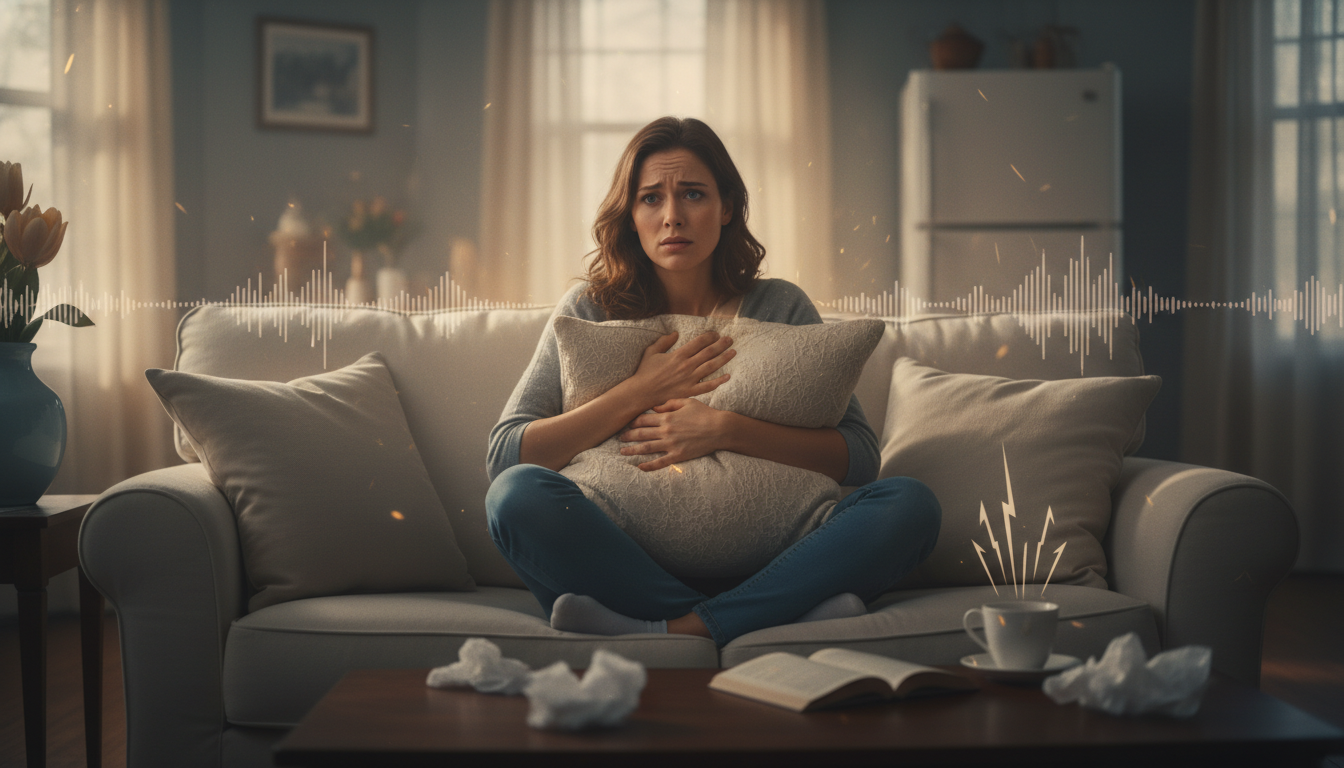
Category: Anxiety vs Physical Symptoms

stress symptoms, panic vs emergency, anxiety causing dizziness/palpitations

  • Why Anxiety Makes Symptoms Louder

    Why Anxiety Makes Symptoms Louder

    Why Do Symptoms Feel Worse When You’re Anxious?

    Disclaimer: This article is for general information only and isn’t medical advice or a diagnosis. If you have severe symptoms or think it may be an emergency, call your local emergency number.

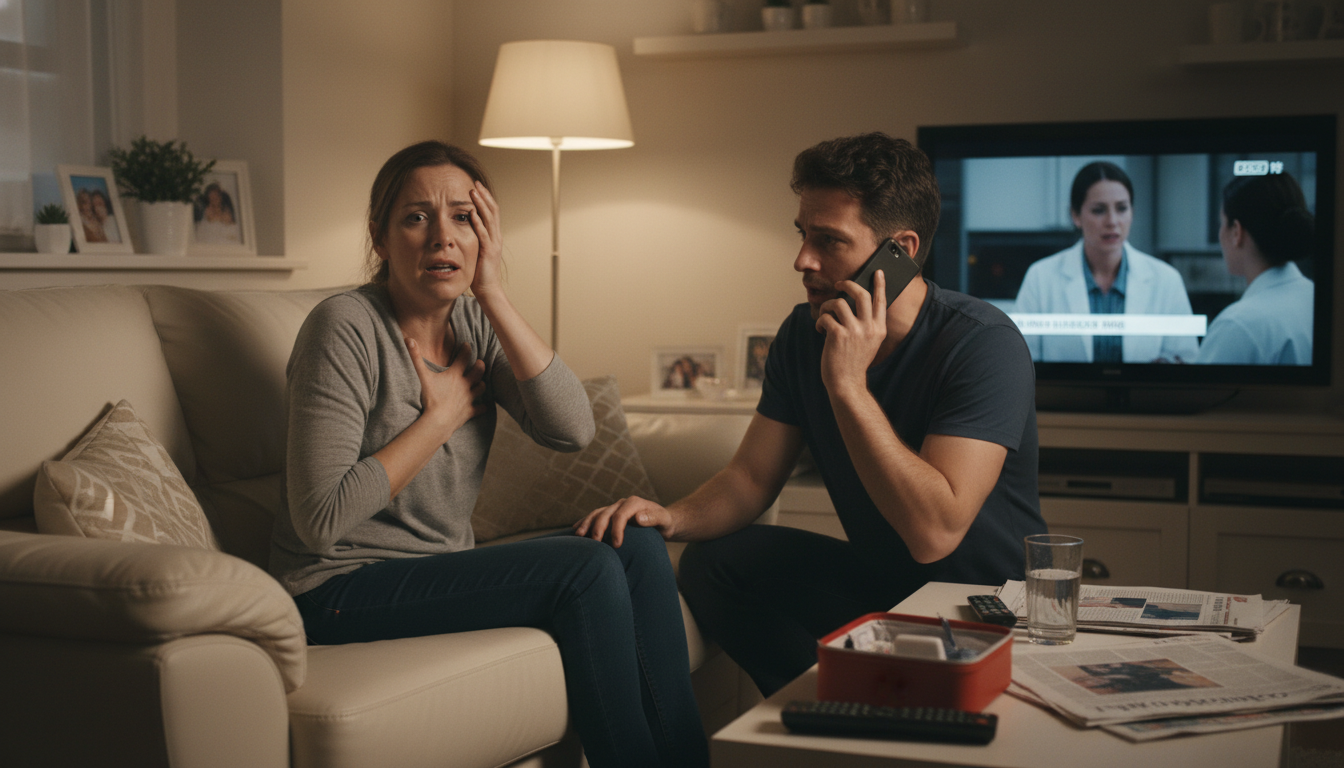
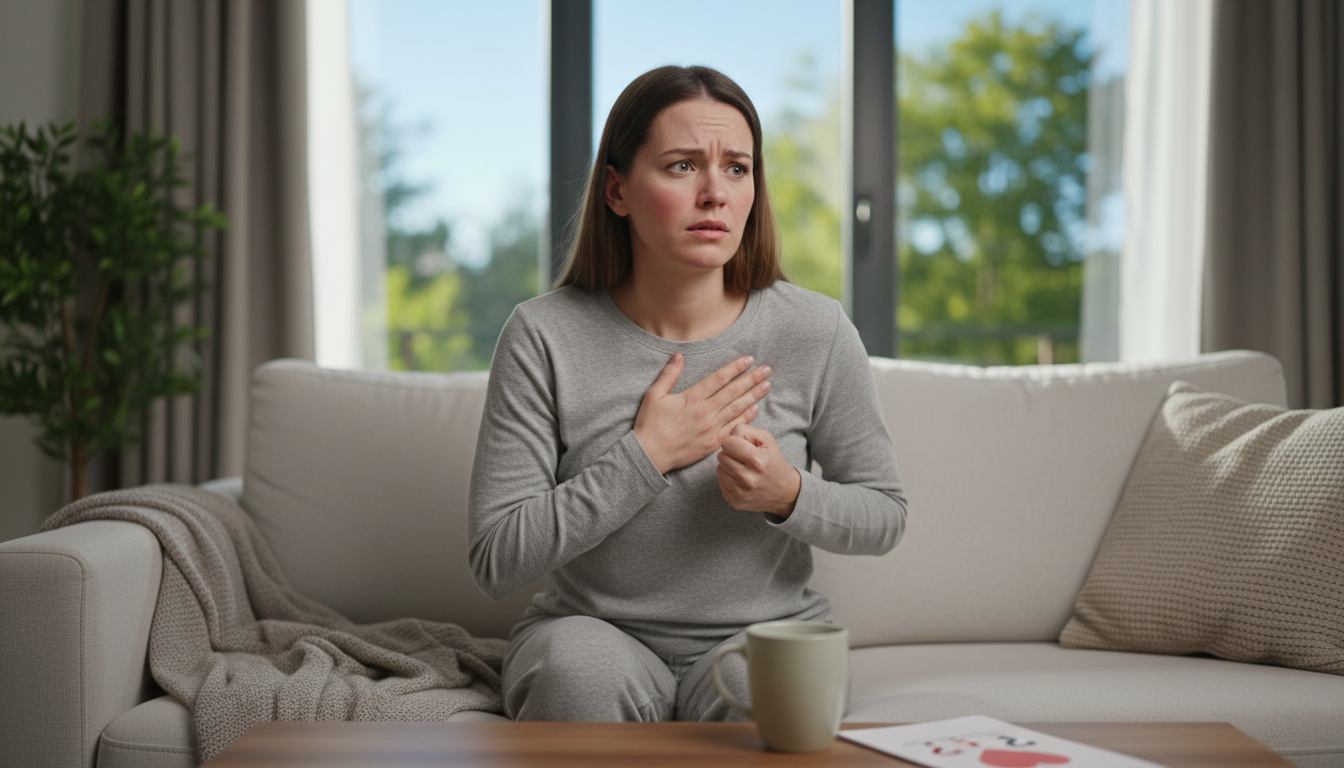
    You know that moment when you feel a tiny twinge in your chest and your brain immediately goes:

    “This is it. This is The Big One.”

    Five minutes later your heart is racing, your hands are shaky, your head feels weird, and now everything feels ten times worse than it did at the start. So what’s going on? Are your symptoms actually getting worse—or does anxiety just make them feel worse?

    Let’s unpack why anxiety can turn normal (or mild) body sensations into something that feels terrifying, intense, and impossible to ignore.

    Quick Answer: Why Do Symptoms Feel Worse When You’re Anxious?

    Because your brain and body think there’s danger.

    When you’re anxious:

    • Your body flips into fight-or-flight mode.
    • Your heart rate, breathing, and blood pressure can all change.
    • Your brain’s “alarm system” starts scanning your body for threats.
    • Normal sensations (or mild symptoms) feel bigger, louder, and scarier.

    The result is that you experience real physical symptoms—like chest tightness, dizziness, shaky legs, tingling, or stomach upset—that are amplified by attention, fear, and adrenaline.

    Key idea: Anxiety doesn’t mean “it’s all in your head.” It means your nervous system is overreacting, and that reaction is completely capable of creating and worsening real physical sensations.

    Meet Your Alarm System: The Brain–Body Loop

    Let’s introduce the main characters:

    • Amygdala – your internal smoke alarm, always on the lookout for danger.
    • Prefrontal cortex – the rational part of your brain that can say, “Hey, we’re okay.”
    • Autonomic nervous system – runs your heart rate, breathing, sweating, and more.

    When you get anxious, your amygdala sends a message:

    “Danger! Do something!”

    That message triggers your fight-or-flight response:

    • Heart beats faster
    • Breathing gets quicker or shallower
    • Muscles tense
    • Blood flow shifts to muscles and away from your gut

    Those body changes are meant to protect you from a real threat—like a bear.

    But if the “threat” is actually an email from your boss, a weird flutter in your chest, or a headache you woke up with, then the same system still activates. Now you’re stuck feeling strong physical symptoms with no obvious external cause, which makes your brain panic more.

    Takeaway: Your body is doing exactly what it’s designed to do—just at the wrong time, for the wrong reason.

    Why Anxiety Makes Every Sensation Feel Bigger

    1. Hypervigilance: Your Attention Is Turned Up to Max

    When you’re anxious, you automatically start body-scanning:

    • “Is my heart still racing?”
    • “Do I feel dizzy?”
    • “Is my chest tight now? What about now?”

    The more you check, the more you notice. Focusing intensely on a sensation increases how strong it feels. This is called hypervigilance—your brain is on constant lookout for signs of danger, so it amplifies any sensation that might matter.

    Mini example:

    You’re watching TV, feeling fine. Then a commercial mentions heart attacks. You suddenly notice your heartbeat.

    • Two minutes ago: Heart was beating the same, and you didn’t care.
    • Now: You’re focusing on it, so it feels heavier, louder, and maybe even irregular.

    Takeaway: Whatever you monitor constantly tends to feel worse—especially when you’re worried about it.

    2. Catastrophic Thoughts: “What If This Is Something Serious?”

    Anxiety loves the phrase: “What if…?”

    • “What if this headache is a stroke?”
    • “What if this chest tightness is a heart attack?”
    • “What if this dizziness means I’m about to pass out?”

    Those thoughts trigger more fear, which triggers more adrenaline, which triggers more physical symptoms.

    This creates a loop:

    1. You feel a symptom (tight chest, weird heartbeat, tingling, dizziness, etc.).
    2. You have a scary thought about it.
    3. Your body releases more stress hormones.
    4. Your symptoms increase.
    5. The increased symptoms seem to “prove” your scary thought.

    Now you’re not just uncomfortable—you’re terrified.

    Takeaway: The story your brain tells about a symptom can make that symptom feel dramatically worse.

    3. Fight-or-Flight Creates Real Physical Symptoms

    Anxiety isn’t just mental. It’s a full-body response.

    Common anxiety-related physical symptoms include:

    • Heart and circulation: racing heart, pounding heartbeat, skipped beats, feeling like your pulse is everywhere
    • Breathing and chest: shortness of breath, tight chest, feeling like you can’t get a deep breath
    • Head and neurology: dizziness, lightheadedness, tingling, headaches, feeling detached or unreal
    • Muscles and body: shaking, trembling, jelly legs, tension, aches
    • Stomach and digestion: nausea, urgency, cramps, butterflies

    These sensations happen because your nervous system is trying to help you outrun a threat. Blood flow, muscle tension, and breathing all shift—and you feel that.

    Takeaway: Your symptoms feel worse not because you’re imagining them, but because your body is literally reacting to fear.

    Why Symptoms Spike When You Finally Relax

    Ever notice that you feel worse at night or when you finally sit down after a long day?

    Here’s why that happens:

    • During the day, you’re distracted and busy.
    • At night or when you lie down, there’s less noise and more awareness.
    • Your brain suddenly has space to say, “So… about that weird feeling in your chest…”

    With fewer distractions, you zoom in on every sensation. That can make normal body fluctuations feel dramatic.

    Also, your body may be coming down from a day of stress:

    • Muscles that were tight may ache.
    • Your heart rate is slowing, but you’re now paying attention to it.
    • Adrenaline is dropping, which can leave you feeling shaky or drained.

    Takeaway: Feeling symptoms more when you slow down doesn’t always mean things are getting worse—it often means you’re finally noticing what was already there.

    Common Example Loops: “Anxiety vs Real Emergency” Feelings

    Let’s walk through a few typical scenarios.

    Example 1: Chest Tightness and Racing Heart

    • You notice a brief chest twinge.
    • Thought: “Heart attack?”
    • Heart rate shoots up from fear.
    • Now you feel pounding in your chest, maybe shortness of breath.
    • You start monitoring every beat, every breath.

    Result: The anxiety response layers on top of the original, mild sensation—so your chest tightness feels way worse.

    Example 2: Dizziness and Feeling Faint

    • You stand up quickly, feel a little lightheaded (which can be totally normal).
    • Thought: “I’m going to pass out.”
    • Anxiety kicks in, leading to faster breathing and possible hyperventilation.
    • Hyperventilation changes carbon dioxide levels in your blood.
    • That can increase dizziness, tingling, and feelings of unreality.

    Now you feel like you’re definitely about to collapse—even if your actual blood pressure and oxygen are okay.

    Example 3: Palpitations and Skipped Beats

    • You feel a weird “thump” or flutter in your chest.
    • Thought: “My heart is failing.”
    • You check your pulse repeatedly.
    • Each time your heart speeds up from the stress of checking.

    Now what might have been a harmless extra beat turns into a lengthy experience of pounding, racing, and panic.

    Important note: Anxiety can mimic serious symptoms, but it can also co-exist with real medical conditions. If something feels new, intense, or “off” for you, medical evaluation is always the right move.

    Takeaway: The loop is classic: sensation → fear → more sensation → more fear.

    Is It “Just Anxiety” or Something Serious?

    This is the question that keeps people up at 2 a.m. Googling.

    You can’t and shouldn’t self-diagnose online. But here are some general ideas that doctors often use when thinking about red flags.

    You should seek urgent medical care (emergency services) if you notice, for example:

    • Sudden, crushing, or severe chest pain (especially with sweating, nausea, or pain spreading to arm, jaw, or back)
    • Sudden weakness, trouble speaking, facial drooping, or confusion
    • Difficulty breathing that’s getting worse or not improving
    • Fainting, or nearly fainting and not improving
    • New, intense, or rapidly worsening pain anywhere in your body
    • High fever, stiff neck, or severe headache unlike any before

    Also talk to a healthcare professional promptly if:

    • Your symptoms are new, unusual for you, or changing.
    • You have underlying conditions (heart, lung, neurological, etc.).
    • You’re just not sure—and it’s bothering you often.

    Getting checked can be reassuring either way: if it’s something benign, you gain peace of mind; if it’s something that needs treatment, you get help sooner.

    Takeaway: Anxiety is common, but it’s never a reason to ignore real red-flag symptoms.

    How to Break the “Anxiety Makes Symptoms Worse” Cycle

    You can’t control every sensation your body has—but you can change how your brain responds.

    1. Name What’s Happening

    Try gently labeling the process:

    • “My alarm system is on.”
    • “This is my fight-or-flight response.”
    • “My brain is misinterpreting a sensation as danger.”

    This doesn’t magically make symptoms vanish, but it takes some power away from the fear story.

    2. Shift From Fear to Curiosity

    Instead of:

    • “What if this means I’m dying?”

    Try:

    • “What exactly am I feeling right now?”
    • “Has this happened before and then passed?”
    • “Is there another explanation, like stress, tension, or lack of sleep?”

    Curiosity calms the nervous system more than catastrophe thinking.

    3. Ground Your Nervous System

    Simple, evidence-backed strategies that can help include:

    • Slow breathing: Inhale through your nose for about 4 seconds, exhale gently for about 6 seconds, repeat for a few minutes.
    • Muscle relaxation: Gently tense and release muscle groups from toes to forehead.
    • 5–4–3–2–1 grounding: Notice 5 things you see, 4 you can touch, 3 you hear, 2 you smell, 1 you taste.

    These techniques help your body shift away from fight-or-flight and toward a calmer state, which can turn the volume down on physical symptoms.

    4. Limit Body-Checking and Googling

    Constantly checking your pulse, blood pressure, heart rate, or symptom lists online teaches your brain:

    “This must be dangerous, or we wouldn’t be checking so much.”

    Try:

    • Setting a personal rule like: “I only check my pulse if my doctor asked me to, or once a day max.”
    • Scheduling worry time—10–15 minutes at a set time—to write your fears down instead of chasing them all day.

    5. Get Professional Support

    Therapies like cognitive behavioral therapy (CBT) and other anxiety-focused approaches can help you:

    • Challenge catastrophic thoughts.
    • Reduce health anxiety.
    • Respond differently to body sensations.

    In some cases, medications (prescribed by a medical or mental health professional) can also help with anxiety and the physical discomfort that comes with it.

    Takeaway: You can’t stop every twinge, flutter, or dizzy spell—but you can change the way your brain reacts to them.

    Final Reassurance: You’re Not Broken, You’re Reacting

    If your symptoms always seem worse when you’re anxious, you’re not making it up, and you’re not weak.

    Your brain is doing what it evolved to do: notice possible danger and crank up your body’s response. It just sometimes mislabels normal sensations, minor issues, or temporary changes as serious threats.

    The goal isn’t to never feel anxious again. The goal is to:

    • Understand what’s happening.
    • Learn to recognize the anxiety–symptom loop.
    • Know when to seek medical care.
    • Practice tools that calm your nervous system.

    From there, physical symptoms often become less terrifying, less intense, and less in control of your day.

    You deserve to feel informed, not helpless—and you’re already on that path by asking these questions.

    Sources

  • Panic Attack or Medical Emergency?

    Panic Attack or Medical Emergency?

    Panic Attack vs Medical Emergency: How to Tell the Difference

    Disclaimer: This article is for general information only and isn’t medical advice or a diagnosis. If you have severe symptoms or think it may be an emergency, call your local emergency number.

    You’re sitting there minding your business when suddenly: heart racing, chest tight, can’t catch your breath, your brain screams, “I’M DYING.”

    But are you having a panic attack, or is this a real medical emergency?

    In the moment, those two can feel almost identical. And that’s exactly why so many people either rush to the ER for what turns out to be a panic attack, or stay home and “wait it out” when they actually need urgent care.

    Let’s untangle the two—calmly, clearly, and with zero judgment.

    Panic attack vs medical emergency: what’s the difference?

    Panic attack

    • A surge of intense fear or discomfort that peaks within minutes
    • Often comes with strong physical symptoms (racing heart, shortness of breath, chest tightness, sweating, shaking)
    • Usually improves within 20–30 minutes, even if it feels longer
    • Not dangerous to the heart or lungs in otherwise healthy people, but feels terrifying

    Medical emergency

    • A serious, potentially life‑threatening problem (like a heart attack, stroke, severe asthma attack, or blood clot)
    • Needs immediate medical attention
    • Waiting it out or assuming “it’s just anxiety” can be dangerous

    Key idea: A panic attack is mainly driven by the nervous system and adrenaline. A medical emergency is driven by a physical problem that can permanently harm organs if not treated.

    Takeaway: Panic feels like an emergency; a medical emergency is an emergency. The trick is learning red flags.

    Common symptoms of panic attacks (and why they feel so real)

    Panic attack symptoms can look a lot like medical problems, especially heart or breathing issues. According to major medical centers like Mayo Clinic and the NHS, common panic attack symptoms include:

    • Pounding or racing heart (palpitations)
    • Chest pain or chest tightness
    • Shortness of breath or feeling like you can’t get a deep breath
    • Sweating, hot or cold flashes
    • Shaking or trembling
    • Nausea or stomach discomfort
    • Dizziness, lightheadedness, or feeling like you might faint
    • Numbness or tingling in hands, feet, or face
    • Feeling detached from yourself (derealization/depersonalization)
    • Intense fear of losing control, “going crazy,” or dying

    Why it feels like a medical emergency:

    • Your body flips into fight-or-flight mode.
    • Adrenaline increases heart rate, breathing, and muscle tension.
    • Blood flow shifts, which can cause tingling or dizziness.

    Your brain then does the very human thing and thinks: “Heart racing + chest pain = heart attack. Game over.”

    Mini scenario: You’re in a grocery store, suddenly your heart starts racing, you feel lightheaded, your vision feels weird. You think, “Something is wrong with my heart.” The fear spikes, your body releases more adrenaline, and your symptoms get even stronger. That loop is basically a panic attack in action.

    Takeaway: Panic symptoms are produced by a real biological stress response—but that doesn’t automatically mean damage is happening.

    What does a medical emergency look like?

    Different emergencies have different red flags. Here are some big ones doctors emphasize as “do not ignore.”

    Possible heart attack (not just anxiety)

    Call emergency services right away if you have:

    • Chest pain or pressure that feels like squeezing, crushing, or heavy weight
    • Pain spreading to arm, shoulder, neck, jaw, or back
    • Shortness of breath that’s not just from anxiety
    • Nausea, vomiting, or breaking out in a cold sweat
    • Symptoms that start with physical exertion (climbing stairs, walking) and don’t quickly let up with rest

    These can be more subtle in women, older adults, and people with diabetes—sometimes they feel more like sudden fatigue, shortness of breath, or discomfort instead of classic “movie heart attack” chest pain.

    Possible stroke

    Use the FAST rule:

    • Face: drooping on one side when you smile
    • Arms: weakness or numbness in one arm
    • Speech: slurred or hard to understand
    • Time: call emergency services immediately

    Other red flags: sudden severe headache (“worst headache of my life”), confusion, trouble seeing, or sudden loss of balance.

    Trouble breathing that isn’t “just” panic

    Call for help right away if you have:

    • Sudden shortness of breath that’s getting worse, not better
    • Wheezing, choking, or inability to speak full sentences
    • Blue lips or face
    • Chest pain with breathing, especially if it started suddenly

    Other serious red flags

    Urgent help is usually needed if you notice:

    • Sudden, severe chest pain
    • Coughing up blood
    • Fainting or repeated near-fainting
    • Severe, ripping or tearing chest/back pain
    • Severe allergic reaction: swelling of tongue or throat, hives, difficulty breathing

    Takeaway: If you see stroke signs, classic heart attack symptoms, trouble breathing, or sudden severe pain, treat it as a medical emergency. Don’t self-diagnose it as panic.

    How long does a panic attack last vs a medical emergency?

    This isn’t a hard rule, but it’s a helpful clue.

    Panic attack timing:

    • Often peaks within 10 minutes
    • Most last 20–30 minutes, though milder after-symptoms (feeling wired, tired, or unsteady) can linger longer

    Medical emergency timing:

    • Symptoms may come on suddenly and stay or worsen
    • Heart attack pain may build and not fully go away with rest
    • Stroke symptoms usually don’t just vanish in a few minutes without treatment

    If your symptoms come in waves, rise and fall, or start to ease when you sit down, breathe slowly, or change your focus, that’s more typical of a panic response—though not a guarantee.

    Takeaway: Panic attacks usually ramp up fast and then ease. Emergencies often stay the same or get worse.

    Questions to ask yourself in the moment

    These questions do not replace medical care, but they can help you make sense of what you’re feeling:

    1. Have I felt something like this before and been told it was a panic attack?
      If yes, and the pattern feels similar, panic is more likely.
    2. Did this start during a stressful thought, situation, or trigger?
      Example: work argument, driving on a highway, crowded store, health worry spiral.
    3. Did it ramp up very quickly (within a few minutes)?
      That sudden surge is classic panic.
    4. Are symptoms starting to gradually ease when I slow my breathing or change position?
      Panic symptoms often respond to calming the nervous system.
    5. Do I have known medical conditions?
      History of heart disease, blood clots, severe asthma, or other high‑risk conditions = much lower threshold to seek emergency care.

    If your body is screaming that something is seriously wrong—and especially if symptoms are new, intense, or different from your usual panic attacks—it’s safer to get checked.

    Takeaway: Your history matters. “Same as usual panic” is different from “brand‑new, never‑felt‑this‑before” symptoms.

    When to treat it like a medical emergency (even if you have anxiety)

    Many people with anxiety have been dismissed before, so they hesitate to seek help. But even if you have a long history of panic attacks, you should treat it as an emergency if:

    • Chest pain is severe, crushing, or spreading to arm, jaw, neck, or back
    • You feel short of breath in a way that’s different or worse than usual
    • You have one‑sided weakness, facial drooping, or trouble speaking
    • You faint or keep nearly fainting
    • You have sudden confusion, trouble seeing, or severe headache
    • Symptoms won’t ease at all and are getting worse over 10–20 minutes
    • Your gut feeling says, “This is not normal for me.”

    It’s always okay to be evaluated and then find out it was “just” a panic attack. Doctors and paramedics see this all the time.

    Takeaway: If in doubt, get checked out. Embarrassment is temporary; safety is non‑negotiable.

    Signs it may be a panic attack (but still worth following up)

    None of these guarantee it’s “only” panic—but they often show up in panic attacks:

    • You’ve had similar episodes before, and medical tests were normal
    • Symptoms started during stress, fear, or intense worry
    • Your mind is racing with catastrophic thoughts (“I’m dying,” “I’m losing it”)
    • You notice hyper‑awareness of your body (checking pulse, focusing hard on breathing)
    • Symptoms start to calm down—at least a bit—when you:
      • Slow your breathing
      • Move to a quieter space
      • Distract yourself
      • Remind yourself, “This feels awful, but I’ve survived this before”

    Even if you’re pretty sure it’s panic, it’s still worth discussing with a healthcare or mental health professional, especially if it’s happening more often or it’s stopping you from doing normal things (work, driving, flying, social situations).

    Takeaway: Recognizing panic is the first step; getting support so it happens less often is the real win.

    What to do during a suspected panic attack

    If you think it might be a true emergency, stop reading and call your local emergency number. If you’ve been checked before and this feels like your “usual” panic, these steps can help:

    1. Ground your body first

    • Sit or lie somewhere safe.
    • Feel where your body makes contact with the chair, floor, or bed.
    • Look around and name 5 things you can see, 4 you can feel, 3 you can hear, 2 you can smell, 1 you can taste.

    This tells your brain, “I am in a room, not in a disaster movie.”

    2. Use slow, structured breathing

    Try this pattern:

    • Inhale through your nose for 4 seconds
    • Hold for 2 seconds
    • Exhale slowly through pursed lips for 6–8 seconds
    • Repeat for a few minutes

    You’re giving your nervous system a “chill out” signal.

    3. Talk to yourself like you would a friend

    Instead of “I’m dying,” try:

    • “This is a panic surge. I’ve felt this before and survived it.”
    • “My heart is racing because my body is trying to protect me, not kill me.”

    It may sound cheesy, but it works.

    4. Ride the wave

    Think of a panic attack as a wave: it rises, peaks, and falls.

    Tell yourself:

    • “This wave will peak and pass, usually within minutes.”
    • “My job is not to fight the wave, just to float on it.”

    Takeaway: During a panic attack, you’re not trying to “win” or “stop” it instantly—you’re trying to stay safe and wait it out while your system resets.

    How to reduce future panic attacks and protect your health

    Panic vs medical emergency isn’t a one‑time question. It’s about creating a plan with professionals so you’re not constantly guessing.

    1. Get a real medical workup at least once

    If you’ve never had your symptoms evaluated, it’s reasonable to ask your doctor about:

    • Basic physical exam
    • Heart evaluation if you have chest pain or palpitations
    • Blood work if needed

    This helps rule out underlying issues and can give you more confidence when episodes happen.

    2. Consider therapy (especially CBT)

    Cognitive behavioral therapy (CBT) and other forms of talk therapy can:

    • Help you understand how panic attacks work
    • Teach you skills to interrupt the fear-symptom-fear cycle
    • Gradually reduce how often and how intensely they happen

    3. Ask about medication if needed

    Some people benefit from:

    • Short‑acting medications for rare, intense attacks
    • Daily medications (like certain SSRIs) to reduce overall anxiety and panic frequency

    You and your clinician decide if this makes sense based on your situation.

    4. Work on the baseline: sleep, caffeine, and stress

    These aren’t magic fixes, but they matter:

    • Poor sleep and high caffeine can mimic panic symptoms (racing heart, jitters)
    • Dehydration and skipping meals can cause dizziness and heart flutters
    • Chronic stress keeps your body closer to “panic ready” mode

    Even small habits—consistent sleep times, moderate caffeine, regular meals—can make panic attacks less likely.

    Takeaway: Partnering with professionals and taking care of your baseline body needs can reduce both panic attacks and your risk of missing a real emergency.

    Bottom line: you’re not crazy, and you’re not alone

    Feeling torn between “It’s just anxiety” and “What if I’m actually dying?” is incredibly common.

    Here’s the distilled version:

    • Panic attacks can look and feel like medical emergencies—especially heart problems.
    • Certain red flags (crushing chest pain, weakness on one side, trouble speaking, severe trouble breathing) should always be treated as emergencies.
    • If it’s new, severe, or just feels different from your usual, err on the side of getting urgent care.
    • Over time, working with healthcare and mental health professionals can help you rule out serious conditions, understand your panic, and build tools to manage it.

    You deserve both safety and peace of mind. It’s not either/or.

    Sources

  • Physical Symptoms Of Stress You Shouldn’t Ignore

    Physical Symptoms Of Stress You Shouldn’t Ignore

    Physical Symptoms of Stress: What They Mean and What to Do

    Disclaimer: This article is for general information only and isn’t medical advice or a diagnosis. If you have severe symptoms or think it may be an emergency, call your local emergency number.

    Ever had a day where your eye is twitching, your heart is racing, your stomach’s in knots—and you think, “Cool, so I’m probably dying”? Then Dr. Google politely suggests: stress.

    Modern life is basically a competitive sport in stress. The tricky part is that stress doesn’t just live in your head; it shows up all over your body in very real, physical ways.

    If you’ve been wondering, “Are these weird body symptoms from stress or something serious?” this guide is for you.

    What Is Stress, Really?

    Stress is your body’s built-in alarm system. When your brain senses a threat (an actual danger or an email with the subject line “Quick chat?”), it flips on the fight-or-flight response.

    Hormones like adrenaline and cortisol surge. Heart rate climbs, breathing speeds up, muscles tense. This is great if you’re running from a bear, and less helpful if you’re sitting in a Zoom meeting.

    Short bursts of stress can be helpful. But when stress is chronic—day after day—those physical changes stop being protective and start causing symptoms.

    Takeaway: Stress is a whole‑body response, not just a mental thing.

    Common Physical Symptoms of Stress (From Head to Toe)

    1. Headaches, Pressure, and Brain Fog

    Stress commonly triggers tension headaches—that tight band‑like feeling across your forehead or at the back of your head and neck. Migraines can also flare with stress in some people.

    You might notice:

    • A dull, aching headache
    • Tight neck, jaw, or scalp muscles
    • Trouble concentrating or feeling “foggy”

    That foggy, spaced‑out feeling happens because your brain is juggling worry, planning, and “what if” thoughts, leaving fewer resources for memory and focus.

    When to pay attention: Sudden, severe “worst headache of your life,” headaches with vision changes, confusion, weakness, or trouble speaking need urgent medical attention.

    Mini‑takeaway: If your head feels like it’s wearing a too‑tight hat on stressful days, tension may be the culprit—but red‑flag changes always deserve a doctor’s visit.

    2. Muscle Tension, Aches, and Shakiness

    When you’re stressed, your body gets ready to move. Muscles tighten so you can fight, flee, or at least survive your inbox.

    Physical stress symptoms can include:

    • Tight shoulders, neck, or jaw
    • Back pain or generalized body aches
    • Muscle twitching or trembling hands
    • Feeling “wired” or unable to relax physically

    Over time, constant clenching can lead to chronic pain, especially in the neck, shoulders, and lower back.

    Mini‑takeaway: If your shoulders live somewhere near your ears by mid-afternoon, stress‑driven muscle tension may be part of the picture.

    3. Chest Tightness, Racing Heart, and Palpitations

    Stress and anxiety can cause very real heart‑related sensations, including:

    • Pounding or racing heart
    • Skipped beats or flutters (palpitations)
    • Chest tightness or pressure

    During stress, your heart beats faster to pump more blood to your muscles. You may feel this as an exaggerated heartbeat.

    However, chest pain, pressure, or discomfort can also signal a heart attack or other urgent problem.

    Get emergency help right away if chest symptoms are:

    • Severe, crushing, or feel like pressure or heaviness
    • Spreading to your arm, jaw, neck, or back
    • Accompanied by sweating, nausea, shortness of breath, or feeling like you might pass out

    Mini‑takeaway: Stress can cause chest tightness and palpitations—but never assume. New, intense, or different chest symptoms should be checked promptly.

    4. Shortness of Breath or “Can’t Get a Deep Breath”

    Stress often changes how you breathe. Many people start shallow, rapid breathing from the upper chest, sometimes without noticing.

    This can leave you feeling:

    • Short of breath
    • Like you can’t take a full, satisfying breath
    • Lightheaded or tingly in the hands, feet, or face (especially during panic)

    Ironically, the more you focus on your breathing and worry about it, the more anxious you may feel.

    Red flag: If you have sudden or severe trouble breathing, wheezing, bluish lips, or chest pain, seek emergency care.

    Mini‑takeaway: Stress breathing is a thing. Learning slow, deep breathing can directly calm your nervous system.

    5. Stomach Issues, Nausea, and Gut Changes

    The gut and brain are on speed dial with each other via the gut–brain axis. When stress flares, your digestive system notices.

    Common physical stress symptoms in the gut include:

    • Nausea or a “sour” stomach
    • Stomach cramps or churning
    • Diarrhea or constipation
    • Bloating or gas
    • Worsening of IBS (irritable bowel syndrome) symptoms

    Some people lose their appetite under stress; others stress‑eat. Long‑term, chronic stress can even affect how your body digests and absorbs nutrients.

    Mini‑takeaway: If your stomach acts like a weather report for your stress levels, you’re not imagining it.

    6. Sweating, Flushing, and Temperature Swings

    You might notice under stress:

    • Sweaty palms
    • Damp underarms even when it’s not hot
    • Feeling suddenly flushed or warm
    • Chills or feeling cold when anxious

    This is your autonomic nervous system in action—adjusting blood flow and sweat as part of the fight‑or‑flight response.

    Mini‑takeaway: Random sweat during a hard email is probably stress. Drenched night sweats or unexplained fevers deserve a medical check.

    7. Sleep Problems and Exhaustion

    Stress often disrupts sleep.

    You might:

    • Take a long time to fall asleep
    • Wake up frequently at night
    • Wake feeling unrefreshed, like you didn’t sleep
    • Notice more vivid or disturbing dreams

    Poor sleep then feeds back into more stress, anxiety, low mood, and physical tiredness. It’s a vicious circle.

    Mini‑takeaway: If you’re waking more tired than when you went to bed, stress and sleep may be locked in a loop.

    8. Immune Changes: Getting Sick More Often

    Chronic stress doesn’t just make you feel run‑down—it can actually influence your immune system.

    Over time, high stress levels have been linked with:

    • Getting colds or infections more often
    • Slower healing of cuts or illnesses
    • Flare‑ups of autoimmune conditions in some people

    You might notice you always seem to catch whatever’s going around when life is especially intense.

    Mini‑takeaway: Constantly sick around deadlines? Your immune system might be waving a stress flag.

    Are These Stress Symptoms or Something Serious?

    Stress and serious medical problems can look similar. Chest tightness, dizziness, nausea, fatigue, and headaches can all be seen in both.

    Some clues a symptom might be stress‑related include:

    • It appears or worsens during or after stressful events
    • It improves when you relax, distract yourself, or sleep
    • You’ve had a medical evaluation and serious causes were ruled out

    However, always err on the side of safety.

    You should seek urgent or emergency medical care if you have:

    • New, severe chest pain or pressure
    • Sudden trouble breathing
    • Confusion, difficulty speaking, facial drooping, or weakness on one side
    • Sudden, severe headache unlike anything before
    • Fainting or nearly fainting, especially with chest pain or shortness of breath
    • High fever, stiff neck, or other concerning infection symptoms

    Mini‑takeaway: It’s possible for symptoms to be just stress and still be miserable. But new, severe, or changing symptoms deserve real medical evaluation.

    How Stress Shows Up in Everyday Life (3 Relatable Scenarios)

    Scenario 1: The Work Email Spiral

    You’re fine all morning. Then you see an email with the subject “We need to talk.”

    Within minutes:

    • Heart racing
    • Slight chest tightness
    • Sweaty palms
    • Brain replaying your entire career

    You take a short walk, breathe slowly, and after the meeting (which turns out to be about a routine project update), your symptoms fade. That pattern—clear trigger, symptoms peaking, then easing as the stressor passes—often points toward stress.

    Scenario 2: Nighttime Overthinking

    You’re exhausted, but the second your head hits the pillow, your mind starts:

    • What if I lose my job?
    • Did I say something weird earlier?
    • I really need to sleep or tomorrow will be awful.

    Your body responds with:

    • Tight jaw
    • Racing thoughts
    • Light chest pressure
    • Restless legs

    When you finally drift off near morning, your alarm goes off. Now the sleep deprivation makes every minor stressor feel huge.

    Scenario 3: The “Random” Stomach Meltdown

    You’ve had a long week but feel okay. Then you go to dinner with friends and your stomach suddenly cramps, churns, and sends you speed‑walking to the bathroom.

    Looking back, you realize:

    • You skipped lunch
    • You were nervous about socializing
    • You were thinking about a big meeting on Monday

    Stress plus irregular meals plus nerves can lead to a gut overreaction.

    Mini‑takeaway from all scenarios: Stress symptoms are often tied to context. Tracking when they appear can reveal patterns.

    What Can You Do About Physical Symptoms of Stress?

    You can’t remove all stress from life, but you can lower how much it hijacks your body.

    1. Train Your Breathing

    Slow, deep breathing can directly calm the nervous system.

    Try this simple pattern:

    1. Inhale gently through your nose for 4 seconds.
    2. Hold for 2–4 seconds.
    3. Exhale slowly through your mouth for 6 seconds.
    4. Repeat for 3–5 minutes.

    Do this when:

    • You notice chest tightness or a racing heart
    • You’re stuck in traffic or before a meeting
    • You’re trying to fall asleep

    2. Relax Your Muscles on Purpose

    Progressive muscle relaxation helps break the clenching cycle:

    • Start at your feet: tense the muscles for 5–7 seconds, then release.
    • Move up: calves, thighs, glutes, stomach, hands, arms, shoulders, face.
    • Notice the difference between tension and relaxation.

    A few minutes a day can reduce baseline tension.

    3. Move Your Body (Even a Little)

    Gentle movement can:

    • Lower stress hormones over time
    • Improve sleep
    • Ease muscle tension
    • Support mood and energy

    You don’t need a perfect workout plan. Start with:

    • 10–15 minute walks
    • Stretching or yoga videos
    • Light strength exercises at home

    4. Protect Your Sleep

    Your body heals and resets during sleep. Some stress‑friendly habits include:

    • Go to bed and wake up around the same time daily
    • Keep your room dark, cool, and quiet
    • Limit caffeine later in the day
    • Try a “brain dump” journal before bed—list worries and to‑dos so your brain feels less responsible for holding them all night

    5. Set Tiny Boundaries with Stress

    You may not be able to quit your job or solve everything overnight, but small boundaries help:

    • Turn off non‑urgent notifications for certain hours
    • Build a 5–10 minute transition ritual between work and home, such as a walk, shower, or music
    • Say no to one extra commitment this week

    6. Talk It Out

    Physical symptoms of stress are easier to carry when you’re not carrying them alone.

    Options include:

    • A trusted friend or family member
    • A therapist or counselor
    • A support group (online or in‑person)

    Therapy, in particular, can help with coping skills, thought patterns, and behavior changes that reduce stress at the source.

    Mini‑takeaway: You don’t have to earn support by being “sick enough.” Stress that’s affecting your body is enough.

    When to Talk to a Doctor About Stress Symptoms

    Even if you strongly suspect your symptoms are from stress, it’s reasonable and wise to involve a healthcare professional.

    Consider booking an appointment if:

    • Your symptoms are persistent, frequent, or worsening
    • They interfere with work, school, relationships, or daily life
    • You’re worried something serious is going on
    • You’re using alcohol, nicotine, or other substances more to cope

    Be honest with your provider about:

    • What you’re feeling physically
    • What’s been stressful in your life
    • How long it’s been going on
    • Any medications, supplements, or substances you use

    You and your clinician can work together to:

    • Rule out or treat medical conditions
    • Identify stress and anxiety patterns
    • Create a plan, which may include therapy, lifestyle changes, and sometimes medication

    Final takeaway: Physical symptoms of stress are real, valid, and common. They’re your body’s way of saying, “I’m at capacity.” Listening early—and getting help when needed—can prevent those warning lights from turning into long‑term problems.

    Sources

  • Feeling Off But No Clear Symptom

    Feeling Off But No Clear Symptom

    What It Means When You Just Feel “Off”

    Disclaimer: This article is for general information only and isn’t medical advice or a diagnosis. If you have severe symptoms or think it may be an emergency, call your local emergency number.

    You know that weird, hard-to-explain feeling where you’re not sick, but you’re definitely not okay either?

    You can still go to work. You can still answer emails. You can technically function. And yet something just feels off. Not bad enough to go to the ER. Not clear enough to Google a specific symptom. Just this vague, annoying, unsettling sense that your body or brain isn’t running at 100%.

    If that’s you, you’re not alone—and you’re not imagining it. Let’s unpack what “feeling off” can actually mean, why it happens, when to worry, and what you can practically do next.

    What Does “Feeling Off” Even Mean?

    “Feeling off” isn’t a medical diagnosis. It’s a catch-all phrase people use when:

    • Nothing hurts exactly, but you don’t feel well.
    • You’re more tired, foggy, or wired than usual.
    • You feel detached, not like yourself, or slightly unsteady.
    • You can’t point to one clear symptom to tell a doctor.

    Some common ways people describe it:

    • “I feel weird but I don’t know why.”
    • “My body feels off—like I’m out of sync.”
    • “I feel slightly dizzy or floaty, but not spinning.”
    • “My head feels full or foggy, not painful.”
    • “I just feel off balance with no clear symptom.”

    Quick takeaway: “Feeling off” is real—but it’s vague. The goal is to translate that vague feeling into more specific clues.

    Normal vs. Not-Normal: When “Off” Is Just Life

    Humans are not robots. Your energy, mood, and physical sensations naturally change day to day.

    You may feel a bit off if:

    • You slept badly or not enough
    • You had more caffeine, alcohol, or sugar than usual
    • You’re dehydrated
    • You’re under stress (even the “good” kind)
    • You’re getting over a cold, flu, or COVID
    • You’re hormonally shifting (menstrual cycle, perimenopause, etc.)

    Mild, short-lived “off days” that improve with rest, good sleep, hydration, and time are often just your body saying, “Hey, can we not do that again?”

    Quick takeaway: If it lasts a day or two, has an obvious cause, and gets better with basic care, it’s probably in the “annoying but normal” category.

    When Feeling Off Might Have a Physical Cause

    Sometimes that vague, off feeling is your body sending early, quiet signals that something’s up.

    Here are some common physical reasons people feel “off” without one dramatic symptom:

    1. Sleep Debt and Circadian Chaos

    Chronic lack of sleep—or constantly changing sleep times—can cause:

    • Brain fog
    • Feeling unreal or detached
    • Irritability
    • Slower thinking and reaction time

    You may not say “I’m exhausted,” but you might say “I don’t feel like myself.”

    2. Blood Sugar Ups and Downs

    Even if you don’t have diabetes, big swings in blood sugar can make you feel:

    • Shaky inside
    • Off-balance
    • Weirdly anxious
    • Hungry-but-not-really

    Skipping meals, eating mostly refined carbs, or going long stretches without food can all contribute.

    3. Mild Dehydration

    You don’t have to be desert-level thirsty to be dehydrated. Even mild dehydration can cause:

    • Lightheadedness
    • Fatigue
    • Headache
    • Trouble concentrating

    Many people walk around perpetually under-hydrated and just label it “feeling off.”

    4. Viral Illness or Recovery Mode

    Sometimes your body is fighting something before you notice classic symptoms like fever, cough, or sore throat. Or you may be in the post-illness phase where you’re “better,” but your system is still rebooting. That vague, blah, not-quite-right feeling is very common here.

    5. Medications or Supplements

    New meds, dosage changes, or even stopping a medication can absolutely make you feel off—but not always in a neat, obvious way.

    This could include:

    • Blood pressure meds
    • Antidepressants or anti-anxiety meds
    • Hormonal birth control or hormone therapy
    • Sleep aids
    • Some herbal supplements or energy products

    Never stop or change medication without talking to the prescriber—but do mention any new “off” feelings.

    6. Nutrient Deficiencies

    Low levels of certain vitamins or minerals can cause vague, whole-body symptoms like:

    • Low energy
    • Brain fog
    • Mild weakness
    • Feeling washed out

    Common culprits include iron, vitamin B12, vitamin D, and others. Blood work is usually needed to check.

    Quick takeaway: Physical causes don’t always scream; sometimes they whisper. If you’ve felt off for more than a couple of weeks, it’s reasonable to check in with a healthcare provider.

    The Anxiety Connection: Can Stress Make You Feel Physically Off?

    Anxiety doesn’t always look like full-blown panic attacks. Sometimes it looks like:

    • Slight dizziness or floaty feelings
    • Tingling, butterflies, or internal shakiness
    • Tight chest or throat—but normal tests
    • Feeling disconnected from your body or surroundings
    • Random waves of “something’s wrong” with no clear cause

    Your nervous system doesn’t perfectly separate “mind stuff” from “body stuff.” Worry, stress, poor sleep, and chronic overthinking can all trigger very real physical sensations.

    Feeling physically off can increase anxiety, which makes you feel more off, creating a vicious cycle.

    Quick takeaway: Anxiety and stress can show up as real, physical “off” sensations—even when tests are normal.

    Quick Self-Check: Red Flags You Shouldn’t Ignore

    Feeling “off” is one thing. Feeling “off” with certain symptoms is another.

    Seek urgent or emergency medical care (call your local emergency number or go to an ER or urgent care) if your “off” feeling comes with:

    • Sudden chest pain, pressure, or tightness
    • Trouble breathing or feeling like you can’t get enough air
    • Sudden weakness or numbness in face, arm, or leg (especially one side)
    • Difficulty speaking, confusion, or trouble understanding speech
    • Sudden severe headache (“worst headache of my life”)
    • Fainting or feeling like you’re about to pass out and it doesn’t ease quickly
    • Rapid heart rate with chest pain, shortness of breath, or faintness
    • High fever, stiff neck, confusion, or a rash that spreads quickly

    These can be signs of something serious and are not “wait and see until next week” situations.

    Quick takeaway: Vague “off” feeling is usually not an emergency—but serious, sudden, or intense symptoms with it are a big “get help now.”

    When Is It Reasonable to See a Doctor for Just “Feeling Off”?

    If you’re wondering, “Is it dumb to see a doctor if I just feel off?”—no. It’s not.

    Consider booking an appointment if:

    • The feeling has lasted more than 2–3 weeks
    • It’s getting worse instead of slowly better
    • It’s starting to affect your work, relationships, or daily life
    • You have a history of medical conditions (heart, lung, diabetes, etc.)
    • You’ve recently changed medications or started something new

    Here’s what you can do to make that visit more helpful.

    How to Explain “Feeling Off” So Your Doctor Can Actually Help

    Go from vague to specific. Before your appointment, jot down:

    1. Onset – When did this start? Suddenly or gradually?
    2. Pattern – Is it constant, or does it come and go?
    3. Triggers – Is it worse with standing, after eating, at night, after stress, or with certain foods or activities?
    4. Associated symptoms – Even small things: headache, mild nausea, weird vision changes, palpitations, sleep changes, etc.
    5. Life changes – New job, stress, grief, illness, travel, big diet or exercise changes.
    6. Medications/supplements – Including over-the-counter and “natural” products.

    Example you might bring:

    “For the last three weeks, I’ve felt weirdly out of it. Not dizzy exactly, more floaty. It’s worse in the afternoon and when I’m stressed. I’m sleeping badly and drinking more coffee than usual. No chest pain or trouble breathing.”

    That’s much more useful than: “I just feel off.”

    Quick takeaway: You’re not overreacting by seeing a doctor for a vague problem. Clarity is part of prevention.

    Practical Things You Can Try at Home (If There Are No Red Flags)

    These steps are not a substitute for medical care, but they can help you test and support common causes of feeling off.

    1. Stabilize the Basics for 1–2 Weeks

    Pick a short “reset period” and focus on:

    • Sleep: Aim for 7–9 hours, with regular bed and wake times.
    • Hydration: Drink water regularly throughout the day. A rough target for many adults is around 2 liters, but your needs may vary.
    • Food pattern: Eat regular meals with protein, fiber, and healthy fats (not just carbs) to smooth out blood sugar.
    • Caffeine and alcohol: Cut back, especially later in the day.

    Track whether your symptoms ease, stay the same, or worsen.

    2. Gentle Movement

    If you’re able, add light, regular movement:

    • Short walks
    • Gentle stretching or yoga
    • Light strength or bodyweight exercises

    Movement can help circulation, mood, sleep, and nervous system regulation, all of which can affect that off feeling.

    3. Stress Check-In

    Ask yourself honestly:

    • Am I under more pressure than usual?
    • Have there been big life changes recently?
    • Am I constantly “on,” scrolling, or working?

    Try:

    • Short breathing exercises (even 3–5 minutes at a time)
    • Scheduled breaks from screens
    • Journaling worries before bed
    • Talking to a friend, counselor, or therapist if you can

    4. Track Your Symptoms

    Keep a simple log for 1–2 weeks:

    • Time of day you feel most off
    • What you ate or drank before
    • Sleep hours
    • Stress level (1–10)
    • Any specific sensations (lightheaded, foggy, weak, wired, etc.)

    Patterns often show up on paper that feel random in your head.

    Quick takeaway: Supporting sleep, hydration, nutrition, movement, and stress doesn’t fix everything, but it can turn down the volume on a lot of “off” sensations and gives you better data for a doctor.

    Two Real-Life Style Scenarios (That Might Sound Familiar)

    Scenario 1: The Afternoon Float

    Alex, 34, notices that almost every afternoon around 3–4 p.m., they feel slightly floaty and off. Not spinning dizzy, but not grounded either. No chest pain, no trouble breathing. It passes by evening.

    They track their day and realize:

    • Breakfast: coffee only
    • Lunch: quick sandwich and chips
    • Afternoon: more coffee, no water

    After two weeks of:

    • Drinking water steadily
    • Adding a real breakfast with protein
    • Swapping one coffee for water or herbal tea

    The floaty feeling gets dramatically better. Still tired some days—but no longer “off” in that unsettling way.

    Scenario 2: The Vague Blur That Didn’t Go Away

    Jordan, 47, has felt “off” for a month. Low energy, brain fog, and just not right. They blame stress at first, but:

    • It’s getting worse, not better
    • They’re short of breath walking up stairs (new)
    • They’re more pale than usual

    They see their doctor, who orders blood tests. It turns out Jordan has iron-deficiency anemia. With treatment and follow-up, their energy and clarity slowly return—and that vague off feeling finally has a name and a plan.

    Quick takeaway: Sometimes lifestyle tweaks are enough. Sometimes they’re not—and that’s exactly why medical evaluation exists.

    Giving Yourself Permission to Take It Seriously

    Here’s the bottom line:

    • You’re not weak or dramatic for noticing you feel off.
    • You’re not “bothering” anyone by asking a doctor to help you figure it out.
    • You don’t have to wait until things get unbearable to seek clarity.

    Your body is allowed to whisper before it screams. Paying attention to the whispers—without panicking about every single one—is a healthy skill.

    If you’ve been feeling off with no clear symptom:

    1. Check for any red flags. If yes, get urgent help.
    2. Support the basics for 1–2 weeks (sleep, hydration, food, movement, stress).
    3. Track patterns and how long this has been going on.
    4. Book an appointment if it’s persistent, worsening, or worrying.

    You’re allowed to investigate even the vague stuff. That’s not overreacting—that’s taking care of yourself.

    Sources

  • Heart Racing And Feeling Weak: What Now?

    Heart Racing And Feeling Weak: What Now?

    Heart Beating Fast and Feeling Weak: What It Might Mean

    Disclaimer: This article is for general information only and isn’t medical advice or a diagnosis. If you have severe symptoms or think it may be an emergency, call your local emergency number.

    You’re just minding your business and suddenly your heart is beating fast and you feel weak, shaky, or like you might pass out.

    Cue the internal monologue:

    • “Am I dying?”
    • “Is this a panic attack?”
    • “Do I need the ER right now or am I being dramatic?”

    Let’s walk through what might be going on, what’s actually an emergency, and what you can do in the moment.

    First: Is This an Emergency Right Now?

    If your heart is racing and you feel weak right now, pause and quickly check for red flags. Don’t overthink, just scan:

    Call 911 or your local emergency number immediately if:

    • Chest pain, pressure, squeezing, or tightness (especially if it spreads to your arm, jaw, back, or neck)
    • Trouble breathing or feeling like you can’t get air
    • Fainting or almost fainting, confusion, trouble speaking, or one side of the body drooping or weak
    • Severe sudden headache with weakness or vision or speech changes
    • Heartbeat is very fast and very irregular (feels chaotic, not just fast)
    • You have a known heart condition (like atrial fibrillation, heart failure, history of heart attack) and these symptoms feel new or much worse
    • You just had major blood loss, trauma, or a serious allergic reaction

    If any of those are happening, stop reading and get help. You can always sort out the details later; your job is to stay alive.

    Quick takeaway: If your gut says “this feels really wrong” and you see any red-flag symptom above, treat it as an emergency.

    Why Is My Heart Beating Fast and I Feel Weak?

    There are a lot of possible reasons. Some are urgent, many are not, but they can still feel terrifying.

    1. Normal Body Response (Stress, Fear, or Exertion)

    When you’re anxious, scared, in pain, or have a surge of adrenaline, your body flips on “fight or flight.” Your heart rate goes up, blood vessels shift, and you might feel:

    • Fast or pounding heartbeat
    • Shaky or weak
    • A little sweaty or lightheaded

    This can happen even if the threat is basically just your brain imagining worst-case scenarios.

    Scenario: You’re scrolling, read something scary, notice your heart once, and your nervous system takes that as a threat. Heart speeds up, you feel weak, now you’re scared of your own heartbeat.

    Quick takeaway: Strong emotions or stress can absolutely make your heart race and make you feel weak, even if your heart itself is healthy.

    2. Anxiety, Panic Attacks, and Health Anxiety

    A racing heart and weakness is classic in anxiety and panic episodes. Common symptoms include:

    • Fast heartbeat or pounding in the chest
    • Feeling weak, shaky, or like your legs are jelly
    • Shortness of breath or tight chest
    • Dizziness, feeling unreal or detached
    • Fear of dying, losing control, or “going crazy”

    The symptoms themselves can make you more scared, which makes the symptoms worse, which makes you more scared.

    Does that mean it’s always “just anxiety”? No. But if:

    • You’ve had similar episodes before
    • Medical tests have been okay
    • Symptoms often show up when you’re stressed, in crowds, driving, or trying to sleep

    then anxiety or panic is a strong possibility.

    Quick takeaway: Anxiety and panic can feel absolutely physical and very real, even if tests are normal.

    3. Dehydration, Low Blood Sugar, or Standing Up Too Fast

    Sometimes the problem is more “basic plumbing” than mysterious illness.

    Dehydration or low blood volume can cause:

    • Fast heart rate (your heart speeds up to push less fluid around)
    • Weakness or fatigue
    • Dizziness, especially when standing

    Low blood sugar (for example, from not eating for many hours) can cause:

    • Shaky, weak feeling
    • Heart pounding
    • Sweating and feeling off or irritable

    Standing up too fast (or conditions like POTS – postural orthostatic tachycardia syndrome) can cause:

    • Heart rate jumping quickly when you stand
    • Weakness, dizziness, blurry vision

    Quick self-check:

    • Have you eaten in the last few hours?
    • Have you had enough water or electrolytes today?
    • Do you mostly notice it when you stand up or after being upright a while?

    Quick takeaway: Sometimes your body is saying, “I need fuel or fluids,” not “I’m dying.” Still, repeated or severe episodes deserve a doctor visit.

    4. Heart Rhythm Issues (Arrhythmias)

    Not every fast heartbeat is harmless. Arrhythmias are abnormal heart rhythms that can feel like:

    • Very fast, very sudden heart racing
    • Fluttering, skipping, or pounding
    • Weakness, lightheadedness, or near-fainting

    Some arrhythmias are relatively benign, others can be dangerous, especially if you also have:

    • Chest discomfort
    • Shortness of breath
    • Fainting
    • Known heart disease

    If your symptoms:

    • Come out of nowhere
    • Make you feel like you might pass out
    • Don’t settle after a few minutes of rest

    you should speak with a healthcare professional urgently or seek same-day or emergency care.

    Quick takeaway: Fast and irregular and feeling like you’ll pass out is a “get checked now” combo.

    5. Infections, Fever, or Illness

    When you’re sick, your body’s demand for oxygen increases and your heart beats faster to keep up. You might feel:

    • Weak and drained
    • Hot or feverish
    • Fast heartbeat

    Even mild viral illnesses can do this. But if you have:

    • Fever
    • Fast heart rate at rest
    • Feeling severely weak or short of breath

    it’s worth checking in with a clinician, especially if you’re older, pregnant, or have chronic conditions like heart or lung disease.

    Quick takeaway: Being sick naturally raises heart rate and can make you feel weak, but severe or rapidly worsening symptoms deserve medical attention.

    6. Medication, Caffeine, Nicotine, or Substance Effects

    Certain things you ingest can make your heart race and body feel weak or shaky.

    Common culprits include:

    • Caffeine (coffee, energy drinks, pre-workout, pills)
    • Nicotine (vapes, cigarettes)
    • Decongestants (like some cold medicine)
    • Asthma inhalers (some can cause jitteriness and fast heart rate)
    • Stimulants for ADHD or weight loss
    • Certain thyroid medications or supplements

    Recreational drugs (cocaine, amphetamines, some party drugs) can be outright dangerous and cause true emergencies with heart, blood pressure, and brain.

    Quick takeaway: Always consider: “What did I take today—meds, drinks, supplements, or substances?” and mention it to any doctor you see.

    7. Less Common but Important Medical Causes

    There are other medical reasons for a fast heart and weakness that need a professional to sort out, such as:

    • Thyroid problems (overactive thyroid)
    • Anemia (low red blood cells)
    • Heart conditions (coronary artery disease, heart failure, valve problems)
    • Blood clots in the lungs (pulmonary embolism, usually with sudden shortness of breath and chest pain)

    You can’t reliably diagnose these on your own. But patterns like ongoing fatigue, frequent palpitations, breathlessness with light activity, or swelling in legs are all signals to book an appointment.

    Quick takeaway: If this isn’t a one-time thing but a pattern, your doctor needs to know.

    What Should I Do Right Now If My Heart Is Racing and I Feel Weak?

    Assuming you don’t have the emergency red flags listed earlier, here’s a practical “in the moment” checklist.

    Step 1: Sit or Lie Down Somewhere Safe

    Don’t try to power through it. Sit or lie flat. If you feel like you might faint, lying on your back with your legs slightly elevated can help blood flow to your brain.

    Goal: Prevent injury if you do get dizzy.

    Step 2: Check Your Breathing

    When we’re anxious or scared, we tend to over-breathe (fast, shallow breaths), which actually makes dizziness and tingling worse.

    Try this simple reset:

    1. Inhale gently through your nose for 4 seconds.
    2. Hold for 1–2 seconds.
    3. Exhale slowly through your mouth for 6 seconds.
    4. Repeat for a couple of minutes.

    If your symptoms significantly improve while you’re doing slow breathing, stress or panic may be playing a big role.

    Step 3: Do a Quick Body and Context Scan

    Ask yourself:

    • Did this start after a stressful thought or situation?
    • When did I last eat?
    • How much water have I had today?
    • Any new meds, caffeine, or substances?
    • Do I feel chest pain, trouble breathing, or like I’m going to pass out right now?

    Write down:

    • Time started
    • What you were doing right before
    • Any other symptoms (chest pain, shortness of breath, dizziness, sweating, nausea)

    This is very useful for any doctor or nurse you talk to.

    Step 4: Check Your Pulse (If You Can Do It Calmly)

    If it doesn’t make you more anxious, you can gently place two fingers on the thumb side of your wrist or on your neck beside your windpipe. Count beats for 30 seconds and double that number for beats per minute.

    What you’re noticing:

    • How fast? (roughly)
    • Is it steady like a drumbeat or totally irregular or chaotic?

    If your heart feels extremely fast (like over about 130 at rest), very irregular, or you feel like you might pass out, it’s reasonable to seek urgent or emergency care.

    Step 5: Decide: Home Monitoring vs. Urgent Care vs. ER

    You might be okay to watch at home for now if:

    • No emergency red flags (no chest pain, no severe shortness of breath, no fainting, no stroke-type symptoms)
    • You start feeling somewhat better within 10–20 minutes of rest and slow breathing
    • This has happened before and your doctor has evaluated you and wasn’t concerned

    You should call your doctor, nurse line, or urgent care today or soon if:

    • These episodes are new, frequent, or getting worse
    • You also feel very tired, breathless on mild activity, or have ongoing weakness
    • You have other conditions (like high blood pressure, diabetes, thyroid issues, or known heart problems)

    You should go to the ER or call emergency services if:

    • Symptoms come with chest pain, real trouble breathing, fainting, or confusion
    • Your heart is going very fast and feels wild or irregular and you feel like you’ll pass out
    • You have a known serious medical condition and this feels very different from your normal

    Quick takeaway: When in doubt, you’re never bothering anyone by getting checked. Medical teams would much rather say “you’re okay” than miss something serious.

    How to Talk to a Doctor About This (So You Get Real Answers)

    When you do see a healthcare professional, it helps to be specific. You can say something like:

    “Yesterday and again today my heart suddenly started beating very fast and I felt weak. It lasted about X minutes. I was [sitting or standing or walking]. I had [no or yes] chest pain, [no or yes] shortness of breath, and I [did or did not] feel like I might faint.”

    Useful info to bring:

    • A symptom diary: when it happens, what you’re doing, how long it lasts
    • Medication list: prescriptions, over-the-counter meds, supplements, caffeine or energy drinks, vapes, etc.
    • Any wearable device data (smartwatch heart rate traces), if available, but treat that as supporting info, not the full story.

    Your clinician might:

    • Listen to your heart and lungs
    • Check blood pressure and oxygen saturation
    • Order an ECG (heart rhythm test)
    • Consider blood tests (electrolytes, thyroid, anemia, etc.)
    • Possibly order a Holter monitor or event monitor to track your heart over time

    Quick takeaway: The more concrete info you give, the easier it is for them to figure out whether this is likely anxiety, rhythm issues, or something else.

    Can Anxiety Really Make My Heart Feel This Bad?

    Anxiety and panic can cause:

    • Fast heart rate and palpitations
    • Weakness, trembling, and jelly legs
    • Chest tightness or discomfort
    • Sweating and hot or cold flashes
    • Tingling in hands or face

    Because those symptoms look like serious physical problems, your brain understandably becomes more alarmed.

    What helps if anxiety is a major factor:

    • Therapy (especially CBT) to break the “symptom → fear → more symptoms” cycle
    • Breathing and grounding techniques you can practice even when you’re calm
    • Exercise, sleep, and reducing stimulants (like heavy caffeine or energy drinks)
    • In some cases, medications prescribed by your clinician

    Important: Don’t assume it’s only anxiety until a healthcare professional has ruled out physical causes. After that, treating the anxiety becomes part of treating the symptoms.

    Quick takeaway: Anxiety is real and physical, but also treatable. You don’t have to endure it without help.

    When to Stop Googling and Get Checked

    If you’re reading this while your heart is racing and you feel weak, here’s a simple guide:

    • Get emergency help now if you have: chest pain, trouble breathing, fainting, confusion, stroke-like symptoms, or a wildly irregular racing heartbeat.
    • Call your doctor or a nurse line soon if: this is new, keeps happening, or is getting worse, even if it seems to settle down each time.
    • Work on anxiety, lifestyle, and triggers if: you’ve been medically checked out and serious issues were ruled out, but symptoms still pop up with stress, lack of sleep, or caffeine.

    You’re not too young or too anxious to deserve proper medical care. If your body keeps setting off alarms, it’s worth letting a professional take a look.

    Final Reassurance

    Feeling your heart race and your body go weak is scary, and that fear is valid.

    Sometimes it’s your nervous system overreacting. Sometimes it’s your body saying, “I need water, food, or rest.” Sometimes it’s a sign something medical needs attention.

    You don’t have to figure it all out alone in the middle of a panic spiral. Use the red-flag list, calm your breathing if you can, and when in doubt, reach out to a real-life human clinician.

    You’re allowed to take your symptoms seriously, even if it turns out to be something treatable or benign.

    Sources

  • Heart Racing And Chest Tightness: Normal Or Not?

    Heart Racing And Chest Tightness: Normal Or Not?

    Racing Heart and Chest Tightness: When to Worry and What to Do

    Disclaimer: This article is for general information only and isn’t medical advice or a diagnosis. If you have severe symptoms or think it may be an emergency, call your local emergency number.

    Your heart is racing, your chest feels tight, and your brain has just one question: “Is this normal… or am I in serious trouble?” Let’s walk through this calmly, step by step, without doom-scrolling or spiraling.

    First: Quick Self-Check – Do You Need Emergency Care Right Now?

    Before anything else, pause and check for red flag symptoms. If any of these are happening, do not keep reading – seek emergency care immediately (call 911 in the U.S.).

    Call emergency services right away if:

    • Chest pain or tightness is heavy, crushing, or squeezing, especially in the center or left side of the chest
    • Pain spreads to your arm, shoulder, neck, jaw, or back
    • You feel short of breath (like you can’t get enough air)
    • You feel faint, weak, or about to pass out
    • You’re sweating a lot, nauseated, or vomiting
    • You have sudden confusion, trouble speaking, or one side of your face, arm, or leg feels weak or numb
    • Your heart is racing or irregular and you have known heart disease, very high blood pressure, or a history of blood clots or stroke

    These can be signs of a heart attack, dangerous arrhythmia, pulmonary embolism, or stroke, which are emergencies.

    Takeaway: If your gut is screaming “this feels really wrong,” trust it and get help now.

    Why Your Heart Might Be Racing and Your Chest Tight Right Now

    A racing heart (often called palpitations) plus chest tightness can come from a wide range of causes – some benign, some urgent.

    Common, Often Less Dangerous Causes

    These are very common and often not life-threatening, but still worth discussing with a healthcare professional.

    1. Anxiety or panic attacks

      • The body’s “fight-or-flight” system turns on.
      • Heart rate shoots up, breathing becomes faster or shallow, and chest muscles can tense.
      • You may feel:
        • Racing heart
        • Chest tightness or discomfort
        • Feeling of doom, unreality, or “I’m going to die”
        • Tingling in hands or face, dizziness, or shaking
      • Panic symptoms can peak within minutes and then slowly ease.
    2. Stress and stimulants combo

      • Caffeine (coffee, energy drinks, pre-workout), nicotine, certain decongestants, or some ADHD meds can make your heart beat faster.
      • Add poor sleep, dehydration, or stress, and your body is primed to feel on edge.
    3. Muscle or chest wall strain

      • Sore or tight chest muscles (from exercise, posture, lifting, or even coughing) can feel like “tightness” or pressure.
      • Often worse when you move, twist, or press on the area.
    4. Acid reflux (GERD)

      • Stomach acid can irritate the esophagus and mimic chest discomfort.
      • Often worse after big meals, lying down, or certain foods.
    5. Benign heart rhythm changes

      • Some people get brief extra beats or episodes of fast but not dangerous rhythms.
      • Can feel like fluttering, pounding, or a skipped beat followed by a thud.

    Takeaway: There are many non-emergency reasons your heart can race and your chest can feel tight, especially if you’re anxious or stressed. But it is still important to rule out the serious causes.

    When It Is Not Just Anxiety: Red Flags to Watch Over the Next Hours

    Even if you’re not in immediate crisis, call a doctor or urgent care today (or as soon as possible) if:

    • The chest tightness keeps coming back or lasts more than a few minutes at a time
    • You notice it with activity (walking, climbing stairs) and it eases with rest
    • You’ve never felt this before and it’s suddenly new and intense
    • You’re pregnant, recently had surgery, have been on a long flight, or immobilized (higher risk for clots)
    • You have risk factors like:
      • High blood pressure
      • High cholesterol
      • Diabetes
      • Smoking
      • Strong family history of heart disease at a young age

    These raise concern for heart- or lung-related causes that should be checked sooner rather than later.

    Takeaway: New, unexplained, or exertion-related chest symptoms should always be checked out.

    Anxiety vs Dangerous Heart Problem: How Do You Tell?

    Many people worry, “What if it’s just anxiety? I don’t want to waste anyone’s time… but what if it’s not?” You can’t safely 100 percent self-diagnose this at home, but some patterns can give clues.

    Things That Lean More Toward Anxiety or Panic

    These are not proof, just patterns commonly seen:

    • You’ve had similar episodes before that were checked and labeled as panic or anxiety
    • Symptoms come on suddenly during stress, an argument, or while spiraling in your thoughts
    • You feel:
      • A wave of fear, dread, or “I’m going to lose control”
      • Numbness or tingling in hands, feet, or around your mouth
      • Shaking, trembling, or feeling detached from reality
    • Your heart rate is fast but regular, and gradually settles once you:
      • Slow your breathing
      • Change environments
      • Distract yourself or are reassured

    Things That Lean More Toward a Heart or Lung Issue

    Again, not a diagnosis, but clues that deserve prompt medical attention:

    • Chest tightness or pain with physical activity, improving with rest
    • Pain that feels heavy, squeezing, or like pressure in the center or left chest
    • Shortness of breath that doesn’t match your exertion level
    • Pain plus one-sided leg swelling, recent surgery, or long travel (blood clot risk)
    • Palpitations plus fainting, near-fainting, or severe lightheadedness

    Takeaway: If you’re unsure, err on the side of getting checked. Clinicians would much rather see you for a scare than miss a real emergency.

    Real-Life Scenarios: What This Can Look Like

    To make this less abstract, here are a few common real-world patterns. These are simplified examples, not diagnoses.

    Scenario 1: The 2 a.m. Panic Spiral

    You’re in bed scrolling your phone. Suddenly you notice your heart pounding. You focus on it and it gets faster. Your chest feels tight. You take a deep breath, it feels strange, and now you’re sure something’s wrong. You may start sweating, your hands tingle, and you think, “I’m dying.” You sit up, pace, maybe search symptoms online, feel even worse, then slowly, after 15–30 minutes of breathing, crying, or distraction, it settles.

    This pattern is classic for panic attacks or high anxiety, especially if it happens repeatedly and tests such as ECG and blood work have been normal.

    Scenario 2: The “Only When I Walk” Chest Tightness

    You’re fine sitting on the couch, but when you walk up a hill or climb stairs, you feel tightness or pressure in your chest. If you stop and rest, it eases. When you start moving again, it comes back. That exertion-related pattern can be a sign of reduced blood flow to the heart (angina) and should be evaluated quickly.

    Scenario 3: The After-Coffee Heart Race

    You drink an energy drink, skip lunch, and rush through the day. Your heart feels fast and thumpy, your chest a bit tight, and you’re jittery. You also slept only a few hours the night before. In this case, stimulants, dehydration, and stress may be driving your symptoms. It’s still worth talking to a clinician, but cutting back caffeine and improving sleep often helps.

    Takeaway: The pattern of when and how symptoms show up is a big clue, but it never replaces a proper medical evaluation.

    What You Can Do Right Now

    These steps don’t replace medical care, but can help you get through the moment and gather useful information.

    1. Check Your Heart Rate and Breathing

    If you have a watch, fitness tracker, or pulse oximeter, glance at it. If you have no devices, you can:

    1. Place two fingers gently on the side of your neck or inside your wrist.
    2. Count beats for 30 seconds and multiply by 2.

    This number is not a diagnosis, but it’s helpful data when you talk to a clinician.

    2. Slow Your Breathing on Purpose

    When you’re anxious, you often over-breathe, which can worsen chest tightness and tingling. Try this simple pattern for 2–5 minutes:

    • Inhale through your nose for 4 seconds
    • Exhale gently through your mouth for 6 seconds
    • Repeat, letting your belly rise more than your chest

    If this makes symptoms much worse, stop and seek help.

    3. Change Your Environment

    • Sit or lie down in a comfortable position.
    • Loosen tight clothing such as a bra, tie, or belt.
    • If you’re somewhere stressful (argument, loud environment, heavy workload), step away if you can.

    4. Reality-Check Your Thoughts

    Notice if your thoughts are extreme, such as “I’m definitely going to die right now” or “If my heart races, it means heart attack.” Try to gently swap these for more balanced thoughts like “This feels scary, but a racing heart can also happen with anxiety” or “I can get checked if I’m worried – I don’t have to solve this alone.”

    5. Decide on Your Next Action: Watch, Call, or Go In

    Use this as a rough guide:

    • Go to the ER or call 911: Severe, crushing, spreading chest pain; major shortness of breath; fainting; confusion; or sudden, intense “something is very wrong” feeling.
    • Call a nurse line, urgent care, or doctor today: New or worsening symptoms, exertion-related chest tightness, or repeated unexplained episodes.
    • Schedule a routine visit: Mild, brief symptoms that seem clearly linked to anxiety, caffeine, or stress, but you want a professional opinion.

    Takeaway: You don’t have to decide “it’s fine” or “it’s fatal” alone. Use professionals – that’s what they’re there for.

    Tests a Doctor Might Use

    If you go in to be evaluated, here’s what might happen:

    • History and physical exam – Questions about when it started, triggers, exact sensations, medical history, medications, and family history.
    • Vital signs – Heart rate, blood pressure, oxygen level, temperature.
    • ECG/EKG – A quick, painless test to look at your heart’s rhythm and electrical activity.
    • Blood tests – To check for heart damage markers, anemia, thyroid issues, electrolytes, and more, depending on the situation.
    • Chest X-ray – To look at lungs, heart size, and chest structures.
    • Sometimes an echocardiogram, stress test, or heart monitor over days or weeks if needed.

    For anxiety or panic, your provider may also:

    • Screen for anxiety disorders, depression, or trauma history
    • Talk about therapy, lifestyle changes, and possibly medication

    Takeaway: Getting checked doesn’t mean something terrible will be found. Often, it is the path to reassurance and a clear plan.

    How to Reduce Future Episodes of Heart Racing and Chest Tightness

    Whether your main issue ends up being anxiety, lifestyle, or a medical condition, there are habits that generally help your heart and nervous system.

    1. Tame the Stimulants

    • Cut back on caffeine (coffee, tea, soda, energy drinks, pre-workout powders).
    • Avoid nicotine and recreational stimulants.
    • Be cautious with decongestants that contain pseudoephedrine or similar ingredients – they can speed up your heart.

    2. Support the Basics

    • Aim for consistent sleep (7–9 hours for most adults).
    • Stay hydrated; even mild dehydration can make your heart beat faster.
    • Eat regular, balanced meals to avoid blood sugar crashes.

    3. Train Your Nervous System to Calm Down

    • Practice slow breathing or relaxation daily, not just during crises.
    • Try walking, yoga, or gentle exercise, which can reduce resting anxiety and improve heart health.
    • Consider therapy, especially cognitive behavioral therapy (CBT), if anxiety or panic is frequent.

    4. Follow Up on Medical Advice

    If a clinician suggests cardiology follow-up, anxiety treatment (therapy or medication), a sleep study, or medication changes, try to follow through on those referrals.

    Takeaway: Long-term change is gradual but powerful, and your heart tends to reward consistency.

    So… Is What You’re Feeling Right Now “Normal”?

    Racing heart and chest tightness are common symptoms, and they often show up with anxiety, panic, stress, or stimulants. They can also be signs of serious problems, especially when paired with red-flag symptoms such as crushing pain, trouble breathing, fainting, spreading pain, or confusion. You can’t safely self-diagnose this at home, and you never have to feel silly for getting checked.

    If you’re unsure what to do, try this:

    1. Re-scan the emergency red flags at the top.
    2. If any apply, stop reading and seek help now.
    3. If they don’t, but you’re still scared, call a nurse line, urgent care, or your doctor and describe exactly what you’re feeling.

    You are not overreacting by taking your symptoms seriously.

    Sources

  • Heart Racing And Lightheaded: What Now?

    Heart Racing And Lightheaded: What Now?

    Racing Heart and Lightheadedness: What It Might Mean and What to Do

    Disclaimer: This article is for general information only and isn’t medical advice or a diagnosis. If you have severe symptoms or think it may be an emergency, call your local emergency number.

    You’re sitting there minding your business and suddenly your heart is pounding, your chest feels weird, and your head goes light like you might pass out. Cue the thought: “Is this normal or am I dying?”

    Let’s walk through what might be going on, when it’s commonly harmless but terrifying, when it’s not okay to wait it out, and what you can realistically do right now.

    First: When a Racing Heart and Lightheadedness Is an Emergency

    There are times when heart palpitations and feeling lightheaded are not something to Google later.

    Call 911 or your local emergency number immediately if:

    • Your heart is racing and you also have chest pain, pressure, or tightness.
    • You feel short of breath or like you can’t get enough air.
    • You’re about to pass out, actually faint, or can’t stay awake.
    • You have confusion, trouble speaking, weakness, or drooping on one side of the face (possible stroke signs).
    • The racing heart began suddenly, is very fast, and doesn’t slow down after a few minutes of rest.
    • You have a known heart condition, are pregnant, or recently had surgery and now feel very unwell.

    If your brain is doing that “maybe I’m overreacting” thing, err on the side of getting checked. Medical staff would much rather tell you you’re okay than miss something serious.

    Takeaway: If your symptoms are intense, new, or come with chest pain, trouble breathing, or fainting, treat it as urgent.

    What’s Actually Happening When Your Heart Races

    When people say “my heart is racing,” it can mean a few things:

    • Palpitations – you’re aware of your heartbeat: pounding, fluttering, skipping, or thudding.
    • Fast heart rate – over about 100 beats per minute (bpm) while at rest is called tachycardia.
    • Strong, hard beats – your heart rate might not technically be high, but it feels dramatic.

    A normal resting heart rate for most adults is roughly 60–100 bpm. Being a bit above or below that once in a while doesn’t automatically mean disaster. Fitness, medications, dehydration, and stress all move that number.

    Key idea: A racing heart is a symptom, not a diagnosis. The cause is what matters.

    Takeaway: “Heart racing” can mean different things. Rate, rhythm, and context all matter.

    Why Do I Feel Lightheaded With a Fast Heartbeat?

    Lightheadedness is that “I might pass out,” floaty, woozy feeling. It often shows up with a racing heart because of how blood flow works.

    A few common reasons:

    1. Not enough blood reaching the brain
      If your blood pressure drops, or your heart isn’t pumping efficiently, your brain gets less oxygen-rich blood for a moment. Result: lightheaded, gray vision, maybe ringing in ears.
    2. Adrenaline surge (fight-or-flight)
      Anxiety, panic, or sudden stress mean your body floods with stress hormones. Your heart races, your breathing changes, blood vessels constrict or dilate, and your brain interprets this as “uh-oh.” This can cause dizziness or lightheadedness.
    3. Dehydration or standing up too fast
      Low fluid volume plus gravity means less blood to the head when you stand. Your heart speeds up to compensate. Sometimes you get orthostatic lightheadedness or even brief fainting.
    4. Abnormal heart rhythms (arrhythmias)
      Sometimes the heart’s electrical system misfires. In certain arrhythmias, your heart can beat so fast or irregularly that it doesn’t pump effectively, which can make you feel faint.

    Takeaway: Lightheaded plus a racing heart usually means your body is struggling to keep blood and oxygen flowing smoothly to your brain—sometimes benign, sometimes not.

    Is It Just Anxiety or Something Else?

    Anxiety and panic attacks are some of the most common reasons people suddenly feel their heart race and get lightheaded.

    With anxiety or panic, you might notice:

    • Sudden pounding heart
    • Shaking or trembling
    • Sweaty palms
    • Tight chest or throat lump
    • Feeling unreal or detached (“this doesn’t feel like me”)
    • Intense fear that something terrible is happening

    Panic attacks can mimic heart emergencies so closely that even doctors check for medical causes first. You shouldn’t assume it’s “just anxiety” until serious things are ruled out.

    However, if you’ve been medically checked before and told your heart is healthy, anxiety becomes a more likely suspect.

    Clues it might be anxiety-related:

    • It often hits during stress, after a scary thought, in crowds, or when you’re “waiting for something bad.”
    • It comes in waves and often peaks within 10–20 minutes.
    • Deep breathing, distraction, or moving around gradually help.
    • You’ve had similar episodes before and workups like ECG and labs were normal.

    Takeaway: Anxiety can cause a racing heart and lightheadedness, but it’s a diagnosis of exclusion—serious causes should be ruled out first.

    Other Common Causes That Are Not Always Dangerous

    There are a bunch of everyday things that can send your heart rate up and make you feel lightheaded.

    1. Caffeine and stimulants

    Coffee, energy drinks, pre-workout supplements, some cold meds, and nicotine can:

    • Speed up your heart
    • Raise blood pressure
    • Trigger jitters, tremors, and lightheadedness

    If your episode followed a double espresso and an energy drink, your body may be saying “please stop.”

    2. Dehydration and heat

    Not drinking enough or sweating a lot from exercise, hot weather, sauna, or long showers can:

    • Drop your blood pressure
    • Make your heart beat faster to compensate
    • Cause weakness, dizziness, and racing heart when you stand

    3. Low blood sugar

    If you’ve gone too long without eating:

    • You may feel shaky, sweaty, and have a pounding heart.
    • You might feel lightheaded, irritable, or foggy.

    A quick balanced snack with protein and carbs can help if low blood sugar is part of the problem.

    4. Illness, fever, or infection

    Even mild infections can:

    • Increase heart rate
    • Leave you feeling weak, dizzy, or lightheaded

    If you’re also running a fever, coughing, or feeling generally sick, this might be part of the picture.

    Takeaway: Many everyday triggers—caffeine, dehydration, heat, not eating—can cause heart racing and lightheadedness, especially in combination.

    When Heart Racing and Lightheadedness Need a Doctor Soon

    Maybe it’s not a 911 situation, but also not something to ignore for weeks.

    You should contact a doctor or urgent care promptly (same day or within 24 hours) if:

    • This is new for you and you have no explanation.
    • Episodes are frequent, getting worse, or lasting longer.
    • You notice your heart sometimes skips beats, flutters, or feels like it’s “stopping and starting.”
    • You feel lightheaded often, especially when standing up.
    • You have a history of heart disease, high blood pressure, diabetes, or thyroid problems.
    • You’re taking new medications or supplements and symptoms started around the same time.

    Doctors may order things like:

    • ECG (EKG) to look at your heart rhythm.
    • Blood tests to check electrolytes, thyroid, anemia, and other factors.
    • Holter monitor or event monitor to record your heart over 24 hours or longer.
    • Blood pressure and orthostatic measurements comparing lying versus standing.

    Takeaway: New, frequent, or worsening episodes deserve a medical workup, even if they turn out to be benign.

    What You Can Do Right Now If It’s Not Emergent

    If you’ve checked the red flags and you’re not in 911 territory, here are some practical steps.

    1. Pause and check the basics

    • Sit or lie down somewhere safe.
    • Loosen tight clothes around your neck or chest.
    • Try to stay still until the worst passes and avoid driving.

    If you have a home blood pressure cuff or smartwatch or fitness tracker, check:

    • Approximate heart rate and note the number and how you feel.
    • Blood pressure, if you can. Note if it seems too high or too low.

    Write these down. They’re helpful for your doctor.

    2. Try slow breathing

    If this might be anxiety, overbreathing or hyperventilation can make lightheadedness worse. Try this:

    • Inhale slowly through your nose for a count of 4.
    • Hold for 1–2 seconds.
    • Exhale gently through your mouth for a count of 6.
    • Repeat for 1–3 minutes.

    Often, as your breathing slows and deepens, your heart rate will gradually follow.

    3. Hydrate and reassess

    If you might be dehydrated:

    • Sip water or an electrolyte drink, not chugging huge amounts at once.
    • If you’ve not eaten for hours, a light snack with some protein and carbs can help.

    4. Note patterns and triggers

    When things calm down, jot down:

    • What you were doing right before it started: standing up, arguing, scrolling bad news, drinking coffee, or something else.
    • Time of day.
    • Any food, drink, meds, or supplements in the last few hours.
    • Rough heart rate, if you checked it.

    Bring this log to your doctor; it makes their job much easier.

    Takeaway: Simple steps—sit or lie down, breathe slowly, hydrate, and track what’s happening—can help in the moment and guide better care.

    Three Real-World Scenarios and What They Might Mean

    Scenario 1: The Shower Scare

    You’re in a hot shower. Suddenly your heart starts pounding, you feel lightheaded, vision goes a bit gray. You sit down quickly and it eases after a minute.

    • Possible factors: Heat, vasodilation (blood vessels widening), maybe dehydration.
    • Good move: Sitting down right away, cooling off, hydrating afterward.
    • Still see a doctor if: This keeps happening, you actually pass out, or you feel chest pain or shortness of breath.

    Scenario 2: The Meeting Meltdown

    You’re in a stressful meeting. Your boss asks you a question out of nowhere. Your heart slams, you feel lightheaded, hands shaky, breathing faster, mind races: “I’m going to pass out in front of everyone.” Ten minutes later it fades.

    • Possible factor: Panic or high anxiety episode.
    • Helpful tools: Breathing exercises, grounding techniques, talking with a therapist, and a rule-out exam from a doctor if this is new.

    Scenario 3: The Random Couch Episode

    You’re on the couch watching TV. No stress, no exercise. Suddenly your heart is racing, you feel lightheaded, maybe some chest fluttering. It lasts several minutes, doesn’t fully calm when you sit still, and it’s not the first time.

    • Possible factor: Could be an arrhythmia, thyroid issue, anemia, or something else.
    • Next step: This is worth a medical evaluation and not something to ignore.

    Takeaway: Context matters. What you were doing right before symptoms started gives important clues.

    So Is This “Normal” or Not?

    It’s common to occasionally feel your heart race and get a bit lightheaded from things like stress, caffeine, standing up fast, being dehydrated, or having a panic episode. It is not something to just shrug off if it’s new, severe, frequent, or comes with red-flag symptoms.

    Think of it like a smoke alarm:

    • Sometimes it’s burnt toast: anxiety, caffeine, not drinking enough water.
    • Sometimes it’s actual smoke. You don’t know which until you look.

    If your body is repeatedly pulling the alarm, it’s asking for attention, not necessarily because something terrible is happening, but because it wants you and possibly a doctor to investigate.

    Takeaway: “Common” doesn’t always equal “fine to ignore.” Listen to your body, but don’t panic yourself into paralysis.

    What To Do Next

    If you’re reading this while your heart is racing and you feel lightheaded, run through this quick checklist:

    1. Do I have chest pain, trouble breathing, confusion, or fainting?
      If yes, stop reading and call 911 or your local emergency number.
      If no, go to the next question.
    2. Did I just have caffeine, intense stress, heat, or haven’t eaten or drunk much?
      If yes, sit or lie down, hydrate, breathe slowly, and see if things ease over 10–20 minutes.
    3. Have these episodes been happening more often or with no clear trigger?
      If yes, schedule a medical visit as soon as you can.
    4. Has a doctor ever checked my heart, blood pressure, and basic labs for this?
      If no, that’s your next smart move.

    Over time, getting clarity on what’s driving your racing heart and lightheadedness—whether that’s anxiety, lifestyle factors, or a medical condition—can give you back a sense of control.

    You deserve to feel safe in your own body. Getting checked out isn’t overreacting; it’s responsible.

    Sources

  • Why Is My Body Freaking Out Today?

    Why Is My Body Freaking Out Today?

    Why Is My Body Suddenly Reacting Today?

    Disclaimer: This article is for general information only and isn’t medical advice or a diagnosis. If you have severe symptoms or think it may be an emergency, call your local emergency number.

    You ever have a totally normal day and then out of nowhere your heart’s racing, your hands are shaky, your stomach flips, or you feel weirdly dizzy and off? Cue the thought: “Why is my body suddenly reacting like this today? Is something seriously wrong?” Let’s walk through what might be happening, what’s usually not an emergency, and when you really should get checked out.

    First: What Do You Mean by “Body Reacting Suddenly”?

    “Body reacting suddenly” can mean a few different things:

    • Heart pounding or racing (palpitations)
    • Sudden feeling of heat, flushing, or sweating
    • Shakiness, trembling, feeling jittery
    • Sudden dizziness or lightheadedness
    • Tight chest or faster breathing
    • Nausea, stomach flip, or sudden urge to use the bathroom
    • Feeling like you might faint
    • A wave of anxiety or a “doom” feeling out of nowhere

    Some of these can be related to anxiety or stress, some to blood pressure or blood sugar changes, and some to infections, medications, or heart and lung issues. Sudden doesn’t always mean dangerous, but it does mean your body is trying to tell you something.

    Common, Not-Usually-Emergency Reasons Your Body Suddenly Feels Off

    Modern life is a perfect recipe for weird body symptoms. Here are some frequent culprits that cause sudden reactions but are often not dangerous.

    1. Anxiety, Panic, or Stress Spikes

    You don’t have to feel mentally stressed to have a stressed-out body. A panic or anxiety surge can trigger:

    • Racing heart
    • Shaking or trembling
    • Chest tightness
    • Fast breathing
    • Nausea or stomach discomfort
    • Feeling detached or like things aren’t real

    Panic attacks often come on suddenly and can mimic heart attacks or other serious issues, which is why they feel so scary.

    Clues it might be anxiety or panic:

    • You’ve had similar episodes before that checked out fine medically.
    • It started during or after a stressful thought, situation, or conflict.
    • Your symptoms peak within 10–20 minutes, then slowly ease.
    • You’re also having racing thoughts, fear of losing control, or intense worry.

    Takeaway: Anxiety can cause very real physical symptoms. Scary doesn’t always mean dangerous, but if you’re unsure, it’s okay and smart to get evaluated.

    2. Caffeine, Energy Drinks, or Sudden Diet Changes

    You’re minding your business, chasing productivity with coffee number three, and suddenly your heart is pounding, your hands feel shaky, and you feel wired-but-tired.

    High doses of caffeine or energy drinks can cause:

    • Palpitations
    • Jitters
    • Anxiety-like feelings
    • Trouble sleeping

    Similarly, going too long without food or suddenly changing your diet (very low-carb, skipping meals, starting intense fasting) can lead to:

    • Lightheadedness
    • Weakness
    • Shakiness

    Takeaway: If your “body suddenly reacting” day also involved extra caffeine, poor sleep, or skipped meals, your nervous system may just be over-caffeinated and under-fueled.

    3. Dehydration or Standing Up Too Fast

    Sudden dizziness or feeling faint when you stand up quickly, get out of bed, or take a hot shower and then step out can be related to blood pressure dropping or your body struggling to adjust to position changes.

    Mild dehydration or being overheated makes this worse and can cause:

    • Lightheadedness
    • Fast heartbeat
    • Feeling weak or shaky

    This is especially common if you:

    • Haven’t had much water
    • Have been sick with vomiting or diarrhea
    • Have been in the heat or a hot shower

    Takeaway: Before assuming the worst, ask, “Have I actually eaten and hydrated today?” You’d be surprised how often the answer is “barely.”

    4. Blood Sugar Swings

    If you suddenly feel:

    • Shaky
    • Sweaty
    • Very hungry or nauseated
    • Anxious or irritable

    and you haven’t eaten in a while, low blood sugar could be playing a role.

    People with diabetes or on blood sugar–lowering medications are at higher risk, and they need to treat low blood sugar promptly. Even without diabetes, long gaps between meals or a heavy sugar or carb meal followed by a crash can make you feel weird and shaky.

    Takeaway: Food timing and balance matter. If you feel better 15–30 minutes after a snack (especially one with carbs and some protein), that’s a useful clue.

    5. Mild Viral Illness Starting Up

    Sometimes your body reacts before you feel classic sick symptoms. Early signs can include:

    • Sudden fatigue
    • Achiness
    • Mild dizziness
    • Faster heart rate
    • Slight nausea

    Within a day or two, you may notice:

    • Sore throat
    • Cough
    • Fever or chills
    • Runny or stuffy nose

    Takeaway: Sometimes “my body just feels off today” is the prologue to “I’m actually getting sick.” Rest, fluids, and watching how things evolve are important.

    When a Sudden Reaction Might Be More Concerning

    You may be wondering when you should be worried. You should seek urgent or emergency care if any of these are true.

    Call Emergency Services Right Away If:

    • Chest pain or pressure that is crushing, heavy, or spreads to your arm, back, neck, or jaw
    • Shortness of breath that is severe, sudden, or worsening
    • Sudden confusion, difficulty speaking, or understanding speech
    • Sudden weakness or numbness in face, arm, or leg (especially one side of the body)
    • Sudden severe headache unlike anything you’ve had before
    • Fainting (passing out) or nearly fainting with ongoing symptoms
    • Fast heart rate with chest pain, trouble breathing, or feeling like you’ll pass out
    • Coughing up blood
    • Severe allergic reaction signs: swelling of face, lips, or tongue, trouble breathing, hives all over, or feeling like you might collapse

    These can be signs of heart attack, stroke, serious heart rhythm problems, or anaphylaxis, which need immediate medical care.

    See Urgent Care or Same-Day Medical Care If:

    • Your heart is racing or skipping beats and you feel lightheaded or unwell
    • You have fever plus fast heart rate, shaking chills, or feel very weak
    • You have new chest discomfort that isn’t clearly from muscle strain
    • You feel like you might faint repeatedly
    • You have ongoing shortness of breath with mild activity or at rest

    Takeaway: If your gut is yelling, “This feels really wrong,” and symptoms are intense, new, or not easing, it’s safer to get checked.

    How Do I Know If It’s Anxiety or Something Serious?

    Things that lean more toward anxiety or a stress response:

    • Symptoms started during or after worry, conflict, or a stressful thought
    • You’ve had similar episodes in the past that were medically cleared
    • Symptoms come in waves and ease up within 30–60 minutes
    • Breathing feels fast or tight, but you can still talk in full sentences
    • You also notice racing thoughts, sense of doom, or fear of losing control

    Things that lean more toward needing urgent medical evaluation:

    • Sudden, severe chest pain or pressure
    • Trouble speaking, moving one arm or leg, or facial drooping
    • Pain plus shortness of breath, sweating, or nausea
    • Symptoms came out of nowhere while you were calm, and are not easing
    • You have major risk factors: heart disease, prior stroke or heart attack, uncontrolled high blood pressure, diabetes, smoking, strong family history of early heart disease

    Important: Anxiety and serious problems can look similar. If there’s any doubt, medical professionals would rather see you and rule out something serious than have you stay home with a dangerous condition.

    Takeaway: You don’t have to perfectly sort anxiety versus real problem. Your job is to notice patterns, take symptoms seriously, and seek help when you’re unsure.

    Simple Checks You Can Do Right Now

    If your body is suddenly reacting today and it doesn’t feel like an emergency, here are some grounded steps.

    1. Pause and check your breathing.

      • Are you breathing very fast or shallow from your chest?
      • Try slow breaths: in through your nose for 4 seconds, out for 6 seconds, for 1–2 minutes.
    2. Check for obvious triggers.

      • Caffeine or energy drinks today?
      • Skipped meals or very long gap since last eating?
      • Hard workout, hot shower, or being in a hot environment?
      • Poor sleep or an argument or stressor?
    3. Hydrate and have a light snack.

      • Sip water or an electrolyte drink.
      • If you haven’t eaten, try a small snack with carbs and protein (for example, toast with peanut butter, yogurt, crackers and cheese).
    4. Change position slowly.

      • If you feel dizzy, sit or lie down.
      • When standing, go slowly and hold onto something stable.
    5. Monitor the time.

      • Do symptoms start to ease within 15–30 minutes of resting, hydrating, and breathing slowly?
      • Are they staying the same, worsening, or improving?

    If things steadily improve, it’s more reassuring, but you can still follow up with your doctor to talk about what happened. If symptoms don’t improve or get worse, or you hit any of the red-flag symptoms above, seek urgent or emergency care.

    Takeaway: A few simple steps breathing, hydration, food, rest can give you useful clues about what your body needs and whether this feels like a pattern or a one-off scare.

    When It’s Probably Fine but Still Worth Mentioning to Your Doctor

    Even if your sudden reaction settles down, you should bring it up with a healthcare provider if:

    • Episodes keep happening (more than once or twice)
    • You notice a pattern (after meals, at night, when standing, during stress)
    • You have a history of heart, lung, or neurological problems
    • You’re on medications that can affect heart rate, blood pressure, or mood

    Your doctor might:

    • Review your medication list
    • Check blood pressure, heart rate, and possibly an ECG
    • Order blood tests (like thyroid, electrolytes, blood count, glucose)
    • Talk about anxiety, panic, sleep, and lifestyle

    The goal isn’t to label you as anxious and send you away. It’s to rule out serious conditions and help you manage whatever is actually causing the symptoms.

    Takeaway: Even if it wasn’t an emergency, your experience is valid and deserves real attention in a clinic visit.

    Practical Plan: What To Do the Next Time Your Body Suddenly Reacts

    Here’s a simple mental checklist you can keep:

    1. Check for emergencies.
      • Chest pain, trouble breathing, stroke signs, or feeling like you’ll collapse? Call emergency services.
    2. If no emergency signs, pause.
      • Sit or lie down somewhere safe.
    3. Slow your breathing.
      • Four seconds in, six seconds out, repeat for a few minutes.
    4. Ask: Did I eat, drink, sleep, or overload on caffeine?
      • Correct what you can in the moment.
    5. Notice what your mind is doing.
      • Are you catastrophizing (“I’m going to die right now”)? That can amplify symptoms.
    6. Track the episode.
      • Write down: time of day, what you were doing, what you’d eaten or drunk, how long it lasted, and symptoms.
    7. Share this info with your doctor.
      • Patterns over time help them figure out if this is more likely to be anxiety, blood pressure, heart rhythm, blood sugar, or something else.

    Takeaway: You’re not powerless here. Having a simple plan can turn “my body is randomly freaking out” into “I know what to check and when to get help.”

    Final Reassurance: You’re Not Broken

    If your body suddenly reacted today, it’s completely normal to feel scared and to wonder if something serious is brewing. Sometimes, it is something that needs urgent care, and in those cases, going in quickly can be life-saving.

    Other times, it’s your nervous system yelling about stress, sleep, hydration, or blood sugar. That’s still real, still important, and absolutely worth taking seriously. You’re not weak for being worried. You’re paying attention.

    If today was your first “what on earth is my body doing?” day, consider it a nudge not to panic, but to listen more closely, take care of the basics (food, water, sleep, stress), and loop in a real-life clinician if this keeps happening or you’re just not sure. Your body isn’t your enemy. It’s just trying, sometimes very dramatically, to get your attention.

    Sources

  • Physical Symptoms Right Now: What Matters

    Physical Symptoms Right Now: What Matters

    What to Do When Scary Physical Symptoms Are Happening Right Now

    Disclaimer: This article is for general information only and isn’t medical advice or a diagnosis. If you have severe symptoms or think it may be an emergency, call your local emergency number.

    You’re sitting there, minding your business, and suddenly your heart skips, your chest feels weird, and your head goes floaty. Instant thought: “Am I dying… or is this just stress?”

    Let’s unpack what actually matters with physical symptoms that are happening right now—what’s probably okay to watch, what might be anxiety, and what absolutely deserves urgent medical help.

    Step 1: The 10-Second Red-Flag Scan

    Before anything else, do a quick internal triage. If any of the following is true, stop reading and seek emergency care (call 911 in the U.S. or your local number):

    • Chest pain or pressure that is heavy, crushing, or spreading to your arm, jaw, or back
    • Trouble breathing (can’t speak in full sentences, gasping, feeling like you’re suffocating)
    • Sudden weakness, numbness, or trouble speaking, especially on one side of the body
    • Confusion, trouble waking up, or loss of consciousness
    • Seizure or new seizure-like activity
    • Severe, sudden headache (worst headache of your life), especially with vision changes or confusion
    • Heavy, uncontrolled bleeding
    • Severe allergic reaction signs: swelling of face/tongue/throat, trouble breathing, hives plus feeling faint

    If you’re in that list, go get help.

    Takeaway: If it feels like “this could seriously be it,” don’t negotiate with yourself—get emergency care.

    Step 2: What Are Your Symptoms Doing Right Now?

    Not all symptoms are created equal. What matters a lot is pattern and severity.

    Ask yourself:

    1. Is it getting worse, staying the same, or easing up?

      • Getting sharply worse over minutes to an hour? More concerning.
      • Staying the same but mild for days? Often less urgent, but still worth evaluation.
    2. Is it stopping you from basic things right now?

      • Can’t walk across the room, can’t breathe normally, can’t speak clearly? More urgent.
      • Uncomfortable but you can still talk, eat, walk, text? Usually less urgent.
    3. Did it start suddenly or gradually?

      • Sudden, out-of-nowhere, especially with chest, breathing, or neurological (speech, vision, weakness) changes = needs urgent evaluation.
      • Gradual, up-and-down over days or weeks = more often non-emergency (but still real and worth addressing).

    Takeaway: Fast, severe changes are more worrying than mild, stable symptoms.

    Step 3: Anxiety vs. Physical Emergency – What’s the Difference?

    Anxiety is incredibly good at impersonating scary health problems.

    Common Anxiety or Stress-Related Symptoms

    People with anxiety or panic attacks often report:

    • Racing or pounding heart
    • Chest tightness or pressure
    • Shortness of breath or “can’t get a full breath” feeling
    • Shakiness, trembling, or feeling like you’ll faint
    • Dizziness or lightheadedness
    • Sweaty, hot, or chilled
    • Nausea, stomach flips, or urgency to use the bathroom
    • Tingling in hands, feet, or face

    These symptoms can show up even when your heart and lungs are medically fine. They’re driven by stress hormones and hyperventilation (breathing fast and shallow), not by damage to the heart or brain.

    But here’s the tricky part: anxiety can cause very real physical symptoms, and medical emergencies can also make you anxious. So we never want to dismiss real warning signs as “just anxiety” when something serious could be happening.

    Patterns That Lean More Toward Anxiety

    These don’t rule out medical issues, but they often show up with anxiety or panic:

    • Symptoms peak within about 10 minutes, then slowly fade
    • Symptoms appear during or after stress, conflict, or worrying thoughts
    • You’ve had similar episodes before that were checked out and found to be non-emergency
    • You can distract yourself and symptoms wax and wane with focus (worse when you focus on them, lighter when you’re busy)
    • Physical exam and tests in the past (EKG, labs, imaging) have been reassuring

    If this sounds like you, your symptoms are still valid—but the kind of help you need may be different (more therapy and nervous-system support, less doomscrolling WebMD).

    Takeaway: Anxiety can powerfully mimic emergencies, but never self-diagnose a new or intense symptom as “just anxiety” without proper medical evaluation.

    Step 4: Location, Duration, and Intensity – Why They Matter

    When a clinician hears “I have symptoms right now,” they automatically sort them into: where, how long, and how bad.

    1. Where Is the Symptom?

    • Heart and chest (palpitations, chest tightness, skipped beats)
    • Head and neurology (dizziness, numbness, weakness, trouble speaking, confusion)
    • Breathing and chest (shortness of breath, feeling like you can’t inhale fully)
    • Whole-body (shaking, heavy limbs, fatigue)

    Where it is helps narrow:

    • Chest plus shortness of breath plus sweating → heart or lung concern vs. panic.
    • Dizziness plus slurred speech plus weakness on one side → possible stroke.
    • Shakiness plus racing heart plus intense fear → panic attack (but rule out heart issues if new or severe).

    2. How Long Has This Been Going On?

    • Seconds to minutes: think arrhythmia, panic attack, brief blood-pressure drop, or a transient event.
    • Minutes to hours: heart attack, asthma flare, severe anxiety, infections becoming obvious.
    • Days to weeks: infections, chronic conditions, anemia, thyroid issues, deconditioning, long-term stress effects.

    3. How Intense Is It on a 0–10 Scale?

    • 0–3: Noticeable but not stopping your day. Likely okay to schedule with your doctor.
    • 4–6: Interferes with your day. Same-day or next-day evaluation is reasonable (urgent care, telehealth, or primary care).
    • 7–10: Overwhelming, disabling, or terrifying. If sudden or involving chest, breathing, or neuro changes, treat as urgent or emergency.

    Takeaway: The “what,” “where,” and “how bad” of your current symptoms guide whether this is ER-now, urgent-care-today, or doctor-soon.

    Step 5: What You Can Safely Do Right Now (If No Red Flags)

    If you’ve done a red-flag scan and nothing screams “emergency,” there are a few grounded steps you can try while you arrange proper care.

    1. Check Simple, Objective Data If Available

    If you have access to these tools and know how to use them:

    • Heart rate: Many smartwatches or fitness trackers can help. A resting rate around 60–100 bpm is typical for most adults; short spikes higher with anxiety, activity, or caffeine are common.
    • Blood pressure: Home cuffs can be helpful if used correctly. A single slightly high reading in a moment of panic is less worrying than consistently high readings.
    • Oxygen level (pulse oximeter): Many healthy people read 95–100%. Numbers consistently 92% or below, especially with shortness of breath, deserve urgent evaluation.

    Numbers are just one piece of the puzzle—but they can bring you out of pure fear and into data.

    2. Ground Your Nervous System

    If you strongly suspect anxiety or panic is involved and you’ve ruled out red flags, try:

    • Slow, gentle breathing: Inhale through your nose for a count of 4, exhale through your mouth for a count of 6–8, for a few minutes.
    • Cold water or a cool cloth on your face or neck to activate the diving reflex and calm your heart rate a bit.
    • Name five things you see, four you can touch, three you hear, two you smell, one you taste. Sensory grounding pulls you out of the spiral.

    These don’t replace medical care—but they can calm the panic loop so you can think clearly about next steps.

    3. Avoid “Fuel on the Fire” Behaviors

    While you’re actively symptomatic:

    • Try not to chug more caffeine or energy drinks.
    • Avoid repeated checking of your heart rate every 10 seconds—it tends to spike anxiety.
    • Take a break from doom-Googling every possible diagnosis.

    Takeaway: Support your nervous system, gather a little data, and resist the urge to spiral. Then loop in a real human clinician.

    Step 6: When “Wait and Watch” Is Reasonable vs. Risky

    “Wait and Watch” May Be Reasonable When:

    • Symptoms are mild, not getting worse, and you can function.
    • They’re similar to something you’ve been evaluated for before (for example, known panic attacks) and you were told it’s safe to manage at home under certain conditions.
    • You don’t have serious risk factors (like known heart disease, prior stroke, severe lung disease, or pregnancy complications) tied to today’s symptoms.

    In these cases:

    • Note the time it started, what you were doing, and what you felt.
    • Watch how symptoms change over 1–2 hours.
    • Make a plan to reach out to a healthcare provider within 24–72 hours if things don’t fully resolve or if they keep coming back.

    “Wait and Watch” Is Not a Good Idea When:

    • You have known heart disease, previous stroke, clotting disorders, severe asthma/COPD, or are pregnant, and symptoms match your risk area (like chest pain, severe headache, sudden shortness of breath, or vision changes).
    • Symptoms are new, intense, or very different from your usual anxiety episodes.
    • You have a “gut feeling” that this is not normal for you, especially with red-flag features.

    Takeaway: When in doubt, it is always okay to be evaluated. No ER doctor has ever said, “How dare you come in for chest pain that turned out okay.”

    Step 7: How to Talk About Your Symptoms So You Get Better Help

    If you decide to call a nurse line, urgent care, your primary care doctor, or 911, how you describe your symptoms can really shape the help you get.

    Use this simple script:

    “I’m [age] with a history of [any major conditions]. Right now I’m having [main symptom] that started at about [time]. It feels like [describe type: pressure, sharp, spinning, heavy, etc.]. I’d rate it a [0–10] in intensity. I also have [other key symptoms: shortness of breath, weakness, numbness, sweating, nausea, confusion]. It has been [getting worse / staying the same / getting better]. I have/have not had this before.”

    This gives the person on the other end a clear picture so they can safely advise:

    • “Call 911 now.”
    • “Go to the ER or urgent care today.”
    • “You can schedule with your doctor in the next few days.”

    Takeaway: Clear, concrete descriptions mean better, faster, safer care.

    Step 8: What Matters Most With “Right Now” Symptoms

    When your body is doing something scary in real time, what truly matters is:

    1. Red flags – chest pain, trouble breathing, stroke-like symptoms, severe confusion, major bleeding, or severe allergic reactions → ER immediately.
    2. Pattern and severity – Sudden, intense, rapidly worsening symptoms are higher priority than mild, stable ones.
    3. Context and history – Your age, medical history, and past episodes shape how worried we should be.
    4. Your internal alarm – If something feels deeply wrong, honor that and seek care.

    On the flip side, anxiety and panic can cause very real, very scary symptoms—but are usually not immediately dangerous once emergencies are ruled out. Your experience is valid even if tests come back “normal.” “Nothing life-threatening” is good news, not “it’s all in your head.”

    Biggest takeaway: When physical symptoms are happening right now, your job is not to self-diagnose the exact condition—it’s to decide what level of care you need and how quickly.

    When in doubt, err on the side of safety and reach out to a licensed medical professional.

    Sources

  • Feeling Off But Not Sick?

    Feeling Off But Not Sick?

    Feeling Off But Not Sick: What It Might Mean

    Disclaimer: This article is for general information only and isn’t medical advice or a diagnosis. If you have severe symptoms or think it may be an emergency, call your local emergency number.

    You wake up, nothing hurts, no fever, no obvious illness. And yet something is just off.

    You’re not yourself. You’re tired or weirdly spacey, maybe a little low, a bit unmotivated, or just vaguely unwell. You check your forehead (not hot), maybe even your temperature (normal), and think:

    “I feel off today but I’m not sick. Is this okay?”

    Is It Normal To “Feel Off” Without Being Sick?

    Yes, it’s very common.

    Our bodies and brains are not robots. They change day to day based on:

    • Sleep quality
    • Stress levels
    • Hormones
    • Blood sugar
    • Hydration
    • Caffeine or alcohol
    • Allergies or mild irritation
    • Mood and mental load

    You can feel off or “not like yourself” without having an infection or clear illness like the flu or COVID. Think of it like this: some days your phone runs perfectly; other days it randomly lags at 23% battery. Same phone, different performance. Your body is similar.

    Takeaway: Feeling off for a day or two, without other serious symptoms, is usually okay and very common.

    What Does “Feeling Off” Actually Mean?

    “Feeling off” is vague on purpose. It’s a catch-all for sensations that don’t fit neatly into “sick” or “well.” You might notice things like:

    • Low energy even after sleep
    • Mild dizziness or lightheadedness
    • Brain fog or trouble focusing
    • Feeling emotionally flat, down, or irritable
    • Slightly queasy stomach
    • Just not feeling like you

    You might not have:

    • Fever
    • Obvious pain
    • Vomiting or diarrhea
    • A specific area that clearly “hurts”

    This in-between space can feel unsettling, especially if you’re health-aware or anxious about symptoms.

    Takeaway: “Off” is often your body’s way of saying, “Something’s a bit out of balance, please adjust,” not necessarily “Sound the alarm.”

    Common Everyday Reasons You Might Feel Off

    Here are some of the most common (and usually harmless) causes.

    1. Poor or Disrupted Sleep

    Even one night of poor sleep can mess with mood, focus, and how your body feels. Sleep deprivation affects reaction time, emotional regulation, and even pain sensitivity.

    You might feel:

    • Foggy or disconnected
    • Extra emotional or snappy
    • Physically heavy or sluggish

    Micro-check: Did you:

    • Go to bed way later than usual?
    • Wake up multiple times?
    • Scroll your phone in bed for an hour?

    Quick reset moves include an earlier bedtime tonight, no caffeine late in the day, and dim screens before bed.

    Takeaway: One off day after bad sleep is extremely normal.

    2. Stress, Anxiety, or Mental Load

    Stress doesn’t only live in your thoughts. It shows up in your body.

    Common stress-related physical feelings:

    • Tight chest or shoulders
    • Racing thoughts but tired body
    • Upset stomach or butterflies
    • Feeling “wired but tired”
    • Lightheaded or shaky when anxious

    The brain–body connection is strong. Anxiety can cause real physical sensations even when blood tests or scans look normal.

    Mini example:

    • You have a big deadline or social event coming.
    • You’re not thinking about it constantly, but it’s there in the background.
    • That underlying tension shows up as a “weird day” — restless, unfocused, body a bit on edge.

    Takeaway: Feeling off can be your nervous system saying, “I’m overloaded,” not “I’m dying.”

    3. Blood Sugar Ups and Downs

    If you’ve ever skipped breakfast, had only coffee, and then wondered why you feel shaky, moody, or off, that’s likely blood sugar talking.

    Common patterns:

    • Long gaps between meals
    • Very sugary snacks or drinks followed by a crash
    • Only coffee in the morning (no actual food)

    Low or rapidly changing blood sugar can make you feel:

    • Weak or trembly
    • Headachy
    • Unusually tired
    • Irritable or anxious

    Check-in questions:

    • Have you eaten in the last 3–4 hours?
    • Was it an actual meal with protein, or just snacks or sweets?

    Takeaway: Try a glass of water and a small balanced snack (protein plus complex carbs) and give it 20–30 minutes.

    4. Dehydration (Even Mild)

    You don’t need to be extremely dehydrated to feel off. Even mild dehydration can cause:

    • Headache
    • Fatigue
    • Difficulty concentrating
    • Dizziness when standing up

    People often underestimate how little they’ve drunk in a day, especially if they rely mostly on coffee or soda.

    Simple test:

    • Is your urine dark yellow and strong-smelling? You may need more water.

    Takeaway: A couple glasses of water over an hour or two can noticeably improve how you feel.

    5. Hormones and Natural Body Rhythms

    Hormonal shifts, like parts of the menstrual cycle, changes in birth control, perimenopause, or natural circadian rhythms, can influence:

    • Mood
    • Energy
    • Temperature sensitivity
    • Sleep

    You might have predictable “off days” at certain times of the month or certain times of day, such as mid-afternoon crashes.

    Takeaway: If your off days follow a pattern, hormones or circadian rhythm might be the main player.

    6. Screens, Indoors Life, and Sensory Overload

    Spending long hours:

    • On screens
    • Under artificial light
    • Sitting for long periods

    can leave you feeling weirdly drained, buzzy, or disconnected. A short walk outside, some daylight, or even just stretching and moving around can help reset your nervous system.

    Takeaway: Sometimes you’re not “sick,” you’re just indoors and overstimulated.

    7. Mild Non-Specific Illness Brewing

    Sometimes feeling off is the very first, vague sign of your body fighting something subtle:

    • A mild viral infection
    • Seasonal allergies flaring
    • Sinus irritation

    You might feel strange for a day or two before any classic symptoms, like sore throat, congestion, or cough, show up, or they never fully show up because your immune system handles it quickly.

    Takeaway: A random blah day might just be your immune system quietly doing its job.

    When Is “Feeling Off” Still Okay To Watch At Home?

    Everyone is different, but many healthcare sources generally consider watch-and-wait reasonable if:

    • You do not have red-flag symptoms (more on these below).
    • You can still drink fluids and eat at least lightly.
    • You’re alert, oriented, and can move around, even if slower than usual.
    • Symptoms are mild and improving over 24–48 hours.

    In those cases, you can often rest, hydrate, eat gentle, balanced foods, take a break from intense work, and see if things settle.

    Takeaway: If you feel mildly off but are otherwise functioning and stable, it’s usually okay to monitor yourself for a short time.

    When “Feeling Off” Might Be More Serious (Red Flags)

    This part is important. Feeling off is usually harmless, but not always. Seek urgent medical care or call your local emergency number if you feel off and notice any of the following.

    Call Emergency Services if:

    • Sudden chest pain or pressure, especially if it spreads to arm, jaw, or back
    • Difficulty breathing, gasping, or feeling like you can’t get enough air
    • Sudden weakness or numbness in face, arm, or leg, especially on one side
    • Slurred speech, confusion, or trouble understanding others
    • Fainting or passing out
    • Severe, sudden headache that feels like “the worst headache of your life”
    • Severe allergic reaction symptoms such as swelling of tongue or lips, trouble breathing, or hives all over

    These can be signs of serious conditions like heart attack, stroke, severe allergic reaction, or other emergencies.

    Contact a Doctor or Urgent Care Soon if:

    • You feel off for more than a few days with no improvement
    • You’re noticeably more short of breath than usual with everyday activities
    • You have ongoing chest discomfort, even if mild
    • You’re losing weight without trying
    • You have ongoing low mood, anxiety, or hopelessness most days
    • You feel off along with persistent fever, night sweats, or worsening fatigue

    If you already have chronic conditions like heart disease, diabetes, lung issues, or a history of stroke, you may want to be extra cautious and contact a professional earlier.

    Takeaway: Mild, short-lived “off” feelings are common. But if they’re intense, persistent, or paired with red flags, don’t wait it out. Get medical help.

    What Can You Do Today If You Just Feel Off?

    If you feel weird but not clearly sick, here’s a gentle, practical reset plan you can try today.

    1. Run a Quick Self-Check

    Ask yourself:

    • Did I sleep at least 7 hours in the last 1–2 nights?
    • Have I eaten an actual meal with protein today?
    • How much plain water have I had?
    • Am I under unusual stress right now?
    • Have I been sitting in the same spot for hours?

    Sometimes the answer jumps out before you even finish the list.

    2. Do a “Basic Needs Reset”

    Try this mini routine over the next few hours:

    1. Hydrate:
      • Drink a glass of water now, then sip more during the next couple of hours.
    2. Gentle fuel:
      • Eat something easy but balanced: toast with peanut butter, yogurt and fruit, eggs and toast, or rice with beans.
    3. Move a little:
      • Take a 5–15 minute walk or stretch. If you can go outside, even better.
    4. Screen break:
      • Step away from your phone or computer for at least 10 minutes.
    5. Breathing reset (2 minutes):
      • Try slow breathing: inhale through your nose for 4 seconds, exhale for 6. Repeat 8–10 times.

    Takeaway: You’re not fixing your entire life in one afternoon. You’re just giving your body easier conditions to recover.

    3. Adjust the Day’s Expectations

    If you’re feeling off, it may not be a day for:

    • Mega productivity sprints
    • Intense workouts
    • Big emotional conversations

    Instead, try:

    • Doing the bare essentials and letting the rest wait
    • A lighter workout or walk instead of full intensity
    • Being kinder to yourself if your brain is slower than usual

    Takeaway: You don’t need to perform at 100% every single day to be okay.

    4. Monitor, Don’t Obsess

    If you’re health-anxious, it’s easy to spiral:

    “What if this means something terrible?”

    Instead of checking every sensation every 30 seconds, try:

    • Noting what you feel once in the morning and once later in the day
    • Asking: Is it getting better, worse, or staying the same?

    If things are steady or improving, that’s usually reassuring. If they’re clearly getting worse or you develop red-flag symptoms, that’s your cue to seek help.

    Takeaway: Curiosity and calm observation help more than constant symptom-checking.

    Case Study: Three People Who “Felt Off”

    Case 1: The Sleep-Deprived Scroller

    Jamie stayed up until 1:30 a.m. scrolling, woke up at 6:30 a.m., and dragged through the day feeling off, foggy, and a bit headachey. No fever, no vomiting, just blah.

    • Ate a real lunch
    • Drank water regularly
    • Went to bed earlier the next night

    By the next afternoon, they felt normal again.

    Case 2: The Silent-Stressed Overachiever

    Alex had a big presentation coming up and kept saying, “I’m fine.” But their body said otherwise:

    • Tight chest
    • Stomach in knots
    • Felt lightheaded and weird

    Once they acknowledged they were stressed, took breaks, did some breathwork, and got support, their “off” feeling improved.

    Case 3: The Not-So-Simple Off Day

    Taylor felt off for over a week: tired, out of breath walking up stairs, and losing appetite. No obvious cold symptoms. They decided to see a doctor.

    It turned out an underlying condition needed treatment. Getting it checked early helped.

    Takeaway: Stories like these show both sides. Sometimes it’s lifestyle, sometimes it’s something more. Pay attention to duration and changes.

    So… Is It Okay To Feel Off Today?

    If it came on gradually, is mild, you don’t have emergency red-flag symptoms, and you can still function, eat, drink, and think clearly, then it’s usually okay to have an off day, take it easier, and support your body.

    But if you feel very unwell, the feeling lasts more than a few days with no improvement, you have underlying health conditions, or you’re worried that something is really wrong, then contacting a healthcare professional is the safest move. You deserve peace of mind, not just guessing.

    Big-picture reminder: Being human means not feeling perfect every day. One weird day doesn’t mean your body is broken. Often, it’s just asking for rest, food, water, and a little compassion.

    Sources