
Trouble Taking a Deep Breath: When It’s Normal and When It’s Not
Disclaimer: This article is for general information only and isn’t medical advice or a diagnosis. If you have severe symptoms or think it may be an emergency, call your local emergency number.
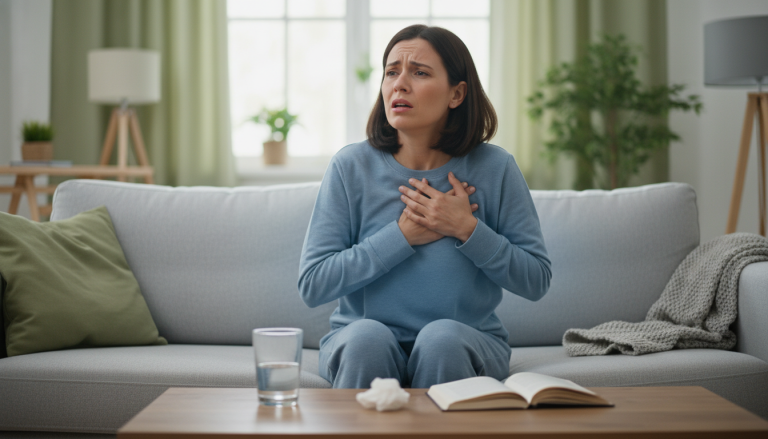
You’re sitting there minding your own business and suddenly it feels like you can’t quite get a full breath in. You try again. Big inhale. Your chest lifts, but something about it feels incomplete or stuck. Instant brain response: “Is this okay or am I about to die?”
This guide walks through what “trouble taking a deep breath” can mean, common causes (including non-scary ones), when it might be okay to monitor, and when it’s not okay and you need help as soon as possible.
First: What Does “Trouble Taking a Deep Breath” Actually Mean?
People describe this feeling in a bunch of different ways:
- “I can breathe, but it doesn’t feel satisfying.”
- “I keep needing to yawn to get a full breath.”
- “My chest feels tight when I try to breathe in deeply.”
- “I can breathe, but it feels like I have to work harder than usual.”
This is different from severe shortness of breath, where you:
- Can barely speak in full sentences
- Feel like you’re suffocating or drowning in air
- Are gasping or struggling just to move air in and out
That severe, obvious shortness of breath is an emergency — do not wait and see.
Quick takeaway: Mild, weird, or unsatisfying breaths are common and not always dangerous, but any feeling that you can’t get enough air at all is not okay.
When Trouble Taking a Deep Breath Might Be Okay (But Still Annoying)
There are several non–life-threatening reasons you might suddenly feel like you can’t get a good breath in.
1. Anxiety and Stress
If your breathing issue showed up out of nowhere during a stressful moment, in a crowd, at work, or while doom-scrolling scary health content, anxiety may be a big player.
Anxiety can cause:
- Faster, shallow breathing from your chest instead of your belly
- Tight chest muscles and throat tension
- A constant urge to “sigh” or “yawn” to feel like you’ve completed a breath
Panic attacks can cause very intense shortness of breath, chest discomfort, pounding heart, shaking, and a strong sense of doom. The physical symptoms are real — they’re just driven by your nervous system, not by your lungs suddenly failing.
Red flag here: Anxiety and panic are common, but it’s important not to automatically blame anxiety if you’ve never been checked out, your symptoms are new, or they feel different from past episodes.
Mini example:
- You’re watching a stressful video, heart starts racing, you suddenly notice your breathing feels weird, and then it feels like you can’t get a deep breath. You stand up, walk around, breathe slowly, distract yourself — within 10–30 minutes it eases up. That pattern is often anxiety-related.
Quick takeaway: Anxiety can absolutely make breathing feel difficult, even when your lungs and heart are fine — but new or severe symptoms still deserve medical evaluation.
2. Poor Posture and “Computer-Slouch Lungs”
If you spend half your life bent over a laptop or phone, your posture can literally restrict how well your lungs expand.
Slouching can:
- Compress your chest and diaphragm
- Make it harder to take a full breath
- Make you notice your breathing more because it feels tight or limited
Try this tiny experiment:
- Slouch as hard as you can in your chair.
- Try to take a deep breath.
- Now sit up straight, shoulders relaxed, chest open. Breathe again.
If sitting or standing tall, rolling your shoulders back, or lying flat in a comfortable position makes breathing feel easier within a few minutes, posture may be part of the problem.
Quick takeaway: Sometimes your lungs are fine — your chair is the problem.
3. Mild Respiratory Infections, Allergies, or Irritation
If you:
- Recently had a cold, flu, or COVID-19
- Have asthma, seasonal allergies, or nasal congestion
- Were around smoke, dust, or strong fumes
Your airways might be a little irritated or narrowed, making deep breaths feel tight or wheezy.
Common non-emergency signs include:
- Cough that’s annoying but not extreme
- A bit of chest tightness or wheezing, especially with exertion
- Mild shortness of breath that comes and goes
- You can still walk around, talk in full sentences, and do light activities
Even if it’s “just” a virus, listen to your body. If breathing is getting worse instead of better over a few days, that’s a reason to check in with a professional.
Quick takeaway: Mild infections and allergies can make deep breathing feel off, but worsening symptoms or trouble breathing at rest are not okay.
4. Muscle Tension and Chest Wall Pain
Sometimes the lungs are fine, but the muscles and joints around them aren’t.
You may notice:
- Sharp or sore pain when you take a deep breath or twist
- Pain in the ribs or upper back
- Recent heavy lifting, new workout, or weird sleeping position
This can be from strained muscles or something called costochondritis (inflammation of the cartilage where ribs meet the breastbone). It can make deep breaths painful or uncomfortable but doesn’t usually mean your lungs or heart are failing.
Heads up: Because chest pain can also be heart-related, don’t self-diagnose. New, unexplained, or intense chest pain — especially with shortness of breath — should be evaluated.
Quick takeaway: Sore muscles can make deep breathing hurt, but chest pain plus shortness of breath always deserves caution.
When Trouble Taking a Deep Breath Is Not Okay
Here’s the part you probably really want: the “Is this an emergency?” checklist.
Call your local emergency number or seek emergency care right now if your breathing trouble comes with any of these:
- You can’t speak in full sentences because of shortness of breath
- Chest pain or pressure, especially if it’s crushing, heavy, or spreading to your arm, jaw, neck, or back
- Bluish lips or face
- Confusion, extreme tiredness, or feeling like you might pass out
- Sudden severe shortness of breath at rest
- Fast breathing with a very fast heart rate, sweating, or feeling like something is very wrong
- You have asthma or COPD and your inhaler isn’t helping like it normally does
- You recently had surgery, a long trip, or are on bed rest and suddenly develop shortness of breath or chest pain (could signal a blood clot in the lungs)
Those combinations are not a “wait and see” situation.
If your symptoms are milder but you’re unsure, urgent care or a same-day clinic is usually better than sitting at home panicking and searching online.
Quick takeaway: If you’re asking yourself “Should I be in the ER right now?” and your gut says “maybe,” it’s usually safer to go.
Common Causes Doctors Think About
Only a medical professional who knows your history and can examine you can sort out what’s actually going on. But here are some of the more frequent categories they consider when someone reports trouble taking a deep breath.
Note: This isn’t the full list, just some common categories.
1. Lung-Related Causes
- Asthma – Airways tighten and swell, causing wheezing, chest tightness, and shortness of breath. Often triggered by exercise, allergens, cold air, or illness.
- Infections (like pneumonia, COVID-19, or bronchitis) – Can inflame airways and lung tissue; deeper breaths might feel heavy, painful, or limited.
- Pulmonary embolism (blood clot in the lungs) – Typically causes sudden shortness of breath, chest pain (often sharp, worse with deep breaths), fast heart rate, and sometimes coughing up blood. This is an emergency.
2. Heart-Related Causes
Your heart and lungs are a team. If the heart isn’t pumping well, your body may sense it as breathing trouble.
Doctors may think about:
- Heart attacks
- Heart failure
- Abnormal heart rhythms
Usually there are other clues: chest pain or pressure, swelling in legs, waking up gasping at night, or a history of heart disease or risk factors.
3. Anxiety and Panic Disorders
Shortness of breath from anxiety is a recognized medical issue and it feels just as real as lung disease in the moment. But because heart and lung problems can also feel similar, a proper evaluation is important, especially the first time.
4. Anemia and Other Whole-Body Issues
If your blood is low on red cells or hemoglobin (anemia), your body may feel “air hungry” or tired more quickly, especially when you’re active. Thyroid problems, deconditioning (being very out of shape), and certain medications can also play a role.
Quick takeaway: Many different systems can create a “can’t get a deep breath” feeling — which is why guessing at home isn’t ideal.
Simple Self-Checks You Can Do Right Now
These are not medical tests and do not replace seeing a doctor — but they can help you notice patterns.
1. Check Your Breathing Position
- Sit or stand tall, shoulders relaxed
- Put one hand on your chest and one on your belly
- Breathe in slowly through your nose for 4 seconds, aiming to expand your belly more than your chest
- Exhale gently through your mouth for 6 seconds
If breathing feels easier this way after a few minutes, anxiety, posture, or shallow chest breathing may be part of what you’re feeling.
2. Notice Your Activity Tolerance
Ask yourself:
- Can I walk across the room and talk in full sentences?
- Can I climb a flight of stairs — yes, maybe a little winded, but not gasping?
If you’re suddenly much more short of breath than usual with light activity, or getting worse over hours or days, that’s a sign to seek care.
3. Track Timing and Triggers
Over a day or two (if your symptoms are mild and not clearly an emergency), jot down:
- When does the breathing trouble show up? (At rest, only when active, at night?)
- What were you doing right before? (Eating, lying down, exercising, reading stressful news?)
- Any other symptoms? (Heart racing, dizziness, cough, fever, chest pain, wheeze?)
This makes your visit with a doctor much more productive.
Quick takeaway: You can’t self-diagnose at home, but you can collect useful clues for your clinician.
What to Do If Your Symptoms Are Mild and You’re Still Worried
If your breathing trouble is mild, comes and goes, and has no scary red flags (like severe chest pain, blue lips, confusion, or inability to speak in full sentences), here are some reasonable next steps while you arrange a check-in with a professional:
- Call your primary care provider or a nurse line. Describe your symptoms, how long they’ve been happening, and any other issues (like chest pain, fever, cough, leg swelling, recent travel, pregnancy, or medical conditions).
- Consider urgent care if you can’t be seen quickly. This is especially important if this is new, worse than usual, or you have conditions like asthma, heart disease, or a history of clots.
- Practice gentle breathing and grounding. Try slow belly breathing, stretching your chest and shoulders, and taking breaks from screens and stressful content.
- Avoid obvious irritants. Stay away from smoke, heavy fragrances, dusty environments, or intense exercise until you’ve been evaluated.
- Don’t self-medicate heavily. Overusing someone else’s inhaler, taking random supplements, or using large doses of sedating medications isn’t safe.
Quick takeaway: Mild symptoms with no red flags still deserve attention — just usually not an ambulance. Reach out early rather than waiting until you feel awful.
So… Is It Okay That I Can’t Take a Deep Breath Right Now?
Sometimes yes: If your symptoms are mild, clearly tied to anxiety or posture, come and go, and you have zero red-flag symptoms, it may not be urgent — but you should still mention it to a healthcare professional.
Sometimes no: If breathing feels severely difficult, painful, or clearly worse than your usual, or if it’s paired with chest pain, confusion, bluish lips, or you simply feel like something is really wrong, that is not okay. Get emergency help.
Your body is not being dramatic for fun. If your breathing feels off and it scares you, that’s worth taking seriously — whether the final answer turns out to be your heart, your anxiety, or your posture and your office chair.
Bottom line: Err on the side of getting checked. You’re not overreacting for wanting to breathe comfortably.
Sources
- Mayo Clinic – Shortness of breath: Causes and when to see a doctor
https://www.mayoclinic.org/symptoms/shortness-of-breath/basics/when-to-see-doctor/sym-20050890 - Mayo Clinic – Anxiety disorders
https://www.mayoclinic.org/diseases-conditions/anxiety/symptoms-causes/syc-20350961 - Cleveland Clinic – Dyspnea (Shortness of Breath)
https://my.clevelandclinic.org/health/symptoms/16943-dyspnea - Cleveland Clinic – Asthma: Symptoms and Causes
https://my.clevelandclinic.org/health/diseases/6424-asthma - MedlinePlus – Pulmonary embolism
https://medlineplus.gov/pulmonaryembolism.html - CDC – COVID-19 Symptoms and Emergency Warning Signs
https://www.cdc.gov/coronavirus/2019-ncov/symptoms-testing/symptoms.html - Johns Hopkins Medicine – Shortness of Breath
https://www.hopkinsmedicine.org/health/conditions-and-diseases/shortness-of-breath
Leave a Reply