
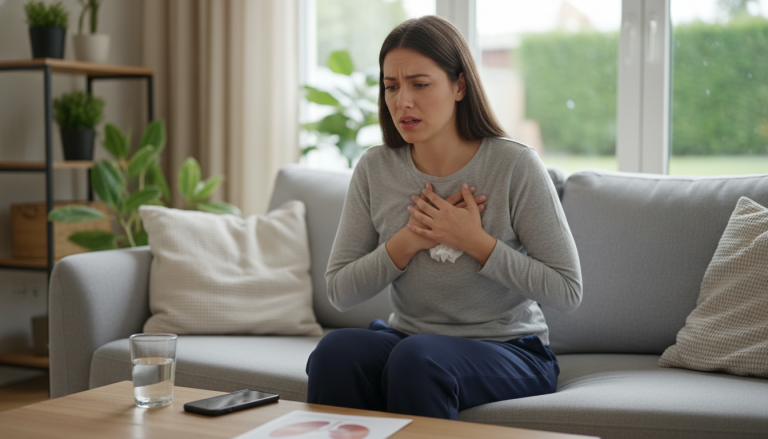
Shortness of Breath: What’s Normal, What’s Not, and What to Do
Disclaimer: This article is for general information only and isn’t medical advice or a diagnosis. If you have severe symptoms or think it may be an emergency, call your local emergency number.
You’re suddenly aware of every breath. Your chest feels tight, air feels thin, and your brain is whispering, “Is this normal or am I dying?”
Shortness of breath right now can be anything from completely harmless to a medical emergency. The trick is knowing which is which and what to do next.
This guide walks you through:
- Common normal-ish reasons you might feel short of breath
- Red flags that mean “stop reading and go get help”
- How to tell anxiety vs. something physical
- Simple steps you can try right now while you decide what to do
First: When Is Shortness of Breath Not Normal and Needs Urgent Help?
If your shortness of breath is happening right now and any of the following are true, you should seek emergency care immediately (call 911 in the U.S.):
- You are struggling to speak full sentences without gasping.
- You feel like you’re choking or can’t get air in at all.
- You have chest pain or pressure, especially if it’s crushing, heavy, or spreading to your arm, jaw, back, or neck.
- You feel faint, confused, or extremely weak.
- Your lips, face, or fingertips look blue or gray.
- You have severe wheezing or a very high-pitched sound when you breathe.
- You have a known heart or lung condition and this feels suddenly worse or very different.
- Shortness of breath came on very suddenly with sharp chest pain, especially on one side (possible blood clot or collapsed lung).
These kinds of symptoms can signal heart attack, a serious asthma attack, blood clot in the lung (pulmonary embolism), severe allergic reaction, or pneumonia — all things emergency doctors want you to come in for.
Takeaway: If you’re reading this while thinking, “I really cannot breathe normally,” err on the side of calling emergency services now, not later.
“Is My Shortness of Breath Normal?” Questions to Ask Yourself
If you’re not in obvious, severe distress, you can check in with a few quick questions:
- Did something specific trigger this?
- Just ran up stairs?
- Just had a panic or stress spike?
- Just inhaled smoke, dust, or an irritant?
- How fast did it come on?
- Sudden, out of nowhere at rest = more concerning.
- Gradual, with an obvious reason (exercise, anxiety, nasal congestion) = often less concerning.
- What else is happening?
- Fever, cough, chest pain, leg swelling, rash, dizziness?
- Or mostly a sense of air hunger and racing thoughts?
- Does changing position help?
- Lying flat makes it worse but sitting up helps: can be heart or lung related in some people.
- Has this happened before?
- Known asthma, allergies, or panic attacks?
Your answers don’t give a diagnosis, but they help sort: “probably okay but get checked soon” vs. “this could be serious.”
Takeaway: Notice patterns — what triggered it, how fast it started, and what else your body is doing.
Common Causes of Shortness of Breath That Are Often Benign
These aren’t “nothing,” but they’re often not immediately dangerous. Still, any new or unexplained shortness of breath deserves a conversation with a healthcare professional.
1. You Just Demanded a Lot From Your Body (Exercise, Stairs, Heat)
You sprinted, carried groceries up three flights, or tried a workout you were not warmed up for. In those moments, breathing faster and feeling winded can be completely normal, especially if:
- It improves quickly when you rest (within a few minutes).
- You don’t have chest pain, severe dizziness, or fainting.
- You can talk again after a short recovery.
Over time, better fitness usually means less of that “I’m dying on this hill” feeling.
Takeaway: Getting winded with exertion can be normal as long as it settles quickly and isn’t wildly out of proportion to the activity.
2. Anxiety, Panic Attacks, and Hyperventilation
Anxiety can make your chest feel tight, your breathing weird, and your brain certain something terrible is happening.
Typical anxiety-related shortness of breath might include:
- Fast, shallow breathing, sometimes feeling like you can’t get a deep breath
- Tingling in fingers or around the mouth
- Feeling of “air hunger” but oxygen levels are usually normal
- Racing heart, trembling, sweating, sense of doom
During panic or hyperventilation, your breathing pattern changes so quickly that it messes with the balance of oxygen and carbon dioxide in your blood, which can cause chest tightness and dizziness.
Clues it may be anxiety-related:
- It started during stress, fear, or intense worry, even if subconscious.
- You’ve had panic attacks or anxiety before.
- Medical tests in the past for similar episodes were normal.
- Slow breathing, grounding, or distraction helps.
Anxiety and serious physical problems can feel similar, and they can even coexist. So if something feels different, worse, or new, it’s still worth a proper medical evaluation.
Takeaway: Anxiety can cause shortness of breath. But don’t automatically blame anxiety for every new or intense episode — get checked if you’re unsure.
3. Mild Respiratory Infections (Colds, Mild COVID, Flu, Bronchitis)
If you’ve had cough, runny nose or congestion, sore throat, or low-grade fever or body aches, then a viral infection might be the reason your breathing feels off.
You might notice:
- Shortness of breath when walking or talking more
- Mild chest discomfort from coughing
- Wheezing if you’re prone to asthma or bronchospasm
This can still be serious (for example, COVID-19, flu, or pneumonia) if:
- Breathing gets progressively worse
- You have high fever, chest pain, or confusion
- You’re in a higher risk group (older age, chronic disease, pregnancy, lower immunity)
Takeaway: With infections, worsening shortness of breath — especially over hours to days — means it’s time to call a doctor or urgent care, not wait it out indefinitely.
4. Asthma or Reactive Airways
Asthma symptoms can include:
- Tight chest
- Shortness of breath
- Cough (sometimes the main symptom)
- Wheezing (a whistling sound when breathing out)
Triggers can be:
- Exercise
- Cold air
- Allergies (pollen, pets, dust mites)
- Smoke or strong smells
- Respiratory infections
If you have known asthma, shortness of breath that improves with your quick-relief inhaler (as prescribed) and settles again may be within the pattern you and your clinician already manage.
Red flags for asthma that needs urgent or emergency care:
- Inhaler is not helping or helping less than usual
- You’re using quick-relief inhaler more frequently than your plan allows
- You’re struggling to speak or your chest feels like it “won’t move”
Takeaway: Asthma-type shortness of breath is common and treatable, but if your usual tools aren’t working, that becomes an emergency question.
Causes That Are Not Normal and Need Prompt Medical Attention
Some serious conditions can start with shortness of breath that feels similar to more benign causes. That’s what makes this symptom tricky.
Below are some important possibilities where you should talk to a clinician urgently (same day) or go to urgent care or the emergency department if symptoms are moderate to severe.
1. Heart Problems (Including Heart Attack and Heart Failure)
Heart-related shortness of breath can show up as:
- Trouble breathing with minimal exertion or when lying down
- Waking up suddenly at night gasping for air
- Shortness of breath with chest pain or pressure
- Swelling in legs or ankles, sudden weight gain from fluid
A heart attack can show up as:
- Chest pain or discomfort (pressure, squeezing, fullness)
- Pain spreading to arm, jaw, neck, or back
- Shortness of breath, sweating, nausea, or lightheadedness
Women, older adults, and people with diabetes may have less classic chest pain and more subtle symptoms like shortness of breath, fatigue, or nausea.
Takeaway: Shortness of breath plus chest pain, jaw or arm pain, sweating, or nausea deserves immediate emergency care.
2. Blood Clot in the Lung (Pulmonary Embolism)
This is a medical emergency.
Clues include:
- Sudden, unexplained shortness of breath, often at rest
- Sharp chest pain that may worsen with deep breaths
- Cough (sometimes with blood)
- Fast heart rate
- A recent long trip, surgery, immobilization, pregnancy, or a history of clots
- One leg more swollen, red, or painful than the other (possible deep vein clot)
Takeaway: Sudden shortness of breath with sharp chest pain, particularly with risk factors for clots, means you should go to the emergency department now, not wait to see if it goes away.
3. Pneumonia or Serious Lung Infection
This is more likely if you have:
- Fever and chills
- Cough with phlegm (or a very dry, hacking cough)
- Chest pain that worsens when breathing deeply
- Feeling unusually tired and unwell
Some people (older adults, people with weaker immune systems) can have milder or atypical symptoms, so any noticeable worsening in breathing after a cold or flu-like illness should be taken seriously.
Takeaway: Shortness of breath that shows up with fever and a bad cough needs a medical evaluation; pneumonia can be serious but is treatable.
4. COPD or Other Chronic Lung Diseases
If you smoke, used to smoke, or have chronic lung issues, you may be dealing with chronic obstructive pulmonary disease (COPD), chronic bronchitis, or emphysema.
Shortness of breath can slowly worsen over time, and flare-ups can be triggered by infections or irritants.
Signs of a flare that needs prompt care:
- Your usual inhalers or treatments are less effective
- You’re more breathless with normal activities
- Changes in your mucus (more, thicker, different color)
Takeaway: If you have chronic lung disease and your breathing is noticeably worse than your “normal bad,” reach out to your clinician or urgent care.
Anxiety vs. Real Emergency: How Can You Tell?
You cannot always tell on your own.
Anxiety can:
- Make your breathing feel tight and shallow
- Make your heart race
- Cause chest discomfort
Emergencies can do the same.
A few gentle guidelines (not rules):
- Onset: Panic often ramps up with a trigger (thought, situation, crowd), but heart or lung problems can hit suddenly with no emotional trigger.
- Activity link: If it happens mostly when thinking or worrying about health and not when walking around, anxiety becomes more likely.
- Testing history: If you’ve had thorough work-ups (EKG, chest X-ray, blood tests, maybe echo, and others) that were normal and multiple doctors have suspected anxiety, that pattern matters, but it doesn’t give lifetime immunity from new physical problems.
If you’re asking, “What if I go in and it’s just anxiety?” then you’ll get reassurance and can focus more confidently on treating anxiety. That’s still a win.
Takeaway: When in doubt between anxiety and emergency, it’s safer and completely okay to get checked.
What You Can Do Right Now If You’re Mildly Short of Breath
If symptoms are getting worse, don’t stay in do-it-yourself mode — seek care.
1. Change Your Position
Try:
- Sitting upright with your back supported, feet on the floor.
- Leaning slightly forward with elbows on knees (the “tripod” position).
- If you’re lying down, elevate your head and torso with pillows.
These positions can help your lungs expand more easily and reduce the work of breathing.
2. Pursed-Lip Breathing
This is a simple technique often used in COPD and anxiety:
- Gently breathe in through your nose for about 2 seconds.
- Purse your lips like you’re blowing out a candle.
- Breathe out slowly through your mouth for about 4 seconds.
- Repeat for 1–3 minutes, as comfortable.
This can help you feel more in control of your breathing and sometimes reduce the sense of air hunger.
3. Check for Obvious Triggers
- Move away from smoke, strong odors, or dust.
- If you have asthma and your action plan says to use a quick-relief inhaler, use it exactly as prescribed.
- Loosen tight clothing around your chest or neck.
4. Ground Your Nervous System (If Anxiety Is Likely)
Try a quick grounding exercise:
- Name 5 things you can see
- 4 things you can touch
- 3 things you can hear
- 2 things you can smell
- 1 thing you can taste
Pair that with slower breathing, and sometimes the “I can’t breathe” feeling eases as your nervous system steps down from high alert.
Takeaway: Simple posture changes, pursed-lip breathing, and calming techniques can help with mild episodes, but they are not a substitute for medical care if symptoms are significant or worsening.
When to Call a Doctor vs. Go to the ER
Call 911 or Go to Emergency Right Now If:
- You can’t catch your breath, are gasping, or can’t speak in full sentences.
- You have chest pain or pressure, especially with sweating, nausea, or arm or jaw pain.
- Breathing is rapidly getting worse.
- Your lips, face, or fingertips look blue or gray.
- You feel like you might pass out.
- You have sudden shortness of breath with sharp chest pain, especially with risk factors for blood clots.
Contact Your Doctor or Urgent Care Today or Soon If:
- This is new shortness of breath that you can’t explain.
- You’re more short of breath than usual with daily tasks.
- You have a lingering cough, fever, or chest discomfort.
- You have known heart or lung disease, and your usual baseline is worse.
- You suspect anxiety but haven’t had a proper evaluation yet.
You can ask specifically for help with:
- Ruling out serious causes (heart, lung, blood clots, anemia)
- Getting a plan for asthma or COPD if that’s suspected
- Support for anxiety or panic if that’s the main driver
Takeaway: Use the emergency department for sudden, severe, or rapidly worsening breathing trouble or chest pain. Use clinics or urgent care for new but stable issues and follow-ups.
Final Thoughts: Is This Normal?
Shortness of breath can be:
- Normal: After exertion, during a mild cold, or in a predictable anxiety episode that calms down.
- Needs attention: New, unexplained, recurrent, or slowly worsening.
- An emergency: Sudden, severe, or paired with chest pain, faintness, blue lips, or inability to speak.
If your gut is conflicted, ask yourself, “If my friend described exactly what I’m feeling, would I tell them to get checked?” Then give yourself the same advice.
You don’t need to be 100% sure something is wrong before you seek help. That’s what healthcare professionals are there to figure out.
Sources
- Mayo Clinic – Shortness of Breath (Dyspnea): Symptoms and Causes (symptoms, causes, when to seek care)
https://www.mayoclinic.org/symptoms/shortness-of-breath/basics/definition/sym-20050890 - Mayo Clinic – Heart Attack: Symptoms and Causes (heart-related red flags)
https://www.mayoclinic.org/diseases-conditions/heart-attack/symptoms-causes/syc-20373106 - Cleveland Clinic – Pulmonary Embolism: Symptoms & Treatment (blood clot in lung)
https://my.clevelandclinic.org/health/diseases/17400-pulmonary-embolism - Cleveland Clinic – Asthma: Overview and Management (asthma symptoms and triggers)
https://my.clevelandclinic.org/health/diseases/6425-asthma - MedlinePlus (U.S. National Library of Medicine) – Dyspnea (shortness of breath) (general overview)
https://medlineplus.gov/ency/article/003075.htm - CDC – COVID-19: Symptoms and Emergency Warning Signs (infection-related breathing issues)
https://www.cdc.gov/coronavirus/2019-ncov/symptoms-testing/symptoms.html - American Lung Association – Breathing Exercises: Pursed-Lip Breathing (self-help breathing technique)
https://www.lung.org/lung-health-diseases/wellness/breathing-exercises/pursed-lip-breathing
Leave a Reply