Shortness of Breath Right Now: What It Might Mean and What to Do
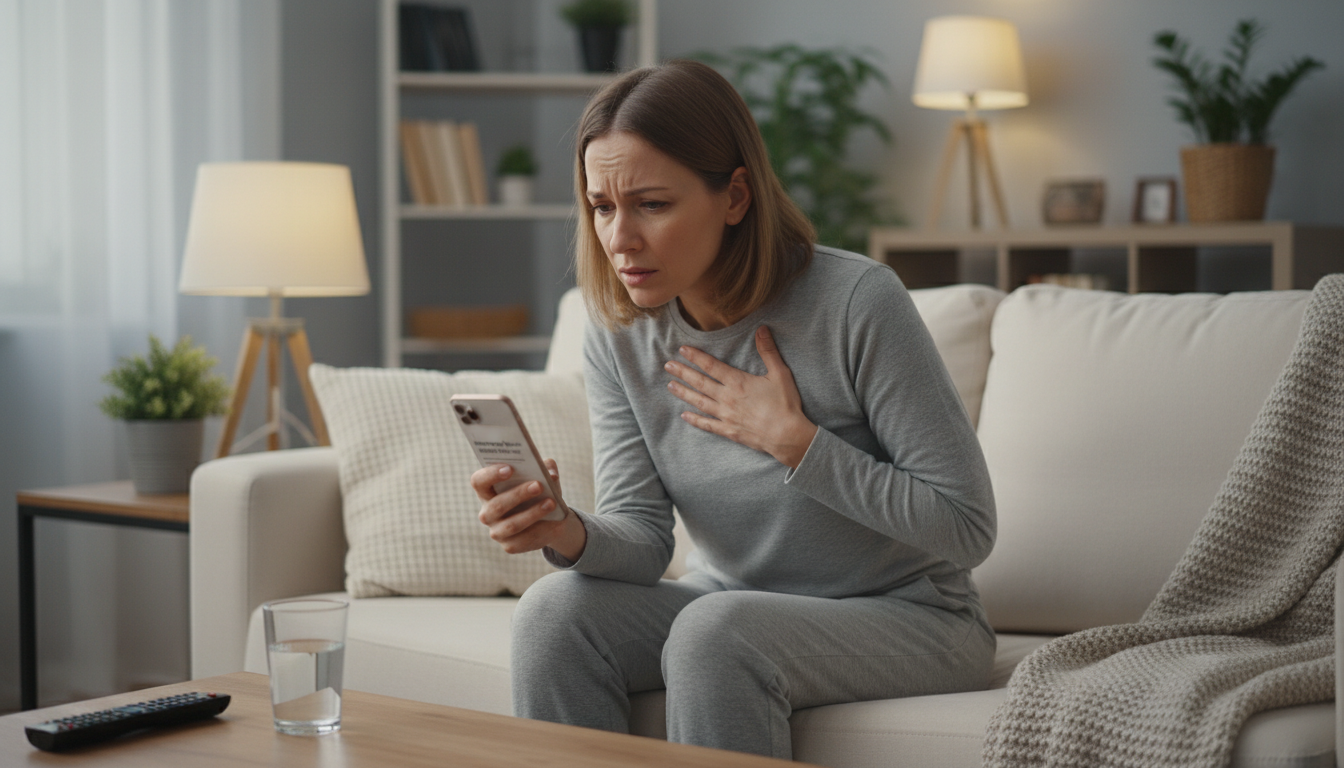
You are short of breath right now and your brain has officially entered Worst Case Scenario Mode.
“Is this anxiety? Asthma? My heart? Am I dying or just stressed and dehydrated?”
Let’s slow things down (literally, your breathing) and walk through what might be going on, what you can safely try at home, and when it is absolutely not the time to Google and chill, but to get medical help right away.
Quick note: This is not a diagnosis and not a replacement for a doctor or 911. If something feels like an emergency, treat it like one.
First: Is This a Medical Emergency Right Now?
Before we talk about anxiety, posture, or breathing exercises, we need to rule out the big, dangerous stuff.
Call 911 or your local emergency number immediately or go to the emergency department if your shortness of breath:
- Started suddenly and severely (especially out of nowhere)
- Comes with chest pain or pressure, especially if it feels like squeezing, heaviness, or burning
- Comes with pain going to your arm, jaw, back, neck, or shoulder
- Is paired with blue or gray lips, face, or fingernails
- Is making it hard to speak full sentences
- Happens with confusion, fainting, or extreme weakness
- Is after a choking episode or you think something is stuck in your airway
- Follows a serious allergic reaction (hives, swelling of face or tongue, wheezing, trouble swallowing)
- Comes with one-sided leg swelling or pain, recent surgery, long travel, or a history of blood clots
These can be signs of things like heart attack, pulmonary embolism (blood clot in the lungs), severe asthma attack, anaphylaxis, or pneumonia, conditions that need urgent, in-person care, not a blog.
Takeaway: If your gut is screaming “this is not okay,” act on that. Better to be checked and reassured than ignore a true emergency.
What Do We Mean by “Shortness of Breath”? (You Are Not Imagining It)
People describe shortness of breath (also called dyspnea) in a lot of different ways:
- “I can’t get a full deep breath.”
- “I feel like I’m breathing fast but still not satisfied.”
- “My chest feels tight or heavy.”
- “I feel like I’m suffocating even though I’m breathing.”
All of those count. Sometimes tests (like oxygen level or chest X-ray) look okay, but the sensation is still very real.
Shortness of breath can come from:
- Your lungs (airflow, air sacs, or airways)
- Your heart (pumping issues, blood flow)
- Your blood (anemia, oxygen-carrying problems)
- Your nervous system and muscles (how you control breathing)
- Or your stress and anxiety system, which can change breathing patterns
Takeaway: Just because your oxygen is “normal” does not mean you are not short of breath. Sensation and numbers do not always match.
Common Causes of Sudden Shortness of Breath (That Are Not Always Obvious)
Let’s walk through some categories. This is not exhaustive, but it hits many common possibilities.
1. Breathing and Lung Causes
These are some of the more familiar culprits.
Asthma or reactive airways
- Tight, inflamed airways make it harder to move air in and out.
- You might notice wheezing, coughing (especially at night or with exercise), or a history of asthma.
- Triggers include cold air, exercise, smoke, perfumes, and infections.
Infections (like bronchitis or pneumonia)
- Shortness of breath with cough, fever, chills, or chest discomfort might signal infection.
- Pneumonia can cause sharp pain when breathing in, plus fatigue and feeling generally unwell.
COPD or chronic lung disease
- More common in people with long-term smoking history or prior lung damage.
- Shortness of breath can be worse with exertion, colds, or air pollution.
Pulmonary embolism (blood clot in the lungs)
- Sudden shortness of breath, often with sharp chest pain, rapid heart rate, or coughing up blood.
- Risk factors include recent surgery, long flights or car rides, pregnancy, birth control or hormones, prior clots, and cancer.
- This is an emergency.
Takeaway: Lung causes often show up with cough, wheeze, chest pain, or risk factors like smoking, recent illness, or clots.
2. Heart-Related Causes
Your heart and lungs are a team. If the heart struggles, your breathing can feel off.
Heart attack
- Chest pressure, squeezing, or heaviness, often with shortness of breath, nausea, sweating, or feeling “off.”
- Symptoms can be more subtle in women and people with diabetes. Sometimes it is mostly shortness of breath and fatigue.
- This is always an emergency.
Heart failure or fluid backup
- Breathlessness that is worse lying flat or wakes you up gasping at night.
- Swelling in legs or ankles, rapid weight gain from fluid, and fatigue.
Abnormal heart rhythms (arrhythmias)
- Racing, fluttering, or irregular heartbeat plus feeling winded or lightheaded.
Takeaway: If your shortness of breath is tied to chest pain, palpitations, leg swelling, or is worse when lying down, your heart deserves a closer look as soon as possible.
3. Other Physical Causes
Anemia (low red blood cell count)
- Your blood carries less oxygen, so you feel winded more easily.
- Often comes with fatigue, paleness, or feeling weak.
Deconditioning (low fitness)
- If you have not moved much recently (illness, long sedentary period), even basic activity can feel breathless.
Obesity and posture
- Extra weight around the chest or abdomen or very slumped posture can make it harder to expand your lungs fully.
Pain, especially in the chest or ribs
- If it hurts to breathe deeply, you may take shallow breaths, which can feel like “I can’t get enough air.”
Takeaway: Sometimes the “why am I so out of breath” answer is part blood, part muscle, part posture and lifestyle, not just lungs.
4. Anxiety, Panic, and “I Can’t Take a Deep Breath”
Anxiety can absolutely cause real, intense shortness of breath, even when your lungs and heart are structurally fine.
During anxiety or panic:
- Your body shifts into fight-or-flight mode.
- Breathing becomes faster and more shallow, often from the upper chest instead of the belly.
- You might feel like you cannot get a satisfying breath, so you keep trying to “yawn” or “top off” a deep breath.
- This can lead to over-breathing (hyperventilation), which lowers carbon dioxide levels in your blood and makes you feel:
- Dizzy or lightheaded
- Tingly in hands, feet, or around the mouth
- Even more breathless
A classic scenario:
You are scrolling, feel a weird sensation in your chest, start paying close attention to every breath, notice it feels wrong, heart rate jumps, breathing speeds up, and within minutes you are convinced something catastrophic is happening.
That spiral is common, and it is exhausting.
Takeaway: Anxiety-related shortness of breath is not “fake.” It is your nervous system cranking the dial too high. The key is to calm the system, not just chase the perfect breath.
Quick At-Home Check-In: What Is Going On With You Right Now?
This is not a substitute for a doctor, but it can help you organize what you are feeling.
Ask yourself:
- When did this start?
- Sudden (seconds to minutes) vs. gradual (days to weeks)?
- What were you doing?
- At rest, asleep, walking up stairs, after a meal, during stress?
- Any other symptoms?
- Chest pain, cough, fever, wheeze, palpitations, swelling, dizziness, tingly fingers?
- Any recent events?
- COVID or other infection, surgery, long travel, big life stress, new meds, new exercise routine?
- Does body position change it?
- Worse lying flat? Better sitting up? Worse with certain movements?
If you are answering “yes” to multiple red-flag items (severe pain, blue lips, confusion, cannot talk in full sentences, sudden onset with clot risk), err on the side of emergency care now.
Takeaway: A quick mental checklist can help you decide whether you are in “get checked soon” territory or “call 911 right this second” territory.
If You Are Not in Immediate Danger: Simple Steps to Try Right Now
If you have screened for obvious red flags and do not think this is a 911 situation, these techniques can sometimes ease shortness of breath, especially if anxiety or breathing pattern is playing a big role.
1. Change Your Body Position
Try one of these for 2 to 5 minutes:
- Sit and lean slightly forward, resting your forearms on your thighs or a table. Let your shoulders drop.
- Stand and lean forward with your hands on a counter or back of a chair.
- Side-lying with your head elevated on pillows, especially if one lung or side of the chest feels worse.
These positions can help your diaphragm work more efficiently and reduce tension in your neck and upper chest muscles.
Takeaway: Sometimes a small change in angle beats many minutes of panicked overthinking.
2. Try a Gentle Breathing Reset (Not a Giant Gasp)
Avoid big dramatic inhales. Instead, go for slow, controlled, smaller breaths.
Exercise: 4–6 Breathing (or whatever number feels doable)
- Gently exhale through your mouth like you are fogging a mirror.
- Inhale through your nose for a count of 4 (or 3 if 4 feels like too much).
- Pause for 1–2 seconds.
- Exhale through pursed lips (like blowing out a candle slowly) for a count of 6.
- Repeat for 1–3 minutes.
This can slow your breathing and heart rate, ease hyperventilation, and give your brain something concrete to focus on instead of “What if this is it?”
If counting stresses you out, just think: gentle in, slow out.
Takeaway: The goal is not the biggest breath, it is the calmest rhythm.
3. Relax the Muscles That Help You Breathe
Your neck, shoulders, and upper back can clamp down during stress and make breathing feel restricted.
Try this:
- Shrug your shoulders up toward your ears, hold 3 seconds, then drop.
- Slowly roll your shoulders backward 5–10 times.
- Gently stretch your chest by clasping hands behind your back (or just pulling shoulders back) and opening your chest.
Even a small release of tension can make your chest feel less “locked.”
Takeaway: Tight muscles can mimic tight lungs. Loosen the frame around your lungs and see what changes.
4. Zoom Out From the Symptom Mentally
When you obsess over each breath, everything starts to feel wrong.
Try a 60–90 second experiment:
- Name 5 things you can see.
- 4 things you can feel (chair under you, clothes on skin).
- 3 things you can hear.
- 2 things you can smell (or like the smell of).
- 1 thing you are grateful for or looking forward to.
This grounding exercise does not fix a physical problem, but if anxiety is cranking your fight-or-flight system, it can take the edge off so you can think clearly and decide what to do next.
Takeaway: Your breathing is one signal. Zooming out lets you see the whole dashboard, not just the red warning light.
When to See a Doctor (Even If It Is Not 911-Level)
You should schedule urgent or prompt medical care (same day or next available) if:
- This is new shortness of breath and you have never been evaluated for it.
- It is getting worse over days to weeks.
- It keeps happening with mild activity, like walking across a room or climbing a single flight of stairs.
- You have had COVID or another infection recently, and breathing still feels off.
- You have conditions like asthma, COPD, heart disease, or anemia and your usual meds or coping strategies are not working as well.
- You are unsure whether what you are feeling is from anxiety or something medical.
A clinician may:
- Check vital signs (heart rate, blood pressure, oxygen level).
- Listen to your heart and lungs.
- Order blood tests, chest X-ray, ECG (heart tracing), or other imaging.
- Talk through stress, panic, or hyperventilation if those seem likely.
Takeaway: If your body keeps sending the same “I can’t breathe right” message, it deserves a real-life listener, not just the internet.
If You Know It Is Anxiety-Linked: Longer-Term Strategies
If you have already been checked out medically and were told your heart and lungs look okay, but the sensation of not getting a deep breath keeps coming back, that is miserable but also common.
Helpful directions to explore with a professional include:
- Breathing retraining with a physical therapist or respiratory therapist
- Cognitive behavioral therapy (CBT) or other talk therapy focused on panic, health anxiety, or trauma
- Regular movement (walking, light cardio) to rebuild trust in your body
- Sleep, caffeine, and stimulant habits (too much caffeine can mimic anxiety symptoms)
- Medication options if anxiety or panic is severe and frequent
Takeaway: “It is just anxiety” should never mean “it does not matter.” It means the treatment path is different but very real.
Key Things to Remember If You Are Short of Breath Right Now
- Emergency signs mean emergency response. Sudden severe breathlessness, chest pain, blue lips, confusion, or trouble speaking full sentences? Call 911.
- Shortness of breath has many causes: lungs, heart, blood, muscles, posture, and your stress system can all play a role.
- Anxiety can make breathing feel broken even with normal tests, but it is still real and treatable.
- Simple steps, such as changing position, slow breathing, relaxing muscles, and grounding your attention, can sometimes help in the moment.
- If this is new, worsening, or unexplained, you should be seen by a medical professional.
For now, if you are safe and stable, pick one small thing from this article to try, maybe the leaning-forward posture or a minute of slow exhales. Then plan your next concrete step: call your doctor, book an appointment, or, if needed, head to urgent or emergency care.
You do not have to figure this out alone, and you do not have to keep white-knuckling every breath.
Leave a Reply