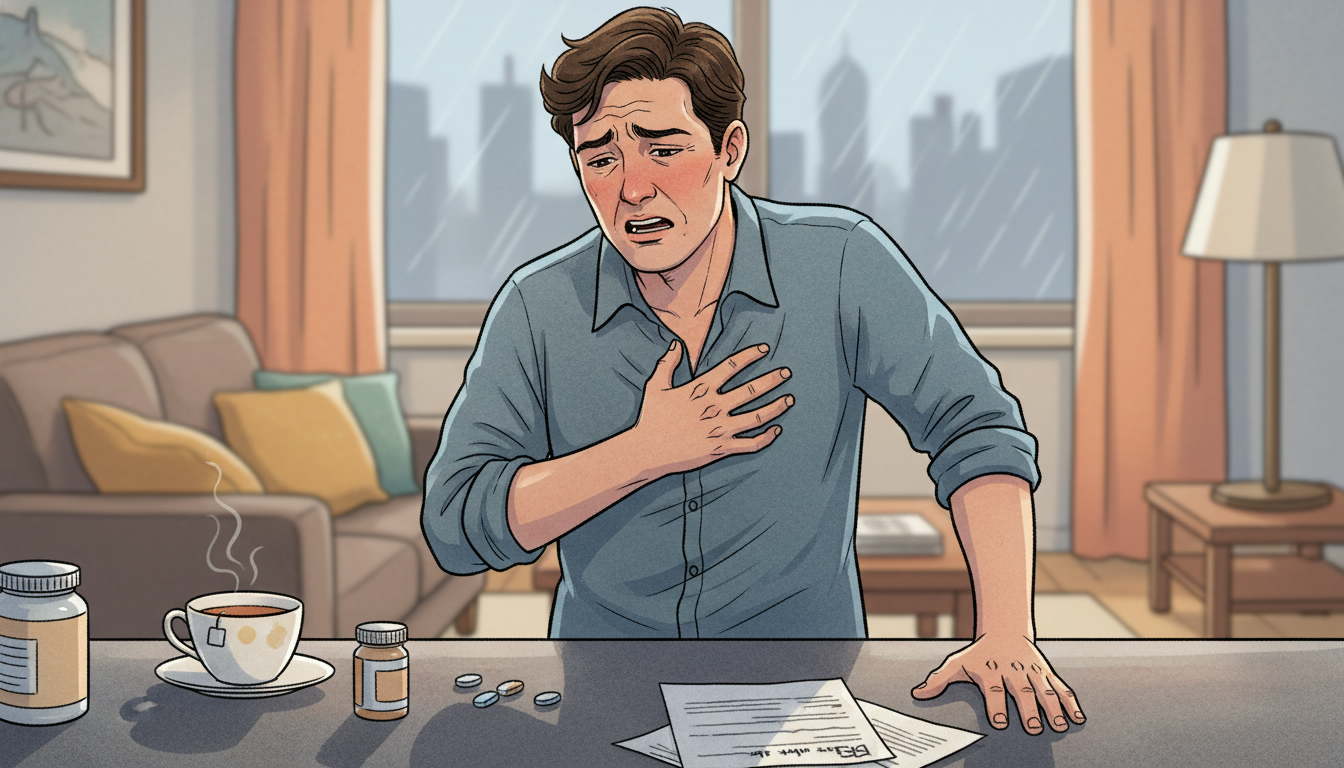
Shortness of Breath Right Now: What to Do
You are short of breath right now, and you are on the internet instead of totally panicking. That is good, but it is important to make sure you are not ignoring anything serious.
Let us walk through what might be going on, when shortness of breath is an emergency, and what you can safely try at home while you decide your next step.
Important: This article is educational, not medical care. If you are worried, trust that feeling and seek real-time help.
First: When to Call 911 or Seek Emergency Care Right Now
Shortness of breath (often called dyspnea) can be anything from “I am out of shape” to “this is life-threatening.” Some red flags are not a wait-and-see situation.
If any of this is happening, stop reading and call 911 or your local emergency number immediately:
- Sudden, severe shortness of breath that came on out of nowhere
- Shortness of breath plus chest pain, pressure, tightness, or pain going to your arm, jaw, back, or neck
- A feeling like you cannot get enough air, even at rest
- Blue or gray lips, face, or fingernails
- Confusion, trouble staying awake, or feeling like you are going to pass out
- Wheezing or choking after you have possibly inhaled food, liquid, or an object
- Rapid breathing plus very fast or irregular heartbeat
- Shortness of breath that started suddenly after:
- A long flight, car ride, or bed rest
- Recent surgery
- Leg swelling or pain
These can be signs of heart attack, pulmonary embolism (blood clot in the lung), severe asthma attack, anaphylaxis (severe allergy), pneumonia, or other emergencies. Major health organizations emphasize not delaying care for these symptoms.
Takeaway: If your gut says “this feels wrong,” act on it. The worst case is you get checked and reassured. That is a win.
Quick Self-Check: How Bad Is Your Shortness of Breath?
While this is not a diagnosis, a quick mental checklist can help you decide how urgent this feels.
Ask yourself:
- Did this come on suddenly or slowly?
- Sudden = more concerning.
- Did it start after something obvious?
- Hard workout? Running to catch a bus? Crying hard? Anxiety trigger? That may point to a more benign cause.
- Can you speak in full sentences?
- If you cannot get more than a few words out without gasping, that is more serious.
- Any chest pain, pressure, or tightness?
- Especially if it feels heavy, crushing, or radiates to arm or jaw.
- Any fever, cough, or mucus?
- Could suggest an infection like bronchitis or pneumonia.
- Any wheezing or whistling sound?
- Could be asthma, COPD, or airway narrowing.
- Any recent travel, surgery, or long period of sitting or lying down?
- Raises concern for a blood clot.
- Any new medications, foods, or insect stings right before this started?
- Think allergic reaction.
If you answer yes to several concerning signs, especially chest pain, collapsing, confusion, or bluish color, that pushes you toward urgent evaluation.
Takeaway: How fast it started, how limited you feel, and what else is going on all matter.
Common (and Not-So-Common) Reasons for Shortness of Breath Right Now
Shortness of breath can come from problems in the lungs and airways, heart and circulation, blood (like anemia), muscles, or even your brain and emotions (anxiety).
Here are some frequent culprits and how they tend to show up.
1. Anxiety or Panic Attack
Your brain can make you feel like you cannot breathe even when your oxygen level is normal.
Typical features:
- Sudden wave of fear, doom, or intense worry
- Fast, shallow breathing; you may feel like you “cannot take a deep breath”
- Racing heart, chest tightness, sweating, shaking
- Tingling in fingers, around the mouth, or toes
Panic symptoms are real and terrifying, but they are typically time-limited and improve with calming and slower breathing.
Red flag: Anxiety and heart or lung issues can look similar. If this is new, feels different from your usual anxiety, or is combined with strong chest pain, do not write it off.
You are scrolling on your phone, read something stressful, and suddenly your heart is pounding, your chest feels tight, and you cannot get a satisfying breath. You feel hot, shaky, and a bit dizzy. Ten to twenty minutes later, after breathing slowly and distraction, it starts to ease.
2. Exercise, Deconditioning, or Being Out of Shape
If you only feel short of breath with exertion (going up stairs, brisk walking, carrying groceries) and it eases quickly when you rest, it could simply be that your body is not used to that level of activity.
Signs it may be fitness-related:
- You can breathe comfortably at rest
- You have been more sedentary lately
- No chest pain, fainting, or severe symptoms
Still, if your exercise tolerance suddenly gets much worse without explanation, a checkup is wise.
3. Asthma or Other Airway Issues
Asthma can cause:
- Wheezing (whistling sound when you breathe out)
- Chest tightness
- Coughing, especially at night or early morning
- Shortness of breath with exercise, cold air, allergens, or infections
If you have been diagnosed with asthma and your inhaler is not helping or you need it more often than usual, that is a reason to call your doctor today and possibly seek urgent care if you are struggling to breathe.
Other airway triggers include respiratory infections, allergies, and irritants like smoke, strong perfumes, or cleaning chemicals.
4. Infections: Bronchitis, Pneumonia, Flu, COVID-19
Breathing can feel harder when your lungs or airways are inflamed or full of mucus.
Symptoms might include:
- Cough (dry or with mucus)
- Fever or chills
- Chest discomfort, especially with deep breaths or coughing
- Feeling unusually tired or weak
With illnesses like pneumonia or COVID-19, shortness of breath that gets worse over a few days, especially with high fever, chest pain, or confusion, can become dangerous. Do not ignore worsening breathing or low oxygen if you have a respiratory infection.
5. Heart-Related Causes
The heart and lungs work together. If the heart is struggling, you may notice:
- Shortness of breath when lying flat, needing extra pillows
- Waking up at night feeling like you are gasping
- Swelling in feet, ankles, or legs
- Fatigue and decreased ability to exercise
Conditions like heart failure, heart valve problems, or coronary artery disease can show up primarily as breathlessness, especially with exertion.
If shortness of breath is new for you, especially if you are older, have high blood pressure, diabetes, high cholesterol, or you smoke or used to smoke, your heart deserves a checkup.
6. Blood Clot in the Lung (Pulmonary Embolism)
This is serious and needs immediate medical attention.
Typical clues can include:
- Sudden shortness of breath
- Sharp chest pain that may worsen when you breathe deeply
- Fast heart rate
- Cough, sometimes with blood
- History of recent surgery, long travel, pregnancy, birth control pills or hormone therapy, cancer, or previous clots
This is one reason doctors emphasize taking new, sudden breathlessness seriously, especially after long immobility.
7. Anemia or Low Oxygen-Carrying Capacity
If your blood is low on red blood cells or hemoglobin, it cannot carry oxygen as well.
You might notice:
- Feeling winded with minimal activity
- Fatigue and weakness
- Looking pale
- Headaches or dizziness
Anemia has many causes and is usually found with a simple blood test.
Takeaway: Shortness of breath is a symptom, not a diagnosis. Many different issues can cause it, some mild and some serious.
What You Can Safely Try Right Now (If No Emergency Red Flags)
If your symptoms feel mild to moderate and you do not have emergency warning signs, you can try a few steps at home while monitoring yourself.
1. Change Your Position
Certain postures can help your lungs and breathing muscles work more efficiently.
Try:
- Sitting leaning forward with your forearms resting on your thighs or a table
- Standing with hands resting on a counter or back of a chair, leaning slightly forward
- Lying on your side with your head elevated on pillows if lying flat worsens it
These positions help your diaphragm move more freely and can ease the work of breathing for many people.
2. Pursed-Lip Breathing
This technique is used in conditions like COPD, but it can also help during anxiety or mild breathlessness.
- Inhale slowly through your nose for about 2 seconds.
- Purse your lips as if you are going to whistle.
- Exhale slowly and gently through your pursed lips for about 4 seconds, or longer than your inhale.
- Repeat for a few minutes.
This helps keep your airways open longer and can reduce the sensation of air hunger.
3. Grounding Yourself If Anxiety Is a Factor
If shortness of breath came on during stress or panic, combining breathing with grounding can help.
Try the 5-4-3-2-1 method:
- Name 5 things you can see
- 4 things you can touch
- 3 things you can hear
- 2 things you can smell
- 1 thing you can taste
Remind yourself: “I have felt this before. It passed. I am doing what I can right now.”
If your symptoms clearly ease as your anxiety decreases, that is helpful information, but do not assume everything is just anxiety if something feels off.
4. Remove Obvious Triggers
- Step away from smoke, strong odors, or chemicals.
- Loosen tight clothing around your chest or abdomen.
- If you use inhalers for asthma or COPD exactly as prescribed, you can use your rescue inhaler. If it is not helping or you are needing it much more than usual, that is a reason to seek prompt care.
Takeaway: Gentle breathing techniques and better positions can take the edge off. They are not a substitute for evaluation if your body is waving red flags.
When to Call a Doctor Today (Non-Emergency but Not Nothing)
You should contact a healthcare provider the same day or within 24 hours if:
- Your shortness of breath is new or clearly worse than your usual
- You had a recent respiratory infection and breathing is getting harder instead of better
- You have a chronic lung or heart condition and your usual medicines are not controlling symptoms
- You are coughing up yellow or green mucus, especially with fever, for more than a few days
- You notice leg swelling, weight gain, or needing more pillows to sleep comfortably
- You are just not sure what is going on and it keeps happening
They may ask about your symptoms and history, listen to your lungs and heart, and order tests like a chest X-ray, EKG, blood tests, or sometimes a CT scan or echocardiogram.
Takeaway: If this is not a one-time, mild issue, it deserves a professional opinion sooner rather than later.
What to Track Before You See a Professional
If you are planning to see or message a doctor, having specific information makes their job a lot easier.
Write down:
- When it started (date and time, if you remember)
- What you were doing right before it began
- Whether it is constant or comes and goes
- What makes it better or worse (lying down, activity, eating, stress, certain environments)
- Any associated symptoms:
- Chest pain or pressure
- Cough, and what the mucus looks like
- Fever or chills
- Swelling in legs or abdomen
- Palpitations, feeling your heart race or skip
- Medications you take, including inhalers, birth control, hormones, and supplements
- Recent travel, surgery, or illnesses
If you have a home pulse oximeter, note your oxygen saturation at rest and after light activity, plus your heart rate. Do not panic over single numbers; trends and how you feel matter.
Takeaway: The more details you bring, the faster you are likely to get answers.
A Few Real-World Scenarios (And What They Might Mean)
These are examples, not a substitute for care, but they can help you frame your own situation.
Scenario 1: “Stairs Are Suddenly Killing Me”
You are 48 and usually manage stairs fine. Over the last two weeks, you have had to pause climbing one flight. You feel a bit breathless but not gasping. There is some ankle swelling at night.
Possible concerns include heart function, anemia, lung issues, or deconditioning.
Good next step: Schedule a doctor’s appointment soon, within days. If it becomes sudden or severe, go to urgent or emergency care.
Scenario 2: “Cannot Catch My Breath, Heart Pounding, Came Out of Nowhere at My Desk”
You are 28, working on a stressful deadline. Suddenly your heart is racing, your chest feels tight, and you feel like you cannot get a deep breath. You feel shaky and tingly. Ten minutes later, with slow breathing and reassurance, symptoms begin to fade.
Possible cause: panic attack or acute anxiety. But if chest pain is intense, crushing, or radiating, or you have never felt this before, emergency evaluation is still the safer move.
Scenario 3: “Short of Breath, Cough, and Fever”
You have had 3 to 4 days of fever, cough, and fatigue. Today, walking across the room leaves you more winded than usual, and your chest hurts when you take a deep breath.
Possible causes include pneumonia, flu, COVID-19, or other respiratory infections.
Good next step: Same-day clinic, urgent care, telehealth, or emergency room depending on how bad it feels. If you are struggling to breathe, turning blue, confused, or chest pain is severe, seek emergency care immediately.
Takeaway: Context such as age, health history, and triggers shapes the level of concern, but severe or rapidly worsening symptoms always win priority.
The Bottom Line: Listen to Your Breath and Your Instincts
If you are searching “shortness of breath right now,” your body got your attention for a reason.
Here is your condensed action plan:
- Scan for red flags. Chest pain, confusion, blue lips or face, severe sudden shortness of breath, or fainting? Call 911.
- Rate how limited you feel. If you cannot speak full sentences or breathe comfortably at rest, seek urgent evaluation.
- Try simple relief techniques if symptoms are mild and no red flags are present: upright positioning, pursed-lip breathing, and calming strategies.
- Arrange a medical visit soon if this is new, recurrent, or getting worse.
- Do not self-diagnose based only on online information, including this article.
You are not overreacting by getting checked. Breathing is one thing you cannot opt out of.
If you are unsure right now whether to go in, a good middle step, if available where you live, is to call a nurse advice line or your doctor’s office and describe your symptoms. When in doubt, err on the side of being seen.
Your lungs and your future self will benefit from taking it seriously.
Leave a Reply