Shortness of Breath and Chest Pressure: What’s Normal, What’s Not, and What to Do
Disclaimer: This article is for general information only and isn’t medical advice or a diagnosis. If you have severe symptoms or think it may be an emergency, call your local emergency number.
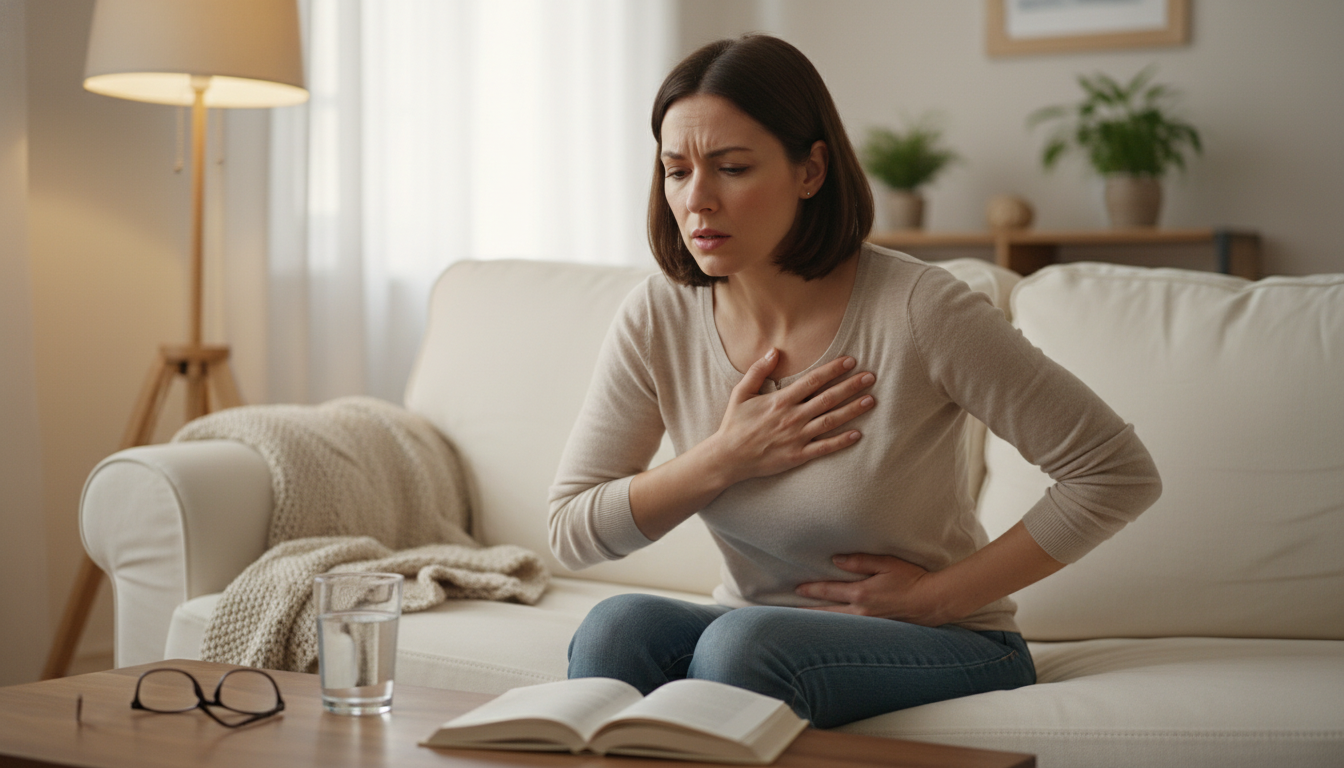
Ever have a moment where you suddenly notice your breathing and think, “Wait… why does my chest feel weird right now?” Cue the mental spiral: heart attack, asthma, anxiety, something horrible?
Let’s talk about shortness of breath and chest pressure right now—what might be normal, what’s not, and what to do next.
First Things First: When Is This an Emergency?
There are times when shortness of breath and chest pressure are absolutely not normal and need urgent medical attention.
Call 911 (or your local emergency number) right away if:
- You have sudden chest pain or pressure that:
- Feels like squeezing, heaviness, or crushing
- Spreads to your arm, neck, jaw, back, or stomach
- You are short of breath at rest and it’s getting worse
- You feel faint, weak, or about to pass out
- You are sweating a lot, nauseated, or vomiting
- Your lips or face look blue or gray
- You have a known heart or lung condition and this feels very different or much worse than usual
These can be signs of a heart attack, dangerous heart rhythm, severe asthma attack, pulmonary embolism (blood clot in the lungs), or other emergencies.
Quick takeaway: If your gut is saying, “Something is really wrong,” don’t overthink it. Treat it as an emergency.
“Is This Normal or Am I Overreacting?”
Shortness of breath (also called dyspnea) and chest pressure can show up in a lot of situations:
- After running upstairs
- During a panic attack
- With a bad cold or COVID
- From heart or lung disease
- From anemia, infections, and more
Sometimes it’s explainable and less concerning. But it’s also a symptom doctors take seriously because it overlaps with true emergencies.
A better question than “Is this normal?” is: “Does this match something clearly harmless, or does it have red flags?”
Quick takeaway: Not all shortness of breath is a crisis, but it’s never something to completely ignore.
Common Non-Emergency Reasons for Shortness of Breath and Chest Pressure
These are situations where symptoms might be uncomfortable but not usually life-threatening. They are still worth checking with a doctor, just not necessarily 911-level.
1. Anxiety or Panic Attacks
Anxiety can feel shockingly physical.
Typical anxiety-related symptoms include:
- Feeling like you can’t get a full breath
- Tight or heavy feeling in the chest
- Fast heart rate or pounding heart
- Tingling in hands, feet, or face
- Sweaty, shaky, or feeling “on edge”
Often, tests like ECG, blood work, and chest X-ray come back normal, and yet the symptoms feel terrifying.
Clues it might be anxiety-related:
- Symptoms come on during stress, arguments, worrying, crowded spaces, driving, etc.
- They peak over minutes, then ease off (like a wave).
- You’ve had similar episodes before and doctors have ruled out major heart or lung problems.
However, anxiety and medical problems can coexist. If it’s new, worse, or different from usual, it’s still worth a medical check.
Mini example: You’re sitting on the couch scrolling on your phone, suddenly notice your breathing, heart starts racing, chest feels tight, and now you’re convinced something’s wrong. Within 20–30 minutes, it calms down without treatment. That pattern often fits panic.
Quick takeaway: Anxiety can cause real chest pressure and shortness of breath, but it’s a diagnosis of exclusion, not a guess you make at home.
2. Overexertion or Deconditioning
If you sprinted up stairs or carried heavy groceries, feeling a bit winded and tight in the chest may be your body saying, “We haven’t trained for this.”
It is more likely to be benign if:
- You were clearly exerting yourself
- Breathing improves within a few minutes of rest
- There is no severe pain, dizziness, or other red-flag symptoms
Mini example: You haven’t exercised in months, then decide to run with a friend. Halfway through, your chest feels tight, you’re huffing, legs are burning—but it settles down after slowing and resting. That can be conditioning, not catastrophe.
Quick takeaway: Being out of shape can mimic more serious issues, but if any chest pain feels deep, heavy, or strange, don’t just blame fitness.
3. Respiratory Infections (Cold, Flu, COVID, Bronchitis)
Shortness of breath and chest pressure are common with:
- COVID-19
- Flu
- Pneumonia
- Bronchitis
You may notice:
- Cough
- Fever or chills
- Mucus or phlegm
- Feeling wiped out or achy
In mild cases, you are a bit short of breath when walking or going upstairs, but can still talk in full sentences and rest helps.
Red flags with infection:
- Rapidly worsening breathing
- High fever that doesn’t improve
- Confusion, chest pain, or blue lips
Those need urgent care.
Quick takeaway: Chest pressure combined with infection symptoms means you should see a doctor promptly, especially if breathing is getting worse.
4. Asthma or Reactive Airways
Asthma is not just wheezing. It can feel like:
- A tight band around your chest
- Hard to fully exhale or inhale
- Coughing, especially at night or with exercise
Common triggers include:
- Allergens (dust, pollen, pets)
- Cold air
- Exercise
- Respiratory infections
If you already have asthma and your inhaler isn’t helping, or you’re using it more often than usual, that’s a sign to call your doctor. If you are really struggling to breathe, it’s an emergency.
Quick takeaway: Chest tightness with wheezing or known asthma should not be ignored. Asthma attacks can escalate quickly.
5. Acid Reflux (GERD) or Stomach Issues
Heartburn can masquerade as heart pain.
You might feel:
- Burning in the chest, especially after eating or lying down
- Sour taste in your mouth
- Pressure or fullness behind the breastbone
GERD can sometimes cause a feeling of shortness of breath or chest tightness, especially when lying flat.
Because heartburn-like symptoms can imitate heart attacks, especially in people over 40 or with risk factors such as smoking, diabetes, high blood pressure, high cholesterol, or a strong family history, doctors often still want to rule out heart issues.
Quick takeaway: Reflux can cause chest pressure, but you never want to assume it’s “just heartburn” for new or intense chest symptoms.
When Shortness of Breath and Chest Pressure Are Not Normal
Some patterns are more concerning, even if you’re young or otherwise healthy.
Call 911 or emergency services if:
- The chest pressure is severe, crushing, or heavy
- It started suddenly at rest or woke you from sleep
- You can’t speak full sentences without gasping
- You feel like you’re drowning when lying flat
- You have chest pain plus one or more of:
- Jaw, arm, back, or neck pain
- Cold sweat
- Nausea or vomiting
- Extreme sense of doom
Contact a doctor the same day (urgent care or your provider) if:
- This is a new symptom for you and not clearly from overexertion
- The shortness of breath or chest pressure keeps coming back
- You notice it’s worse when you lie down, or your legs and ankles are swelling
- You have known conditions like asthma, COPD, heart disease, or blood clots and this episode feels different or worse
Quick takeaway: New, unexplained, or worsening chest symptoms deserve medical attention. It is better to be told “you’re okay” than to wait on something serious.
What You Can Check Right Now (Without Google Spiraling)
Important: If at any point your symptoms feel severe or you’re scared you might pass out, skip this list and call 911.
1. Rate Your Symptoms
On a scale from 0 to 10, rate:
- Chest discomfort: ____ / 10
- Shortness of breath: ____ / 10
Anything 7 or higher, or rapidly increasing, is more concerning.
2. Notice Your Activity
Ask yourself:
- Did this begin during or right after exertion, or did it start at rest?
- Did anything trigger it—stressful conversation, argument, panic, running, lying flat, big meal?
This context helps doctors a lot and may hint at the cause, such as heart, lungs, anxiety, or reflux.
3. Check Basic Signs (If You Can)
If you have tools at home, check:
- Pulse/heart rate: Is it very fast (like more than 120 at rest) or irregular?
- Pulse oximeter: Is your oxygen saturation below about 94% at rest (for most healthy adults)?
- Temperature: Do you have a fever?
Any combination like low oxygen plus shortness of breath plus chest pressure means you should call a doctor urgently or seek emergency care.
4. Try a Grounding Breathing Exercise (If No Red Flags)
If your symptoms seem more anxiety-related (you’ve been cleared medically before, no new risk factors or red flags), you can try:
- Sit upright and place a hand on your belly.
- Inhale gently through your nose for 4 seconds.
- Hold for 1–2 seconds.
- Exhale slowly through pursed lips (like blowing through a straw) for 6–8 seconds.
- Repeat for a few minutes.
If this dramatically improves your symptoms, anxiety may be playing a role, but that doesn’t replace a medical evaluation.
Quick takeaway: Check severity, triggers, and simple signs. If anything feels off the charts or just wrong, err on the side of professional help.
What to Tell a Doctor When You Call or Go In
Whether you go to urgent care, the ER, or a regular appointment, having clear information ready will help you get better care faster.
Be ready to answer:
- When did this start? (Exact time if possible.)
- What were you doing when it began?
- What does it feel like? (pressure, burning, sharp, tight, crushing)
- Where is it? Does it move anywhere (jaw, arm, back)?
- What makes it better or worse? (lying down, walking, deep breaths, eating)
- Any other symptoms? (cough, fever, nausea, sweating, palpitations, swelling)
- Your history and meds:
- Heart disease, high blood pressure, high cholesterol
- Asthma, COPD, blood clots, smoking or vaping
- Diabetes, kidney disease
- Current medications and any birth control or hormone therapy
Quick takeaway: The more specific you can be, the faster doctors can rule in or out serious causes.
“But I’ve Had This Before and They Said It Was Nothing…”
Many people go to the ER, have tests, are told their heart looks fine, and are told it may be anxiety or nonspecific chest pain. Then they become afraid of both dying and “wasting their time” if they go back.
Keep in mind:
- Bodies change; a normal test once doesn’t guarantee everything forever.
- It’s okay to return if the symptoms feel different, worse, or more frequent.
- Many people have both anxiety and a real medical condition, and each flare can feel similar.
If you’ve been told it was anxiety before, it may help to:
- Follow up with your primary care doctor or mental health provider
- Ask about cognitive behavioral therapy (CBT), breathing strategies, and possibly medication
- Learn your personal pattern—what your anxiety chest symptoms usually feel like, how long they last, and what typically helps
Quick takeaway: Prior reassurance is helpful, but it doesn’t mean you’re never allowed to seek help again.
So… Is My Shortness of Breath and Chest Pressure “Normal” Right Now?
Your current symptoms are more likely to be urgent if:
- The chest pressure is severe, crushing, or heavy
- It started suddenly, especially at rest
- You are struggling to breathe and can’t speak full sentences
- You feel faint, confused, or like you might pass out
- There’s new pain in jaw, arm, back, or neck
- You’re sweating heavily, nauseated, or have blue or gray lips
- You have heart or lung disease, clotting problems, or are pregnant
In any of those cases, stop reading and seek emergency care now.
If your symptoms are milder, come and go, and match known triggers like anxiety, exertion, or reflux—and you’ve previously been evaluated—this episode may not be an immediate emergency. But it’s still worth:
- Tracking when it happens
- Scheduling a check-in with your doctor
- Asking directly: “Do I need more testing for my heart or lungs?”
Final takeaway: Your body is not being dramatic. Shortness of breath and chest pressure are always worth paying attention to. When in doubt, get checked—no one in the ER is mad at the person who came in “just in case” and turned out okay.
Sources
- Mayo Clinic – Chest Pain: When to See a Doctor (symptoms, red flags, causes)
https://www.mayoclinic.org/symptoms/chest-pain/basics/when-to-see-doctor/sym-20050838 - Mayo Clinic – Shortness of Breath (Dyspnea): Symptoms and Causes (causes, evaluation)
https://www.mayoclinic.org/symptoms/shortness-of-breath/basics/causes/sym-20050890 - Cleveland Clinic – Shortness of Breath (Dyspnea): Causes & Treatment (causes, when to seek care)
https://my.clevelandclinic.org/health/symptoms/16942-shortness-of-breath-dyspnea - Cleveland Clinic – Heart Attack: Symptoms, Causes & Treatment (emergency signs, risk factors)
https://my.clevelandclinic.org/health/diseases/16898-heart-attack - MedlinePlus (NIH/NLM) – Chest Pain (overview, causes, testing)
https://medlineplus.gov/chestpain.html - MedlinePlus (NIH/NLM) – Panic Disorder (panic symptoms, anxiety and chest discomfort)
https://medlineplus.gov/panicdisorder.html - Mayo Clinic – Asthma: Symptoms and Causes (asthma-related chest tightness and breathing issues)
https://www.mayoclinic.org/diseases-conditions/asthma/symptoms-causes/syc-20369653 - National Heart, Lung, and Blood Institute – COPD and Other Lung Diseases (shortness of breath, lung causes)
https://www.nhlbi.nih.gov/health-topics/copd
Leave a Reply