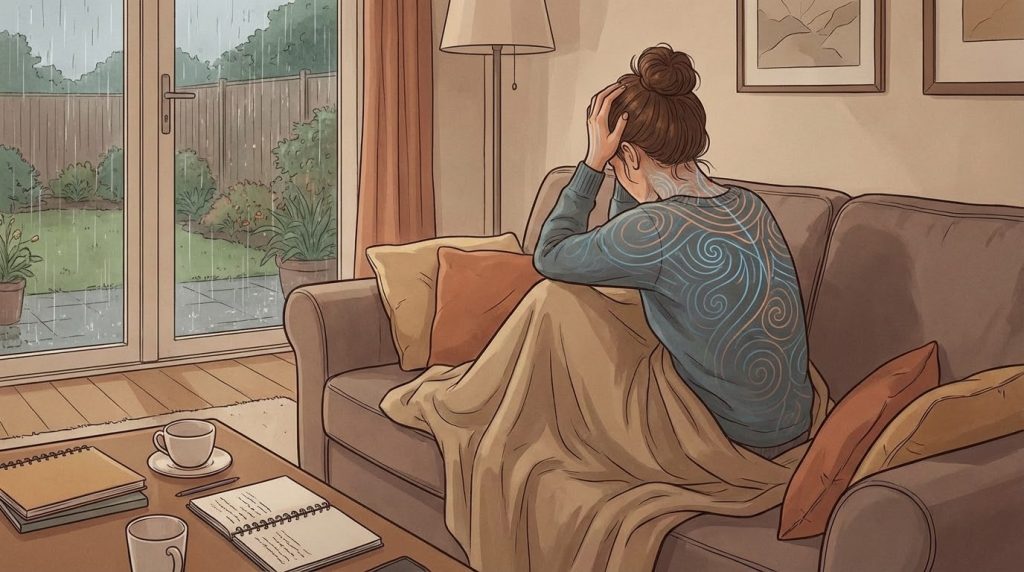
When Stress Shows Up In Your Body (And You Think You’re Just Sick)
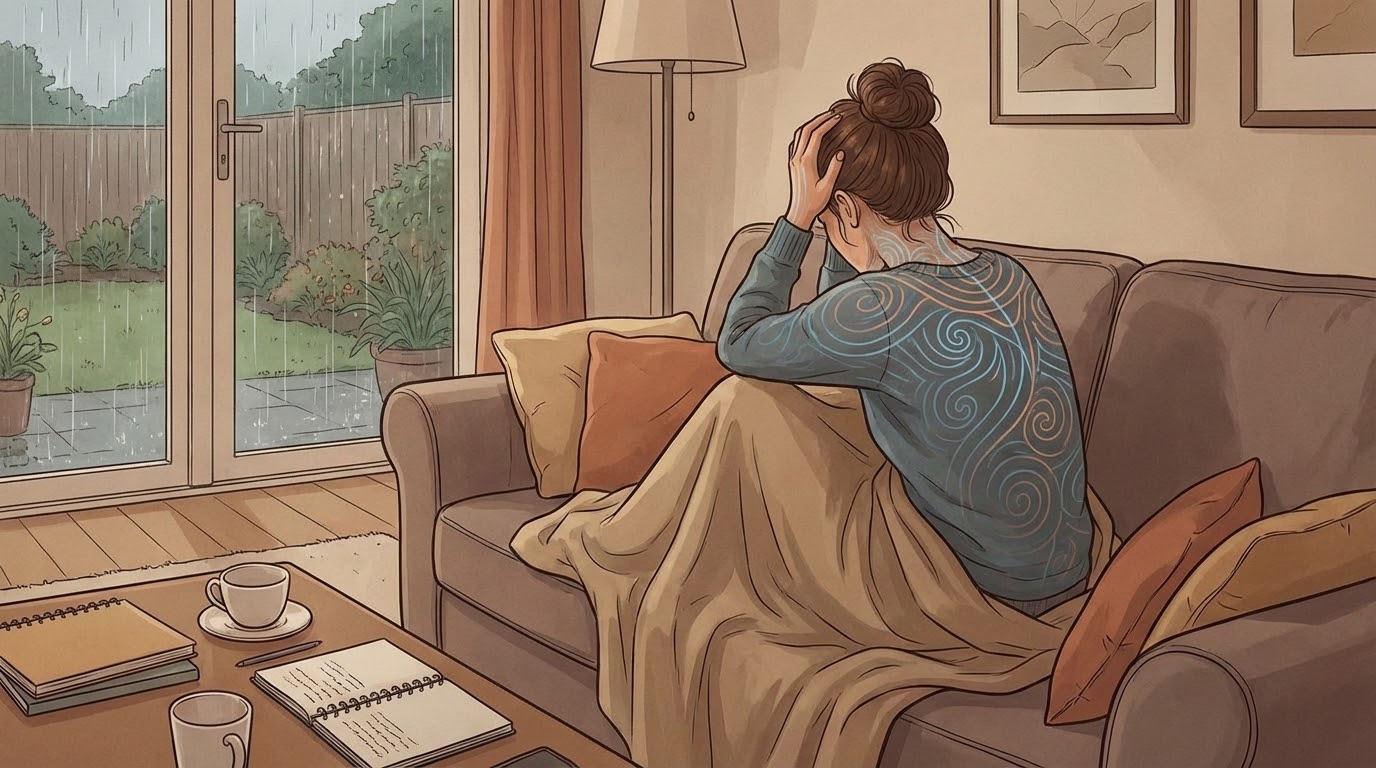
You’re exhausted. Your neck is tight. Your stomach’s a mess. Google says you’re dying, but your doctor says, “All your tests look normal.” So what now?
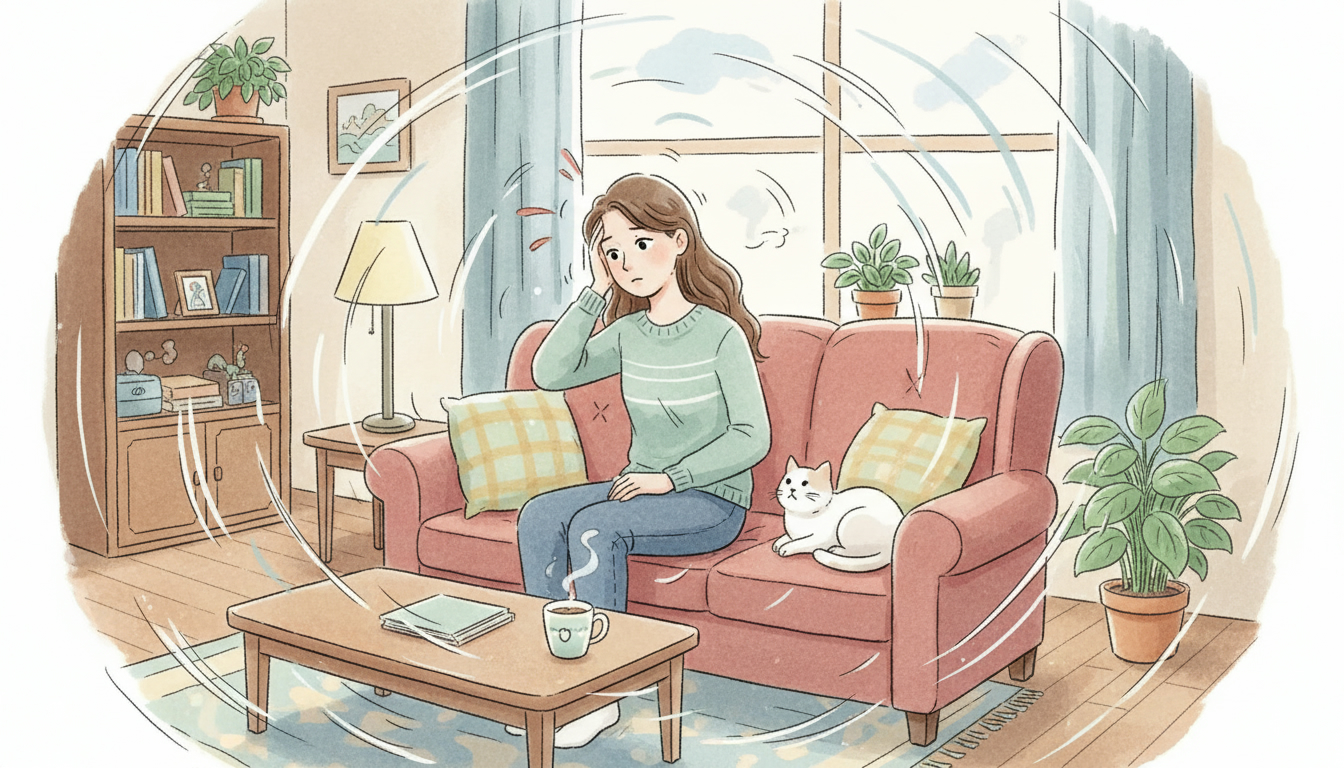
Let’s talk about something under-rated and over-felt: stress causing physical symptoms. Not “it’s all in your head” (it’s not), but how your mind and body team up when life gets too loud.
This post will walk you through:
- How stress actually changes your body
- Common physical symptoms of stress (that don’t feel mental at all)
- When to worry and see a doctor
- Practical ways to calm your nervous system so your body can exhale
Quick disclaimer: This is educational, not medical advice. Always talk to a qualified professional about new, severe, or worrying symptoms.
Wait… Can Stress Really Cause Physical Symptoms?
Yes. Very much yes.
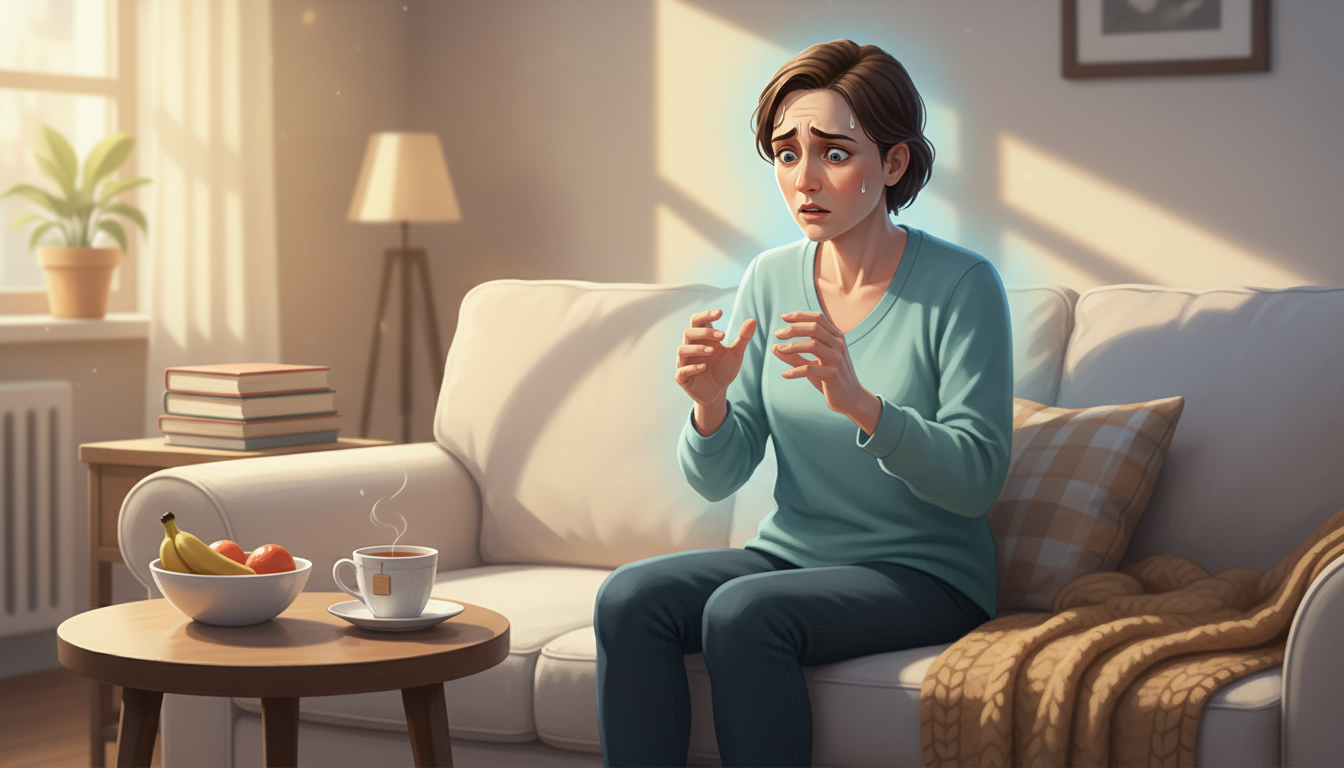
When you’re stressed, your body flips into survival mode (fight, flight, or freeze). Your brain signals your adrenal glands to release stress hormones like adrenaline and cortisol. These chemicals increase your heart rate, tense your muscles, change breathing patterns, and shift digestion and immune function.
According to the American Psychological Association, chronic stress is linked with problems like headaches, digestive issues, muscle tension, sleep disturbances, and changes in appetite, among others. Over time, it can contribute to conditions like high blood pressure and heart disease.
Key idea: Your body isn’t betraying you; it’s trying (a little too hard) to protect you.
Takeaway: If your body feels like it’s constantly bracing for impact, stress is a very real suspect.
The Stress Response in Plain English
What Happens in Your Body When You’re Stressed?
Here’s the simplified play-by-play of the stress response:
-
Your brain detects a threat
The “threat” can be a real danger (car swerving toward you) or a psychological one (email from your boss, money worries, relationship conflict).
-
Your nervous system hits the gas
The sympathetic nervous system (“stress accelerator”) sends alarms through your body.
-
Hormones flood your system
Adrenaline and cortisol prepare you to run or fight:
- Heart beats faster
- Blood pressure rises
- Breathing gets faster and shallower
- Digestion slows down
-
Short-term stress is helpful, long-term stress causes problems
Occasional stress helps you react quickly in real danger. But when stress becomes chronic—work pressure, caregiving, financial strain—your body never fully powers down.
Over time, that constant background alarm can turn into very real physical symptoms.
Takeaway: Your stress response is designed for sprinting away from tigers, not living inside a never-ending inbox.
Common Physical Symptoms of Stress (That Don’t Feel Like “Stress”)
Everyone is different, but here are some of the most common physical signs of stress people report.
1. Muscle Tension and Pain
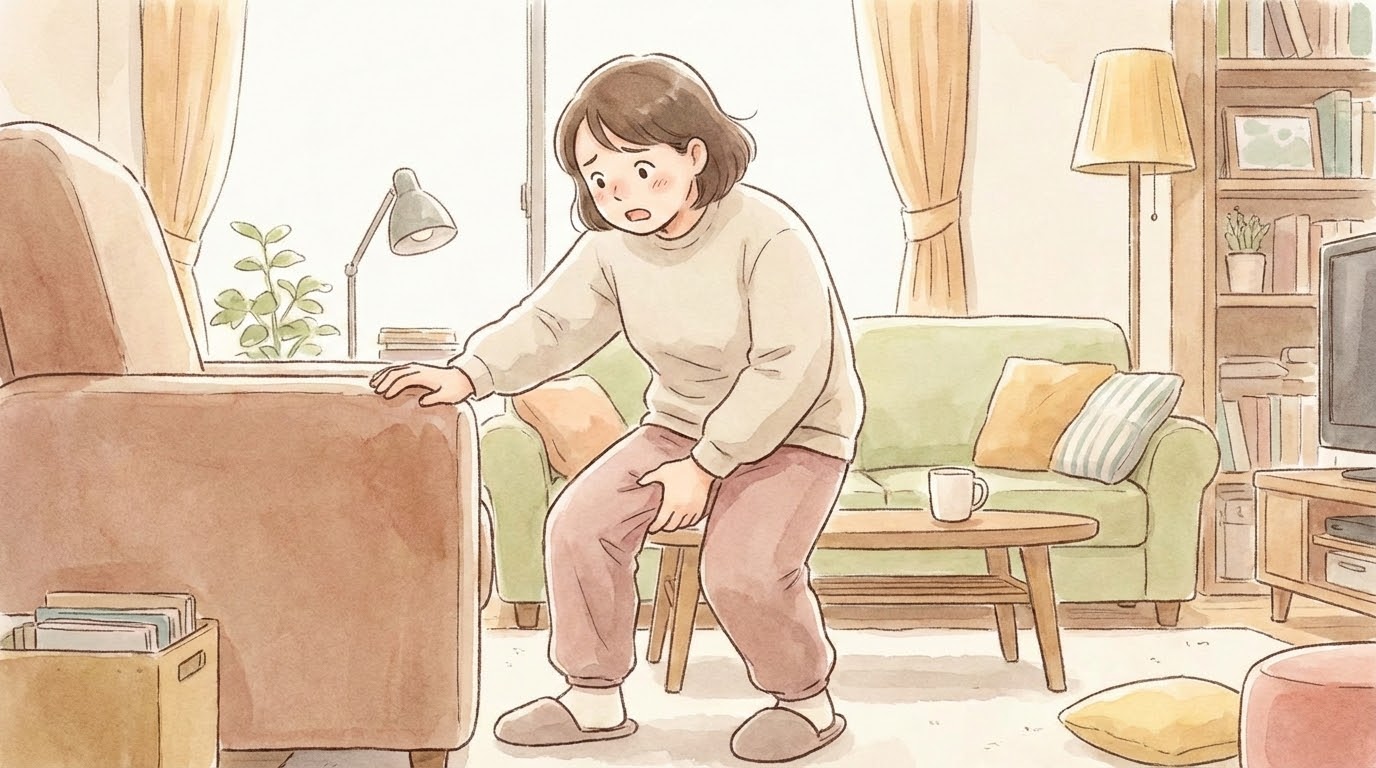
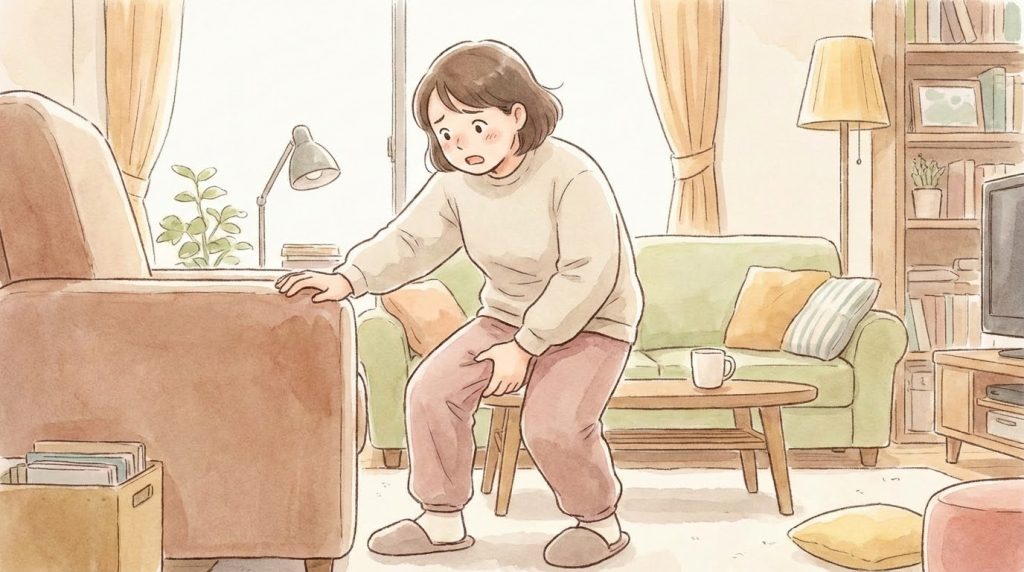
When you’re stressed, your muscles automatically tighten, especially in your neck, shoulders, and jaw. This can lead to tension headaches or migraines, jaw pain or teeth grinding, and upper or lower back pain.
Mini example: You sit at your laptop for hours, shoulders up by your ears, scrolling through work chaos. That evening, your neck is stiff and your head is pounding. It feels like “a bad posture day,” but chronic stress has kept your muscles locked for hours.
Takeaway: If you’re always “bracing,” your muscles are too.
2. Headaches
Stress is a major trigger for tension-type headaches and can also trigger migraines in people who are prone to them. These often feel like dull, aching pain around the forehead or back of the head, a tight band around the skull, or sensitivity to light or noise.
Hydration and screen time matter, but if your headaches flare during busy weeks, conflict, or deadlines, stress might be a big part of the picture.
Takeaway: Track your headaches and note what was happening in your life before they started.
3. Stomach and Digestive Issues
Stress doesn’t just live in your head; it very literally lives in your gut.
When you’re stressed, your body diverts energy away from digestion. This can show up as nausea or “butterflies,” stomach cramps, bloating, diarrhea or constipation, and flare-ups of IBS or heartburn in people who already have them.
Many people notice their appetite swings with stress too, either eating way more (craving sugar or comfort foods) or eating way less (no appetite, food feels unappealing).
Mini example: Before a big presentation, your stomach is in knots and you can’t eat breakfast. After, you’re suddenly starving. That’s your stress response turning digestion on and off like a switch.
Takeaway: If your gut acts up when life does, that’s a clue.
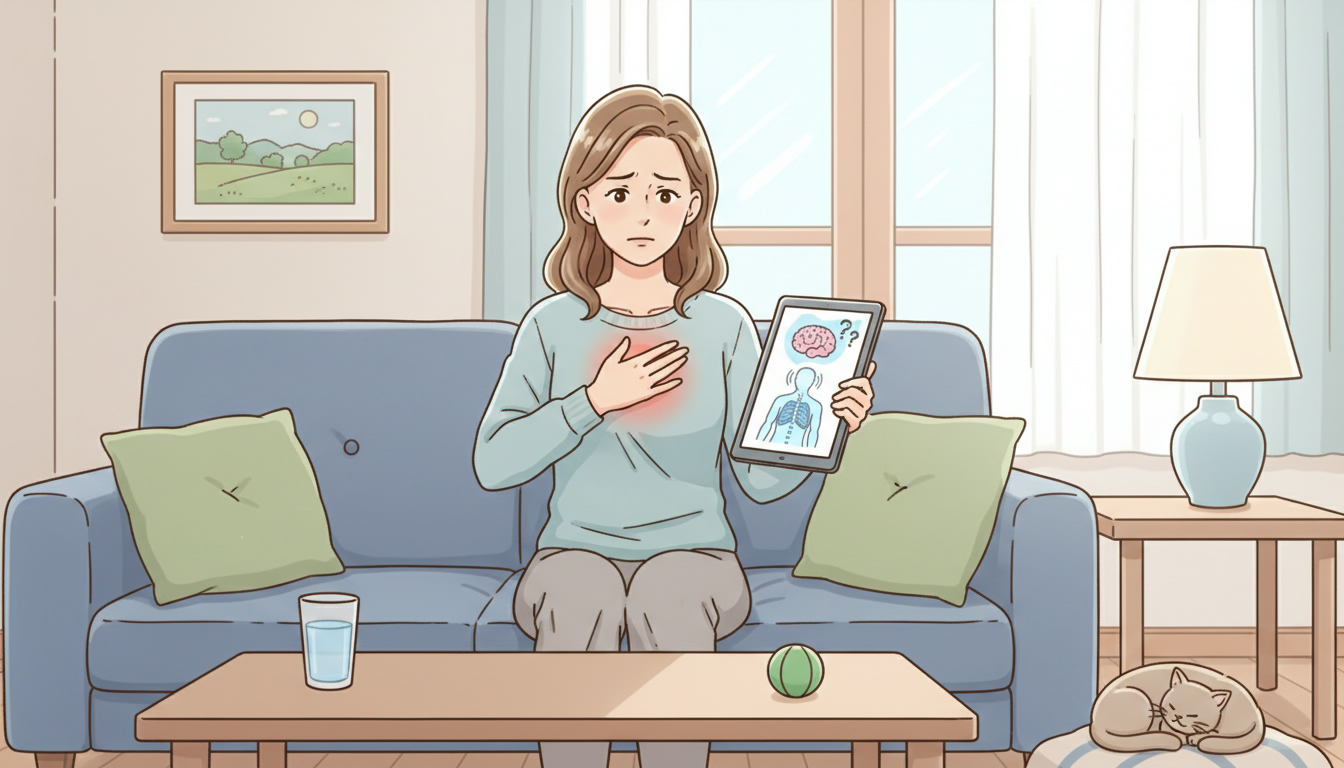
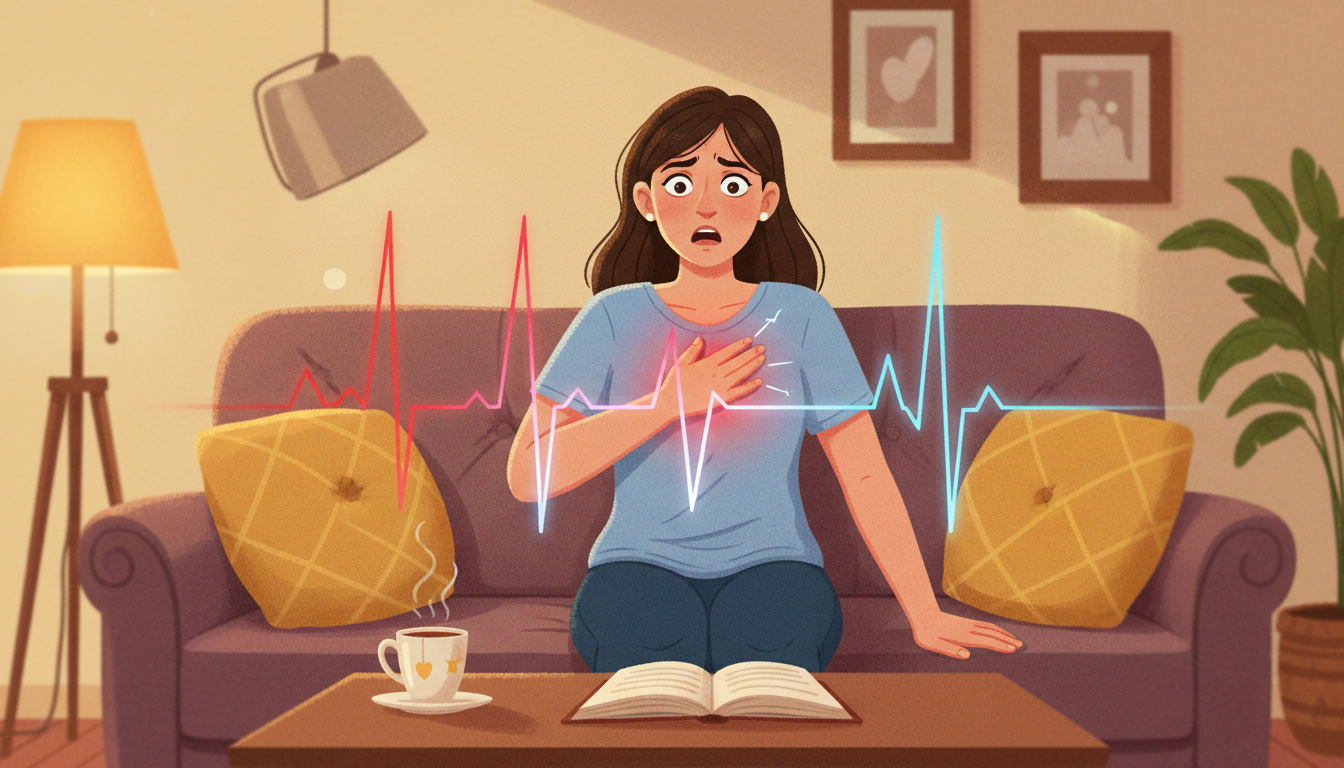
4. Chest Tightness and a Racing Heart
This one is scary because it can feel like a medical emergency.
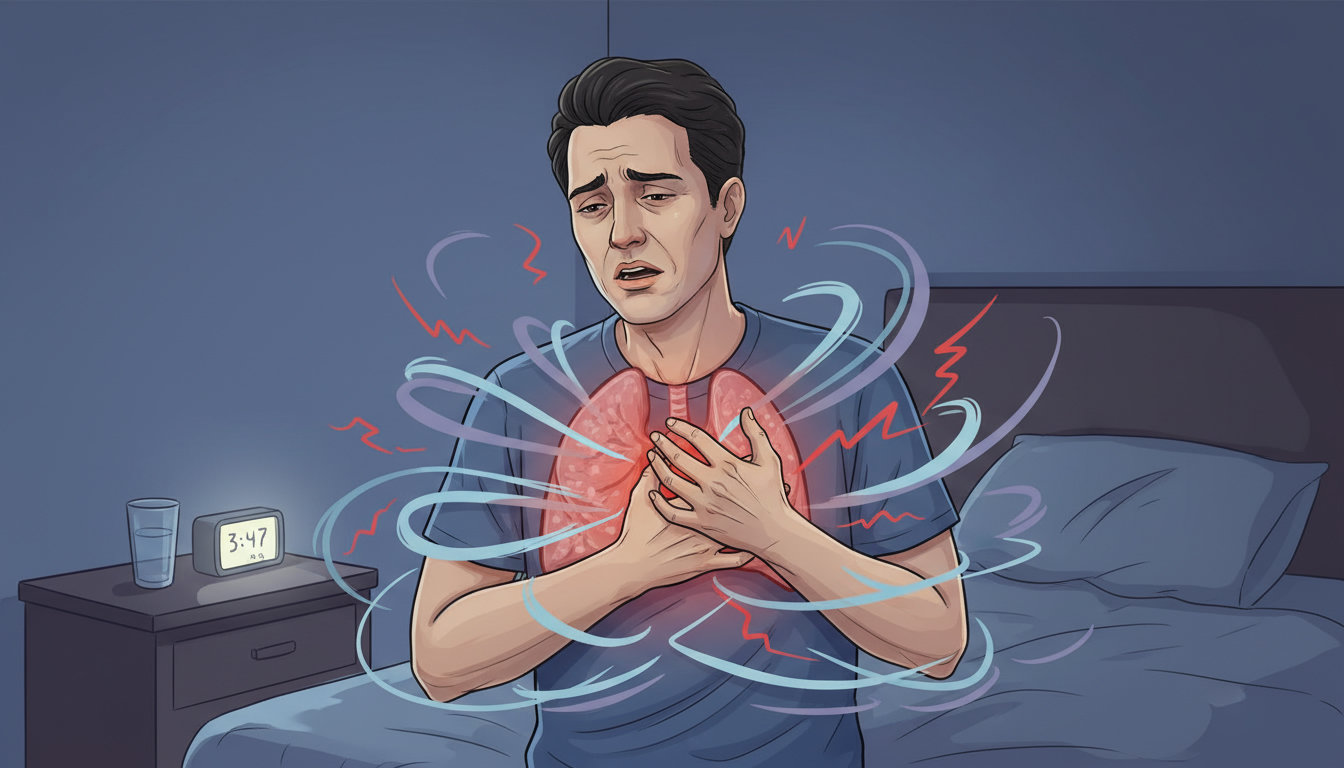
Stress and anxiety can cause a rapid heartbeat or heart palpitations, chest tightness or pressure, and shortness of breath.
These can overlap with symptoms of serious conditions like heart problems. Never assume it’s “just stress” if chest pain is new, severe, or worrying. It’s important to get checked by a medical professional.
Once dangerous causes are ruled out, some people learn that these sensations are part of panic attacks or chronic stress.
Takeaway: Listen to your body and your doctor. Rule out emergencies first, then work on stress.
5. Sleep Problems
Stress and sleep have a very complicated relationship.
You might notice trouble falling asleep because your brain won’t stop replaying everything, waking up multiple times during the night, waking too early and not falling back asleep, or restless, low-quality sleep, even if you were “out” for 8 hours.
Over time, poor sleep amplifies stress, irritability, and physical pain. It becomes a loop: stress leads to bad sleep, which leads to more stress and more symptoms.
Takeaway: If your nights are noisy in your head, your days will feel heavier.
6. Frequent Colds, Fatigue, and Feeling Run Down
Chronic stress can affect the immune system and leave you feeling constantly tired, more likely to catch every cold going around, and slower to recover from minor illnesses.
You may also feel a kind of heaviness or malaise, like you’re dragging through the day even when you’re technically sleeping enough.
Mini example: Every busy season at work, you end up sick right after the big deadline. That “post-deadline crash” is often your body finally relaxing and then showing you how depleted it really is.
Takeaway: If you only get sick when you’re stressed, that pattern matters.
7. Skin Flare-Ups
Stress can trigger or worsen acne, eczema, psoriasis, hives, or itchy skin.
Inflammation and immune changes during stress can make the skin more reactive. Plus, when you’re stressed, you might touch your face more, skip your routine, or sleep less, which doesn’t help.
Takeaway: Sometimes your skin is just your nervous system with better lighting.
How Do I Know If It’s “Just Stress” or Something Serious?
You should not self-diagnose. Stress can mimic many other conditions, and those conditions can be serious.
Here are some red flags that mean you should seek medical care promptly (urgent care or emergency services depending on severity and your local guidelines):
- Sudden, severe chest pain
- Trouble breathing
- Weakness, numbness, or difficulty speaking
- Sudden, intense headache (“worst headache of your life”)
- High fever, stiff neck, or confusion
- Severe abdominal pain
- Any symptom that feels extreme, new, or frightening to you
For less urgent but persistent symptoms like ongoing headaches, stomach issues, pain, or fatigue, it’s still worth seeing your primary care provider. They can rule out medical causes, run basic labs or tests, and refer you to specialists if needed.
If medical causes are ruled out, that doesn’t mean nothing is wrong. It often means:
Something functional is happening—like your body’s systems being thrown off by chronic stress.
Takeaway: “It might be stress” should be a doorway to care, not a reason to ignore your body.
How to Calm Stress-Related Physical Symptoms
You can’t avoid all stress. But you can train your body to come out of fight-or-flight more often. Think of this as shifting from “stuck on alert” to “able to reset.”
1. Start With the Basics
These are not exciting, but they matter more than any hack:
- Sleep: Aim for a consistent sleep-wake schedule when possible. Dim screens before bed and keep the room dark and cool.
- Movement: Gentle, regular movement such as walking, stretching, yoga, or light strength work helps burn off stress hormones and relax muscles.
- Food: Eat regularly. Blood sugar crashes can make anxiety and physical symptoms worse.
- Hydration and caffeine: Dehydration and too much caffeine can worsen headaches, heart palpitations, and anxiety-like sensations.
Takeaway: You don’t have to optimize your life; you just need to stop running on fumes.
2. Use Body-First Calming Techniques
Because stress lives in the body, physical techniques can be surprisingly effective:
- Slow, deep breathing: Try 4–6 breaths per minute. Inhale through your nose for about 4–5 seconds, exhale for about 6–7 seconds. Longer exhales signal safety to your nervous system.
- Progressive muscle relaxation: Tense one muscle group at a time, such as feet, legs, stomach, shoulders, or jaw, for a few seconds, then release. Notice the difference between tension and relaxation.
- Grounding techniques: Look around and name 5 things you can see, 4 you can touch, 3 you can hear, 2 you can smell, and 1 you can taste. It pulls you out of the mental spiral and back into your body.
- Gentle stretching or yoga: Focus on neck, shoulders, and hips, where stress often shows up.
Takeaway: You don’t have to think your way out of stress; you can breathe and move your way out of it too.
3. Make Small, Realistic Life Tweaks
If your life is a constant fire drill, no amount of deep breathing will fully cancel it out.
Ask yourself where you are consistently overcommitted, what you can say no to or delay, whether you can negotiate deadlines or ask for help, and what small task would make your week a bit less stressful, such as simple meal prep, automating a bill, or setting up a shared calendar.
You don’t have to redesign your whole life at once. But reducing just one ongoing stressor can lower your body’s background alarm volume.
Takeaway: Tiny, boring changes add up to big nervous system relief.
4. Address the Mental and Emotional Side
Stress-related physical symptoms are your body’s language. Ignoring what they’re saying rarely works long-term.
Consider therapy or counseling to work through anxiety, trauma, burnout, or chronic stress patterns. Learn stress management skills like time management, boundary-setting, or cognitive behavioral techniques. Build support systems by talking openly with trusted friends, family, or support groups.
Many people find that as they process their emotions, set boundaries, or make meaningful changes, their physical symptoms ease.
Mini example: Someone with weekly “mystery stomach pain” realizes it flares before meetings with a critical manager. Working with a therapist, they practice boundary-setting and coping strategies. The symptoms don’t vanish overnight, but they go from weekly to rare.
Takeaway: Treat the cause, ongoing stress, not just the alarm, your symptoms.
5. When to Consider Professional Help Specifically for Stress
You may benefit from professional help if your physical symptoms are frequent or disruptive, you feel constantly on edge, overwhelmed, or burned out, you’re avoiding things you care about because you fear symptoms like panic attacks, or you’re using alcohol, drugs, or other numbing behaviors to cope.
Depending on your situation, helpful options might include a primary care provider to rule out medical concerns and talk about stress, a therapist or counselor specializing in anxiety, stress, or somatic approaches, or a psychiatrist or psychiatric nurse practitioner if medication might help.
Takeaway: Needing help doesn’t mean you’re weak. It means your body and brain have been doing too much alone for too long.
How to Talk to Your Doctor About Stress-Related Symptoms
If you suspect stress is affecting your body, but you’re not sure how to bring it up, you can say something like:
“I’ve been having headaches, stomach issues, or chest tightness, and my tests are normal. I notice they get worse when I’m stressed. Can we talk about how stress might be affecting my body and what I can do about it?”
It can also help to track your symptoms for one to two weeks, including time of day, what you were doing, stress level, sleep, food, and caffeine, and bring that log to your appointment. Patterns are powerful.
Takeaway: You’re allowed to put “stress” on the agenda at a medical visit. It’s a legitimate health factor.
Final Thought: Your Body Isn’t the Enemy
If stress is causing physical symptoms, it doesn’t mean you’re weak, dramatic, or making it up. It means your alarm system is working overtime.
The goal isn’t to never feel stress again. The goal is to notice your body’s signals sooner, take them seriously without panicking, and build habits and support that help your system calm down.
Your body’s not trying to ruin your life. It’s trying to get your attention. You’re listening now. That’s the first, very real step toward feeling better.