
Author: James

  • Chest Tightness When Lying Down

    Chest Tightness When Lying Down

    Chest Tightness When Lying Down: What It Could Mean

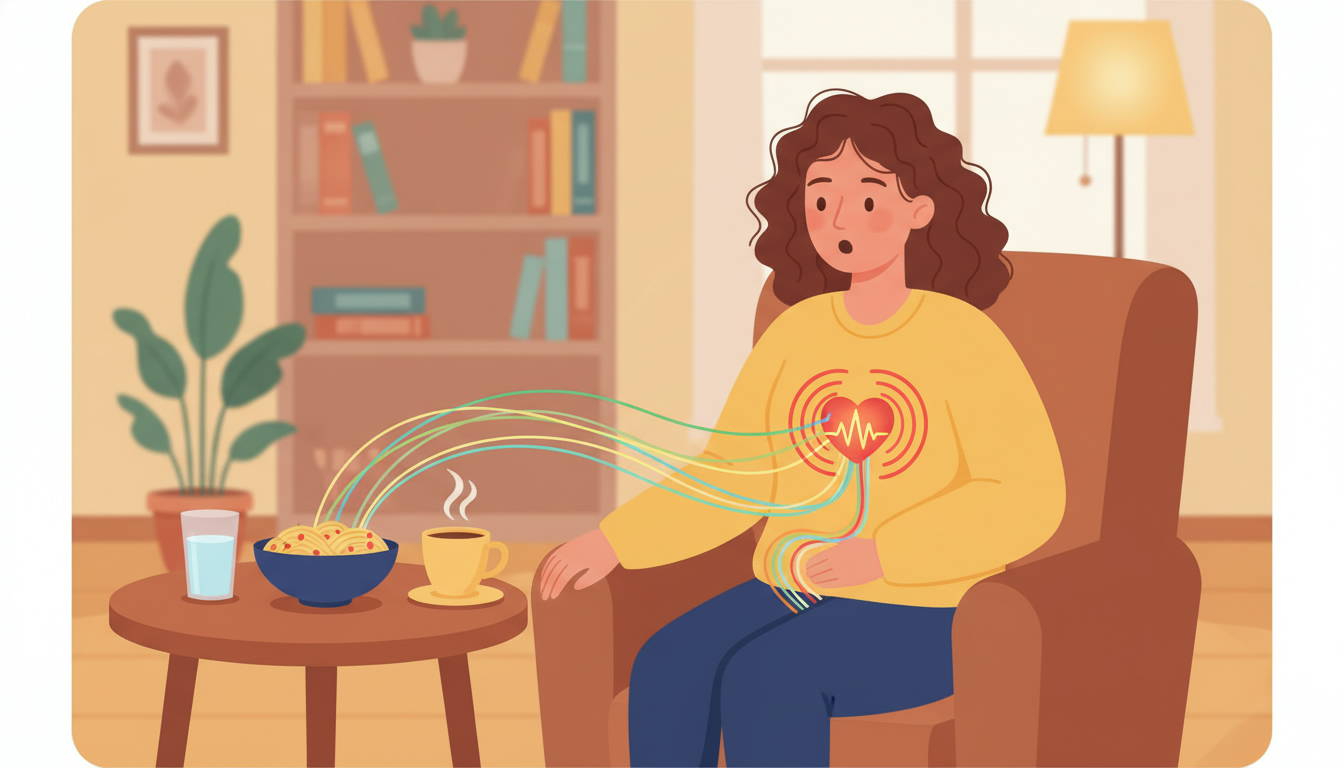
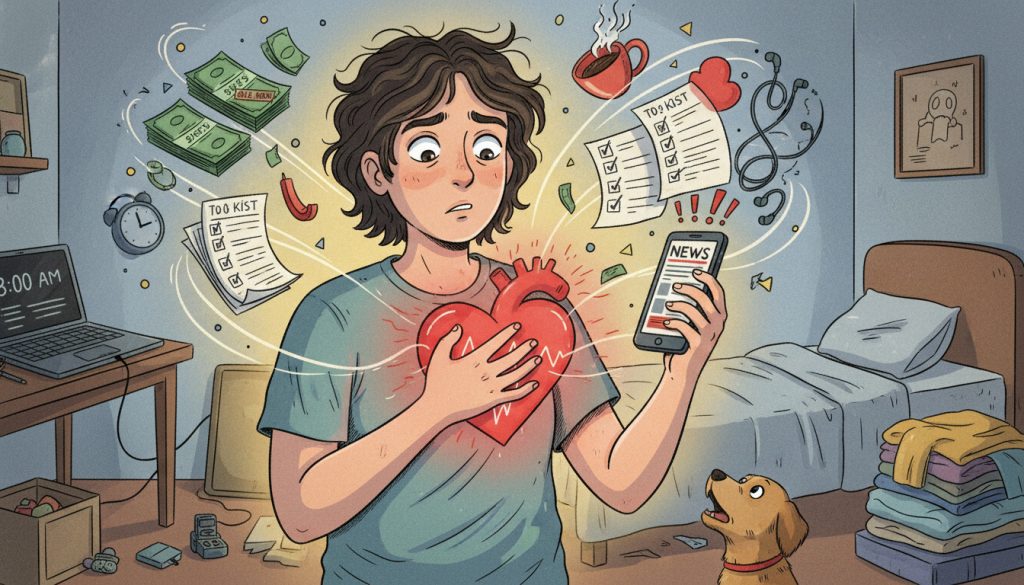
    You lie down, finally ready to relax, and instead of drifting off, you notice that weird chest tightness. Cue the internal monologue: “Is this my heart? Is this anxiety? Am I dying or just bad at sleeping?”

    Let’s walk through what might be going on when you feel chest tightness lying down, what’s usually not an emergency, what could be, and some practical steps to feel safer and more comfortable.

    Quick reminder: This is education, not medical care. If something feels seriously wrong, trust your gut and seek help.

    First: What Does “Chest Tightness When Lying Down” Even Mean?

    People describe this in a bunch of ways:

    • A band-like pressure around the chest
    • A heavy weight on the chest when lying flat
    • A need to sit up to “open” the chest
    • Tight, achy, or squeezing feeling in the middle or one side of the chest
    • Sometimes with shortness of breath, palpitations, or a lump-in-throat feeling

    The position part is key: maybe you feel mostly OK upright, but when you lie flat (or especially on one side), the tightness shows up or gets worse.

    Takeaway: “Chest tightness when lying down” is a symptom, not a diagnosis. Position-related symptoms give your doctor important clues.

    Common (and Often Non-Emergency) Reasons for Chest Tightness Lying Down

    These are possibilities, not labels for you personally. Different conditions can feel similar, which is why real-life evaluation matters.

    1. Acid Reflux / GERD

    When you lie flat, stomach acid can more easily move up into the esophagus (the tube between your mouth and stomach). That burning or pressure can feel like chest tightness.

    Typical clues it could be reflux-related:

    • Burning or pressure behind the breastbone
    • Worse after big, spicy, fatty, or late-night meals
    • Sour taste, belching, or a feeling of food coming back up
    • Better when you sit up, stand, or prop yourself on pillows

    Things that may help:

    • Avoid large or heavy meals 2–3 hours before lying down
    • Limit alcohol, caffeine, chocolate, tomato, citrus, and spicy foods at night
    • Elevate the head of your bed 6–8 inches (not just extra pillows—true incline helps more)
    • Talk to a clinician about OTC meds like antacids or acid reducers

    Takeaway: If it burns, feels worse after eating, and better when upright, reflux is high on the list to discuss with a doctor.

    2. Anxiety, Panic, and Hyperventilation

    Anxiety doesn’t always feel like “worrying thoughts.” It can show up as very physical symptoms, especially when things get quiet at night.

    How anxiety-related chest tightness can show up:

    • Tight or heavy feeling in the chest, often with a sense you “can’t get a deep breath”
    • Symptoms come in waves, often at night or during stress
    • You might yawn or sigh a lot, trying to “reset” your breathing
    • Heart pounding, tingling hands, a sense of doom, or feeling like you’re “not really here” can show up in panic attacks

    Hyperventilation (breathing too fast or too shallow) can actually make your chest feel tighter, even if your oxygen levels are normal.

    What sometimes helps in the moment:

    • Slowing your exhale (for example: in for 4, out for 6–8 seconds)
    • Relaxed belly breathing instead of high chest breathing
    • Grounding techniques: 5 things you see, 4 you feel, 3 you hear, etc.
    • Reminding yourself: “This feels scary, but panic itself is not a heart attack.”

    Red flag caution: Anxiety and chest pain can absolutely coexist with real heart or lung issues. Never assume it’s “just anxiety” if something feels new, severe, or different for you.

    Takeaway: If symptoms flare during stress, get better when you’re distracted, and come in bursts, anxiety might be playing a role—worth addressing both mind and body.

    3. Muscular or Postural Strain

    Your chest wall is made of muscles, joints, and cartilage. Long hours at a desk, phone-hunched posture, weightlifting, or even a bad cough can irritate these structures.

    Clues this might be musculoskeletal:

    • Pain changes with movement, twisting, or deep breaths
    • Certain positions (like lying on one side) make it worse, others better
    • Pressing on a specific spot reproduces the soreness or tightness

    Sleeping on an unsupportive mattress or with stacked pillows can also strain the neck and upper back, which sometimes feels like chest tightness.

    What can help:

    • Gentle stretching of the chest and upper back
    • Adjusting pillows and mattress support
    • Heat or ice on sore areas (as your clinician recommends)
    • Paying attention to daytime posture

    Takeaway: If you can “poke it” or move and reliably change the pain, muscles and joints may be involved.

    4. Postnasal Drip, Asthma, or Airway Irritation

    If you’ve got allergies, a lingering cough, viral infection, or asthma, lying down can make mucus pool or irritate your airways. That, plus nighttime airway narrowing, can make your chest feel tight.

    Possible hints:

    • Wheezing, coughing, or a whistling sound when you breathe out
    • Tightness that’s worse at night or early morning
    • History of asthma, allergies, or reactive airways
    • Relief with prescribed inhalers (if you already have them)

    Takeaway: Breathing-related chest tightness that improves with inhalers or allergy treatment should be evaluated for asthma or related conditions.

    5. Heart and Circulation Issues (Sometimes Serious)

    Position-related chest symptoms can sometimes involve the heart or circulation. While some heart issues cause classic exertional chest pain (with activity), others can feel worse when lying flat.

    Heart-related symptoms can include:

    • Pressure, squeezing, or heaviness in the center or left side of the chest
    • Pain spreading to the arm, jaw, neck, back, or stomach area
    • Shortness of breath, especially if you need multiple pillows or must sleep sitting up
    • Sweating, nausea, or feeling faint or lightheaded

    Some people with certain types of heart failure notice orthopnea—difficulty breathing or chest pressure when lying flat that eases when they sit forward or prop themselves up.

    These patterns absolutely deserve prompt medical attention.

    Takeaway: Anything that sounds heart-related, especially with shortness of breath, sweating, or spreading pain, is a “get checked now” situation.

    When Is Chest Tightness Lying Down an Emergency?

    If you’re on the fence about calling for help, lean toward caution.

    Seek emergency care right away (call 911 in the U.S.) if chest tightness comes with:

    • Sudden, crushing, or severe chest pain or pressure
    • Trouble breathing or feeling like you can’t get air at all
    • Pain that spreads to your arm, neck, jaw, or back
    • Sweating, nausea, or vomiting along with chest pain
    • Feeling like you might pass out or very weak
    • Fast, irregular, or pounding heartbeat with other symptoms

    These can signal heart attack, pulmonary embolism (blood clot in the lungs), or other emergencies.

    If it’s not 911-level but still concerning (new, persisting, or getting worse), urgent care or a same-day or next-day visit with your doctor is reasonable.

    Takeaway: Trust the rule: if you’re wondering, “Should I go in for this?” that’s usually a yes.

    What to Track Before You See a Doctor

    If your chest tightness keeps showing up when you lie down, having a few details ready can make your appointment way more productive.

    Write down or keep a note on your phone:

    1. Timing

      • When did this first start?
      • Does it happen every night or only sometimes?
    2. Triggers

      • After big or specific meals?
      • During high-stress days?
      • With exertion, or only at rest or lying down?
    3. Location and quality

      • Center, left, right, under the ribs?
      • Sharp, dull, burning, squeezing, stabbing?
    4. What makes it better or worse?

      • Sitting up or standing?
      • Antacids? Inhaler? Moving or stretching?
      • Changing from left side to right side?
    5. Other symptoms

      • Palpitations, dizziness, cough, heartburn, anxiety, leg swelling, fever, etc.

    This kind of “symptom diary” can help your clinician decide which tests (if any) are needed, like an EKG, chest X-ray, blood tests, or others.

    Takeaway: The more specific you are, the less guessing your clinician has to do.

    Simple Things You Can Try at Home (While Still Being Safe)

    These are general comfort strategies, not a substitute for medical evaluation.

    1. Adjust Your Sleeping Position

    • Try lying slightly propped up with a wedge pillow or by elevating the head of your bed.
    • If reflux seems likely, avoid lying completely flat right after eating.
    • If one side hurts more, try the other side or on your back with a small pillow under your knees.

    2. Check Your Evening Habits

    • Avoid heavy meals, alcohol, or a lot of caffeine close to bedtime.
    • Give yourself at least 2–3 hours between your last big meal and lying down.
    • Notice if certain foods reliably trigger symptoms and reduce them for a bit to see if it helps.

    3. Support Calm Breathing Before Bed

    • Try 5–10 minutes of slow breathing: inhale through the nose for 4, exhale through the mouth for 6–8.
    • Gently place a hand on your belly and focus on letting the belly rise more than the chest.
    • Pair breathing with a simple body scan, relaxing one area at a time.

    4. Create a Low-Stress “Landing Zone” for Sleep

    • Dim lights, put the phone away, and stick to a pre-sleep routine.
    • If you notice health-anxious spiraling at night, try writing worries in a notebook with a note: “To discuss with doctor” so your brain doesn’t keep looping.

    Takeaway: Small changes in posture, food timing, and stress can give you useful clues and sometimes real relief.

    “How Do I Know If This Is Anxiety or Something Physical?”

    This is the million-dollar question, and the honest answer is: you can’t always know on your own. Anxiety and physical illness aren’t either or; they can overlap.

    Some patterns that may lean more anxiety:

    • Symptoms come in waves, especially during stress or at night when you’re alone with your thoughts
    • Chest tightness improves when you’re distracted or busy
    • You’ve had similar episodes before that were medically cleared

    Some patterns that may lean more physical:

    • Tightness is clearly brought on by exertion (walking, climbing stairs)
    • You wake up gasping or can’t lie flat without feeling like you’re smothering
    • New or changing symptoms, especially if you’re older or have risk factors (smoking, high blood pressure, diabetes, high cholesterol, strong family history of heart disease)

    But these are just patterns, not rules. The safest move with new or changing chest symptoms is to get evaluated.

    Takeaway: Let your doctor help sort out “anxiety vs. body.” Your job is to report what you feel; their job is to interpret.

    What to Ask Your Doctor About Chest Tightness Lying Down

    You’re allowed to show up with questions. In fact, it helps.

    Possible questions:

    • “What are the most likely causes of my chest tightness based on what you see so far?”
    • “Are there any red flags I should watch for at home?”
    • “Do you think I need tests like an EKG, blood work, or imaging?”
    • “Could this be related to reflux, asthma, muscle strain, my heart, or anxiety—or a mix?”
    • “What can I safely try at home while we’re figuring this out?”

    Takeaway: A clear plan plus clear red-flag instructions means less late-night searching for answers.

    Bottom Line: You’re Not Imagining It—and You’re Not on Your Own

    Chest tightness when lying down can be:

    • Something relatively common and manageable (like reflux, postural strain, anxiety)
    • A sign of breathing or airway issues (like asthma or postnasal drip)
    • Less often, a sign of heart or circulation problems that need urgent care

    Your job is not to self-diagnose; it’s to:

    1. Notice specific patterns (what triggers it, what helps)
    2. Respect red flags and seek urgent help when needed
    3. Bring the details to a medical professional so they can do the sorting

    You deserve to feel safe in your own body, especially in the place you’re supposed to rest. If this has been bothering you for a while, consider this your nudge to get it checked. Even if the answer is “You’re okay,” that peace of mind is worth a lot.


  • Dizzy When Standing Up?

    Dizzy When Standing Up?

    Dizzy When Standing Up? Here’s What Might Be Going On

    You stand up, and the room does that annoying slow spin. Maybe your vision goes a bit dark, your ears ring, or you feel like your body suddenly weighs nothing and a thousand pounds at the same time. You grab a wall, wait a few seconds, then pretend everything is fine.

    Relatable? Let’s unpack what “dizzy when standing up” could mean, what’s usually going on, when it’s a red flag, and what you can actually do about it.

    Quick note: This is education, not diagnosis. If something feels off or scary, don’t wait on a blog post—get real-life medical help.

    What Does “Dizzy When Standing Up” Actually Mean?

    “Dizzy” is one of those words that can mean a lot of different things, like “tired” or “stressed.” When you stand up, you might notice:

    • Lightheadedness, like you might faint
    • Vision dimming or going “gray” or “sparkly” for a few seconds
    • Feeling off-balance, wobbly, or unsteady
    • Brief spinning sensation (though true spinning is more often vertigo)

    Doctors sometimes separate these into:

    • Presyncope – the “I might pass out” feeling
    • Vertigo – the “room is spinning” feeling
    • General unsteadiness – like your body isn’t quite under control

    When you say “dizzy,” try to be specific about what it feels like and how long it lasts. That’s extremely helpful if you ever talk to a clinician.

    Why Do I Get Dizzy When I Stand Up? (The Short Version)

    When you go from sitting or lying to standing, gravity suddenly pulls blood toward your legs. Your body has to quickly tighten blood vessels and speed up your heart rate to keep enough blood going to your brain.

    If that system is a little slow or not working perfectly, blood pressure can drop briefly, and your brain gets slightly less blood for a few seconds. That’s when you feel lightheaded, see stars, or feel like you might black out.

    This broad situation is often called:

    • Orthostatic (postural) hypotension – a drop in blood pressure when you stand up
    • Orthostatic intolerance – your body doesn’t tolerate standing very well (this can show up in conditions like POTS)

    We’ll walk through the common causes, but remember, you can’t self-diagnose from a list. Standing up is like a mini stress test for your circulation. If the response is sluggish, you feel it fast.

    Common Causes of Dizziness When Standing Up

    1. Dehydration or Not Enough Fluid

    Low fluid means lower blood volume and less to pump to your brain when you stand.

    Possible clues:

    • Dark yellow pee or going hours without peeing
    • Feeling thirsty, dry mouth, headache
    • Worse on hot days, after sweating, or when you’ve had diarrhea or vomiting

    Even mild dehydration can trigger lightheadedness on standing.

    What helps (general tips, not a prescription):

    • Sip water regularly through the day, not just chug once
    • More fluids on hot days or if you’re active
    • Talk to a clinician before drastically changing fluids if you have heart or kidney issues

    Before you assume something complex is wrong, check your water and salt habits.

    2. Blood Pressure Drops (Orthostatic Hypotension)

    Orthostatic hypotension basically means your blood pressure drops too much when you stand. Doctors often define it as a significant drop in systolic (top number) or diastolic (bottom number) within a few minutes of standing.

    It can be caused by:

    • Dehydration or blood loss
    • Certain medications (like some blood pressure meds, diuretics, antidepressants, or meds for prostate issues)
    • Alcohol
    • Some nervous system conditions

    You might notice:

    • Dizziness or near-fainting within seconds to a few minutes of standing
    • Blurry or dim vision
    • Weakness or “washed out” feeling

    What you can do (safely, generally):

    • Stand up slowly – sit at the edge of the bed first, then stand
    • Flex your calf muscles or pump your feet before getting up
    • Avoid suddenly jumping up after lying down for a long time

    If this is frequent or intense, it’s something to bring to a clinician; they can measure your blood pressure and heart rate while lying, sitting, and standing.

    If you feel like your body is slow to “catch up” when you stand, orthostatic hypotension is one possibility worth checking.

    3. Low Iron or Low Blood Counts (Anemia)

    If your red blood cells or hemoglobin are low, your body carries less oxygen. That can make standing, walking upstairs, or doing basic tasks feel like a lot.

    Clues it might be anemia:

    • Dizziness or lightheadedness, especially with exertion
    • Fatigue that feels beyond normal
    • Shortness of breath climbing stairs
    • Pale skin or pale inner eyelids for some people
    • Heavy menstrual periods, known bleeding, or recent surgery

    A simple blood test can look at your blood counts. If your whole life feels like a low-battery mode with extra dizziness, it’s worth having your blood checked.

    4. Fast Heart Rate on Standing (e.g., POTS or Orthostatic Intolerance)

    Some people have a big jump in heart rate when they stand up, often with dizziness, brain fog, or feeling wired and exhausted at the same time. This can happen in conditions like POTS (Postural Orthostatic Tachycardia Syndrome) or related autonomic issues.

    Common patterns people describe:

    • Heart pounding or racing within minutes of standing
    • Dizziness, weakness, shaky feeling, sometimes nausea
    • Feeling better when lying down
    • Symptoms worse in heat, after a big meal, or when dehydrated

    If this sounds uncomfortably familiar, it’s something people often bring to a cardiologist or neurologist familiar with autonomic disorders. If standing feels like cardio and just being upright is exhausting, your heart rate response might be part of the story.

    5. Medications and Substances

    Lots of medications can make you dizzy when standing up by lowering blood pressure, changing heart rate, or affecting the nervous system.

    Examples (not a complete list):

    • Blood pressure medications
    • Diuretics (“water pills”)
    • Some antidepressants or antipsychotics
    • Medications for prostate enlargement
    • Strong pain medications (opioids)
    • Alcohol or certain recreational substances

    If your dizziness started soon after a new medication or dose change, that’s important information for your prescriber. Never stop a prescribed medication on your own, but do mention dizziness to the person who prescribed it.

    6. Inner Ear or Balance System Issues

    True spinning (vertigo) when you move your head or change position can be related to inner ear issues, like BPPV (benign paroxysmal positional vertigo) or infections.

    Clues it might be more of a vertigo or balance issue:

    • The room spins when you roll over in bed, look up, or bend down
    • Nausea, maybe vomiting
    • Symptoms brought on by head movements more than just the act of standing

    That’s still a “see someone” situation, but the cause and treatment are different than pure blood-pressure-drop dizziness. If it is true spinning with head movement, clinicians often think “inner ear” first.

    7. Blood Sugar Swings, Illness, or Feeling Run Down

    Feeling dizzy when you stand up can get worse when your body is already under stress:

    • You’re fighting an infection
    • You haven’t eaten much, or you’re very sensitive to low blood sugar
    • You’re sleep-deprived or extremely stressed

    Your body’s ability to compensate when you stand is lower when everything else is running on fumes. Sometimes dizziness is your body’s way of saying it needs basic maintenance.

    Is It Anxiety or Something Physical?

    “Is this anxiety or something serious?” is one of the most common questions around dizziness.

    Anxiety and panic can cause:

    • Lightheadedness
    • Feeling “floaty” or detached
    • Tingling around the mouth or hands (from over-breathing)

    Sometimes, the fear of dizziness itself creates a loop: you stand up, feel weird, get scared, and that makes your body feel even weirder.

    Anxiety and physical conditions are not mutually exclusive. You can have both. The goal is not to brush it off as “just anxiety,” but to make sure obvious physical causes are considered and treated and you get support for anxiety if it is part of the picture.

    If you’re constantly worrying it is “all in your head,” that alone is a good enough reason to talk to a professional and get clarity.

    When Dizziness on Standing Is a Red Flag

    Dizziness can be annoying, but sometimes it is a symptom you should not ignore.

    You should seek urgent or emergency care (ER or calling emergency services) if dizziness when standing up is accompanied by any of these:

    • Chest pain, pressure, or tightness
    • New or one-sided weakness, facial droop, difficulty speaking, or confusion
    • Sudden severe headache (“worst headache of my life” type)
    • Fainting or repeatedly almost fainting
    • Shortness of breath that is new or clearly worse
    • Irregular or very fast heartbeats with feeling unwell
    • Recent significant blood loss (vomiting blood, black or bloody stools, heavy sudden bleeding, major injury)

    Also contact a clinician soon (same day if possible) if:

    • Your dizziness on standing is new, getting worse, or happening daily
    • You have a condition like heart disease, diabetes, or a known neurological condition
    • You’re pregnant and feeling persistently faint or dizzy

    Trust your “this isn’t right” instinct, especially if dizziness is not your normal and it comes with other strong symptoms.

    What You Can Try Safely Right Now (While You Plan Follow-Up)

    These are general strategies to reduce dizziness when you stand up. They do not replace medical advice, but they are often suggested as first-line supports.

    1. Change How You Stand Up

    • Move from lying to sitting to standing instead of jumping straight up
    • Sit at the edge of the bed for 30–60 seconds first
    • Before standing, tense your leg and butt muscles, or pump your ankles up and down to help push blood upward

    2. Hydration and Salt (If Safe for You)

    • Sip water steadily through the day
    • Some people feel better with a bit more salt (such as salty snacks or electrolytes), but this depends heavily on your health situation
    • If you have heart failure, kidney disease, or are on fluid or salt restrictions, ask your clinician first

    3. Avoid Long, Very Hot Showers and Sudden Heat

    Heat makes blood vessels widen and can worsen dizziness upon standing. The post-hot-shower wobble is a known thing.

    4. Watch Alcohol and Dehydrating Drinks

    Alcohol and some caffeinated drinks can dehydrate you or affect blood pressure and heart rate.

    5. Check In on Food and Sleep

    • Don’t skip meals regularly
    • Try not to go long stretches without eating if you’re prone to feeling faint
    • Work on even a modest sleep routine if you can

    If symptoms are new, severe, or not improving, don’t just keep trying to manage it alone. Involve a professional. Small habit changes can reduce symptoms, but they are not a substitute for figuring out the cause.

    What to Tell Your Doctor or Clinician

    When you do talk to a healthcare professional, having a clear description saves time and helps them help you faster.

    You might note:

    • What “dizzy” feels like for you (spinning, faint, foggy, off-balance)
    • Exactly when it happens – only when you stand, also when you walk, or when you turn your head
    • How long it lasts – seconds, minutes, or longer
    • What makes it better or worse – sitting, lying, fluids, food, heat
    • Any other symptoms – heart racing, chest pain, shortness of breath, numbness, headache, visual changes
    • Medications and supplements you take (including over-the-counter and “natural” products)

    If you can safely do this, some people also bring readings of their blood pressure and heart rate lying versus standing (with a home monitor) to share with their clinician.

    Think of yourself as a detective bringing clues; your clinician is there to help interpret them.

    The Bottom Line

    Feeling dizzy when standing up is common and usually linked to how your blood pressure, heart rate, fluids, and nervous system react to gravity.

    Sometimes it’s simple, like being dehydrated and jumping out of bed too fast, and sometimes it’s a clue to something that deserves real evaluation.

    If it is happening a lot, getting worse, or comes with other intense symptoms, then it is time to stop guessing and get checked. You are not overreacting by wanting answers.

    You don’t have to live with the “stand up, see stars, pretend it’s fine” routine. There are explanations, and often, there are ways to make it much better once you know what is going on.

  • Feeling Faint Right Now?

    Feeling Faint Right Now?

    Feeling Faint Right Now: What It Might Mean and What to Do

    First: Are You in Immediate Danger?

    If you are feeling faint right now, do this before you keep scrolling:

    1. Sit or lie down immediately. If you can, lie flat on your back and elevate your legs on a pillow, couch, or against a wall. This helps blood flow back to your brain.
    2. Loosen tight clothing around your neck or waist.
    3. Take slow, deep breaths in through your nose, out through your mouth.
    4. Do not drive, do not stand up quickly, and do not ignore it if you feel worse.

    Call 911 or your local emergency number right now (or have someone drive you to the ER) if any of this is true:

    • Chest pain or pressure
    • Shortness of breath
    • Sudden, severe headache
    • Trouble speaking, understanding, seeing, or moving one side of your body
    • You actually fainted and hit your head
    • Heart racing or pounding in a scary, new way
    • Bleeding heavily, vomiting blood, or black/tarry stools
    • You are pregnant and feel faint with abdominal pain, heavy bleeding, or severe cramping

    If any of those apply, stop reading. You can come back to this later; right now, you need a human medical professional.

    Quick takeaway: Feeling faint plus serious symptoms means emergency, not “wait and see.”

    What Does “Feeling Faint” Actually Mean?

    People use different words for this feeling:

    • Lightheaded
    • Woozy
    • About to black out
    • Vision going dim or “closing in”
    • Feeling like your body is far away or not quite real

    This “I might pass out” sensation is often your brain saying: “I am not getting enough blood or oxygen, or something is off with my system right now.” Sometimes that is temporary and harmless. Sometimes it is a red flag.

    Quick takeaway: Feeling faint is your brain’s “low power mode” warning, not something to shrug off completely.

    Common, Often Benign Reasons You Might Feel Faint

    These are not the only causes, but they are some frequent, less-dangerous ones doctors see.

    1. Standing Up Too Fast (Orthostatic Lightheadedness)

    You go from lying or sitting to standing and your vision washes out, your ears ring, and you feel like you are about to drop. That can happen when your blood pressure briefly dips as gravity pulls blood down into your legs before your blood vessels and heart catch up. Many people experience this occasionally, especially if they are dehydrated, overheated, or have been sitting a long time.

    What usually helps in the moment:

    • Sit back down or squat until the feeling passes.
    • Stand up more slowly.
    • Drink water if you might be dehydrated.

    But: If this is new, frequent, or intense, it is worth checking in with a doctor.

    2. Dehydration and Not Eating Enough

    If you have had very little water, skipped meals, are on a crash diet, or have been vomiting or have diarrhea, your body may be running low on fluid and blood sugar. That can make you:

    • Dizzy or faint
    • Weak and shaky
    • Nauseated
    • Headachy

    What may help right now (if safe for you):

    • Sip water or an electrolyte drink slowly.
    • Eat something with a mix of carbs and a little protein, like toast with peanut butter, a granola bar, or crackers and cheese.

    If you cannot keep fluids down, or you are dizzy even lying down, you need urgent evaluation.

    3. Heat, Crowds, and Stuffed Rooms (Vasovagal Feeling)

    Fainting in a hot church, a crowded concert, or while getting blood drawn is often a vasovagal episode. Your nervous system overreacts to a trigger such as heat, pain, stress, seeing blood, or standing too long, your heart rate and blood pressure dip, and your brain briefly does not get enough blood.

    Signs it might be vasovagal:

    • Nausea
    • Sweating
    • Yawning
    • Pale, clammy skin
    • Tunnel vision, sounds getting muffled

    If you feel this coming on:

    • Lie down with legs elevated if possible.
    • Or sit and put your head between your knees.
    • Once you feel better, cool down, drink some water, and do not jump up fast.

    Even if it is vasovagal, repeated or severe episodes should be discussed with a clinician.

    4. Anxiety, Panic, and Hyperventilation

    Anxiety can absolutely make you feel faint, and just because it is anxiety does not mean the experience is any less real. When you are anxious or panicking, you may breathe fast and shallow, blow off too much carbon dioxide, and feel:

    • Lightheaded and tingly
    • Detached or unreal (derealization)
    • Chest tightness
    • Racing heart

    Right-now reset techniques: Try one of these while sitting or lying down:

    • Box breathing: Inhale for 4 seconds, hold 4, exhale 4, hold 4, repeat.
    • Hand on belly: Put one hand on your chest and one on your belly; try to make only the belly hand rise.
    • Grounding: Name 5 things you can see, 4 you can feel, 3 you can hear, 2 you can smell, 1 you can taste.

    If anxiety is a frequent cause of feeling faint, it is still worth a medical check to rule out physical causes, and then consider therapy, medication, or both for long-term help.

    Quick takeaway: Anxiety can mimic dangerous symptoms; you deserve both reassurance and real evaluation, not “it is just in your head.”

    More Serious Causes to Know About

    Feeling faint can sometimes be related to:

    • Heart rhythm issues (arrhythmias)
    • Heart valve or muscle problems
    • Blood loss (heavy periods, internal bleeding, ulcers, injury)
    • Low blood pressure from infection, dehydration, or medications
    • Anemia (low red blood cells)
    • Blood sugar problems (very low or, less often, very high)
    • Neurologic conditions

    You cannot sort these out on your own at home. That is why persistent, new, or unexplained faint feelings are a “talk to a doctor” situation.

    Quick takeaway: One faint spell in a hot shower is one thing; frequent or unexplained “about to pass out” episodes are a medical mystery worth solving.

    What to Do Right Now If You Are Still Feeling Faint

    Assuming you do not have any emergency red flags from earlier, here is a step-by-step approach.

    Step 1: Get Safe and Still

    • Lie down flat if you can, or sit with your head lowered.
    • Prop your legs up.
    • Stop whatever you are doing, such as driving, walking, or carrying heavy items.

    Stay there until the feeling clearly improves.

    Step 2: Check Your Basics

    Ask yourself:

    • Have I eaten in the last 3 to 4 hours?
    • Have I had any water today?
    • Am I in a hot, crowded, or stuffy space?
    • Did I just stand up quickly?
    • Am I very anxious or panicking right now?

    If you can safely do so:

    • Sip cool water.
    • Have a small snack.
    • Cool the room or move to a cooler area.
    • Use the breathing exercises above if you are anxious.

    Step 3: Look for Concerning Patterns

    Some patterns that mean you should call a medical provider the same day or be seen urgently:

    • Feeling faint repeatedly over days or weeks
    • Nearly passing out with very minimal activity
    • Faintness with chest pain, palpitations, or shortness of breath
    • Faintness with severe headache or neurologic changes such as confusion, slurred speech, weakness, or vision loss
    • Faintness plus heavy bleeding, including periods, nosebleeds, coughing blood, vomiting blood, or black or bloody stools

    If you are unsure whether it is urgent enough, many clinics or nurse triage lines can help you decide. When in doubt, it is safer to be checked.

    Quick takeaway: One episode that passes is one thing; a pattern is your body’s feedback loop saying, “Let us get this looked at.”

    Should You Check Vitals at Home?

    If you have home tools and feel well enough to use them safely while sitting or lying down, it can be useful information to share with a doctor.

    You might check:

    • Heart rate: Is it very fast, very slow, or irregular?
    • Blood pressure: Is it abnormally low for you?

    But remember:

    • Normal vitals do not guarantee everything is fine.
    • Abnormal vitals do mean you should talk with a professional.

    Do not chase numbers on your own. Use them as data points, not self-diagnosis.

    When to See a Doctor (Even If It Is Not 911-Level)

    You should schedule a medical appointment in the near future if:

    • You have felt faint more than once, even if you did not fully pass out.
    • You feel lightheaded every time you stand up.
    • You feel faint along with heart palpitations, extra fatigue, or exercise intolerance.
    • You have a medical condition like diabetes or heart disease, or are on blood pressure or heart medications and this is new.

    At the visit, they might:

    • Ask detailed questions about your episodes.
    • Check vitals lying versus standing.
    • Do blood tests for anemia, electrolytes, blood sugar, and similar issues.
    • Possibly do an ECG or heart monitoring.

    Your job is to describe the episodes as clearly as you can: what you were doing, how it started, how long it lasted, and what made it better or worse.

    Building Your “Feeling Faint” Safety Plan

    Even if this ends up being something benign like occasional vasovagal spells or dehydration, it helps to have a game plan for next time.

    You might:

    • Hydrate regularly, especially in hot weather or before standing long periods.
    • Do not skip meals; carry a small snack if your day gets busy.
    • Stand up slowly; sit at the edge of the bed for a moment before standing.
    • Avoid very hot showers or getting overheated in crowded spaces when possible.
    • Learn and practice calming and breathing techniques if anxiety is part of your picture.
    • Follow through on any tests or recommendations your clinician gives.

    Quick takeaway: You are not powerless. Small daily habits can reduce how often you feel like you are about to keel over.

    A Final Word of Reassurance

    If you are feeling faint right now, it can be terrifying. But feeling faint does not automatically mean something catastrophic is happening. Sometimes it is your body asking for water, food, cooler air, or a pause from stress. Sometimes it is a nudge that says, “Let a doctor check this out.”

    If your symptoms are severe, sudden, or give you a bad gut feeling, honor that and seek urgent care. If they have mostly eased as you have been reading, today might be about rest, hydration, and planning a follow-up appointment.

    You deserve to feel steady in your own body, and getting curious, not dismissive, about these symptoms is a solid first step.

  • Feeling Lightheaded Right Now?

    Feeling Lightheaded Right Now?

    What to Do If You Feel Lightheaded Right Now

    First: Is This an Emergency?

    You’re feeling lightheaded right now, your brain is like “uhhh, hello?” and you’re wondering if you should panic, lie down, or just drink a glass of water and hope for the best.

    Let’s slow this down and walk through what might be going on and what to do in the next few minutes.

    Quick note: This is not personal medical advice or a diagnosis. If anything feels severe or just really “not right,” err on the side of getting checked.

    Red-flag symptoms: call 911 or seek emergency care now if:

    If your lightheadedness is right now and any of these are also happening, don’t keep reading. Get help:

    • Chest pain, pressure, or burning that doesn’t go away
    • Trouble breathing, gasping, or feeling like you can’t get air
    • Sudden trouble speaking, understanding, or confusion
    • One side of the face drooping, or weakness or numbness in an arm or leg
    • Sudden, severe headache (“worst headache of my life”)
    • You’re about to pass out or you just actually fainted and feel awful
    • Fast, pounding, or very irregular heartbeat plus feeling unwell

    If any of that sounds like you, call 911 or your local emergency number. Now is not the time to be polite or wait and see.

    If none of those fit and you mostly feel lightheaded, woozy, or floaty but still awake and able to read this, keep going.

    Takeaway: If your gut is screaming “this feels serious,” trust it and get checked.

    Grounding Yourself: 60-Second Check-In

    Before you start spiraling on search engines, try this quick reset.

    1. Sit or lie down safely

      • If you’re standing, sit in a chair with your feet flat on the floor.
      • If you feel like you might faint, lie on your back and, if you can, prop your legs up on a chair, couch, or wall so they’re slightly above your heart.
    2. Breathe on purpose (not on autopilot)

      Try this for 1–2 minutes:

      • Inhale through your nose for a count of 4
      • Hold for 2
      • Exhale gently through your mouth for a count of 6
      • Repeat. Go slower if you can.

      This can help if you’re lightheaded from anxiety or over-breathing (hyperventilating).

    3. Quick self-scan

      Ask yourself:

      • Did I skip a meal or barely eat today?
      • Am I dehydrated (dark urine, dry mouth, barely drank water)?
      • Did I stand up too fast or stand in one place for a long time?
      • Am I sick with something (cold, flu, COVID, stomach bug)?
      • Did I drink alcohol recently? New meds or dosage change?
    4. Don’t test your limits

      This is not the moment to drive, shower, or climb stairs “just to see” if you’re okay. Stay put until things feel more stable.

    Takeaway: Step one is safety and calm. Sit, breathe, scan.

    What Does “Lightheaded” Actually Mean?

    People describe lightheadedness a few different ways:

    • “I feel like I might faint.”
    • “My head feels empty or floaty.”
    • “I’m woozy, like I stood up too fast.”

    This is different from true spinning vertigo (like the room is rotating). Vertigo usually points more toward inner ear issues, while lightheadedness often has to do with blood pressure, blood flow, breathing, or overall body status such as hydration or blood sugar.

    You don’t have to label it perfectly, but noticing how it feels can help you and a doctor narrow it down.

    Takeaway: Lightheadedness can come from many systems: blood pressure, breathing, blood sugar, anxiety, illness, and more.

    Common (Non-Emergency) Reasons You Might Feel Lightheaded Right Now

    These are possibilities, not diagnoses, but they’re very common scenarios.

    1. You Stood Up Too Fast (Low Blood Pressure Moment)

    When you go from lying or sitting to standing, your blood has to fight gravity to reach your brain. If the blood pressure response is a bit slow, you can get a sudden wave of lightheadedness.

    You might notice:

    • It hits right after standing
    • Vision gets dim or blurry for a few seconds
    • You feel like you might faint, then it passes

    This is called orthostatic or postural lightheadedness and is very common if you’re tired, dehydrated, or have been ill.

    What can help right now:

    • Sit back down. Don’t push through it.
    • When you try again, stand up slowly, maybe in stages (sit to edge of seat to stand).
    • Flex your calf and thigh muscles before you stand to help push blood upward.

    Takeaway: If it only happens when you stand and passes quickly, low blood pressure on standing might be part of the story. It is still worth mentioning to a clinician.

    2. Dehydration or Not Enough Fluids

    Your body needs enough fluid in your blood vessels to keep blood pressure stable and your brain comfortable. If you’ve been:

    • Not drinking much water
    • Sweating from exercise, hot weather, sauna, or hot showers
    • Having vomiting or diarrhea
    • Drinking a lot of caffeine or alcohol

    you might feel lightheaded because you’re a bit dried out.

    Right-now steps:

    • If you’re awake, alert, and not vomiting, sip water or an electrolyte drink slowly.
    • Avoid drinking a huge amount at once if you already feel queasy.

    Get help soon (same day or urgent care) if:

    • You can’t keep fluids down
    • You’re peeing very little or not at all
    • You feel increasingly weak or confused

    Takeaway: Lightheadedness plus dry mouth, dark urine, and not much fluid intake today makes hydration a likely suspect.

    3. Low Blood Sugar (Haven’t Eaten in a While)

    If you haven’t eaten for many hours or only had something sugary, you can feel:

    • Lightheaded or shaky
    • Sweaty or jittery
    • Hungry, nauseated, or unusually irritable

    If you’re able to eat right now:

    • Try a small snack with carbs and protein, such as a piece of fruit and peanut butter, crackers and cheese, yogurt, or a small sandwich.
    • Avoid only straight sugar like candy if you can, because that helps short term but can cause another crash.

    If you have diabetes or take medications that affect blood sugar and you feel lightheaded right now:

    • Check your blood sugar if you can.
    • Follow your prescriber’s hypoglycemia plan, or seek urgent care if you feel very unwell.

    Takeaway: If your last real meal was a long time ago, your brain may be begging for fuel.

    4. Anxiety, Panic, or Over-Breathing

    You can feel very physically strange from stress alone. It is not just in your head, but in your body.

    When you’re anxious, you may:

    • Breathe faster and shallower
    • Blow off extra carbon dioxide
    • Tense your muscles

    This can cause:

    • Lightheadedness or a floaty feeling
    • Tingling in fingers, lips, or face
    • Chest tightness, lump in throat, racing heart

    What to try right now:

    Use the 4–6 breathing pattern from earlier:

    • Inhale for 4, hold for 2, exhale for 6.

    Then add the 5–5–5 grounding:

    • Name 5 things you can see
    • 4 things you can touch
    • 3 things you can hear
    • 2 things you can smell or remember smelling
    • 1 thing you’re grateful for or looking forward to

    If symptoms ease as you calm down, stress or panic may be a big piece of the puzzle.

    Takeaway: Anxiety can absolutely make you lightheaded, but the possibility of anxiety never rules out getting checked if you’re unsure.

    5. Being Sick: Infections, Viruses, and Feeling Wiped Out

    When you’re fighting something like a cold, flu, COVID, or a stomach bug, your body is under stress.

    • You may be eating and drinking less.
    • You may have fever or sweating.
    • Your blood pressure can run lower when you’re run down.

    The result is that you stand up or move around and suddenly feel lightheaded, weak, or wobbly.

    Right-now ideas:

    • Rest lying or sitting down for a bit.
    • Sip fluids steadily, such as water, broths, or electrolyte drinks.
    • Don’t push yourself to power through errands or workouts.

    Get medical care quickly if you’re sick and:

    • Your lightheadedness is getting worse
    • You feel short of breath, confused, or have chest pain
    • You have a high fever that isn’t improving with medication

    Takeaway: Being ill with low intake and fever is an easy recipe for feeling faint.

    6. Medications or New Substances

    Certain medications and substances can cause lightheadedness, especially:

    • Blood pressure medications
    • Diuretics or water pills
    • Some antidepressants or anti-anxiety medications
    • Medications for prostate issues
    • Heart rhythm medications
    • Alcohol, cannabis, or mixing alcohol with medications

    If you recently started a new medication, changed the dose, or mixed substances, that might be involved.

    Right now:

    • Don’t take extra doses of anything trying to fix it unless a clinician told you to.
    • Avoid driving or risky activities until you feel more normal and you’ve talked with a professional.

    Takeaway: Always mention new medications or dose changes if you end up calling or visiting a doctor.

    When Should You Seek Same-Day Medical Help?

    It’s not always an emergency, but sometimes it’s also not something to ignore.

    Consider same-day care if:

    • Your lightheadedness keeps coming back over hours or days
    • You nearly faint or actually faint, even once
    • You feel a racing, very slow, or irregular heartbeat with lightheadedness
    • You have new headaches, vision changes, or confusion
    • You’re pregnant and feel repeatedly lightheaded
    • You have a history of heart problems, stroke, blood clots, or serious medical conditions

    If in doubt, a quick nurse line, telehealth visit, or urgent care check is completely reasonable.

    Takeaway: Recurrent or unexplained lightheadedness deserves a real-life professional opinion.

    Simple Things You Can Do in the Next Few Hours

    Assuming no red-flag symptoms and you’re stable where you are, here’s a gentle plan:

    1. Stay seated or lying until you feel steady. No driving right now.

    2. Hydrate smartly. Sip water or an electrolyte drink over 30–60 minutes.

    3. Have a small, balanced snack if you haven’t eaten. Choose something with carbs and protein, not just candy.

    4. Stand up in stages. When you do get up, sit first, then stand slowly, and hold onto something if needed.

    5. Take note of patterns. Jot down:

      • When it started
      • What you were doing
      • How long it lasted
      • Any triggers such as heat, standing, skipping meals, or stress

      This is very helpful for any doctor you see later.

    6. Listen to your body for the rest of today. Cancel non-essential plans and avoid intense workouts, hot showers, or long hot baths until you feel solid again.

    Takeaway: Treat today as a gentle mode day until your body proves it’s back to normal.

    How to Talk About This If You See a Doctor

    If you decide to get checked, you can make the visit much more useful by describing your lightheadedness clearly.

    Try to answer:

    • Onset: When did it start? Suddenly or gradually?
    • Triggers: Did it happen at rest, standing, after eating, or after exertion?
    • Duration: Seconds, minutes, or longer?
    • Associated symptoms: Chest pain, palpitations, shortness of breath, visual changes, weakness, headache, nausea?
    • Context: New medications? Illness? Missed meals? Period, pregnancy, or postpartum?

    Even a short, clear story like:

    “I felt suddenly lightheaded when I stood up from the couch about 10 minutes ago. No chest pain or trouble breathing. I haven’t really eaten today and only had coffee.”

    gives them a lot to work with.

    Takeaway: The more specific you are, the faster they can sort out what’s likely versus unlikely.

    Final Calm-But-Real Talk

    Feeling lightheaded right now can be scary. Your brain is very attached to having a steady supply of blood and oxygen, and it reacts strongly when something feels off.

    Here’s the bottom line:

    • If you have red-flag symptoms or your gut says “this is bad,” treat it as an emergency.
    • If you’re mostly just woozy but stable, sit or lie down, hydrate, eat something small if appropriate, breathe slowly, and don’t push yourself.
    • If it keeps happening, is getting worse, or you have medical conditions, get checked by a professional sooner rather than later.

    You’re not weak or dramatic for taking lightheadedness seriously. Your job is to keep yourself safe in the moment, then let a real-life clinician help you figure out the reason.

    For now: legs up, slow breaths, small sips of water. One thing at a time.

  • Feeling Weak After A Shower?

    Feeling Weak After A Shower?

    Feeling Weak After a Shower: What It Means and What to Do

    Ever step out of a hot shower feeling like you just ran a marathon you did not sign up for? Instead of feeling refreshed, your legs are jelly, your heart’s pounding, and you’re suddenly wondering if you should sit down on the toilet lid right now or risk collapsing like a Victorian noble.

    Let’s unpack what’s going on when you’re feeling weak after a shower, when it might be normal, and when it’s time to call a doctor.

    Quick note: This is educational, not medical advice or diagnosis. If this happens often or feels severe, talk to a healthcare professional.

    Is It Normal to Feel Weak After a Shower?

    Sometimes, yes.

    Showers (especially hot ones) aren’t as gentle on your body as they seem. They change your body temperature, blood pressure, and heart rate, and if your system is already stressed, even a quick wash can feel like a workout.

    That said, frequent or intense weakness, dizziness, or near-fainting after a shower is not something to ignore. It’s your body waving a little red flag.

    Takeaway: Occasional mild weakness can be normal, but repeated or severe episodes deserve attention.

    Why You Might Feel Weak After a Shower

    Here are the most common, non-diagnostic reasons people feel weak, lightheaded, or shaky after a shower.

    1. Hot Water Lowers Your Blood Pressure

    Hot water makes your blood vessels widen (vasodilation). That’s one reason hot showers feel relaxing. But when vessels widen, blood pressure can drop, and less blood gets to your brain for a moment.

    You may notice:

    • Lightheadedness
    • Seeing spots or feeling swimmy
    • Needing to sit down quickly

    This can be more noticeable if you:

    • Stand up suddenly in the shower
    • Already have low blood pressure
    • Are dehydrated

    Takeaway: Very hot showers plus standing is a recipe for temporary low blood pressure and weakness.

    2. Dehydration (Even Mild) Makes It Worse

    You don’t have to be desert-level thirsty to be dehydrated. Mild dehydration can:

    • Lower blood volume
    • Make your heart work harder
    • Exaggerate the blood pressure drop from a hot shower

    If you:

    • Drink more coffee or soda than water
    • Forget to drink during the day
    • Have been sick with vomiting or diarrhea recently

    a hot shower can tip you into the “I might pass out” zone.

    Takeaway: If your pee is dark yellow and you feel weak after showers, dehydration might be part of the picture.

    3. Standing Still Too Long (Blood Pooling)

    When you stand in one position for a while, like in the shower, blood can pool in your legs. Less blood returns to your heart and brain, which can cause:

    • Weakness
    • Dizziness
    • A sense of “fade to black” when you step out

    People who are more prone include:

    • Those with low blood pressure
    • People with certain forms of dysautonomia or POTS (postural orthostatic tachycardia syndrome)
    • Anyone who already feels faint standing in lines or during hot weather

    Takeaway: Your body doesn’t love hot plus standing still plus steam plus low hydration. That combo can absolutely make you feel weak.

    4. Blood Sugar Ups and Downs

    If you shower when you’re:

    • Very hungry
    • Haven’t eaten for many hours
    • Have blood sugar issues (like diabetes, prediabetes, or reactive hypoglycemia)

    the heat, standing, and low fuel can team up to make you feel:

    • Shaky
    • Sweaty
    • Weak
    • Anxious or off

    Sometimes people mislabel this as anxiety, when their brain is just quietly asking: “Hey, can I get some glucose in here?”

    Takeaway: Taking a hot shower on an empty stomach can amplify weakness if your blood sugar runs low.

    5. You’re Already Sick, Run Down, or Anemic

    When your body is already under stress, a shower can feel like doing cardio.

    Common contributors:

    • Recent illness (flu, COVID, stomach bugs, etc.)
    • Anemia (low red blood cells or low iron)
    • Chronic conditions like heart disease or lung disease
    • Extreme fatigue or overtraining

    If you notice:

    • Climbing stairs leaves you gasping
    • You’re tired all the time
    • You feel weak not just after showers but a lot of the day

    the shower is not the root problem, it’s just exposing how drained your system already is.

    Takeaway: If everyday tasks (including showering) feel exhausting, that’s a whole-body signal worth checking out.

    6. Anxiety and Over-Awareness of Body Sensations

    Anxiety doesn’t just live in your mind; it lives in your body:

    • Faster heart rate
    • Shallow breathing
    • Muscle tension

    In a small, steamy, enclosed space like a shower, that can feel intense. If you’ve ever:

    • Felt like you can’t breathe in a hot shower
    • Got scared by your own racing heart
    • Started panicking after one weird sensation

    you might end up feeling weak, shaky, and drained, partly from the anxiety spiral, not just the water.

    Takeaway: Your brain and nervous system can turn a normal physical response into a scary-feeling episode. The sensations are real; the conclusions your brain jumps to may not be.

    7. Certain Medications

    Some medications can lower blood pressure, affect heart rate, or shift your fluid balance, such as:

    • Blood pressure medications
    • Diuretics (water pills)
    • Some antidepressants or anxiety medications
    • Heart medications

    Add a hot shower on top of that, and your system may protest a little.

    Takeaway: If new weakness-after-shower episodes started soon after a medication change, that’s something to mention to your prescriber.

    Red Flag Symptoms: When Feeling Weak After a Shower Is Not Okay

    Call a doctor or seek urgent care promptly if you notice weakness after showering plus:

    • Chest pain, pressure, or tightness
    • Trouble breathing or feeling like you can’t catch your breath
    • Fainting or almost fainting repeatedly
    • Irregular or racing heartbeat that feels scary or new
    • Sudden confusion, trouble speaking, or one-sided weakness
    • New, severe headache

    Also contact a healthcare professional soon (non-emergency) if:

    • This happens often, not just once in a while
    • You feel wiped out for hours after every shower
    • You have a history of heart problems, stroke, or serious illness

    Takeaway: Trust your gut. If it feels like more than just “got a little woozy,” do not ignore it.

    Simple Changes to Reduce Weakness After a Shower

    You don’t have to give up showers and live a dry-shampoo-only life. Try these tweaks and see if they help.

    1. Lower the Water Temperature a Bit

    You don’t have to go full ice-bath. Just aim for warm instead of super hot.

    Benefits:

    • Less sudden blood vessel widening
    • Smaller blood pressure drop
    • Less heart-rate spike

    Practical tip: If your skin is bright red when you get out, the water’s probably too hot for your body’s comfort zone.

    2. Shorten Shower Time

    Long, steamy showers mean more heat exposure and more standing.

    Try:

    • 5–10 minute showers instead of 20 or more
    • Turning off the water while you soap or shampoo, then back on to rinse

    Takeaway: Shorter, slightly cooler showers are often enough to reduce weakness.

    3. Sit (or at Least Lean) in the Shower

    If standing makes you feel woozy, change the position.

    Options:

    • Use a shower chair or a sturdy plastic stool
    • Install grab bars if you’re worried about balance
    • Lean one hand or forearm on the wall if you start to feel off

    Takeaway: You don’t get extra life points for standing the whole time. Sitting is smart, not weak.

    4. Hydrate Before and After

    About 30–60 minutes before showering, try:

    • A glass of water or an electrolyte drink

    After showering:

    • Sip more water, especially if you’re still warm or a little shaky

    If you have conditions where you must limit fluids (like certain heart or kidney issues), always follow your provider’s guidance.

    Takeaway: A hydrated body handles temperature and blood pressure swings better.

    5. Avoid Super Hot Showers on an Empty Stomach

    If you tend to:

    • Shower first thing in the morning
    • Skip breakfast

    you might be stacking low blood sugar on top of heat and standing.

    Try instead:

    • A light snack first (banana, toast with peanut butter, yogurt, etc.)
    • Or move your shower to later, after you’ve eaten something

    Takeaway: Shower plus a completely empty tank of fuel makes you more likely to feel weak.

    6. Make the Bathroom Less Steamy

    High humidity and heat can feel suffocating.

    Try:

    • Cracking the bathroom door a bit
    • Turning on a strong exhaust fan
    • Opening a window if that’s an option

    Takeaway: The less your bathroom feels like a jungle sauna, the kinder it is to your circulation.

    7. Stand Up Slowly and Pause Before Walking Away

    When you’re done:

    • Turn the water off
    • Take a moment to steady yourself
    • Hold onto a bar, wall, or counter as you step out
    • Sit on the toilet lid or a chair for a minute if you feel weak

    Takeaway: You are allowed to move slowly for a short time if it keeps you from falling.

    8. Check Your Routine Outside the Shower

    Because the shower might be revealing a bigger issue, not causing it.

    It’s worth asking:

    • Am I sleeping enough?
    • Am I eating regular meals with enough protein and calories?
    • Am I drinking enough water during the day?
    • Have I had recent big stress, illness, or weight loss?
    • Did this start after a new medication?

    If your entire life has been go, go, go and your body is whispering “I am tired” every chance it gets, the shower is just another moment when that message breaks through.

    Takeaway: Big-picture habits matter as much as water temperature.

    When to Talk to a Doctor About Feeling Weak After a Shower

    You don’t have to have all the answers before you ask for help. But it’s useful to bring specific notes.

    Consider tracking for a week or two:

    • How often you feel weak after showering
    • Time of day
    • Water temperature (roughly)
    • What you ate and drank beforehand
    • Any other symptoms (heart racing, chest pain, trouble breathing, headache, etc.)

    Then, share this with your healthcare professional and ask:

    • Could low blood pressure, anemia, dehydration, or medication be contributing?
    • Do I need lab work (like blood counts, electrolytes, iron, blood sugar)?
    • Are my symptoms concerning given my medical history?

    If you ever feel like you might fully pass out, or you have severe symptoms, treat that as urgent.

    Gentle Reality Check and a Bit of Reassurance

    Feeling weak after a shower can be scary — it’s happening when you’re naked, wet, and surrounded by hard surfaces. Not exactly the ideal time for your body to glitch.

    But here’s the bigger picture:

    • There are very real, very common reasons this happens.
    • Many are fixable or improvable with small changes (cooler, shorter showers, hydration, snacks, sitting down).
    • If it’s frequent or intense, you absolutely deserve a proper medical evaluation — you’re not being dramatic.

    Your body isn’t trying to betray you; it’s trying to tell you something. Listen, make a few adjustments, and don’t hesitate to bring a professional into the conversation.

    And if you need to grab a shower chair and treat bathing like a spa-meets-safety operation, that’s not a downgrade. That’s main-character, “I take my health seriously” energy.

  • Why Are My Hands Shaking Right Now?

    Why Are My Hands Shaking Right Now?

    Why Your Hands Are Shaking Right Now

    If you’re reading this while staring at your own trembling hands thinking, “Uh… is this bad?”, you’re in the right place.

    Let’s slow this down (even if your hands aren’t cooperating).

    This post will walk you through common reasons your hands might be shaking right now, what’s usually not an emergency, when it might be, and practical steps you can take next. This is educational only and not a diagnosis or a substitute for medical care.

    First: Is It Normal for Hands to Shake Sometimes?

    Short answer: yes, sometimes.

    Everyone has a tiny amount of natural shake in their hands called physiologic tremor. Most of the time, it’s so small you don’t notice it. But certain things can turn up the volume on that tremor and suddenly you’re like, “Why do my hands look like they’re running on espresso and anxiety?”

    Before jumping to worst‑case scenarios, it helps to do a quick self-check.

    Quick self-check questions:

    • Did you just drink coffee, an energy drink, or a lot of soda?
    • Are you anxious, panicking, or under a lot of stress right now?
    • Have you eaten in the last few hours, or could your blood sugar be low?
    • Did you exercise hard, rush somewhere, or feel overheated?
    • Are you taking a new medication (or changed the dose) recently?

    If you’re already nodding yes to one or more of those, keep reading — we’ll connect the dots.

    Takeaway: A little shakiness, especially during stress, caffeine, or hunger, can be normal — but it’s still worth understanding why it’s happening.

    Common Reasons Your Hands Are Shaking Right Now

    There are many possible causes, but a few show up over and over. We’ll start with the most common and benign ones.

    1. Caffeine, Energy Drinks, or Other Stimulants

    If you had coffee, a pre‑workout drink, or anything labeled “extra energy” recently, your hands might just be chemically hyped up.

    Caffeine and other stimulants increase activity in your nervous system — your heart beats faster, you feel more alert, and your muscles may become a little twitchy. That can show up as hand tremors, jitteriness, and restlessness.

    You’re more likely to notice:

    • Fine shaking when you hold your hands out or try to do precise tasks
    • Racing heart, feeling wired or on edge
    • Trouble sitting still or relaxing

    What you can do:

    • Pause caffeine and energy drinks for the rest of the day.
    • Drink water and have a balanced snack (protein + carbs).
    • Give it a few hours — caffeine effects usually ease as your body metabolizes it.

    Takeaway: If you’re basically powered by iced coffee, your hands might simply be protesting.

    2. Stress, Anxiety, or a Panic Response

    You know that feeling when your body acts like you’re being chased by a bear, but the only thing chasing you is your inbox? That’s your fight‑or‑flight system kicking in.

    When you’re anxious or panicking, your body releases stress hormones like adrenaline. These can cause:

    • Shaking in the hands, legs, or entire body
    • Racing heart, sweating, shortness of breath
    • Feeling detached, dizzy, or “not quite here”

    The shaking doesn’t mean you’re weak or “losing it.” It’s your body trying to mobilize energy fast — it just picked the wrong situation.

    What you can do right now:

    1. Name what’s happening. Tell yourself: “My hands are shaking because my body is stressed, not because I’m in immediate danger.”
    2. Try a 4–6 breathing reset:
      • Breathe in through your nose for 4 seconds.
      • Hold for 2 seconds.
      • Exhale slowly through your mouth for 6 seconds.
      • Repeat for 1–3 minutes.
    3. Grounding check:
      • Look around and name 5 things you can see.
      • 4 things you can feel.
      • 3 things you can hear.
      • 2 things you can smell.
      • 1 thing you can taste.

    These techniques don’t solve the underlying stress, but they can help dial down the immediate shaking.

    Takeaway: Anxiety-triggered hand shaking is extremely common — it feels scary, but it’s often a reversible stress response.

    3. Low Blood Sugar (Haven’t Eaten in a While)

    If your hands are shaking and you also feel:

    • Hungry or “hangry”
    • Lightheaded, weak, or sweaty
    • Irritable or suddenly emotional

    It might be that your blood sugar is low.

    Your brain is very sensitive to changes in glucose (sugar) levels. When they drop, your body reacts by releasing adrenaline to push sugar back into the bloodstream — that adrenaline surge can cause hand tremors.

    Try this experiment:

    • Eat a small, balanced snack: for example, a banana with peanut butter, yogurt with some granola, or cheese and whole‑grain crackers.
    • Drink some water.
    • Wait 15–30 minutes and see if the shaking improves.

    If it fades after eating, low blood sugar was likely part of the story.

    Important: If you have diabetes or a blood sugar disorder, shaking with confusion, sweating, or behavior changes can be serious. Follow your care plan and contact a medical professional or emergency services as directed by your provider.

    Takeaway: Sometimes your hands are shaking because your body is basically saying, “Feed me or I will make everything weird.”

    4. Exercise, Fatigue, or Overexertion

    Hands can shake after a workout, carrying something heavy, or even after intense fine-motor work (like writing, drawing, gaming, or playing an instrument for a long time).

    Your muscles use up energy and can get temporarily fatigued, leading to:

    • Shaky hands when holding objects
    • Weak or wobbly feeling in arms or legs
    • Improvement after rest, hydration, and food

    This kind of shaking usually fades within minutes to a few hours.

    Takeaway: If you just hit a new PR at the gym, your post‑workout tremor is likely your muscles filing a complaint.

    5. Medications and Substances

    Certain medications and substances are known for causing hand tremors in some people. These can include (not an exhaustive list):

    • Some asthma medications
    • Thyroid medications
    • Certain antidepressants or mood stabilizers
    • Some anti‑seizure drugs
    • Stimulant medications (for conditions like ADHD)
    • Excessive alcohol use or alcohol withdrawal

    If your hand shaking started soon after a new medication or dose change, or when you cut back sharply on alcohol or another substance, that’s important context.

    What you can do:

    • Do not stop or change prescription medication on your own.
    • Write down when the shaking happens and anything that makes it better or worse.
    • Contact the prescribing clinician and describe the symptoms.

    Takeaway: Shakiness could be a side effect or withdrawal effect — which is a “talk to a professional” situation, not a “tough it out alone” one.

    6. Essential Tremor and Other Chronic Causes

    If your hands have been shaking for weeks, months, or years (not just today), and it’s especially noticeable when you’re doing things like writing, holding a cup, or using utensils, there are other possibilities.

    One of the most common chronic causes is called essential tremor. This is:

    • A movement disorder that often runs in families
    • Usually worse when using the hands (action tremor), not at rest
    • Sometimes improved a bit by small amounts of alcohol (though that’s not a treatment)

    There are also neurologic conditions, like Parkinson’s disease, that can cause tremors, but these usually come with a specific pattern (for example, more at rest, often starting on one side) and other symptoms. Only a medical professional can properly evaluate and diagnose these.

    If your question is less “Why are my hands shaking right now?” and more “Why have my hands been shaking for ages?”, that’s a sign to schedule a proper medical evaluation.

    Takeaway: Long‑term, persistent hand shaking deserves a calm, thorough work‑up — you don’t have to DIY this.

    Quick At-Home Check: How Bad Is This Right Now?

    This is not a diagnostic test, but it can help you organize what you’re noticing before you talk to anyone else.

    Ask yourself:

    1. How sudden was it?
      • Just started within minutes to hours? Look for recent triggers: caffeine, stress, missed meals, exercise, new meds.
    2. Any red flag symptoms?
      • Chest pain or pressure
      • Trouble breathing
      • Slurred speech, facial drooping, or weakness on one side of the body
      • Confusion, trouble speaking, or severe headache
      • Severe dizziness, fainting, or losing consciousness

      If any of these are present, seek emergency medical care immediately.

    3. Is it only my hands? Or more?
      • Whole body shaking with anxiety or chills can happen in panic or infection.
      • One‑sided weakness or numbness is more concerning.
    4. Could this be withdrawal?
      • Have you recently stopped or sharply reduced alcohol, benzodiazepines, or other substances you used regularly?

    Takeaway: If your shaking comes with serious, sudden, or one‑sided symptoms, or you feel “not right” in a big way, don’t wait — reach out for emergency help.

    What To Do If Your Hands Are Shaking Right Now

    If this does not feel like an emergency, here’s a calm, practical step‑by‑step you can follow.

    Step 1: Pause and Breathe

    Sit down somewhere safe. Put your feet on the floor.

    Try the simple 4–6 breathing pattern again:

    • Inhale for 4 seconds.
    • Hold for 2.
    • Exhale for 6.
    • Repeat for 10–15 breaths.

    Sometimes the act of checking in with your body (instead of fighting it) can slightly reduce tremors caused by stress or adrenaline.

    Step 2: Check the Obvious Triggers

    Run this quick list:

    • Caffeine/stimulants: Did I have coffee, tea, energy drinks, pre‑workout, or stimulant meds recently?
    • Food: When was my last real meal or snack?
    • Sleep: Am I severely sleep‑deprived?
    • Stress: Am I in the middle of an argument, deadline, or panic spiral?
    • Exercise: Did I just work out hard or do something physically intense?

    If one of these is clearly true, address that first:

    • Drink water.
    • Eat something balanced.
    • Reduce or pause caffeine.
    • Give your body time — 30–90 minutes can make a difference.

    Step 3: Observe, Don’t Obsess

    For the next hour or two, instead of checking your hands every 5 seconds, try to notice patterns:

    • Is the shaking only when I reach for things, or even when my hands are resting?
    • Does it change if I’m distracted vs. focused on it?
    • Does it improve after eating, resting, or calming down?

    Jot down a few notes. If you end up talking to a doctor, this info is gold.

    Step 4: Decide Who To Contact (If Anyone)

    Consider reaching out to a medical professional soon (same day or within a few days) if:

    • The shaking is new and doesn’t improve after rest, food, and avoiding stimulants.
    • It’s happening often, interfering with daily tasks (writing, holding a cup, typing).
    • You have other symptoms, like weight loss, racing heart, heat intolerance, or changes in mood or sleep.
    • You’ve started a new medication and this began afterward.

    Seek immediate/emergency care if:

    • The shaking comes with chest pain, severe shortness of breath, or you feel like you might pass out.
    • There’s sudden weakness, numbness, facial drooping, or trouble speaking.
    • You or someone with you is acting very confused, not making sense, or has a sudden, severe headache.

    Takeaway: When in doubt, it’s okay to err on the side of talking to a professional — even if it turns out to be something simple.

    Two Short Real-Life Style Scenarios

    Sometimes it’s easier to recognize yourself in a story.

    Scenario 1: The Caffeine + Deadline Combo

    Alex is on a deadline, stressed, and on their third coffee of the morning. Around noon, they notice their hands shaking while typing and holding a mug. Their heart’s a bit fast, and they feel wired but tired.

    They:

    • Switch to water.
    • Eat lunch with some protein and carbs.
    • Take a 10‑minute walk outside.

    Over the next hour, the tremor fades.

    Likely contributors: Stress + caffeine + possibly low blood sugar.

    Scenario 2: The Long-Term Shaker

    Jordan has noticed their hands shaking for the past year, especially when using utensils or signing documents. It’s slowly getting more noticeable, and they sometimes feel embarrassed in public.

    They schedule a visit with a healthcare provider, who:

    • Takes a medical history and does a neurologic exam.
    • Asks about family history of tremor.
    • Considers conditions like essential tremor and rules out others.

    Jordan learns it’s likely a chronic but manageable condition, and together they discuss treatment options and lifestyle changes.

    Key point: Long‑term shaking deserves real answers; you don’t have to just “live with it” without evaluation.

    Final Word: You’re Not Weird, and You’re Not Alone

    Seeing your own hands shake can feel unsettling, even scary. But you’re far from the only one noticing this — and in many cases, the causes are common, understandable, and treatable.

    To recap:

    • Occasional shaking can be linked to caffeine, anxiety, low blood sugar, fatigue, or medications.
    • Persistent or worsening tremors, or tremors with other symptoms, should be checked out by a healthcare professional.
    • Sudden shaking with serious symptoms (chest pain, trouble speaking, one‑sided weakness, confusion, severe headache) is an emergency situation.

    If your hands are shaking right now, the most important next step is simple: be kind to yourself, check the basics (food, sleep, stress, stimulants), and when in doubt, reach out to a qualified medical professional for personalized advice.

    You don’t have to figure this out alone — and you definitely don’t have to Google yourself into a panic spiral.

  • Why Your Head Feels So Weird

    Why Your Head Feels So Weird

    Why Your Head Feels Weird (And What to Do About It)

    You know that feeling when your head just doesn’t feel like your head? Not quite painful, not exactly dizzy, but just off.

    If your first thought was, “Cool, I’m broken,” you’re not alone.

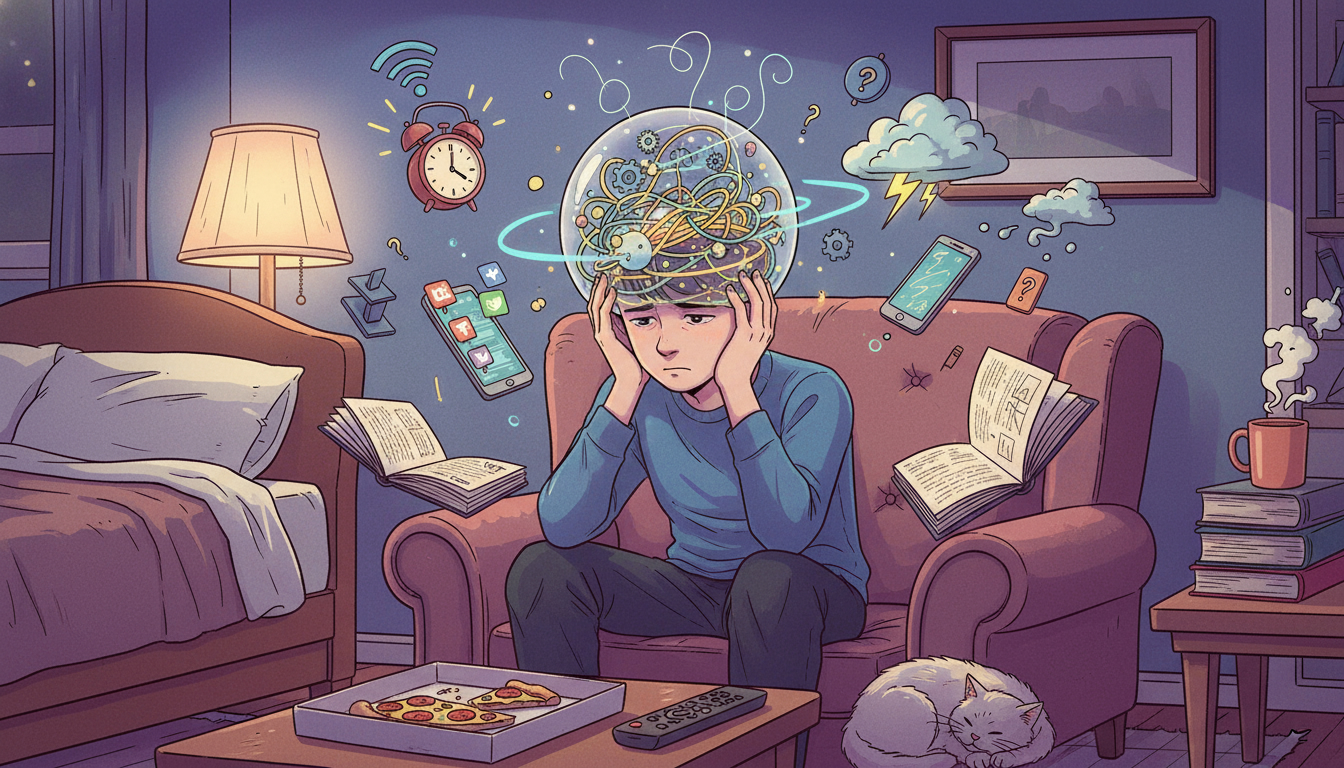
    Let’s walk through what “my head feels weird” might mean, when it’s usually normal, when it’s not, and what you can do right now—without scaring yourself via a 3 a.m. symptom search spiral.

    Important: This is not medical advice or a diagnosis. It’s a guide to help you make sense of what you’re feeling so you can decide what to do next.

    What Does “My Head Feels Weird” Even Mean?

    People use “my head feels weird” to describe a bunch of different sensations, like:

    • Fuzzy or spacey, like your brain has bad Wi‑Fi
    • Lightheaded or floaty
    • Pressure or tightness in the head or face
    • A heavy head or “cotton” feeling
    • Mild buzzing or tingling
    • Feeling detached or not fully present

    The tricky part: these can come from totally different causes—from not drinking enough water to high anxiety to something more serious that needs medical attention.

    Quick takeaway: “Weird head” is a symptom shape-shifter. Getting specific about what it feels like is step one.

    Common, Not-Usually-Emergency Reasons Your Head Feels Weird

    These are very common and often fixable with rest, routine changes, or basic care. Still, if something feels off or is getting worse, talk to a doctor.

    1. You’re Exhausted (Mentally or Physically)

    Not sleeping well, working nonstop, or being “on” all the time can make your head feel:

    • Foggy or slow
    • Heavy or tight
    • Weirdly detached, like you’re watching your life through glass

    Sleep deprivation messes with attention, mood, and perception. Even one bad night can affect your ability to think clearly and regulate emotions the next day.

    What might help:

    • Aim for a consistent sleep schedule (same wake-up time every day, including weekends)
    • Avoid doomscrolling in bed (screens and bright light delay sleep)
    • Try a 10–20 minute nap if you’re safe to rest and feeling wiped

    Takeaway: Before assuming catastrophe, ask: “Have I been sleeping like a raccoon in a dumpster?”

    2. Stress and Anxiety Doing Their Thing

    Stress and anxiety don’t always show up as racing thoughts or panic attacks. Sometimes they are sneaky and show up as physical sensations:

    • Tight band-like pressure around your head (classic tension-type headache pattern)
    • Feeling spacey, unreal, or “not in my body” (often called derealization or depersonalization)
    • Buzzing, tingling, or head “heat” when adrenaline surges

    When you are anxious, your body stays in “fight, flight, or freeze” mode. That affects your breathing, muscle tension, and blood flow, which can all change how your head feels.

    What might help (right now):

    1. Check your breathing. Are you breathing fast and shallow? Try:
      • Inhale through your nose for 4 seconds
      • Hold for 2–3 seconds
      • Exhale slowly for 6–8 seconds
      • Repeat 5–10 times
    2. Drop your shoulders and jaw. Physically unclenching can reduce head tightness.
    3. Label it. Saying to yourself, “This is anxiety showing up in my body” can soften the fear.

    Takeaway: A weird-feeling head is a classic anxiety side quest.

    3. Dehydration, Hunger, or Blood Sugar Swings

    Sometimes your head is not mysterious—it is just mildly annoyed.

    You might notice:

    • Woozy or lightheaded feelings
    • Mild headache
    • Difficulty concentrating or “foggy” thinking

    Common culprits:

    • Not drinking enough water
    • Skipping meals or going long stretches without food
    • Having mostly caffeine and sugar and calling it “nutrition”

    Quick reset checklist:

    • Drink a full glass of water and see how you feel in 20–30 minutes
    • Eat something with protein + complex carbs (for example: peanut butter toast, yogurt and fruit, hummus and crackers)
    • If you have had multiple coffees, consider pausing the caffeine for a bit

    Takeaway: Sometimes your head doesn’t feel weird. It feels hungry.

    4. Screens, Posture, and Eye Strain

    If your head feels weird after staring at a screen, you are not alone.

    Eye strain and poor posture can cause:

    • Pressure around the eyes or forehead
    • Heaviness or a “tight band” feeling
    • Slight dizziness or off-balance sensations when you finally look away

    Staring at screens for long periods also reduces your blink rate, drying your eyes and making them work harder.

    What might help:

    • Follow the 20-20-20 rule: every 20 minutes, look at something 20 feet away for 20 seconds
    • Raise your screen to eye level so you are not craning your neck
    • Take a 5-minute movement break every hour (stretch, walk, anything)

    Takeaway: If your head feels weird after six straight hours of scrolling, it is probably not a mystery illness. It is physics and posture.

    5. Sinus Pressure, Allergies, or Mild Congestion

    If your head weirdness comes with:

    • Pressure in your cheeks, forehead, or behind your eyes
    • Stuffy or runny nose
    • Worse sensations when you bend over

    It might be sinus-related.

    Mucus buildup and inflammation around the sinuses change how your head feels—sometimes more like pressure than pain.

    What might help (general ideas):

    • Hydration and steam (warm showers or a humidifier)
    • Saline nasal rinses or sprays (if you tolerate them)
    • Over-the-counter meds if they are safe for you (always check with a pharmacist or doctor)

    Takeaway: A “weird head” plus a “weird nose” often points to sinuses.

    When a Weird-Feeling Head Might Be More Serious

    A strange feeling in your head can sometimes be a sign of something that needs urgent or at least prompt medical care.

    You should seek emergency care (call 911 or go to the ER) if:

    • The weird feeling comes on suddenly and severely, like a thunderclap
    • You have trouble speaking, understanding, walking, or seeing
    • One side of your face, arm, or leg feels weak or numb
    • You feel like you are about to faint or you do faint
    • You have a stiff neck, high fever, and intense headache
    • You have had a recent head injury and now your head feels very off, you feel confused, or you are vomiting

    These types of symptoms can be linked with serious conditions like stroke, severe infection, or significant head injury. Time matters—do not wait it out “just to see.”

    If your symptoms are not that severe, but you notice any of these, call your doctor or an urgent care line soon:

    • Your head feels weird most days and it is getting worse over time
    • You also have new changes in your vision, coordination, or balance
    • You have frequent migraines or headaches that are changing in pattern, intensity, or triggers
    • You feel persistently detached from reality, low, or hopeless

    Takeaway: If your gut is screaming, “This is not normal for me,” listen. It is always okay to get checked.

    How to Describe Your Weird Head Feeling (So Doctors Actually Get It)

    If you do reach out to a doctor, saying “my head feels weird” is a start, but more detail helps a lot.

    Try answering these questions in your notes app before the appointment:

    1. Where exactly?
      • All over? Front? Back? One side? Behind eyes?
    2. What kind of weird?
      • Pressure, burning, buzzing, heavy, light, tight, floaty, electric, foggy?
    3. How long has this been happening?
      • Minutes, hours, days, weeks? Constant or in episodes?
    4. What makes it better or worse?
      • Lying down, standing up, screens, stress, certain foods, lack of sleep?
    5. Any other symptoms with it?
      • Nausea, vision changes, ringing in ears, neck pain, mood changes, fever?

    You can show that list to your provider. It gives them a clearer picture and can make the visit more efficient.

    Takeaway: More specific is more helpful. “Weird” is your starting point, not the entire description.

    Grounding Yourself When Your Head Feels Unreal or Floaty

    One especially unsettling type of “weird head” feeling is when you feel detached, like you are not fully in your body or the world looks a bit unreal. This can happen with anxiety, panic, burnout, and other conditions.

    If that is you, try a simple grounding routine:

    1. Name 5 things you can see
    2. 4 things you can touch (and actually touch them—chair, clothing, table)
    3. 3 things you can hear
    4. 2 things you can smell (or remember a smell)
    5. 1 thing you can taste (or take a sip of water or tea)

    You can also:

    • Hold something cold (ice pack, chilled can) and notice how it feels
    • Plant your feet flat on the floor and gently press down, noticing the ground supporting you

    This does not fix root causes, but it can turn the intensity down while you figure out next steps.

    Takeaway: Feeling unreal is a known, common human brain glitch—not proof you are “losing it.”

    Simple Checklist: What to Do Right Now

    If your head feels weird right now and you are not having any emergency symptoms, you can try this mini reset:

    1. Safety check
      • Ask honestly: “Am I having any severe, sudden, or scary symptoms (trouble speaking, seeing, walking, weakness, chest pain, high fever, etc.)?”
      • If yes or you are unsure, err on the side of calling a medical professional or emergency services.
    2. Body basics
      • Drink a glass of water
      • Eat something simple if you have not eaten in a while
      • Step away from screens for 10–15 minutes
    3. Breath and posture
      • Do a few slow, deep breaths
      • Unclench your jaw, drop your shoulders, gently stretch your neck
    4. Note your symptoms
      • Jot down what you are feeling, when it started, and anything that seemed to trigger it
    5. Decide on next steps
      • If it passes and you feel okay, that is reassuring
      • If it keeps coming back or worsens, plan to schedule a medical appointment

    Takeaway: You do not have to fix everything right now. You just have to take the next wise step.

    When to Absolutely Not Just “Wait and See”

    To recap, do not sit on it—seek urgent or emergency help—if:

    • Your head suddenly feels extremely strange or painful, like “worst ever”
    • You have weakness, numbness, trouble speaking, understanding, or seeing
    • You are confused, very dizzy, or cannot stand or walk properly
    • You recently hit your head and now feel very off, drowsy, or are vomiting
    • You have a high fever with intense headache and neck stiffness

    If you are thinking, “I do not know if this is that serious, but something feels wrong,” it is completely valid to:

    • Call your doctor’s office or an after-hours nurse line
    • Use telehealth if it is available to you
    • Go to urgent care or the ER if your concern feels urgent

    You are never being dramatic for wanting your brain and head checked out.

    Final Thoughts: You’re Not Weird. Your Brain Is Just Loud.

    Having your head feel weird can be scary, especially when your mind jumps straight to worst-case scenarios.

    Very often, the cause is something common and fixable: stress, sleep, tension, dehydration, screens, or a minor illness. That does not mean you should ignore it—it means you can approach it with curiosity instead of panic.

    Your next steps:

    • Check for any red-flag symptoms (if yes, seek urgent care)
    • Do a quick body and environment reset (water, food, rest, less screen)
    • Write down what you are feeling and for how long
    • Plan to talk to a healthcare professional if it is new, frequent, or worrying you

    Your head feeling weird does not automatically mean something terrible is happening, but it does mean your body is trying to tell you something.

    Listening to it is not overreacting. It is taking yourself seriously—which you deserve.

  • Why Your Heart Races After Eating

    Why Your Heart Races After Eating

    Heart Racing After Eating: Should You Worry or Just Skip Dessert?

    You sit down, enjoy a meal, life is good… and then your heart suddenly feels like it’s auditioning for a drum solo. Fast heartbeat. A weird thump in your chest. Maybe a little shaky or anxious on top. And now you’re wondering: “Is this normal, or do I need to head to the ER?”

    Let’s walk through what might be going on when your heart races after eating, what’s usually harmless, what’s not, and how to calm things down without spiraling on WebMD.

    What Does “Heart Racing After Eating” Actually Mean?

    When people say their “heart is racing after eating,” they usually mean one or more of these:

    • Fast heart rate (tachycardia): resting heart rate jumps above about 100 beats per minute shortly after a meal.
    • Pounding or fluttering sensations (palpitations): you feel your heartbeat in your chest, neck, or even ears.
    • Skipped beats or extra beats: the heart feels like it “drops” or “kicks,” often from benign extra beats.

    A small increase in heart rate after eating is normal. Your body is sending more blood to your digestive system and activating what’s called the “rest and digest” response.

    The problem is when it feels sudden or intense, it comes with other symptoms such as chest pain, shortness of breath, or faintness, or it happens frequently or seems to be getting worse over time.

    Takeaway: A little bump in heart rate after a meal is common. Big, scary jumps or scary symptoms deserve attention.

    Common (Often Harmless) Reasons Your Heart Races After Eating

    There are several everyday triggers that can make your heart pound post-meal. These are very common and usually not dangerous on their own, but they are still worth paying attention to.

    1. Large, Heavy, or High-Carb Meals

    When you eat a big meal, especially one heavy in refined carbs, sugar, or fat, your body has to work harder to digest it. Blood flow shifts to your digestive tract, and your heart may beat faster to keep up.

    Think:

    • Big pasta dinner
    • Huge fast-food combo
    • Holiday buffet “I regret everything” plate

    If your blood sugar spikes quickly from lots of simple carbs or sugar, your body releases insulin to bring it down. Rapid blood sugar swings can trigger a racing heart in some people, along with shakiness or lightheadedness.

    What this feels like:

    • Fifteen to forty-five minutes after eating, your heart feels faster or more noticeable.
    • You might feel sleepy, a bit sweaty, or “off.”

    Takeaway: Big, carb-heavy meals are a classic “heart racing after eating” trigger. Smaller, balanced meals usually stress your system less.

    2. Caffeine and Stimulants (Not Just Coffee)

    Caffeine stimulates your nervous system and can increase heart rate. If your meal includes coffee or espresso, strong tea or energy drinks, pre-workout supplements, chocolate, or caffeine-containing sodas, it can all add up.

    Some people are especially sensitive, and combining caffeine with sugar, such as in sweetened iced coffee or energy drinks, is a double effect.

    Takeaway: If your meals plus caffeine lead to a racing heart, experiment with cutting back or spacing caffeine away from meals.

    3. Alcohol With Meals

    Alcohol can dilate blood vessels, lowering blood pressure, trigger an increase in heart rate to compensate, and act as a direct irritant to the heart’s electrical system in some people.

    There is even a term sometimes used informally, “holiday heart,” for heart rhythm issues or palpitations after heavy drinking, even in people without known heart disease.

    Takeaway: If your heart pounds after dinner with wine or cocktails, alcohol might be a key player.

    4. Dehydration and Electrolyte Imbalances

    If you are even mildly dehydrated, your heart may beat faster to maintain blood flow. Combine that with a big meal or salty food, and your cardiovascular system is juggling a lot at once.

    Low levels of certain electrolytes like potassium or magnesium can also contribute to palpitations or abnormal beats.

    Clues this might be you:

    • Dark urine, dry mouth, or headache
    • You have had vomiting, diarrhea, or intense sweating recently
    • You take medications like diuretics (water pills)

    Takeaway: Drink enough water through the day, not just during meals, and talk to a healthcare professional if you suspect electrolyte issues.

    5. Anxiety, Stress, and the “Oh No, What Is This?” Spiral

    If you have ever felt your heart race, then immediately felt more anxious, which made your heart race even more, you know the feedback loop.

    Anxiety can increase adrenaline, raise heart rate, and make you hyper-aware of normal body sensations. Sometimes, the original trigger might be mild, such as a small bump in heart rate from a meal, but anxiety magnifies it into a full-blown symptom episode.

    Takeaway: Your mind and body are a team. Managing stress and anxiety can reduce how intense or scary post-meal heart sensations feel.

    Medical Reasons Your Heart May Race After Eating

    Now let’s talk about when a racing heart after eating might be part of a bigger medical picture. None of this is a diagnosis, but it is helpful to know what doctors consider.

    1. Reactive Hypoglycemia (Blood Sugar Drops After Meals)

    In some people, blood sugar may drop too low a few hours after eating, particularly after a carb-heavy meal. This is called reactive hypoglycemia.

    Symptoms can include:

    • Racing or pounding heart
    • Shakiness
    • Sweating
    • Hunger or nausea
    • Feeling suddenly weak or anxious

    If you notice you feel worse one to three hours after eating, especially after sugary or high-carb meals, this is worth mentioning to your doctor.

    Takeaway: It is not just high blood sugar that causes issues. Big swings up and down can make your heart race too.

    2. Postprandial Hypotension (Blood Pressure Drop After Eating)

    Postprandial simply means “after a meal.” In postprandial hypotension, your blood pressure drops after eating because blood rushes to your digestive system, and your body does not compensate well.

    Your heart may then beat faster to keep blood flowing.

    Common symptoms include dizziness or lightheadedness after meals, weakness or feeling like you might pass out, blurry vision, and a racing heart.

    This happens more often in older adults or people with certain conditions like Parkinson’s disease, diabetes, or nervous system disorders, but it can occur in others as well.

    Takeaway: If you feel dizzy and your heart is racing after eating, especially when standing up, talk to a doctor about your blood pressure.

    3. Heart Rhythm Issues (Arrhythmias)

    Some arrhythmias, or irregular heart rhythms, can flare up around mealtimes.

    Examples include:

    • Supraventricular tachycardia (SVT): very rapid heart rate that can start and stop suddenly.
    • Atrial fibrillation (AFib): irregular, often fast heartbeat that may be noticed more after certain triggers like alcohol, big meals, or caffeine.

    Signs this might be more than just a busy digestive system include a sudden racing heart that feels very fast and does not settle within a few minutes, feeling faint, weak, or very short of breath, or an irregular, chaotic-feeling heartbeat.

    Takeaway: Intense, sudden, or irregular heart racing, especially with other symptoms, should be checked out urgently.

    4. Thyroid Problems

    An overactive thyroid (hyperthyroidism) can cause a rapid or pounding heart, anxiety or irritability, weight loss despite normal or increased eating, and heat intolerance and sweating.

    When your baseline heart rate is already high from thyroid overactivity, meals and digestion may push it even higher.

    Takeaway: If your heart races frequently, not just after eating, ask about thyroid testing.

    5. Food Sensitivities, Allergies, and Histamine

    Some people notice heart racing or palpitations after certain foods, especially foods they are allergic or sensitive to, or high-histamine foods such as aged cheeses, wine, smoked meats, or some fermented foods.

    More severe allergic reactions can cause hives, swelling, wheezing, trouble breathing, tightness in the throat, and a drop in blood pressure. This is a medical emergency and needs immediate attention.

    Takeaway: If specific foods reliably trigger symptoms, keep a log and discuss this with a professional, especially if other allergy symptoms show up.

    Is It Dangerous If Your Heart Races After Eating?

    It can be, but often it is not.

    More likely to be benign if:

    • It is mild and short-lived, lasting a few minutes.
    • It improves when you stand up, walk, or take a few slow breaths.
    • You have had a normal heart evaluation in the past and no other symptoms.

    More concerning if:

    • You have chest pain, tightness, or pressure.
    • You are short of breath at rest.
    • You feel faint, confused, or actually pass out.
    • You have known heart disease, high blood pressure, or diabetes.
    • The rhythm feels very irregular or extremely fast.

    Bottom line: When in doubt, especially with severe or new symptoms, it is much better to overreact and get checked than to underreact.

    Simple Things You Can Try at Home (Non-Emergency Situations Only)

    These are general lifestyle tips, not medical treatment, but they help many people calm post-meal heart racing.

    1. Shrink Your Meal Size

    Instead of two or three huge meals, try four or five smaller meals or snacks. Balance protein, healthy fat, and fiber at each meal to blunt blood sugar spikes.

    Example: Swap a giant plate of white pasta and garlic bread for a smaller portion of pasta with grilled chicken or tofu, vegetables, and a side salad.

    2. Go Easy on Sugar and Refined Carbs

    High-sugar foods and drinks can cause rapid swings in blood sugar and insulin.

    Try to cut back on soda, energy drinks, and large desserts, choose whole grains and fiber-rich carbs, and pair carbs with protein and fat, such as an apple with peanut butter instead of just apple juice.

    3. Watch the Caffeine and Alcohol Combo

    If you suspect caffeine or alcohol is a trigger, move coffee to earlier in the day or reduce the dose, skip energy drinks especially with meals, and limit alcohol and see if episodes improve.

    You do not have to quit everything forever, but a two to four week experiment can tell you a lot.

    4. Hydrate and Support Electrolytes

    Aim to drink water regularly through the day, not only when you are already thirsty. If you sweat a lot, are very active, or take certain medications, ask your doctor if an electrolyte drink or supplement makes sense for you.

    5. Gentle Movement After Eating

    Instead of collapsing on the couch, take a slow 10 to 15 minute walk or do light stretching. This can help digestion and keep your cardiovascular system balanced.

    6. Calm Your Nervous System

    If anxiety is in the mix, try slow, deep breathing such as inhaling for four seconds, holding for two, and exhaling for six to eight, box breathing with a four-four-four-four pattern, or grounding by looking around and naming several things you can see, feel, and hear.

    Takeaway: Small, consistent tweaks to what and how you eat can significantly reduce after-meal heart symptoms.

    When You Should Call a Doctor (Or 911)

    Call Emergency Services Right Away if:

    • Your heart is racing and you also have chest pain or pressure.
    • You have trouble breathing.
    • You have pain radiating to jaw, arm, or back.
    • You have sudden confusion, trouble speaking, or weakness on one side.
    • You faint or nearly faint.

    Do not drive yourself if you feel like you might pass out.

    Make an Appointment With Your Healthcare Provider Soon if:

    • Your heart often races after eating, even with small meals.
    • You feel dizzy, weak, or “off” after meals.
    • There is a clear pattern with certain foods, but no obvious allergy.
    • You have other ongoing symptoms such as weight loss, fatigue, anxiety, tremors, or frequent sweating.
    • You have a history of heart issues, high blood pressure, or diabetes.

    They might ask detailed questions about your meals and symptoms, check your vital signs, heart, and possibly blood pressure lying versus standing, and order tests like an EKG, Holter monitor, blood work including thyroid and glucose, or an echocardiogram.

    Takeaway: You are not bothering anyone by asking about this. Recurrent heart symptoms are exactly the kind of thing worth a professional opinion.

    How to Track Your Symptoms (So Your Doctor Can Actually Help)

    If your heart races after eating but you are not sure why, a simple log can be incredibly useful.

    For one to two weeks, note the time and content of each meal or snack, caffeine and alcohol intake including amount and time, the approximate time symptoms start after eating, what you feel such as fast heart, skipped beats, dizziness, sweating, or chest discomfort, and how long it lasts.

    You can also use a smartwatch or fitness tracker to capture approximate heart rates. These are not perfect medical devices, but they give helpful trends.

    Bring this log to your healthcare provider. It often speeds up getting to an answer.

    Takeaway: A simple notebook or phone note can turn “my heart is weird sometimes” into useful data.

    The Bottom Line: You’re Not Imagining It—and You’re Not Alone

    A racing heart after eating is common and often tied to large or high-sugar meals, caffeine or alcohol, dehydration, or stress. But sometimes it is a clue to something more, like blood pressure changes, blood sugar swings, thyroid issues, or heart rhythm problems.

    You do not need to panic, but you do deserve clarity. Start with small changes such as smaller, balanced meals, hydration, and less caffeine and alcohol. Track what you feel and when. Loop in a healthcare professional, especially if symptoms are new, intense, or frequent.

    Your heart is doing a lot for you, all day, every day. If it is sending you signals after you eat, it is worth listening.

  • Why Is My Heart Racing Right Now?

    Why Is My Heart Racing Right Now?

    Why Is My Heart Racing Right Now?

    You are sitting there minding your business when suddenly your heart decides to audition for a drum solo. No warning. No treadmill. Just boom-boom-boom in your chest.

    If you are thinking, “Why is my heart racing right now — and should I be freaking out?”, this will walk through what might be going on, when it is usually harmless, when it is not something to ignore, and what you can do in the moment.

    Quick note: This is for education, not diagnosis. If something feels seriously wrong, do not overthink it — get help.

    What Does “Heart Racing” Actually Mean?

    People describe a racing heart in a bunch of ways:

    • Pounding or thudding in your chest
    • Heartbeat that feels faster than normal
    • Fluttering, skipping, or “flip-flop” sensations
    • Feeling your pulse in your neck, ears, or chest

    Medically, a resting heart rate over about 100 beats per minute is called tachycardia. But you may feel like your heart is racing even below that if you are not used to noticing your heartbeat.

    Takeaway: “Heart racing” is usually about either speed (fast), force (pounding), rhythm (irregular) — or all three.

    Common (and Surprisingly Normal) Reasons Your Heart Is Racing Right Now

    Here are some causes that sound dramatic but are often very fixable.

    1. Stress, Anxiety, or a Mini Adrenaline Surge

    When you are anxious, your body flips into fight-or-flight mode. Your brain signals your adrenal glands to release adrenaline. That hormone:

    • Speeds up your heart rate
    • Makes your breathing faster or shallower
    • Can cause chest tightness, sweating, or a “wired” feeling

    You might notice this:

    • Right after a stressful text, email, or conflict
    • While you are doomscrolling bad news
    • Out of nowhere — because your brain revisited something stressful

    Panic attacks can make your heart race, pound, or feel like it is skipping along with dizziness or a sense of “I am about to die” — even though many people are medically fine afterward.

    Quick self-check:

    • Has anything stressful happened today?
    • Did your heart start racing around the same time as feeling worried, scared, overwhelmed, or upset?

    If yes, anxiety is high on the suspect list.

    Takeaway: Your body might not be broken; it might just be reacting (loudly) to stress.

    2. Caffeine, Energy Drinks, or Stimulants

    Coffee, energy drinks, pre-workout, certain teas, chocolate, and some medications can all crank up your heart rate.

    Common culprits:

    • Large coffees or multiple cups back-to-back
    • Energy shots or drinks
    • Strong pre-workout powders
    • Decongestants (like some cold medicines) and ADHD stimulants

    Some people are more sensitive to caffeine and stimulants than others. Even a “normal” amount can cause:

    • Jitters or shakiness
    • Racing heart
    • Feeling wired but tired

    Questions to ask yourself:

    • Did you have caffeine or an energy drink in the past 4–6 hours?
    • Did you increase your dose recently (stronger coffee, new pre-workout, new pill)?

    Takeaway: Your heart may be reacting to what is in your cup, not what is in your soul.

    3. Dehydration or Not Eating Enough

    Low fluid intake or low blood sugar can push your body into “compensate mode,” which often means:

    • Faster heart rate
    • Lightheadedness or dizziness when you stand up
    • Weakness or shakiness

    This can happen if you:

    • Have not eaten in many hours
    • Are on a new diet and barely eating carbs
    • Spent time in heat, sweated a lot, or exercised and did not rehydrate

    Fast check:

    • When was your last real meal?
    • How much water have you had today, really?

    Takeaway: Sometimes your heart is racing because your body is quietly whispering, “Water and food. Now, please.”

    4. Normal Response to Movement or Position

    If you just:

    • Walked up stairs
    • Rushed across the room
    • Stood up quickly after sitting or lying down

    Your heart rate will naturally rise to pump blood where it needs to go. If you are out of shape, tired, or recovering from illness, you may notice this more.

    There is also something called orthostatic intolerance — where standing up makes your heart beat faster and you feel a bit off — but that is something a doctor would need to evaluate if it is frequent.

    Takeaway: If your heart speeds up briefly with movement and quickly settles, that can be normal.

    5. Illness, Fever, or Infection

    When you are sick — even with something like the flu or a viral infection — it is common for your heart rate to go up.

    You might notice:

    • Fever or chills
    • Cough, sore throat, or body aches
    • Feeling weak, wiped out, or just “off”

    Your heart beats faster to help your body fight infection and move oxygen more quickly.

    Takeaway: Feeling sick plus a racing heart is not rare, but it is still something to mention to a healthcare provider, especially if you feel very unwell.

    When a Racing Heart Might Be More Serious

    Here are situations where you should not just shrug it off.

    Red-Flag Symptoms: Do Not Ignore These

    You should seek immediate medical help (ER or emergency services) if your heart is racing and you have:

    • Chest pain, pressure, squeezing, or discomfort
    • Shortness of breath that is new or severe
    • Fainting or feeling like you are about to pass out
    • Pain in your jaw, arm, back, or neck
    • A feeling of impending doom or something being very wrong
    • Confusion, trouble speaking, or weakness on one side of the body

    Those can be signs of something serious like a heart attack, dangerous heart rhythm, stroke, or another emergency.

    Also get urgent care if:

    • Your heart rate is very high and not slowing down at rest (for example, staying above 120–130 beats per minute for a while when you are just sitting)
    • The rhythm feels wildly irregular (not just a single skipped beat here or there)
    • You have a known heart condition and this feels very different from your usual

    Takeaway: If you are asking, “Is this an emergency?” and your gut says “maybe,” it is better to get checked.

    Could It Be a Heart Rhythm Problem (Arrhythmia)?

    Sometimes a racing heart comes from an arrhythmia — an abnormal heart rhythm.

    Some examples you might hear from a doctor:

    • Supraventricular tachycardia (SVT): Sudden episodes of very rapid heart rate that can start and stop abruptly.
    • Atrial fibrillation (AFib): Irregular, often fast heartbeat that may feel like fluttering or pounding.
    • Premature beats (PACs, PVCs): Extra beats that can feel like flutters, thumps, or “skipped beats.”

    These can be benign (more annoying than dangerous) or potentially serious — especially if you have other heart disease, are older, or have other medical conditions.

    Only a healthcare professional with tools like an ECG (EKG) or heart monitor can tell you for sure what type of rhythm you have.

    Signs it is worth getting evaluated soon:

    • Repeated episodes of heart racing for no obvious reason
    • Episodes that last many minutes to hours
    • Family history of sudden cardiac death or serious arrhythmias
    • You feel weak, dizzy, or breathless when it happens

    Takeaway: A racing heart can be harmless, but if it is frequent, intense, or worrying, a proper workup is the safe move.

    What to Do Right Now If Your Heart Is Racing

    If you are not having severe symptoms like chest pain, fainting, or trouble breathing, here are steps you can try to calm things down and gather useful information.

    1. Check the Basics

    • Sit or lie down somewhere safe. Do not keep walking around or driving if you feel off.
    • Check your pulse on your wrist or neck, or use a smartwatch or fitness tracker if you have one.

    Note roughly:

    • How fast it seems (for example: “around 110 bpm”)
    • Whether it feels regular (steady) or irregular (all over the place)
    • What you were doing right before it started

    Write this down or put it in your phone. It is very useful for a doctor later.

    2. Try a Slow-Breathing Reset

    You can help your nervous system shift gears using your breath.

    Try this for 1–3 minutes:

    1. Inhale gently through your nose for a count of 4.
    2. Hold your breath for a count of 4.
    3. Exhale slowly through pursed lips for a count of 6–8.
    4. Repeat.

    If holding your breath feels uncomfortable, skip the hold and just inhale for 4 and exhale for 6–8.

    Often, this can lower anxiety and help your heart rate drift downward if the cause is stress or adrenaline.

    3. Remove Obvious Triggers

    Ask yourself:

    • Have I had caffeine or energy drinks recently? If so, no more today.
    • Am I overheated? Move to a cooler place and remove extra layers.
    • Am I dehydrated? Sip water slowly.
    • Did I skip eating? Have a light, balanced snack if it is safe for you.

    4. Try Grounding Your Mind

    Because anxiety and heart racing feed each other (your heart races, you panic, your heart races more), grounding can help break the loop.

    You can try the 5–4–3–2–1 technique:

    • Name 5 things you can see
    • 4 things you can feel
    • 3 things you can hear
    • 2 things you can smell
    • 1 thing you can taste

    Giving your brain a specific task can lower that spiraling “what if?” chatter.

    5. Decide What Level of Care You Need

    After a few minutes of calm breathing and sitting:

    • If your heart rate is still very high, you feel worse, or you have any red-flag symptoms, seek urgent or emergency care.
    • If it is slowing down, you feel more normal, and there are no other serious symptoms, it is still wise to mention this to your primary care provider and ask if you need an ECG or heart monitor.

    Takeaway: Calm the body, gather data, then decide whether to ride it out or get seen — but do not ignore your instincts.

    How to Reduce Future “Why Is My Heart Racing?” Moments

    You cannot control everything, but you can lower how often this happens or how intense it feels.

    1. Tame the Stimulants

    • Set a caffeine cutoff time (for example, none after 2 p.m.).
    • Track how you feel after coffee, energy drinks, or pre-workout.
    • Consider cutting back for a week or two to see if racing episodes drop.

    2. Support Your Body’s Basics

    • Hydration: Carry a water bottle and actually drink from it.
    • Regular meals: Do not go many hours running only on caffeine.
    • Sleep: Aim for something in the 7–9 hour range if you can.

    Your heart likes boring consistency.

    3. Build Stress Valves Into Your Day

    You do not have to become a meditation expert, but even small practices help:

    • 5–10 minutes of slow breathing or a guided meditation
    • Short walks outside
    • Stretching or light yoga
    • Journaling or brain-dumping your worries

    The lower your baseline stress, the less often your body overreacts with adrenaline dumps.

    4. Get a Proper Medical Checkup

    Especially if:

    • You are having repeated heart-racing episodes
    • You have a history of heart issues, thyroid problems, anemia, or other medical conditions
    • You are on medications that might affect heart rate

    A provider might:

    • Do blood tests (for anemia, thyroid function, electrolytes, and more)
    • Order an ECG (EKG)
    • Give you a wearable heart monitor

    It is not about being dramatic — it is about ruling out the big stuff so your brain can stop going to worst-case scenarios every time your chest thumps.

    Takeaway: Small daily habits plus a good checkup can reduce both the episodes and the anxiety around them.

    When Googling “Heart Racing Right Now” Makes Everything Worse

    The pattern often goes like this: your heart starts pounding, you search your symptoms online, and within a few clicks, you are convinced it is the worst possible thing.

    Information is helpful until it tips into panic fuel.

    If you catch yourself doom-searching:

    • Step away from the screen for a bit.
    • Focus on what you actually know: your symptoms, your history, and what your body is doing right now.
    • Use that energy to either calm yourself with the exercises above or call a real human professional who can evaluate you.

    Takeaway: The internet is not your cardiologist. Use it to get informed, not terrified.

    The Bottom Line: What Your Racing Heart Might Be Saying

    If your heart is racing right now, it could be:

    • A normal reaction to stress, caffeine, dehydration, or movement
    • A sign your body wants basics like rest, food, or water
    • A symptom of anxiety, panic, or being chronically on edge
    • Occasionally, a warning sign of a heart rhythm issue or another medical problem

    You do not have to figure it all out alone. If you are scared, symptoms are intense, or something just feels off in a serious way, seeking medical care is not overreacting — it is being careful with the only heart you have.

    And if this turns out to be “just” stress or a benign rhythm quirk, that is still valuable information. It means you can work on triggers, build calming habits, and learn your body’s patterns.

    So take a deep breath in, a slow breath out, and if you are in doubt about your racing heart, reach out to a professional who can check you properly. You are not strange; you are just a human with a very dramatic internal drum section.

  • Is 90/60 Blood Pressure Dangerous?

    Is 90/60 Blood Pressure Dangerous?

    Is 90/60 Blood Pressure Dangerous?

    If you have ever checked your blood pressure and seen 90/60, you may have wondered whether that is a sign of excellent health or something dangerous.

    This article walks through what 90/60 actually means, when it is usually fine, and when it is a red flag that deserves a call to your doctor.

    Quick disclaimer: This is educational, not personal medical advice. If you are worried about your blood pressure or feeling unwell, talk to a healthcare professional.

    What Does 90/60 Blood Pressure Mean?

    Blood pressure is written as two numbers:

    • Systolic (top number) – the pressure when your heart beats
    • Diastolic (bottom number) – the pressure when your heart relaxes between beats

    So 90/60 mmHg means:

    • Your heart’s pumping pressure is 90
    • Your resting pressure between beats is 60

    Most guidelines consider normal blood pressure to be around 120/80 mmHg, and low blood pressure (hypotension) is usually defined as less than 90 systolic or less than 60 diastolic.

    That means 90/60 is right on the border of what many would call “low,” but it is not automatically dangerous.

    Takeaway: 90/60 is low-ish but not automatically a problem—context matters a lot.

    Is Blood Pressure 90/60 Dangerous?

    Sometimes no, sometimes yes. The key question is: How do you feel?

    When 90/60 Is Usually Not Dangerous

    • You feel totally fine: no dizziness, no fainting, no chest pain, no shortness of breath.
    • This is your usual blood pressure and has been low for years.
    • You are young, healthy, and active (especially endurance athletes, people who exercise regularly, or are naturally slim).
    • Your doctor has checked you out before and said, “Yes, that is your normal.”

    For many healthy adults, a blood pressure of 90/60 is just their normal baseline and may even be associated with a lower lifetime risk of heart disease compared with consistently high blood pressure.

    When 90/60 Can Be Dangerous

    Low blood pressure becomes a concern when it is new, sudden, or causing symptoms. That can signal that your organs are not getting enough blood flow.

    Red flag scenarios include:

    • You feel dizzy, lightheaded, or like you might faint, especially when standing up.
    • You have blurred vision, confusion, or trouble thinking clearly.
    • You feel weak, shaky, or unusually tired for no clear reason.
    • You notice cold, clammy, or pale skin.
    • You have chest pain, shortness of breath, or a rapid, weak pulse.
    • Your low reading comes after vomiting, diarrhea, heavy sweating, blood loss, or dehydration.
    • You recently started or changed medications. Blood pressure pills, heart medications, diuretics, some antidepressants, or medications for Parkinson’s and others can all lower blood pressure.

    In those cases, low blood pressure (including 90/60) may reflect something more serious going on in your body.

    Takeaway: 90/60 on a screen is not the whole story. No symptoms and long-term stability is often fine. New, sudden, or with symptoms is when we worry.

    When Is Blood Pressure 90/60 an Emergency?

    It helps to draw a clear line between “monitor this” and “get help now.”

    Call emergency services or seek emergency care immediately if you have a reading around 90/60 and:

    • Chest pain or pressure
    • Shortness of breath or trouble breathing
    • Fainting or passing out
    • Severe weakness, confusion, or difficulty waking up
    • Signs of shock, such as:
      • Very pale, cool, or clammy skin
      • Fast, weak pulse
      • Fast, shallow breathing

    These symptoms can signal serious problems like internal bleeding, heart issues, severe infection (sepsis), or a major allergic reaction, where blood pressure being low is part of a bigger emergency.

    Takeaway: 90/60 with scary symptoms is an emergency. Do not wait it out; get help.

    What If I Feel a Little Off, but Not Terrible?

    If your blood pressure is about 90/60 and you feel mildly off—like slightly dizzy or tired—but not in crisis, you still should not ignore it.

    You should contact your doctor the same day (or use an urgent care or telehealth service) if:

    • The low reading is new for you, especially if you are usually closer to 110–130 systolic.
    • You have had several readings under 90/60 over a day or more.
    • You have recurrent dizziness, “head rushes,” or near-fainting, especially when standing.
    • You recently started a new medication or had the dose of a current one changed.
    • You have a history of heart disease, diabetes, kidney issues, or hormonal problems.

    Your doctor may:

    • Review your medications (some may need adjustment).
    • Check for dehydration, blood loss, or infection.
    • Consider tests for heart or endocrine issues, such as adrenal or thyroid problems.
    • Ask you to track your blood pressure at home at different times of day.

    Takeaway: Mild but persistent symptoms with low blood pressure are a “call your doctor” situation, not a “ignore it” situation.

    Common Causes of a 90/60 Blood Pressure

    Seeing 90/60 does not automatically mean something is wrong, but there are common reasons your reading might land there.

    1. Your Body’s Natural Setting

    Some people are just built for low blood pressure. This often includes:

    • Younger adults, especially women
    • Physically active people or endurance athletes
    • People with a smaller body size

    If this has always been your range and you feel great, your body may simply run on a lower pressure without any issue.

    Mini takeaway: For some people, 90/60 is simply their normal.

    2. Dehydration

    Not drinking enough fluids, sweating a lot, or losing fluid from vomiting or diarrhea can lower blood volume, and that can drop your blood pressure.

    Clues this might apply to you include:

    • Dark yellow urine or peeing less often
    • Feeling thirsty, dry-mouthed, or lightheaded
    • Recent illness, heat exposure, or hard workouts

    Mild dehydration may improve with fluids and rest, but if you cannot keep fluids down or feel very weak or dizzy, you should seek medical care.

    3. Medications

    Several medications can push your blood pressure down, including:

    • Blood pressure medications (ACE inhibitors, ARBs, beta blockers, diuretics, and others)
    • Some heart medications
    • Certain antidepressants
    • Medications for Parkinson’s disease
    • Drugs for erectile dysfunction, especially if combined with nitrates

    If your 90/60 reading started after a new prescription or dose change, call the prescribing provider. Do not stop medications abruptly unless you are told to.

    4. Standing Up Too Fast (Orthostatic Hypotension)

    If your blood pressure drops when you go from lying or sitting to standing and you feel dizzy or “woozy,” this could be orthostatic hypotension.

    It can be caused by dehydration, medications, or sometimes nervous system conditions.

    This is worth discussing with a doctor, especially if you have nearly fainted or actually fainted.

    5. Underlying Medical Conditions

    Less commonly, low blood pressure like 90/60 can be part of a bigger medical issue, such as:

    • Heart problems, such as heart failure or heart valve disease
    • Hormonal issues, such as adrenal gland problems or severe hypothyroidism
    • Severe infection (sepsis)
    • Significant blood loss, internal or external

    These are usually accompanied by other clear symptoms, such as pain, fever, major fatigue, or shortness of breath.

    Takeaway: Sometimes 90/60 is just your normal; other times it is your body saying something is wrong. The context and your symptoms tell the story.

    How Accurate Is That 90/60 Reading?

    Before you panic or feel proud of a very low reading, it helps to check how the reading was taken.

    Home monitors and wrist cuffs are not perfect. To improve accuracy:

    1. Sit quietly for 5 minutes before measuring.
    2. Keep your feet flat on the floor, not crossed.
    3. Ensure your back is supported and your arm is resting on a table so the cuff is at heart level.
    4. Avoid caffeine, nicotine, or exercise for at least 30 minutes beforehand if you want a resting reading.
    5. Use the right cuff size, as a cuff that is too small or too big can skew results.
    6. Take two or three readings, one minute apart, and average them.

    If one rushed reading says 90/60 but others are normal (for example, 105/70 or 112/68), you are probably fine.

    Takeaway: One odd reading does not define you. Technique and repeat checks matter.

    What Should I Do If My Blood Pressure Is 90/60?

    Here is a simple decision guide you can adapt to your situation.

    If You Feel Completely Fine

    • Repeat the reading after sitting calmly for a few minutes.
    • Check at different times of day for a couple of days.
    • If 90/60 (or nearby) is consistent and you have no symptoms, mention it at your next routine visit if you have not already.

    If your doctor already knows your numbers and is not worried, you probably do not need to stress about it.

    If You Feel Mildly Off

    If you feel lightheaded or a bit weak, but not severely ill:

    • Sit or lie down to avoid falling.
    • Drink water, unless you have been told to limit fluids.
    • Avoid sudden position changes; stand up slowly and hold onto something for balance.
    • Call your doctor or clinic the same day to ask if you should be seen.

    If You Feel Very Unwell or Have Red-Flag Symptoms

    • Do not drive yourself if you feel faint or confused.
    • Seek urgent or emergency care depending on the severity.
    • If in doubt, err on the side of going in, especially with chest pain, breathing trouble, or fainting.

    Takeaway: What you do next depends less on the number and more on how your body is acting.

    Is Lower Blood Pressure Always Better?

    Many people hear that “lower is better” when it comes to blood pressure.

    That is mostly true when we are talking about people with high blood pressure (hypertension) bringing their numbers down from, for example, 150/95 into the 120s or low 130s. In that group, lower usually means lower risk of stroke, heart attack, and kidney damage.

    But blood pressure that is too low can also be a problem if it causes:

    • Fainting and falls
    • Reduced blood flow to vital organs
    • Fatigue, dizziness, and trouble functioning

    The real goal is “healthy for you,” not “as low as possible.”

    For some people, that is 118/76. For others, it might be 100/65. For a few, it may be around 90/60 with zero symptoms.

    Takeaway: The best blood pressure is the one that keeps your organs healthy and lets you live your life without feeling half-conscious.

    Quick FAQ: Common Questions About 90/60 Blood Pressure

    1. Is Blood Pressure 90/60 Dangerous During Pregnancy?

    Pregnancy naturally changes blood pressure, and many pregnant people experience lower readings in the first and second trimester.

    However, any dizziness, fainting, or very low readings in pregnancy should be discussed with an obstetric provider or midwife. Do not self-diagnose in this situation—pregnancy has its own considerations.

    2. Is 90/60 OK for Older Adults?

    In older adults, very low blood pressure can increase the risk of falls, fractures, and reduced blood flow to the brain and other organs.

    If you are older, or caring for someone who is, and regularly seeing readings around 90/60, especially with dizziness or unsteadiness, this should be reviewed with a healthcare provider. Sometimes blood pressure medications need adjustment.

    3. Can I Exercise If My Blood Pressure Is 90/60?

    If 90/60 is normal for you and you feel well, most people can safely exercise, and regular activity is great for overall heart health.

    If low blood pressure is new or making you feel faint, weak, or unwell, skip intense workouts and talk to your doctor first.

    4. What Lifestyle Habits Help If My Blood Pressure Tends to Run Low?

    If your doctor has confirmed that your lower pressure is not caused by a serious condition, they might suggest:

    • Staying well hydrated throughout the day
    • Eating small, frequent meals instead of big heavy ones
    • Standing up slowly, especially in the morning
    • Wearing compression stockings in some cases
    • Adjusting medications that may be pushing your pressure too low

    Never start increasing salt or changing medications without medical guidance.

    The Bottom Line: Is 90/60 Dangerous?

    • By itself, 90/60 is not automatically dangerous.
    • For many healthy people, it is just a normal low reading.
    • It becomes concerning when it is new, sudden, or accompanied by symptoms like dizziness, fainting, chest pain, shortness of breath, confusion, or signs of shock.
    • If you are ever in doubt, especially with serious symptoms, get medical help right away.

    If this is a one-off reading and you feel fine, do not panic. Recheck it properly and bring a short log of readings to your next medical appointment.

    Your blood pressure is one data point in a complex system: your body. The goal is not a perfect number—it is a number at which you feel well and stay safe.