Author: James

  • Heart Racing After Shower: Should You Worry?

    Heart Racing After Shower: Should You Worry?

    Heart Racing After a Shower: What It Might Mean

    Disclaimer: This article is for general information only and isn’t medical advice or a diagnosis. If you have severe symptoms or think it may be an emergency, call your local emergency number.

    You step out of the shower feeling all clean and refreshed and then notice your heart is pounding like you just sprinted up 5 flights of stairs. You weren’t running. You were just shampooing. So why is your heart racing after a shower, and when is it something you should actually worry about?

    Let’s unpack what might be going on, what’s probably harmless, and when it’s time to get checked out.

    First, What Counts as a “Racing” Heart After a Shower?

    Your heart rate naturally changes throughout the day. It speeds up when you stand up quickly, get warm (like in a hot shower), feel anxious, stressed, or startled, or move around more than usual.

    A “racing heart” usually means you’re feeling:

    • Fast heartbeat (often over 100 beats per minute when you’re just standing or resting)
    • Strong, pounding beats in your chest, neck, or throat
    • A fluttering, skipping, or flip-flop sensation (palpitations)

    Feeling your heart more than usual for a short time after a shower isn’t automatically dangerous. The big questions are: How fast is it? How long does it last? What else are you feeling with it?

    Quick takeaway: Not every post-shower heart thump is a medical emergency, but paying attention to the details matters.

    Why Can Your Heart Race After a Shower?

    Let’s walk through some of the most common (and often harmless) reasons this happens.

    1. Hot Water and Widened Blood Vessels

    Hot showers cause your blood vessels to widen (dilate) to help your body release heat. When your vessels widen, blood pressure can drop a bit and your body may respond by speeding up your heart rate to keep blood flowing where it needs to go.

    This is a normal reflex. Many people feel a little lightheaded or notice a faster heartbeat after a very hot, steamy shower because of these circulation changes.

    You may notice this more if:

    • You take long, very hot showers
    • You stand up quickly at the end
    • The bathroom is also very warm and steamy

    Takeaway: Extra-hot, long showers can temporarily boost your heart rate. Warm is usually better than scalding if this bothers you.

    2. Standing Up and Moving After Lying or Sitting

    If you’re going from lying in bed or sitting on the couch straight into the shower, your body does a little postural adjustment dance. Standing pulls blood toward your legs and lower body and your nervous system reacts by tightening blood vessels and raising heart rate.

    For some people, especially if they’re dehydrated, under-fueled, or have a sensitive nervous system, this can cause heart racing, lightheadedness, and feeling like you need to sit down.

    In some cases, this can be related to conditions like orthostatic intolerance or POTS (postural orthostatic tachycardia syndrome), where the heart rate jumps a lot when standing up.

    Takeaway: A big heart-rate jump when you stand, especially from bed to shower, can be more noticeable in the bathroom but isn’t always caused by the shower itself.

    3. Anxiety and the “Bathroom Amplifier” Effect

    Anxiety and panic can absolutely make your heart race. And bathrooms are sneakily great at making you notice your heartbeat. It’s quiet, you’re often alone, you might already be thinking about your health or body, and you may feel slightly breathless from the warm steam.

    Your brain picks up on a few extra thumps and suddenly goes, “Wait, are we okay?” That worry triggers more adrenaline, which makes your heartbeat faster and stronger, your breathing a bit quicker, and you hyper-focus on every sensation. This can spiral into a mini panic loop.

    If your heart racing after a shower comes in waves of intense fear, is paired with chest tightness, shakiness, tingling, or feeling of doom, and peaks within 10–20 minutes then fades, it might be more about panic or anxiety than the shower itself.

    Takeaway: Sometimes the shower isn’t the cause, it’s just where you notice your anxious body the most.

    4. Dehydration or Not Eating Enough

    Taking a hot shower after barely drinking water all day can leave you with heart pounding, feeling weak or shaky, and a bit dizzy. Being dehydrated or low on fuel means your body has to work harder to maintain blood pressure and circulation, especially when you’re warm.

    You may be more prone to:

    • Faster heart rate
    • Feeling faint when getting out of the shower
    • Needing to sit down afterward

    If your urine is very dark, you barely drank all day, or you shower first thing after skipping dinner or breakfast, this can be part of the picture.

    Takeaway: A dry body in a hot, steamy environment means your heart has to pick up the slack.

    5. Stimulants, Medications, or Substances

    Certain things you eat, drink, or take can prime your heart to race, and the shower is just when you happen to notice it.

    Common culprits include:

    • Caffeine (coffee, energy drinks, pre-workout)
    • Nicotine (vaping, smoking, nicotine pouches)
    • Decongestants (like pseudoephedrine in cold medicine)
    • Some inhalers
    • Thyroid medications or high thyroid hormone levels
    • Certain mental health medications
    • Recreational drugs (cocaine, amphetamines, MDMA, etc.)

    If your heart is already a bit fast or sensitive from one of these, adding heat, standing up, or anxiety can lead to more noticeable pounding.

    Takeaway: If your heart racing after showers lines up with caffeine, cold meds, or other stimulants, that’s an important clue to mention to your doctor.

    6. Underlying Heart Rhythm or Health Issues

    Most of the time, post-shower heart racing is from normal body responses such as heat, position changes, or anxiety. But sometimes, it can reveal an underlying heart or circulation problem, such as:

    • Arrhythmias (irregular heart rhythms), like supraventricular tachycardia (SVT) or atrial fibrillation
    • Inappropriate sinus tachycardia (heart beats faster than expected at rest)
    • POTS or other autonomic nervous system conditions
    • Anemia (low red blood cells)
    • Overactive thyroid (hyperthyroidism)
    • Heart valve or structural heart disease

    These conditions typically show up in more situations than just the shower, but the shower might make them more obvious.

    Takeaway: If your heart races in lots of everyday situations, not just after showers, or you feel clearly unwell, it deserves a medical workup.

    When Is Heart Racing After a Shower Probably Okay?

    Nothing replaces a proper medical evaluation, but there are patterns that are often more reassuring.

    Your post-shower heart racing is more likely to be benign if:

    • It happens mainly after very hot or long showers
    • It eases within a few minutes of cooling down or sitting
    • You do not have chest pain, severe shortness of breath, or passing out
    • You recently had caffeine, were stressed, or didn’t drink much water
    • Your resting heart rate the rest of the day is generally normal

    You can still bring this up with a healthcare professional, but it’s less likely to be an emergency.

    Takeaway: Short-lived, mild racing that clearly links to heat, stress, or dehydration is usually less concerning.

    When to Pay Close Attention: Red Flags

    Here’s where we stop shrugging it off and start taking it seriously.

    Call emergency services right away (911 in the U.S.) or go to the nearest ER if, after a shower, your heart racing is paired with:

    • Chest pain, pressure, or tightness, especially if it spreads to your jaw, neck, back, arm, or shoulder
    • Trouble breathing or feeling like you can’t catch your breath
    • Fainting or nearly passing out
    • Sudden confusion, trouble speaking, facial drooping, or weakness on one side (stroke signs)
    • Severe, ripping chest or upper back pain
    • A heart rate that is extremely fast (for example, 180+ beats per minute) and not slowing down at all

    These can be signs of a heart attack, dangerous arrhythmia, stroke, or other emergency situation. If any of these show up, do not wait to see if a shower adjustment helps. Get emergency care.

    Takeaway: Heart racing plus chest pain, severe shortness of breath, fainting, or stroke-like symptoms is an emergency.

    When to Schedule a Non-Emergency Doctor Visit

    You should book an appointment with a healthcare professional if:

    • Your heart racing after showers happens frequently (for example, several times per week)
    • Episodes last longer than 10–15 minutes, even after sitting, cooling off, and hydrating
    • You also notice:
      • Dizziness or feeling faint
      • New or worsening fatigue
      • New shortness of breath with everyday activities
      • Swelling in legs, ankles, or feet
      • Unexplained weight loss, tremor, heat intolerance (possible thyroid issues)
    • You have a history of heart disease, high blood pressure, diabetes, or high cholesterol
    • You’re pregnant or recently postpartum
    • You have a strong family history of sudden death, arrhythmias, or early heart disease

    At that visit, your clinician might check your vitals and blood pressure sitting and standing, listen to your heart and lungs, order blood tests (for anemia, thyroid problems, electrolytes, and more), order an ECG (electrocardiogram), and possibly suggest a heart monitor worn for 24 hours or longer to capture your rhythm during episodes.

    Takeaway: If it’s happening often, lasting longer, or you feel “off” in other ways, getting checked is absolutely worth it.

    Simple Tweaks to See If Your Symptoms Improve

    While you’re waiting for an appointment, or if your symptoms sound more on the mild side, some practical steps may reduce heart racing after showers.

    1. Turn Down the Water Temperature

    Try switching from very hot to warm showers, keeping showers shorter (5–10 minutes instead of 20), and cracking a window or using a fan to reduce steam. See if a week of gentler showers changes how your heart feels.

    2. Move More Gradually

    Give your body time to adjust. When getting out of bed, sit first, then stand. Avoid suddenly standing up quickly in the shower. If you feel lightheaded, sit down or squat safely until it passes.

    3. Hydrate and Fuel

    Try, if medically safe for you, drinking a glass of water 20–30 minutes before your shower, not showering on an empty stomach if you tend to feel weak or shaky, and adding a bit of salt to your diet if your doctor has said it’s okay and you tend to have low blood pressure. Ask before changing salt intake.

    4. Watch Caffeine and Stimulants

    If you notice a pattern like energy drink plus hot shower equals heart pounding, experiment with cutting back caffeine or spacing it out, avoiding vaping or smoking right before showering, and checking labels on cold or allergy medicines, since many can raise heart rate.

    5. Calm Your Nervous System

    If anxiety is part of this, as it is for many people, try slow, diaphragmatic breathing while in or after the shower (for example, inhale for 4 seconds, exhale for 6–8 seconds), grounding techniques (notice 5 things you can see, 4 you can feel, 3 you can hear), and reminding yourself: “My body is reacting to heat and standing — this feels scary but isn’t automatically dangerous.”

    Takeaway: Small, low-risk changes (cooler showers, better hydration, slower movements) can give you clues about what’s driving your symptoms.

    What to Track Before Talking to a Doctor

    If you decide to see a healthcare professional, bringing good notes can speed things up.

    For 1–2 weeks, jot down:

    • When it happens: morning, evening, after exercise, only with hot showers?
    • How fast your heart is: if you can, count beats for 15 seconds and multiply by 4, or use a smartwatch or fitness tracker (but don’t obsess)
    • How long it lasts: 30 seconds, 5 minutes, 30 minutes?
    • Other symptoms: chest discomfort, shortness of breath, dizziness, headache, shaking, feeling of panic
    • What you had before: caffeine, alcohol, large meals, cold meds, poor sleep, dehydration

    This kind of log helps your clinician decide whether you may need more tests like a heart monitor, echocardiogram, or blood work.

    Takeaway: Notes turn a vague “my heart just races” into a clear pattern your doctor can work with.

    The Bottom Line

    A heart that races after a shower is very common and often related to hot water and dilated blood vessels, standing and position changes, dehydration or low blood pressure, and anxiety or panic.

    But it can occasionally unmask something more serious, especially if it happens frequently and lasts a long time, you feel faint, have chest pain, or can’t catch your breath, or you have other risk factors or medical conditions.

    If your gut is nagging you about it, it’s reasonable and smart to bring it up with a healthcare professional. You’re not being dramatic; you’re paying attention.

    In the meantime, experiment with cooler, shorter showers, better hydration, gentler transitions, and less caffeine. See how your body responds, and don’t hesitate to seek help if the red flags apply to you.

    Sources

  • Heart Racing After Eating: Normal Or Not?

    Heart Racing After Eating: Normal Or Not?

    Heart Racing After Eating: What It Might Mean

    Disclaimer: This article is for general information only and isn’t medical advice or a diagnosis. If you have severe symptoms or think it may be an emergency, call your local emergency number.

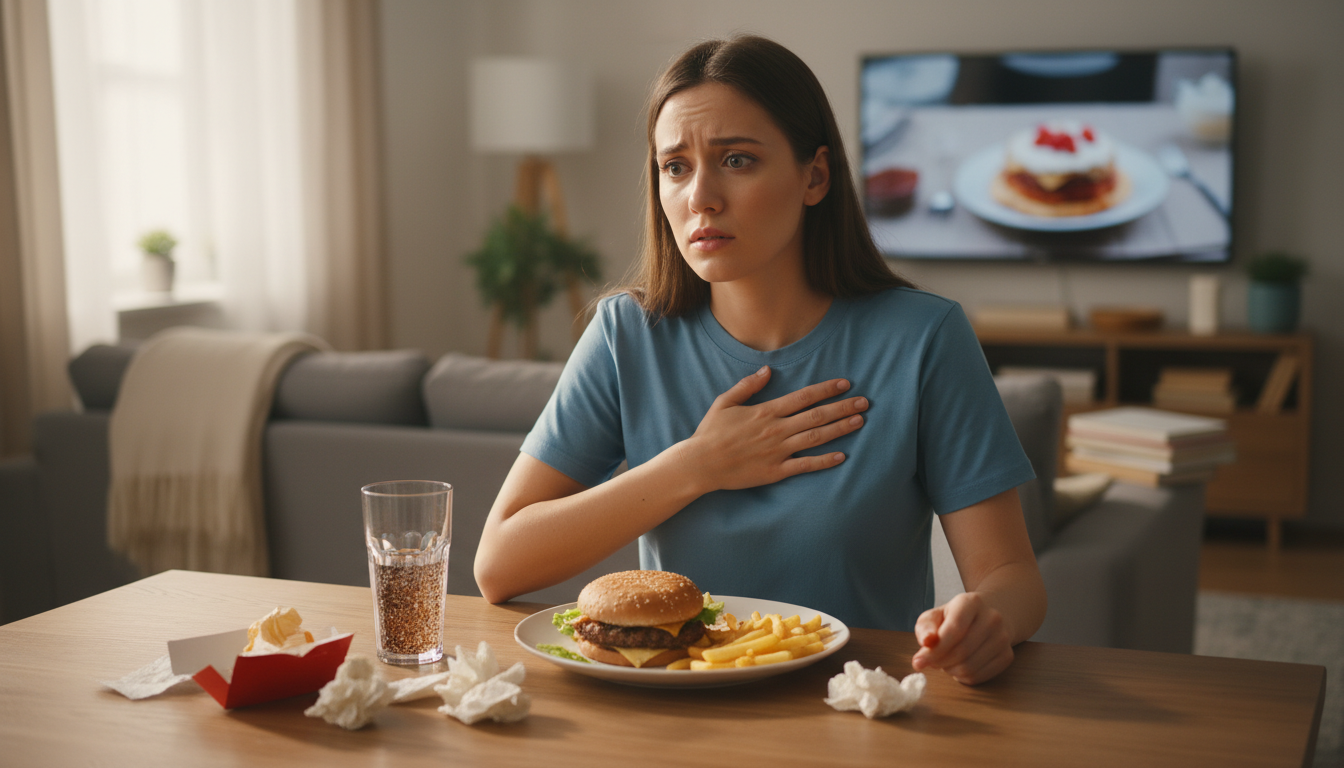
    You just finished eating, sat back, and suddenly your heart is pounding.

    Now your brain is saying things like:

    • “Am I having a heart attack?”
    • “Is this normal after eating?”
    • “Do I Google this or just panic quietly?”

    Let’s walk through what might be going on, when a racing heart after eating can be normal, when it’s more concerning, and what you can actually do about it right now.

    First, What Do We Mean by “Heart Racing After Eating”?

    When people say their heart is racing after eating, they usually mean one or more of these:

    • Your heart feels like it’s beating faster than usual
    • You notice stronger or heavier beats
    • You feel skipping, fluttering, or pounding (palpitations)
    • You suddenly feel very aware of your heartbeat

    A normal resting heart rate for most adults is about 60–100 beats per minute (bpm). After eating, it’s not unusual for your heart rate to go up by 10–20 bpm for a while as your body digests food.

    Quick takeaway: A mild increase in heart rate after meals can be normal. What really matters is how high it goes, how you feel, and whether anything else is going on.

    Why Does My Heart Race After Eating? (The Normal Reasons)

    Your body is actually doing a lot behind the scenes after a meal.

    1. Blood Flow Shift: Your Gut Becomes the VIP

    After you eat, more blood is sent to your digestive system to help break down and absorb food. To keep your overall blood pressure and circulation stable, your heart may beat a little faster and pump a bit stronger.

    This is called the postprandial (after-meal) response, and it’s a normal part of digestion.

    Feels like: Slightly faster heartbeat, maybe a bit of warmth or sleepiness.

    Usually not worrying if:

    • Your heart rate doesn’t go extremely high
    • You don’t have chest pain, trouble breathing, or feel like you’ll pass out

    Mini takeaway: Sometimes your heart is just doing its job so your stomach can do its job.

    2. Big, Heavy, or High-Carb Meals

    Large meals, especially ones high in simple carbs, sugar, or fat, can cause a bigger spike in blood sugar, insulin, and stress hormones (like adrenaline in some people). This can make your heart beat faster or feel more noticeable.

    Common culprits:

    • Fast food or greasy takeout
    • Big bowls of pasta or white rice
    • Sugary desserts and drinks
    • Holiday feasts

    Mini takeaway: The bigger and heavier the meal, the more work your body has to do, and your heart may speed up to keep up.

    3. Caffeine, Alcohol, and Nicotine

    If your meal includes any of these, your post-meal palpitations might not be the food at all.

    • Caffeine (coffee, tea, energy drinks, soda, chocolate) can increase heart rate and make you more aware of your heartbeat.
    • Alcohol can trigger a racing or irregular heartbeat in some people, sometimes called “holiday heart” when it happens after drinking.
    • Nicotine (smoking, vaping) also raises heart rate and blood pressure.

    Mini takeaway: Sometimes it’s not the sandwich, it’s the coffee, wine, or cigarette hanging out next to it.

    4. Anxiety and Hyper-Awareness of Your Body

    If you’ve had scary symptoms before, it’s easy to go into scan mode after eating:

    “Was that an extra beat? Why is my heart doing that? Should it be doing that?”

    Anxiety itself can raise your heart rate, make normal sensations feel intense and alarming, and create a cycle: notice heartbeat, worry, adrenaline, faster heartbeat.

    Mini takeaway: Worrying about your heart can, ironically, make your heart race more.

    When a Racing Heart After Eating Might Be More Than Just Digestion

    While it’s often harmless, sometimes heart racing after meals is a clue to an underlying issue. You don’t need to self-diagnose, but here are some possibilities doctors look at.

    1. Postprandial Hypotension (Blood Pressure Drop After Eating)

    In some people, especially older adults or those with certain health conditions, blood pressure drops after a meal. The heart may beat faster to compensate.

    Typical signs:

    • Racing heart and
    • Dizziness or feeling faint
    • Blurry vision
    • Weakness or fatigue shortly after eating

    If you notice you feel lightheaded, woozy, or like you might black out after most meals, that’s something to bring to a doctor.

    Mini takeaway: If your heart races and you feel like you might pass out after eating, that’s not one to ignore.

    2. Blood Sugar Swings

    If you have diabetes, prediabetes, insulin resistance, or reactive hypoglycemia, your blood sugar may spike and then drop after eating.

    Possible symptoms:

    • Heart racing or pounding
    • Shakiness
    • Sweating
    • Hunger or nausea
    • Feeling weak, jittery, or anxious

    People sometimes confuse these symptoms with anxiety or panic, but they can be related to blood sugar.

    Mini takeaway: If your racing heart after eating comes with shakiness or sweating, blood sugar might be part of the story.

    3. Arrhythmias (Irregular Heart Rhythms)

    Sometimes the heart isn’t just fast, it’s irregular.

    Examples include:

    • Atrial fibrillation (AFib) – chaotic, irregular heartbeat
    • Supraventricular tachycardia (SVT) – sudden episodes of very fast heart rate

    These can sometimes be triggered by large meals, alcohol, caffeine, or certain medications.

    Possible warning signs:

    • Sudden, very fast heart rate (often over 120–150 bpm) that doesn’t settle quickly
    • Heart feels like it’s fluttering, quivering, or flip-flopping
    • You feel short of breath, weak, or lightheaded

    Mini takeaway: A heart that’s very fast and irregular, especially in episodes, deserves medical attention.

    4. Thyroid or Other Medical Conditions

    An overactive thyroid (hyperthyroidism) can make your heart beat faster and feel jumpy or irregular.

    Other conditions (like anemia, dehydration, or infections) can also raise your heart rate and make palpitations more obvious, especially after eating when your body is working harder.

    Mini takeaway: If your heart seems to race not just after meals but all the time, it’s worth a proper check-up.

    Red Flags: When Is a Racing Heart After Eating Not Normal?

    If you’re sitting there thinking “Okay but is this an emergency right now?” here are signs to take seriously.

    Seek urgent medical care (ER or local emergency number) if your heart is racing and you also have:

    • Chest pain, pressure, or tightness (especially if it spreads to arm, jaw, back, or neck)
    • Trouble breathing or feeling like you can’t get enough air
    • Fainting or feeling like you’re about to pass out
    • Severe dizziness or confusion
    • Sudden, extreme sweating (cold sweat)
    • A heart rate that is very fast (for example, over 140–150 bpm at rest) and not slowing down

    Don’t talk yourself out of getting help because “it might just be anxiety.” Emergency services would always rather see you and rule out something serious.

    Mini takeaway: If it feels very bad, especially with chest pain, breathing problems, or fainting, treat it like an emergency.

    What Can I Do Right Now If My Heart Is Racing After Eating?

    You’re reading this in the moment, so here are some practical steps.

    1. Pause and check in (safely)

    • Sit or lie down.
    • Take a few slow, deep breaths, in through your nose for 4 seconds, out through your mouth for 6 seconds.
    • If you have a smartwatch or blood pressure cuff, check your heart rate, but don’t obsessively re-check every 10 seconds.

    2. Ask yourself:

    • Did I just eat a big, heavy, or sugary meal?
    • Did I have coffee, an energy drink, alcohol, or nicotine?
    • Have I been stressed, anxious, or sleep-deprived?

    If the answer is yes to any of these, your heart may just be reacting to a normal trigger.

    3. Watch for red-flag symptoms

    If any of the serious symptoms above show up (chest pain, trouble breathing, fainting, severe dizziness), don’t wait it out, get emergency care.

    4. If it settles down

    If your heart rate comes back toward your normal range and you feel okay within 10–30 minutes, make a mental note of what you ate, how fast you ate, any caffeine, alcohol, or smoking, and how stressed or tired you were. These notes help if you decide to talk to a doctor later.

    Mini takeaway: In the moment: sit, breathe, check for red flags, and notice patterns.

    How to Reduce Heart Racing After Meals Going Forward

    If your symptoms are mild but annoying, there are lifestyle tweaks that can really help.

    1. Shrink the Meal, Not Your Joy

    Instead of one giant meal, try smaller, more frequent meals and avoiding “I’m starving so I inhaled half the fridge” situations. Large meals demand more blood flow to the gut and can cause a bigger heart rate response.

    2. Tame the Fast Carbs and Sugar

    Options that may be easier on your system include choosing whole grains over white bread or pasta, pairing carbs with protein and healthy fats (like chicken plus veggies plus olive oil), and skipping or reducing huge sugary drinks or desserts right after meals.

    3. Watch Your Caffeine and Alcohol Timing

    Try having coffee or energy drinks away from meals or in smaller amounts, and notice if your heart racing is worse after wine, beer, or cocktails with dinner. If you see a pattern, you’ve found a trigger.

    4. Slow Down and Chew

    Eating quickly can trigger more air swallowing (which can cause chest sensations and bloating), make you feel overly full faster, and stress your system more than needed.

    Try putting the fork down between bites and taking 15–20 minutes instead of 5 to finish a meal.

    5. Don’t Lie Completely Flat Right Away

    Some people feel worse if they lie down immediately after eating.

    Instead, sit upright for 30–60 minutes after meals, and go for a gentle walk if you feel up to it (not a hardcore workout right after eating).

    6. Manage the Anxiety Side of It

    Even if something physical kicked it off, anxiety can turn the volume up a lot.

    Things that may help include slow, controlled breathing (about 4–6 breaths per minute), reminding yourself “My body is doing digestion work; I’ll monitor but I don’t have to panic,” and discussing with a therapist if health anxiety is a big theme for you.

    Mini takeaway: Small, basic changes such as smaller meals, less sugar, caffeine, and alcohol, and slower eating often make a big difference.

    Should I See a Doctor About My Racing Heart After Eating?

    If this is new, frequent, getting worse, or worrying you, it’s worth being checked.

    You should especially talk to a doctor if:

    • Your heart races after most meals, not just occasionally
    • You also feel dizzy, weak, or like you might pass out
    • You have a history of heart disease, high blood pressure, diabetes, thyroid issues, or arrhythmias
    • You’re pregnant and not sure what’s normal
    • You’ve noticed heart rates that are regularly above 120 bpm at rest

    What a Doctor Might Do

    Depending on your symptoms and history, they may:

    • Check vital signs and listen to your heart
    • Order blood tests (checking things like thyroid function, anemia, electrolytes, blood sugar)
    • Do an ECG/EKG to look at your heart rhythm
    • Suggest a Holter monitor or event monitor (a portable heart monitor you wear for a day or more)
    • Ask you to track your heart rate and symptoms after different types of meals

    This can help sort out whether your symptoms are a normal physiologic response, anxiety-related, due to blood pressure or blood sugar changes, or related to an arrhythmia or other heart condition.

    Mini takeaway: If your gut says “I should probably get this checked,” that’s a good enough reason.

    So, Is Heart Racing After Eating Normal?

    Sometimes yes, sometimes no.

    It can be normal if it’s mild, happens after big or heavy meals, settles down in a short time, and you don’t have other concerning symptoms.

    It’s not something to brush off if it’s new, frequent, intense, or getting worse, if you feel chest pain, trouble breathing, faint, very dizzy, or confused, or if you have known heart disease or major risk factors.

    When in doubt, it’s always okay to call your doctor’s office and ask, use telehealth or urgent care if you’re unsure, or go to the ER if symptoms are severe or feel just not right.

    Final takeaway: A racing heart after eating doesn’t automatically mean something is seriously wrong, but it’s your body’s way of asking you to pay attention. Notice patterns, make gentle changes, and get medical advice if it keeps happening or worries you.

    Sources

  • Heart Feels Weird But No Pain

    Heart Feels Weird But No Pain

    Heart Feels Off But No Pain: What It Might Mean

    Disclaimer: This article is for general information only and isn’t medical advice or a diagnosis. If you have severe symptoms or think it may be an emergency, call your local emergency number.

    Ever sit there minding your business when suddenly your heart just feels off? Not exactly painful. Not exactly normal. Just weird.

    Maybe it’s fluttery, heavy, slow, buzzy, or like it skips and then thumps hard. And once you notice it, you can’t stop noticing it. You search online and start to worry.

    This article walks through what heart feels off but no pain might mean, when it’s probably okay to watch and wait, and when you should take it seriously. You don’t need to ignore it, but you also don’t need to assume the worst.

    What Do People Mean by “Heart Feels Off”?

    When someone says their heart feels off but there’s no chest pain, they might be talking about things like:

    • Heart palpitations – a feeling of skipped beats, racing, pounding, or flip-flopping in your chest or neck.
    • Heaviness or awareness – suddenly being very aware of your heartbeat, like it feels louder or heavier than usual.
    • Mild tightness or odd sensations – pressure, fluttering, or a hollow feeling that isn’t exactly pain.
    • Slow or irregular feeling – feeling like your heart is beating too slowly or not regularly, even if it’s actually okay when checked.

    Some people feel this mostly at night when lying down, after coffee, energy drinks, or alcohol, during stress or anxiety, or after a big meal or when dehydrated.

    Takeaway: Feels off can mean a lot of different things. The details and the context matter more than the vague weirdness.

    Is It Always Dangerous If My Heart Feels Weird?

    Not always. A surprising number of people have occasional off heart sensations that turn out to be benign (not dangerous).

    Common examples include:

    • Benign premature beats – like premature atrial contractions (PACs) or premature ventricular contractions (PVCs). These are extra beats that can feel like a skip or a thump. Many healthy people have them and never know. They’re often harmless in people without structural heart disease.
    • Sinus tachycardia – your normal heart rhythm going faster, often from exercise, fever, anxiety, dehydration, caffeine, or some medications.
    • Anxiety and panic – your fight-or-flight system pumps stress hormones, which make your heart speed up or feel loud and pounding, even while your actual heart structure is normal.

    On the other hand, sometimes no pain doesn’t mean no problem. Some serious heart issues can show up as uncomfortable awareness of heartbeat, irregular rhythm, shortness of breath or fatigue, or lightheadedness without classic crushing chest pain.

    Takeaway: A weird-feeling heart is common and often benign, but not something to ignore if it’s frequent, intense, or comes with other symptoms.

    Common Non-Emergency Reasons Your Heart Feels Off (But Still Deserve Attention)

    Here are some frequent, usually non-emergency causes behind my heart feels weird but doesn’t hurt.

    1. Caffeine, Energy Drinks, and Stimulants

    Coffee, pre-workout, energy drinks, some cold medicines, and nicotine can all speed up your heart rate, trigger palpitations or extra beats, and make you more aware of your heartbeat.

    This is especially true if you suddenly increased your intake, you’re drinking on an empty stomach, or you’re sensitive to stimulants or on certain medications.

    Mini check-in: Did your symptoms start after a new drink, supplement, or higher caffeine dose?

    Takeaway: Your off feeling might be your heart saying maybe not that third energy drink.

    2. Stress, Anxiety, and Panic

    Your body is not great at telling the difference between running from danger and dealing with modern stress. When you’re anxious, your body releases adrenaline and related hormones that can increase heart rate, cause pounding or fluttery feelings, make your chest feel tight or heavy, and create a feedback loop where you notice your heart, you worry, and it speeds up more.

    People with anxiety often report feeling every beat in their chest or neck or a big thump or skip when trying to fall asleep. If tests show a healthy heart, these sensations, while miserable, are often not dangerous.

    Takeaway: Anxiety can make a healthy heart feel very unhealthy. Both the mind and heart deserve care.

    3. Dehydration, Illness, or Being Run-Down

    If you’re low on fluids or recovering from a virus, your heart may have to work a bit harder to keep blood flowing. You might notice faster heart rate when standing, mild palpitations, or feeling off or shaky.

    People sometimes experience this after a stomach bug, heavy sweating, or not drinking much water, especially in heat.

    Takeaway: Sometimes your heart feels off because your whole body is off and needs rest, fluids, and time.

    4. Hormones and the Heart

    Hormonal shifts can make your heart feel strange.

    • Thyroid problems – an overactive thyroid can cause racing heart and palpitations; an underactive one can cause slow or heavy-feeling beats.
    • Menstrual cycle, perimenopause, pregnancy – many women report more palpitations or heart awareness around certain phases of their cycle, during pregnancy, or near menopause.

    If your symptoms line up with hormonal changes, it’s worth mentioning that pattern to your clinician.

    Takeaway: Your heart doesn’t live in a vacuum. Hormones can be behind the weirdness.

    5. Mild Arrhythmias (Irregular Heart Rhythms)

    Some irregular rhythms are brief and benign, others need close follow-up.

    • PVCs/PACs – extra beats that can feel like a pause and a hard thump.
    • Supraventricular tachycardia (SVT) – episodes of very fast heart rate, often starting and stopping suddenly.

    These can show up even in people who feel generally okay and have no pain.

    If you’re having repeated episodes of very fast or irregular heartbeats, or episodes that come out of nowhere and stop suddenly, it’s smart to get checked and possibly wear a heart monitor.

    Takeaway: Irregular doesn’t automatically mean emergency, but it does mean get this properly evaluated.

    When a Weird Heart Could Be an Emergency (Even Without Pain)

    Chest pain gets a lot of attention, but it’s not the only red flag. Call emergency services or go to the emergency department right away if your heart feels off and you have any of these:

    • Sudden shortness of breath that’s severe or worsening
    • Fainting or nearly passing out
    • Chest pressure, tightness, squeezing, or burning, especially if it spreads to arm, jaw, back, or neck
    • Sudden confusion, trouble speaking, or weakness on one side of the body
    • Sweating, nausea, or vomiting with heart symptoms
    • A heart rate that is very fast (for example, consistently over about 130–150 at rest) or very slow (like under about 40 at rest) and you feel unwell (dizzy, weak, about to pass out)

    These can signal a heart attack or reduced blood flow to the heart, dangerous arrhythmia, stroke, or other serious heart or lung issues.

    Takeaway: No pain does not rule out an emergency. Focus on your overall symptoms and how sick you feel.

    When It’s Not an Emergency, but You Should See a Doctor

    If your heart feels off but you’re not in immediate danger, it’s still smart to get checked if:

    • The feeling is new and keeps happening, or is getting more frequent.
    • You notice symptoms with exertion (walking up stairs, light exercise) like unusual shortness of breath, lightheadedness, or needing to stop more than usual.
    • You have a history of heart disease, high blood pressure, diabetes, high cholesterol, smoking, or strong family history of early heart disease.
    • You feel skipped beats, pounding, or flutters that last more than a few seconds at a time, come in episodes, or make you feel lightheaded, weak, or unwell.

    This matters because many heart rhythm issues are treatable or manageable, and even if your heart is totally fine, ruling out serious problems can reduce fear and help you focus on stress, lifestyle, or anxiety management.

    Takeaway: If your heart weirdness keeps showing up, it deserves a proper evaluation.

    What Your Doctor Might Do

    If you go in saying, my heart feels off but there’s no pain, your clinician may:

    1. Ask detailed questions about when it started, how often it happens, what it feels like in your words (flutter, thump, racing, heavy), what you were doing when it started (resting, stressed, exercising, after caffeine), and any other symptoms (dizzy, short of breath, chest tightness).

    2. Check vital signs: heart rate and rhythm, blood pressure, and oxygen level.

    3. Do an ECG (electrocardiogram) to look at your heart’s electrical pattern in that moment.

    4. Order blood tests if needed, such as thyroid function, electrolytes, or tests for anemia or other issues.

    5. Consider a heart monitor (like a Holter monitor or patch) that you wear for 24 hours or longer to catch intermittent irregular rhythms.

    6. Possibly order an echocardiogram (heart ultrasound) if they want to check your heart’s structure and pumping function.

    None of this necessarily means something is wrong; it’s how they check whether things are okay or not.

    Takeaway: The goal isn’t to scare you; it’s to get enough data that you’re not guessing about your heart.

    Simple Things You Can Track at Home

    While you’re waiting to be seen (or if your doctor already ruled out emergencies), here are some low-stress, practical steps.

    1. Keep a Symptom Log

    Write down:

    • Date and time of episodes
    • What you were doing (rest, exercise, arguing, scrolling late at night)
    • What it felt like (skipping, racing, heavy, fluttery)
    • How long it lasted
    • Any triggers (caffeine, alcohol, lack of sleep, big meal)

    This is very helpful for your doctor and can also help you notice patterns.

    2. Check Your Pulse (But Don’t Obsess)

    Gently feel your pulse at your wrist or neck and notice whether it is fast, slow, or regular, and whether it feels like it skips.

    Wearables like smartwatches and fitness trackers can help you see trends, but they’re not perfect, and every little blip does not need to cause panic.

    3. Review Your Daily Habits

    Look honestly at:

    • Caffeine – Could you cut down a bit?
    • Alcohol and nicotine – Both can trigger palpitations.
    • Sleep – Are you chronically short on sleep?
    • Hydration – Are you drinking enough water?
    • Stress – Is your nervous system constantly on high alert?

    Even small improvements here can calm your heart sensations over time.

    Takeaway: You can’t self-diagnose everything at home, but you can bring better data and a calmer body to your next appointment.

    Anxiety vs. Heart Problem: How Do You Tell?

    Sometimes even doctors need tests to be sure. These patterns are general, not strict rules.

    More likely anxiety (especially if heart is structurally normal):

    • Symptoms come during or after stress, conflict, or worry.
    • You feel a rush of fear, doom, or panic along with the heart symptoms.
    • Your heart rate goes up but settles down as you calm or distract yourself.
    • Reassurance and normal tests temporarily make you feel better.

    More concerning for a heart issue:

    • Symptoms appear with physical effort (walking uphill, carrying groceries, climbing stairs) and improve with rest.
    • You feel lightheaded, like you might pass out, or actually faint.
    • You have strong heart risk factors (age, diabetes, high blood pressure, smoking, family history of early heart disease).
    • The rhythm feels very irregular or your heart rate suddenly races out of nowhere and is hard to slow down.

    Anxiety and heart issues can exist together. Getting your heart evaluated can make it easier to focus on treating anxiety without constant fear.

    Takeaway: Don’t try to self-label it as just anxiety or definitely my heart. Use your symptoms as a reason to get real information.

    So My Heart Feels Off but No Pain – Should I Worry?

    Here’s a simple way to think about it:

    1. Is this an emergency right now? If you have severe symptoms (trouble breathing, fainting, chest pressure, sudden weakness or confusion, very fast or very slow heart plus feeling really unwell), get emergency help immediately.

    2. If not an emergency, has this been happening more than once or twice? If yes, schedule a visit with your primary care provider or a cardiologist.

    3. In the meantime, can you reduce triggers and track symptoms? Cut down on caffeine and alcohol, hydrate, prioritize sleep, and note when episodes happen.

    4. Give yourself permission not to guess. You are not supposed to know whether it’s anxiety, hormones, or an arrhythmia on your own. That’s why doctors, tests, and heart monitors exist.

    Big-picture takeaway: A heart that feels off but doesn’t hurt is not automatically an emergency, but it is your body asking for some attention. Respect the signal, get it checked when appropriate, and seek urgent help if red flags show up. Once serious problems are ruled out, you can focus on lifestyle, stress, and mental health without constant what if worries in the background.

    Your heart’s job is to look after you. Your job is to look after it in return.

    Sources

  • Sudden Fast Heartbeat Right Now? Read This

    Sudden Fast Heartbeat Right Now? Read This

    What to Do If Your Heart Suddenly Starts Racing

    Disclaimer: This article is for general information only and isn’t medical advice or a diagnosis. If you have severe symptoms or think it may be an emergency, call your local emergency number.

    You’re sitting, scrolling, minding your own business… and suddenly your heart decides to audition for a drum solo. It’s pounding. It’s fast. You notice it right now.

    Question is: Do I panic? Do I Google? Do I call 911? (And yes, you’re allowed to be doing all three at once.) Let’s walk through what to do step-by-step, what might be going on, and when a fast heartbeat is a true emergency.

    First: What Counts as a Fast Heartbeat?

    For most adults, a normal resting heart rate is about 60–100 beats per minute (bpm). Anything higher is called tachycardia (just medical-ese for “fast heart rate”). But context matters:

    • Just ran up stairs? 110–140 bpm might be totally normal.
    • Stressed, scared, anxious? Your heart may zoom without anything being “wrong” with the heart muscle itself.
    • Lying on the couch doing nothing with a random 140 bpm? That’s more concerning.

    Quick takeaway: Fast heartbeat during obvious triggers (exercise, fear, caffeine) is common. Fast heartbeat out of nowhere, especially with other symptoms, deserves more attention.

    Step 1: Check for Emergency Red Flags Right Now

    If you have a sudden fast heartbeat plus any of the following, treat it as an emergency and call 911 (or your local emergency number):

    • Chest pain, pressure, or tightness (especially if it feels heavy, crushing, or spreads to arm, jaw, or back)
    • Trouble breathing or feeling like you can’t get enough air
    • Fainting or nearly fainting
    • Sudden confusion, difficulty speaking, or weakness on one side of the body
    • Severe dizziness or feeling like the room is spinning and you might collapse
    • Sweating a lot (cold, clammy sweat) with feeling very unwell
    • History of heart disease, recent heart attack, heart failure, dangerous heart rhythm, or known structural heart problems
    • You have a very high heart rate (for example, above ~150 bpm at rest) that doesn’t improve quickly

    In these cases, don’t overthink it. Don’t drive yourself unless there is absolutely no other option. Call for help.

    Quick takeaway: If your gut is screaming “Something is really wrong,” believe it and call. Let professionals be the ones to say you’re okay.

    Step 2: If No Red Flags, Do a 60-Second Reality Check

    If none of the major red flags apply, pause and do a quick self-check:

    1. Sit or lie down safely. Don’t stand or walk while lightheaded.
    2. Count your heart rate:

      • Find your pulse at your wrist or side of neck.
      • Use a timer and count beats for 30 seconds, then multiply by 2.
      • Rough idea is fine — you don’t need perfection.
    3. Notice your symptoms:

      • Any chest discomfort?
      • Any shortness of breath?
      • Any feeling like you might black out?
      • Any new pain in your neck, jaw, arm, or back?
    4. Look for an obvious trigger:

      • Caffeine, energy drinks, pre-workout?
      • Alcohol, nicotine, vaping?
      • Recent intense stress, panic, argument, or big fright?
      • Dehydration (haven’t had much water)?
      • Fever, illness, recent infection?

    Quick takeaway: Take 1 minute to gather data instead of spiraling in fear. That information helps you and any doctor you talk to.

    Step 3: Try These Simple Grounding and Slowing Techniques

    If you have no emergency red flags but your heart is still racing, you can try some safe, calming steps while you monitor:

    1. Breathe Low and Slow

    A fast heart from stress or anxiety often eases when you calm your nervous system.

    Try this for 2–3 minutes:

    • Breathe in through your nose for 4 seconds.
    • Hold gently for 1–2 seconds.
    • Breathe out through pursed lips for 6 seconds (like blowing through a straw).
    • Repeat.

    Focus your attention on the feeling of air in and out. If your mind says “We’re dying,” mentally answer with “We’re checking, we’re breathing, we’re okay right now.”

    2. Change Position Carefully

    • If you were standing, sit or lie down.
    • If you were lying down and feel like your heart pounds more when flat, prop yourself up with pillows.

    Sometimes blood pressure shifts or position changes can make your heartbeat feel louder or faster.

    3. Hydrate (But Don’t Chug a Gallon)

    If you might be dehydrated:

    • Sip cool water slowly.
    • Avoid big rapid chugs if you feel nauseated.

    4. Remove Obvious Triggers

    • Stop caffeine and energy drinks for now.
    • Avoid nicotine or vaping.
    • Skip alcohol for the moment.

    What about “vagal maneuvers”?

    Certain maneuvers (like bearing down as if having a bowel movement, blowing into a syringe, or splashing cold water on your face) can sometimes help certain fast heart rhythms. These should only be done under medical guidance, especially if you have heart disease or other health issues. Do not experiment with anything that makes you strain hard, hold your breath too long, or feel worse.

    Quick takeaway: Calm breathing, safe posture, hydration, and avoiding triggers are low-risk ways to help your heartbeat slow if stress or minor causes are involved.

    Step 4: When to Call a Doctor Soon (Same Day or Within 24 Hours)

    Even if you don’t need an ambulance, a sudden fast heartbeat can still be a sign that deserves a prompt check-in with a doctor, urgent care, or virtual visit.

    You should seek same-day medical advice if:

    • Your heart suddenly races at rest to over ~120 bpm and keeps doing this in episodes.
    • You feel new or worsening palpitations (flutters, pounding, skipping) that keep coming back.
    • The fast heartbeat started after a new medication (including ADHD meds, decongestants, inhalers, diet pills, or supplements).
    • You recently had a COVID-19 infection, other viral illness, or fever and now notice persistent racing heart.
    • You have conditions like thyroid disease, anemia, known heart issues, or lung disease, and your heart seems faster than usual.
    • You’re pregnant and have frequent episodes of racing heart.

    Quick takeaway: Not all fast heartbeats are emergencies, but many are “don’t ignore this” situations that deserve a timely doctor’s eyes on you.

    Step 5: Common (and Not-So-Scary) Reasons Your Heart Might Be Racing

    A sudden fast heartbeat right now does not automatically mean heart attack. Some common causes include:

    1. Anxiety, Panic, or Stress

    When your brain senses danger (real or imagined), your body releases adrenaline. Your heart speeds up, breathing changes, and you may feel shaky or sweaty. A panic attack can mimic serious heart problems: chest tightness, shortness of breath, racing heart, sense of doom.

    Key clue: Often peaks within minutes and slowly improves; may be triggered by stress, fears, or “out of the blue” in someone with anxiety history.

    2. Stimulants: Caffeine, Energy Drinks, Nicotine, Certain Meds

    • Coffee, tea, energy drinks, pre-workout supplements
    • Decongestants with pseudoephedrine
    • Some asthma or ADHD meds
    • Nicotine (including vaping)

    These can push your heart rate higher, especially if you’re sensitive, dehydrated, or took more than usual.

    3. Dehydration, Heat, or Illness

    Low fluid volume or fever can make your heart beat faster to keep blood and oxygen flowing.

    You might notice:

    • Dark urine
    • Dry mouth
    • Feeling weak or dizzy, especially when standing

    4. Anemia or Thyroid Problems

    • Anemia (low red blood cells) means your heart must pump faster to deliver enough oxygen.
    • Hyperthyroidism (overactive thyroid) often causes fast heartbeat, shakiness, anxiety, and weight loss.

    These require blood tests and doctor evaluation.

    5. Heart Rhythm Issues (Arrhythmias)

    Sometimes the electrical system of the heart misfires:

    • Supraventricular tachycardia (SVT): Often causes sudden episodes of very fast heart rate that may start and stop abruptly.
    • Atrial fibrillation (AFib): Can feel like a fast, irregular, or fluttering heartbeat and may raise stroke risk.
    • Other rhythm problems can also cause sudden rapid heart rates.

    These are not DIY situations. You need a healthcare provider and usually an ECG (EKG) to figure out what’s going on.

    Quick takeaway: There are many reasons for a fast heartbeat, from totally fixable to more serious. The pattern, triggers, and your overall health help doctors tell them apart.

    What to Do Over the Next 24–48 Hours

    Assuming you are not in immediate danger and have either spoken with a clinician or are planning to, here’s how to track what’s happening.

    1. Keep a Simple Heart Symptom Log

    Write down (or note in your phone):

    • Date and time of each episode
    • What you were doing right before it started
    • How fast you estimate your pulse (even rough: “around 120” is fine)
    • How long it lasted
    • Any associated symptoms: chest pain, shortness of breath, dizziness, sweating, anxiety, faint feeling, etc.

    Bring this log to your appointment. It’s helpful for your doctor.

    2. If You Have a Wearable or Home Monitor

    Devices like smartwatches, fitness trackers, or home blood pressure monitors can help, but they’re not perfect.

    • Use them to track trends, not to terrify yourself minute-by-minute.
    • Screenshot or write down heart rate spikes and times.

    If your device ever flags rhythm issues like “irregular rhythm” or “possible AFib,” share that with a clinician promptly.

    3. Rest and Avoid Extra Stress on the System

    • Skip high-intensity workouts until cleared.
    • Avoid excess caffeine, alcohol, and nicotine.
    • Try for good sleep (even though anxiety can make that hard).

    Quick takeaway: Think of yourself as running a small science experiment: track, observe, and avoid obvious triggers while you wait for medical input.

    When a Fast Heartbeat Is Probably Less Urgent

    While you should still discuss any concerning episodes with a clinician, a fast heartbeat is less likely to be an emergency if:

    • It clearly started during exercise and eased within a few minutes of resting.
    • It came after a big coffee or energy drink and you have no other symptoms.
    • It happened during a panic episode, resolved as you calmed, and you’ve had similar anxiety-related episodes before.
    • You are otherwise healthy, young or middle-aged, and the episode is brief and not associated with chest pain, severe shortness of breath, or passing out.

    Still, if you’re unsure, it’s reasonable to at least message your doctor’s office or use a nurse advice line.

    Quick takeaway: Not every racing heart is a ticking time bomb. Patterns and associated symptoms matter a lot.

    How Doctors Usually Evaluate a Sudden Fast Heartbeat

    This part is to help you know what to expect when you do seek care.

    A clinician may:

    1. Ask detailed questions about:

      • Onset (sudden vs gradual)
      • Triggers (activity, stress, caffeine, meds, illness)
      • Associated symptoms (chest pain, shortness of breath, dizziness, fainting)
      • Medical history (heart disease, thyroid issues, anemia, lung disease, infections)
    2. Do a physical exam (listen to heart and lungs, check blood pressure, oxygen, pulse).
    3. Order tests, such as:

      • Electrocardiogram (ECG/EKG) – the main test for rhythm
      • Blood tests (electrolytes, thyroid, anemia, infection markers)
      • Possibly Holter monitor or event monitor if episodes come and go
      • In some cases, echocardiogram (heart ultrasound)

    Treatment depends on the cause and can range from reassurance and lifestyle changes to medications or, more rarely, procedures.

    Quick takeaway: Doctors don’t just look at the number; they look at the whole picture: symptoms, history, exam, and tests.

    Quick Decision Guide: What Should I Do Right Now?

    Use this as a high-level guide (not a replacement for medical judgment):

    • Call 911 immediately if:

      • Fast heartbeat plus chest pain, severe shortness of breath, fainting, or stroke-like symptoms.
      • Fast heart rate is extremely high, you feel very unwell, or have known serious heart disease.
    • Call a doctor or urgent care today if:

      • New or recurring episodes of fast heartbeat at rest.
      • Fast heartbeat after new meds, recent infection, or with other ongoing symptoms (fatigue, weight changes, breathlessness).
    • Monitor and schedule a visit if:

      • Brief, mild episodes with no red flags, but they keep happening.
    • Self-care and observe if:

      • Clearly triggered by exercise, caffeine, or a known panic episode, resolves quickly, and you otherwise feel okay.

    When in doubt, err on the side of getting checked. No ER doctor is mad that you came in for chest symptoms that turned out okay.

    Gentle Reminder Before You Go

    If your heart is racing right now, you’re likely also fighting racing thoughts:

    “What if this is it?”

    “What if they say it’s anxiety and I’m just being dramatic?”

    Your concern is valid. Getting evaluated is not overreacting.

    For the very short term, focus on what you can do this minute:

    • Get to a safe place to sit or lie down.
    • Scan for red flags and call emergency services if they’re present.
    • If safe: breathe slowly, sip water, and reduce stimulation (loud noise, screens, arguments).
    • Reach out to medical help rather than trying to tough it out if you’re unsure.

    Your heart is literally doing the work of keeping you alive. When it acts weird, it deserves attention — and so do you.

    Sources

  • Heart Racing After Sitting Down

    Heart Racing After Sitting Down

    Racing Heart After Sitting Down: What It Might Mean

    Disclaimer: This article is for general information only and isn’t medical advice or a diagnosis. If you have severe symptoms or think it may be an emergency, call your local emergency number.

    You finally sit down after a long day and suddenly your heart feels like it’s auditioning for a drum solo with fast, fluttery, hard thumps in your chest. You’re literally just sitting. Is that even allowed? Is a racing heart after sitting down normal, or is your body trying to tell you something serious?

    This article breaks it down in plain English so you know what might be going on, what’s probably okay, and when you should get checked out.

    What Does “Heart Racing After Sitting Down” Actually Mean?

    Most people describe this as:

    • A sudden increase in heart rate once they sit or recline
    • Feeling pounding, fluttering, or skipping beats (palpitations)
    • A sense that the heart is beating “too hard” even if the rate isn’t that high

    A normal resting heart rate for most adults is about 60–100 beats per minute (bpm). Some people (especially if young, fit, or on certain meds) run lower than that; others run a bit higher and are still okay.

    The key questions:

    • Is your heart rate actually high (like 100–120+ bpm) when you’re just sitting?
    • Does it come with other symptoms like chest pain, shortness of breath, dizziness, or fainting?
    • Is this new for you, or has it been happening for a while?

    A momentary awareness of your heartbeat isn’t automatically bad. But a persistently high or uncomfortable racing heart at rest deserves attention.

    Common, Often-Benign Reasons Your Heart Races When You Sit Down

    There are quite a few non-emergency reasons your heart might speed up after you sit.

    1. You Just Moved, and Your Body Is Catching Up

    If you were walking around, climbing stairs, or doing chores and then plopped into a chair, your heart may still be in “activity mode” for a bit.

    Your body needs a moment to:

    • Clear adrenaline and stress hormones
    • Redistribute blood from your muscles back to your core
    • Adjust blood pressure and heart rate

    Sometimes, when you finally stop, you actually notice your heart more because the rest of your body got quieter. If your heart rate gradually settles within a few minutes and you feel otherwise fine, this is usually normal.

    2. Anxiety, Stress, or Panic (Even If You Don’t Feel “Stressed”)

    You don’t have to be visibly upset to be stressed. Anxiety can:

    • Release adrenaline and other stress hormones
    • Make your heart beat faster and harder
    • Make you hyper-aware of every sensation in your chest

    Many people notice palpitations when they finally sit or lie down because there are fewer distractions, it’s quieter, and you focus on bodily sensations more.

    You might notice:

    • Racing heart
    • Tight chest or throat
    • A sense of internal “vibration”
    • Worry that something is very wrong, which can make the heart go faster

    Anxiety can make your heart race at rest. It’s common, but it still deserves attention both medically (to rule out physical causes) and emotionally (so you’re not suffering in silence).

    3. Caffeine, Nicotine, Alcohol, or Certain Medications

    Your heart is very responsive to what you put in your body. Things that can trigger a racing heart after you sit down include:

    • Caffeine (coffee, energy drinks, pre-workout, some teas, sodas)
    • Nicotine (vaping, cigarettes, nicotine pouches)
    • Alcohol (especially in the evening or after several drinks)
    • Decongestants (like pseudoephedrine in some cold and flu medications)
    • Some asthma inhalers, thyroid medications, ADHD medications, or weight-loss supplements

    These can stimulate your nervous system, raise your heart rate, and trigger palpitations even when you’re at rest. If your heart typically races after that afternoon latte or evening drink, your trigger might be in your cup or on your nightstand.

    4. Dehydration or Low Blood Volume

    Not drinking enough fluids, losing fluids from sweating, vomiting, or diarrhea, or even heavy periods in some people can reduce your circulating blood volume.

    When that happens, your body may:

    • Speed up your heart to keep blood pressure stable
    • Make you feel lightheaded when you change positions

    You might notice:

    • Racing heart after you sit or stand
    • Dry mouth
    • Dark yellow urine or going less often
    • Fatigue

    If you’re underhydrated, your heart may be doing extra work. Hydration isn’t a miracle cure, but it matters for heart rate and blood pressure.

    5. Being Out of Shape

    If you’re deconditioned and haven’t exercised much lately, your heart may jump up more quickly with minimal effort and take longer to come back down after activity. You might do a short walk, sit down, and your heart feels like it’s still trying to catch up.

    This is common and usually slowly improves with gentle, consistent activity, but sudden or extreme shortness of breath or chest pain is never something to ignore.

    When a Racing Heart After Sitting Might Be a Medical Issue

    Sometimes, a racing heart at rest is your body waving a red flag. Here are some possibilities doctors think about.

    1. Arrhythmias (Abnormal Heart Rhythms)

    “Arrhythmia” is a broad term for heart rhythms that are too fast, too slow, or irregular.

    Examples include:

    • Supraventricular tachycardia (SVT) – sudden bursts of a very fast heartbeat, often 150+ bpm, that may start and stop abruptly
    • Atrial fibrillation – an irregular, often fast heartbeat that can cause fluttering, pounding, or a “fish flopping” sensation in the chest

    You might notice very sudden onset and offset of fast heart rate, skipped beats, flip-flops, or flutters, and lightheadedness or shortness of breath.

    These can be harmless in some cases, but certain arrhythmias can increase the risk of stroke or other complications, especially if you have other health conditions. If your heart races in sudden episodes, feels irregular, or comes with dizziness or chest pain, you should get checked.

    2. Postural Issues (Like POTS or Orthostatic Intolerance)

    Most people hear about heart racing when they stand up, not when they sit. But for some, any change in position can trigger symptoms.

    Conditions like postural orthostatic tachycardia syndrome (POTS) or other autonomic nervous system issues can cause:

    • Big jumps in heart rate when changing positions
    • Lightheadedness, brain fog, fatigue
    • Palpitations, sometimes even when sitting or reclining

    People with these conditions often say things like “My heart pounds when I go from lying to sitting or sitting to standing” or “I feel like gravity hates me.” If position changes consistently trigger your racing heart and you feel dizzy or wiped out, mention POTS or orthostatic symptoms to your doctor.

    3. Anemia or Thyroid Problems

    Two very common internal causes of a racing heart at rest are anemia and an overactive thyroid.

    • Anemia means not enough healthy red blood cells to carry oxygen. Your heart compensates by beating faster.
    • Overactive thyroid (hyperthyroidism) revs up your entire system, including heart rate and palpitations.

    Other possible clues include fatigue, weakness, feeling unusually hot or sweaty, weight loss without trying, pale skin, or shortness of breath with exertion. Blood work can check for these. They’re common, treatable, and worth ruling out if your heart is racing at rest.

    4. Heart or Lung Problems

    Less commonly, a racing heart at rest can be a sign of:

    • Heart disease or heart failure
    • A problem with heart valves
    • A lung issue such as a blood clot (pulmonary embolism) or severe infection

    These situations usually come with other clear red-flag symptoms such as chest pain or pressure, trouble breathing, coughing up blood, swelling in the legs, or sudden severe fatigue or collapse. These are emergencies. If your racing heart comes with serious chest pain, trouble breathing, or fainting, you should seek immediate care.

    When Is a Racing Heart After Sitting Probably Okay?

    Nothing online can give you a personal green light, but in general, it’s more likely to be benign if it happens once in a while, not constantly, your heart rate is elevated but not extreme (for example 90–110 bpm) and then comes back down, it tends to happen after clear triggers like caffeine, stress, a big meal, or recent activity, you have no chest pain, no fainting, and no severe shortness of breath, and you’ve had a medical evaluation and serious causes have been ruled out.

    A heart that occasionally speeds up, especially with obvious triggers and without scary symptoms, is often more annoying than dangerous, but still mention it at your next visit.

    When to Call a Doctor vs. When to Go to Urgent or Emergency Care

    Call Your Regular Doctor or a Clinic Soon (Within Days) If:

    • Your heart races at rest repeatedly or for more than a few minutes at a time
    • You feel new palpitations you’ve never had before
    • You notice patterns such as after meals, certain medications, or specific activities
    • You feel more tired than usual, weaker, or short of breath with normal activities
    • You have a history of heart issues, high blood pressure, or thyroid problems

    They may ask you to track episodes and heart rate, check blood work (anemia, thyroid, electrolytes), order an ECG (electrocardiogram), or use a wearable monitor (Holter or event monitor) to catch abnormal rhythms.

    Seek Urgent or Emergency Care Right Away If:

    • Your heart is racing and you also have:
      • Chest pain, pressure, or tightness
      • Trouble breathing or feeling like you can’t get air
      • Fainting or nearly passing out
      • Severe dizziness or confusion
      • Pain that spreads to jaw, arm, or back
    • Your heart rate is very high at rest (for example, 130–150+ bpm) and not going down
    • You have these symptoms and are pregnant, have known heart disease, or have major risk factors like diabetes, high blood pressure, or a strong family history of heart disease

    If you are wondering whether it is an emergency and you feel uneasy, it is safer to get help. You are not overreacting by protecting your heart.

    What You Can Track at Home That Actually Helps Your Doctor

    You don’t have to self-diagnose, but you can collect useful data.

    When your heart races after sitting down, note:

    1. Heart rate – use a smartwatch, fitness tracker, or manually count your pulse for 30 seconds and double it.
    2. What you were doing just before – walking, climbing stairs, arguing, drinking coffee, or eating.
    3. Position changes – whether it happened when you went from standing to sitting, or lying to sitting.
    4. How long it lasts – seconds, minutes, or longer.
    5. Other symptoms – dizziness, shortness of breath, chest discomfort, sweating, or feeling like you might faint.
    6. What helps it stop – deep breathing, lying down, sipping water, or nothing at all.

    Bring this information to your appointment. It saves time and makes it easier for your clinician to spot patterns. You are not being dramatic by taking notes; you are being helpful and proactive.

    Simple Calming Strategies While You Wait for Answers

    These aren’t cures, but they can help take the edge off when your heart feels like it’s in turbo mode and you’ve already decided it’s not an emergency.

    1. Slow breathing – try breathing in through your nose for 4 seconds, out through your mouth for 6 seconds, for 1–2 minutes.
    2. Grounding your attention – focus on something outside your body such as sounds in the room, a show, or a simple game.
    3. Hydrate – sip some water, especially if you haven’t had much to drink all day.
    4. Limit obvious triggers – cut back on caffeine, nicotine, and energy drinks and see if your episodes improve.
    5. Gentle movement – if cleared by a doctor, regular light exercise like walking can help regulate heart rate over time and reduce anxiety.

    You can’t breathe your way out of every heart issue, but for stress- or anxiety-driven racing, these tools can be surprisingly powerful.

    The Bottom Line: Is It Okay If Your Heart Races After You Sit?

    It can be okay, and often is, especially if it’s brief, triggered by obvious things like stress or caffeine, and not accompanied by serious symptoms. But a persistently fast heart rate at rest, new or worsening palpitations, or any red-flag symptoms like chest pain, breathlessness, or fainting are not things to ignore.

    Think of your racing heart as a notification, not a verdict. The notification might say that you are stressed and overcaffeinated and need to slow down, or that something in your blood, hormones, or heart rhythm needs checking.

    If this is happening to you a lot, your next best step is simple: book an appointment, bring your notes, and ask directly, “My heart races when I sit down—what could be causing this in my case?” That conversation, plus a few basic tests, can turn a scary mystery into a clear plan.

    Sources

  • Heart Pounding At Rest: Normal Or Not?

    Heart Pounding At Rest: Normal Or Not?

    Pounding Heart While Resting: What It Might Mean

    Disclaimer: This article is for general information only and isn’t medical advice or a diagnosis. If you have severe symptoms or think it may be an emergency, call your local emergency number.

    Ever been lying on the couch, totally still, when suddenly you feel your heart pounding out of your chest for no obvious reason? You’re not running. You’re not at the gym. You’re literally scrolling your phone or trying to fall asleep, and now you’re wondering, “Is my heart supposed to feel this loud?”

    Let’s walk through what might be going on and when a pounding heart at rest is just annoying versus when it deserves urgent attention.

    What Does “Heart Pounding While Resting” Actually Mean?

    People describe this a few different ways:

    • “My heart feels like it’s slamming in my chest.”
    • “I can hear my heartbeat in my ears when I’m lying down.”
    • “My heart feels like it’s racing, even though I’m not doing anything.”
    • “It’s not super fast, but it’s strong and thumpy and won’t let me sleep.”

    Doctors often group these sensations under the term palpitations, basically being uncomfortably aware of your own heartbeat.

    Feeling or noticing your heartbeat is common. A pounding, racing, or irregular heartbeat that’s new, frequent, or comes with other symptoms is worth paying attention to.

    Is It Ever Normal for Your Heart to Pound While You’re Resting?

    It can be normal sometimes. Your heart doesn’t keep the exact same speed and force all day. It responds to emotions, hormones, and other factors such as:

    • Emotions (stress, anxiety, excitement, fear)
    • Hormones
    • Caffeine or energy drinks
    • Dehydration
    • Fever or illness
    • Medications or supplements

    So even while you’re technically resting, your body might not feel like it is.

    Examples of relatively normal situations include having strong coffee or an energy drink then sitting down, getting a stressful text or email that triggers adrenaline, lying on your left side in a very quiet room, or being pregnant or having just exercised. In many of these situations, the pounding settles in a few minutes once the trigger passes and you calm down.

    A brief episode tied to something obvious (stress, caffeine, recent exercise) that goes away and doesn’t come with concerning symptoms is often not an emergency, but still worth mentioning to your doctor if it keeps happening.

    What Heart Rate Is Considered Normal at Rest?

    For most healthy adults, a normal resting heart rate is about 60–100 beats per minute (bpm), according to major heart organizations.

    • Athletes or very fit people can be lower, even 40–50 bpm, and still be normal for them.
    • Being nervous, in pain, dehydrated, or sick can push you up toward the higher end of normal (80–100 bpm or a bit more).
    • Some people with anxiety notice values in the 90s or low 100s and panic, even though those can happen with stress or mild illness.

    You can have a normal rate (for example, 75 bpm) but still feel your heart beating hard. Pounding doesn’t always mean too fast. Sometimes it’s just beating more forcefully or you’re more aware of it.

    Numbers help, but how you feel also matters. A wearable or home device can be useful, but try not to let every variation cause alarm.

    Common (Non-Emergency) Reasons Your Heart May Pound at Rest

    These are some frequent, often less dangerous causes. They can still be uncomfortable and worth a check-in with a healthcare professional.

    1. Anxiety, Stress, or Panic

    When you’re anxious, your body releases stress hormones like adrenaline that make your heart beat faster and harder, and can cause chest tightness, sweating, and shaky hands. These often peak when you’re trying to fall asleep or finally relax.

    You might notice heart pounding when lying in bed replaying the day, a racing heartbeat during a panic attack with a sense of doom, or pounding that improves once you distract yourself or calm your breathing.

    2. Stimulants: Caffeine, Nicotine, Energy Drinks, Certain Medications

    Caffeine, nicotine, and some decongestants or ADHD medications can speed up the heart rate, increase the force of each heartbeat, and trigger palpitations or fluttering sensations.

    People differ a lot in sensitivity. One person can drink several energy drinks and feel fine, while another gets a pounding heart from half a latte.

    3. Dehydration or Low Blood Volume

    When you’re dehydrated, your blood volume drops and your heart may beat faster and harder to maintain blood flow.

    You might notice pounding along with feeling lightheaded when you stand up, dry mouth, dark urine, or feeling generally unwell.

    4. Fever, Infections, or Being Run Down

    If you have a fever, your heart rate naturally rises to help your body fight infection. Even milder illnesses, like a cold or flu, can leave your heart beating a bit faster or stronger than usual, especially when lying down.

    5. Hormones and Life Phases

    Hormonal shifts can make your heart more reactive, including:

    • Perimenopause/menopause (hot flashes and palpitations)
    • Thyroid issues, especially an overactive thyroid, which can cause a pounding, racing heart, weight loss, and feeling hot
    • Pregnancy, which increases blood volume and the heart’s workload

    6. Benign Extra Beats (PACs, PVCs)

    Some people feel an occasional skipped beat or a strong thump afterward. These can be premature atrial contractions (PACs) or premature ventricular contractions (PVCs).

    They often feel like a sudden hard thud in the chest, a brief pause followed by a big beat, or a short run of flutters that then settles. These can be harmless in people with an otherwise healthy heart, but only a clinician with appropriate testing can say that for sure.

    Many everyday things, including stress, caffeine, hormones, dehydration, and minor rhythm quirks, can make your heart pound at rest. Common does not always mean harmless, so repeated episodes are worth a professional opinion.

    When a Pounding Heart at Rest Might Be More Serious

    Sometimes, a pounding heart is a clue to an underlying heart rhythm problem or another medical issue.

    Possible concerns include:

    • Arrhythmias such as atrial fibrillation (AFib), supraventricular tachycardia (SVT), or other fast or irregular rhythms
    • Thyroid disease, especially hyperthyroidism
    • Heart valve issues
    • Anemia (low red blood cell count)
    • Heart disease or problems with the heart muscle

    These conditions can’t be diagnosed by feel alone.

    Concerning combinations of symptoms include:

    • Pounding heart with chest pain, pressure, or discomfort
    • Pounding heart with shortness of breath, especially at rest or with light activity
    • Pounding heart with fainting or near-fainting
    • Pounding heart with sudden, severe dizziness or confusion
    • Pounding heart that is very fast (often 150+ bpm) and does not settle with rest
    • Pounding heart with new swelling in legs, feet, or belly, or sudden weight gain

    A pounding heart that comes with chest pain, trouble breathing, fainting, or feeling like you might pass out needs urgent medical attention rather than a wait-and-see approach.

    When Should You Go to the ER vs. Call Your Doctor?

    Call Emergency Services or Go to the ER Right Away If:

    • Your heart is pounding or racing and you have:
      • Chest pain, pressure, or tightness
      • Trouble breathing or feeling like you can’t get air
      • Fainting or almost fainting
      • Sudden, severe dizziness, confusion, or weakness
    • Your heart rate is very high at rest (for many people, 150+ bpm) and doesn’t slow down after several minutes of rest.
    • Your symptoms started suddenly, feel severe, or simply feel “not right” in a way that scares you.

    Contact Your Primary Care Doctor or a Clinic Soon If:

    • You have repeated episodes of pounding at rest, even if they resolve.
    • The pounding is new for you and you are not sure why.
    • You have risk factors like high blood pressure, diabetes, sleep apnea, or a family history of heart disease.
    • You’re pregnant and noticing frequent palpitations.
    • You’re already on heart or thyroid medicine and your symptoms have changed.

    You can mention specifically when it happens (at night, after meals, when lying on your left side, after coffee), how long it lasts, whether you feel dizzy, short of breath, chest pain, or faint, and any medications, supplements, or energy drinks you use.

    If you’re unsure whether you’re overreacting about heart-related symptoms, it’s usually better to get checked. Clinicians would rather see a false alarm than miss a real one.

    What Usually Happens at the Doctor for a Pounding Heart?

    If you go in for evaluation, a clinician may:

    1. Ask detailed questions about your symptoms, including when they happen, what you’re doing at the time, how they feel, and any triggers.
    2. Check vitals such as heart rate, blood pressure, oxygen level, and temperature.
    3. Listen to your heart and lungs.
    4. Order tests, such as:
      • Electrocardiogram (ECG/EKG) to capture a snapshot of your heart’s electrical activity.
      • Blood tests to check things like thyroid function, anemia, and electrolytes.
      • Holter monitor or event monitor, a portable device you wear for 24 hours or longer to catch irregular rhythms that come and go.
      • Echocardiogram, an ultrasound to look at your heart structure and valves.

    Sometimes everything comes back reassuringly normal, and the plan focuses on triggers and lifestyle. Other times, they may find an arrhythmia or another issue that can be treated.

    The goal is not just to ask if something is wrong, but to understand what’s causing this for you and how to make it better or safer.

    Things You Can Track at Home (Without Obsessing)

    If your symptoms aren’t an emergency, some simple tracking can help your doctor a lot:

    1. Heart rate
      • Use a smartwatch, fitness tracker, or count your pulse for 30 seconds and double it.
      • Note what the rate is during the pounding episode, if you can.
    2. Circumstances
      • Time of day
      • What you were doing (lying down, just stood up, scrolling your phone, after dinner, after caffeine)
    3. Associated symptoms
      • Chest pain, shortness of breath, dizziness, nausea, or feeling like you might pass out
    4. Lifestyle factors
      • Caffeine, alcohol, nicotine, energy drinks, new medications or supplements
      • Poor sleep, high stress days, dehydration

    Bring this information, even as a simple note in your phone, to your appointment. Your data plus your story help your clinician move from uncertainty to a clearer understanding and plan.

    Practical Ways to Calm a Pounding Heart (in Non-Emergency Situations)

    Always ask your clinician what’s safe for you, especially if you have heart or lung conditions.

    1. Slow Breathing

    Try this while sitting or lying safely:

    • Inhale through your nose for about 4 seconds.
    • Exhale gently through your mouth for about 6–8 seconds.
    • Repeat for a few minutes.

    This activates the parasympathetic nervous system (the “rest and digest” side) and can help your heart rate settle.

    2. Grounding Your Mind

    If anxiety is making things feel worse, try the 5-4-3-2-1 method:

    • Look around and name 5 things you can see.
    • Notice 4 things you can feel (clothes, chair, blanket).
    • Identify 3 things you can hear.
    • Find 2 things you can smell.
    • Notice 1 thing you can taste.

    This pulls your brain out of the “what if” spiral.

    3. Check Your Triggers

    Over the next few days, experiment with:

    • Cutting back on caffeine, energy drinks, or nicotine.
    • Hydrating more with water or electrolyte drinks if appropriate.
    • Avoiding very heavy late-night meals and large alcohol intake.

    If symptoms noticeably improve, you’ve learned something helpful to share with your doctor.

    4. Don’t Self-Treat With Random Supplements

    Many “heart calming” or “energy” supplements can interfere with medications or even worsen heart rhythm issues. Always clear new supplements with a clinician or pharmacist.

    Simple breathing, grounding, hydration, and trigger awareness can help, but they are a complement to medical evaluation, not a replacement.

    So, Is a Pounding Heart While Resting Normal or Not?

    Sometimes it can be a normal response to stress, stimulants, hormones, or just heightened awareness of your heartbeat. Sometimes it can signal an arrhythmia, thyroid problem, anemia, or heart disease that needs attention.

    Because you get one heart, the safest move is to treat severe or frightening symptoms, especially with chest pain, shortness of breath, or fainting, as an emergency, and to treat recurrent or puzzling episodes as a reason to schedule time with your healthcare provider.

    You are not being dramatic by asking, “Is this normal?” You are being responsible.

    What to Do Next

    1. If you’re having red-flag symptoms right now (chest pain, trouble breathing, fainting, or feeling like you might pass out), stop reading and seek emergency care.
    2. If your symptoms are milder but recurring:
      • Start a simple symptom log.
      • Note your heart rate and triggers.
      • Book an appointment with a healthcare provider to review.
    3. If you’ve already been told it’s benign but you’re still worried:
      • Ask your clinician what specific symptoms should make you seek urgent help.
      • Discuss lifestyle adjustments or anxiety management options.

    Your heart pounding while you’re resting may or may not be “normal,” but you deserve peace of mind about it.

    Sources

  • Heart Feels Weird: What’s Going On?

    Heart Feels Weird: What’s Going On?

    When Your Heart Feels Weird: What It Might Mean and When to Get Help

    Disclaimer: This article is for general information only and isn’t medical advice or a diagnosis. If you have severe symptoms or think it may be an emergency, call your local emergency number.

    So your heart feels off. Not full-on movie-style heart attack, but also not totally normal. Maybe it’s fluttering, thudding, skipping, buzzing, or doing little flip-flops in your chest. And now you’re wondering: Is this serious, or is my heart just being dramatic?

    Let’s walk through what “heart feels weird” can actually mean, what might be going on, what’s probably okay to watch for a bit, and when you should stop Googling and get real-life medical help.

    First, What Does “My Heart Feels Weird” Actually Mean?

    People use this phrase to describe a bunch of different sensations, like:

    • A sudden hard thump in the chest
    • Fluttering or “butterflies” in the chest
    • Heart racing out of nowhere
    • A pause or “skipped” heartbeat feeling
    • Buzzing, pounding, or awareness of your heartbeat (even if it’s normal)
    • Mild chest tightness or pressure

    Doctors often group a lot of these under one umbrella term: palpitations — the feeling that you’re unusually aware of your heartbeat, whether it’s fast, irregular, or just louder than usual.

    Quick takeaway: “Weird heart feelings” are common and often harmless, but the context (symptoms plus your health history) really matters.

    Common, Often Harmless Reasons Your Heart Feels Weird

    These are some of the more common, non-emergency causes behind odd heart sensations. Still, only a health professional who knows you can sort out what’s actually going on.

    1. Extra or Skipped Beats (PACs and PVCs)

    Your heart isn’t a metronome. It’s allowed the occasional glitch.

    Two very common, usually benign rhythm quirks are:

    • PACs (premature atrial contractions) – extra beats from the upper chambers
    • PVCs (premature ventricular contractions) – extra beats from the lower chambers

    Many people feel these as:

    • A sudden thump or “drop” in the chest
    • A brief pause, then a harder beat
    • A momentary flip-flop when you’re resting or lying down

    According to major centers like the Mayo Clinic and Cleveland Clinic, these extra beats are common in healthy people and often triggered by stress, caffeine, alcohol, or lack of sleep.

    You might notice them more when:

    • You finally sit or lie down after a long day
    • You’ve had a lot of coffee, energy drinks, or pre-workout
    • You’re stressed, anxious, or hyper-focusing on your heartbeat

    Quick takeaway: Occasional extra or skipped beats in an otherwise healthy person are often benign, but frequent, worsening, or bothersome episodes deserve a checkup.

    2. Anxiety, Panic, and the Mind–Heart Connection

    Anxiety is an absolute pro at making your heart feel wrong. When you’re anxious, your body releases adrenaline. That can cause:

    • Heart racing or pounding
    • Chest tightness or pressure
    • Shortness of breath
    • Shaky, wired feeling

    Sometimes the weird heart feeling comes first, and then you panic. Other times, anxiety comes first, and your heart reacts. Either way, it can create a feedback loop: you feel something, you worry, your body releases more stress hormones, your heart responds, and you worry more.

    Red flag to watch for: Don’t automatically assume “it’s just anxiety.” Anxiety and a heart condition can coexist, and anxiety doesn’t get a free pass as an explanation without proper evaluation.

    Quick takeaway: Anxiety can make your heart feel odd and amplify normal sensations, but you still deserve real medical evaluation if symptoms are new, intense, or concerning.

    3. Stimulants: Caffeine, Nicotine, Energy Drinks, and Medications

    If your day runs on coffee, energy drinks, vape pens, or ADHD medications, your heart may be simply responding to stimulants.

    Common triggers include:

    • Coffee, espresso, cold brew, energy drinks
    • Nicotine (including vaping)
    • Decongestants (like pseudoephedrine in some cold meds)
    • Some asthma inhalers
    • Certain weight-loss, pre-workout, or “fat burner” supplements

    These can:

    • Speed up your heart rate
    • Make palpitations or skipped beats more noticeable
    • Make you feel jittery or wired

    Quick self-check:

    • Did your weird heart feelings start or get worse after a new drink, supplement, or medication?
    • Are you having more than one or two energy drinks or multiple coffees per day?

    Quick takeaway: Stimulants can make your heart feel jumpy or fast. Cutting back and seeing if things calm down is an easy first experiment, but don’t stop prescription meds without talking to your doctor.

    4. Dehydration, Illness, and Low Blood Volume

    If you’re low on fluids or recovering from being sick, your heart may have to work a bit harder to keep blood moving where it needs to go.

    This can happen with:

    • Dehydration (not drinking enough, sweating a lot, vomiting or diarrhea)
    • Fever or infection
    • Blood loss (heavy periods, gastrointestinal bleeding, injury)

    You might notice:

    • Faster heartbeat, especially when standing up
    • Lightheadedness or wooziness
    • Feeling weak or washed out

    Quick takeaway: Sometimes your heart feels weird because the rest of your body is under strain. Fluids, rest, and treating the underlying issue can help, but sudden or severe symptoms are still a reason to be seen.

    5. Hormones, Thyroid, and Body Changes

    Your heart is very sensitive to hormonal shifts.

    Possible contributors:

    • Overactive thyroid (hyperthyroidism) – can cause a racing heart, palpitations, anxiety, weight loss, heat intolerance
    • Underactive thyroid (hypothyroidism) – can cause slow heart rate, fatigue, feeling cold, weight gain
    • Pregnancy – blood volume and heart rate change; palpitations can be common
    • Perimenopause or menopause – hormonal changes plus hot flashes, sleep issues, and anxiety can all affect heart sensations

    Quick takeaway: If your weird heart feelings come with big shifts in energy, weight, temperature tolerance, or menstrual changes, thyroid or hormonal causes are worth checking.

    Could It Be Something More Serious?

    Sometimes a weird-feeling heart can signal a more serious heart problem. That doesn’t mean it is serious, but these possibilities are exactly why it’s smart to get evaluated.

    1. Arrhythmias (Abnormal Heart Rhythms)

    An arrhythmia is a problem with the rate or rhythm of the heartbeat.

    Some examples:

    • Atrial fibrillation (AFib): irregular, often fast heartbeat; can feel like fluttering, pounding, or uneven beats
    • SVT (supraventricular tachycardia): sudden episodes of very fast heart rate, often starting and stopping abruptly
    • Ventricular arrhythmias: can be dangerous and are usually emergencies

    These can cause:

    • Palpitations
    • Shortness of breath
    • Chest discomfort
    • Lightheadedness or near-fainting

    Quick takeaway: Arrhythmias range from mostly harmless to life-threatening. If your heart is frequently racing, irregular, or episodes are getting worse, you need real-world medical evaluation, not self-diagnosis.

    2. Heart Disease, Blocked Arteries, and Heart Attack

    People often imagine that a heart attack always looks like dramatic chest-clutching. In reality, symptoms can be more subtle, especially in women and people with diabetes.

    Possible warning signs of a heart attack or serious heart problem include:

    • Chest pain, pressure, tightness, squeezing, or heaviness
    • Pain spreading to the arm, neck, jaw, back, or stomach
    • Shortness of breath
    • Nausea, vomiting, or breaking out in a cold sweat
    • Sudden, overwhelming fatigue
    • Feeling like “something is really wrong”

    These symptoms are more concerning if:

    • They come on suddenly and don’t go away
    • They’re triggered by exertion (like walking up stairs) and relieved by rest
    • You have risk factors like high blood pressure, high cholesterol, diabetes, smoking, or a strong family history of heart disease

    Quick takeaway: Chest discomfort plus shortness of breath, sweating, nausea, or pain elsewhere is an emergency pattern. Call your local emergency number.

    3. Structural Heart Problems or Valve Issues

    Less commonly, a weird-feeling heart can come from physical changes to the heart muscle or its valves.

    These might cause:

    • Shortness of breath, especially when lying flat or with activity
    • Swelling in legs or ankles
    • Fatigue and reduced exercise tolerance
    • A new heart murmur your doctor can hear with a stethoscope

    These conditions are usually picked up with tests like an echocardiogram (heart ultrasound).

    Quick takeaway: If your weird heart sensations are paired with ongoing shortness of breath, swelling, or major exercise intolerance, you need an in-person workup.

    Mini Case Examples (Fictional but Relatable)

    Case 1: The Caffeinated Overachiever

    Alex starts feeling random thumps in their chest in the evenings. They’ve been slamming iced coffee all day, using pre-workout before the gym, and sleeping 5–6 hours a night.

    The sensations feel like a skipped beat followed by a strong thud, especially when lying down. Evaluation shows benign premature beats (PVCs). Cutting down caffeine, hydrating, and sleeping more decreases symptoms dramatically.

    Lesson: Lifestyle triggers are real. Your heart notices what you put in your body.

    Case 2: “It’s Just Anxiety”…But Also Not Really

    Jordan has been told for years that their racing heart is “just panic.” Lately, episodes start suddenly, with heart rates over 180 beats per minute, feeling like a light switch turning on and off.

    After finally seeing a cardiologist and wearing a heart monitor, they’re diagnosed with supraventricular tachycardia (SVT). They still have anxiety, but they also had a real arrhythmia that was treatable.

    Lesson: Anxiety and a heart condition are not mutually exclusive. Don’t let “it’s just anxiety” be the end of the conversation if your gut says otherwise.

    Case 3: The Quiet Warning Sign

    Taylor starts getting mild chest pressure and fatigue when walking up hills. There is no dramatic pain, just a strange tightness and feeling wiped out afterward. They chalk it up to being out of shape.

    After seeing a doctor, they’re found to have significant coronary artery disease. Getting evaluated early helps them get treatment before a full-blown heart attack.

    Lesson: Subtle, exertion-related chest symptoms still matter.

    When Should I Worry About My Weird Heart Feeling?

    Intensity, timing, other symptoms, and your risk factors all matter.

    Call Your Local Emergency Number Now If:

    • Chest pain, pressure, or tightness lasts more than a few minutes, especially if it:
      • Radiates to your arm, jaw, back, or neck
      • Comes with shortness of breath
      • Comes with sweating, nausea, or vomiting
    • You feel like you might pass out or you actually lose consciousness
    • Your heart is racing or pounding and you’re also:
      • Very short of breath
      • Lightheaded or confused
      • Having chest pain
    • You have known heart disease and your usual symptoms suddenly get much worse or different

    When in doubt, it’s safer to overreact than underreact.

    Call Your Doctor or Seek Urgent Care Soon (Same Day or Next Day) If:

    • Your heart feels weird frequently (daily or near-daily)
    • You have new or worsening palpitations that you’ve never had before
    • Episodes last minutes to hours, not just a quick single thump
    • You have palpitations plus:
      • Mild shortness of breath
      • Mild chest discomfort
      • Dizziness
      • Exercise intolerance or unusual fatigue
    • You have risk factors like high blood pressure, high cholesterol, diabetes, smoking, or strong family history of heart disease

    Mention This Clearly to Your Doctor

    If you decide to see a clinician, it helps to bring a clear description. Jot these down ahead of time:

    1. What it feels like: thumping, fluttering, skipping, racing, pounding, etc.
    2. How long episodes last: seconds, minutes, hours.
    3. How often it happens: once a month, weekly, daily, many times a day.
    4. Triggers you’ve noticed: exercise, standing up, caffeine, lying down, stress.
    5. What helps it stop: resting, deep breathing, changing position, nothing.
    6. Other symptoms with it: chest pain, shortness of breath, dizziness, fainting, sweating, nausea, fatigue.
    7. Medications and supplements: including caffeine, energy drinks, pre-workout, decongestants, and herbal products.

    This kind of information helps your doctor decide what tests you need—like an EKG, wearable heart monitor, blood work (thyroid, electrolytes), or imaging.

    Quick takeaway: The more specific you can be about what you feel and when it happens, the easier it is for a clinician to help.

    What Can I Do Right Now While I Wait to Be Seen?

    These are not substitutes for medical care, but they may help in the short term if your symptoms are mild and you’re not having any emergency warning signs.

    1. Ease up on stimulants
      • Cut back on coffee, energy drinks, nicotine, and pre-workout.
      • Avoid mixing multiple stimulants (for example, coffee plus energy drink plus decongestant).
    2. Hydrate and eat regularly
      • Dehydration and low blood sugar can both make your heart feel off.
      • Aim for steady fluid intake and balanced meals.
    3. Log your symptoms
      • Use your phone notes or a simple journal.
      • Note time, activity, what you ate or drank, and how it felt.
    4. Practice slow, deep breathing
      • Inhale through the nose for 4 seconds, exhale through the mouth for 6 seconds.
      • This can help calm both your heart rate and your nervous system.
    5. Avoid self-diagnosing from worst-case scenarios online
      • Reading about rare conditions late at night will make your heart feel weirder.

    Important: If any of your symptoms cross into the emergency territory described earlier, stop reading and get help in person.

    The Bottom Line

    Odd heart sensations are incredibly common. Many are benign, like extra beats, anxiety, or too much caffeine, but some are your body’s early warning system for something more serious.

    You don’t have to figure it out alone or decide if it’s worthy of a doctor’s time. If your heart feels weird and it’s scaring you, that alone is a valid reason to get checked.

    Your job is to pay attention, write things down, and seek care when needed. Your doctor’s job is to listen, investigate, and help you sort out whether this is a harmless quirk, a fixable problem, or something that needs closer monitoring.

    If your gut is saying, “This doesn’t feel right,” listen to it.

    Sources

  • Heart Suddenly Racing: Should I Worry?

    Heart Suddenly Racing: Should I Worry?

    Heart Starts Beating Fast All of a Sudden: What It Could Mean

    Disclaimer: This article is for general information only and isn’t medical advice or a diagnosis. If you have severe symptoms or think it may be an emergency, call your local emergency number.

    You’re sitting on the couch, minding your own business, when suddenly your heart takes off like it just heard bad news. Thud-thud-thud-thud. You check your pulse. You check Google. You consider writing your will.

    Let’s slow this down (literally and figuratively) and talk about what might be going on when your heart starts beating fast all of a sudden—and when it is something to worry about.

    What Does “Heart Beating Fast All of a Sudden” Actually Mean?

    When people say their heart is “beating fast,” they usually mean one of three things:

    • It’s going faster than usual (often over 100 beats per minute)
    • It feels strong, pounding, or fluttery (even if the rate isn’t that high)
    • It comes on suddenly, not just after a sprint or climbing stairs

    Medically, this is often called tachycardia (heart rate over 100 bpm at rest) or palpitations (the feeling that your heart is racing, thumping, skipping, or fluttering).

    Quick takeaway: “Fast” can be about speed, but also about how intense and noticeable your heartbeat feels.

    Common Reasons Your Heart Might Suddenly Start Racing

    Not every fast heartbeat is a heart attack. Your heart responds to stress, hormones, posture, hydration, medications, and more. Here are some big categories.

    1. Normal Body Responses (Annoying, but Usually Not Dangerous)

    Your heart is allowed to speed up in certain situations. In fact, it’s supposed to.

    Totally expected triggers include:

    • Exercise or exertion (walking uphill, carrying groceries, working out)
    • Standing up quickly after lying or sitting for a while
    • Heat, hot showers, or a very warm room
    • Dehydration or not having eaten for a long time
    • Caffeine (coffee, energy drinks, pre-workout powders)
    • Nicotine, alcohol, or certain recreational drugs

    In these cases, your heart is doing its job: pushing more blood and oxygen to your brain and muscles.

    What it usually feels like:

    • Gradual increase in heart rate
    • May feel a bit out of breath but settles when you rest, cool down, or hydrate

    When it’s usually not a worry:

    • It clearly matches what you’re doing (you just ran up stairs)
    • It goes back to normal within minutes of resting
    • No major chest pain, fainting, or severe shortness of breath

    Quick takeaway: If your activity explains your heart rate, it’s often normal—though still worth tracking if it feels “off” to you.

    2. Anxiety, Stress, and Panic Attacks

    Sometimes your heart is not the original problem—your nervous system is.

    When you’re anxious, your body can dump adrenaline into your system. That:

    • Speeds up your heart
    • Makes you breathe faster
    • Can cause chest tightness, sweating, shaking, and a sense of doom

    This can spiral into a panic attack, which can feel terrifyingly similar to a heart problem.

    Clues it may be anxiety or panic:

    • Happens during or after stressful thoughts, arguments, bad news, social situations, etc.
    • Comes with racing thoughts, feeling unreal or detached, tingling in hands/face, or feeling like you’re “about to die” but tests later look normal
    • Heart rate often gradually comes down as you calm your breathing or distract yourself

    But here’s the twist: Anxiety and heart issues are not mutually exclusive. You can have both. That’s why any new, severe, or worrying heart symptom deserves at least one real medical evaluation.

    Quick takeaway: If your heart races and your brain is also racing, anxiety may be playing a role—but don’t self-diagnose and ignore red flags.

    3. Dehydration, Illness, and Everyday Body Imbalances

    Your heart sometimes has to work harder when your body is even slightly off balance.

    Common culprits include:

    • Dehydration (not drinking enough, heavy sweating, vomiting, diarrhea)
    • Fever or infections (flu, COVID-19, other illnesses)
    • Anemia (low red blood cells or iron, so your heart beats faster to deliver oxygen)
    • Low blood sugar (you skipped meals, or you’re sensitive to big sugar swings)
    • Thyroid problems, especially overactive thyroid (hyperthyroidism)

    What it might feel like:

    • Heart racing or pounding with weakness, fatigue, feeling “off,” lightheadedness
    • Fast heart rate that’s worse when standing up or moving around

    Quick takeaway: Sometimes your heart is speeding up to compensate for something else that’s off. Solving the root cause can fix the racing.

    4. Medication and Substance Side Effects

    A lot of everyday meds and substances can push your heart rate up.

    Possible triggers include:

    • Decongestants (like pseudoephedrine in some cold medicines)
    • Inhalers for asthma (some bronchodilators can increase heart rate)
    • ADHD medications (stimulants)
    • Thyroid medication if the dose is too high
    • Caffeine, nicotine, alcohol, energy drinks
    • Some weight-loss or pre-workout supplements, especially those with stimulants

    Quick takeaway: If your heart started racing after a new med, a dose change, or a new supplement or energy drink, that’s important data to share with your doctor.

    5. Heart Rhythm Problems (Arrhythmias)

    Sometimes a fast heart rate is coming from the heart’s own electrical system acting up.

    Common arrhythmias that can cause sudden fast heartbeats include:

    • Supraventricular tachycardia (SVT) – very fast, often sudden-onset and sudden-off, can happen in otherwise healthy people
    • Atrial fibrillation (AFib) – irregular, often fast heartbeat, more common with age or certain health conditions
    • Atrial flutter, ventricular tachycardia, and others (some are more serious)

    What it might feel like:

    • Heart suddenly racing out of nowhere, sometimes over 150+ bpm
    • May feel fluttering, thumping in the chest, neck pounding, or skipped beats
    • You might feel dizzy, weak, short of breath, or like you might faint

    These rhythms often need medical evaluation, especially if they’re new, frequent, or come with other strong symptoms.

    Quick takeaway: Arrhythmias are a big reason not to totally shrug off repeated, sudden fast heartbeats—especially if they don’t match your activity level.

    Mini-Scenarios: Should I Be Worried in This Situation?

    Let’s walk through a few realistic examples.

    Scenario 1: The Couch Panic

    You’re binge-watching a show at night. Suddenly your heart starts pounding and racing. You feel hot, a bit shaky, your mind goes straight to “heart attack,” and the more you notice it, the worse it gets. After 15–20 minutes of slow breathing and grounding yourself, it settles.

    Possibilities:

    • Panic attack or anxiety surge
    • Caffeine or stimulant effects (late coffee, energy drinks)

    Still see a doctor if: it’s new, keeps happening, or you have other risk factors (like high blood pressure, diabetes, strong family history of heart disease).

    Scenario 2: The “Why Is My Heart Doing This at My Desk?” Moment

    You’re just sitting at your computer. No stress (that you’re aware of), no exercise. Suddenly your heart rate shoots up into the 140s–180s (if you check a watch or device), feels like a drum solo in your chest, maybe with neck pounding. It lasts several minutes or longer, then either suddenly stops or slowly settles.

    Possibilities:

    • An arrhythmia like SVT or AFib

    This deserves medical attention, even if you feel okay afterward—especially if it happens again.

    Scenario 3: After Standing Up

    You go from lying down to standing and your heart rate jumps quickly and you feel a bit lightheaded. It calms down after a bit.

    Possibilities:

    • Normal adjustment to standing, especially if you’re dehydrated
    • In some people, something like POTS (postural orthostatic tachycardia syndrome), where the heart rate jumps a lot on standing

    See a doctor if:

    • You nearly pass out or do pass out
    • It happens consistently, especially with other symptoms like brain fog, extreme fatigue, or chest pain

    Quick takeaway from all three: Patterns matter. One weird episode isn’t the same as repeated or worsening ones.

    When a Fast Heartbeat Is an Emergency

    If you’re wondering, “Should I be worried?” here are red flag symptoms that mean you should get immediate medical help (call 911 in the U.S. or your local emergency number):

    • Chest pain, pressure, or discomfort that is severe, lasts more than a few minutes, or comes and goes
    • Trouble breathing or feeling like you can’t get enough air
    • Fainting or nearly fainting
    • Sudden confusion, weakness, trouble speaking, or facial drooping
    • Heart rate that is very fast (often 150+ at rest) and not slowing down, especially if you feel unwell
    • Pain that spreads to your arm, jaw, back, or neck
    • A known heart condition with a new or much worse fast heartbeat

    If your gut is screaming that something is very wrong, treat it like an emergency. It is always better to get checked and be told “You’re okay” than to wait on something serious.

    Quick takeaway: Fast heart plus major chest pain, fainting, or severe shortness of breath means emergency mode, not wait-and-see mode.

    When to Make a Non-Emergency Doctor Appointment

    Even if it’s not a 911 moment, you should talk to a healthcare professional if:

    • Your heart starts racing out of nowhere more than once
    • You notice a pattern—such as every night, after certain foods, or when you stand up
    • Your heart rate is often above 100 at rest for no obvious reason
    • You’re getting dizzy, weak, or short of breath with these episodes
    • You have conditions like high blood pressure, diabetes, high cholesterol, thyroid disease, sleep apnea, or a strong family history of heart disease
    • You’re pregnant and noticing new or worsening palpitations

    Your clinician might:

    • Ask detailed questions about timing, triggers, and symptoms
    • Check your vital signs, heart sounds, and basic labs (like thyroid, electrolytes, and blood counts)
    • Order tests like:
      • ECG (EKG) – a snapshot of your heart’s electrical rhythm
      • Holter monitor or event monitor – you wear this for 24 hours or longer to catch irregular rhythms
      • Echocardiogram – an ultrasound that looks at heart structure and function

    Quick takeaway: If your heart keeps doing weird things, don’t just “monitor at home forever.” Get professional eyes on it at least once.

    What You Can Do at Home in the Moment

    If your heart suddenly starts racing and you do not have red-flag symptoms, you can try:

    1. Pause and breathe:
      • Slow, deep belly breaths: in for about 4 seconds, out for about 6–8 seconds.
      • Do this for a few minutes.
    2. Check for obvious triggers:
      • Recently had caffeine, energy drinks, decongestants, stimulants, or alcohol?
      • Very stressed, anxious, or panicking?
      • Dehydrated, skipping meals, or recently sick?
    3. Hydrate and sit or lie down:
      • Drink water (unless you’ve been told to restrict fluids by a doctor).
      • Sit or lie down to reduce dizziness or fainting risk.
    4. Vagal maneuvers (only if your doctor has cleared this for you):
      • Some people with SVT are taught things like bearing down (like having a bowel movement) or splashing cold water on the face. These can sometimes help slow the heart.
      • Do not do anything you haven’t been advised about by a professional.
    5. Track what’s happening:
      • Note the time it started, how it felt, what you were doing, and how long it lasted.
      • If you have a smartwatch or heart rate monitor, jot down the numbers—but don’t obsessively check every few seconds, or you’ll just fuel your anxiety.

    Go to urgent care or your doctor soon if these episodes are new, intense, or keep happening—even if they eventually settle.

    Quick takeaway: You can help calm things down and gather data—but don’t let home tricks replace real evaluation when needed.

    How to Reduce the Chances of Sudden Fast Heartbeats

    You can’t control everything, but you can make life easier on your heart.

    Lifestyle steps that often help:

    • Hydrate consistently. Aim for steady fluid intake through the day unless you’re on fluid restrictions.
    • Go easy on stimulants. Limit caffeine, energy drinks, nicotine, and certain supplements.
    • Watch alcohol intake. Alcohol can trigger arrhythmias in some people.
    • Sleep like it matters. Poor sleep or untreated sleep apnea can strain your heart.
    • Manage stress. Breathing exercises, therapy, journaling, movement, and hobbies can help dial down constant fight-or-flight mode.
    • Move your body regularly. With your doctor’s okay, regular exercise can actually stabilize heart rhythms and improve overall cardiovascular health.
    • Take meds as prescribed. Don’t stop heart or blood pressure meds on your own.

    Quick takeaway: Your heart is less likely to react suddenly when the rest of your lifestyle isn’t constantly stressing it.

    So… My Heart Beat Fast All of a Sudden. Should I Worry?

    Here’s the short version:

    • Sometimes no. Brief, explainable episodes (after exercise, caffeine, mild stress) that go away quickly and don’t come with scary symptoms are often benign.
    • Sometimes yes. Sudden, unexplained, recurrent, or very fast heartbeats—especially with chest pain, fainting, or trouble breathing—are not something to ignore.
    • Always respect new symptoms. If this is a new pattern for you, or it just feels wrong, getting checked out is a sign of wisdom, not weakness.

    Your job: listen, log, and get evaluated when in doubt.

    Your doctor’s job: help figure out why it’s happening and what, if anything, needs to be done.

    Paying attention to your heart is not overreacting—it’s good self-care.

    Sources

  • Heart Racing Right Now: Normal?

    Heart Racing Right Now: Normal?

    Is a Racing Heart Normal or Dangerous?

    Disclaimer: This article is for general information only and isn’t medical advice or a diagnosis. If you have severe symptoms or think it may be an emergency, call your local emergency number.

    Your heart is suddenly pounding out of your chest and you can feel it in your throat. Your brain is wondering if you are in danger or just stressed.

    This article explains when a racing heart is normal, when it might be anxiety, and when it is a situation that needs urgent medical attention.

    Quick answer: Is a racing heart always dangerous?

    No, a racing heart (often called palpitations or fast heart rate / tachycardia) is not always dangerous.

    Your heart is designed to speed up when:

    • You exercise or climb stairs
    • You are scared, stressed, or excited
    • You have had caffeine, nicotine, energy drinks, or certain medications
    • You are dehydrated, overheated, or have just been ill

    Sometimes this feels dramatic but is part of your normal body response.

    Big picture:

    • Short bursts of racing heart with an obvious trigger (like sprinting or a jump scare) and no other serious symptoms are often normal.
    • Sudden, fast, out-of-the-blue racing heart with chest pain, trouble breathing, or fainting can be an emergency.

    The key point is that a racing heart can be normal, but context and other symptoms matter a lot.

    What counts as a “racing heart” anyway?

    Your resting heart rate for most healthy adults is usually around 60–100 beats per minute (bpm).

    Doctors often describe:

    • Tachycardia: Heart rate over 100 bpm at rest.
    • Palpitations: The feeling of your heart pounding, racing, skipping, or fluttering, even if the actual rate is normal.

    If your heart is beating fast because you are moving, that is usually expected. During exercise, it is common for heart rate to go well over 100 bpm.

    When it is more concerning:

    • Your heart is over 100 bpm while you are sitting or lying still, and
    • It comes out of nowhere, or
    • It does not slow down after you rest and calm down, or
    • It is paired with worrying symptoms.

    Fast heart rate during exertion is often fine. Fast, out of nowhere, while you are resting deserves more attention.

    Normal reasons your heart might be racing right now

    Here are common, often normal triggers for a racing heart:

    1. Exercise or physical effort

    If you walked up stairs, carried groceries, or ran for the bus, your heart speeds up to deliver more oxygen to your muscles. That is its job.

    If your heart slows back down within several minutes of resting, that is usually normal.

    2. Stress, fear, or panic

    Your body has a built-in fight-or-flight response. When you are anxious or stressed, your body releases adrenaline, which makes your heart beat faster, even if there is no immediate danger.

    This can happen when:

    • You get upsetting news
    • You are having a panic attack
    • You are lying in bed scrolling on your phone and suddenly notice every heartbeat

    Anxiety-driven palpitations often:

    • Come in waves
    • Are felt as pounding or thudding in the chest, neck, or throat
    • Improve as you calm down or distract yourself

    3. Caffeine, nicotine, or energy drinks

    Coffee, pre-workout supplements, energy drinks, vaping, and cigarettes can stimulate your heart.

    If you recently had:

    • Strong coffee or multiple caffeinated drinks
    • An energy drink or pre-workout
    • Nicotine from smoking, vaping, or pouches

    Your heart may race or feel fluttery.

    4. Dehydration or being overheated

    When you are dehydrated or overheated (hot bath, sauna, intense sun, fever), your heart may beat faster to keep blood and oxygen moving.

    5. Hormones and normal body changes

    You may notice heart racing:

    • Around your period
    • During pregnancy
    • With menopause or hot flashes

    Hormonal shifts can increase heart rate and make palpitations more noticeable.

    If there is a clear trigger such as exercise, stress, caffeine, or heat and you otherwise feel okay, it is often normal, but still worth watching and discussing with a clinician if it keeps happening.

    When a racing heart might be more serious

    Sometimes a racing heart is your body saying it needs help. It can be related to medical conditions like:

    • Heart rhythm problems (arrhythmias): such as supraventricular tachycardia (SVT), atrial fibrillation (AFib), or other rhythm issues.
    • Thyroid problems: an overactive thyroid (hyperthyroidism) can keep your heart rate high.
    • Anemia: low red blood cells make your heart work harder.
    • Infections or fever: can speed up heart rate.
    • Low blood sugar or some medications, including some asthma medications, decongestants, or stimulants.

    These are not things you can confirm at home and they need medical evaluation.

    Clues it might be more than just stress or coffee:

    • The racing heart comes out of nowhere while you are resting
    • It feels very fast and very regular, like a machine-gun beat
    • Or it is irregular, like flip-flopping, fluttering, or pauses
    • It lasts more than a few minutes and does not ease with rest or deep breathing
    • You have had this happen repeatedly or it is getting worse over time

    Recurrent, unexplained, or very intense episodes should be checked, even if you suspect anxiety.

    Red-flag symptoms: When to call emergency services

    If your heart is racing right now and you have any of the following, treat it as an emergency and call your local emergency number (such as 911 in the U.S.):

    • Chest pain, pressure, or tightness
    • Pain spreading to your arm, jaw, back, or neck
    • Trouble breathing or feeling like you cannot get enough air
    • Feeling like you might pass out, or actually fainting
    • Severe dizziness or confusion
    • Suddenly sweating a lot, feeling cold or clammy
    • A known heart condition and this feels different or worse than usual

    Do not try to self-diagnose a heart attack or serious rhythm problem at home.

    A racing heart plus chest pain, severe shortness of breath, fainting, or heavy dizziness means you should call emergency services, not rely on online information.

    Anxiety vs heart problem: How can you tell?

    You cannot always tell on your own. Anxiety and heart issues can feel very similar, but there are some patterns.

    Signs that lean more toward anxiety

    • The episode started during or after stress, worry, or a panic feeling
    • You also feel shaky, tingling in hands or feet, a knot in your stomach, or a sense of dread
    • Your symptoms improve with slow breathing, leaving a stressful situation, grounding techniques, or distraction
    • You have had similar episodes before that were checked and found to be panic attacks

    Signs that lean more toward a physical heart issue

    • Palpitations or fast heart rate out of nowhere, even when you are calm
    • Very fast and regular pounding, like someone flipped a switch
    • Episodes start and stop very suddenly, not gradually building with anxiety
    • You are also short of breath with light activity or at rest
    • You have known heart disease, high blood pressure, or significant risk factors such as diabetes, smoking, or strong family history of early heart disease

    Even doctors sometimes need tests like an ECG, labs, or a heart monitor to be sure.

    If you are asking whether it is anxiety or your heart, that alone is a good reason to talk with a clinician rather than guessing.

    Simple things you can do right now if your heart is racing

    If you do not have red-flag symptoms and do not feel like this is an emergency, you can try the following.

    1. Check your context

    Ask yourself:

    • Did I just have caffeine, nicotine, or an energy drink?
    • Am I very stressed, panicked, or scared right now?
    • Was I just moving around or climbing stairs?
    • Am I dehydrated, hot, or recently sick?

    If yes, that may explain at least part of what is happening.

    2. Try slow breathing

    Slowing your breathing can sometimes help your heart rate ease back down, especially if anxiety is involved.

    Try this for a few minutes:

    1. Breathe in through your nose for 4 seconds.
    2. Hold for 2–4 seconds.
    3. Breathe out slowly through pursed lips for 6–8 seconds.
    4. Repeat.

    3. Change your position

    Sit or lie down somewhere safe. If you feel lightheaded, lying down with your legs slightly raised may help blood flow.

    4. Hydrate

    Sip water slowly, especially if you have not had much to drink today or have been sweating or sick.

    5. Avoid more stimulants right now

    Skip extra coffee, energy drinks, nicotine, or decongestants for the moment.

    If your racing heart does not settle within about 10–15 minutes, or you start to feel worse, call your doctor, urgent care, or emergency services depending on how severe it is.

    You can use breathing, hydration, rest, and avoiding triggers to help, but if you are not improving, do not wait it out for hours.

    When should you talk to a doctor about a racing heart?

    Even if you are not in crisis, you should schedule a medical visit soon if:

    • Your heart races or feels like it is skipping repeatedly
    • You often notice it at rest or at night when lying down
    • You feel dizzy, weak, or short of breath during episodes
    • You have other health conditions such as heart disease, lung disease, thyroid disease, or anemia
    • You are on medications that may affect your heart rate
    • You are worried and it is affecting your quality of life

    What a clinician might do includes:

    • Asking detailed questions about your symptoms and triggers
    • Checking your vitals and heart sounds
    • Possibly ordering:
      • ECG (EKG) to get a snapshot of your heart’s rhythm
      • Blood tests to check thyroid, electrolytes, anemia, or infection
      • Holter or event monitor, a wearable device that records your heart rhythm over time

    If this is not a one-time thing, getting evaluated is wise, even if it turns out to be benign or anxiety-related.

    Can a racing heart hurt your heart over time?

    Short episodes from normal causes such as exercise, brief stress, or a scary movie are usually not harmful to a healthy heart.

    However:

    • Very frequent or sustained high heart rates
    • Untreated arrhythmias
    • Or a fast heart from an underlying condition such as hyperthyroidism or anemia

    Can cause strain over time and need proper management. That is why it is important not to ignore regular or severe episodes.

    Occasional, brief racing from normal triggers is not likely to damage your heart. Ongoing or unexplained episodes should be checked.

    What to track before your appointment

    If your heart racing keeps happening, keeping notes can help your clinician figure out what is going on.

    Write down:

    • Date and time of episodes
    • What you were doing right before it started
    • How it felt (pounding, fluttering, skipped beats, very fast and steady)
    • How long it lasted
    • Any other symptoms such as dizziness, chest discomfort, shortness of breath, or anxiety
    • Caffeine, alcohol, nicotine, new medications, or supplements that day

    If you have a smartwatch or fitness tracker, you can bring heart rate logs, but do not panic if they look odd. They are a tool, not a doctor.

    A simple symptom log can speed up getting answers.

    Bottom line: Is your heart racing right now normal?

    Ask yourself these three questions:

    1. Is there an obvious trigger such as exercise, stress, caffeine, heat, or recent illness?
    2. Do I have any red-flag symptoms such as chest pain, severe shortness of breath, fainting, or extreme dizziness?
    3. Does it settle down with rest and calming techniques within minutes?
    • If there is a clear trigger, no red flags, and it eases, it is often normal or benign, but still worth mentioning to a clinician if it is new or frequent.
    • If it is sudden, unexplained, very fast, or paired with serious symptoms, get urgent or emergency care.
    • If you are stuck wondering whether it is anxiety or your heart, you do not have to figure that out alone. That is your clinician’s job.

    Your heart is important. Asking questions about it is not overreacting; it is taking care of yourself.

    Sources

  • Feeling Like You Can’t Take a Deep Breath

    Feeling Like You Can’t Take a Deep Breath

    Feeling Unable to Take a Deep Breath: What It Might Mean and What to Do

    Ever catch yourself thinking, “Why can’t I just take a deep breath?” and then immediately trying to suck in the biggest inhale of your life to prove you still can? And then it does not feel satisfying.

    That can lead to mild panic, more forced breaths, and a fast trip down the “something must be seriously wrong” rabbit hole.

    If that sounds familiar, you are not alone. Feeling unable to take a deep breath is a very common symptom people report to doctors, anxiety forums, and late-night search engines.

    This post will walk you through what this feeling often is (and is not), common causes, what you can try at home, and when to get checked out. It is educational, not diagnostic—so if you are worried, always lean toward calling a medical professional.

    What Does “Feeling Unable to Take a Deep Breath” Actually Mean?

    People describe this in a few different ways:

    • “I can breathe, but I cannot get a full, satisfying breath.”
    • “I keep needing to yawn or sigh to feel like I got enough air.”
    • “I feel like there is a block halfway down my chest.”
    • “It is not exactly shortness of breath, just incomplete breathing.”

    Often, oxygen levels are totally normal, and your lungs are technically working. The problem is in the sensation of breathing and the way you are using your breathing muscles.

    Quick takeaway: This feeling is very real—but it does not automatically mean your lungs are failing.

    Common Reasons You Might Feel Unable to Take a Deep Breath

    You cannot know the cause for sure without a medical evaluation, but some patterns show up over and over.

    1. Anxiety and “Air Hunger”

    When your nervous system is on high alert—stress, anxiety, panic, even chronic worry—your breathing often becomes:

    • faster
    • shallower
    • more chest-based than belly-based

    This can create a sensation called air hunger or cannot get a full breath even when oxygen levels are normal.

    Typical clues it might be anxiety-related:

    • Symptoms get worse when you focus on your breathing or health.
    • It comes in waves or episodes, often with stress or panic.
    • You might also notice chest tightness, racing heart, tingling fingers or lips, or feeling on edge.

    Takeaway: Your body is breathing enough, but your brain keeps pressing the “more air” button.

    2. Over-Breathing and Dysfunctional Breathing Patterns

    A lot of us are quietly not very good at breathing.

    Modern life trains us to:

    • sit slumped over laptops and phones
    • breathe mostly into the upper chest
    • take frequent deep sighs or yawns to “reset”

    Over time, you can develop a dysfunctional breathing pattern, where you:

    • overuse the neck and upper chest muscles
    • underuse the diaphragm (your main breathing muscle)
    • breathe faster than your body actually needs

    This can make you feel like you constantly need one perfect deep breath that never quite arrives.

    Takeaway: It is not always about lung capacity—sometimes it is your breathing technique.

    3. Asthma or Airway Issues

    Sometimes, feeling unable to take a deep breath can be related to asthma or other airway constriction problems.

    Common asthma clues include:

    • Wheezing (whistling sound when breathing out)
    • Coughing, especially at night or with exercise
    • Tight or heavy feeling in the chest
    • Symptoms triggered by allergens, cold air, exercise, or infections

    Other airway issues—like vocal cord dysfunction, chronic bronchitis, or exposure to irritants such as smoke and chemicals—can also make breathing feel tight or restricted.

    Takeaway: If breathing trouble is triggered by exercise, allergens, or illness—or you have had wheezing—it deserves a medical workup.

    4. Deconditioning and Fitness Level

    If you have been more sedentary lately, your body might simply be less conditioned to handle exertion.

    Signs this might play a role:

    • You mainly notice the problem when walking uphill, climbing stairs, or exercising.
    • You get winded faster than you used to, but basic breathing at rest is mostly okay.
    • Heart and lung tests (if you have had them) come back normal.

    Takeaway: Sometimes your muscles, not your lungs, are the ones complaining.

    5. Post-Illness Recovery (Colds, Flu, COVID, etc.)

    After a respiratory infection—anything from a basic cold to COVID—many people describe lingering:

    • chest tightness
    • occasional breathlessness
    • an odd, unsatisfying feeling when taking a deep breath

    This may be due to irritation or inflammation in the airways, muscle weakness from being sick, or increased anxiety about breathing after feeling unwell.

    Takeaway: Even when you are over the infection, your breathing and energy can lag behind for weeks. Do not ignore it, but do not be surprised if recovery feels slower than the fever did.

    6. Heart or Lung Disease (Less Common, but Important)

    While many people with the “cannot get a deep breath” sensation end up having normal testing, sometimes it can signal something more serious, like:

    • heart problems (for example, heart failure, arrhythmias)
    • lung disease (like pulmonary embolism, pneumonia, COPD)
    • fluid around the lungs or heart

    Possible red flags include:

    • New or rapidly worsening shortness of breath
    • Trouble breathing when lying flat; needing extra pillows
    • Chest pain, pressure, or pain going to jaw, arm, or back
    • Swelling in legs or sudden weight gain
    • Coughing up pink, frothy, or bloody mucus
    • Fever, chills, or feeling very unwell

    Takeaway: These are “do not wait it out” situations. If any of these describe you, call your doctor or emergency services, depending on severity.

    Is Feeling Unable to Take a Deep Breath Dangerous?

    It can be, depending on what is causing it.

    But many people who have this sensation have normal oxygen levels, can walk, talk, and exercise within reason, and have normal chest X-rays, ECGs, and blood tests.

    In many cases the issue turns out to be anxiety, breathing pattern, or muscle tension rather than damaged lungs.

    Here is a helpful question to ask yourself:

    “Am I truly short of breath, or am I uncomfortable with the quality of my breath?”

    If you are gasping, unable to speak full sentences, turning blue, or feeling like you are suffocating, that is an emergency.

    If you are breathing, talking, and functioning but feel like your breaths are never deep enough, that is still important—but usually less immediately dangerous.

    Takeaway: The brain can sound the alarm even when the numbers, like oxygen level, are totally okay.

    Simple Self-Checks You Can Do Right Now (Not a Diagnosis!)

    These are not to replace medical care, but they can give you a bit more information.

    1. The Conversation Test

    Ask yourself: Can I speak in full sentences without having to gasp for air?

    • If yes, your body is likely getting enough air, even if your breathing feels strange.
    • If no, or if speaking a sentence makes you very breathless, that is a sign to seek urgent help.

    2. Gentle Walking Test

    If it is safe for you to do so:

    • Walk around your home or do a slow walk for 2–3 minutes.
    • Notice: does your shortness of breath get dramatically worse? Does your chest hurt? Do you feel faint?

    Severe worsening with light activity, especially if new for you, means a medical evaluation is recommended.

    3. Pay Attention to Triggers

    Write down:

    • When you notice the feeling most (morning, night, after eating, while resting, while anxious, during exercise).
    • What you are usually doing when it starts (scrolling, arguing, rushing, sitting hunched, lying down).
    • Any associated symptoms (dizziness, chest pain, cough, heart pounding, and so on).

    You are not doing this to self-diagnose. You are gathering data to bring to a doctor, which can speed up getting help.

    Takeaway: Notice patterns, but still get real medical advice when in doubt.

    How to Gently Reset Your Breathing (Practical Steps)

    These strategies are generally safe for most people, but if anything makes you feel worse, stop and seek medical attention.

    1. Drop Your Shoulders and Fix Your Posture

    When we are stressed, we often:

    • hunch forward
    • tense the neck and shoulders
    • lock the ribs

    This literally shrinks the space your lungs have to expand.

    Try this:

    1. Sit or stand tall, with both feet on the floor.
    2. Roll your shoulders up, back, and down. Let them drop.
    3. Imagine a string gently lifting the crown of your head.
    4. Place one hand on your upper chest and one on your upper belly.

    Notice which hand moves more when you breathe.

    Takeaway: You are giving your lungs and diaphragm physical room to do their job.

    2. The 4–6 Breathing Reset

    This is a calm-breathing pattern, not a competition. Avoid big dramatic inhales.

    1. Breathe in through your nose for a count of 4, letting your belly rise more than your chest.
    2. Gently breathe out through pursed lips (like blowing out a candle slowly) for a count of 6.
    3. Pause for 1–2 seconds before the next inhale.
    4. Repeat for 1–3 minutes.

    Helpful tips:

    • Focus on softening the breath, not deepening it.
    • If 4 and 6 feel too long, do 3 in, 4 out. Comfort over perfection.
    • If you feel dizzy or more panicky, stop and go back to normal, gentle breathing.

    Takeaway: Longer, slower exhales can signal to your nervous system that you are safe.

    3. Chest vs. Belly Experiment

    Do a quick mini-experiment to retrain your brain:

    1. Place one hand on your chest, one on your belly.
    2. Take a breath where only your chest moves. Notice how shallow or tense it feels.
    3. Now take a breath where you try to keep your chest hand relatively still and let your belly hand rise and fall.

    You are building awareness of how different breathing styles feel, so you can choose the one that supports you.

    Takeaway: Belly-focused (diaphragmatic) breathing is usually more efficient and calming.

    4. Limit “Checking” Breaths

    If you are constantly taking big test breaths, sighing heavily, or yawning to force a deep breath, you might actually be reinforcing the feeling that your normal breathing is not enough.

    Try this for a few hours:

    • Allow your body to breathe however it wants, without testing or forcing big breaths.
    • If you feel the urge to check, do a gentle, small inhale and an extended, slow exhale instead.

    Takeaway: The more you chase that one perfect breath, the more elusive it can feel.

    When Should You Seek Medical Care?

    It helps to split this into urgent and non-urgent but important.

    Seek Urgent or Emergency Care If You Have:

    • Trouble breathing that is sudden or significantly worse than usual
    • Chest pain or pressure, especially if it spreads to jaw, arm, back, or neck
    • Blue or gray lips or face
    • Extreme difficulty speaking full sentences
    • Feeling like you might pass out, or new confusion
    • Coughing up blood, or pink frothy mucus
    • Very fast heart rate with shortness of breath and feeling unwell

    These can be signs of serious heart or lung problems, and you should call emergency services or go to the emergency department.

    Make a Non-Urgent Appointment With a Doctor If:

    • You have had ongoing feelings of not getting a full breath for more than a few days or weeks.
    • Exercise tolerance is dropping (you are more winded than usual doing normal things).
    • You have a history of asthma, heart disease, blood clots, or lung problems.
    • You recently had a COVID or respiratory infection and breathing still feels off.
    • This symptom is making you anxious, interfering with sleep, or lowering your quality of life.

    Your clinician may consider tests like:

    • physical exam and listening to your lungs and heart
    • oxygen level check (pulse oximeter)
    • chest X-ray or other imaging
    • ECG or heart tests
    • lung function tests (spirometry)

    Takeaway: You deserve reassurance and answers—not just “you are fine” with no explanation.

    What If It Really Is “Just Anxiety”?

    That phrase can feel dismissive—like someone is saying, “It is all in your head.” In reality, anxiety is a body-wide experience that absolutely can:

    • change how your breathing muscles fire
    • alter your perception of air hunger
    • make harmless sensations feel terrifying

    If breathing tests are normal and your provider thinks anxiety or dysfunctional breathing is the main driver, that does not mean you are making it up or that you should “just stop worrying.”

    It does mean there are powerful tools that can help, including:

    • breathing exercises and breath-focused physical therapy
    • cognitive-behavioral therapy (CBT) or other anxiety therapies
    • lifestyle changes such as movement, sleep, reducing stimulants like caffeine, and stress management
    • sometimes, medication when appropriate

    Takeaway: “Just anxiety” is still a real problem—and a very treatable one.

    Putting It All Together

    If you have been feeling unable to take a deep breath, here is the short version:

    1. The sensation is common and real—even when tests are normal.
    2. Many cases relate to anxiety, breathing patterns, posture, or recovery after illness.
    3. Serious causes exist, especially with red-flag symptoms—do not ignore your instinct if something feels very wrong.
    4. Gentle breathing resets, posture changes, and limiting test breaths may ease the feeling.
    5. If this is new, worsening, or worrying you, a medical check is always a good idea.

    Until you get answers, try to treat yourself with the same kindness you would offer a friend who said, “My breathing feels strange and it is frightening me.”

    You do not have to manage it alone—and you are allowed to ask for help.