Panic Attack vs Medical Emergency: How to Tell the Difference
Disclaimer: This article is for general information only and isn’t medical advice or a diagnosis. If you have severe symptoms or think it may be an emergency, call your local emergency number.
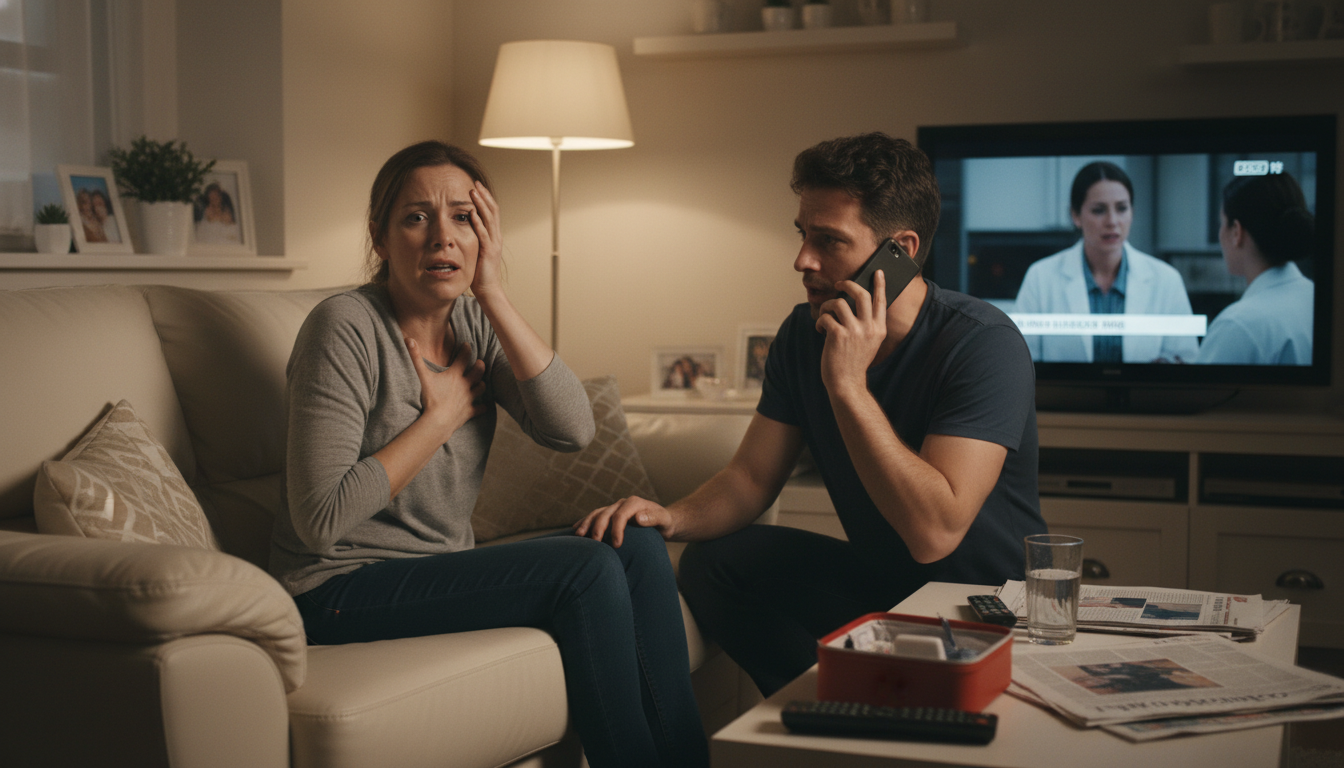
You’re sitting there minding your business when suddenly: heart racing, chest tight, can’t catch your breath, your brain screams, “I’M DYING.”
But are you having a panic attack, or is this a real medical emergency?
In the moment, those two can feel almost identical. And that’s exactly why so many people either rush to the ER for what turns out to be a panic attack, or stay home and “wait it out” when they actually need urgent care.
Let’s untangle the two—calmly, clearly, and with zero judgment.
Panic attack vs medical emergency: what’s the difference?
Panic attack
- A surge of intense fear or discomfort that peaks within minutes
- Often comes with strong physical symptoms (racing heart, shortness of breath, chest tightness, sweating, shaking)
- Usually improves within 20–30 minutes, even if it feels longer
- Not dangerous to the heart or lungs in otherwise healthy people, but feels terrifying
Medical emergency
- A serious, potentially life‑threatening problem (like a heart attack, stroke, severe asthma attack, or blood clot)
- Needs immediate medical attention
- Waiting it out or assuming “it’s just anxiety” can be dangerous
Key idea: A panic attack is mainly driven by the nervous system and adrenaline. A medical emergency is driven by a physical problem that can permanently harm organs if not treated.
Takeaway: Panic feels like an emergency; a medical emergency is an emergency. The trick is learning red flags.
Common symptoms of panic attacks (and why they feel so real)
Panic attack symptoms can look a lot like medical problems, especially heart or breathing issues. According to major medical centers like Mayo Clinic and the NHS, common panic attack symptoms include:
- Pounding or racing heart (palpitations)
- Chest pain or chest tightness
- Shortness of breath or feeling like you can’t get a deep breath
- Sweating, hot or cold flashes
- Shaking or trembling
- Nausea or stomach discomfort
- Dizziness, lightheadedness, or feeling like you might faint
- Numbness or tingling in hands, feet, or face
- Feeling detached from yourself (derealization/depersonalization)
- Intense fear of losing control, “going crazy,” or dying
Why it feels like a medical emergency:
- Your body flips into fight-or-flight mode.
- Adrenaline increases heart rate, breathing, and muscle tension.
- Blood flow shifts, which can cause tingling or dizziness.
Your brain then does the very human thing and thinks: “Heart racing + chest pain = heart attack. Game over.”
Mini scenario: You’re in a grocery store, suddenly your heart starts racing, you feel lightheaded, your vision feels weird. You think, “Something is wrong with my heart.” The fear spikes, your body releases more adrenaline, and your symptoms get even stronger. That loop is basically a panic attack in action.
Takeaway: Panic symptoms are produced by a real biological stress response—but that doesn’t automatically mean damage is happening.
What does a medical emergency look like?
Different emergencies have different red flags. Here are some big ones doctors emphasize as “do not ignore.”
Possible heart attack (not just anxiety)
Call emergency services right away if you have:
- Chest pain or pressure that feels like squeezing, crushing, or heavy weight
- Pain spreading to arm, shoulder, neck, jaw, or back
- Shortness of breath that’s not just from anxiety
- Nausea, vomiting, or breaking out in a cold sweat
- Symptoms that start with physical exertion (climbing stairs, walking) and don’t quickly let up with rest
These can be more subtle in women, older adults, and people with diabetes—sometimes they feel more like sudden fatigue, shortness of breath, or discomfort instead of classic “movie heart attack” chest pain.
Possible stroke
Use the FAST rule:
- Face: drooping on one side when you smile
- Arms: weakness or numbness in one arm
- Speech: slurred or hard to understand
- Time: call emergency services immediately
Other red flags: sudden severe headache (“worst headache of my life”), confusion, trouble seeing, or sudden loss of balance.
Trouble breathing that isn’t “just” panic
Call for help right away if you have:
- Sudden shortness of breath that’s getting worse, not better
- Wheezing, choking, or inability to speak full sentences
- Blue lips or face
- Chest pain with breathing, especially if it started suddenly
Other serious red flags
Urgent help is usually needed if you notice:
- Sudden, severe chest pain
- Coughing up blood
- Fainting or repeated near-fainting
- Severe, ripping or tearing chest/back pain
- Severe allergic reaction: swelling of tongue or throat, hives, difficulty breathing
Takeaway: If you see stroke signs, classic heart attack symptoms, trouble breathing, or sudden severe pain, treat it as a medical emergency. Don’t self-diagnose it as panic.
How long does a panic attack last vs a medical emergency?
This isn’t a hard rule, but it’s a helpful clue.
Panic attack timing:
- Often peaks within 10 minutes
- Most last 20–30 minutes, though milder after-symptoms (feeling wired, tired, or unsteady) can linger longer
Medical emergency timing:
- Symptoms may come on suddenly and stay or worsen
- Heart attack pain may build and not fully go away with rest
- Stroke symptoms usually don’t just vanish in a few minutes without treatment
If your symptoms come in waves, rise and fall, or start to ease when you sit down, breathe slowly, or change your focus, that’s more typical of a panic response—though not a guarantee.
Takeaway: Panic attacks usually ramp up fast and then ease. Emergencies often stay the same or get worse.
Questions to ask yourself in the moment
These questions do not replace medical care, but they can help you make sense of what you’re feeling:
- Have I felt something like this before and been told it was a panic attack?
If yes, and the pattern feels similar, panic is more likely. - Did this start during a stressful thought, situation, or trigger?
Example: work argument, driving on a highway, crowded store, health worry spiral. - Did it ramp up very quickly (within a few minutes)?
That sudden surge is classic panic. - Are symptoms starting to gradually ease when I slow my breathing or change position?
Panic symptoms often respond to calming the nervous system. - Do I have known medical conditions?
History of heart disease, blood clots, severe asthma, or other high‑risk conditions = much lower threshold to seek emergency care.
If your body is screaming that something is seriously wrong—and especially if symptoms are new, intense, or different from your usual panic attacks—it’s safer to get checked.
Takeaway: Your history matters. “Same as usual panic” is different from “brand‑new, never‑felt‑this‑before” symptoms.
When to treat it like a medical emergency (even if you have anxiety)
Many people with anxiety have been dismissed before, so they hesitate to seek help. But even if you have a long history of panic attacks, you should treat it as an emergency if:
- Chest pain is severe, crushing, or spreading to arm, jaw, neck, or back
- You feel short of breath in a way that’s different or worse than usual
- You have one‑sided weakness, facial drooping, or trouble speaking
- You faint or keep nearly fainting
- You have sudden confusion, trouble seeing, or severe headache
- Symptoms won’t ease at all and are getting worse over 10–20 minutes
- Your gut feeling says, “This is not normal for me.”
It’s always okay to be evaluated and then find out it was “just” a panic attack. Doctors and paramedics see this all the time.
Takeaway: If in doubt, get checked out. Embarrassment is temporary; safety is non‑negotiable.
Signs it may be a panic attack (but still worth following up)
None of these guarantee it’s “only” panic—but they often show up in panic attacks:
- You’ve had similar episodes before, and medical tests were normal
- Symptoms started during stress, fear, or intense worry
- Your mind is racing with catastrophic thoughts (“I’m dying,” “I’m losing it”)
- You notice hyper‑awareness of your body (checking pulse, focusing hard on breathing)
- Symptoms start to calm down—at least a bit—when you:
- Slow your breathing
- Move to a quieter space
- Distract yourself
- Remind yourself, “This feels awful, but I’ve survived this before”
Even if you’re pretty sure it’s panic, it’s still worth discussing with a healthcare or mental health professional, especially if it’s happening more often or it’s stopping you from doing normal things (work, driving, flying, social situations).
Takeaway: Recognizing panic is the first step; getting support so it happens less often is the real win.
What to do during a suspected panic attack
If you think it might be a true emergency, stop reading and call your local emergency number. If you’ve been checked before and this feels like your “usual” panic, these steps can help:
1. Ground your body first
- Sit or lie somewhere safe.
- Feel where your body makes contact with the chair, floor, or bed.
- Look around and name 5 things you can see, 4 you can feel, 3 you can hear, 2 you can smell, 1 you can taste.
This tells your brain, “I am in a room, not in a disaster movie.”
2. Use slow, structured breathing
Try this pattern:
- Inhale through your nose for 4 seconds
- Hold for 2 seconds
- Exhale slowly through pursed lips for 6–8 seconds
- Repeat for a few minutes
You’re giving your nervous system a “chill out” signal.
3. Talk to yourself like you would a friend
Instead of “I’m dying,” try:
- “This is a panic surge. I’ve felt this before and survived it.”
- “My heart is racing because my body is trying to protect me, not kill me.”
It may sound cheesy, but it works.
4. Ride the wave
Think of a panic attack as a wave: it rises, peaks, and falls.
Tell yourself:
- “This wave will peak and pass, usually within minutes.”
- “My job is not to fight the wave, just to float on it.”
Takeaway: During a panic attack, you’re not trying to “win” or “stop” it instantly—you’re trying to stay safe and wait it out while your system resets.
How to reduce future panic attacks and protect your health
Panic vs medical emergency isn’t a one‑time question. It’s about creating a plan with professionals so you’re not constantly guessing.
1. Get a real medical workup at least once
If you’ve never had your symptoms evaluated, it’s reasonable to ask your doctor about:
- Basic physical exam
- Heart evaluation if you have chest pain or palpitations
- Blood work if needed
This helps rule out underlying issues and can give you more confidence when episodes happen.
2. Consider therapy (especially CBT)
Cognitive behavioral therapy (CBT) and other forms of talk therapy can:
- Help you understand how panic attacks work
- Teach you skills to interrupt the fear-symptom-fear cycle
- Gradually reduce how often and how intensely they happen
3. Ask about medication if needed
Some people benefit from:
- Short‑acting medications for rare, intense attacks
- Daily medications (like certain SSRIs) to reduce overall anxiety and panic frequency
You and your clinician decide if this makes sense based on your situation.
4. Work on the baseline: sleep, caffeine, and stress
These aren’t magic fixes, but they matter:
- Poor sleep and high caffeine can mimic panic symptoms (racing heart, jitters)
- Dehydration and skipping meals can cause dizziness and heart flutters
- Chronic stress keeps your body closer to “panic ready” mode
Even small habits—consistent sleep times, moderate caffeine, regular meals—can make panic attacks less likely.
Takeaway: Partnering with professionals and taking care of your baseline body needs can reduce both panic attacks and your risk of missing a real emergency.
Bottom line: you’re not crazy, and you’re not alone
Feeling torn between “It’s just anxiety” and “What if I’m actually dying?” is incredibly common.
Here’s the distilled version:
- Panic attacks can look and feel like medical emergencies—especially heart problems.
- Certain red flags (crushing chest pain, weakness on one side, trouble speaking, severe trouble breathing) should always be treated as emergencies.
- If it’s new, severe, or just feels different from your usual, err on the side of getting urgent care.
- Over time, working with healthcare and mental health professionals can help you rule out serious conditions, understand your panic, and build tools to manage it.
You deserve both safety and peace of mind. It’s not either/or.
Sources
- Mayo Clinic – Panic Attacks and Panic Disorder: Symptoms and Causes (symptoms, timing, treatment) https://www.mayoclinic.org/diseases-conditions/panic-attacks/
- Mayo Clinic – Heart Attack: Symptoms and Causes (chest pain red flags, when to seek care) https://www.mayoclinic.org/diseases-conditions/heart-attack/symptoms-causes/
- American Heart Association – Heart Attack Symptoms in Women (atypical symptoms, risk awareness) https://www.heart.org/en/health-topics/heart-attack/warning-signs-of-a-heart-attack
- Centers for Disease Control and Prevention (CDC) – Stroke Signs and Symptoms (FAST, emergency signs) https://www.cdc.gov/stroke/signs_symptoms.htm
- NHS – Panic Disorder (symptoms, diagnosis, treatment options) https://www.nhs.uk/mental-health/conditions/panic-disorder/
- Cleveland Clinic – Shortness of Breath: Causes & When to Call 911 (breathing red flags) https://my.clevelandclinic.org/health/symptoms/16949-shortness-of-breath
- MedlinePlus – Anxiety Disorders (overview, treatment, when to seek care) https://medlineplus.gov/anxietydisorders.html
Leave a Reply