
Anxiety or Heart Problem? Understanding the Difference
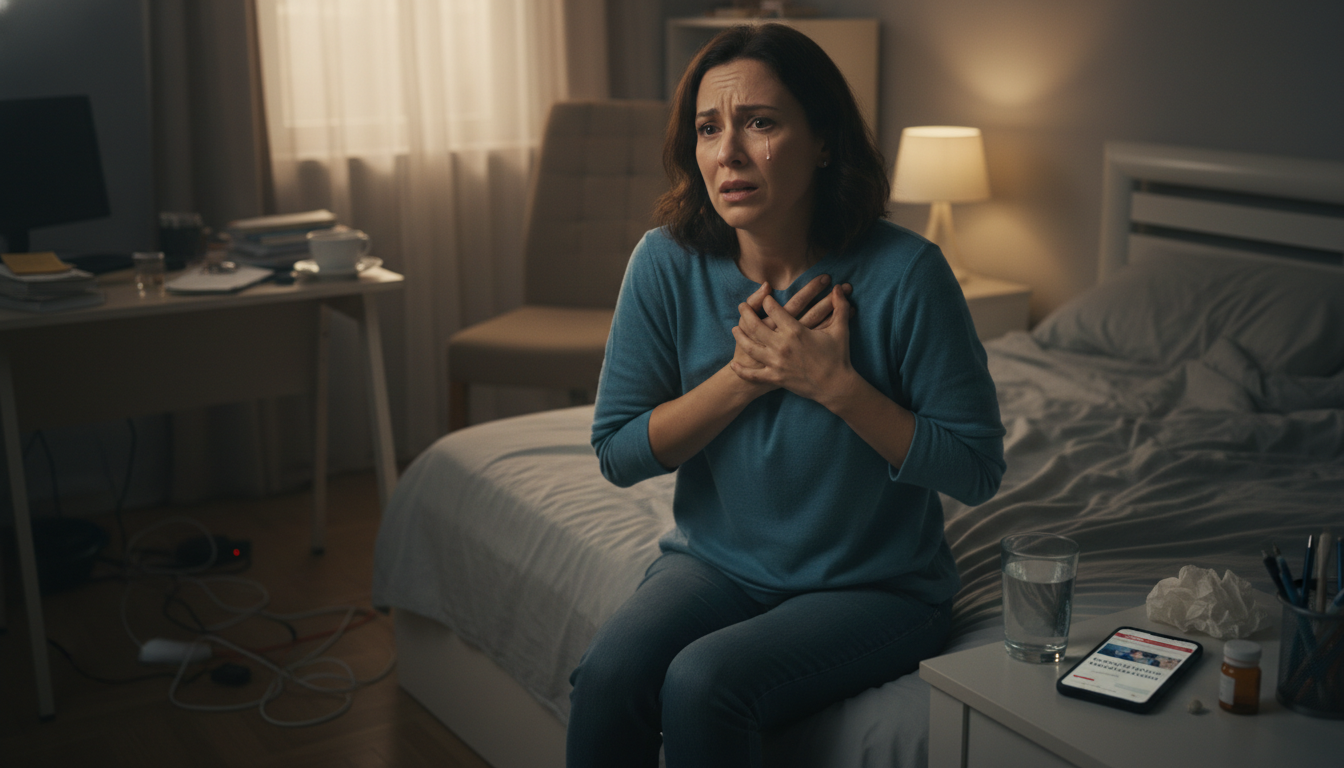
You’re lying in bed, minding your own business, when your heart suddenly slams in your chest. Cue the spiral: “Is this anxiety? Or am I about to have a heart attack?”
If that sounds familiar, you are very much not alone. Heart-related anxiety is one of the most common reasons people rush to the ER, only to be told, “It’s probably panic.” That can be reassuring and also confusing.
Let’s walk through how anxiety can mimic heart problems, what can be red flags, and how to handle that terrifying “is this in my head or is this my heart?” moment.
Quick disclaimer: This is educational, not medical advice. If you’re worried about your heart, get checked. No blog post (or AI) can examine you.
How Anxiety Messes With Your Heart (In Totally Real, Physical Ways)
Anxiety isn’t “just in your head.” It triggers a real, measurable stress response in your body.
When your brain thinks you’re in danger, your nervous system hits the gas pedal:
- Adrenaline and cortisol surge
- Heart rate increases
- Blood vessels tighten
- Breathing gets faster and more shallow
All of this can cause:
- Pounding heart or racing heart (palpitations)
- Chest tightness or brief sharp pains
- Feeling like your heart is skipping beats
- Lightheadedness or a “floating” feeling
- Tingling in hands, feet, or face
Those are very real sensations, even though they’re driven by anxiety.
Takeaway: Anxiety can create powerful body sensations that feel like a heart problem even when your heart is structurally normal.
Common Overlap: Anxiety Symptoms vs Heart Symptoms
Let’s compare what people commonly feel with anxiety versus what’s more typical with heart disease or a heart attack.
This is not a diagnosis tool, just a general pattern to help you make more sense of what’s happening.
More Often Seen With Anxiety
These can also occur with other conditions, but they’re very common in panic and anxiety:
- Sudden onset during stress, fear, or out of the blue (watching TV, trying to sleep, in a meeting)
- Racing heart or pounding heart that may slow down when you calm your breathing or distract yourself
- Sharp, stabbing chest pains that last a few seconds or come and go in different spots
- Tingling, numbness, or buzzing in hands, feet, face, or lips
- Feeling of unreality, detachment, or intense dread
- Hyper-awareness of heartbeat once you start focusing on it
- Symptoms that peak within 10–20 minutes then slowly ease (classic panic attack pattern)
More Concerning for a Heart Problem
These are general red-flag patterns doctors worry about more. If you notice these, get evaluated quickly:
- Chest pressure, squeezing, or heaviness, especially in the center or left side of the chest
- Pain that may spread to the arm, shoulder, neck, jaw, or back
- Symptoms that come on with physical effort (climbing stairs, walking uphill) and improve with rest
- Shortness of breath that’s new, worsening, or unrelated to anxiety
- Nausea, cold sweats, or feeling like you might pass out with chest discomfort
- Symptoms in people with higher risk: older age, smoking history, diabetes, high blood pressure, high cholesterol, strong family history of heart disease
Takeaway: Anxiety and heart issues can overlap, but persistent pressure, exertion-related symptoms, spreading pain, or collapse-like feelings deserve urgent care.
Fast Self-Check Questions (That Do Not Replace a Doctor)
When you’re in the moment, try asking yourself:
- What was I doing when this started?
- Sitting, scrolling, arguing, worrying about something? Anxiety more likely.
- Climbing stairs, shoveling, lifting, walking? Heart strain more concerning.
- What does the discomfort feel like?
- Brief, stabbing, moving around? More often anxiety or muscle.
- Heavy, squeezing, or like an elephant on the chest? More concerning.
- Does slowing my breathing help?
If focusing on slow, deep breaths makes it ease up, anxiety is a strong suspect.
- Have I felt this before and been checked?
If you’ve had a workup (like ECG, blood tests, maybe echo or stress test) and were told it’s anxiety, your body may be replaying the same stress pattern.
Again, this is about understanding, not deciding, “Oh, it’s fine, I’ll ignore it.” Use it as information, not as a reason to avoid care when needed.
Takeaway: Your body’s context and triggers matter. How it starts, when it happens, and what affects it can give you clues.
Real-World Scenarios: Anxiety or Heart Problem?
Let’s walk through a few common situations.
Scenario 1: The 2 a.m. Heart Slam
You’re almost asleep when your heart suddenly thuds hard a few times. You sit up. Now it’s racing. You notice your breathing is shallow and fast. Your hands feel tingly. You’re sure you’re dying.
What it might be: A benign extra heartbeat (very common) followed by a surge of panic. Once you noticed the sensation, your stress skyrocketed. The stress chemicals pushed your heart rate higher and tightened your muscles.
What usually happens:
- ER or urgent visit, normal ECG and labs
- You’re told it’s anxiety or a panic attack
Scenario 2: The Stairs Test
You’re walking up a couple flights of stairs. Halfway up, you feel pressure in the center of your chest. It’s not stabbing; it’s heavy. You’re a bit out of breath. You stop, and within a minute, the pressure eases.
What it might be: Your heart working harder than it should under load. That exertion-triggered pattern is something doctors take seriously.
What usually happens:
- This deserves prompt medical evaluation
- Depending on age and risk, your doctor might order ECG, blood tests, imaging, or a stress test
Scenario 3: The Meeting Meltdown
You’re in a tense work meeting. You notice your heart speed up. Then your chest feels tight, like you can’t get a deep breath. Thoughts spiral: “What if I pass out in front of everyone?” Now you’re sweating and dizzy.
What it might be: A classic panic attack:
- Triggered by stress or social fear
- Heart and breathing speed up, chest muscles tense
- You feel like there’s no air, even though lungs are working
Takeaway: How and when symptoms show up tells a story. Anxiety often flares with stress, nighttime, or strong emotions; heart disease often shows up reliably with physical effort.
Why Anxiety Loves to Target the Heart
Anxiety tends to zoom in on areas we fear most: brain, heart, and breathing.
The heart is an easy target because:
- You can literally feel it pounding or skipping
- You’ve heard scary stories about heart attacks
- Health anxiety and searching online amplify every tiny sensation
Over time, your brain can link normal sensations, like a brief flutter, to the thought, “Danger!” That pairing gets stronger every time you panic about it.
Soon, the sensation → catastrophic thought → panic → more sensation loop keeps repeating.
Breaking that loop is a big part of recovering from health anxiety.
Takeaway: Your brain may be overprotecting you by mislabeling normal heart sensations as emergencies.
Practical Ways to Calm Anxiety-Driven Heart Symptoms
Again, this is not a replacement for a medical check. But once your doctor has said, “Your heart looks healthy,” these tools can help you manage the anxiety side.
1. The 4–6 Breathing Reset
This helps switch your body from “fight or flight” to “rest and digest.”
- Inhale gently through your nose for a count of 4
- Exhale slowly through pursed lips for a count of 6
- Repeat for 2–5 minutes
Longer exhale means a stronger calming signal.
2. Ground Your Senses
Panic takes you into your head. Grounding brings you back into your body and surroundings.
Try the 5–4–3–2–1 technique:
- 5 things you can see
- 4 things you can feel
- 3 things you can hear
- 2 things you can smell
- 1 thing you can taste
3. Change Your Inner Script
Instead of, “This is it, my heart is failing,” try:
- “My body is having a stress surge. It’s intense, but it will pass.”
- “I’ve felt this before and survived it.”
- “This pounding is my body’s alarm system, loud, but not always accurate.”
You’re not lying to yourself; you’re choosing a more balanced story.
4. Watch the Caffeine and Stimulants
Coffee, energy drinks, decongestants, some pre-workouts, all can:
- Increase heart rate
- Trigger palpitations
- Make anxiety easier to ignite
If you notice your heart reactions happen more after caffeine or nicotine, that’s valuable data.
5. Build a “Checked and Cleared” File
If you’ve had tests (normal ECG, labs, echo, and so on), keep a note or folder. When anxiety hits, you can remind yourself:
“I’ve been evaluated. My doctor said my heart is okay. My body is running the same anxiety pattern again.”
This doesn’t mean ignore all new symptoms; it just keeps you from treating every repeat sensation like a brand-new catastrophe.
Takeaway: You can’t stop all sensations, but you can change how you respond to them, and that can shrink both panic and symptom intensity over time.
When Anxiety and a Real Heart Problem Coexist
Yes, both can be true at the same time.
People with real heart conditions may also develop intense anxiety about their symptoms, and people with long-standing anxiety can later develop unrelated heart issues as they age.
So:
- New, different, or clearly worsening symptoms deserve medical attention, even if you’ve had anxiety for years.
- If you already have a diagnosed heart condition, ask your cardiologist what your specific red flags are and what’s expected versus emergency.
Takeaway: Having anxiety doesn’t mean you’re imagining everything. You still deserve appropriate care and clear guidance.
Clear Red Flags: Don’t Overthink, Just Go In
Seek emergency care (call 911 or your local emergency number) if you have:
- Chest pain or pressure that lasts more than a few minutes, especially if it’s heavy, crushing, or worsening
- Pain spreading to arm, jaw, back, or neck
- Shortness of breath that is severe or sudden
- Feeling like you might pass out, or you actually do pass out
- Sudden confusion, trouble speaking, or weakness on one side of the body (stroke signs)
- A known heart condition and symptoms that your doctor has told you are red flags for you
If you’re on the fence, err on the side of going in. Doctors would much rather rule out a heart attack than have you stay home with a real one because you were worried about bothering anyone.
Takeaway: When in doubt, get checked out. Anxiety can be calmed later; heart damage can’t be undone.
What to Ask Your Doctor If You’re Unsure
If you’re stuck in the “anxiety or heart problem?” loop, bring these questions to your next visit:
- “Given my age and risk factors, what’s my overall heart risk?”
- “Do my symptoms fit more with anxiety, with a heart condition, or is it unclear?”
- “What tests (if any) do you recommend to evaluate my heart?”
- “Once those are done, how will I know when a symptom is likely anxiety versus when I should seek urgent care?”
- “Can you help me find support for anxiety—like therapy, CBT, or other options?”
Write the answers down. Future-you, at 2 a.m. with a pounding heart, will thank you.
Final takeaway: Your fear is understandable. Your symptoms are real. The goal isn’t to guess what’s wrong, it’s to rule out dangerous heart issues with a professional, and learn how to manage the anxiety patterns that love to hijack your heartbeat.
You don’t have to choose between “it’s all in my head” and “it must be deadly.” You’re allowed to say: “My body is loud, my anxiety is loud, and I’m going to get informed help for both.”
Leave a Reply