Shortness of Breath After a Shower: What It Might Mean
Disclaimer: This article is for general information only and isn’t medical advice or a diagnosis. If you have severe symptoms or think it may be an emergency, call your local emergency number.
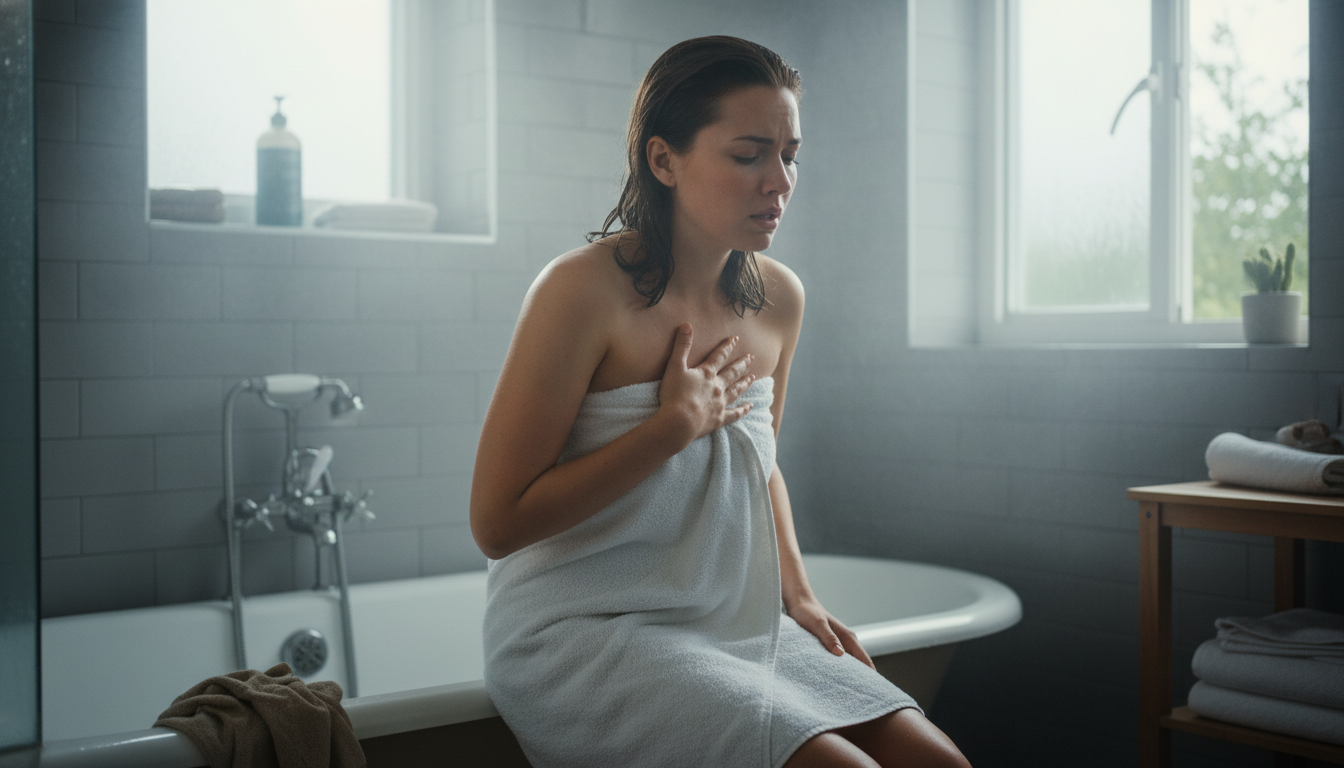
You step out of the shower feeling not refreshed, but weirdly out of breath. You weren’t running a marathon in there. You were just washing your hair. So why does your chest feel tight, your breathing feel shallow, or your heart seem a little too excited about soap and water?
Let’s break down what shortness of breath after a shower might mean, when it’s probably okay, and when you really should pay attention.
Is Shortness of Breath After a Shower Normal?
Sometimes, yes, depending on the situation.
A brief feeling of being winded or needing a few extra deep breaths right after a hot shower can be caused by things like:
- Steam and humidity
- Hot water causing your blood vessels to widen
- Standing up too quickly or bending over in a small space
- Mild deconditioning (your body isn’t used to exertion)
- Anxiety or panic
If the feeling:
- Lasts less than a few minutes
- Goes away once you cool down and sit or stand in fresh air
- Isn’t happening with chest pain, severe dizziness, or fainting
Then it’s often not an immediate emergency. But it’s still a symptom your body is sending you, and repeated episodes are worth mentioning to a doctor.
Takeaway: One-off, mild breathlessness that settles quickly can be normal. Persistent or intense symptoms are not something to ignore.
Why Can a Hot Shower Make You Short of Breath?
Let’s walk through some common, mostly non-emergency reasons first.
1. Heat and Steam Change How You Breathe
Hot showers create a mini-sauna. Warm, humid air can make it feel harder to take a deep breath, especially if you:
- Have asthma
- Have allergies
- Have chronic lung conditions like COPD
According to major medical sites like Mayo Clinic and the National Heart, Lung, and Blood Institute, humidity and temperature extremes can trigger asthma symptoms, including coughing, chest tightness, and shortness of breath (often called “asthma triggers”).
In a small bathroom with poor venting, you’re essentially breathing warm, moist air over and over. For sensitive lungs, that can feel like your chest is closing up.
Takeaway: Hot, steamy bathrooms are cozy, but your lungs might not agree, especially if you already have breathing issues.
2. Hot Water Affects Your Heart and Blood Vessels
Hot showers don’t just warm your skin, they affect your circulation.
Heat causes your blood vessels to dilate (widen). That can:
- Lower your blood pressure
- Make your heart beat faster to keep blood flowing
- Make you feel lightheaded, wobbly, or short of breath, especially when you first step out
People with low blood pressure, heart problems, or poor circulation may feel this more strongly.
Mini example:
- You’re in a very hot shower for 15 minutes.
- Your blood vessels dilate; your heart is working a bit harder.
- You bend to pick up shampoo, stand back up, then step out quickly.
- Suddenly: head rush, heart pounding, breathing feels off.
That sequence can be enough to leave you momentarily breathless.
Takeaway: Very hot showers can stress your circulation a bit, which sometimes shows up as feeling short of breath or lightheaded.
3. Deconditioning (a.k.a. “I’m Not as Fit as I Thought”)
If walking up a flight of stairs makes you breathe harder, it’s not shocking that standing for a while, lifting your arms to wash your hair, and bending and straightening repeatedly in a hot, humid environment might also leave you winded.
Shortness of breath with mild activity can be a sign of deconditioning, but it can also be a sign of heart or lung issues. The key is whether this is new for you or has been going on a long time, and how severe it is.
Takeaway: If showering feels like exercise, your fitness level might be part of the story, but don’t assume that’s all it is if this is a new symptom.
4. Anxiety or Panic in the Shower
For some, the bathroom is actually a surprisingly common place for anxiety or panic to spike:
- You’re alone with your thoughts
- Hot water and a closed space can feel a bit suffocating
- You notice your heart beating, and then you focus on it
Anxiety can cause or worsen shortness of breath, a feeling of “air hunger,” chest tightness, and the sense that you can’t take a satisfying breath, even when your oxygen level is normal.
If you:
- Feel a sudden rush of fear, doom, or unease
- Notice a racing heart, tingling, shaking, or feeling detached
- Find that trying to force a deep breath makes you more panicky
This may be more of a panic or anxiety reaction than a lung or heart malfunction. Medical sites like the National Institute of Mental Health and Mayo Clinic describe shortness of breath as a classic panic attack symptom.
Takeaway: If your breathing trouble in the shower comes with intense anxiety, it may be more about your nervous system than your lungs, but still worth talking about with a clinician.
5. Asthma or Other Lung Conditions
If you already know you have asthma, COPD, or another lung issue, a hot shower can be a trigger.
Common signs it may be lung-related:
- Coughing or wheezing in the shower or right after
- Chest tightness that feels like a band around your chest
- Using an inhaler helps the symptoms
Medical organizations such as the American Lung Association and NHLBI list cold air, hot humid air, fragrances, and steam as potential asthma triggers.
Takeaway: For people with asthma or chronic lung disease, shower steam can be a legitimate trigger, not just in your head.
6. Heart Problems (More Serious but Important to Mention)
Shortness of breath can be a sign of heart trouble, especially if it:
- Is new or suddenly worse
- Comes with chest pain, pressure, or discomfort
- Shows up with swelling in your legs or ankles
- Is worse when lying flat
Conditions like heart failure or coronary artery disease can cause shortness of breath during everyday activities (and sometimes at rest). Major organizations like the American Heart Association and Mayo Clinic emphasize that unexplained shortness of breath, particularly with exertion or at rest, can be a red flag for heart disease.
If your breathing is noticeably worse in hot showers and you are also short of breath walking across a room, climbing a few steps, or lying down at night, you should definitely speak with a health care professional.
Takeaway: Shower-related breathlessness can sometimes unmask underlying heart issues, especially if you’re also short of breath at other times.
When Should I Worry About Shortness of Breath After a Shower?
Here are the red flags.
Contact a doctor soon (same day or next available) if:
- Your shortness of breath is new or clearly getting worse over days or weeks
- You feel short of breath with very light activities (talking, dressing, walking a few steps)
- You’ve had a cough, wheeze, or chest tightness that keeps returning
- You’ve noticed swelling in your legs, feet, or belly
- You feel more breathless when you lie flat and need extra pillows
- The breathing problem lasts more than a few minutes after you’re out, cooled, and resting
Get emergency medical care (call 911 or your local emergency number) if:
- You are struggling to breathe, can’t speak full sentences, or feel like you’re suffocating
- You have chest pain, pressure, or tightness that lasts more than a few minutes or goes away and comes back
- You feel like you might faint or actually lose consciousness
- Your lips or face look bluish or gray
- You have a known heart or lung condition and this is much worse than your usual
Takeaway: Mild, brief breathlessness that clears quickly is usually less urgent. Severe, persistent, or worsening symptoms should not be waited out.
What You Can Try at Home (Without Ignoring Serious Signs)
If your symptoms are mild, short-lived, and you’ve checked with a doctor (or are planning to), some practical changes might help.
1. Adjust the Water Temperature
Try a warm (not super hot) shower:
- Slightly cooler water puts less stress on your blood vessels
- Helps prevent large blood pressure swings
- Reduces how much steam builds up
If you notice you feel much better with a milder temperature, that’s a useful clue to share with your clinician.
2. Improve Bathroom Ventilation
- Turn on the exhaust fan before you start your shower
- Crack the door or window if possible
- Avoid letting the room turn into a full steam room
Less steam means less humidity and often easier breathing for many people.
3. Take Your Time Standing Up and Getting Out
If you tend to feel dizzy or lightheaded too:
- Sit on a shower stool or use a bench while washing
- Near the end, turn the water temperature down a bit
- Stand up slowly, hold onto a grab bar or wall
- Pause for a few seconds before stepping out
This can help your blood pressure adjust more smoothly.
4. Pay Attention to Fragrances and Products
Some people are sensitive to:
- Strongly scented body washes and shampoos
- Aerosol sprays in the bathroom
- Cleaning chemicals lingering in the air
These can irritate airways and cause cough or tightness. Switching to gentler, fragrance-free products may help.
5. Use Breathing Techniques if You Get Anxious
If anxiety or panic seems to be part of your shortness of breath after showering, try:
- Pursed-lip breathing: Inhale slowly through your nose for 2–3 seconds, then exhale gently through pursed lips (like blowing out a candle) for 4–6 seconds.
- Box breathing: Inhale for 4 seconds, hold 4 seconds, exhale 4 seconds, hold 4 seconds.
These strategies are recommended in many pulmonary rehab and anxiety resources to reduce the sensation of breathlessness and calm your nervous system.
If showering regularly triggers panic-like episodes, it’s very reasonable to ask your primary care provider or a mental health professional about it. Panic attacks are treatable.
Takeaway: Small changes to temperature, ventilation, and routine often make a big difference, as long as there’s no serious underlying condition.
Should I See a Doctor Just for Shortness of Breath After a Shower?
If this is repeated, new, or bothersome, it’s worth at least a non-urgent visit or telehealth appointment.
Shortness of breath is a non-specific but important symptom. It can come from lungs, heart, blood, anxiety, deconditioning, or a mix. Only a clinician who can take a full history, do an exam, and possibly order tests (like spirometry, chest X-ray, ECG, blood work, or echocardiogram) can really sort out the cause.
Be ready to answer questions like:
- How long has this been happening?
- Only after showers, or with other activities too?
- Any chest pain, palpitations, wheeze, or cough?
- Any history of asthma, heart disease, anemia, or anxiety?
- Any medications you’re on (including inhalers or heart meds)?
Takeaway: Even if it feels minor, repeated shortness of breath is something your doctor will want to know about, especially if it’s a new pattern.
Quick Recap: Shortness of Breath After Shower — Should You Worry?
- Occasional, mild episodes that settle quickly once you cool down and breathe fresh air are often related to heat, humidity, mild deconditioning, or anxiety.
- Frequent, worsening, or intense shortness of breath — especially with chest pain, faintness, wheezing, or leg swelling — needs medical evaluation.
- Simple tweaks like cooler water, better ventilation, slower movements, and gentler products can reduce symptoms.
- Underlying issues like asthma, heart disease, or panic disorder can all show up as shortness of breath, including after a shower.
Listening to your body isn’t being dramatic; it’s smart. If your gut says, “This doesn’t feel right,” talk to a health professional.
Sources
- Mayo Clinic – Shortness of Breath: Symptoms and Causes (symptoms, causes, when to seek care) https://www.mayoclinic.org/diseases-conditions/shortness-of-breath/symptoms-causes/syc-20374483
- Mayo Clinic – Asthma: Symptoms and Causes (asthma triggers, humidity, temperature) https://www.mayoclinic.org/diseases-conditions/asthma/symptoms-causes/syc-20369653
- National Heart, Lung, and Blood Institute – Asthma Triggers and Management (triggers, steam/humidity, treatment) https://www.nhlbi.nih.gov/health/asthma
- American Lung Association – Asthma Triggers (environmental factors, humidity, irritants) https://www.lung.org/lung-health-diseases/lung-disease-lookup/asthma/asthma-triggers
- American Heart Association – Warning Signs of Heart Failure (shortness of breath, swelling, exertional symptoms) https://www.heart.org/en/health-topics/heart-failure/warning-signs-of-heart-failure
- Cleveland Clinic – Shortness of Breath (dyspnea): Causes & When to See a Doctor (evaluation, serious causes, red flags) https://my.clevelandclinic.org/health/symptoms/16964-shortness-of-breath-dyspnea
- National Institute of Mental Health – Panic Disorder (panic symptoms including shortness of breath) https://www.nimh.nih.gov/health/topics/panic-disorder
Leave a Reply