When Stress Causes Physical Symptoms (And When to Worry)
Disclaimer: This article is for general information only and isn’t medical advice or a diagnosis. If you have severe symptoms or think it may be an emergency, call your local emergency number.
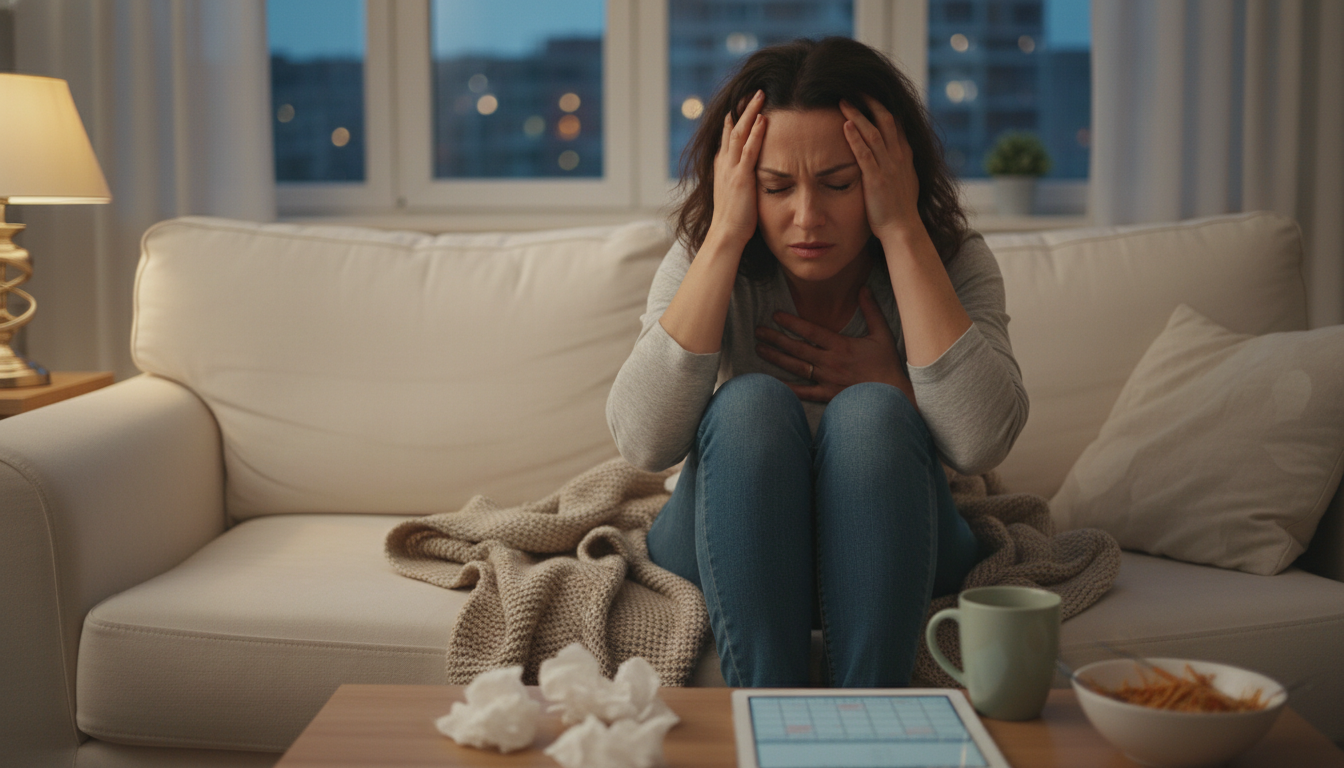
Ever had a super stressful week and suddenly your chest feels tight, your stomach is a mess, or your left eyelid starts twitching?
Then comes the fear spiral:
“Is this just stress… or is something actually wrong with me?”
Let’s walk through what’s normal (though uncomfortable), what’s common but needs a check-in, and when your body’s stress response might be waving a red flag.
Is It Normal for Stress to Cause Physical Symptoms?
Stress can absolutely cause real physical symptoms, sometimes very intense ones. You’re not imagining it, and it’s not “all in your head” in the dismissive way people sometimes say.
When you’re stressed, your brain flips on the body’s fight-or-flight response. Stress hormones like adrenaline and cortisol speed up your heart, change your breathing, tighten muscles, and redirect blood flow. That can show up as:
- Racing or pounding heart
- Tight chest or throat
- Upset stomach, nausea, or diarrhea
- Headaches or pressure in your head
- Shakiness, weakness, or feeling wired and exhausted at the same time
- Trouble swallowing, a lump-in-the-throat feeling
- Sweating, flushing, or feeling hot and cold
These are real, measurable body changes. The stress response is built to protect you from danger, but in modern life, it often gets triggered by emails, bills, relationship issues, or health worries instead of physical threats.
Takeaway: Feeling physical symptoms from stress is common and biologically normal, but that doesn’t mean you should ignore everything or self-diagnose.
What Physical Symptoms Can Stress and Anxiety Cause?
Everyone’s body has its own “favorite” stress symptoms, but here are some of the most common.
1. Heart and Circulation Symptoms
Stress and anxiety can:
- Increase heart rate
- Make you feel palpitations (thumps, flutters, or skipped beats)
- Raise blood pressure temporarily
This can feel like:
- Pounding heart when you’re just sitting
- Sudden rushes or surges in your chest
- Feeling your heart in your throat
Panic attacks especially can cause intense chest tightness, racing heart, shortness of breath, and feeling like you might pass out, symptoms that overlap with serious heart problems, which is why they’re so scary.
Mini takeaway: Stress can absolutely make your heart feel weird, but new, severe, or different chest symptoms should always be taken seriously. When in doubt, get checked.
2. Breathing and Chest Symptoms
When you’re anxious, your breathing often becomes:
- Faster
- Shallower
- Higher in your chest instead of deep in your belly
That can cause:
- Feeling short of breath or like you can’t get a deep breath
- Tightness or pressure in your chest
- Lightheadedness or dizziness from over-breathing
Sometimes people start to yawn a lot, sigh frequently, or keep testing their breathing, which can make them even more aware of every breath and more stressed about it.
Mini takeaway: Stress can mess with your breathing rhythm and make you feel like you’re not getting enough air, even when your oxygen is actually fine, but new or severe shortness of breath must always be checked urgently.
3. Gut and Stomach Symptoms
Your brain and gut are deeply connected, so stress often shows up in your digestive system.
Common stress-related GI symptoms include:
- Nausea or queasiness
- Stomach cramps
- Diarrhea or more frequent bowel movements
- Bloating or gas
- Worsening of IBS (irritable bowel syndrome) symptoms
Many people notice:
- Pre-presentation stomach: You have to run to the bathroom before a big talk or stressful event.
- After-work crash stomach: You hold it together all day, then your stomach revolts in the evening when you finally relax.
Mini takeaway: Stress is a classic trigger for stomach and bowel changes, especially if you already have a sensitive gut, but persistent pain, blood in stool, fever, or weight loss are not “just stress.”
4. Muscle, Body, and Nerve Symptoms
When you’re stressed, you may unconsciously:
- Clench your jaw
- Hunch your shoulders
- Tighten your neck and back muscles
Over time, this can cause:
- Tension headaches
- Neck and shoulder pain
- Back pain
- Jaw pain or TMJ problems
You might also feel:
- Muscle twitching (eyelid, calves, random spots)
- Shakiness or trembling
- A heavy, tired, or weak feeling even though your muscles test normal
Mini takeaway: Chronic tension plus stress hormones can lead to cranky muscles and nerves. This is very normal but uncomfortable, and often improved with stress management and movement.
5. Head, Brain, and “Weird Sensation” Symptoms
Stress and anxiety can also show up in your head and nervous system as:
- Head pressure, tight band-like headaches, or migraines (in people prone to them)
- Dizziness or feeling off-balance
- Brain fog, trouble concentrating, or feeling “out of it”
- Tingling in hands, feet, or face (sometimes related to breathing too fast)
Many people describe:
- A “floaty” feeling in stores or crowded places
- A “not quite in my body” sensation during high anxiety
Mini takeaway: Your nervous system is like your body’s electrical wiring. When stress is high, the system becomes more sensitive, which can create a lot of odd, unsettling sensations.
Three Real-World Scenarios
Scenario 1: The 3 a.m. Symptom Spiral
You’ve had a stressful week. You finally fall asleep, then wake up at 3 a.m. with:
- Pounding heart
- Tight chest
- Sweaty palms
Your brain thinks “heart attack.”
In reality, this is often a surge of stress hormones and a panic attack during light sleep. These can feel very real and come out of nowhere.
Still, any new, severe chest symptom, especially with risk factors like older age, smoking, strong family history, or known heart disease, should be treated as an emergency to be safe.
Scenario 2: Big Meeting, Upset Stomach
You’re about to give a presentation. You feel nauseous, have to run to the bathroom twice, and lose your appetite completely. Once it’s over, your appetite starts to come back, and your stomach slowly settles.
This is a classic fight-or-flight response pulling blood away from your gut, changing motility, and increasing nerves.
Scenario 3: Weeks of Vague, Shifting Symptoms
For a month, you’ve been extra aware of your heartbeat, noticing random tingles, Googling symptoms a lot, and feeling more anxious about your symptoms.
Now you’re stuck in a loop: stress leads to symptoms, which lead to worry, more stress, and more symptoms.
This is very common with health anxiety. Even if stress is a big factor, it’s usually worth a medical check-in to:
- Rule out serious causes
- Get guidance on next steps
- Talk about anxiety or stress support if needed
Mini takeaway: Stress can fully explain some symptom patterns, but you should never feel guilty or silly for getting checked. “Just stress” is still a real problem worth addressing.
How Do I Know If It’s “Just Stress” or Something Serious?
You can’t always tell on your own. That’s why healthcare professionals exist.
Here are some red-flag signs where you should seek urgent or emergency care (call 911 in the U.S. or your local emergency number):
- Chest pain or pressure that is:
- New, severe, or crushing
- Spreading to your jaw, arm, back, or neck
- Along with sweating, nausea, or feeling like you might pass out
- Trouble breathing that is new, severe, or getting worse
- Sudden weakness, numbness, or difficulty speaking, seeing, or walking
- Chest pain with a known heart condition or very high risk factors
- Fainting or episodes where you lose consciousness
- Severe, sudden headache that feels like the worst of your life
- High fever with chest pain, trouble breathing, or confusion
If you’re unsure, it’s always okay to err on the side of getting urgent medical care. Stress and anxiety are common, but they can exist right alongside real medical problems.
Mini takeaway: Let doctors rule out the big scary things. That’s their job, not yours.
When Stress Is Likely Playing a Big Role
While not a guarantee, stress or anxiety is more likely a major factor when:
- Symptoms come and go with stress levels (worse during arguments, work deadlines, health worries, and similar situations)
- You feel better when you’re deeply distracted or relaxed
- Multiple systems are involved (heart, gut, muscles, sleep, thoughts) without clear test findings
- Your doctor has done reasonable tests and said things look okay, but the sensations are still there
- You notice you’re constantly body-checking: taking your pulse, testing your breathing, or re-Googling the same symptoms
This doesn’t mean there’s zero physical issue. It means your nervous system is on high alert, and stress is turning the volume up.
Mini takeaway: If your symptoms track your stress curve, your nervous system may be in survival mode even when you’re technically safe.
What Can I Do Right Now When Stress Is Causing Symptoms?
Here are some simple, low-risk strategies you can try alongside, not instead of, medical care when needed.
1. Ground Your Body in the Present
When symptoms spike:
- Slow your exhale: Breathe in for about 4 seconds, out for about 6–8 seconds. Do this gently for a few minutes.
- Use your senses: Name 5 things you can see, 4 you can feel, 3 you can hear, 2 you can smell, 1 you can taste.
- Move gently: If safe, walk around your home, stretch your shoulders, and roll your neck slowly.
These help tell your body that you’re not actually in physical danger right now.
2. Label What’s Happening
Instead of “I’m dying,” try “My stress response is turned up really high right now. These sensations are uncomfortable, but they’re common with anxiety.”
How you talk to yourself can either make things worse or help calm them.
3. Zoom Out on Your Life Stress Load
Ask yourself:
- Have I had more work, money, relationship, or health stress lately?
- Am I sleeping badly?
- Have I been skipping meals, over-caffeinating, or not moving much?
- Am I dealing with grief, chronic illness, caregiving, or burnout?
Your symptoms might be your body’s loud way of saying “I’m overloaded.”
Small adjustments can help:
- Regular meals with some protein
- Cutting back slightly on caffeine and alcohol
- Short walks, even 5–10 minutes
- Protecting a non-negotiable wind-down routine before bed
4. Talk to a Professional
You don’t have to figure this out alone. Options include:
- Primary care clinician: To rule out medical causes, review medications, order basic tests, and talk about next steps.
- Therapist (especially CBT-based): To work on health anxiety, panic, and the stress–symptom loop.
- Psychiatry or prescribing clinician: If anxiety, panic, or depression are severe or long-lasting, medication may be part of the plan.
Asking “Could stress or anxiety be contributing to these symptoms?” is a valid question for your appointment.
Mini takeaway: Getting support is not overreacting. It’s exactly what these systems are for.
So Is This Normal, or Not?
It is very common and biologically normal for stress and anxiety to cause physical symptoms, sometimes dramatic ones. That does not mean you should ignore everything or blame yourself for being stressed.
You are allowed to get checked out, even if it might just be anxiety. If the emergencies are ruled out, it becomes very worthwhile to invest in calming your nervous system, reducing stress load where you can, and getting emotional support.
Your symptoms are your body trying to talk to you. The goal isn’t to silence it completely; it’s to help it feel safe enough to stop shouting.
Sources
- Mayo Clinic – Anxiety disorders: Symptoms and causes (symptoms, physical effects of anxiety)
https://www.mayoclinic.org/diseases-conditions/anxiety/symptoms-causes/syc-20350961 - Mayo Clinic – Stress symptoms: Effects on your body and behavior (stress-related physical symptoms)
https://www.mayoclinic.org/healthy-lifestyle/stress-management/in-depth/stress-symptoms/art-20050987 - Cleveland Clinic – Panic Attacks & Panic Disorder (chest pain, breathing changes, when to seek care)
https://my.clevelandclinic.org/health/diseases/4451-panic-attack-panic-disorder - National Institute of Mental Health – Anxiety Disorders (anxiety, physical symptoms, treatments)
https://www.nimh.nih.gov/health/topics/anxiety-disorders - MedlinePlus – Stress and your health (body’s stress response, health impact)
https://medlineplus.gov/ency/article/003211.htm - American Heart Association – Heart attack symptoms in women and men (red-flag chest symptoms)
https://www.heart.org/en/health-topics/heart-attack/warning-signs-of-a-heart-attack - CDC – When to use emergency medical services (emergency signs, when to call 911)
https://www.cdc.gov/heartdisease/signs_symptoms.htm
Leave a Reply