Shortness of Breath After a Shower
Disclaimer: This article is for general information only and isn’t medical advice or a diagnosis. If you have severe symptoms or think it may be an emergency, call your local emergency number.
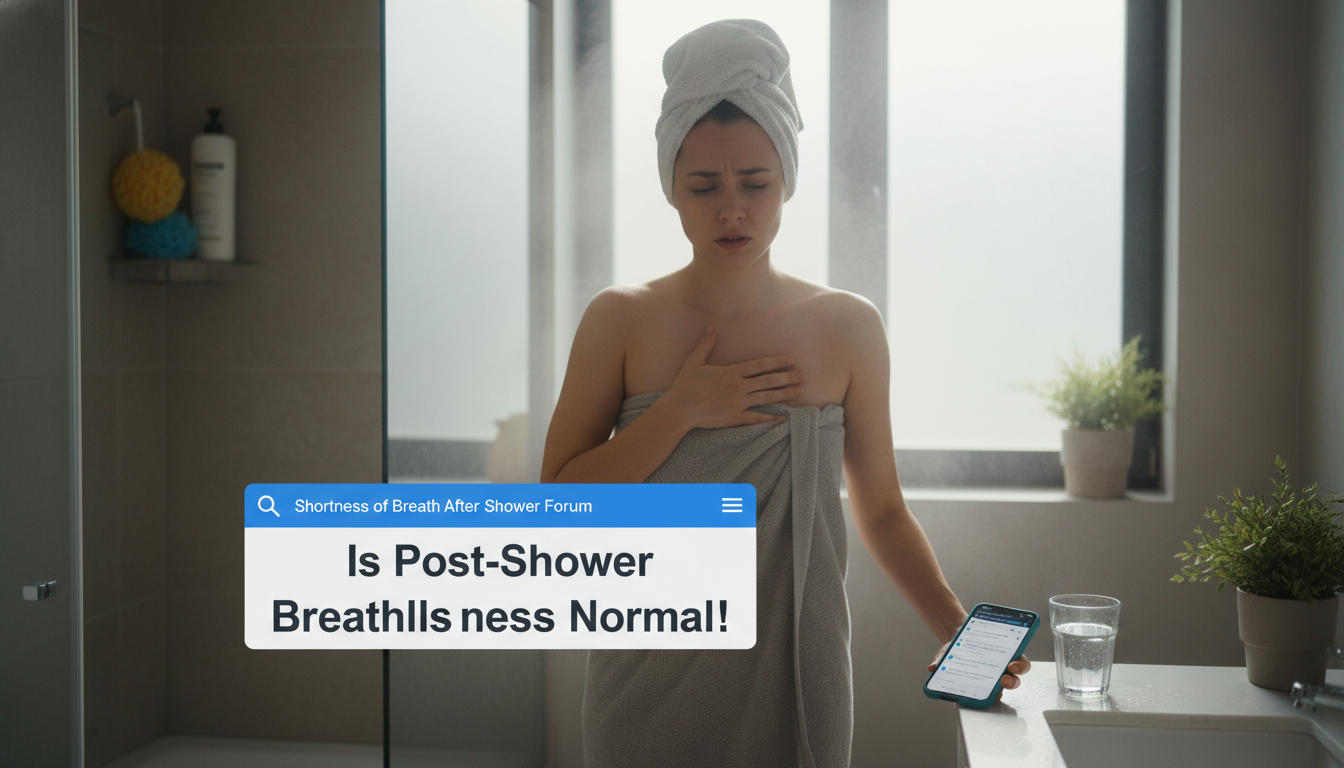
You step out of a hot shower feeling not refreshed, but weirdly out of breath. Heart thumping a little too fast? Chest a bit tight? Already wondering, “Is this just me being unfit or is something actually wrong?”
Shortness of breath after a shower can feel unsettling. It helps to know when it might be relatively normal, when it could be a red flag, and what you can do about it.
Is Shortness of Breath After a Shower Ever “Normal”?
It can happen for non-dangerous reasons, but it is not something to ignore if it is new, severe, or getting worse.
Showers change your body’s environment fast:
- The air gets hot and steamy.
- Blood vessels in your skin dilate (widen) from the warmth.
- Your heart and lungs adjust to sudden temperature and humidity shifts.
- You are standing, reaching, bending, which can be a mini workout, especially if you are already tired or deconditioned.
For some people, that combination leads to “Why am I breathing so hard right now?”
Quick takeaway: Occasional mild breathlessness in a very hot, steamy shower can happen, especially if you are out of shape, overheated, or anxious. But anything intense, painful, or new should be taken seriously.
What Does “Shortness of Breath” Actually Feel Like?
Different people describe it differently:
- “I feel like I can’t get a full breath.”
- “I’m winded just from showering.”
- “My chest feels tight.”
- “I have to stop and rest afterward.”
Doctors often call this dyspnea a feeling of hard, labored, or uncomfortable breathing.
If your shortness of breath after showering is:
- Mild, goes away in a few minutes, and only happens with very hot showers it may be related to heat, humidity, or deconditioning.
- Moderate to severe, and comes with chest pain, dizziness, fainting, blue lips, or confusion, treat that as an emergency.
Quick takeaway: How it feels, how fast it comes on, and how long it lasts all matter.
Common, Less-Serious Reasons You Might Feel Breathless After a Shower
These causes are often uncomfortable but not immediately dangerous. Still, they are worth paying attention to.
1. Hot, Steamy Air Makes Breathing Harder
Warm, humid air can feel thick to breathe, especially if you have asthma, COPD, or sensitive airways.
Steam can narrow your airways and trigger symptoms like wheezing or chest tightness in people with asthma, and high humidity can make the air feel heavy and harder to move in and out.
You might notice:
- Coughing in the shower
- Tight chest afterward
- Needing to sit down and catch your breath
Quick fix ideas:
- Take lukewarm (not super-hot) showers.
- Turn on the bathroom fan or crack the door or window.
- Limit shower time to 5–10 minutes.
Takeaway: If you have asthma or lung issues, hot steamy showers can be a real trigger.
2. Your Heart Is Working Harder in the Heat
Hot water dilates blood vessels in your skin. That can lower your blood pressure a bit and make your heart beat faster to keep blood flowing to your brain.
If your heart or circulation is already under strain from conditions like heart failure, heart disease, anemia, or poor fitness, this extra workload can show up as:
- Feeling winded after a shower
- Needing to sit or lie down to recover
- Lightheadedness when stepping out of the shower
Takeaway: Hot showers are like a gentle stress test for your heart. If they leave you unusually breathless, it is worth checking in with a doctor.
3. Anxiety or Panic
Showers are often where anxious thoughts show up. You are alone, your mind is wandering, and body sensations are more noticeable.
Anxiety can make your breathing fast and shallow, tighten chest and throat muscles, and make you hyperaware of every breath. Then the brain goes: “I feel weird, something is wrong, I can’t breathe,” and panic intensifies.
Signs it might be anxiety-related:
- You also feel heart racing, trembling, or “on edge.”
- The shortness of breath comes in waves and often improves when you distract yourself.
- Medical exams (if you have had them) have not shown heart or lung problems.
Takeaway: Anxiety can make you feel short of breath after showering, even if your lungs are okay.
4. Deconditioning: “I Get Winded So Easily”
If you sit most of the day, do not exercise much, or recently had an illness, surgery, or pregnancy, even everyday activities like standing, washing, and drying your hair can feel like more effort than they should.
You might notice breathing harder when you rush in the shower and feeling more breathless with other small tasks, like climbing a single flight of stairs.
Takeaway: Low fitness and recent illness can make simple activities, including showering, surprisingly tiring.
More Serious Causes You Should Know About
Breathlessness after a shower can be a clue that something more serious is going on, especially if it is new, worsening, or happening with other symptoms.
Below are some possibilities to be aware of, not to scare you, but to help you know when to seek help.
1. Asthma or Other Lung Conditions
Hot steam and sudden temperature changes can trigger asthma symptoms such as:
- Wheezing
- Coughing
- Chest tightness
- Shortness of breath
Other lung issues like COPD, chronic bronchitis, or interstitial lung disease can also make any increase in breathing demand, like a warm shower, feel hard.
Look out for:
- Using inhalers more often
- Nighttime cough
- Breathlessness with mild activity
2. Heart Problems
Conditions like heart failure or coronary artery disease can show up as shortness of breath with everyday tasks.
Red flags include:
- Shortness of breath when lying flat
- Waking at night gasping for air
- Leg or ankle swelling
- Chest discomfort or pressure during exertion, even light exertion
3. Anemia (Low Red Blood Cell Count)
If you do not have enough healthy red blood cells, your body cannot carry oxygen efficiently. Then your heart and lungs have to work harder, even in the shower.
You might also notice:
- Fatigue
- Pale skin or inner eyelids
- Headaches
- Fast heartbeat
4. Infection (Like COVID-19, Flu, or Pneumonia)
If you are sick or just getting over being sick, your lungs and heart may be under extra strain.
Warning signs include:
- Fever, chills
- Cough, chest pain when breathing deeply
- Sudden worsening of shortness of breath
5. Blood Clot in the Lung (Pulmonary Embolism)
This is an emergency. It usually does not only show up during showers, but you might particularly notice it with any exertion.
Red flags include:
- Sudden, unexplained shortness of breath
- Sharp chest pain that may get worse with deep breaths
- Coughing up blood
- One leg swelling, redness, or pain
Takeaway: Serious causes often come with other symptoms such as pain, swelling, fever, or big changes in exercise tolerance. If you are unsure, err on the side of getting checked.
When Is Shortness of Breath After a Shower an Emergency?
Call 911 or your local emergency number or seek emergency care right away if shortness of breath after showering comes with:
- Chest pain, pressure, or squeezing
- Pain spreading to jaw, neck, back, shoulder, or arm
- Blue lips or face
- Confusion, trouble speaking, or weakness in your face, arm, or leg
- Fainting or feeling like you are about to pass out
- Severe, sudden difficulty breathing
- Coughing up blood
Also get urgent care if:
- Your shortness of breath is suddenly much worse than usual
- You cannot speak in full sentences without gasping
- Symptoms are not improving with rest
Takeaway: If you are debating whether it is bad enough to go in, that is often your sign to go.
When to Make a Non-Urgent Doctor’s Appointment
Schedule a regular appointment with your primary care provider or a clinic if you regularly feel short of breath after showering, even if it is mild, if it is new for you in the last few weeks or months, if you are also noticing breathlessness with other normal activities like stairs or walking across a room, or if you have known heart, lung, or blood conditions and symptoms seem to be changing.
Your doctor may:
- Ask detailed questions about when and how the breathlessness happens.
- Listen to your heart and lungs.
- Check oxygen level and blood pressure.
- Order tests like blood work, chest X-ray, ECG, breathing tests (spirometry), or possibly an echocardiogram depending on your situation.
Takeaway: You do not need to wait for something to become severe before getting it checked.
Practical Tips to Make Showers Easier on Your Breathing
You can try these at home while you are waiting to see a doctor, or if you have already been checked and just want symptom control.
1. Cool It Down
- Use warm, not hot water.
- Shorten showers to 5–10 minutes.
- Keep the bathroom door cracked or use a fan to reduce steam.
2. Change Your Position and Pace
- Use a shower chair or stool if standing the whole time makes you winded.
- Move more slowly and pause between washing, rinsing, and drying.
- Sit down after your shower for a minute before getting fully dressed.
3. Try Breathing Techniques
Before, during, or after the shower, try pursed-lip breathing:
- Inhale gently through your nose for 2 seconds.
- Purse your lips, like you are blowing out a candle.
- Exhale slowly through pursed lips for 4 seconds.
This can help if you feel air-trapped or anxious.
4. If You Have Asthma or Lung Disease
- Use inhalers exactly as prescribed.
- Talk to your doctor about whether a rescue inhaler used before showering is appropriate for you.
- Avoid very hot or very cold showers; stick to lukewarm.
5. Longer-Term: Build Overall Stamina
If your doctor clears you for exercise, gentle movement like walking, stationary cycling, or light strength training can improve your lung and heart efficiency so everyday tasks like showering feel easier over time.
Takeaway: Small tweaks to water temperature, bathroom setup, and your breathing can make a big difference.
Is It Just Anxiety, or Something Physical?
This is a common question.
It might lean more toward anxiety if medical tests have come back normal, you notice shortness of breath mostly in stressful moments or when your mind is racing, and the feeling eases when you distract yourself, practice relaxation, or change focus.
It may be more physical if it happens predictably with exertion such as walking, stairs, showering, or carrying groceries, if it is gradually getting worse over weeks or months, or if you have other physical signs like swelling, wheezing, cough, chest pain, or faintness.
It is also possible to have both. Anxiety and physical issues are not mutually exclusive. Do not let anyone brush you off with “it is just anxiety” without a proper evaluation.
Takeaway: If you are not sure, that is a good reason to get a medical evaluation.
What to Do Next If You Are Worried
- Check your red flags. If any emergency signs apply to you, seek urgent care now.
- Track your symptoms. For a week, jot down time of day you shower, water temperature (roughly), how breathless you felt on a 0–10 scale, and any other symptoms like chest pain, dizziness, palpitations, cough, or wheeze.
- Book an appointment. Share your symptom log with your healthcare provider; it gives them a head start.
- Adjust your shower routine. Try cooler water, shorter showers, ventilation, and sitting if needed.
- Be kind to yourself. Feeling breathless can be scary. You are not overreacting by paying attention to it.
If showering leaves you short of breath, your body is telling you something. Maybe it is “turn the water temperature down,” maybe it is “we should get checked out.” Either way, listening early is usually better than waiting.
Sources
- Mayo Clinic – Shortness of breath: Symptoms and causes (symptoms, causes, when to seek care) https://www.mayoclinic.org/diseases-conditions/shortness-of-breath/symptoms-causes/syc-20353168
- Mayo Clinic – Asthma: Symptoms and causes (asthma triggers, humidity, breathing symptoms) https://www.mayoclinic.org/diseases-conditions/asthma/symptoms-causes/syc-20369653
- Cleveland Clinic – Dyspnea (Shortness of Breath) (definitions, causes, evaluation) https://my.clevelandclinic.org/health/symptoms/16944-dyspnea
- Cleveland Clinic – Heart Failure: Symptoms and Causes (heart-related shortness of breath, red flags) https://my.clevelandclinic.org/health/diseases/17069-heart-failure
- MedlinePlus (NIH/NLM) – Anemia (causes of fatigue and shortness of breath) https://medlineplus.gov/anemia.html
- CDC – Symptoms and Emergency Warning Signs of COVID-19 (infection-related shortness of breath, emergencies) https://www.cdc.gov/coronavirus/2019-ncov/symptoms-testing/symptoms.html
- American Lung Association – Pulmonary Embolism (serious causes, when to seek emergency care) https://www.lung.org/lung-health-diseases/lung-disease-lookup/pulmonary-embolism
Leave a Reply