What a Hard-Beating Heart Can Mean and When to Worry
Disclaimer: This article is for general information only and is not medical advice or a diagnosis. If you have severe symptoms or think it may be an emergency, call your local emergency number.
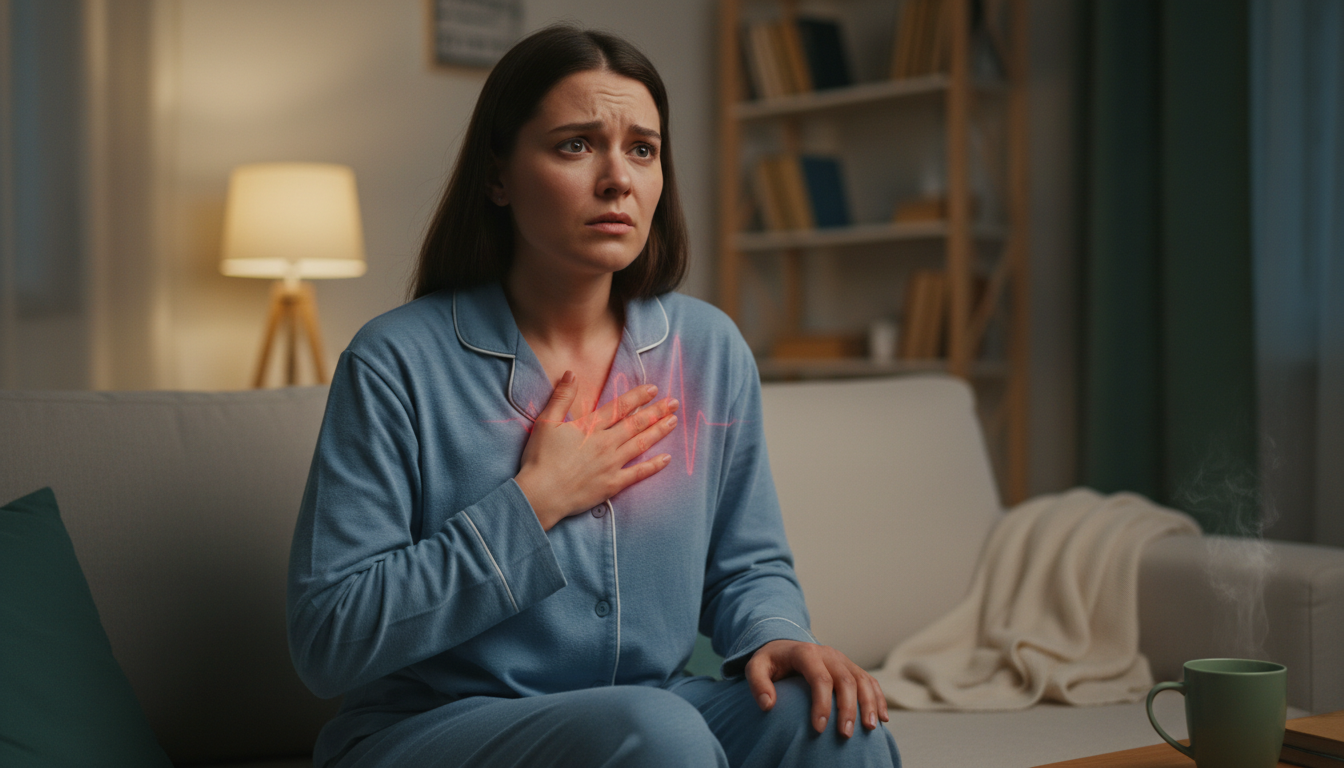
You are sitting there, not exactly running a marathon, when suddenly your heart starts pounding like it just had three espresso shots. It feels big, loud, and way too noticeable. Is this just anxiety, or something you should actually worry about?
This article explains what a heart beating hard can mean, when it is likely normal, when it is concerning, and what to do next.
First, What Does “Heart Beating Hard” Actually Mean?
When people say “my heart is beating hard,” they usually mean one or more of these:
- You feel strong, thudding heartbeats in your chest, throat, or even ears.
- Your heart feels like it is pounding or racing.
- You are suddenly very aware of each heartbeat.
- It might feel like your chest is “shaking” from the force of each beat.
Medically, these sensations fall under heart palpitations — the feeling of your own heartbeat. According to major heart organizations, palpitations can feel like pounding, fluttering, or skipped beats, and are often harmless but sometimes a sign of an underlying issue.
Quick takeaway: Feeling your heart beat does not automatically mean danger, but context matters.
Common Normal Reasons Your Heart Is Beating Hard
There are very common, non-dangerous reasons your heart might suddenly feel like it is working overtime.
1. Exercise or Physical Exertion
If you climbed stairs, carried groceries, ran for a train, or did a workout, your brain tells your heart that more oxygen and blood flow are needed.
So your heart:
- Beats faster
- Beats harder
If it gradually calms down within a few minutes of rest, and you do not have chest pain, severe shortness of breath, or fainting, this is usually a normal physiological response.
Takeaway: A hard heartbeat right after exertion that settles with rest is typically expected.
2. Anxiety, Panic, or Stress
You do not have to be visibly upset to have anxiety symptoms. Stress hormones like adrenaline can:
- Make your heart beat faster and harder
- Cause chest tightness
- Make you hyper-aware of body sensations
Then a loop can start: hard heartbeats lead to worry, which leads to more adrenaline, which makes the heart beat even harder.
You might notice this:
- In crowded places
- Before a presentation or tough conversation
- When lying in bed overthinking
Even panic attacks can show up as sudden pounding heart, chest discomfort, shaking, shortness of breath, and feeling like something terrible is happening.
Red flag twist: Panic and some heart problems can feel similar. If you are not sure, or symptoms are new, severe, or different than your usual pattern, it is safer to get checked.
Takeaway: Stress and anxiety are very common causes of a pounding heart, but do not blame anxiety for everything without ruling out medical causes.
3. Caffeine, Energy Drinks, and Stimulants
Coffee, pre-workout supplements, certain teas, sodas, chocolate, energy drinks, and some medications (such as some decongestants or ADHD medications) can:
- Speed up your heart rate
- Make beats feel stronger
- Trigger or worsen palpitations if you are sensitive
Energy drinks and large doses of caffeine, in particular, have been linked to racing or pounding heartbeats, especially if combined with dehydration, lack of sleep, or alcohol.
Takeaway: If your heart is beating hard after a big coffee or energy drink, that may be your body saying not to repeat that dose.
4. Dehydration, Heat, or Standing Up Quickly
When you are dehydrated or overheated, there is less fluid circulating, and your heart may beat harder and faster to keep blood pressure up.
You may notice:
- Pounding heart
- Lightheadedness or dizziness when standing
- Dry mouth, dark urine, or feeling weak
Similarly, standing up quickly or being in a hot shower can cause blood pressure changes and a stronger, more noticeable heartbeat.
Takeaway: Sometimes your heart is just trying to keep your blood moving in less-than-ideal conditions.
5. Hormones: Periods, Pregnancy, Perimenopause
Hormone shifts can affect heart rate and how strong your heartbeat feels.
You might notice stronger or faster heartbeats:
- Around your period
- During pregnancy (blood volume and heart workload increase)
- In perimenopause or menopause (hot flashes, anxiety, and palpitations often occur together)
Takeaway: Hormonal phases can temporarily make a normal heart feel like it is working harder.
When a Hard-Beating Heart Might Be More Concerning
A strong heartbeat by itself can be harmless, but paired with other symptoms or certain patterns, it may signal something that deserves prompt medical attention.
1. Pounding Heart With Chest Pain or Pressure
If your heart is beating hard and you have:
- Chest pain or pressure (especially if it feels heavy, tight, or like strong pressure)
- Pain spreading to your jaw, neck, back, shoulders, or arm
- Shortness of breath
- Nausea, sweating, or feeling like you might pass out
this could be a sign of a heart attack or another serious problem.
This is especially urgent if you are older or have risk factors like high blood pressure, diabetes, smoking, high cholesterol, or a strong family history of heart disease.
What to do: Treat this as an emergency. Call your local emergency number.
Takeaway: Hard heartbeat plus chest pain or pressure and other systemic symptoms is not something to self-diagnose as anxiety. Get help.
2. Very Fast, Very Sudden, or Very Irregular Heartbeats
Sometimes a heart rhythm problem (arrhythmia) can feel like:
- A very fast pulse out of nowhere (for example, 150–200 beats per minute)
- Strong thumping or fluttering in your chest
- Feeling like your heart is flip-flopping or skipping beats
Some arrhythmias are benign; others increase stroke or heart risk.
Get urgent medical care if:
- Your heart suddenly starts racing for no clear reason, and
- It stays that way for more than a few minutes, or
- You feel faint, dizzy, weak, or like you might pass out.
Takeaway: A random, very fast, pounding heartbeat that will not settle, especially with dizziness or faintness, is not a “wait and see” situation.
3. Hard Heartbeat With Trouble Breathing
If your heart feels like it is beating hard and you have:
- New or worsening shortness of breath
- Trouble breathing when lying flat
- Waking up at night gasping for air
- Swelling in your legs, ankles, or feet
this could suggest a heart or lung issue that needs evaluation.
Takeaway: Strong heartbeat plus breathing problems means you should get checked sooner rather than later.
4. Fainting, Near-Fainting, or Confusion
A pounding heart that comes with:
- Passing out
- Almost passing out
- Sudden confusion or trouble speaking
can be a red flag for a serious heart rhythm issue or other emergency.
Takeaway: If you black out or almost do along with a hard-beating heart, this is emergency territory.
5. Hard Heartbeat Plus Other Ongoing Symptoms
Call your doctor if your pounding heart comes with:
- Unexplained weight loss or gain
- Swelling, fatigue, or reduced exercise tolerance
- New feelings of weakness
- Fever or signs of infection
These could point toward thyroid problems, anemia, infections, or heart conditions.
Takeaway: Persistent or progressive symptoms plus a hard heartbeat mean it is time for a proper medical workup.
Is a Hard Heartbeat From Anxiety or Something Else?
Many people wonder whether their symptoms are from anxiety or a physical heart problem. There are some clues that can help, though they are not perfect.
Clues That Point More Toward Anxiety or Panic
- Happens during stressful situations, conflicts, driving, crowds, or when overthinking
- Often comes with:
- Sweaty palms
- Churning stomach
- Shakiness
- Fearful or “doom” thoughts
- Improves when you:
- Breathe slowly
- Distract yourself
- Move your body or go outside
- You have been checked by a doctor before and major heart issues were ruled out
Clues That Deserve More Medical Evaluation
- Happens out of the blue, even when you are calm or asleep
- Triggered by mild effort (like walking across a room) and feels out of proportion
- You are older or have risk factors (high blood pressure, diabetes, family history of heart disease, smoking)
- Comes with chest pain, severe shortness of breath, fainting, or near-fainting
The tricky part is that anxiety and medical issues can coexist. Even if you know you are an anxious person, do not assume every symptom is just anxiety.
Takeaway: Anxiety is a common cause of a hard-beating heart, but it should not be your only explanation without proper medical input.
Simple At-Home Checks You Can Do
These are not a substitute for medical care, but they can give you and your doctor useful information.
1. Check Your Pulse
Use your wrist or the side of your neck and notice:
- Is it fast? (Resting over 100 beats per minute repeatedly?)
- Is it regular, or does it feel like it is skipping around?
- Does it feel extremely forceful?
Write this down along with when it happened and what you were doing.
2. Track Patterns
For a week or two, jot down:
- Time of day symptoms start
- What you were doing (resting, exercising, stressed, drinking coffee)
- Other symptoms (chest discomfort, shortness of breath, dizziness)
A doctor can use this to see patterns, such as:
- Always after caffeine
- Mostly at bedtime
- Only with exertion
3. Try the Basics (If No Red Flags)
If there are no emergency symptoms (no chest pain, no severe shortness of breath, no fainting), you can try:
- Drinking some water
- Sitting or lying down for a few minutes
- Slow, deep breathing (in through your nose for 4 seconds, out through your mouth for 6–8 seconds)
- Getting out of a hot environment
If your heartbeat calms down and you feel okay afterward, that is somewhat reassuring, but if this keeps happening, still mention it to a doctor.
Takeaway: Basic tracking plus simple calming steps can help you figure out triggers and give your doctor better data.
When Should You See a Doctor About a Hard-Beating Heart?
You should schedule a medical appointment soon (not necessarily an emergency, but not to be ignored) if:
- Your heart is beating hard frequently or daily
- The episodes are getting worse or more frequent
- You have a known heart condition or risk factors
- You are pregnant and notice new or worsening palpitations
- It is affecting your sleep, daily activities, or peace of mind
A healthcare provider might:
- Ask detailed questions about your symptoms and triggers
- Check your blood pressure and oxygen level
- Order blood tests (for anemia, thyroid issues, electrolytes, and more)
- Order an ECG (electrocardiogram) to look at your heart rhythm
- Arrange a heart monitor you wear for a day or more to catch intermittent episodes
Takeaway: If a hard-beating heart is now a regular symptom and it was not before, it is worth a proper checkup.
When Is a Hard-Beating Heart an Emergency?
Call your local emergency number or seek urgent care right away if your heart is beating hard and you have any of these:
- Chest pain, pressure, or tightness
- Pain spreading to your arm, jaw, back, neck, or shoulder
- Severe shortness of breath
- You feel like you might pass out, or you actually do
- Sudden confusion, trouble speaking, or weakness on one side
- A very fast heart rate that will not slow down, especially if you feel unwell, dizzy, or weak
If you are alone or unsure, it is better to err on the side of caution. Medical providers would rather check you and tell you that you are okay than see you too late.
Takeaway: Do not wait to see if frightening symptoms go away on their own. Get help.
What You Can Start Doing Today
If your heart is beating hard right now but you do not have emergency symptoms, here are some steps you can take:
- Pause and scan for red flags. Any chest pain, serious trouble breathing, fainting, or stroke-like symptoms? If yes, get urgent help.
- Hydrate and rest. Drink some water, sit or lie down, and give it a few minutes.
- Breathe intentionally. Slow, steady breathing can calm both your heart rate and your nervous system.
- Review your recent choices. Caffeine, alcohol, energy drinks, poor sleep, high stress, or a heavy meal can all contribute.
- Make a note. Record the time, what you were doing, how long it lasted, and any other symptoms. This information is useful for a future doctor visit.
- Plan a checkup. Especially if this is new, recurring, or worrying you. Saying “I keep feeling my heart beat really hard” is reason enough for an appointment.
Final takeaway: A hard-beating heart can be completely normal in some situations, but your body is also allowed to get your attention when something is off. Listen to it, do not panic, and do not ignore it.
Sources
- Mayo Clinic – Heart palpitations: Symptoms and causes
- Mayo Clinic – Arrhythmia: Symptoms and causes
- American Heart Association – Warning signs of a heart attack
- Cleveland Clinic – Heart palpitations: Causes, symptoms and treatment
- MedlinePlus (NIH/NLM) – Palpitations
- Cleveland Clinic – Anxiety and heart palpitations
- American Heart Association – Caffeine and heart health
Leave a Reply