Sudden Chest Tightness: What It Means and What To Do
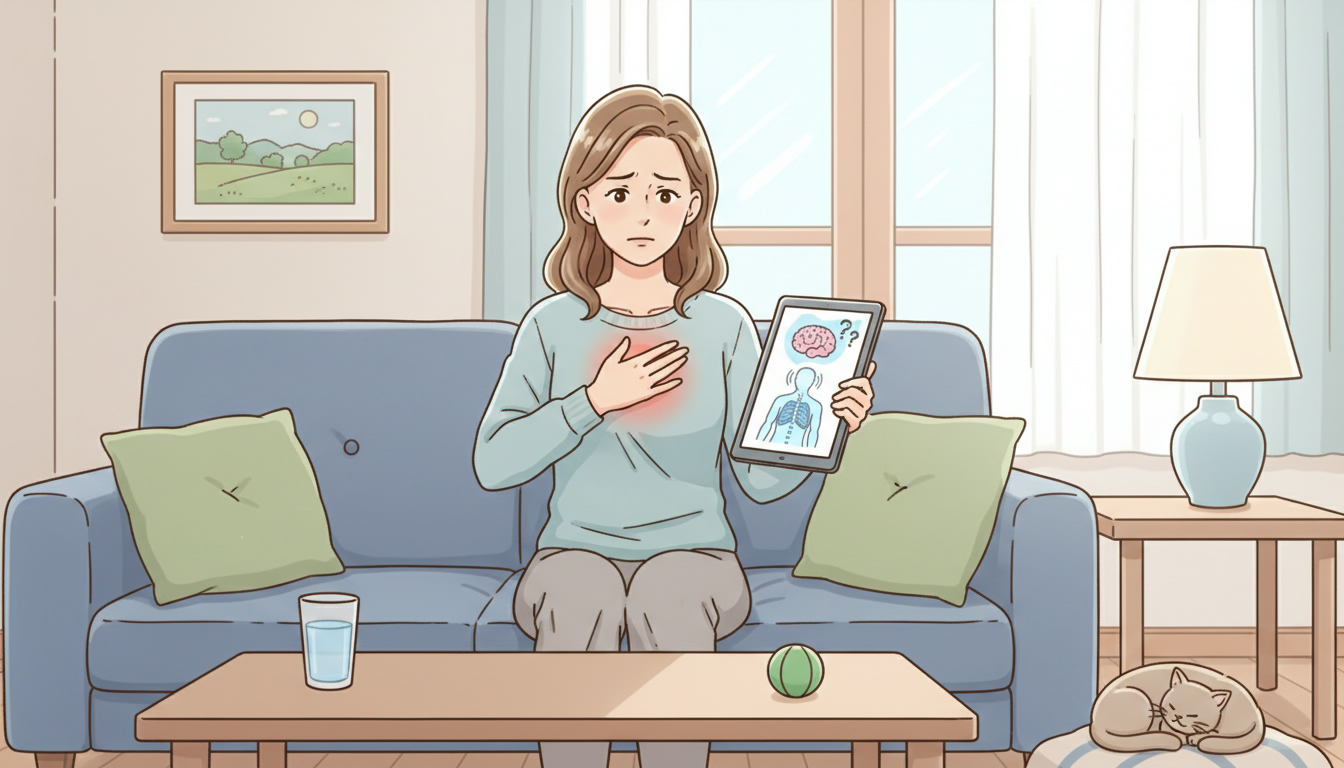
You’re minding your business — scrolling, working, eating lunch — when suddenly your chest feels tight.
“Is this a heart attack? Anxiety? Gas? Am I… dying or just dramatic?”
Sudden chest tightness can be serious, but it also has many causes that are not immediately life-threatening. The key is knowing what to watch for, what to do right now, and when not to wait it out.
This guide will walk you through:
- What sudden chest tightness can mean
- The big red-flag symptoms you should never ignore
- Common non-emergency causes (like anxiety, reflux, or muscle strain)
- Simple steps to take at home — and when to go straight to the ER
Quick note: This isn’t medical care and can’t diagnose you. If you’re in doubt, always err on the side of getting checked.
First Things First: When Sudden Chest Tightness Is an Emergency
Let’s start with the non-negotiables.
If you’re experiencing sudden chest tightness right now and any of the following are true, call 911 (or your local emergency number) immediately:
- Chest tightness or pressure that feels like crushing, squeezing, or heavy weight in the center or left side of your chest
- Pain or tightness spreading to your arm (especially left), jaw, neck, back, or stomach
- Shortness of breath (you feel like you can’t get enough air)
- Sweating, especially cold or clammy sweat
- Nausea or vomiting
- Dizziness, lightheadedness, or fainting
- You have a history of heart disease, high blood pressure, diabetes, or you’re a smoker, and this feels “different” or worse than usual
These can be signs of a heart attack (myocardial infarction) or another serious heart problem, like unstable angina or aortic dissection. The American Heart Association emphasizes that chest discomfort, shortness of breath, and breaking out in a cold sweat are classic heart attack warning signs, and waiting to see if it goes away can be dangerous.
Takeaway: If your gut is yelling “this is bad” and the symptoms match the list above, do not drive yourself, do not Google more — call 911.
What Does Sudden Chest Tightness Actually Feel Like?
“Chest tightness” is a vague term, and that’s part of why it’s scary. People describe it in a lot of different ways, like:
- “Someone is sitting on my chest.”
- “A band is squeezing my ribs.”
- “My chest feels full or heavy.”
- “It’s hard to take a deep breath.”
For doctors, the quality of the feeling, plus what triggers it and what makes it better or worse, helps narrow down the cause.
A few patterns:
- Cardiac (heart) causes often feel like pressure, squeezing, or heaviness, may come on with exertion or stress, and can spread to the arm, jaw, or back.
- Lung causes often come with shortness of breath, coughing, or pain when breathing in deeply.
- Anxiety or panic can cause tightness, a feeling of not getting enough air, pounding heart, and a sense of impending doom.
- Muscle or rib issues often feel sharper and can hurt more when you move, twist, or press on the area.
Takeaway: Describing how it feels (pressure vs. stabbing vs. burning) and what you’re doing when it happens are big clues — write it down if you plan to see a doctor.
Serious Causes of Sudden Chest Tightness (You Should Know These)
This is the scary list, but knowing it helps you act fast if needed.
1. Heart Attack (Myocardial Infarction)
A heart attack happens when blood flow to part of the heart is blocked, often by a blood clot in a narrowed artery. This is a true medical emergency.
Common features:
- Sudden chest pressure, squeezing, or tightness lasting more than a few minutes or that comes and goes
- May radiate to left arm, jaw, neck, or back
- Shortness of breath, nausea, sweating, or feeling faint
Not everyone has the “Hollywood” version of a heart attack. Symptoms in women, older adults, and people with diabetes may be more subtle, including fatigue, mild chest discomfort, or shortness of breath.
If you suspect a heart attack: Call 911. Don’t drive yourself. Don’t wait an hour “to see.”
2. Angina (Reduced Blood Flow to the Heart)
Angina is chest discomfort caused by temporary reduced blood flow to the heart muscle, usually from narrowed coronary arteries. It’s a warning sign of underlying heart disease.
Typical patterns:
- Chest tightness or pressure brought on by physical exertion, cold air, or emotional stress
- Often eases with rest or medication like nitroglycerin (if prescribed)
Stable angina tends to be predictable (same trigger, same pattern). New, worsening, or “out of the blue” angina-like chest tightness can be unstable angina — which is an emergency.
Takeaway: If “exercise or stress = chest tightness” is becoming a pattern, don’t ignore it. That’s a “call your doctor ASAP” situation.
3. Pulmonary Embolism (Blood Clot in the Lung)
A pulmonary embolism (PE) is a blood clot that travels to the lungs. This can be life-threatening and needs immediate care.
Signs can include:
- Sudden chest pain or tightness, often worse when you take a deep breath
- Shortness of breath that appears suddenly
- Fast heart rate, feeling anxious or lightheaded
- Sometimes coughing up blood
Risk is higher if you recently had surgery, long travel with little movement, are pregnant or postpartum, use estrogen-based birth control or hormone therapy, smoke, or have a history of clots.
Takeaway: Sudden chest tightness + shortness of breath + risk factors for clots = ER now, not later.
4. Pneumothorax (Collapsed Lung)
A pneumothorax happens when air leaks into the space around the lung, causing it to collapse partially or fully.
It can cause:
- Sudden sharp chest pain or tightness, often on one side
- Trouble breathing or feeling like you can’t fully inhale
- Sometimes happens after an injury, but can also occur spontaneously (especially in very tall, thin people or those with underlying lung disease)
Severe cases can be life-threatening and require emergency treatment to re-expand the lung.
Takeaway: If your breathing suddenly feels very off with sharp chest pain or tightness, get urgent care.
5. Aortic Dissection (Rare, but Critical)
An aortic dissection is a tear in the inner layer of the main artery leaving the heart. It’s rare but extremely serious.
Typical symptoms:
- Sudden, severe chest or upper back pain described as tearing or ripping
- May move from chest to back or abdomen
- Can be associated with fainting, stroke-like symptoms, or extremely high blood pressure
This is a call-911-right-now situation.
Takeaway: Sudden “worst-ever” chest/back pain that feels tearing or ripping is never a “wait and see” moment.
Less Dangerous (But Still Real) Causes of Sudden Chest Tightness
Not all chest tightness means heart attack. Here are common non-cardiac causes that can still feel very scary.
1. Anxiety and Panic Attacks
Panic attacks are known for mimicking heart problems.
You might feel:
- Sudden chest tightness or pain
- Rapid heartbeat or pounding heart
- Shortness of breath or feeling like you can’t get enough air
- Sweating, shaking, dizziness
- A powerful sense of fear or “I’m going to die”
The symptoms often peak within 10–20 minutes and then gradually ease. They can happen even when you’re sitting quietly, often during periods of high stress.
Why this happens: The body’s “fight or flight” response floods you with adrenaline, which affects breathing, muscles, and heart rate.
Important: Panic and heart issues can overlap. If it’s new, different, or your first time with these symptoms, you should still get medically evaluated.
2. Gastroesophageal Reflux (GERD) and Heartburn
Acid reflux can cause burning or tightness in the chest that’s very similar to heart pain.
Clues it may be reflux:
- Burning or pressure in the chest, often after eating
- Worse when lying down or bending over
- Sour taste in mouth, belching, or regurgitation
- May improve with antacids
Heartburn is common, but sometimes heart attacks are mistaken for heartburn. If your “heartburn” feels different, more intense, or comes with shortness of breath, sweating, or jaw/arm pain, get checked immediately.
Takeaway: Reflux can explain a lot of chest discomfort, but it should never be your only explanation for new, severe, or unusual symptoms.
3. Musculoskeletal Pain (Costochondritis, Muscle Strain)
Sometimes the problem is in your chest wall, not your heart or lungs.
Costochondritis (inflammation of the cartilage where ribs attach to the breastbone) or a muscle strain can cause:
- Sharp or aching pain or tightness on one side of the chest
- Pain that gets worse if you press on the area, twist, stretch, or move certain ways
- Pain after heavy lifting, intense workouts, new exercise, or even bad posture at a desk
This type of pain can be very uncomfortable but is usually not dangerous.
Takeaway: If pressing on the spot or moving your torso clearly changes the pain, it’s more likely to be muscle or cartilage than heart — but again, when in doubt, get evaluated.
4. Asthma, Bronchospasm, or Other Lung Conditions
Lung issues can cause chest tightness, especially with breathing symptoms.
Common signs:
- Tightness in the chest, wheezing, or whistling when you breathe
- Coughing, especially at night or with exercise
- Feeling like you can’t fully exhale
People with asthma often describe a band around the chest or a sense of constriction. Chest infections (like pneumonia or bronchitis) can also cause chest discomfort and tightness.
Takeaway: If chest tightness comes with wheezing, coughing, or a history of asthma or lung disease, talk with your doctor about adjusting your treatment plan.
How to Respond to Sudden Chest Tightness (Step-by-Step)
Step 1: Check for Emergency Red Flags
Use this quick mental checklist:
- Am I having crushing, squeezing, or heavy chest pressure?
- Is it spreading to my arm, jaw, back, or neck?
- Am I short of breath, sweating, nauseated, or about to faint?
- Do I have major risk factors (heart disease, diabetes, high blood pressure, smoking, strong family history)?
If yes to any combination of these and the symptoms are significant or worsening, call 911. Don’t drive yourself. Don’t wait 30 minutes just to see.
Step 2: If No Red Flags, Pause and Observe
If your symptoms are mild and you don’t have the emergency signs above:
- Stop what you’re doing. Sit or lie down in a comfortable position.
- Take slow breaths: In through your nose for 4 seconds, hold for 4, out through your mouth for 6–8.
- Notice patterns:
- Did this start after exercise, eating, stress, or lying down?
- Does it change when you press on the area or move your ribs or arms?
- Have you had this before?
If things improve steadily over 10–20 minutes and you feel generally okay, it’s reasonable to call your doctor or a telehealth service for advice on next steps.
Step 3: Call a Healthcare Professional the Same Day If…
- The tightness is new and you can’t clearly link it to something like sore muscles
- You’ve had similar episodes more than once recently
- You have risk factors (smoking, high blood pressure, high cholesterol, diabetes, strong family history of heart disease)
- You’re just not sure and it’s making you anxious
They may recommend:
- An in-person evaluation
- An EKG (electrocardiogram)
- Blood tests to check for heart damage
- Possibly a stress test or imaging studies, depending on your history
Takeaway: “It went away” does not always mean “it was nothing.” Recurrent or unexplained chest symptoms deserve a real workup.
Real-Life Style Scenarios (And What They Might Mean)
Scenario 1: The 2 a.m. Heartburn Panic
You eat a big, spicy dinner at 9 p.m., lie down at 11:30, and at 2 a.m. wake up with burning chest tightness.
- Feels worse when you lie flat
- Eases a bit when you sit up
- You have a sour taste in your mouth
Possibility: Acid reflux or GERD. But if this is more intense than usual, comes with shortness of breath or sweating, or you have strong heart risk factors, get emergency care.
Scenario 2: The Meeting Meltdown
You’re in a stressful work call. Out of nowhere:
- Your chest feels tight
- Heart races
- Hands tingle, you feel dizzy and detached
- You’re convinced something terrible is happening
Symptoms peak in 10 minutes and start to ease.
Possibility: Panic attack. Still worth a medical check at least once to rule out heart issues, especially if this is new.
Scenario 3: The Weekend Warrior
You helped a friend move yesterday — heavy boxes, stairs, the whole deal. Today:
- Sharp pain and tightness in a specific spot on your chest
- Hurts more when you twist, stretch, or press that area
- Breathing is otherwise normal
Possibility: Muscular strain or costochondritis. Usually managed with rest, gentle stretching, and over-the-counter pain relief (if safe for you), but see a provider if it’s intense, persists, or you’re not completely sure.
Scenario 4: Climbing the Stairs
You walk up two flights of stairs and:
- Feel pressure or tightness in the center of your chest
- Need to stop and rest
- It eases after a few minutes of rest
This pattern has been happening more often over the past few weeks.
Possibility: Angina (reduced blood flow to the heart). This deserves prompt medical evaluation — call your doctor right away or seek urgent care or ER, especially if the pattern is getting worse.
Practical Ways to Reduce Future Episodes (Depending on the Cause)
Once a doctor has helped rule out or identify a cause, some lifestyle changes can reduce episodes of chest tightness:
- For heart health:
- Stop smoking (if you do)
- Manage blood pressure, blood sugar, and cholesterol
- Build up regular, moderate exercise if your doctor says it’s safe
- Focus on heart-healthy eating patterns (Mediterranean-style, more plants and fiber, fewer ultra-processed foods)
- For reflux or GERD:
- Avoid huge late-night meals
- Cut back on trigger foods (spicy, acidic, very fatty, chocolate, caffeine, alcohol — varies by person)
- Elevate the head of your bed slightly if nighttime reflux is an issue
- For anxiety or panic:
- Learn and practice grounding or breathing techniques when not in crisis
- Consider therapy (like CBT), which is very effective for panic disorders
- Discuss medication or other options with your healthcare provider if attacks are frequent
- For muscle-related pain:
- Improve posture (especially if you work at a desk)
- Warm up before workouts and progress intensity gradually
- Include mobility and stretching in your routine
Takeaway: You can’t control everything, but you can lower your odds of scary chest episodes with long-term habits.
When in Doubt About Chest Tightness, Here’s the Rule
Sudden chest tightness is one of those symptoms where overreacting is better than underreacting.
- If you have severe, crushing, or spreading chest pain or tightness, especially with shortness of breath, sweating, nausea, or faintness, call 911.
- If your symptoms are mild but new, recurrent, or confusing, and you’re not actively in distress, call your doctor or a nurse line the same day.
- If a healthcare provider has already evaluated you and told you what to watch for, follow that plan — and go back if things change.
You’re not bothering anyone by getting chest symptoms checked. You’re doing the most responsible thing you can do for yourself.
And if you’re reading this because that tight feeling just scared you, take one slow breath in and one long breath out.
Then, based on what you’ve read here, decide: Is this an emergency right now? Or is this a “call my doctor today” moment?
Either way, you don’t have to just sit in fear. You can act — and that’s where your power is.
Leave a Reply