
Sudden Heart Palpitations: What They Mean and What to Do
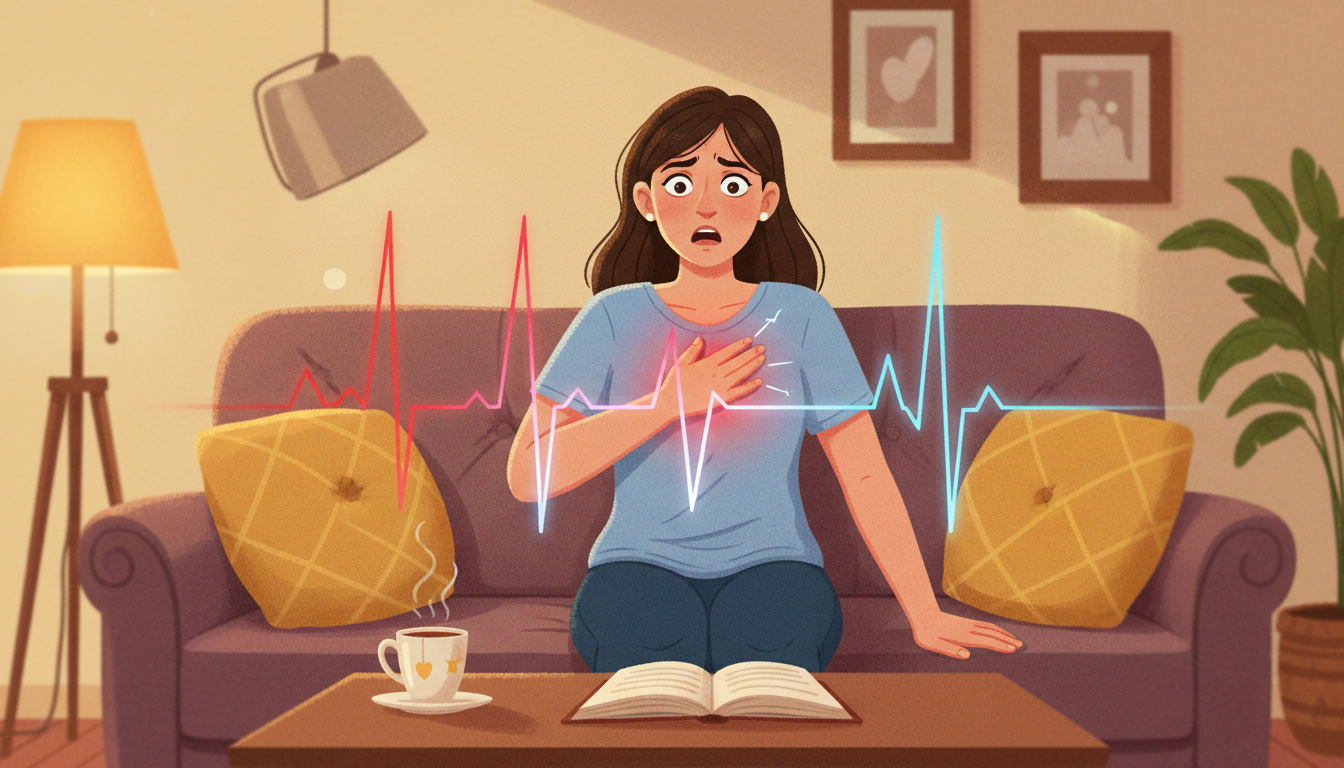
You are sitting on the couch, scrolling your phone, when suddenly your heart does a weird flip-flop. Skip. Thud. Flutter. Instant panic: “Am I having a heart attack?” If that sounds familiar, you are not alone.
Sudden heart palpitations are one of the most common reasons people end up in urgent care or searching symptoms late at night. They are often benign, but sometimes they are a red flag.
This article explains what sudden heart palpitations are, why they happen, when to relax, and when to get help, without sending you into a spiral.
What Are Sudden Heart Palpitations?
Heart palpitations are the sensation that your heart is beating weirdly, such as:
- Pounding or racing
- Skipping beats
- Fluttering or “flip-flopping”
- Beating harder than usual
They can show up out of the blue, at rest or during activity, and last for a few seconds, minutes, or occasionally longer.
Sometimes they are harmless extra beats. Sometimes they are an abnormal heart rhythm (an arrhythmia). And sometimes they are your nervous system in overdrive, not a heart problem at all.
Takeaway: Palpitations are a symptom, not a diagnosis. The feeling can be scary even when the cause is not.
Common Causes of Sudden Heart Palpitations
Causes can be grouped into two big buckets: often-benign triggers and potentially serious causes.
1. Everyday Triggers (Annoying but Usually Harmless)
These are very common and often show up out of nowhere.
- Caffeine (coffee, energy drinks, pre-workout, tea)
- Alcohol, especially binge drinking or “holiday heart” after heavy use
- Nicotine (cigarettes, vaping, nicotine pouches)
- Dehydration or low blood volume
- Lack of sleep or chronic fatigue
- Stress and anxiety (including panic attacks)
- Stimulant medications (ADHD meds, some cold meds with pseudoephedrine)
- High-sugar or big meals, especially if you eat quickly
For many healthy people, these cause extra beats, such as premature atrial contractions (PACs) or premature ventricular contractions (PVCs), which are often benign when the heart is structurally normal.
For example, Jenna drinks two iced coffees and a pre-workout before the gym. During her warmup, her heart suddenly starts racing and skipping. Her EKG at urgent care shows normal sinus rhythm with occasional extra beats. The likely cause is caffeine, stimulants, and anxiety. The solution is to cut back.
Quick takeaway: If your palpitations line up with caffeine, stress, or poor sleep, your heart may just be responding to your lifestyle.
2. Medical Causes (Worth Checking Out)
Sometimes sudden palpitations are your body signaling that something else is going on.
a) Arrhythmias (Abnormal Heart Rhythms)
These are electrical problems in the heart that can cause fast, slow, or irregular rhythms, such as:
- Atrial fibrillation (AFib) – Irregular, often fast heartbeat; more common with age, high blood pressure, sleep apnea, or heart disease.
- Supraventricular tachycardia (SVT) – Episodes of very fast heart rate that start and stop suddenly; often in younger, otherwise healthy people.
- Ventricular arrhythmias – More serious; usually seen in people with underlying heart disease.
These can cause sudden racing heart (often over 150 beats per minute), chest discomfort, and feeling off or lightheaded.
b) Thyroid Problems
An overactive thyroid (hyperthyroidism) can speed up your metabolism and heart rate, leading to palpitations, weight loss, heat intolerance, and tremors.
c) Anemia and Low Oxygen
When your blood cannot carry enough oxygen, as with anemia, your heart may beat faster or harder to compensate.
d) Electrolyte Imbalances
Abnormal levels of potassium, magnesium, sodium, or calcium, sometimes from vomiting, diarrhea, certain medications, or extreme dieting, can affect the heart’s electrical system.
e) Heart Disease or Structural Issues
Conditions like cardiomyopathy, valve problems, or prior heart damage can predispose you to more dangerous arrhythmias.
Quick takeaway: One random flutter is usually not a crisis, but repeated, prolonged, or intense episodes should be evaluated.
What Do Sudden Heart Palpitations Feel Like?
Everyone describes them differently, but common phrases include:
- “It is like my heart dropped into my stomach.”
- “It thumps really hard for a second and then feels normal.”
- “It starts racing out of nowhere and I feel like I cannot calm down.”
- “A fluttering in my chest, almost like a bird in there.”
They might happen at rest or wake you from sleep, show up when you stand up quickly, or be triggered by stress, caffeine, or exertion, and sometimes have no obvious cause.
Anxiety can cause palpitations and palpitations can trigger anxiety, creating a feedback loop.
Quick takeaway: Trust your experience. If something feels new, more intense, or just wrong, do not ignore it.
When Are Sudden Palpitations an Emergency?
Call emergency services right away if palpitations come with:
- Chest pain or pressure
- Trouble breathing or shortness of breath
- Fainting or passing out
- Severe dizziness or feeling like you are about to black out
- Sudden confusion or trouble speaking
- Weakness or numbness on one side of the body
Also treat it as urgent if:
- Your heart rate is very fast (for example, over 150 beats per minute) and does not slow down with rest.
- You have a known heart condition and the sensation is new or dramatically different.
- You recently had a heart attack, heart surgery, or major procedure.
If you are not sure, it is always acceptable to seek emergency care. It is better to be checked for something that turns out to be benign than to stay home during something serious.
Quick takeaway: Palpitations plus chest pain, breathing trouble, fainting, or stroke-like symptoms mean you should not wait.
When Should You See a Doctor About Palpitations?
If it is not an emergency but things still feel off, book an appointment soon with your primary care provider or a cardiologist if:
- Palpitations are frequent, such as daily or several times a week.
- Episodes last longer than a few minutes, especially if this is new for you.
- You notice they are getting more intense or more frequent over time.
- You have a history of heart disease, high blood pressure, diabetes, or thyroid issues.
- You feel lightheaded, mildly short of breath, or unusually tired with episodes.
- You are pregnant and having new or worsening palpitations.
For example, Marcus notices sudden racing heart episodes lasting 5 to 10 minutes, a few times a week, sometimes with lightheadedness and no chest pain. He sees his doctor, gets an EKG and a wearable monitor, and is diagnosed with SVT, which can often be managed with medication or a simple procedure.
Quick takeaway: If it is not “once in a blue moon” anymore, it is time for an evaluation.
What Will a Doctor Likely Do for Sudden Palpitations?
Evaluation usually includes a mix of questions, an exam, and tests.
1. Detailed Questions
They will ask about:
- When the palpitations started
- How long they last
- What they feel like (racing, pounding, skipping)
- Triggers (caffeine, exercise, stress, lying down)
- Associated symptoms (dizziness, chest pain, shortness of breath, fainting)
- Your medical history and medications, including supplements and energy drinks
2. Physical Exam and Basic Tests
Common tests may include:
- Blood pressure and heart rate
- Electrocardiogram (EKG/ECG) to check your heart’s electrical pattern
- Blood tests to check thyroid function, anemia, electrolytes, and related issues
3. Additional Heart Monitoring
If your EKG is normal but symptoms come and go, they might order:
- Holter monitor – Worn for 24 to 48 hours continuously
- Event monitor or patch – Worn for days to weeks and activated during symptoms, or auto-recording abnormal rhythms
Some people may also need:
- Echocardiogram (heart ultrasound) to look at heart structure and function
- Stress test if symptoms occur with exertion
Quick takeaway: You do not have to guess what is going on; there are good tools to capture and interpret your heart’s rhythm.
Things You Can Do Right Now to Reduce Palpitations
These steps do not replace medical care, but they are practical things you can start today.
1. Track Your Episodes
Use your phone’s notes app or a journal to record:
- Date and time
- What you were doing
- How long it lasted
- Any potential triggers (caffeine, alcohol, stress, missed meals, poor sleep)
- Symptoms (dizziness, chest pain, and so on)
This information is very helpful for your doctor and helps you spot patterns.
2. Check Your Pulse Calmly
If you can, gently check:
- Rate – How many beats in 60 seconds
- Rhythm – Steady or irregular
You can feel your pulse at your wrist or neck, or use a home blood pressure cuff or watch if you have one. A few checks during episodes can be helpful, but try not to obsess over every single beat.
3. Reduce Common Triggers
Try a one to two week experiment with:
- Cutting back on caffeine (coffee, energy drinks, pre-workout)
- Limiting or pausing alcohol
- Avoiding nicotine
- Hydrating regularly (aim for pale yellow urine unless told otherwise)
- Prioritizing sleep (aim for 7 to 9 hours if possible)
- Checking labels for decongestants like pseudoephedrine and talking to your doctor about alternatives
If palpitations clearly decrease during this time, that is useful information.
4. Practice Quick Calming Techniques
When a sudden palpitation hits, your body often switches into panic mode. Try:
- Slow, deep breathing – In for 4 seconds, out for 6 to 8 seconds, repeated for a minute or two
- Grounding techniques – Notice several things you can see, feel, and hear around you
- Reassuring self-talk – Remind yourself you are monitoring it and will get it checked
Some types of fast rhythm, like certain SVTs, can sometimes slow down with specific vagal maneuvers, but these should only be done after a doctor teaches you the safe technique.
Quick takeaway: You cannot control every beat your heart takes, but you can modify triggers and how your nervous system responds.
Sudden Palpitations at Night: Why They Hit When You Are Trying to Sleep
If you get palpitations mostly when you lie down or in the middle of the night, you are not imagining it.
Possible reasons include:
- Fewer distractions, so you notice your heartbeat more
- Higher vagal tone at night, which can change how beats feel
- Reflux or big meals close to bedtime
- Sleep apnea, which is linked to abnormal heart rhythms and AFib
- Anxiety increasing when your brain finally runs out of daytime distractions
If your partner notices snoring, gasping, or pauses in breathing while you sleep, or you wake feeling unrefreshed, talk to your doctor about screening for sleep apnea.
Quick takeaway: Nighttime palpitations are not automatically more dangerous, but they are worth mentioning to your doctor, especially with snoring or poor sleep.
Can Anxiety Really Cause Heart Palpitations?
Yes. When you are anxious, your body releases stress hormones like adrenaline. These:
- Speed up your heart
- Make you more aware of each beat
- Can trigger extra beats or a racing heart
Your brain then notices the fast heart and assumes something is wrong, which makes you more anxious and continues the loop.
You can have both anxiety and a real heart rhythm issue. You should not assume it is just anxiety without at least one medical evaluation. Therapy, stress management, and sometimes medication can significantly reduce anxiety-driven palpitations.
Quick takeaway: Anxiety is a real, physical trigger, but ruling out medical causes first is a smart move.
What Is the Bottom Line on Sudden Heart Palpitations?
Sudden palpitations are common and often tied to lifestyle triggers like caffeine, stress, or lack of sleep. They can also signal arrhythmias, thyroid issues, anemia, or heart disease, especially when frequent or intense.
Emergency care is needed if palpitations happen with chest pain, trouble breathing, fainting, or stroke-like symptoms. If your episodes are recurring, worsening, or simply worrying you, get them checked. An EKG, basic labs, and possibly a monitor can provide real answers.
In the meantime, track your symptoms, reduce obvious triggers, and work on sleep and stress. You are not being dramatic or overly sensitive for wanting clarity about your heart. If something feels off, you are allowed to get it evaluated.
Important note: This article is for general education and is not a substitute for personal medical advice, diagnosis, or treatment. If you are worried about your symptoms, even if they seem minor, reach out to a healthcare professional.
Leave a Reply