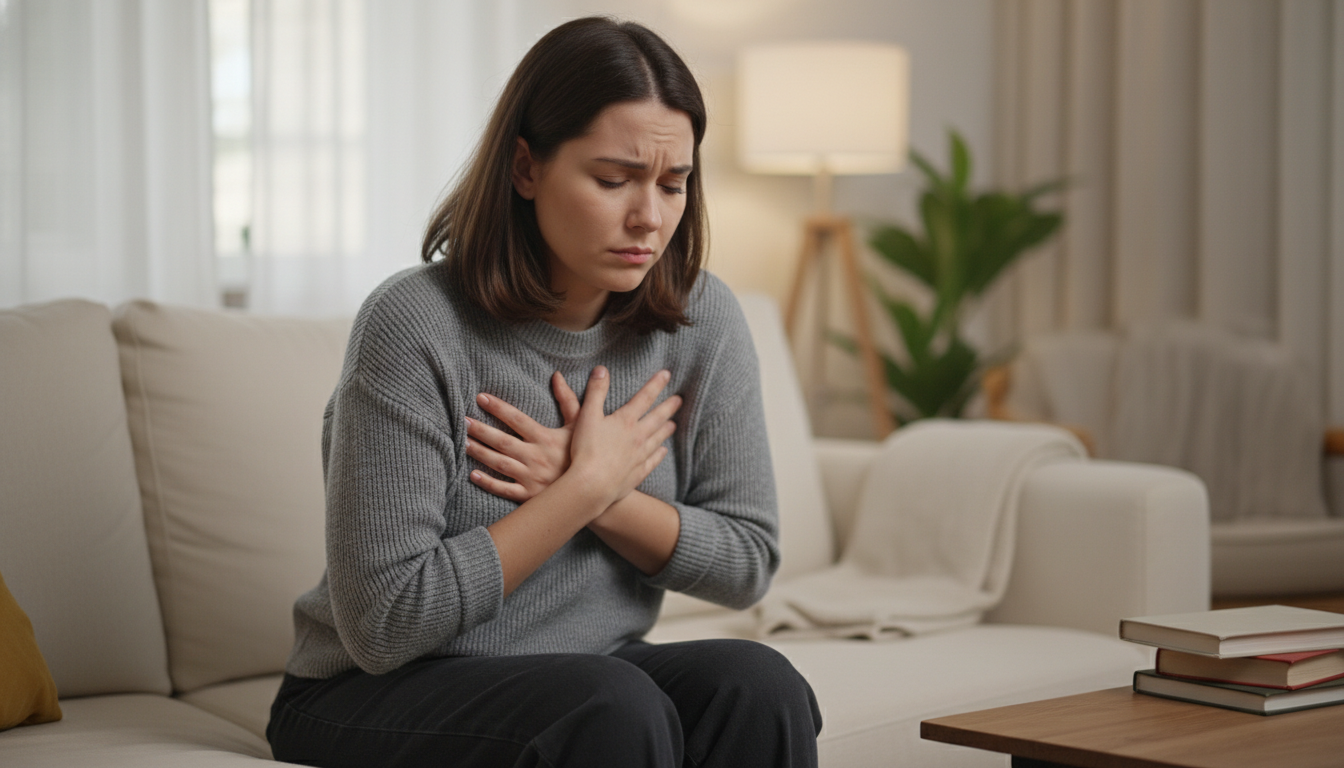
Can Anxiety Cause Chest Tightness?
You’re sitting there minding your business when suddenly your chest feels tight. Cue instant panic: “Am I having a heart attack… or is this just anxiety?”
If that sounds familiar, you are very, very not alone. Let’s unpack what’s actually happening when anxiety shows up in your chest, how to tell when it might be just anxiety vs. when it might be something more serious, and what you can do in the moment to calm both your body and your brain.
Can Anxiety Cause Chest Tightness?
Yes. Anxiety can absolutely cause chest tightness.
When you feel anxious, your body flips into fight-or-flight mode. Stress hormones like adrenaline and cortisol surge, your heart rate and breathing change, and your muscles tense up—especially around your chest, shoulders, and neck.
All of that can create:
- A band-like tightness across the chest
- A pressure or heaviness feeling
- Sharp but short-lived chest pains
- Burning or aching around the breastbone
These symptoms are very real. They’re not in your head. They’re just being driven by your nervous system, not necessarily by a heart or lung emergency.
Quick takeaway: Anxiety can absolutely cause chest tightness—but that doesn’t mean every tight chest is just anxiety.
What Does Anxiety Chest Tightness Feel Like?
Everyone describes it a little differently, but some common patterns show up again and again.
1. It Often Comes With Other Anxiety Symptoms
Chest tightness from anxiety usually doesn’t travel alone. You might also notice:
- Racing heart or palpitations
- Feeling shaky or jittery
- Shortness of breath or feeling like you can’t get a deep breath
- Sweaty palms, flushed or cold skin
- A lump in the throat, stomach knots, nausea
- Feeling unreal or detached (“am I in a dream?”)
The chest discomfort is part of a whole-body stress response, not an isolated symptom.
Mini example: You’re in traffic, already late, and your boss just texted. Your chest suddenly feels tight, your heart whooshes in your ears, your breathing goes weird. Ten minutes later, as you’re parked and calmer, the tightness eases. That pattern—tied to stress, easing with calm—is very anxiety-like.
2. It Can Be Sharp but Brief—or Dull and Lingering
Anxiety chest tightness can feel like:
- A quick, sharp stab that makes you catch your breath
- A squeezing or band-like pressure
- A dull ache that lingers during a stressful period
It may worsen when you focus on it and partially ease when you’re distracted.
3. Your Tests May Be Normal
Many people with anxiety-driven chest tightness have had:
- A normal EKG
- Normal blood tests
- A normal chest X-ray or echocardiogram
Yet the sensations continue. That can feel frustrating—but it’s also reassuring: your heart may be structurally fine, while your nervous system is just on high alert.
Takeaway: Anxiety chest tightness usually comes with other stress signs, fluctuates with your emotional state, and often shows up despite normal medical tests.
Why Does Anxiety Show Up in Your Chest?
Let’s zoom in for a second.
1. Muscle Tension and Posture
When you’re anxious, your body subtly curls in: shoulders up, chest slightly hunched, neck tight.
This can:
- Strain the muscles between your ribs
- Tighten the big chest muscles (pectorals)
- Pull on your upper back and neck
All of that can create a tight, sore, or constricted chest—especially if you sit for long periods, drive a lot, or hunch over your phone or laptop.
2. Breathing Changes (Shallow Breathing)
Anxiety often makes your breathing:
- Faster (hyperventilation)
- Shallower (from the upper chest instead of deep in the belly)
This can lead to:
- A feeling of not getting a full breath
- Tightness or pressure in the chest
- Lightheadedness, tingling in hands or face
The more you notice this, the more anxious you feel, which makes breathing even more off. That’s the anxiety–breathing loop at work.
3. Sensation Sensitivity
When you’re anxious, your brain’s alarm system is turned up. Normal body sensations—like small muscle twitches, regular heartbeat changes, or mild gas, even tiny ones—can feel huge and scary.
Your brain starts scanning: “What’s that? Is this dangerous? Am I in trouble?” That fear amplifies the sensation, especially in a place as symbolically loaded as your chest.
Takeaway: Anxiety tightens muscles, changes breathing, and makes you hyper-aware of normal sensations—perfect recipe for chest tightness.
Anxiety Chest Tightness vs Heart Attack: What’s the Difference?
This is the million-dollar question, and it’s important to get this right.
Only a medical professional who evaluates you in person can tell you for sure. But here are general patterns, not rules.
Features That Can Lean More Toward Anxiety (Not a Guarantee)
- You’re younger and otherwise healthy, with low heart risk factors.
- The tightness comes during or after obvious stress or panic.
- The pain may be sharp, fleeting, or move around (chest, ribs, sometimes back or shoulder) rather than one fixed spot.
- It improves when you calm down, distract yourself, or change position.
- You’ve had similar symptoms before that were medically checked and cleared.
Features That Can Be More Concerning (Get Checked)
Call emergency services or seek urgent care immediately if you notice any of these patterns:
- Crushing, squeezing, or heavy pressure in the chest that doesn’t let up
- Pain that spreads to the arm, jaw, neck, or back
- New or unusually severe shortness of breath
- Chest pain with fainting, confusion, or sudden severe weakness
- Chest pain plus sweating, nausea, or vomiting that feels different from your usual anxiety
- You have known heart disease, high blood pressure, diabetes, or strong family history of heart problems
If you’re ever unsure, err on the side of caution. Doctors would rather see you and say, “It’s anxiety; your heart looks okay,” than have you stay home with something serious.
Takeaway: Patterns can give clues—but they’re not perfect. New, severe, or different chest pain always deserves medical attention.
Why Does Anxiety Chest Tightness Feel So Scary?
Because your chest holds some of your most vital organs—and your brain knows it.
A few reasons it feels extra terrifying:
- Cultural association: We’re taught “chest pain = heart attack.” Any sensation there triggers worst-case thinking.
- Visibility bias: The chest is front and center; every breath and heartbeat is noticeable.
- Fear loop: You feel tightness → you fear a heart problem → your anxiety spikes → your chest gets tighter. The sensation is real, but it’s fueled by the fear about the sensation.
Over time, you can actually become afraid of the feeling itself, which keeps the cycle going.
Takeaway: The fear of chest symptoms often amplifies the symptoms. Breaking that fear loop is key.
What to Do in the Moment When Anxiety Causes Chest Tightness
Here’s a simple, practical playbook you can try when your chest tightens and you suspect anxiety is involved (assuming you’ve already been cleared by a doctor for heart issues, or this fits your known pattern).
1. Check for Red Flags
Ask yourself:
- Is this sudden, crushing, or the worst chest pain I’ve ever had?
- Is it radiating to my arm, jaw, or back?
- Am I extremely short of breath, faint, or confused?
If yes, get urgent medical help immediately. Don’t self-diagnose.
If it feels like your familiar anxiety pattern and you’ve been evaluated before, move to the next steps.
2. Slow Your Breathing (in a Specific Way)
Try this for 1–3 minutes:
- Inhale through your nose for a count of 4.
- Gently hold your breath for a count of 2.
- Exhale through pursed lips (like blowing out a candle) for a count of 6.
- Repeat.
This slows your breathing, helps reset the CO₂ balance in your blood, and tells your nervous system, “We’re okay.”
3. Un-Crumple Your Posture
- Drop your shoulders away from your ears.
- Open your chest by gently rolling your shoulders back.
- If you’re sitting, place both feet flat on the floor and let your hands rest on your thighs.
This can ease muscle tension around your chest and ribs and make breathing easier.
4. Name What’s Happening
Try saying something like:
This is anxiety. My body is in fight-or-flight mode right now. I’ve felt this before. It’s uncomfortable, but it’s not automatically dangerous.
This doesn’t magically erase the feeling, but it takes away some of its power.
5. Gently Engage Your Body
Once the peak intensity passes (often within 10–20 minutes for panic), try:
- A slow walk
- Light stretching for your chest, shoulders, and upper back
- A warm shower or heating pad on tense muscles (not on bare skin, and not if you’re feeling faint)
Movement helps your body “use up” some of the stress chemicals and can reduce that locked-in-tight feeling.
Takeaway: Ground yourself, breathe, fix your posture, and talk back to the fear. Your goal isn’t to make the tightness vanish instantly, but to ride it out with less panic.
Long-Term: How Do You Reduce Anxiety-Related Chest Tightness Overall?
If this is happening often, it’s worth addressing the root cause: your anxiety, not just the chest symptom.
Here are some evidence-based tools people commonly find helpful.
1. Cognitive Behavioral Therapy (CBT)
CBT is a structured type of therapy that helps you:
- Notice anxious thoughts (“I’m definitely dying right now”)
- Challenge them (“Is there another explanation?”)
- Change the behaviors that keep the cycle going (like compulsively checking your pulse)
Many people with health anxiety or panic disorder report fewer chest symptoms once they learn to respond differently to body sensations.
2. Breathing and Relaxation Training
Practicing calming techniques when you’re not anxious makes them easier to use when you are. Consider:
- Diaphragmatic (belly) breathing
- Progressive muscle relaxation (tensing and releasing muscles)
- Gentle yoga or stretching
Over time, this teaches your nervous system a new default: less high alert, more baseline calm.
3. Lifestyle Habits That Support Your Nervous System
These aren’t magic, but they really do matter:
- Sleep: Aim for a consistent sleep schedule.
- Caffeine: High caffeine can mimic or worsen anxiety and chest sensations.
- Alcohol and nicotine: Both can increase anxiety over time, even if they feel calming in the moment.
- Movement: Regular activity (even walks) helps regulate mood, sleep, and stress hormones.
4. Medication (for Some People)
For moderate to severe anxiety or panic, some people work with a clinician on:
- Daily medications that reduce overall anxiety levels
- Short-term medications for acute panic in specific situations
This is highly individual and should always be decided with a licensed medical or mental health professional who knows your history.
Takeaway: Managing anxiety at the source—through therapy, breathing skills, lifestyle, and sometimes medication—often reduces chest tightness episodes over time.
When Should You See a Doctor About Chest Tightness?
Even if you’re 99% sure it’s anxiety, it’s completely reasonable—and often wise—to get checked.
Consider seeing a healthcare provider if:
- This is your first time having chest tightness
- The pattern of symptoms has changed (new type of pain, new triggers)
- The tightness is happening more often or more intensely
- You’re avoiding activities because you’re scared of triggering it
A clinician can:
- Rule out heart, lung, or other physical causes
- Explain what’s happening in your body
- Offer treatment options for anxiety and/or physical issues
And if you’re ever in doubt—especially with sudden, severe, crushing, or radiating chest pain—treat it as an emergency. It’s much better to hear, “Your tests look okay; this is likely anxiety,” than to wait on something serious.
Takeaway: When in doubt, get checked out. Peace of mind is part of your health.
The Bottom Line
Can anxiety cause chest tightness? Yes, absolutely.
It can:
- Tighten your chest muscles
- Change your breathing
- Turn up your awareness of every heartbeat and sensation
The result feels intensely real—and intensely scary.
But with medical evaluation to rule out emergencies, plus tools like breathing exercises, posture adjustments, therapy, and lifestyle changes, many people find that chest tightness becomes:
- Less frequent
- Less intense
- Less terrifying
You may not be able to control when anxiety first knocks on the door—but you can learn to control how you respond when it shows up in your chest.
Leave a Reply